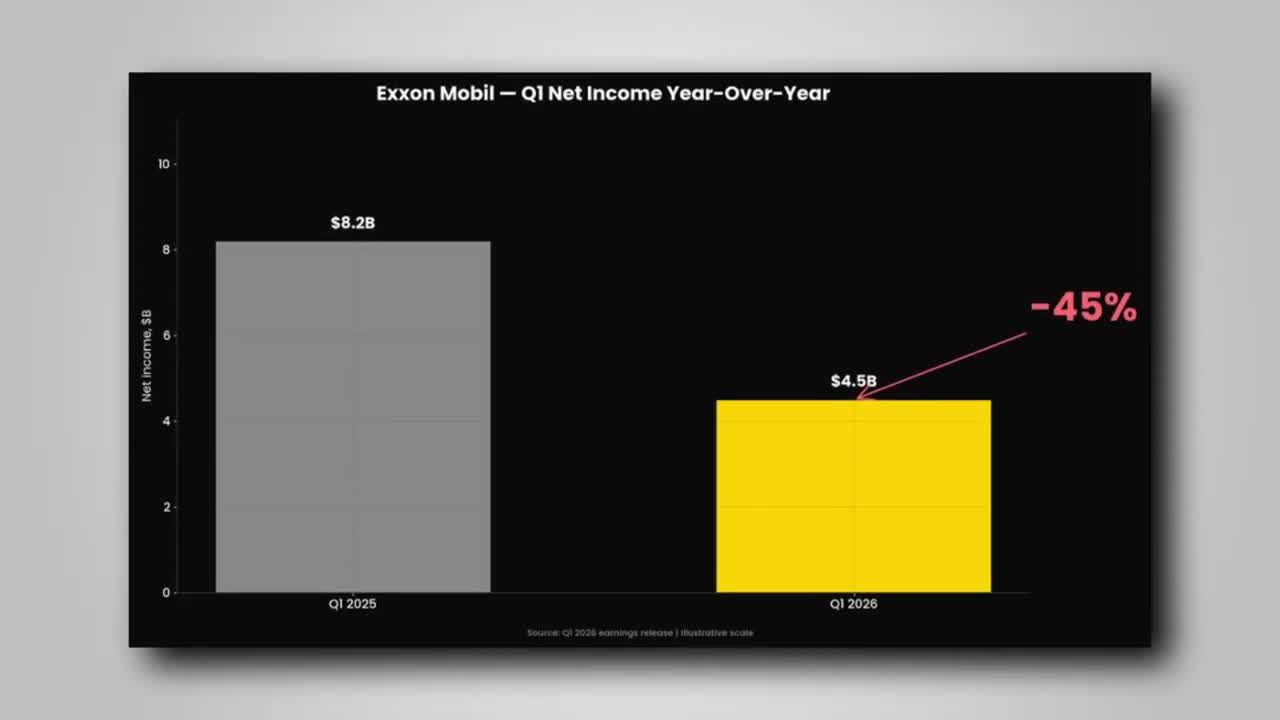
Oil just hit $126 a barrel, the highest level in three years, a 30% move in less than 90 days. And somehow, the biggest oil companies in the world just reported disastrous earnings. Exxon Mobil's profits dropped 45%. Chevron fell 36%. Billions of dollars that should have hit their bottom lines simply vanished. This is the result of massive oil price hedging losses that no one is talking about.
Most investors look at those numbers and think something is broken. But the reality is, this massive earnings drop is the result of a single line item that Wall Street is completely misreading. The oil price hedging losses these companies reported created a temporary accounting illusion.
What happened to these stocks in Q1 is setting up one of the most lopsided risk-reward trades of the entire year. The earnings disaster is already priced in. The recovery is not.
$126 Oil, Collapsing Profits: Understanding Oil Price Hedging Losses
Bottom Line: The 45% and 36% profit collapses at Exxon and Chevron were accounting artifacts of legacy hedge positions, not signs of broken businesses. With those hedges cleared, oil at multi-year highs, and a packed catalyst calendar ahead, the gap between reported earnings and physical reality is the trade. The selloff handed investors a discounted entry into companies whose underlying economics are stronger than the headlines suggest.
How the world's biggest oil companies lost money in a historic rally
The numbers, side by side, make no sense on the surface. Exxon Mobil reported Q1 net income down 45% year over year. Chevron posted a 36% decline in the exact same quarter.
During that exact same period, oil went vertical. The price of the actual product these companies sell, the literal output of every well, every pipeline, every refinery they own, went up in value by 30%.
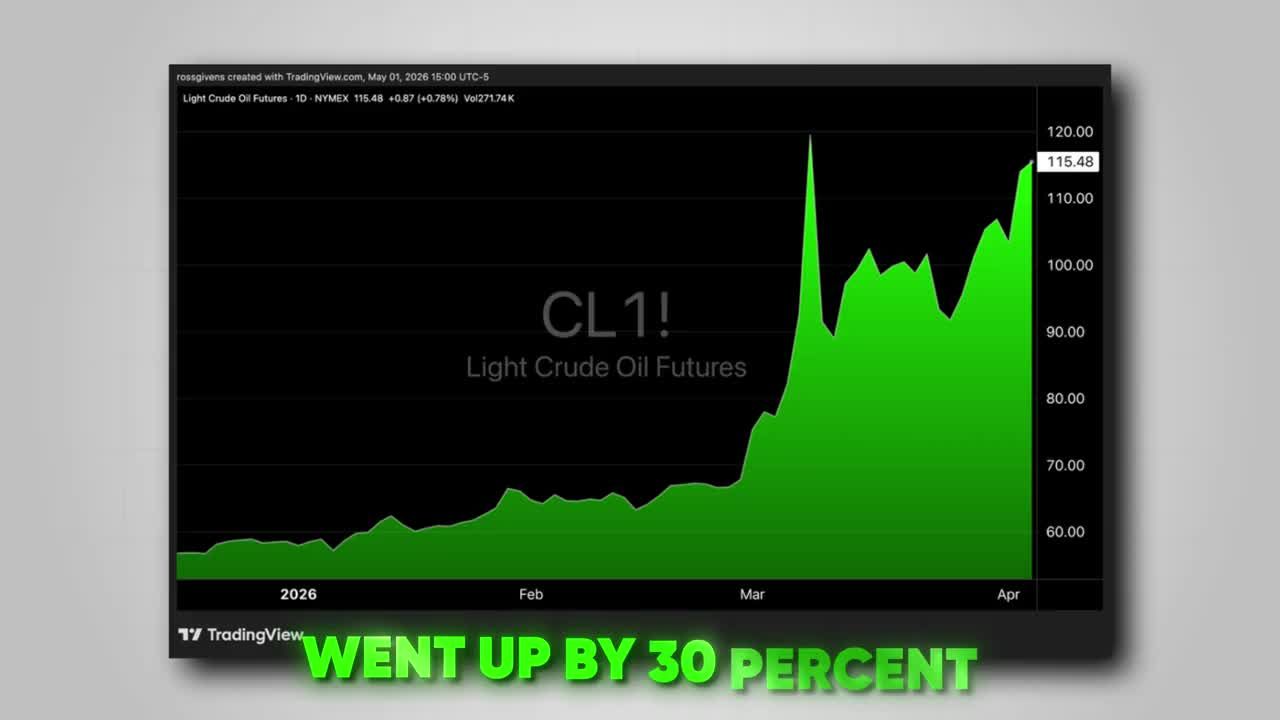
In a normal market, a 30% surge in the underlying commodity is a massive tailwind. A barrel at $126 means more profit per barrel, more cash per truckload, more margin on every refining run. It is impossible to lose 45% of your earnings in this environment unless something else is going on.
Something else is going on. That something is the hedge book.
How Did Hedge Books Destroy Profits When Oil Was Surging?
Both Exxon and Chevron hedge a portion of their production. They sign contracts months, sometimes years, in advance, locking in the price they will receive on a chunk of their oil before they pump it out of the ground.
In normal times, this is smart. It saved these companies during COVID when crude prices collapsed. It also smooths out the swings and makes cash flow more predictable. Wall Street likes companies that do not whip around with every tick of crude.
But when prices explode higher the way they did the last few months, hedging becomes a financial wrecking ball.
The simplest analogy: imagine you are a corn farmer. Last year, corn was at $4 a bushel. In October, you sign a contract to sell next year's harvest at $4.50. You are locking in a profit. Responsible move. Then March hits, a drought strikes, and corn explodes to $12 a bushel. Every farmer in the county is selling at $12. You are stuck delivering yours at $4.50. You just lost $7 on every bushel you grew.
That, in a nutshell, is what happened to Exxon and Chevron.
Why Will Q2 Earnings Look So Different for Exxon and Chevron?
Here is the detail the financial media is glossing over. Hedge contracts roll off. The futures contracts, the put options, they expire.
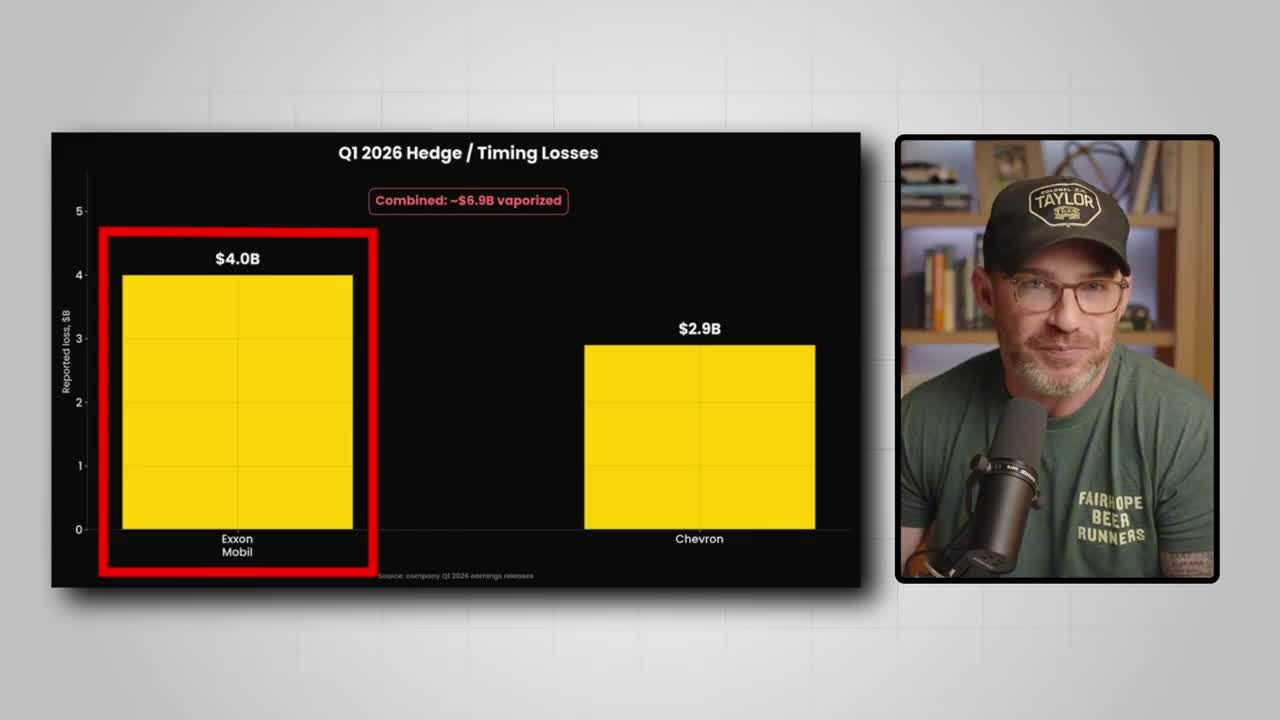
Those $4 billion and $2.9 billion losses came from contracts signed months ago when oil was sitting in the $60s. They had fixed expiration dates. They cleared this past quarter. They are gone.
The second quarter is a clean slate. Physical oil is not trading at $80, $90, or even $100. It is trading in the high $120s.
According to consensus estimates, Wall Street is forecasting Exxon's Q2 earnings to roughly double year over year. Chevron's earnings are expected to triple. The same companies that just got punished are sitting at the table for Q2 numbers that are double, triple last year's performance.
The negative earnings surprise is already priced in. The setup is loaded.
Everyone thinks prices are about to come down. They are not. If anything, crude is going higher when the US and Iran undoubtedly fail to come to an agreement and the Strait of Hormuz stays closed even longer.
When the media runs the obituary on energy stocks, and Wall Street is too embarrassed to upgrade the stocks they downgraded the week before, that is when the smart money gets in.
Get an entire year of live weekly mentoring sessions, my newsletter, indicators, bonus reports, tons more. Click the link and I'll see you in the next live session.
Join my Black Ops Trading ClubIs Exxon or Chevron the Better Trade After the Hedge Losses?
These two stocks are at the center of this story, but they are not the same trade. You need to understand the specific advantages of each before taking a position.
Exxon Mobil (XOM): The Bulletproof Leader
Exxon has probably the best balance sheet in the entire energy industry. Roughly $30 billion in cash, a double-A credit rating, and a debt-to-equity ratio under 5%. They could buy almost any independent oil company in America without breaking a sweat.
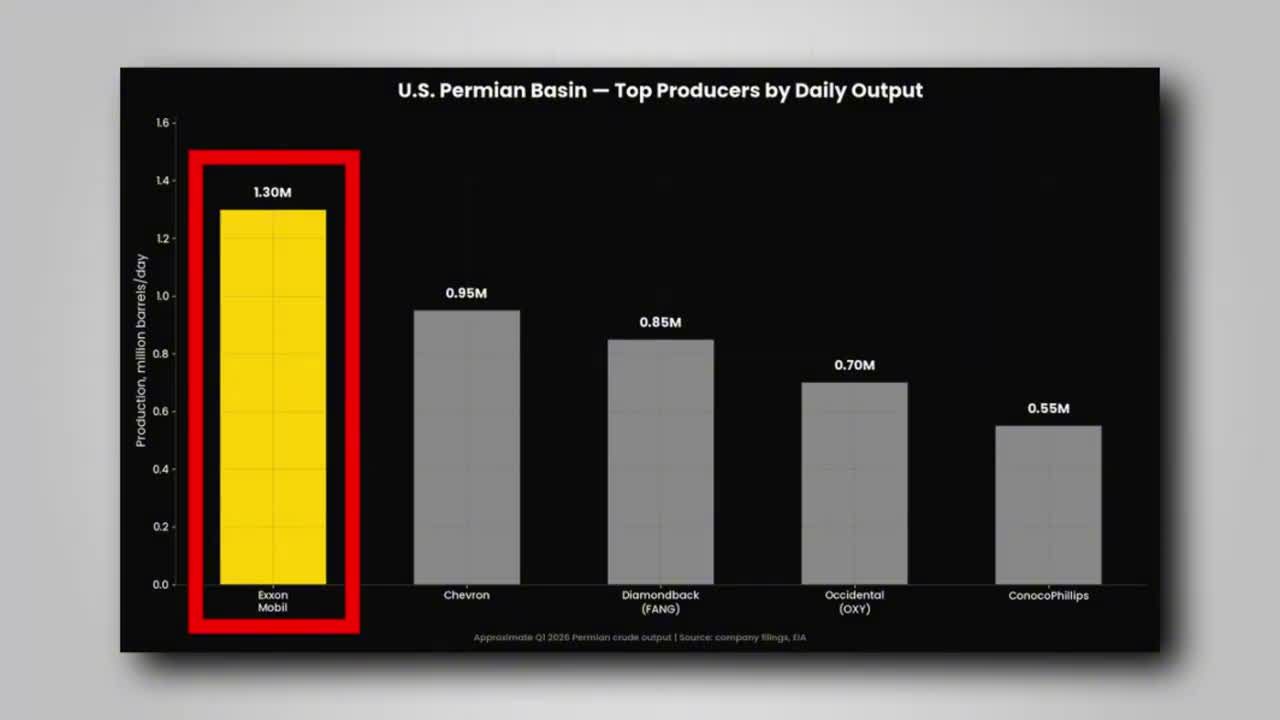
Exxon's crown jewel is the Permian Basin, the most productive oil field in the world. After swallowing Pioneer Natural Resources back in 2024, Exxon became the single largest producer in the Permian, sitting on the lowest cost barrels in the United States.
Combine that Permian dominance with their offshore Guyana operation, now producing more than 600,000 barrels a day at a break-even cost of around $35 a barrel. This is a company that mints cash when crude is at $80. Right now, crude is at $126.
The only real question with Exxon is what they do with this firehose of free cash flow. The buyback gets bigger, the dividend gets bigger, or they start making acquisitions.
Chevron (CVX): The Deep Value Play
Chevron is a different story. Smaller balance sheet, about $9 billion in cash. Their barrels cost a little more to produce on average. Their portfolio is heavier in international and refining versus pure upstream production.
But Chevron is currently the cheapest of the supermajors.
If you want value with a fat dividend as a kicker, Chevron is your target. If you want the bulletproof industry leader, you buy Exxon.
The Energy Calendar Is Loaded
Six drivers Wall Street is not pricing in yet
1. The June 7th OPEC Meeting
The 41st OPEC and non-OPEC ministerial meeting happens on June 7th. OPEC Plus held production flat through the entire first quarter of this year.
The big question on the table: do they keep the spigot tight, or let supply ramp back up? If they hold production flat, Brent crude could get above $140. If they raise production, these companies still print money because their break-evens are below $50 a barrel. Either way, the headline risk skews positive for the names actually pumping the oil.
2. Gulf Coast Hurricane Season
With all the geopolitical focus on Iran and the Strait of Hormuz, the market has completely forgotten about the massive storms that rip through the Gulf every summer.
Hurricane season runs from June through November. A single major storm in the Gulf of Mexico can take roughly 1.5 million barrels a day of offshore production completely offline. It can knock out major refining capacity along the coast and spike retail gasoline prices 20, 30, or even 40 cents a gallon overnight.
The producers do not lose money in a hurricane. In fact, it is just the opposite. The barrels they are already pumping become more valuable because the missing barrels create a tighter market.
3. The Super Independent Consolidation Wave
In February of this year, Devon Energy announced a $21.5 billion all-stock acquisition of Katerra Energy.
Devon is now part of what the industry is calling the "big four super independents": Devon, ConocoPhillips, EOG, and Diamondback Energy. There are exactly four of these massive players left in the US, and every single supermajor is looking at them as very tempting acquisition targets.
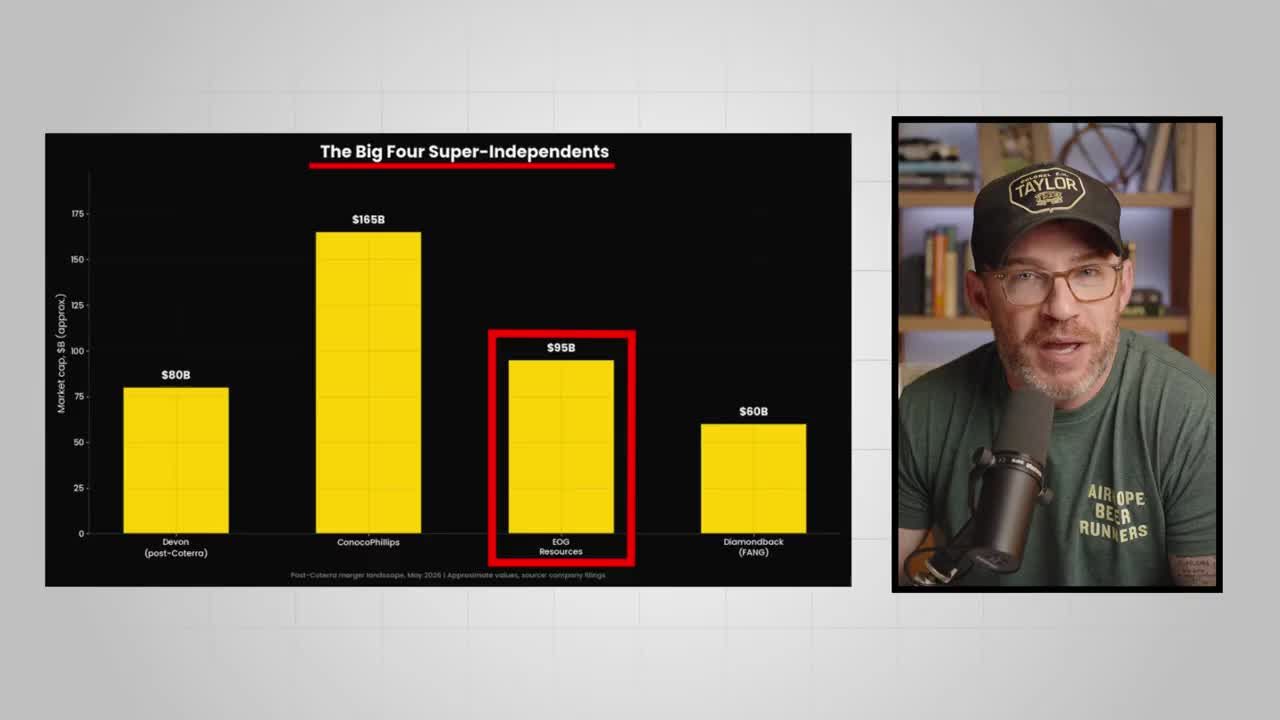
EOG Resources is the specific name to watch. It is the last large-cap independent with a pristine balance sheet and high-quality inventory. They have been pivoting hard into gas for AI, selling natural gas directly to data center operators to bridge the gap until the tech industry figures out nuclear. That gives EOG a lot of strategic value that none of the other independents have.
If Exxon wants to use its firehose of cash to gobble up a smaller fish, EOG is at the top of the list.
4. Small-Cap M&A Targets
Below those big four sits a tier of companies the industry refers to as subscale, operators in the $5 billion to $15 billion range. This group includes names like APA Corp, Magnolia Oil and Gas, Murphy Oil, SM Energy, and Matador Resources.
These are the names most likely to get bought in the next round of consolidation. When they get picked up, they typically catch a 25% to 40% takeout premium. The stock is trading at $10, the acquiring board offers $14 or $15 per share as a tender offer, and the stock gaps up 40 or 50% overnight.
If you want asymmetric upside in this environment, you do not just buy Exxon. You target the small-cap names that will command a massive premium when the buyout goes through.
5. The Summer Crack Spread
Summer driving season kicks off on Memorial Day. When gasoline demand increases, refining margins historically expand by 30% to 50% between April and July. The industry calls this the crack spread. Diesel demand then follows in the back half of the year.
If you want a backdoor energy play that is not directly held hostage to the daily price of crude oil, look to the refiners. Companies like Valero, Phillips 66, and Marathon make money no matter what crude does. They have underperformed the upstream names for two quarters running, and that underperformance will reverse fast if the crack spread expands.
6. The Sector Rotation Is Already Here
Energy is currently the best-performing sector in the S&P 500 this year. Up roughly 25% year-to-date. The broader market? Up 2%.
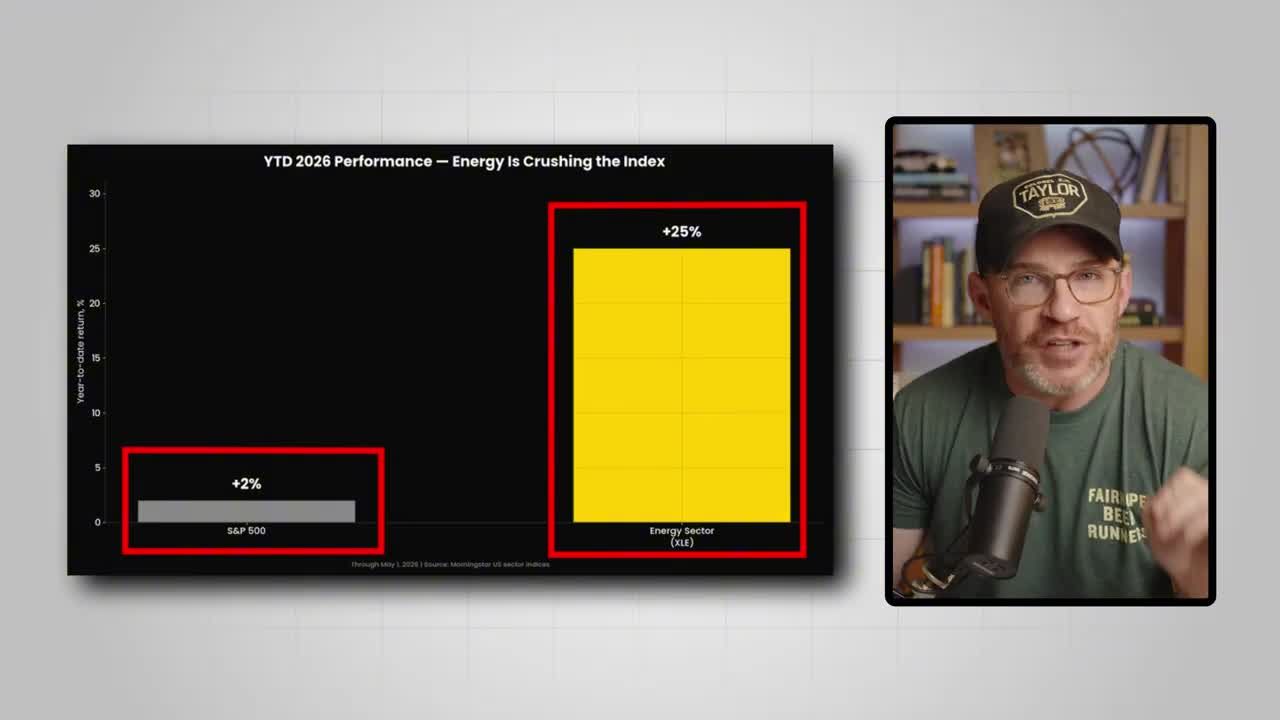
This is what a massive sector rotation looks like. Back in November, I went heavily into metals and energy. 25% of my retirement account allocated to energy, and it is having a good year.
The smart money has been quietly moving into this space for the last six months. The retail crowd is still chasing last year's winners, AI and Nvidia. The financial media is still running negative oil headlines based on temporary oil price hedging losses. They are always late. If you wait until CNBC starts doing daily energy segments, the stocks will be 50% to 80% higher by then.
There is a major energy crunch being felt across the globe, in part fueled by the massive AI expansion requiring energy-hungry data centers. Do not fight the current. Just follow where the money is flowing.
Positioning for the Multi-Year Run
The earnings drop was the headline news, but the recovery quarter is the actual trade. The massive oil price hedging losses created a temporary accounting illusion that punished the best companies in the industry. That multi-quarter setup is now fully loaded.
When oil is sitting at $120, and the two biggest oil companies in America somehow report their worst quarter in years, you have to look under the hood. OPEC is meeting in a few weeks. Hurricane season starts in 30 days. The Permian consolidation wave is rolling forward.
Both Exxon and Chevron made huge moves in the first quarter, and in all likelihood, this is just the start of a multi-year run.
If you do not have exposure to the energy sector yet, the April pullback is a gift. The earnings disaster is priced in, the hedges have cleared, and the physical product is trading at multi-year highs. Position accordingly.
Get an entire year of live weekly mentoring sessions, my newsletter, indicators, bonus reports, tons more. Click the link and I'll see you in the next live session.
Key Takeaways
- Exxon Mobil's Q1 net income dropped 45% and Chevron's fell 36% during the same quarter oil surged 30% to $126 a barrel, a disconnect driven entirely by hedge book losses, not operational weakness.
- Oil price hedging losses created a one-time accounting drag that is already reflected in current stock prices, meaning the earnings disaster is priced in but the recovery from cleared hedges is not.
- With OPEC meeting in weeks, hurricane season starting in 30 days, and Permian consolidation accelerating, multiple near-term catalysts could push energy stocks higher before the market reprices the sector.
- The April pullback in Exxon and Chevron is framed as a buying opportunity precisely because Q2 results will no longer carry the same hedging headwind that distorted Q1 earnings.
- Both Exxon and Chevron made significant acquisition moves in Q1, positioning them for what is described as the early stage of a multi-year energy run.
DISCLAIMER: Traders Agency does not offer financial advice. The information provided is for educational purposes only and should not be considered financial advice. Traders Agency is not responsible for any financial losses or consequences resulting from the use of the information provided. Trading carries inherent risks and may not be suitable for all individuals. You are advised to conduct your own research and seek personalized advice before making any investment decisions, recognizing the potential risks and rewards involved.
See more from Traders Agency on Google
Make us a preferred source and our market analysis will appear more prominently in your Google Search, Top Stories, and AI results.
Add to Preferred Sources