

Hey, Ross here:
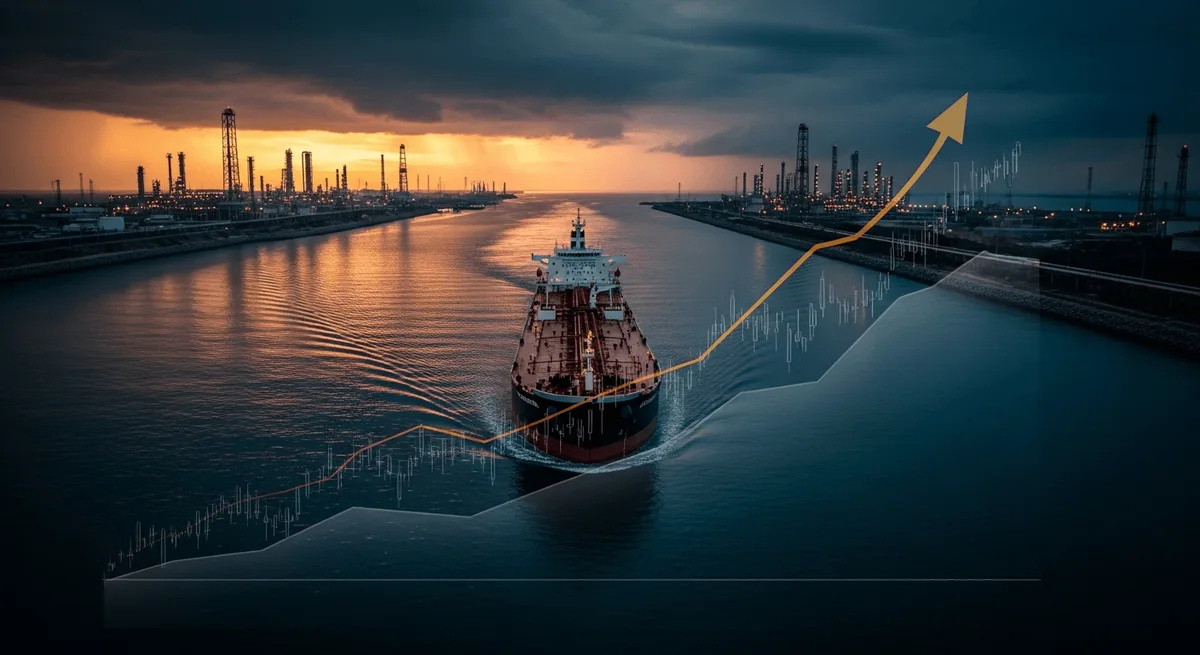
In the next 12 months, oil could double.
Not to $120. Not to $150. I'm talking about a straight shot to $200 per barrel.
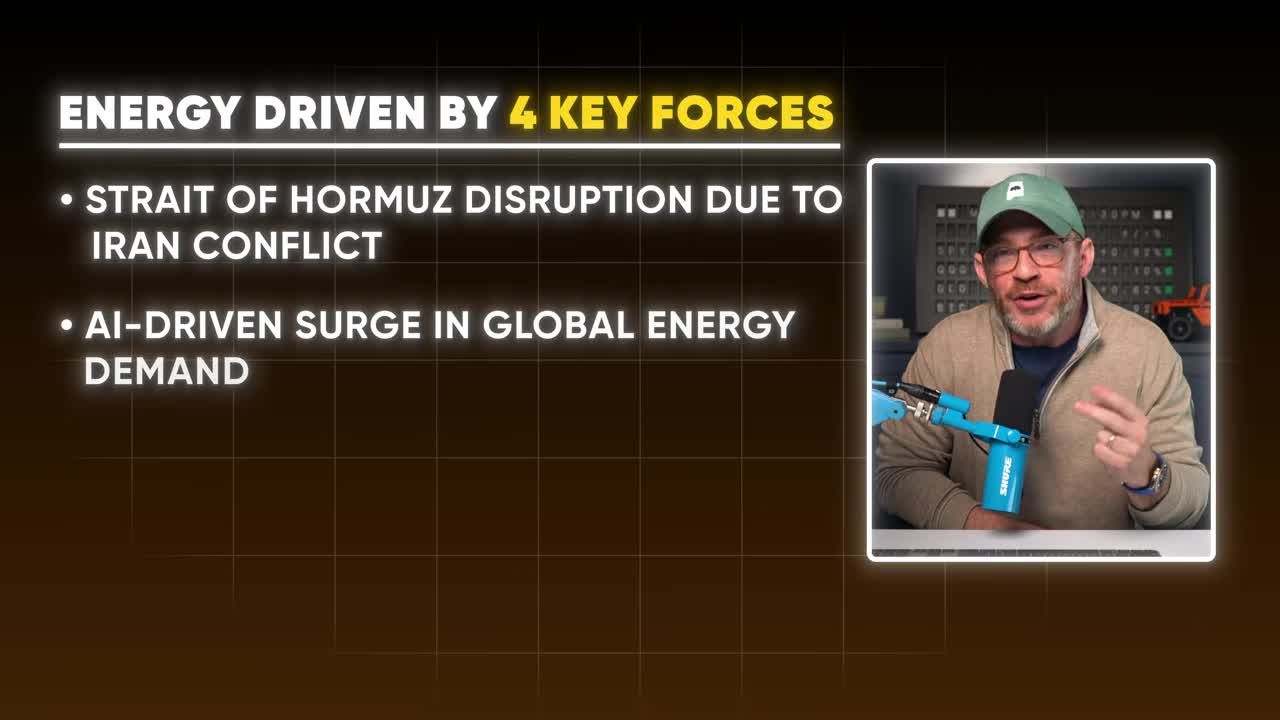
We are in the early stages of a macro shift in energy that is being driven by four key forces. When supply shocks meet a surge in structural demand, oil moves violently and quickly. Energy markets are inherently fragile — even a small disruption can cause significant price spikes. Today, we're seeing multiple disruptions forming at the exact same time.
These are the forces that could drive oil to $200 in 2026.
The Case for a Massive Oil Shock
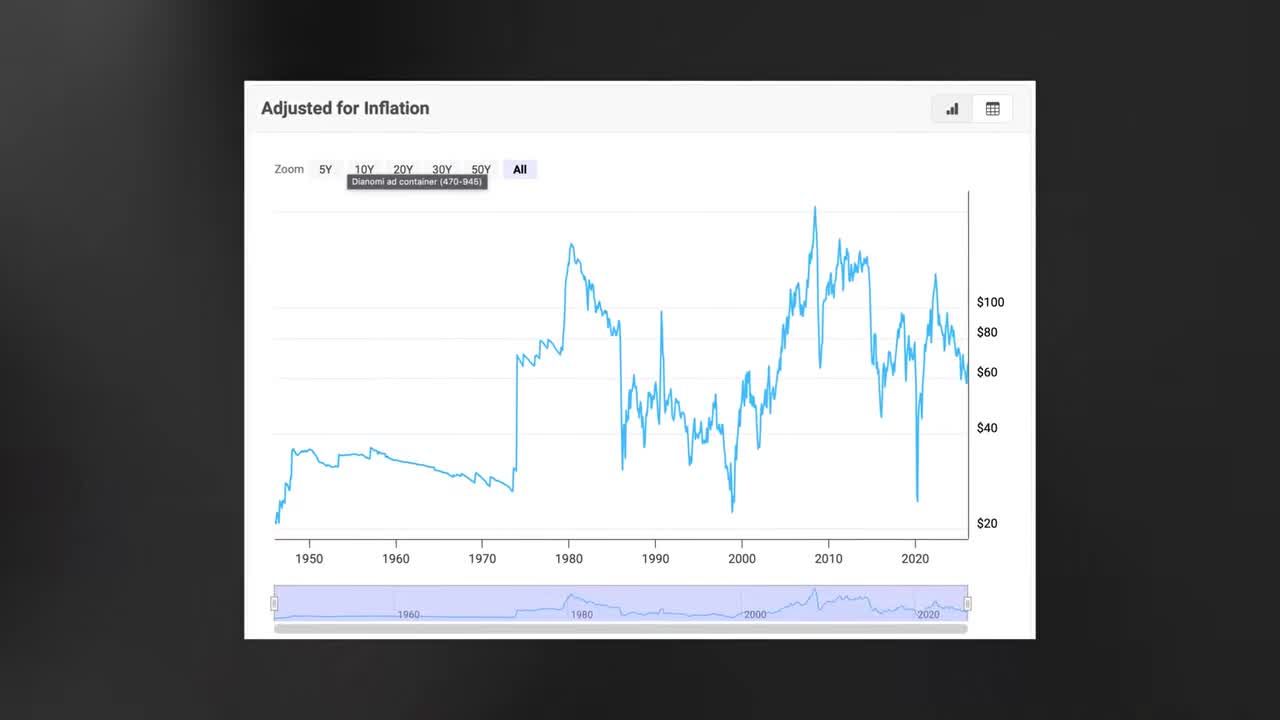
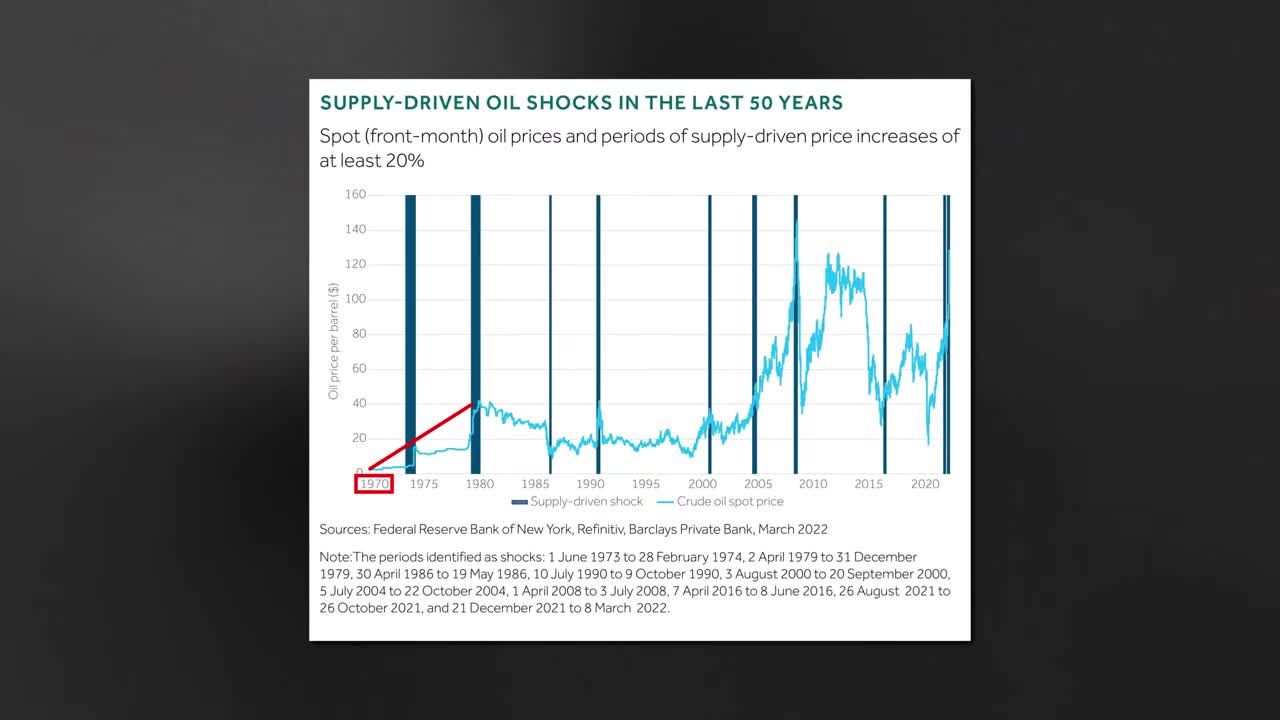
A $200 price target is not crazy. Oil prices have spiked multiple times throughout history.
In the 1970s, oil surged from $5 a barrel to $40 — an 800% increase. Interestingly, this was also caused by unrest in Iran.
In 2008, prices hit $147 a barrel. That was almost 20 years ago. When we adjust for inflation, today's crude oil prices are actually cheap.
The pattern is clear. When supply shocks like what we're experiencing today meet strong demand, oil moves violently and quickly.
The Strait of Hormuz Problem
The biggest and most obvious factor driving this macro shift is the war with Iran.
Iran controls the Strait of Hormuz — the critical choke point through which 20% of global oil flows. All the oil out of the Middle East gets pumped into tankers, ships out of the Persian Gulf, passes through the Strait, and moves out to the Gulf of Oman, the Arabian Sea, and the rest of the world.
All of it has to pass through this narrow passageway along the coast of Iran. And they're not letting that happen. From underwater mines to exploding drones, they're doing anything they can to disrupt global supply.
Most investors thought the Iran situation would end quickly. The U.S. military sank their navy, destroyed their air force, and wiped out their leadership three tiers deep. Iran appointed a new supreme leader, and he was dead before his next meal.
Yet these guys won't stop fighting.
Why? Because they can't stop.
The Mosaic Doctrine
Why Iran's military was built to fight without a head
The Iranian military was designed to fight without a head.
The Mosaic doctrine divides the Islamic Revolutionary Guard Corps into 31 autonomous provincial commands. Each one operates with pre-delegated authority, local weapons stockpiles, and sealed orders that activate upon central command failure.
It was designed to survive exactly what is happening right now.
The Supreme Leader is dead. His successor cannot stand. The defense industrial base is rubble. Yet the 31 commands are still firing. Not because someone is ordering them to fire — because the doctrine orders them to fire until someone orders them to stop.
The someone who would order them to stop is in a hospital bed, issuing written statements through a television anchor.
The Iranian war machine was built to run without an operator. The operator is gone, but the machine is running. The off switch was never installed because the doctrine's designers believed the machine should never be turned off.
This war will last longer than most people think. As long as it does, oil supply will remain constrained and prices will face upward pressure. Oil doesn't need to completely stop flowing for prices to explode. The market only needs to fear that it might.
Get an entire year of live weekly mentoring sessions, my newsletter, indicators, bonus reports, tons more. Click the link and I'll see you in the next live session.
Join my Black Ops Trading ClubThe AI Energy Revolution
Geopolitics is only half the story. At the same time, demand is surging in a way we've never seen before.
AI data centers are consuming enormous energy. Training large models requires massive computing clusters, and global tech companies are sparing no expense.
Google, Anthropic, and OpenAI are building thousands of new data centers. Each one has serious implications for energy prices. Think about what these facilities require to function:
- Electricity
- Natural gas
- Backup diesel generation
- Advanced cooling systems
As we've learned over the last 18 months, artificial intelligence isn't just a software revolution. It is an energy revolution. AI is expected to be the key driver of energy demand for at least the next five years.
Tech companies are signing massive power contracts just to lock up supply. Microsoft is bringing the Three Mile Island nuclear plant back online, securing 100% of its output for AI data centers. Utility companies are scrambling to expand capacity. Energy demand is growing faster than supply can respond.
The Hidden Layer Cost
An aging grid meets unprecedented demand
Meeting this massive new demand is about to become dramatically more expensive. Grid expansion is not cheap.
The United States needs to expand its transmission lines, substations, and gas and oil pipelines. This takes money and it takes time. Even if we wanted to add energy supply tomorrow, the infrastructure isn't there.
And this too is leading to higher costs, which are ultimately being passed down to end consumers.
The Blue-Collar Bottleneck
Even with unlimited capital, we run into the biggest constraint of all: people.
Electricians, pipe fitters, welders, plumbers, linemen — the workforce is aging and it's creating a real crisis.
America is trying to build the most ambitious AI infrastructure in history. Meta alone is spending $50 billion on a single data center campus in Louisiana. That construction requires an enormous amount of electrical work. There are simply not enough electricians to do it.
The problem is so severe that BlackRock just spent $100 million training plumbers and electricians in what they're calling the Future Builders Initiative. The goal: get 50,000 Americans through skilled trade programs over five years — electricians, HVAC techs, iron workers, pipe fitters.
Microsoft and Google have both flagged the electrician shortage as a top constraint on U.S. data center expansion.
For decades, the U.S. pushed every student toward a four-year degree. Trade enrollment fell. Apprenticeship pipelines thinned out. The workforce aged and was never replaced. Now the bill is coming due at the worst possible time.
You cannot build pipelines, refineries, or power plants without skilled labor. And right now, there simply aren't enough workers. Soon, skilled blue-collar workers will be able to name their price. Kids who go to trade school will be out-earning their peers with master's degrees.
Labor is getting much more expensive — and that is directly adding to the rising cost of energy production.
How to Position for $200 Oil
Here is the situation we find ourselves in today:
Geopolitical risk is threatening energy supply, and the Iranian conflict is unlikely to resolve quickly. The AI-driven demand surge is accelerating — I don't see the U.S. or China backing down on their path to global dominance. They will spend until they can't spend anymore, and then they'll start borrowing.
Massive infrastructure expansion is happening with record commodity input prices. A national skilled labor shortage is driving buildout costs even higher.
Each of these forces alone could push oil prices higher. Together, they create the conditions for a historic energy squeeze.
The supply disruption in Iran triggered an immediate move in price. The demand surge is adding sustained pressure. Infrastructure bottlenecks are leading to a slow supply response. The labor shortage is producing higher costs.
That is how you get $200 oil.
The next oil spike won't just affect the pump. It will reshape the entire global economy. Oil markets typically move slowly — until they don't. As these four trends collide in 2026, the next big energy trade is likely already underway.
We don't have to overthink this one. When oil prices go up, the companies pumping the stuff out of the ground make a mountain of money.
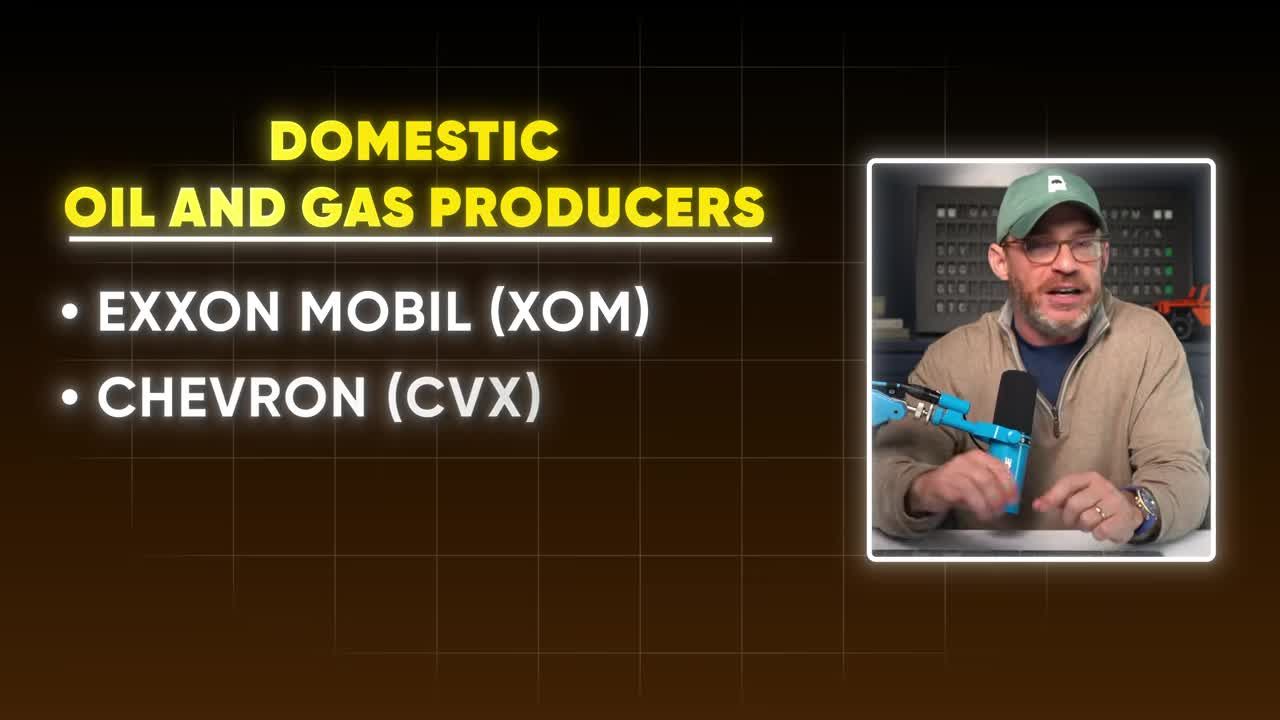
1. Domestic Oil and Gas Producers
The direct play is simple. You want exposure to major domestic oil and gas producers.
I recommended these same stocks two weeks ago, and they continue to push higher:
- Exxon Mobil (XOM)
- Chevron (CVX)
- ConocoPhillips (COP)
- EOG Resources (EOG)
2. Broad Exposure for Retirement
For your longer-term dollars, consider an exchange-traded fund like the Vanguard Energy ETF (VDE). This fund contains the four stocks I just mentioned, along with a hundred others in the oil and gas space.
3. The 12-to-24-Month Horizon
I don't know what's going to happen in the next 5, 10, or 20 years. Anyone who says they do is lying.
As an investor, my job is to reasonably forecast what the next 12 to 24 months are going to look like and get positioned early.
Energy and Metals Are the Play
The theme of this market is crystal clear. Energy and metals.
The geopolitical reality of the Mosaic doctrine guarantees sustained supply pressure. The AI revolution guarantees sustained demand pressure. The aging grid and the severe lack of blue-collar labor guarantee that expanding capacity will be slow and incredibly expensive.
If you want to outperform the market, exposure here is non-negotiable. Get your capital positioned before the collision of these four forces pushes crude to $200 a barrel.
Get an entire year of live weekly mentoring sessions, my newsletter, indicators, bonus reports, tons more. Click the link and I'll see you in the next live session.
DISCLAIMER: Traders Agency does not offer financial advice. The information provided is for educational purposes only and should not be considered financial advice. Traders Agency is not responsible for any financial losses or consequences resulting from the use of the information provided. Trading carries inherent risks and may not be suitable for all individuals. You are advised to conduct your own research and seek personalized advice before making any investment decisions, recognizing the potential risks and rewards involved.
See more from Traders Agency on Google
Make us a preferred source and our market analysis will appear more prominently in your Google Search, Top Stories, and AI results.
Add to Preferred Sources