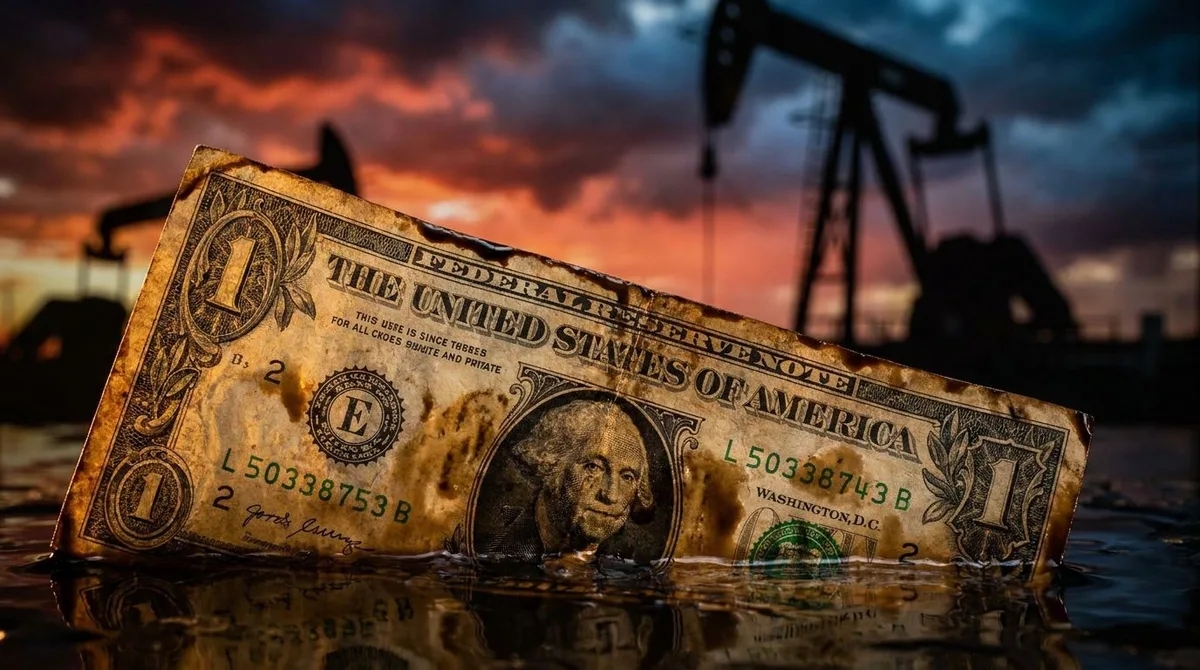
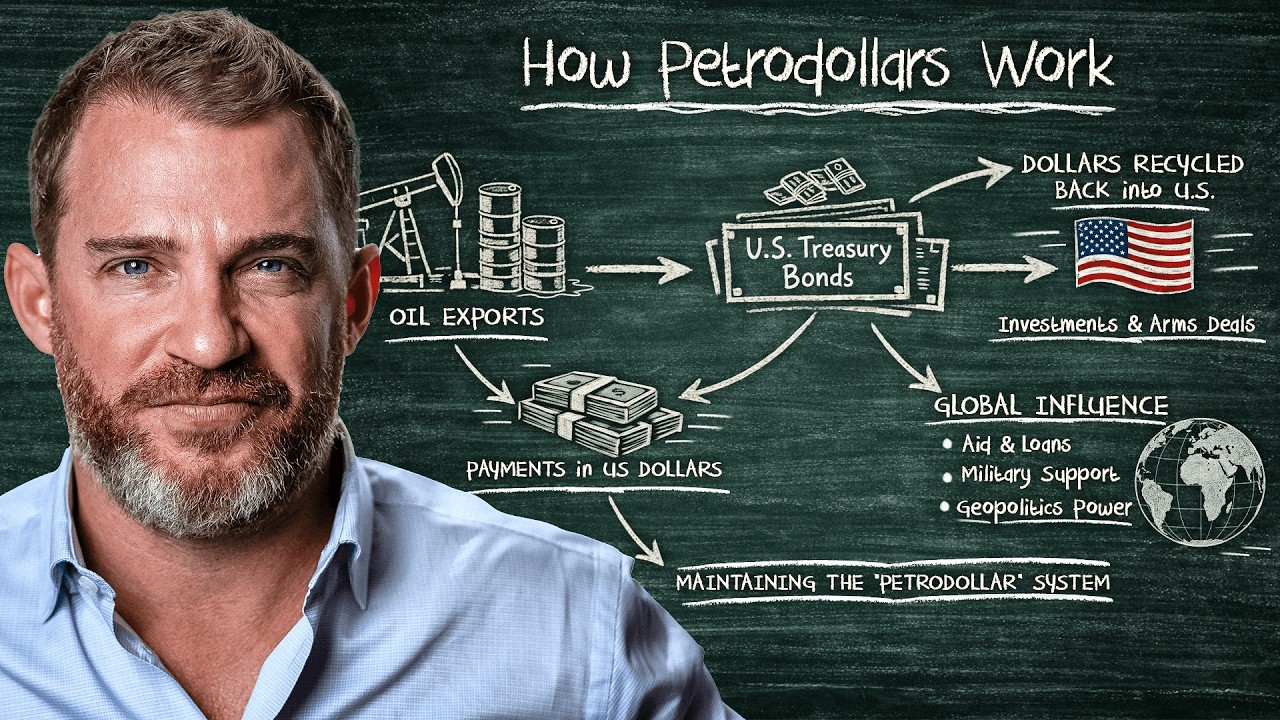
What if I told you there is one system quietly controlling everything? Oil prices. Inflation. Interest rates. Even the strength of your 401(k). Understanding what is petrodollar and how it works is essential to making sense of the forces shaping our world today.
This is not about the stock market. It is not about the Fed. It is not even about the banking system. This is bigger than all of them.
For over 50 years, one exact system has dominated the global economy. Every country on Earth is forced to play along. But right now, that system is starting to crack. And when it does, you are going to see big swings in energy, currency, and asset prices. The kind of moves that create huge opportunities if you know where to look, and serious risk if you do not.
Once you understand this, you are going to start seeing the market very differently.
What Is the Petrodollar System?
Bottom Line: The petrodollar system built since 1973 is the hidden architecture beneath oil prices, inflation, and the dollar's global reserve status. As geopolitical shifts push more countries to settle energy trades outside the dollar, the pressure on US interest rates and asset valuations will grow. Investors who understand this mechanics now, before the transition accelerates, are the ones best positioned to protect wealth and spot the opportunities the disruption creates.
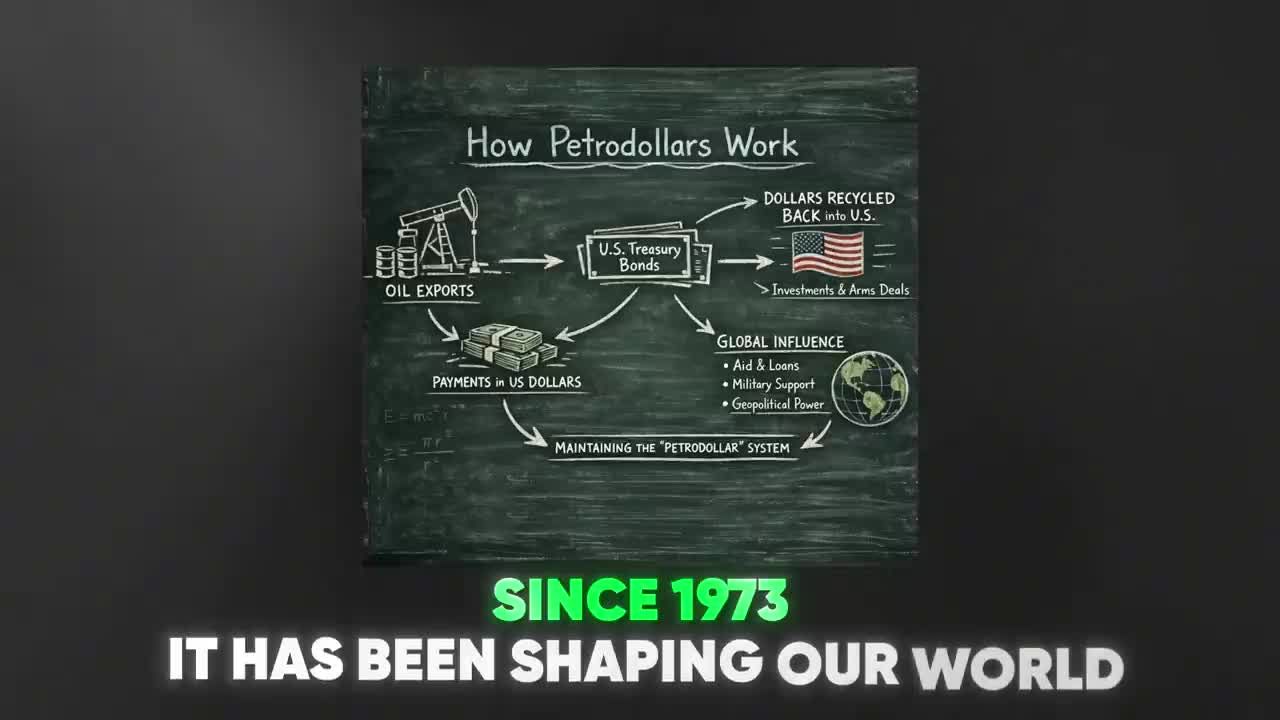
There is a system running the world, controlling everything from the price of energy to government policy. It is the petrodollar, and since 1973 it has been shaping our world.
But to understand the petrodollar, you first need to understand why oil is so important. We use oil to fuel our cars, planes, and ships. We use it to transport people and goods across countries and around the globe. We use it to make plastics. In some countries we use it to produce electricity. We even use it to manufacture chemicals, fertilizers, and many other everyday products.
Our modern economy depends on oil for basically everything.
Because oil is so important, countries are constantly buying and selling it. Some countries produce a lot of oil, like Saudi Arabia. Others use a lot but do not produce much, like Japan. And this creates a massive global oil market.
How Was the Petrodollar System Created?
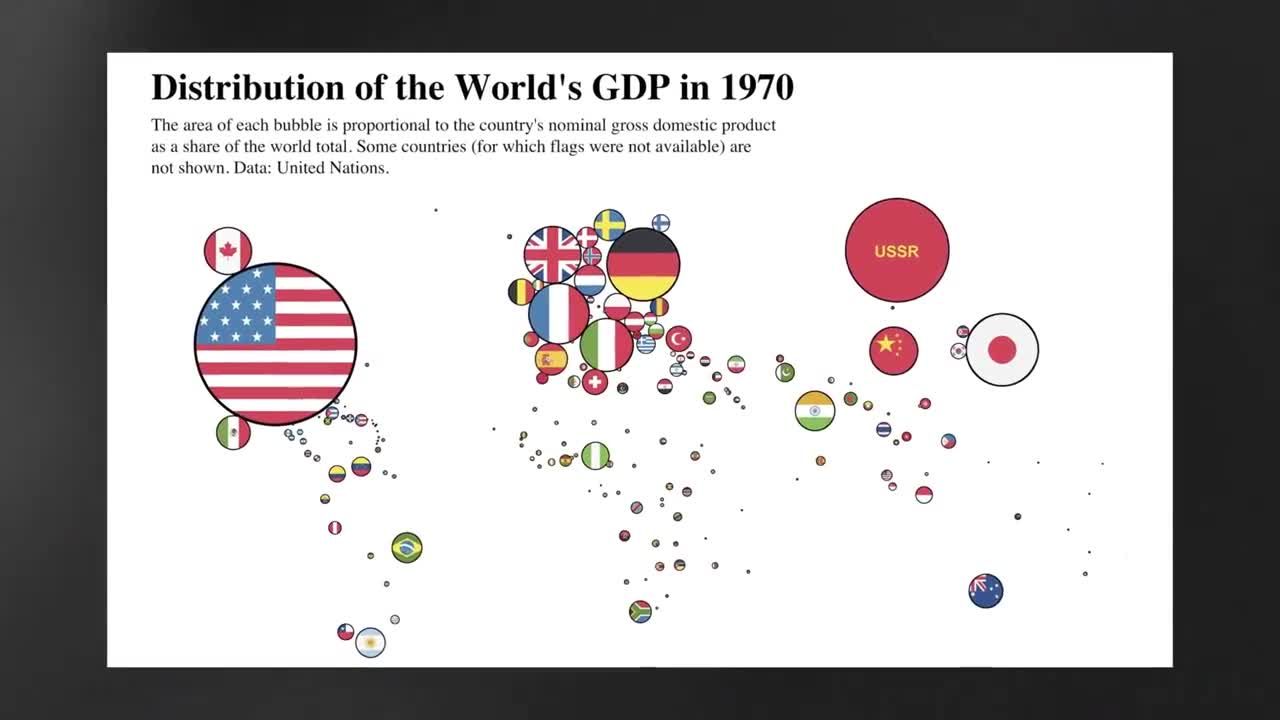
To understand how the US dollar came to control this global market, we need to go back to World War II.
At the end of the war, while most of the world lay in ruins, the US emerged with its economy and manufacturing base intact. This led to countries agreeing to make the US dollar the center of the global financial system. At the Bretton Woods conference of 1944, a new world order was established, backed by the US dollar. The US promised that its dollars could be exchanged for gold, and so other nations tied their currencies to the dollar.
Then in 1971, President Nixon decoupled the US economy from the gold standard.
After the US stopped backing dollars with gold, the dollar stayed dominant because the US economy was so huge and the US government was considered to be stable. Plus, a lot of global transactions were already being done in dollars. The dollar became what is called the world's reserve currency, meaning countries hold large amounts of it in their central banks.
The 1973 Oil Crisis Changed Everything
In 1973, the world experienced the OPEC oil crisis. Arab oil-producing countries stopped selling oil to countries supporting Israel in the Yom Kippur War, and that included the United States. They did this in order to gain political leverage. Oil prices quadrupled, leading to massive shortages and severe inflation in Western economies.
In response, the United States made an agreement with Saudi Arabia, one of the world's largest oil producers. The deal was simple: Saudi Arabia would sell its oil only in US dollars. In return, the US would provide military protection and support.
Since Saudi Arabia was the largest of the oil-producing countries, the others soon had to follow suit. If you wanted to buy oil from most major producers, no matter where you were in the world, you needed US dollars.
That is the petrodollar system.
Why Does Every Country Need to Hold US Dollars?
If every country needs oil, and oil is sold in dollars, then every country needs dollars. The logic is inescapable.
Imagine you are a country like Japan. You do not produce much oil, but you need it to power your economy. To buy that oil, you are locked into a system with three requirements:
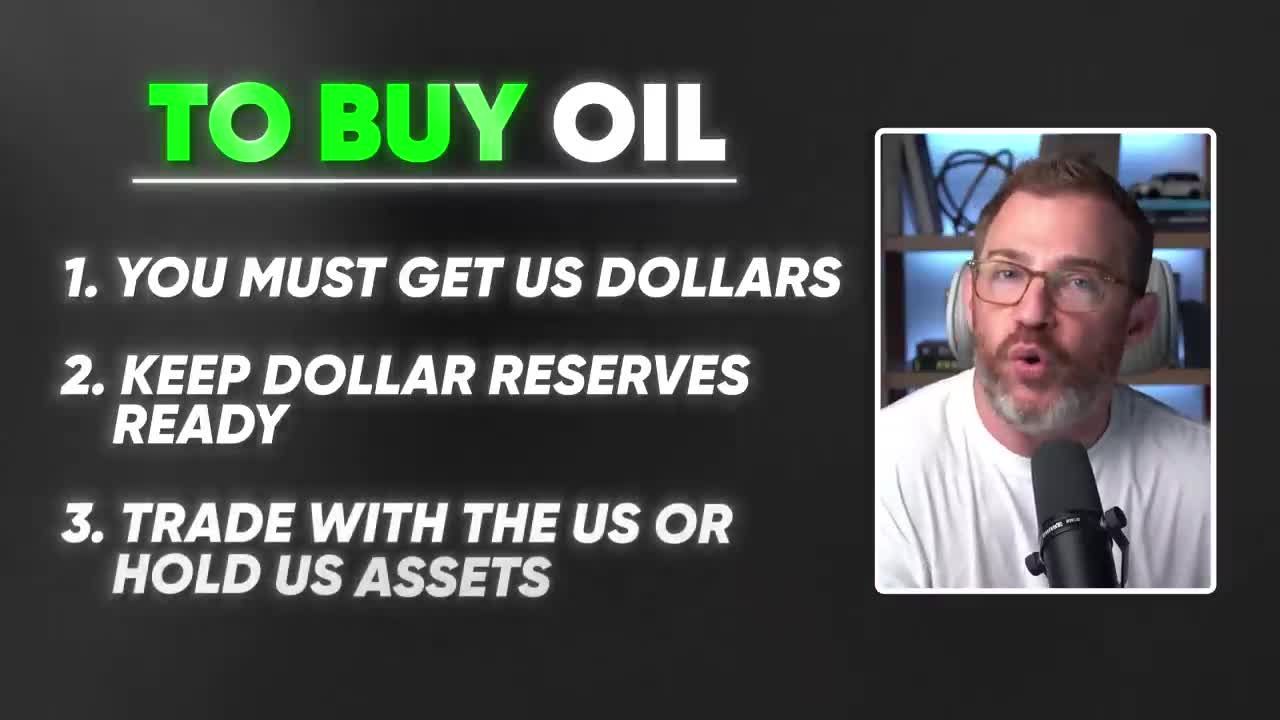
You must first get US dollars. Second, keep dollar reserves ready. And third, trade with the US or hold US assets.
This creates constant global demand for the US dollar. That demand gives the US major advantages. It keeps the dollar strong because everyone needs dollars. It allows the US government to borrow money more easily and at lower interest rates. And it means the US can use financial systems like sanctions to influence other countries, because so many international transactions go through US banks.
The petrodollar helps keep the US and its dollar at the center of the world economy.
The Power of Petrodollar Recycling
What happens to the oil money that these oil-producing countries receive? They do not just store big piles of cash. They invest it.
This is called petrodollar recycling.
Oil countries invest in US government bonds. They buy American companies. They invest in real estate and global markets. The dollars often flow back into the US financial system.
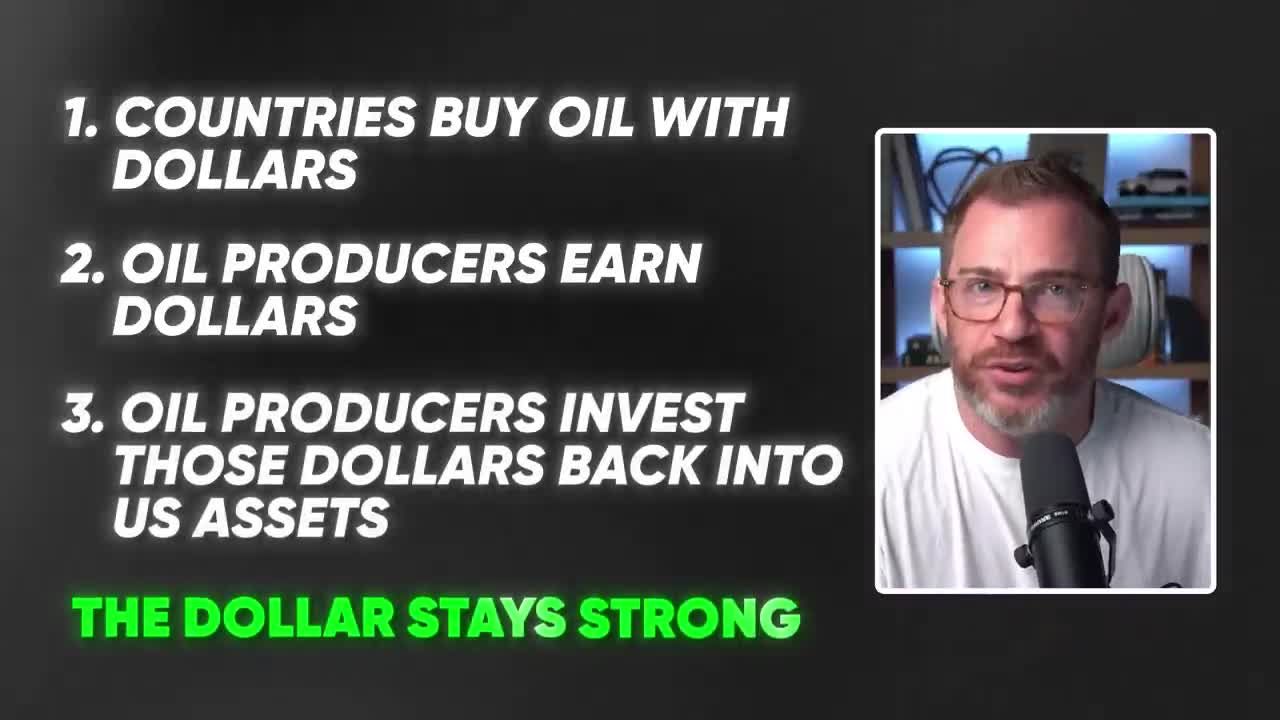
It becomes a loop:
- Countries buy oil with dollars.
- Oil producers earn those dollars.
- Oil producers invest those dollars back into US assets.
All the while, the dollar stays strong.
Get an entire year of live weekly mentoring sessions, my newsletter, indicators, bonus reports, tons more. Click the link and I'll see you in the next live session.
Join my Black Ops Trading ClubIs the Petrodollar System Starting to Break Down?
For decades, this system has kept the US dollar at the center of everything. But now, for the first time in 53 years, cracks are starting to show.
In recent years, some countries like Russia, Venezuela, India, and Pakistan have tried to trade oil in other currencies like the euro or the Chinese yuan. This is one of the goals of the BRICS Trade Alliance, a partnership of countries that aims to reduce global dependence on the dollar.
China and Russia are reducing their dollar use selectively. Russia has increased its oil trade with China in yuan. It has settled some of its transactions in rubles. It has reduced its US Treasury holdings. China now promotes yuan-denominated oil contracts and encourages trade settlements in yuan with its trading partners.
Why the Shift Is Gradual
So why are countries that are hostile to the US, ones that hate us, still trading oil in dollars?
Because moving away from the petrodollar system is not as simple as it sounds. If you suddenly switch currencies, you are not just changing payments. You are disrupting contracts, hedging systems, insurance, and pricing models. The US dollar offers high liquidity, meaning you can move billions without crashing the market. It also has strong legal protections.
Think of it like when Facebook tried to introduce Threads to compete with Twitter. It is not so easy to suddenly get everybody to move platforms when everything is already happening on Twitter.
They reduce dollar use where it is politically necessary, especially under sanctions, while still using it when it is convenient and efficient. It is a gradual shift, not a revolution.
What Is Petrodollar's Role in the Bigger Picture?
China's strategy to destabilize the dollar is not limited to the petrodollar system. It is also using the gold market.
This is why the petrodollar matters more than most people realize. It is not just about oil. It is about control. Control of currency, control of global trade, and ultimately control of the financial system itself.
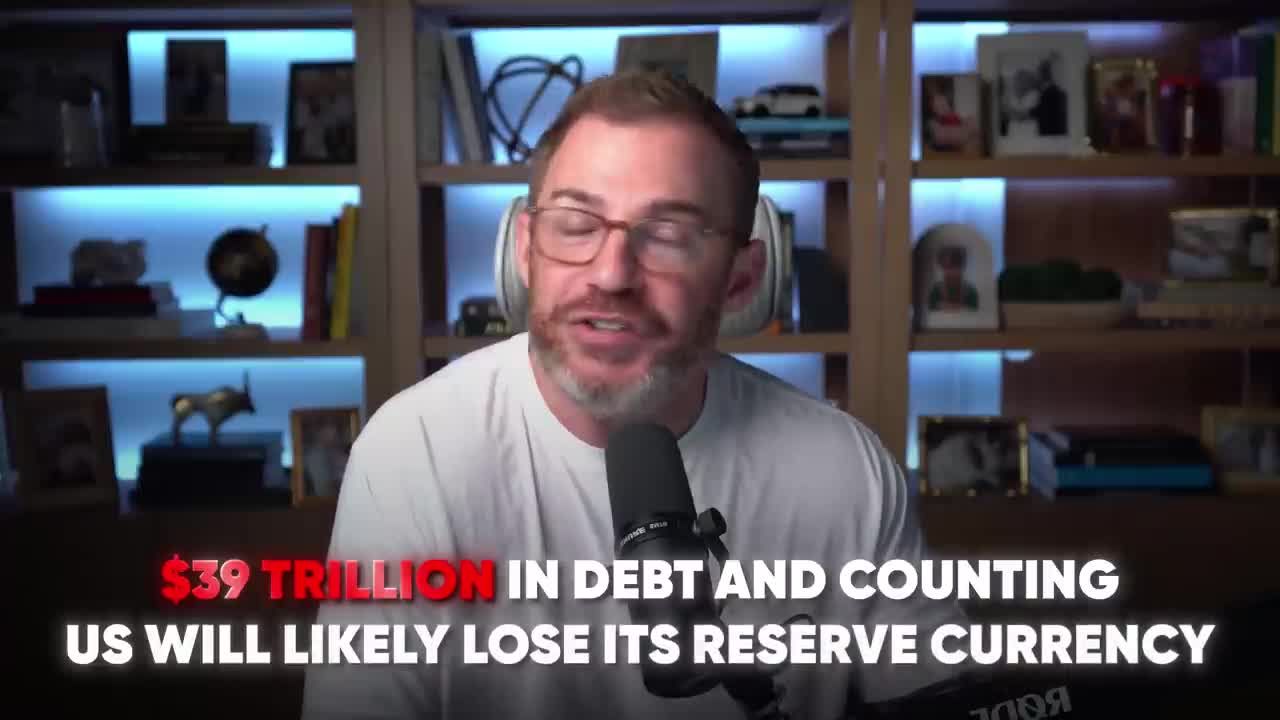
Countries are testing alliances. Alliances are shifting. The United States currently has $39 trillion in debt and counting. Because of this massive debt load and shifting global power, the US will likely lose its reserve currency status in our lifetime.
Is a total petrodollar collapse going to happen tomorrow? No. You do not need to predict exactly when it breaks. You just need to understand what is happening early enough to position yourself on the right side of it.
The System Is Being Tested
The petrodollar system is facing its biggest test in over 50 years.
The system that has kept the US dollar at the center of everything since 1973 is changing. As countries slowly diversify away from the US dollar, the impacts on inflation, interest rates, and asset prices will be significant. Anyone asking what is petrodollar today is asking the right question, because the answer affects every investor's portfolio.
Pay attention to these geopolitical moves. The investors who understand the mechanics of the petrodollar, and the reality of our $39 trillion national debt, will be the ones who protect their wealth and find the best opportunities.
Get an entire year of live weekly mentoring sessions, my newsletter, indicators, bonus reports, tons more. Click the link and I'll see you in the next live session.
Join my Black Ops Trading ClubKey Takeaways
- The petrodollar system has dominated the global economy since 1973, forcing every country to hold US dollars to purchase oil on world markets.
- The US national debt has reached $39 trillion, and the sustainability of dollar dominance is directly tied to how long oil-exporting nations continue recycling petrodollars into US assets.
- Countries are actively diversifying away from the US dollar in energy trade, a shift that carries direct consequences for inflation, interest rates, and asset prices for everyday investors.
- The unwinding of petrodollar dominance creates both serious portfolio risk and significant opportunity, particularly in energy, currency, and hard asset markets.
- Anyone with a 401(k) or investment portfolio is exposed to petrodollar dynamics whether they know it or not, because the system underpins the value of dollar-denominated assets globally.
DISCLAIMER: Traders Agency does not offer financial advice. The information provided is for educational purposes only and should not be considered financial advice. Traders Agency is not responsible for any financial losses or consequences resulting from the use of the information provided. Trading carries inherent risks and may not be suitable for all individuals. You are advised to conduct your own research and seek personalized advice before making any investment decisions, recognizing the potential risks and rewards involved.
See more from Traders Agency on Google
Make us a preferred source and our market analysis will appear more prominently in your Google Search, Top Stories, and AI results.
Add to Preferred Sources