

SpaceX is about to go public. Everybody knows it, and everybody is asking the exact same question: how do I get a piece of this before the IPO? If you're searching for a spacex supplier stock that offers real exposure to the SpaceX ecosystem, this one deserves your attention.
The obvious plays are either inaccessible or nearly fully priced in. There is a completely different angle worth examining. A small company so deeply embedded in SpaceX's infrastructure that without it, Starlink literally does not work.
You can buy it right now for about $3.65 a share.
This is not a speculation play. This is a profitable, cash-generating business with a defensible monopoly position. This one is worth your attention.
What Is Starlink's Data Bottleneck and Why Does It Matter?
Why one radio frequency controls everything
Starlink has over 7,000 satellites in orbit right now. More go up every single week. Millions of subscribers around the globe are getting high-speed internet beamed down from space.
But all that data in space is completely worthless if you cannot get it down to Earth fast enough.
That is the bottleneck.
The ground gateway, the massive dish on the ground that talks directly to satellites, has to punch enormous amounts of data through the atmosphere, through clouds, through weather. To do that, you need a very specific radio frequency called E-band.
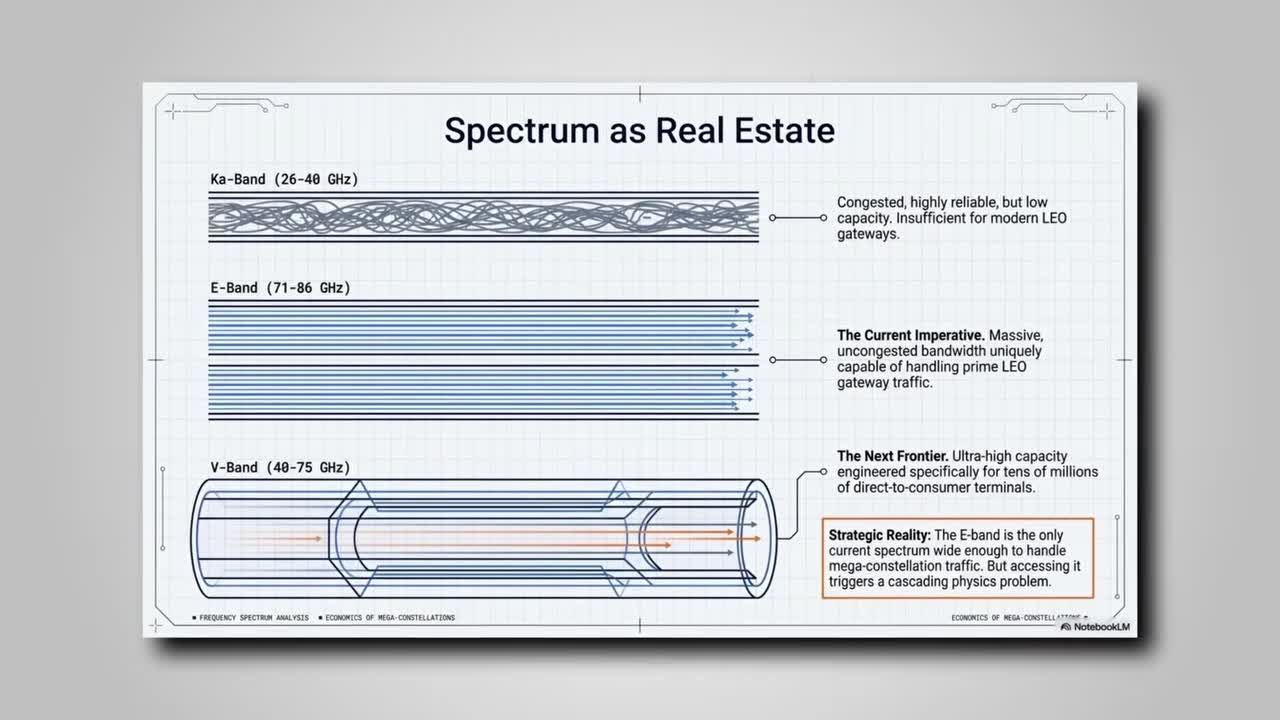
E-band is the only frequency with enough spectrum and enough bandwidth to handle the sheer volume of data that a mega constellation like Starlink generates.
There is no substitute. There is no workaround.
The Physics Nightmare
Why GaN chips melt themselves at E-band frequencies
E-band signals are incredibly susceptible to weather and atmospheric interference. To punch the signal through, you need extreme power. Brute force power.
Old semiconductor technology, specifically gallium arsenide, simply cannot generate enough. You need newer, more powerful material: gallium nitride, or GaN.
Here is where physics turns into a nightmare for engineers.
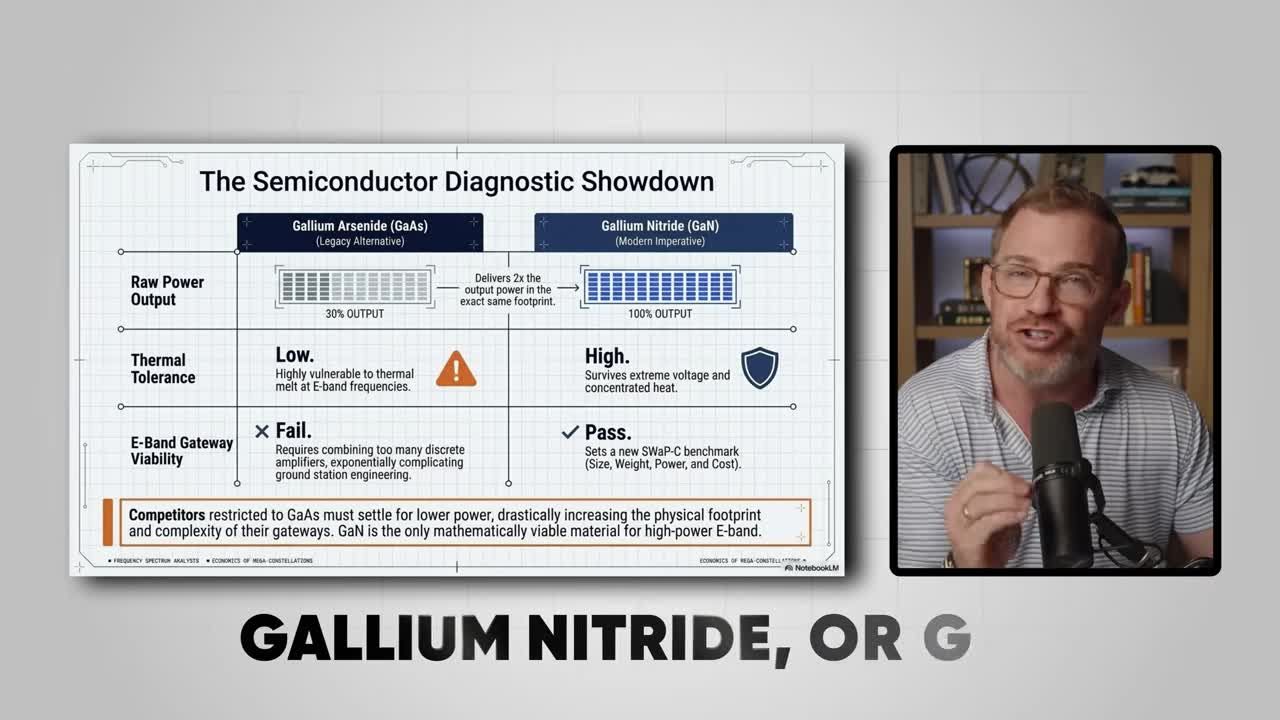
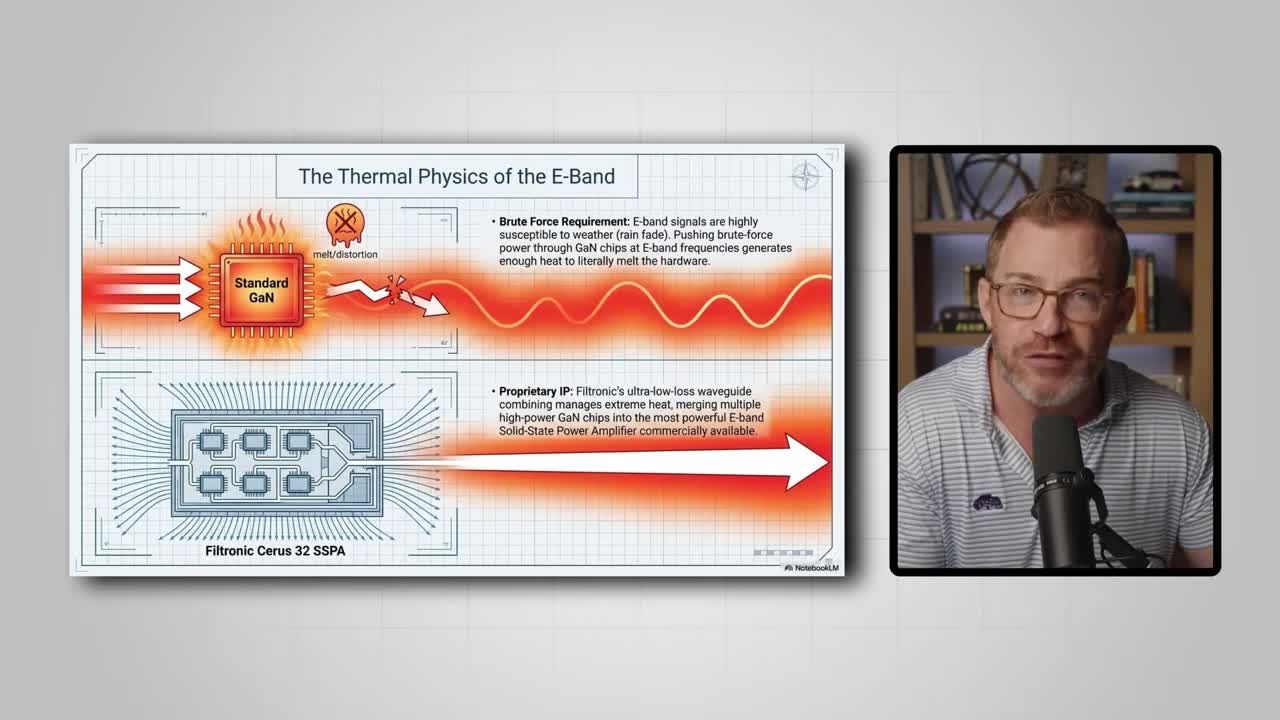
When you push that much power through GaN microchips at E-band frequencies, they generate enough heat to literally melt themselves. This is one of the hardest engineering problems in the entire satellite industry.
To make this work, you have to take multiple high-power GaN chips, combine their output into one massive beam, and package it in a way that manages extreme heat without degrading the signal. All at commercial scale. All at competitive prices.
For years, nobody could solve it.
Then a small British company figured it out.
What Is Filtronic and Why Is It Critical to SpaceX?
The company SpaceX cannot function without
The company is called Filtronic. Based in Sedgefield, England, they design and manufacture ultra-high frequency radio components, specifically in the millimeter wave frequency range. Satellite constellations, defense systems, and 5G infrastructure all depend on these components.
Their flagship product is the Cirrus 32, currently the most powerful E-band solid-state power amplifier commercially available anywhere in the world. It solves the melting problem. They hold the proprietary IP. They have the manufacturing skills.
And right now, SpaceX occupies every single production line they have.
Amazon's Terrible Options
Why competitors are trapped
Amazon is building its own LEO satellite constellation called Kuiper, a direct Starlink competitor. Amazon needs the exact same E-band ground gateway technology to make its network competitive.
Their options are terrible.
They can use older, weaker gallium arsenide amplifiers, but that puts them at a severe disadvantage against Starlink's signal strength. Or they can stay in Ka-band, which is congested and limited.
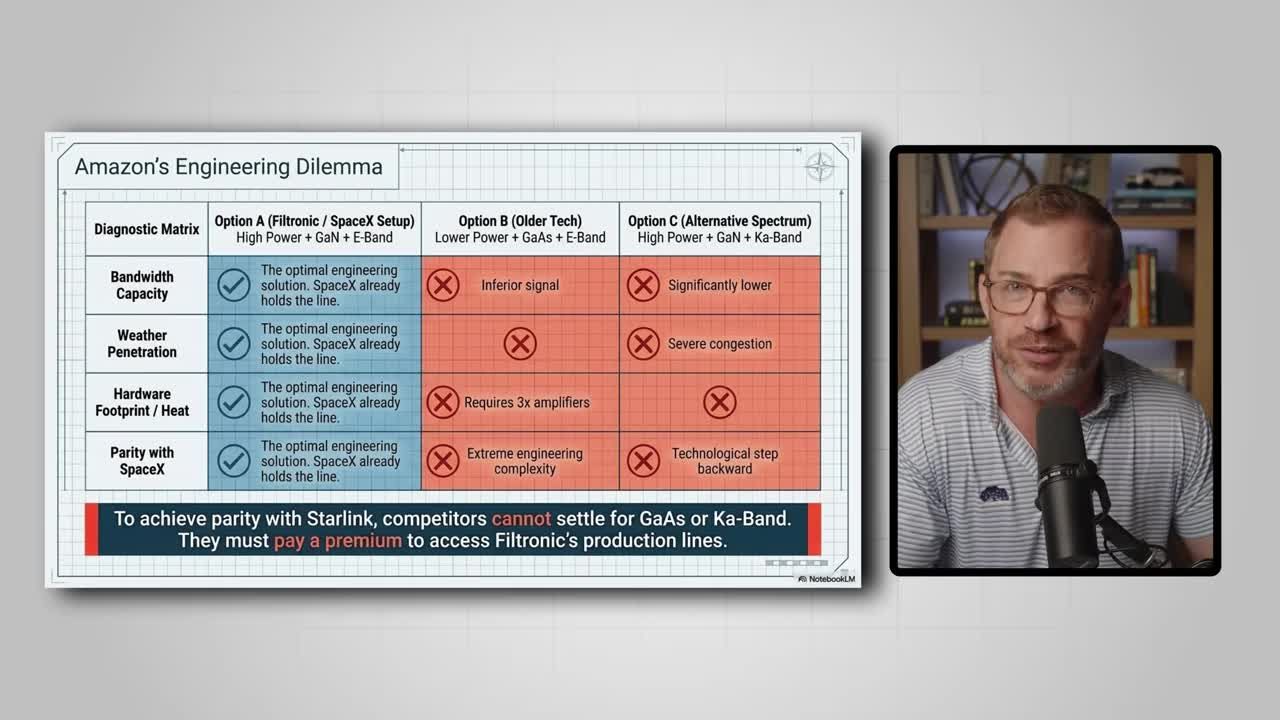
Neither option is good. The most likely outcome is that Amazon pays whatever Filtronic charges to get access to a production line.
Analysts have noted that Filtronic recently announced an $8 million contract with an undisclosed US company. That contract could be exactly this scenario: a development deal with Amazon, AST SpaceMobile, or some other key player.
But that $8 million is just the qualifying round. The production contracts are what really move the needle.
Get an entire year of live weekly mentoring sessions, my newsletter, indicators, bonus reports, tons more. Click the link and I'll see you in the next live session.
Join my Black Ops Trading ClubWhy Did SpaceX Take an Equity Stake in a Supplier?
Structural alignment that changes everything
SpaceX didn't just become Filtronic's biggest customer. Elon, as always, is being strategic.
There is a formal equity warrant agreement built directly into the deal. SpaceX has been granted warrants, essentially options to buy shares in Filtronic, tied to commercial milestones. As SpaceX places orders and Filtronic delivers product, SpaceX can acquire up to 15% of Filtronic's total shares.
SpaceX now has a massive financial incentive for Filtronic to both succeed and increase in value. They are structurally aligned.
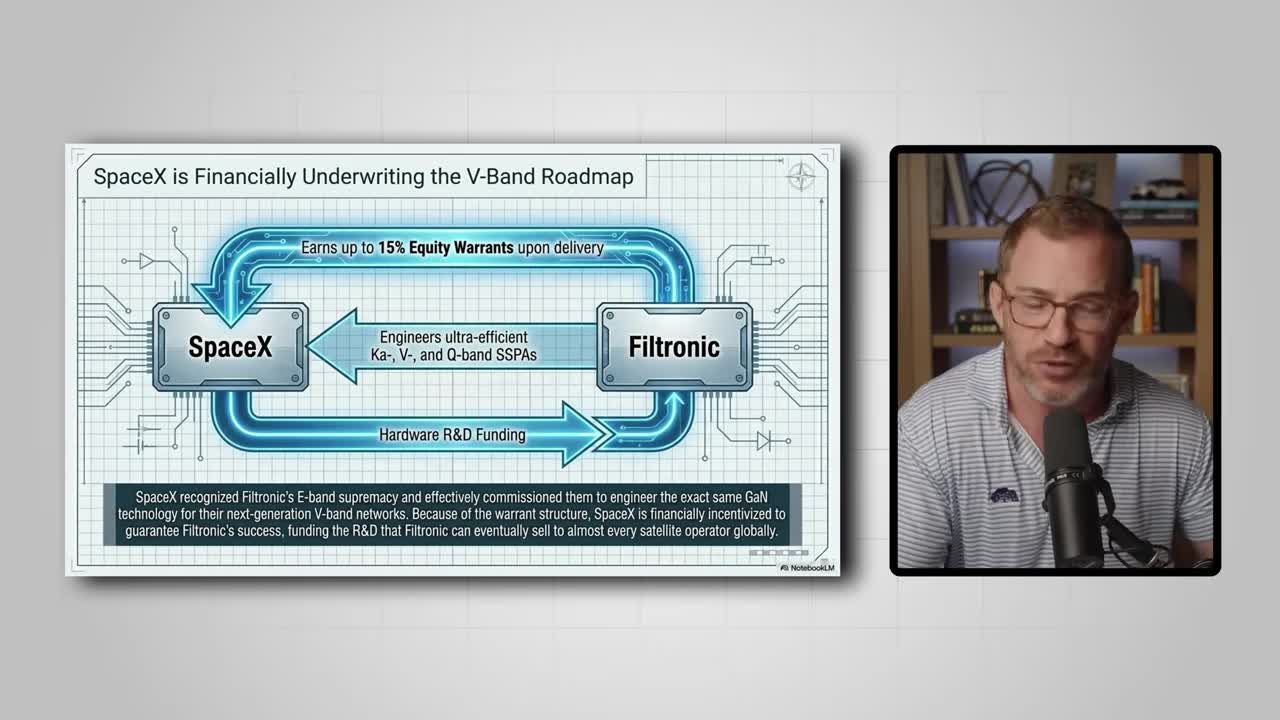
The original deal was strictly for E-band. But SpaceX came back and effectively said they want Filtronic to take this same GaN technology and engineer it for other frequencies: high band, V-band, and Q-band. Frequencies they plan to use in next-generation networks.
SpaceX is actively funding Filtronic's R&D.
SpaceX already has FCC approval to launch thousands of next-generation satellites using V-band technology. This is the frequency that will eventually power true multi-gigabit speeds directly to consumer dishes, houses, RVs, and airplanes.
Filtronic is positioned to ride both waves. This is what makes it such a compelling spacex supplier stock for investors looking beyond the obvious plays.
The Financial Case for This SpaceX Supplier Stock
This is not a story stock
This is a profitable, cash-generating business backed by hard financial growth. In fiscal 2025, Filtronic posted massive numbers:
- Revenue grew 121%, jumping from £25 million to £56 million
- Adjusted EBITDA grew 247%
- Operating profit surged by 272%
- Return on equity hit 31.6%
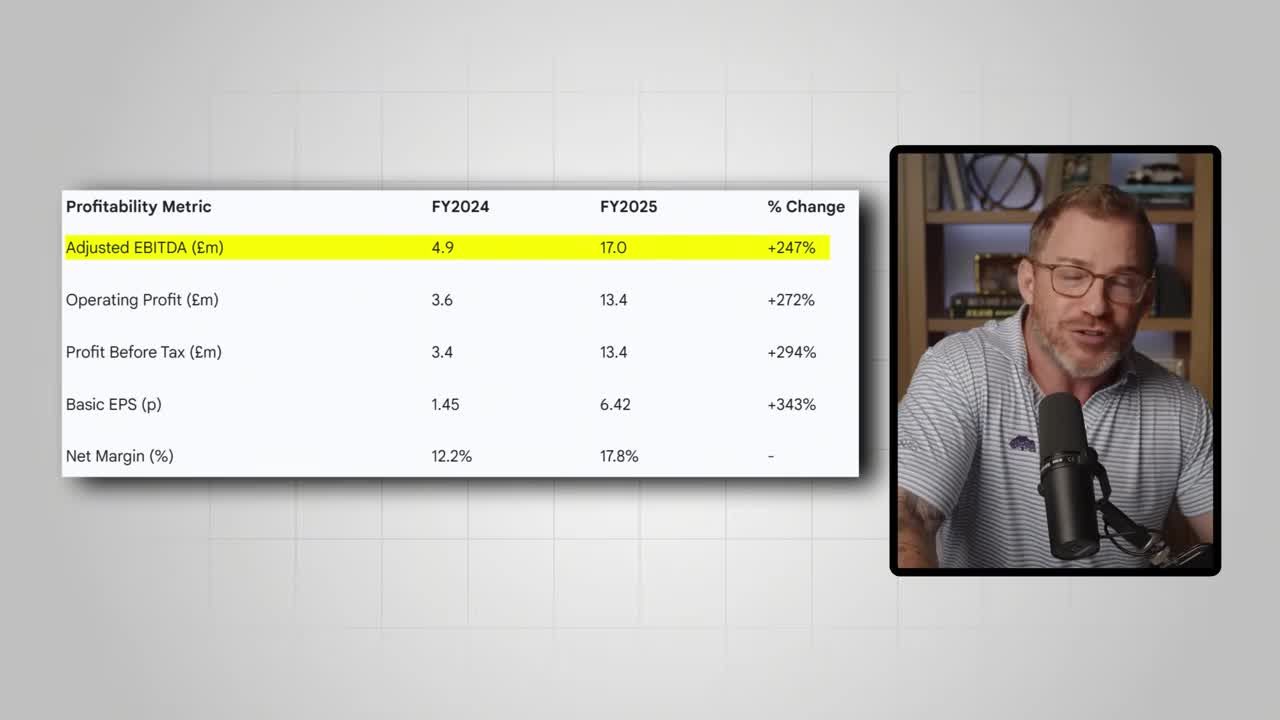
The company is completely debt-free. Zero debt on the balance sheet, with under 14.5 million British pounds in cash.
Even better: 90% of the revenue Filtronic expects to earn this year is already locked in through signed contracts and confirmed orders sitting on their order book.
In August 2025, they announced their largest single order ever. A roughly £47.3 million contract (approximately $60 to $65 million US) for next-generation GaN E-band technology. That single contract delivers material revenues through 2027 and even 2028.
The Risks
Customer Concentration
The big risk is obvious. SpaceX makes up the dominant portion of Filtronic's forward revenue. If SpaceX changes its architecture, decides to bring manufacturing in-house, or reduces order volume, the stock gets murdered. You cannot ignore that reality.
Execution Risk
The company is scaling fast to keep up with growing demand. That rapid growth is going to put pressure on manufacturing and quality control. There is real execution risk tied to scaling a physical manufacturing footprint.
These are manageable risks. The equity warrant structure with SpaceX, the debt-free balance sheet, and the 90% order book visibility provide decent downside protection. But you should always know exactly what you own.
How to Buy This SpaceX Supplier Stock
One major detail on liquidity
The main stock trades on the London Stock Exchange under the ticker symbol FTC. It trades for roughly £2.75 per share and sees roughly $900 million in daily trading volume. Plenty of liquidity.
If you are in the US and cannot easily buy European stocks, it also trades over the counter under the ticker symbol FLTCF at roughly $4 per share. The OTC version, however, sees just a fraction of that trading volume.
If you are trading decent size, buy FTC on the London Exchange, not FLTCF over the counter. Interactive Brokers, Fidelity, and Schwab all offer international trading. Check your platform for access.
The Bottom Line
SpaceX is going public. Every investor in America is trying to figure out how to get exposure. The obvious plays, your SoftBank, pre-IPO funds, private equity, are either inaccessible to retail investors or nearly fully priced in.
Filtronic offers a completely different angle.
It is the company SpaceX cannot operate without. It is the company SpaceX has taken a direct equity stake in. It is the company solving one of the hardest engineering problems in the entire satellite industry, doing it profitably, with zero debt, at triple-digit growth rates.
Right now, American investors can buy this spacex supplier stock for around $3.65 a share over the counter under the ticker symbol FLTCF.
That alone should tell you something.
Get an entire year of live weekly mentoring sessions, my newsletter, indicators, bonus reports, tons more. Click the link and I'll see you in the next live session.
Key Takeaways
- Filtronic (OTC: FLTCF) trades at roughly $3.65 per share and supplies the E-band radio frequency components that SpaceX's Starlink ground gateways require to move satellite data to Earth at scale.
- E-band is currently the only spectrum wide enough to handle mega-constellation traffic volumes, giving Filtronic a defensible monopoly position in a critical and hard-to-replicate niche.
- SpaceX has taken a direct equity stake in Filtronic, an unusually strong signal of supplier dependency that goes well beyond a standard purchase order relationship.
- Filtronic carries zero debt and is generating cash at triple-digit growth rates, making it a profitable business rather than a speculative pre-revenue bet.
- For investors seeking SpaceX exposure ahead of a potential IPO, Filtronic represents a liquid, accessible entry point that most retail investors have overlooked entirely.
DISCLAIMER: Traders Agency does not offer financial advice. The information provided is for educational purposes only and should not be considered financial advice. Traders Agency is not responsible for any financial losses or consequences resulting from the use of the information provided. Trading carries inherent risks and may not be suitable for all individuals. You are advised to conduct your own research and seek personalized advice before making any investment decisions, recognizing the potential risks and rewards involved.
See more from Traders Agency on Google
Make us a preferred source and our market analysis will appear more prominently in your Google Search, Top Stories, and AI results.
Add to Preferred Sources