
You've probably seen gold prices making headlines during market pullbacks or periods of high inflation. When traditional stock markets drop, many traders look for alternative assets to protect their capital. In this guide, we'll walk you through exactly how gold ETFs work, how to compare GLD vs IAU vs SGOL, how to handle the unique tax rules, and how to execute your first trade with a structured, risk-defined approach.
What Is a Gold ETF?
A gold exchange-traded fund is a financial product that tracks the price of gold, allowing you to buy and sell shares on a standard stock exchange. These funds give you a simple way to gain exposure to gold prices without needing to buy, store, or insure physical metal yourself.
Key Concept: Gold ETFs are physically backed funds. The fund managers hold actual gold bars in a vault to match the value of shares issued. You get gold price exposure through a regular brokerage account, just like buying shares of any stock.
Can I Trade Gold ETFs?
Yes. You can trade gold ETFs exactly like regular stocks through any standard brokerage account. These funds trade under specific ticker symbols during normal market hours, and they provide immediate liquidity and clear pricing for retail traders.
Many beginners ask us if they need a special commodities account to get started. You do not. Whether you want to hold gold in a retirement account or use a fast-paced day trading broker, the process is identical to buying shares of Apple or Microsoft. You simply enter the ticker symbol, choose your share quantity, and click buy.
The SPDR Gold Shares ETF (GLD) is the largest and most popular option on the market. However, it's not the only choice available to you. We teach our members to look closely at the specific fund characteristics before allocating capital.
GLD vs IAU vs SGOL: Which Gold ETF Should You Trade?
When comparing GLD vs IAU vs SGOL, your choice depends entirely on your trading style and holding period. GLD offers the highest liquidity for active traders. IAU provides a lower expense ratio for longer holds. SGOL offers the lowest fees while storing its physical gold in secure Swiss vaults.
Key Concept: An expense ratio is the annual fee the fund charges to manage the gold and cover storage costs. This fee is automatically deducted from the fund's asset value. For a short-term trade, a slightly higher expense ratio won't impact your bottom line. For a multi-year investment, high fees will slowly drain your returns.
Here's how the three major funds compare:
| Fund | Expense Ratio | Best For | Our Take |
|---|---|---|---|
| GLD (SPDR Gold Shares) | 0.40% | Short-term swing trades and options strategies | High daily volume, tight bid-ask spreads. Our top pick for active trading. |
| IAU (iShares Gold Trust) | 0.25% | Standard portfolio diversification | Excellent liquidity at a significantly lower cost than GLD. |
| SGOL (abrdn Physical Gold Shares ETF) | 0.17% | Long-term buy-and-hold investors | Most cost-effective option with physical gold stored in Swiss vaults. |
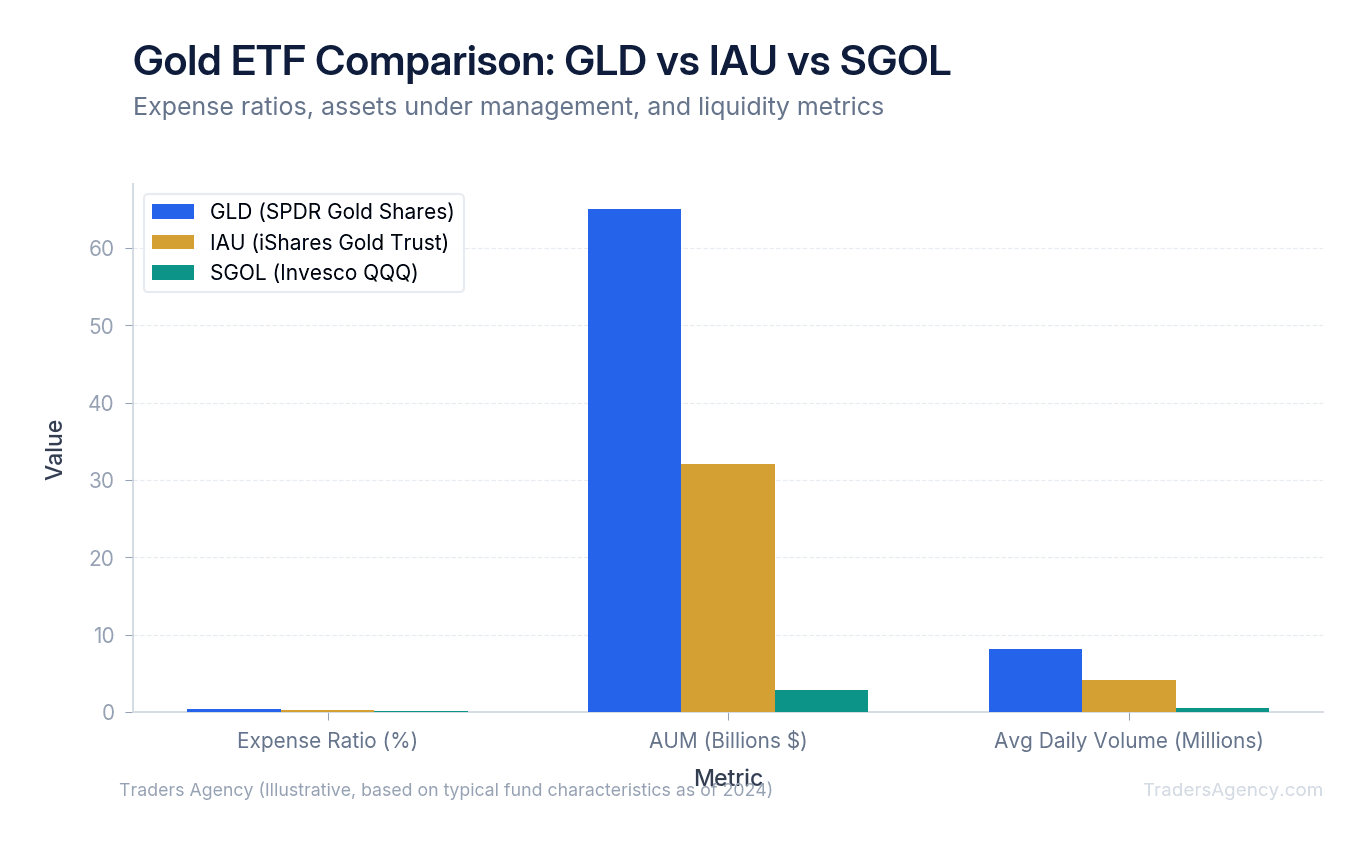
All three of these funds are physically backed, meaning the fund managers actually hold physical gold bars in a vault to match the value of the shares issued. The difference comes down to cost, liquidity, and your intended holding period.
Is GLD Taxed at 28%?
This is one of the most common questions we get, and the answer is yes: the IRS classifies physically backed gold ETFs as collectibles. That means long-term capital gains on funds like GLD are taxed at a maximum collectibles rate of 28%, rather than the standard 15% or 20% long-term capital gains rate applied to regular stocks.
This tax rule applies if you hold the ETF for more than one year. The collectibles classification covers any asset directly backed by physical precious metals. Short-term gains (positions held for one year or less) are still taxed at your ordinary income tax rate.
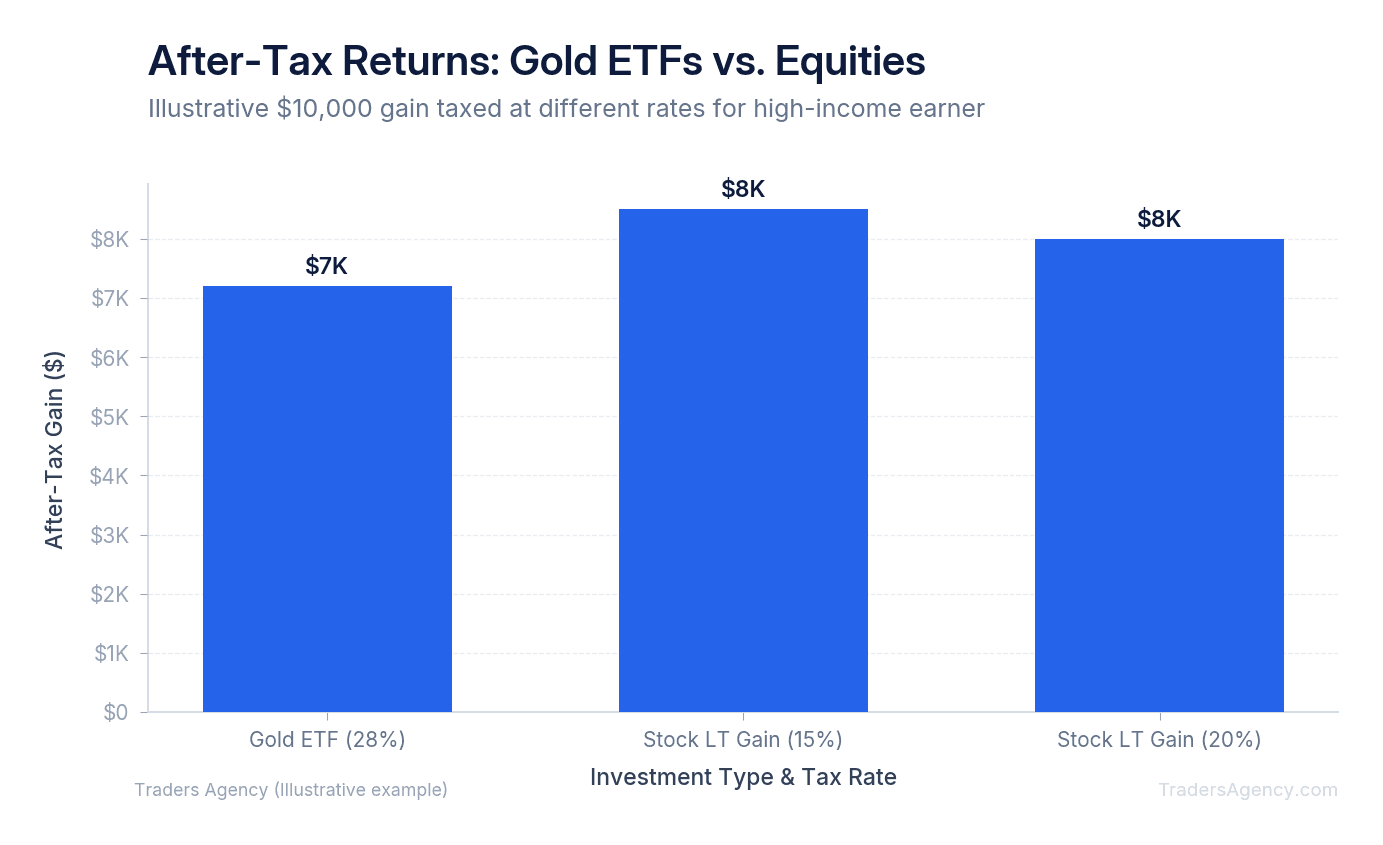
Here's a concrete example. Assume you buy $10,000 worth of GLD and sell it two years later for $15,000. You have a $5,000 long-term capital gain.
| Tax Scenario | Tax Rate | Tax Owed on $5,000 Gain |
|---|---|---|
| Gold ETF (Collectibles Rate) | 28% | $1,400 |
| Regular Stock (Long-Term Rate) | 15% | $750 |
| Difference | $650 more in taxes |
Watch Out: The 28% collectibles tax rate can significantly eat into your long-term gold ETF returns. We recommend consulting a tax professional to see how this rule impacts your personal tax bracket. Holding gold ETFs inside a tax-advantaged account (like an IRA) can help you avoid this issue entirely.
What Drives Gold Prices?
Gold prices are primarily driven by three forces: the strength of the US dollar, real interest rates, and overall market volatility. Because gold is priced in dollars globally, a weaker dollar typically pushes gold prices higher. A strong dollar makes gold more expensive for foreign buyers, driving the price down.
Real interest rates also play a major role. Gold doesn't pay a dividend or yield interest. When savings accounts and government bonds pay high interest rates, investors often prefer those guaranteed returns over holding gold. When interest rates drop below the rate of inflation, gold becomes highly attractive. You can track current Federal Reserve rate decisions and economic data at the Federal Reserve's official site.
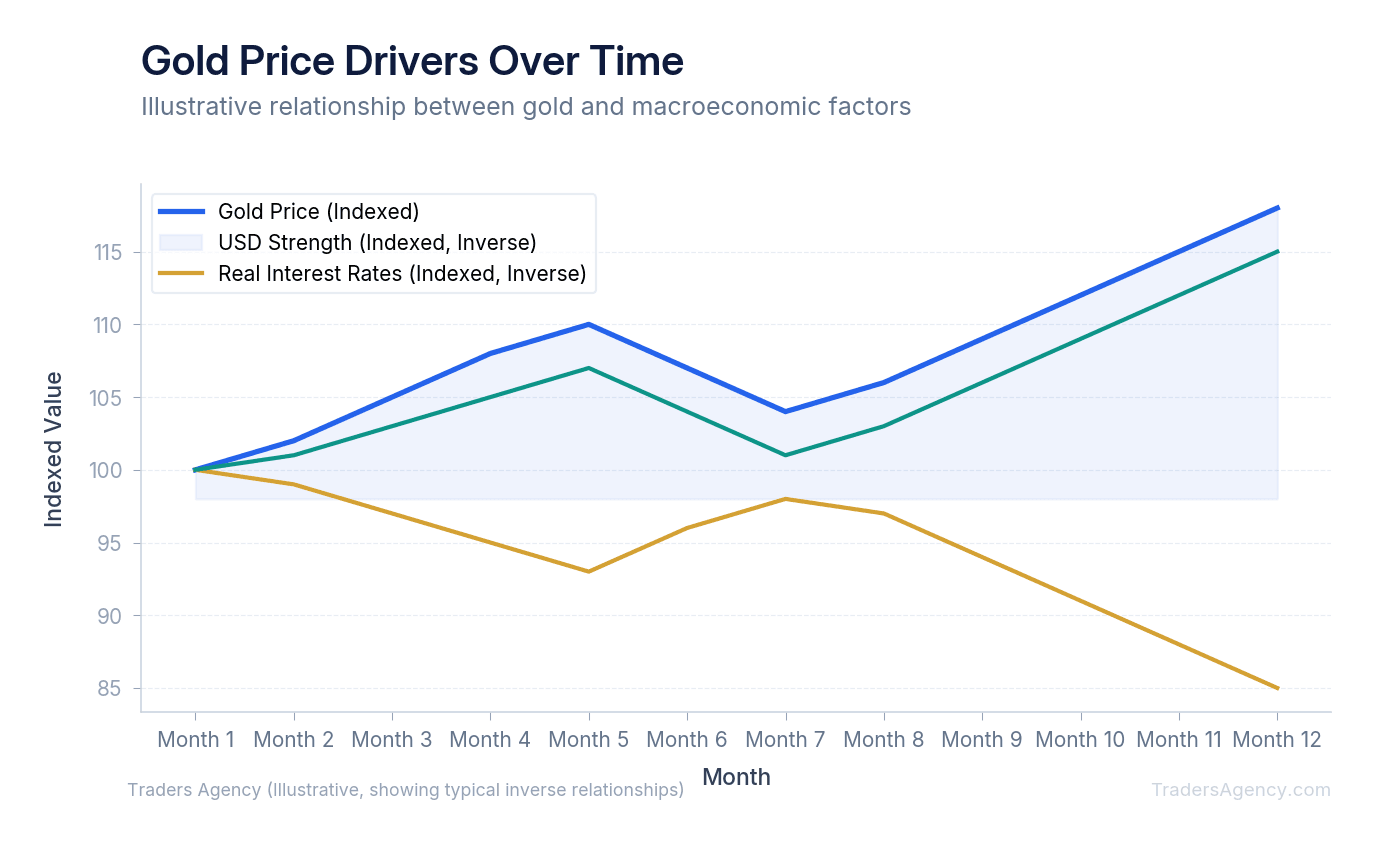
We teach our members to watch the broader macroeconomic picture. When equity markets experience heavy selling or geopolitical tensions rise, institutional investors often flock to gold as a safe haven. This sudden demand can cause rapid price spikes in funds like GLD and IAU.
Want expert trading insights delivered daily?
Join thousands of traders who rely on Traders Agency for market analysis and trade ideas.
Join Traders AgencyHow to Buy and Sell Gold ETFs: Step by Step
To buy a gold ETF, you need to identify your entry price, determine your position size, and place a limit order with your broker. We teach our members to always plan their exit strategy before entering the trade to manage risk effectively.
Here's a specific, practical example. Assume you've decided to trade GLD based on a weakening US dollar. GLD is currently trading at exactly $190.00 per share.
- Define the Setup: Determine how much capital you want to risk. You decide to buy 50 shares of GLD. Your total capital required is $9,500 (50 shares x $190.00). You identify a technical support level at $185.00 and a resistance target at $200.00.
- Execute the Trade: Log into your brokerage platform. Instead of using a market order, place a limit order to buy 50 shares of GLD at $190.00. A limit order ensures you never pay more than your specified target price. The order fills, and you now own the shares.
- Manage the Outcome: Now manage the trade based on your predefined plan. You have a stop-loss set at $185.00 and a profit target at $200.00. Monitor the position daily and wait for a clear trend to develop.
| Scenario | GLD Price | Action | Result |
|---|---|---|---|
| Best Case | $200.00 | Sell 50 shares at target | +$500 profit |
| Worst Case | $185.00 | Stop-loss triggers automatically | -$250 loss |
| Most Likely | $188 - $194 range | Hold and monitor for trend | Flat, waiting for direction |
Options Trading on GLD: What Beginners Should Know
GLD offers highly liquid options markets, allowing traders to generate income or protect their existing positions. A common strategy we teach is the covered call, where you own 100 shares of GLD and sell one call option contract against those shares to collect an immediate cash premium.
You'll find plenty of aggressive, high-risk gold trading ideas online. Our approach is different. We prefer structured, risk-defined strategies. GLD has incredibly tight bid-ask spreads on its options chain, making it ideal for retail traders.
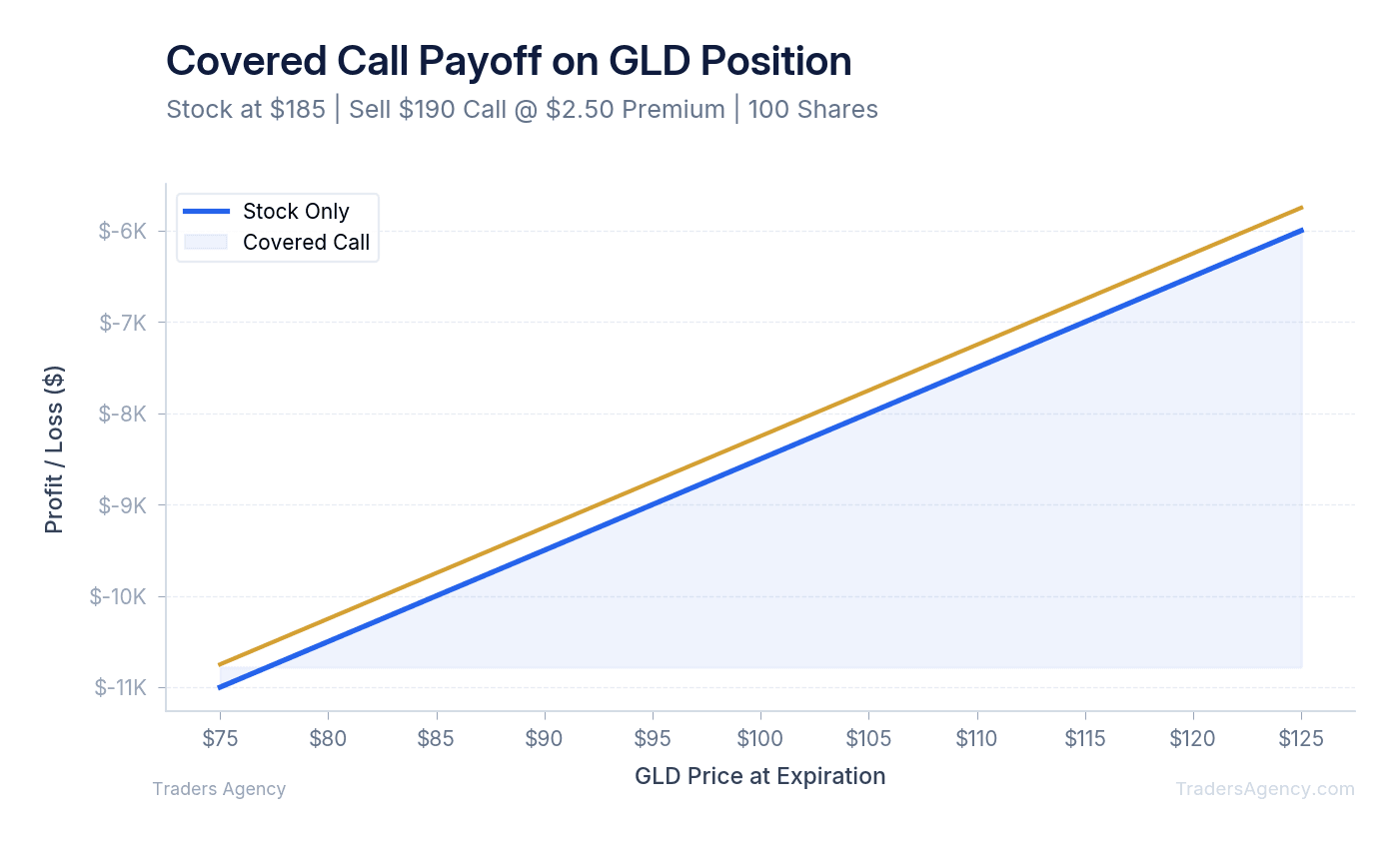
Here's a covered call example with specific numbers. You currently own 100 shares of GLD at a cost basis of $190.00 per share. You decide to sell the $195.00 strike call option expiring in exactly 30 days. The market pays you a premium of $2.00 per share. Because one options contract controls 100 shares, you collect $200 instantly ($2.00 x 100).
| Parameter | Value |
|---|---|
| Shares Owned | 100 shares of GLD at $190.00 |
| Call Sold | $195.00 strike, 30 days to expiration |
| Premium Collected | $200 ($2.00 x 100 shares) |
| Breakeven Point | $188.00 ($190.00 cost basis - $2.00 premium) |
| Maximum Gain | $700 ($500 stock gain + $200 premium) |
| Maximum Loss | $18,800 (if GLD goes to $0, minus $200 premium collected) |
This strategy generates income from the premium collected while capping your upside potential at the $195.00 strike price. Keep in mind that you still bear nearly all of the downside risk on the shares; the $200 premium only provides a small buffer.
How Do Gold ETFs Fit Into a Diversified Portfolio?
Gold ETFs serve as a non-correlated asset class within a broader portfolio. Their price movements don't perfectly mirror the stock market. Adding gold can reduce overall portfolio volatility and provide a psychological buffer during severe equity market downturns.
Many traders ask us: is GLD a good gold ETF for weekly trading? Is it better suited for a retirement account? The answer depends on your specific financial goals. We recommend keeping total gold exposure to a strict allocation limit, typically between 5% and 10% of your total portfolio value.
Common Mistakes to Avoid
Watch Out: These are the three most common mistakes we see traders make with gold ETFs:
- Chasing the news: Buying gold only after it has already spiked 15% during a global panic usually leads to buying at the absolute top.
- Ignoring the tax drag: Holding GLD for three years in a taxable brokerage account will subject your gains to the 28% collectibles tax rate. Consider tax-advantaged accounts for long-term holds.
- Trading illiquid options: Trying to trade options on SGOL can result in poor fill prices due to low volume. IAU options have improved in liquidity, but GLD remains the best choice for options trading due to its tighter spreads and higher volume.
By understanding the differences in GLD vs IAU vs SGOL, respecting the tax rules, and using strict position sizing, you can effectively trade the gold market. Start small, define your risk before you enter, and never let a single trade dictate the health of your entire account.
Our education team publishes new strategy guides and market analysis every week.
Want expert trading insights delivered daily?
Join thousands of traders who rely on Traders Agency for market analysis and trade ideas.
Join Traders AgencyKey Takeaways
- GLD is the best choice for options trading due to tighter spreads and higher volume compared to IAU and SGOL.
- SGOL can produce poor fill prices because of low trading volume, making it a weaker choice for active traders who need reliable execution.
- Gold ETFs are physically backed, meaning fund managers hold actual gold bars in a vault to match the value of shares issued.
- You do not need a special commodities account to trade gold ETFs. They trade like regular stocks through any standard brokerage, including retirement accounts.
- IAU options liquidity has improved, but GLD remains the dominant instrument for traders who want flexibility and tight pricing.
DISCLAIMER: Traders Agency does not offer financial advice. The information provided is for educational purposes only and should not be considered financial advice. Traders Agency is not responsible for any financial losses or consequences resulting from the use of the information provided. Trading carries inherent risks and may not be suitable for all individuals. You are advised to conduct your own research and seek personalized advice before making any investment decisions, recognizing the potential risks and rewards involved.
See more from Traders Agency on Google
Make us a preferred source and our market analysis will appear more prominently in your Google Search, Top Stories, and AI results.
Add to Preferred Sources