
Uranium nuclear energy investing is the practice of allocating capital to the physical commodity of uranium, the mining companies that extract it, or the utilities that generate nuclear power. You've probably seen the headlines about tech giants funding nuclear reactors to power their artificial intelligence data centers. We're going to walk you through how to trade this specific commodity cycle, manage the unique risks of the uranium market, and size your positions correctly. Our education team has watched too many traders misunderstand the mechanics of commodity super-cycles. They buy at the wrong time, choose the wrong vehicles, and take on unnecessary risk. By the end of this guide, you'll know exactly how to structure a trade in this sector.
What Is the Nuclear Renaissance Thesis?
Bottom Line: The uranium trade is fundamentally a supply-deficit story reinforced by two converging forces: clean energy mandates and the electricity demands of AI infrastructure. Because new mine supply takes over a decade to reach the market, the structural imbalance can persist long enough to reward patient, well-sized positions. Understanding where you are in the commodity cycle, and choosing the right investment vehicle, is what separates traders who profit from those who get caught holding at the top.
The nuclear renaissance thesis is the expectation that global demand for nuclear power will drastically outpace the available supply of uranium over the next decade. This is driven by clean energy mandates and the massive electricity requirements of modern data centers.
To understand uranium nuclear energy investing, you have to understand the supply deficit. The World Nuclear Association tracks global reactor requirements. Currently, the world's nuclear reactors consume millions of pounds more uranium each year than global mines produce.
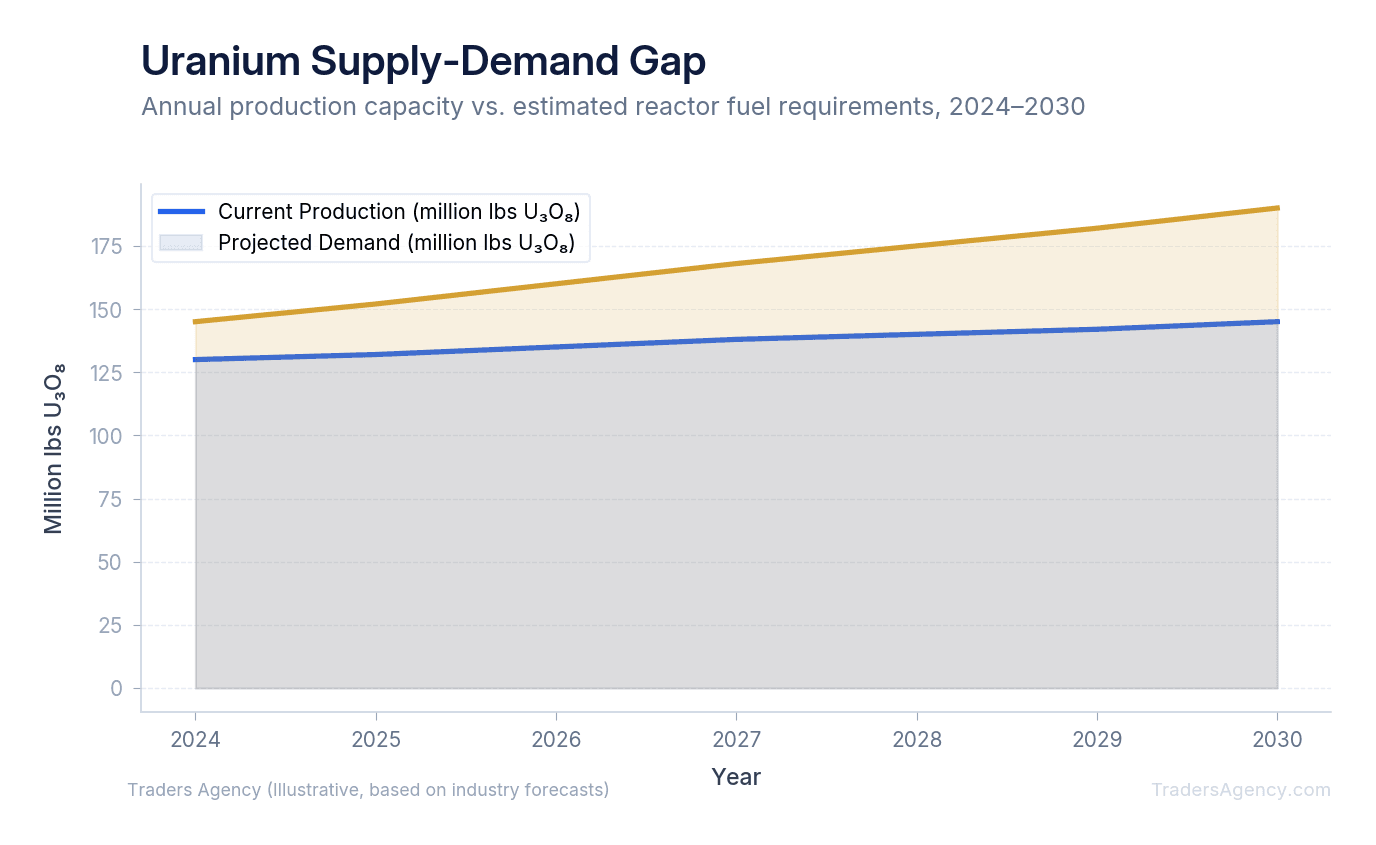
This creates a structural supply squeeze. Mining is a long-cycle industry. You cannot simply turn on a new uranium mine overnight. It takes ten to fifteen years of permitting, drilling, and construction to bring new supply to the market.
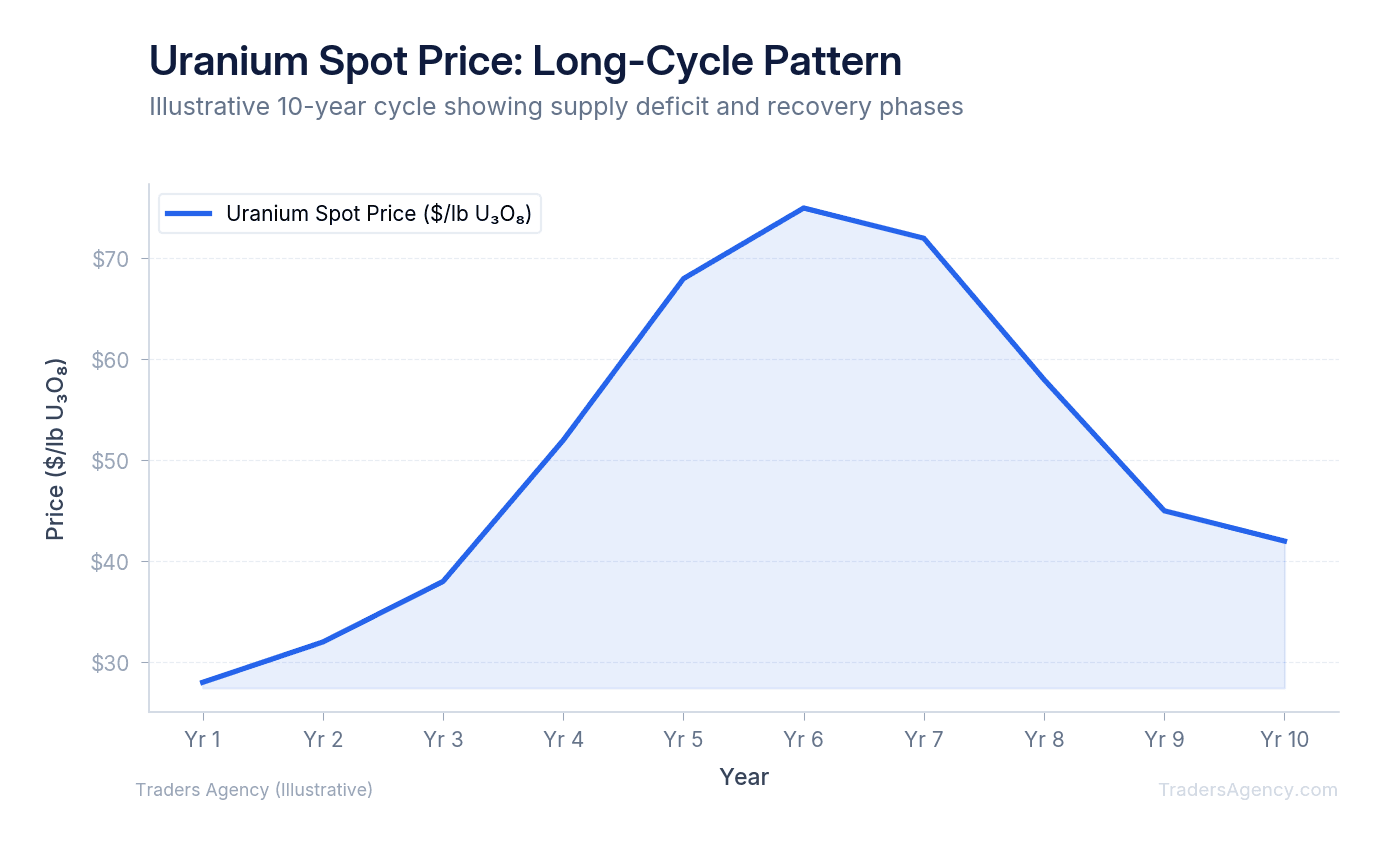
Key Concept: When demand spikes and supply is locked in a long development cycle, prices tend to rise violently. This is the core logic behind the uranium trade. We teach our members to track the physical spot price of uranium as the primary indicator for the sector.
Which ETF Is Best for Uranium?
The best ETF depends on your specific trading goals, but many traders prefer the VanEck Uranium and Nuclear ETF or the Global X Uranium ETF. These funds provide diversified exposure to miners, physical trusts, and utility companies without the single-stock risk of individual miners.
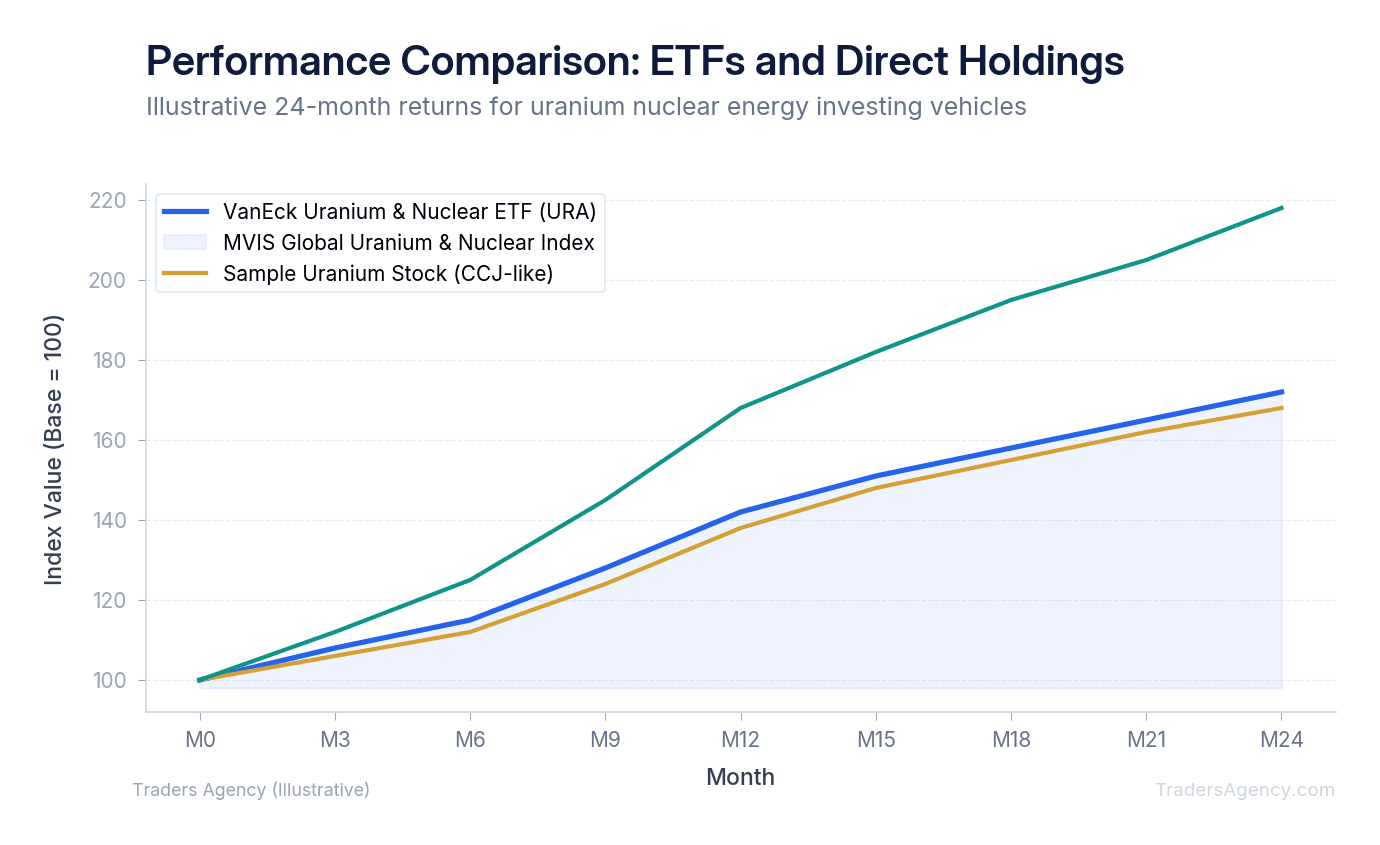
When you search for a nuclear energy ETF list, you'll find several options with different weightings. The VanEck Uranium and Nuclear ETF (ticker: NLR) tracks the MVIS Global Uranium and Nuclear Energy Index. This index includes companies involved in uranium mining, the construction of nuclear facilities, and the generation of nuclear electricity.
Many of our students ask about a nuclear energy ETF Vanguard product. Vanguard does not currently offer a pure-play uranium or nuclear energy ETF. Traders using Vanguard platforms typically buy broad energy sector funds or purchase the specific uranium ETFs managed by other providers.
We prefer ETFs for traders who want broad exposure without analyzing individual mining balance sheets. ETFs smooth out the extreme volatility that affects small exploration companies.
How Do You Trade the Uranium Cycle?
Here's a concrete example of how our team approaches a trade in this sector. We'll use a cash-secured put strategy on a major uranium producer.
- Identify the Setup: First, we confirm the macro trend. We want to see the physical uranium spot price holding steady above $80.00 per pound. This price level ensures that major miners are highly profitable. Next, we look for a temporary pullback in the stock price of a major producer.
- Select Your Vehicle: For this example, we'll look at uranium nuclear energy investing stocks rather than an ETF. We'll use Cameco (ticker: CCJ), one of the largest producers in the world. Assume CCJ is currently trading at $48.00 per share.
- Execute the Trade: Instead of buying the stock outright, we sell a cash-secured put to generate income and define our entry price. Sell to open one contract of the CCJ $45.00 strike put, with an expiration 45 days out, collecting a premium of $1.50 per share (or $150.00 total per contract).
- Manage the Outcome: There are two possible outcomes at expiration. Review the table below for the full breakdown.
| Parameter | Value |
|---|---|
| Underlying Stock | CCJ at $48.00 |
| Put Sold | $45.00 strike, $1.50 premium |
| Expiration | 45 days |
| Cash Secured | $4,500.00 |
| Scenario | Stock Price at Expiration | Outcome |
|---|---|---|
| Scenario A: Stock stays above $45.00 | Above $45.00 | Option expires worthless. You keep the $150.00 premium as pure profit. That's roughly a 3.3% return on secured cash in 45 days. |
| Scenario B: Stock drops below $45.00 | Below $45.00 | You're assigned 100 shares of CCJ at $45.00. Your actual breakeven price is $43.50 after subtracting the premium collected. You now own a tier-one uranium stock at a discount. |
Want expert trading insights delivered daily?
Join thousands of traders who rely on Traders Agency for market analysis and trade ideas.
Join Traders AgencyIs Investing in Uranium a Good Investment?
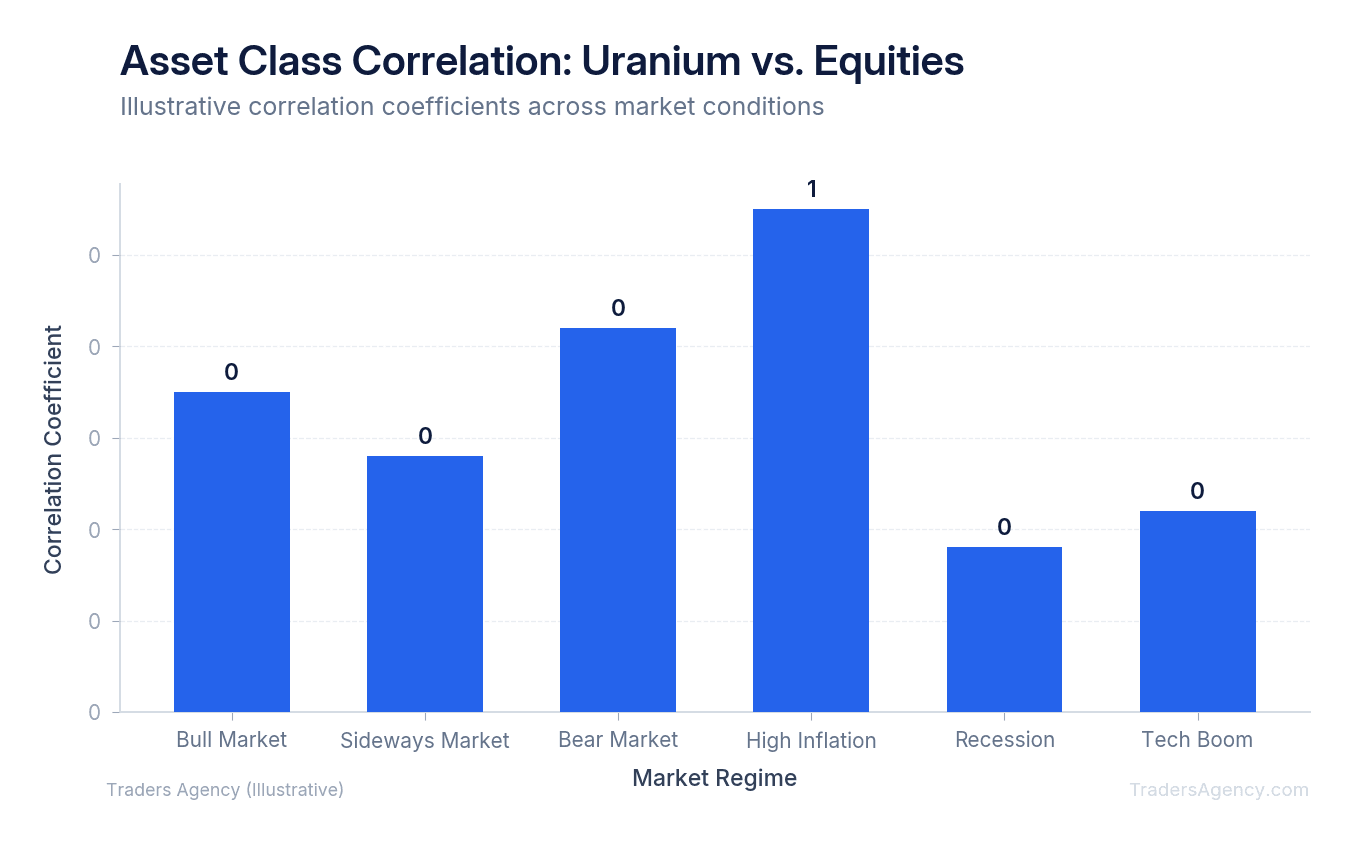
Investing in uranium can be highly profitable during periods of structural supply deficits, but it carries significant volatility. It serves as an excellent portfolio diversifier because uranium prices often move independently of the broader stock market and traditional economic cycles.
Our team recommends treating uranium as a satellite position. It should not replace your core equity holdings. The SEC provides excellent educational resources on the risks of commodity investing, reminding traders that physical commodities do not produce earnings or dividends on their own.
Key Concept: We prefer to cap our total exposure to uranium nuclear energy investing at 2% to 5% of a total trading portfolio. This sizing allows you to capture the massive upside of a commodity super-cycle while protecting your account from the inevitable 30% drawdowns that occur in mining stocks.
What Are the Most Common Mistakes in Uranium Trading?
Traders often lose money in the uranium sector by ignoring the specific mechanics of the mining industry. Here are the most common errors we see and how to avoid them.
- Buying exploration companies blindly: Small mining companies (often called junior miners) frequently have zero revenue. They only have a patch of dirt and a theory. We teach our members to stick to producers that are actively pulling uranium out of the ground.
- Ignoring geopolitical risk: A massive percentage of the world's enriched uranium comes from regions with high political instability. Supply chains can be cut off overnight by sanctions or export bans.
- Misunderstanding reactor timelines: Tech companies are announcing new nuclear plants, but building a reactor takes a decade. Traders often buy on the news of a new plant, expecting immediate uranium demand, and then panic when the stock drifts lower for months.
- Using excessive margin: Uranium stocks regularly experience 20% price swings in a single week. If you use heavy margin, a routine pullback will trigger a margin call and force you out of the trade before the thesis plays out.
Watch Out: Always use strict position sizing. We prefer to set hard stop losses at 15% below our entry price when trading individual mining stocks. If the trade goes against us, we take the small loss and wait for a better technical setup.
Frequently Asked Questions
What's the best nuclear energy stock to invest in?
While "best" is subjective, Cameco (ticker: CCJ) is widely considered the industry leader due to its massive tier-one assets in Canada. We prefer it for its high liquidity and excellent options volume, which makes it ideal for selling covered calls and cash-secured puts.
How do geopolitical events affect uranium prices?
Uranium supply is highly concentrated. Countries like Kazakhstan produce a massive portion of the world's supply. Any political instability, transportation issues, or international sanctions in these regions can cause immediate and violent spikes in the spot price of uranium.
Can I buy physical uranium?
Retail traders cannot take physical delivery of uranium due to obvious regulatory and safety restrictions. However, you can buy shares in physical uranium trusts, such as the Sprott Physical Uranium Trust. These trusts buy and hold physical uranium in secure facilities, allowing your shares to track the spot price directly.
What drives the spot price of uranium?
The spot price is driven by utility companies securing fuel for their reactors. Unlike gold or oil, uranium is primarily traded through long-term contracts between miners and utilities. When utilities fear a future shortage, they rush to the spot market to secure material, driving prices higher.
Are there options available on uranium ETFs?
Yes. Major ETFs like URA and NLR have active options chains. We frequently use these options to hedge our long positions or generate income through covered calls. The liquidity is generally good, though bid-ask spreads can widen during periods of low market volume.
How long does a uranium bull market typically last?
Commodity cycles are long. Because it takes over a decade to permit and build a new mine, supply cannot react quickly to high prices. Historically, uranium bull markets have lasted anywhere from five to ten years before new supply finally catches up with demand and cools the market.
Our education team publishes new strategy guides and market analysis every week.
Want expert trading insights delivered daily?
Join thousands of traders who rely on Traders Agency for market analysis and trade ideas.
Join Traders AgencyKey Takeaways
- Global nuclear reactors currently consume millions of pounds more uranium each year than mines produce, creating a structural supply deficit that underpins the bull case.
- Uranium bull markets have historically lasted five to ten years because permitting and building a new mine takes over a decade, meaning supply cannot respond quickly to rising prices.
- Tech companies funding nuclear reactors for AI data centers represent a new, large-scale demand driver that is accelerating the supply-demand imbalance.
- Investors can gain exposure through physical uranium, mining equities, or utilities, each carrying different risk profiles and liquidity characteristics.
- Position sizing matters in this sector: commodity super-cycles attract traders who buy at the wrong point in the cycle and oversize positions in illiquid vehicles.
DISCLAIMER: Traders Agency does not offer financial advice. The information provided is for educational purposes only and should not be considered financial advice. Traders Agency is not responsible for any financial losses or consequences resulting from the use of the information provided. Trading carries inherent risks and may not be suitable for all individuals. You are advised to conduct your own research and seek personalized advice before making any investment decisions, recognizing the potential risks and rewards involved.
See more from Traders Agency on Google
Make us a preferred source and our market analysis will appear more prominently in your Google Search, Top Stories, and AI results.
Add to Preferred Sources