
If you don't understand bonds, you don't understand money. Grasping bond market basics is essential for anyone who wants to make sense of the financial world.
There's a market worth over a hundred trillion dollars that is the most important piece of the global financial system. It impacts your mortgage, your job, your investments, and even the price of crypto.
It's not the stock market. It's not Bitcoin. It's the bond market. And right now, understanding how it works could change the way you think about the economy and your investments.
What Are Bonds and How Do They Work?
Bottom Line: The bond market sets the price of money itself, which means it determines borrowing costs, stock valuations, and economic conditions long before those effects show up in headlines. Watching treasury auctions, tracking the high yield spread, and understanding the direction of interest rates gives you a forward-looking edge that stock-only investors simply do not have. If the bond market is flashing stress, the rest of the financial system will follow.
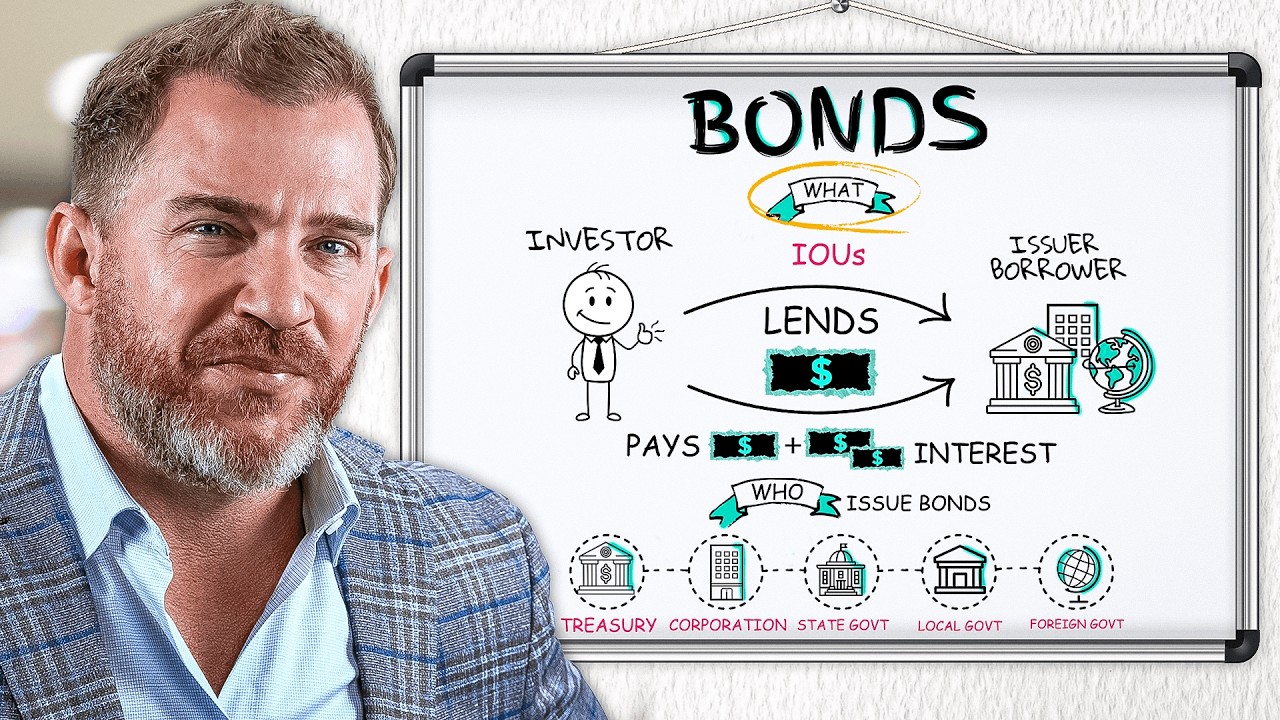
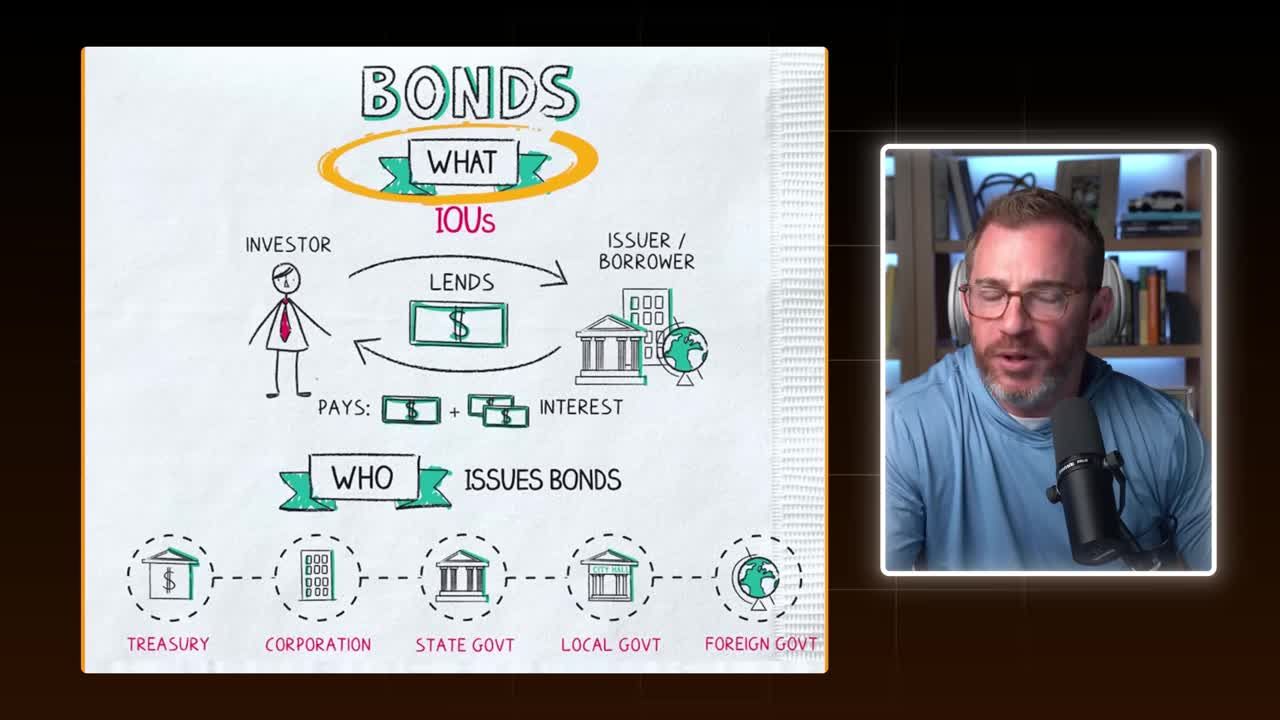
A bond is a loan. When a company or government needs money, they issue bonds to borrow from investors. The issuer promises to pay back the principal plus extra money on top, called interest.
Governments are constantly spending on infrastructure, the military, and healthcare. That spending stimulates the economy by creating jobs, which produces productive citizens and businesses that generate tax revenues.
Tax revenue is the lion's share of the government's income. Most US government revenue comes directly from taxes. Only 1.1% does not come from taxes. This data doesn't account for the tariff impact, simply because there's not enough clarity yet on how that will play out.
The problem? The US government spends a lot more than it collects. That gap between spending and revenue is called the budget deficit.
How Does Government Debt Influence Bond Yields?
Every year the government spends more than it collects, it adds to the national debt.
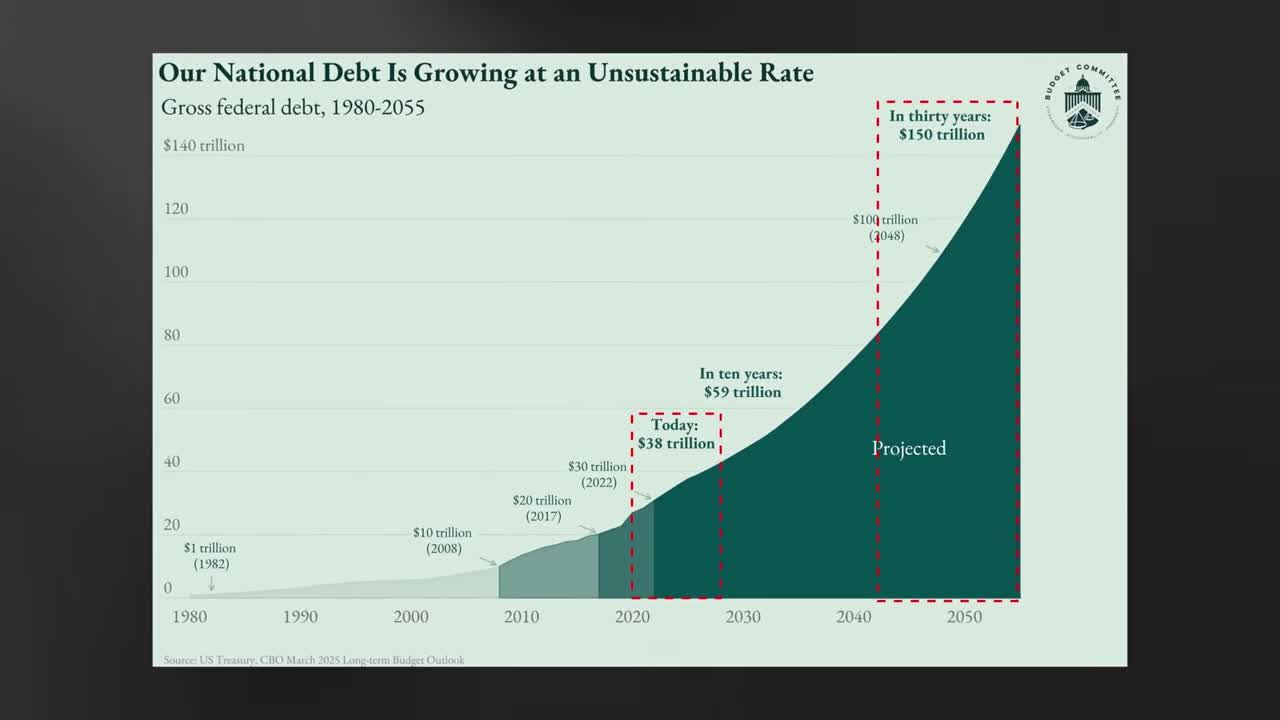
To get this money, the government borrows from the public by issuing treasury bonds. The Treasury holds auctions to sell these bonds to investors all over the world. The typical buyers:
- Banks and insurance companies
- Pension funds
- Foreign governments
- Regular people
Investors buy them because US government bonds are considered some of the safest investments in the world. If the US were ever to default on its debt and go bankrupt, it could be the end of the global financial system as we know it.
But the government has to pay back that $39 trillion with interest. Right now, those interest payments alone cost around $3 billion per day.
A lot of government debt sits in short-term treasury bills that mature in six and 12-month periods, so the rates are constantly resetting. The government keeps using these short-term treasuries to fund its borrowing, a process called rolling over the debt. They take on more and more debt just to pay for public services, pay off the old debt, and cover the interest, all at the same time.
How Bonds Actually Work
Four terms you need to know:
Principal is the amount borrowed. Coupon is the annual interest payment in dollars. Maturity is when the loan is due. Yield is the return the investor gets from that bond.
One important distinction: yield is different from coupon.
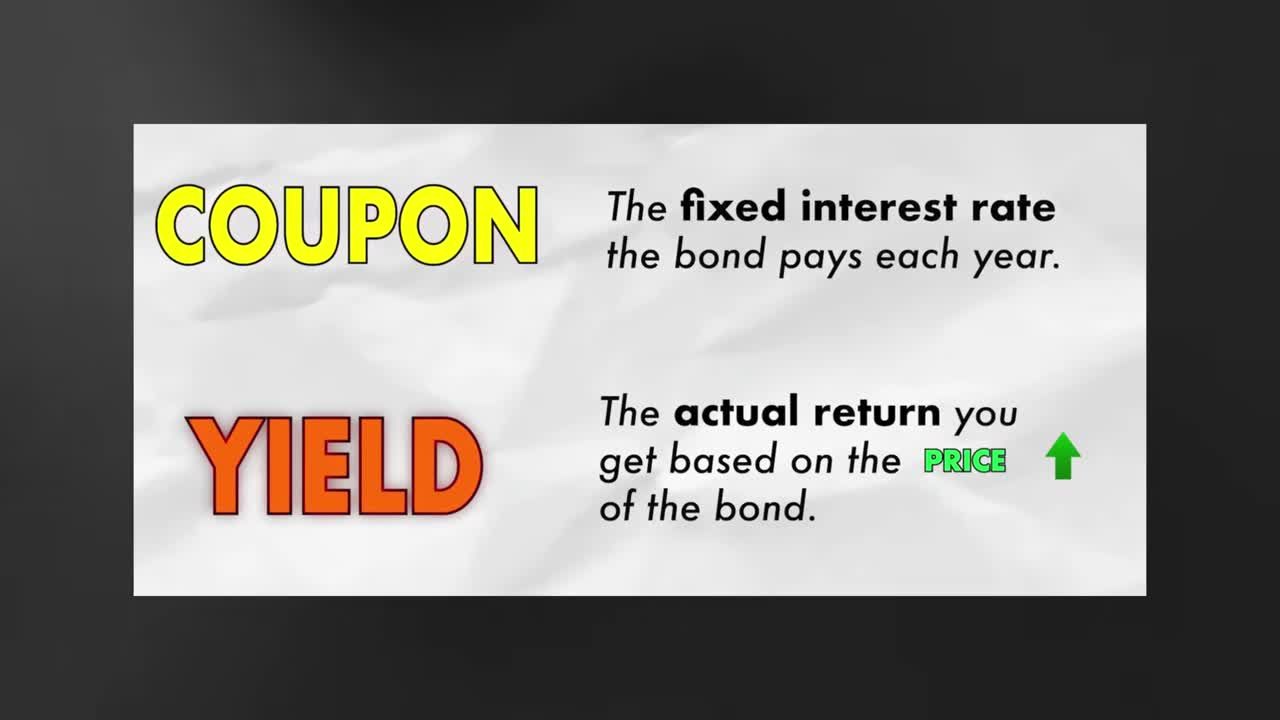
The price of a bond can change, and that price change affects your return. Think of a bond that pays a $100 annual coupon. If you pay $1,000 for that bond, you get a hundred bucks a year. That's a 10% yield.
Buy that exact same bond for $900? Your yield jumps to 11%.
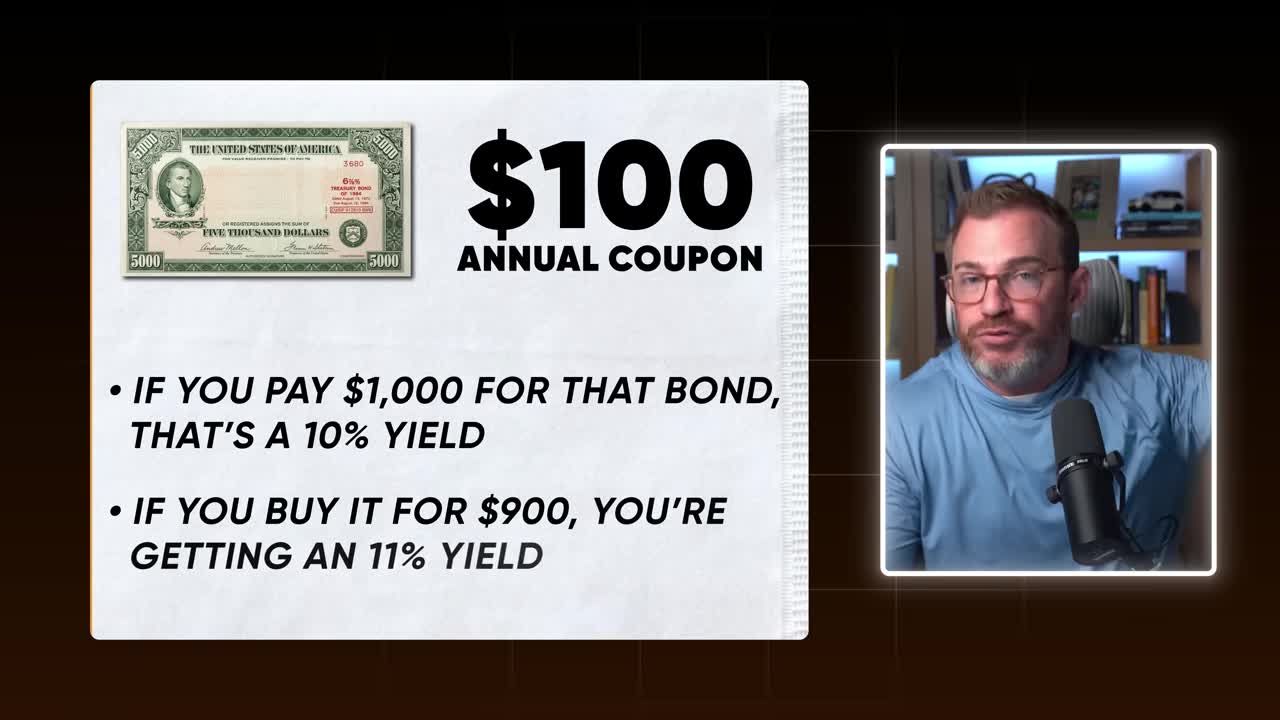
Same coupon payment, higher yield, because you bought the bond at a lower price. This is why when bond prices go up, yields go down. When bond prices go down, yields go up. This inverse relationship is one of the most important bond market basics to understand.
Get an entire year of live weekly mentoring sessions, my newsletter, indicators, bonus reports, tons more. Click the link and I'll see you in the next live session.
Join my Black Ops Trading ClubThe Bond Market in Real Time
The bond market operates in two phases.
In the primary market, the government sells new bonds at weekly or monthly treasury auctions. The yield is determined by investor demand. If there's not a lot of demand, people aren't going to pay a lot, and the yield will be higher.
In the secondary market, investors constantly buy and sell existing bonds based on economic expectations. When new treasury bonds are sold in the primary market, the yield at which they sell becomes a benchmark. Investors in the secondary market then use that price to reassess the value of similar bonds already in circulation.
They're constantly guessing. Will interest rates go up or down? Will the economy speed up or slow down? Will inflation rise or fall? These questions determine what yield makes sense for them to loan the money out at.
Market interest rates are really just the yield global bond investors are demanding at that current time.
If market rates go up, the cost for the government to borrow also goes up. As the overall debt burden keeps rising, more of the country's GDP has to be spent on paying off the debt and paying interest. The government ends up with less money for healthcare, infrastructure, social services, and the military.
How Do Bond Yields Affect Stock Prices?
Bond yields dictate stock prices through something called the equity risk premium.
Government bonds offer a guaranteed return, known as the risk-free rate. Stocks are riskier. A stock is just a small piece of ownership in a company. If the company gets in trouble, the stock price plummets. The extra return investors demand to buy stocks instead of safe government bonds is the equity risk premium.
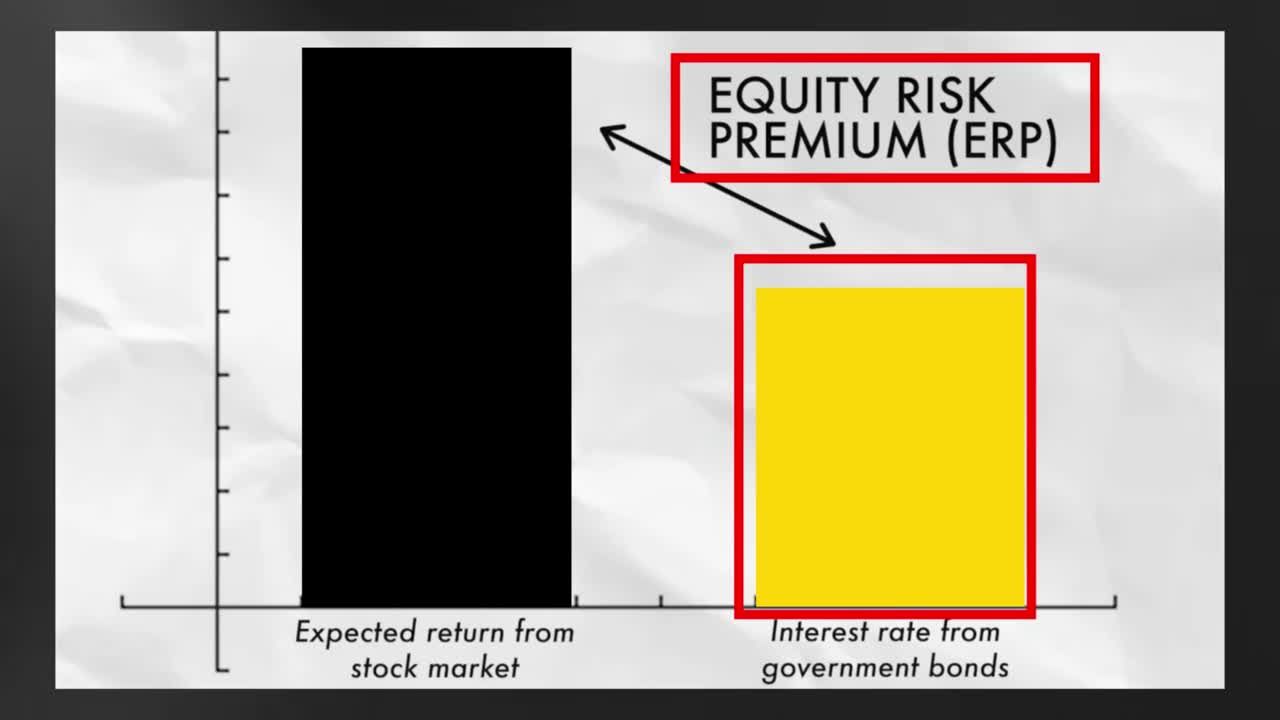
Historically, bonds were a very safe investment. Unless the government defaults, it has to pay back your bond with the agreed-upon interest. They'll even print the money to do it.
So investors have a choice: buy a government bond guaranteed to pay them back, or take a risk in the stock market.
This is exactly why Wall Street hangs on every word of Federal Reserve Chairman Jerome Powell. The entire market is waiting to see if he will cut, maintain, or raise interest rates.
Government vs. Corporate Bonds
Government bonds are issued by a sovereign nation. They're safer since it's unlikely the government will default. Companies, however, sometimes do default. They go bankrupt.
Because corporate bonds carry higher risk, investors demand higher interest rates to own them. The gap between safe government bonds and risky corporate bonds is called the high yield spread.
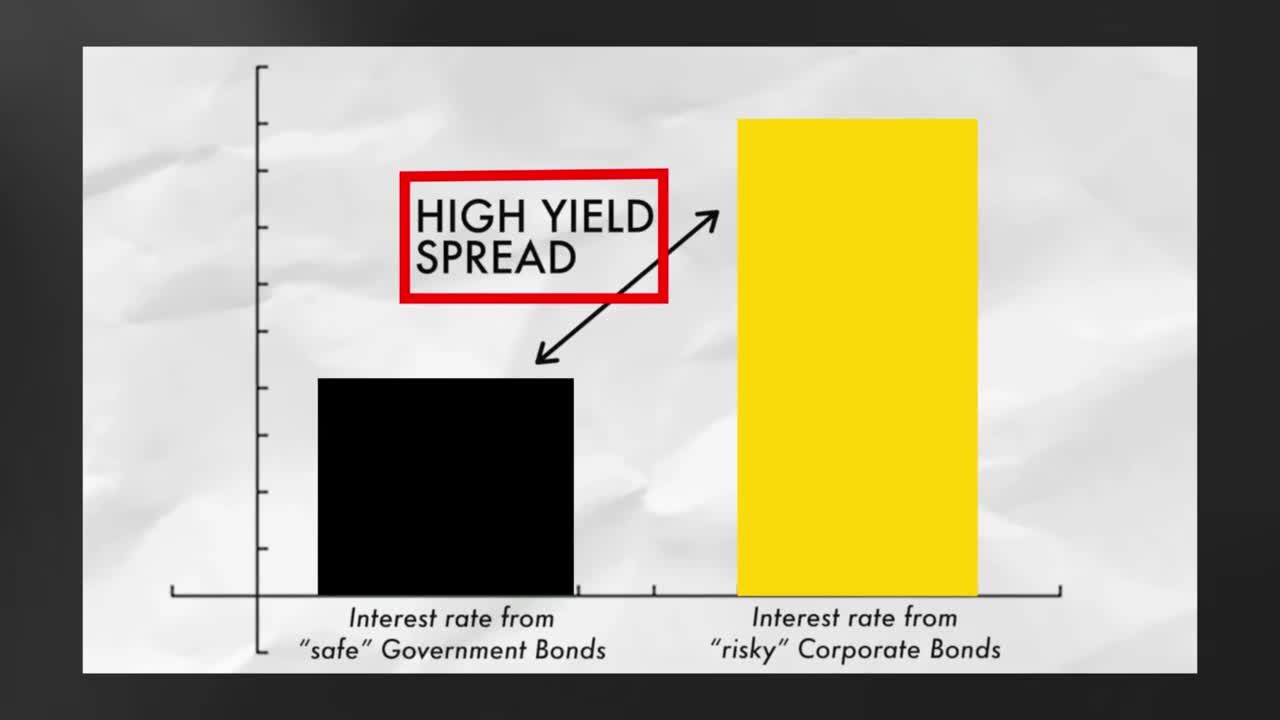
When fear enters the market, investors want higher interest rates from corporate bonds since the investment feels riskier. When that high yield spread widens, it's usually a sign that there's trouble.
Reading Bond Market Signals
The bond market doesn't just mirror the economy. It actively shapes it. You don't need to be an institutional trader to use this data. You just need to watch the right indicators.
1. Track the High Yield Spread
Watch the gap between government and corporate bond yields. A widening spread means fear is entering the system. Companies are viewed as higher risk, and investors are demanding a premium to lend them money.
2. Monitor the Equity Risk Premium
Compare the expected return of the stock market to the risk-free rate of government bonds. If safe bonds are paying high yields, expect money to flow out of risky stocks. Shrinking premiums lead to stock market selloffs.
3. Watch Interest Rate Impacts
Higher interest rates slow down the economy. Companies are much less likely to borrow and expand at 8% interest rates than they are at 3% and 4%. The exact same logic applies to you and me. You're far more likely to take out a car loan or a mortgage when rates are lower.
The Force Driving Everything
The bond market is the most important force driving the economy and the stock market. It dictates the cost of capital for the US government, major corporations, and everyday consumers.
Understanding bond market basics gives you a massive advantage over investors who only watch stock tickers.
Keep your eyes on treasury auctions, watch the high yield spread, and track the direction of interest rates. That data will tell you where the market is heading next.
Get an entire year of live weekly mentoring sessions, my newsletter, indicators, bonus reports, tons more. Click the link and I'll see you in the next live session.
Key Takeaways
- The global bond market exceeds $100 trillion, making it larger and more influential than the stock market, crypto, or any other asset class.
- Only 1.1% of US government revenue comes from sources other than taxes, meaning federal spending is almost entirely dependent on tax collection and borrowing.
- Bond yields and stock prices move in opposite directions: rising yields increase the discount rate applied to future earnings, which compresses stock valuations.
- The high yield spread (the gap between junk bond yields and treasury yields) is a real-time risk indicator. A widening spread signals that credit markets are pricing in economic stress before it shows up in stocks.
- Treasury auctions are a critical data point: weak demand at auction pushes yields higher, raising borrowing costs for the government, corporations, and consumers simultaneously.
DISCLAIMER: Traders Agency does not offer financial advice. The information provided is for educational purposes only and should not be considered financial advice. Traders Agency is not responsible for any financial losses or consequences resulting from the use of the information provided. Trading carries inherent risks and may not be suitable for all individuals. You are advised to conduct your own research and seek personalized advice before making any investment decisions, recognizing the potential risks and rewards involved.
See more from Traders Agency on Google
Make us a preferred source and our market analysis will appear more prominently in your Google Search, Top Stories, and AI results.
Add to Preferred Sources