

A currency reset is something that happens maybe once in a lifetime. It is a seismic event that turns the global system upside down. Right now, we are on the cusp of one, and understanding currency reset investments could be the difference between preserving your wealth and losing it.
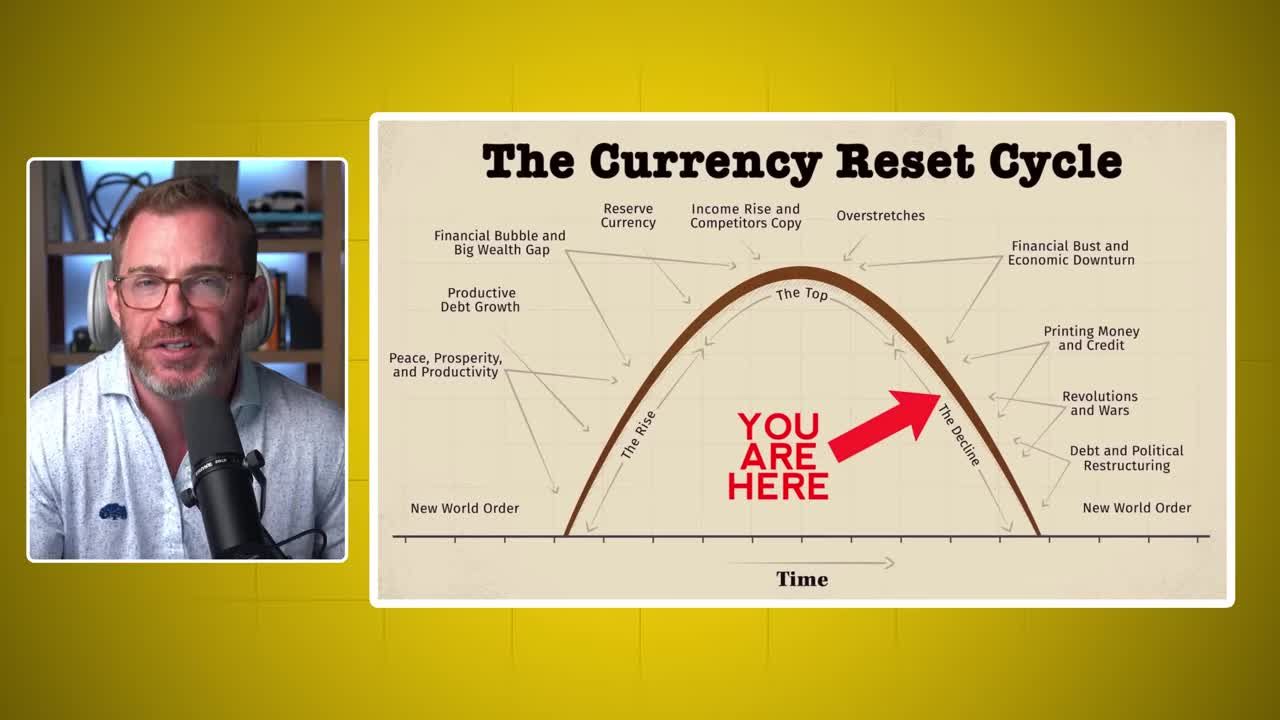
Every 75 to 100 years, the financial system collapses under its own weight. Debt becomes unmanageable. Inequality becomes unsustainable. The entire economy falls like a house of cards.
This is part of a much bigger pattern, a long-term cycle that plays out again and again throughout history and has led to cataclysmic events like the Great Depression, World Wars I and II. It even goes back as far as the fall of the Dutch Empire in the 1600s.
What Is a Currency Reset?
Bottom Line: The core thesis is that the U.S. dollar reserve currency system is past its peak and moving toward a structural reset, following a pattern that has repeated throughout history every 75 to 100 years. Wealth preservation during this transition depends on holding assets outside the traditional banking infrastructure, with gold as the primary vehicle, before the reset forces the terms on savers rather than letting them choose. Those with capital face the greatest risk of asset seizure through inflation and currency devaluation, making early repositioning the only practical defense.
A currency reset is a period of financial crisis. Consider Germany in 1923 during its acute hyperinflation crisis. The destruction of the currency was absolute.
- People carried their wages in wheelbarrows
- Children played with piles of useless bills
- People burned cash for warmth because it was cheaper than coal or firewood
Unsurprisingly, financial crises almost always lead to civil unrest and international conflict as well.
How Do the Wealthy Protect Their Assets During a Currency Reset?
Not everyone suffers during a currency reset. If you look at some of the wealthiest family dynasties in Europe and North America, they were able to preserve their fortunes through crisis. Often their fortunes increased.
They knew they needed to convert their wealth into assets that would weather the storm.
The Case for Gold
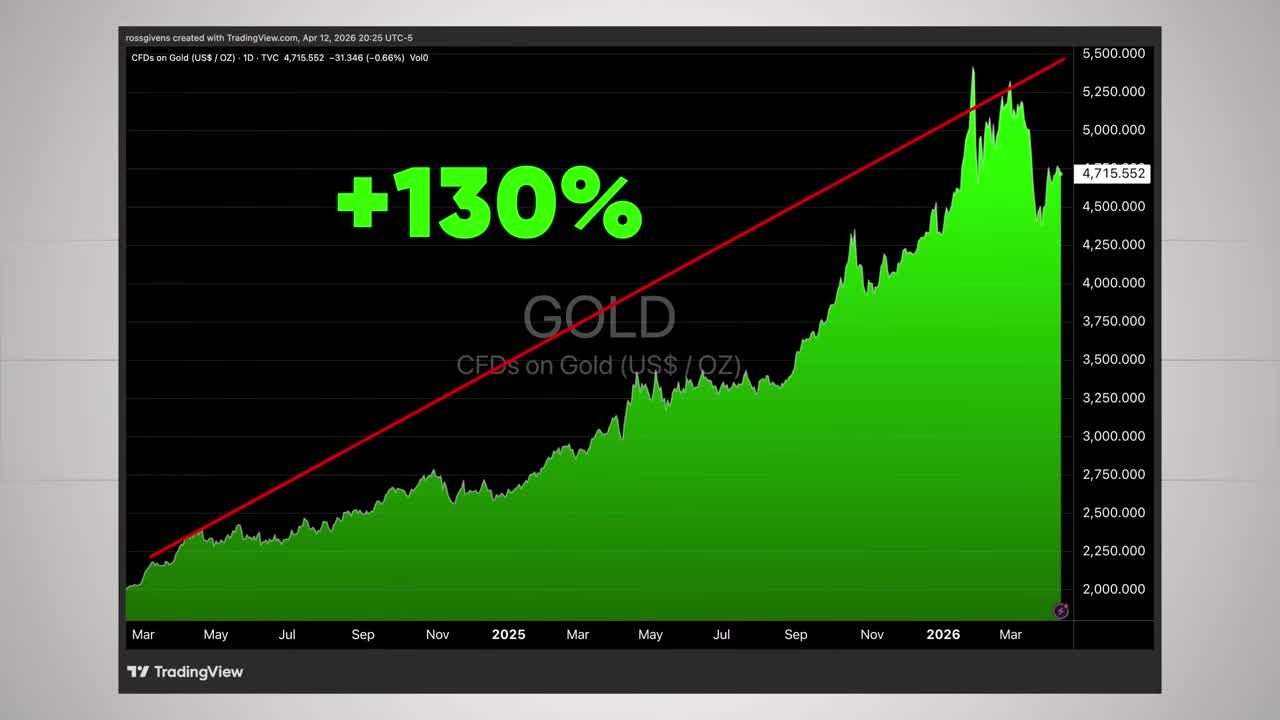
The price of gold has seen an astronomical rise over the last two years, up more than 130%. Central banks and investors have been buying it in record amounts. They see it as a safe haven against increasingly unstable and volatile currencies.
Physical gold does not rely on banks or networks. It does not need conversion. It cannot be sanctioned. And it does not sit on anyone else's balance sheet. In short, physical gold is difficult to interfere with.
Central banks are constantly interfering with currencies, whether that is through adjusting interest rates or printing massive amounts of money as a short-term fix for domestic problems. Printing money causes inflation because it makes the money everyone already has less valuable. When there is more overall money in circulation, you get more dollars chasing the same number of goods and services.
Gold does not have this problem. The only way new gold is created is by mining it. It is expensive, specialized, and a difficult process. Gold is inherently rare, which is what makes it so valuable.
Physical Gold vs. Paper Gold
The gold market is made up of two different worlds. You need to understand the distinction before you allocate your capital.
Real or physical gold is actual gold you can hold. Coins, bars, jewelry. If you buy physical gold, its value depends on how much real gold exists and how many people want to buy it.
Paper gold means you do not own actual gold in your hand. You own a promise or a contract connected to gold. You hold digital records that say you own gold or have the right to it in the future.
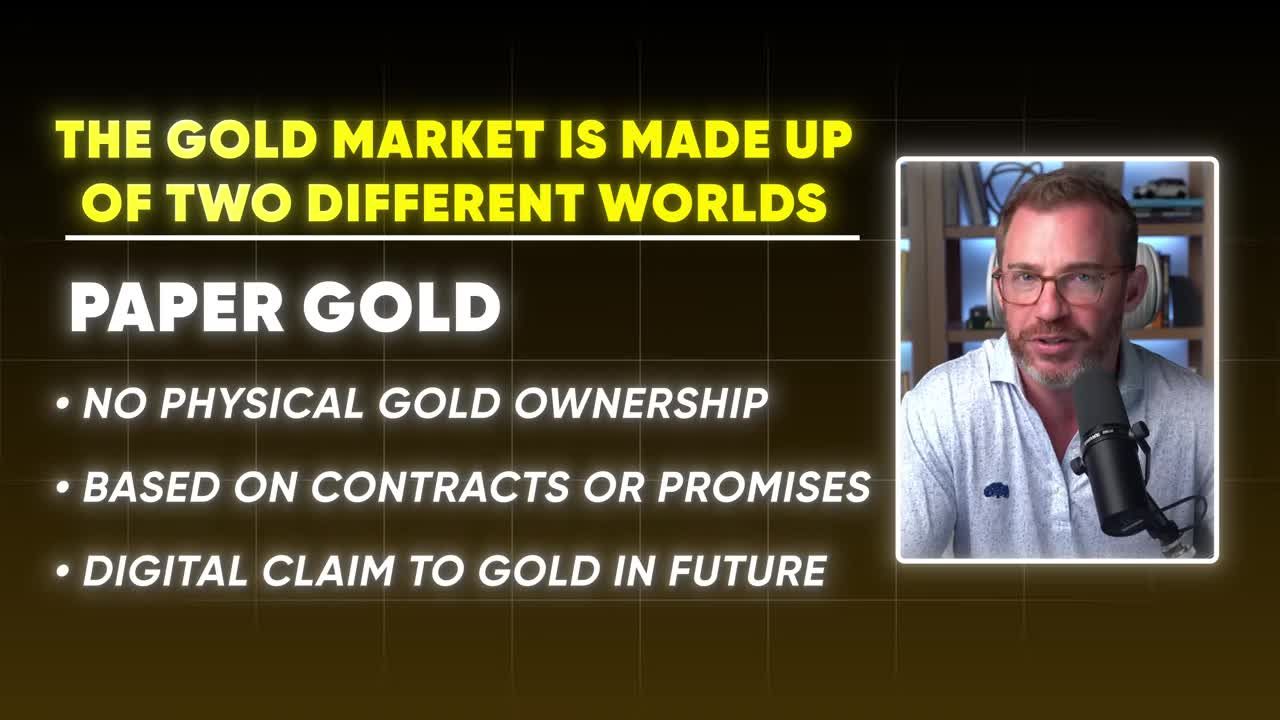
When everyone wants to buy gold quickly, they typically buy paper gold. Exchange-traded funds, futures. It is just quicker and easier. The problem is these digital records, these derivatives, do not have to be tied to real physical gold. This can inflate the system and cause sharp swings in both directions.
Personally, I have a little of both. I have been buying physical gold and started buying it when gold crossed $2,200 an ounce. I also hold a gold ETF and gold mining stocks in my retirement account.
Get an entire year of live weekly mentoring sessions, my newsletter, indicators, bonus reports, tons more. Click the link and I'll see you in the next live session.
Join my Black Ops Trading ClubWill Bitcoin Protect You?
Bitcoin solves a similar problem to gold, but in a slightly different way. It is self-custodied, easily stored, easily transferred, and highly fungible, meaning it is easily exchangeable for cash. Technically, this should make it resilient during a currency reset. But before getting too excited, we need to remember a few things.
First, it is a very new asset class. While gold has been used by humans for thousands of years, Bitcoin has only been widely adopted since about 2013. This means we simply do not have the data to see how it performs over centuries, or how it responds to things like global war, great depressions, or currency resets. The data we do have is not exactly confidence inspiring.
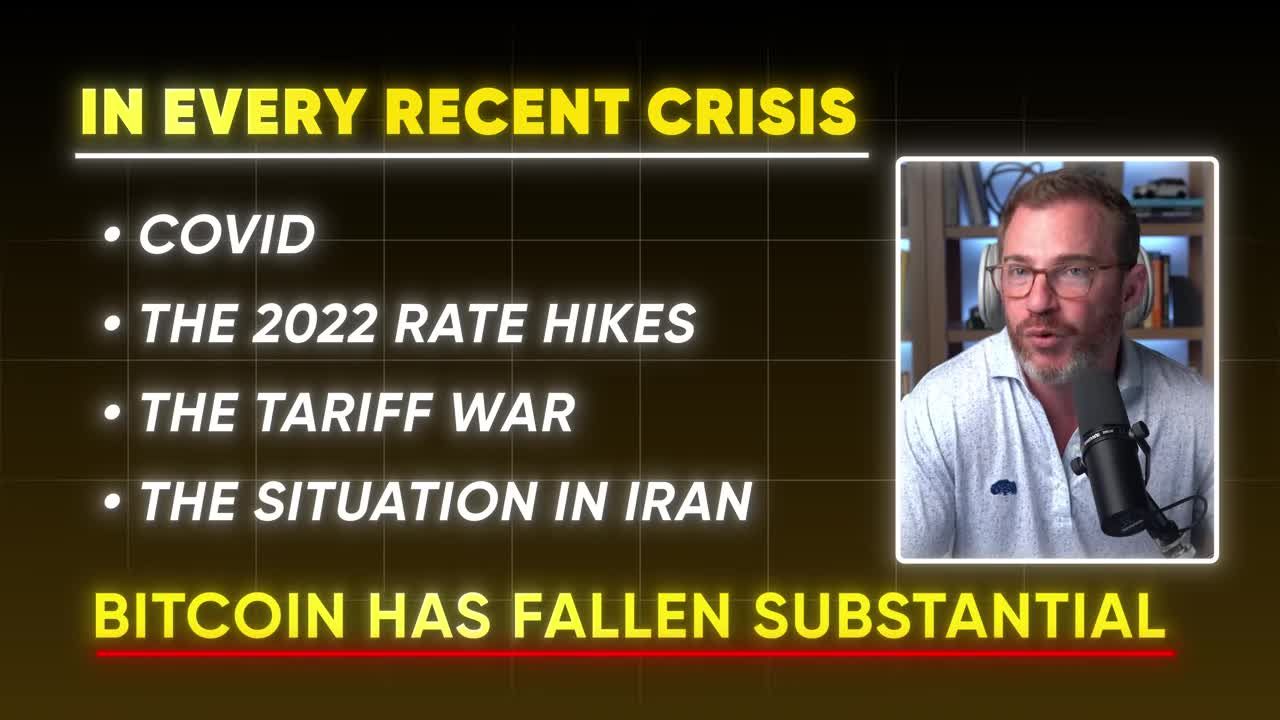
In every recent crisis: COVID, the 2022 interest rate hikes, the tariff war, the situation in Iran. In all of them, Bitcoin has fallen, sometimes substantially. That is the opposite of what a safe haven asset is supposed to do.
Many people believe Bitcoin could be a modern example of tulip mania. Tulip mania was one of the first recorded financial bubbles in the Netherlands in the 1600s. People became obsessed with rare tulip bulbs and started buying and selling them at higher and higher prices. At their peak, some bulbs were worth more than a house. Eventually, people realized the prices were crazy. They stopped buying, the market crashed, and prices collapsed almost overnight. Many people lost a lot of money. It is now used as a classic example of how hype and greed can cause prices to rise way beyond what something is actually worth.
People tend to hold very strong opinions on Bitcoin. Some believe it is a Ponzi scheme. Others think it is the currency of the future.
I am not a big crypto guy for a number of reasons. I am not against it. I love the idea of blockchain. What I do not love is the idea of putting my net worth on a flash drive and having it vanish if I forget my secret password. Maybe I am just getting old.
The idea of Bitcoin is that it serves as a digital store of value similar to gold. Its main appeal is that it cannot be influenced by governments or banks, which are very good things.
Do I think the government will stay hands-off on crypto if people actually start using it as a currency in real transactions and avoiding taxes? No. But that is just me.
Why Is Cash a Liability During a Currency Reset?
The world is moving towards central bank digital currencies, which means that cash risks becoming obsolete. A central bank digital currency, or CBDC, is basically digital cash created and backed by a country's central bank. Even though most money today feels digital, that money is still stored and managed by commercial banks. A CBDC would be official government-issued money that exists only in digital form.
When these digital currencies are introduced, cash becomes irrelevant. Therefore, it is not resilient to the future currency reset.
Real Estate: Somewhere in Between
Real estate sits somewhere in between. Property cannot be moved around, and it is easy to tax. It has obvious utility because it is used to live or work in. But due to being immovable and taxable, it does exist within the financial system, unlike gold and Bitcoin.
But it will always retain its intrinsic value as shelter. The more rural and self-sufficient the property is, the more resilient it becomes. Rural properties tend to be more safeguarded against uncertainty or civil volatility like rioting, pollution, or increases in crime.
Are Stocks Safe to Hold During a Currency Reset?
Stocks sit fully inside the system because they are priced in legacy currency. They require exchanges. They require stock brokers. In some respects, they are even more deeply entrenched in the system. This means they will be reshaped however the new system requires.
The Threat to Your Savings
What will the new system do with your savings, your pensions, your investment accounts, your large bank balances? This requires thinking about something uncomfortable: universal basic income.
UBI is the idea that governments will give every adult a set amount of money on a regular basis, no matter how rich or poor they are. Many argue that UBI may become necessary in the future because automation and AI are expected to replace many traditional jobs, making stable full-time work harder to find for a lot of people.
Legacy claims to savings may well be kept and tapered in order to fund this universal basic income. Smaller pensions will be largely protected. Larger ones will be partially honored. The largest ones will be quietly written down.
Building a Portfolio with Currency Reset Investments
If your wealth exists as a legacy asset within the system, that system will decide how it is converted, redirected, and what it is used for. Assets that do not need conversion, like gold and Bitcoin, will not face these pressures.
For people with no capital, the reset will feel like a good thing. For people with savings, it will feel like what it is: a seizure of assets. That is why we are seeing people rebalance their assets now, while they still have the agency to do so.
The time to explore currency reset investments is before the system dictates the terms. Ensuring a portion of your wealth is held outside the traditional banking infrastructure is one of the most important steps you can take.
Get an entire year of live weekly mentoring sessions, my newsletter, indicators, bonus reports, tons more. Click the link and I'll see you in the next live session.
Key Takeaways
- Currency resets follow a 75-to-100-year cycle, historically coinciding with events like the Great Depression, both World Wars, and the collapse of the Dutch Empire in the 1600s.
- During Germany's 1923 hyperinflation, currency destruction was so complete that people burned banknotes for heat because cash was cheaper than firewood.
- Gold is positioned as the primary currency reset investment because it exists outside the banking system and has historically preserved wealth across every major financial collapse.
- Cash loses purchasing power during a reset by design, making it one of the most dangerous places to hold savings when a currency devaluation is underway.
- The window to rebalance into hard assets matters: once the system dictates terms, individual agency to protect savings disappears.
DISCLAIMER: Traders Agency does not offer financial advice. The information provided is for educational purposes only and should not be considered financial advice. Traders Agency is not responsible for any financial losses or consequences resulting from the use of the information provided. Trading carries inherent risks and may not be suitable for all individuals. You are advised to conduct your own research and seek personalized advice before making any investment decisions, recognizing the potential risks and rewards involved.
See more from Traders Agency on Google
Make us a preferred source and our market analysis will appear more prominently in your Google Search, Top Stories, and AI results.
Add to Preferred Sources