
A YOLO trade is a high-conviction, highly concentrated speculative position where a trader risks a significant portion of their capital on a single market event. You've probably seen it on social media: a trader posts a screenshot of massive gains from a single aggressive options play. What you don't see is the blown-up account that usually follows.
We're going to walk you through a proper YOLO trades risk management strategy. Our team teaches traders how to handle these aggressive setups without destroying their portfolios. By the end of this guide, you'll know exactly how to structure high-conviction bets using defined risk parameters.
What Is the YOLO Strategy in Trading?
Bottom Line: YOLO trades are not inherently irrational, but they require strict allocation rules, defined risk instruments, and a clearly articulated thesis before entry. The traders who survive aggressive positions long-term are not the ones who bet bigger. They are the ones who protect capital first and treat high-conviction plays as rare, structured exceptions rather than a default approach.
The YOLO strategy in trading involves placing a highly concentrated, speculative bet on a single stock or asset, often using out-of-the-money options to maximize potential returns. Traders use this approach when they have extreme conviction in a specific market event, accepting a high probability of total loss in exchange for massive upside.
This approach gained enormous popularity during the meme stock era. Retail traders began sharing their aggressive positions online, creating a culture of all-or-nothing bets.
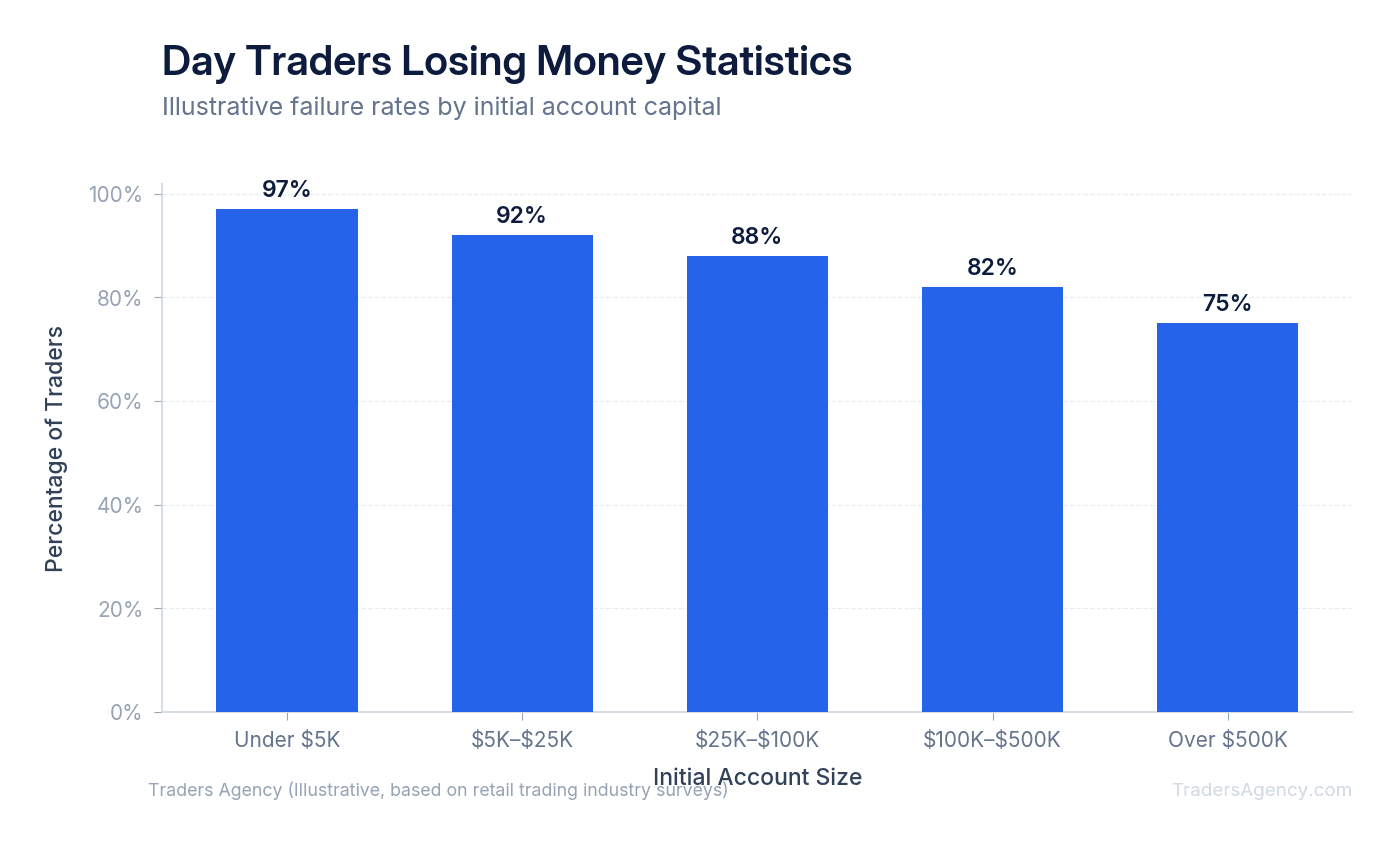
However, relying on hope is not a trading plan. The SEC's investor education resources frequently warn about the dangers of concentrated, speculative positions. We prefer to treat these setups as calculated asymmetric bets rather than lottery tickets.
Key Concept: A YOLO trade is not inherently reckless. The difference between gambling and a calculated asymmetric bet comes down to one thing: a defined risk management framework before you enter the position.
How Do YOLO Trades Actually Work?
A standard trade might risk 1% to 2% of your account on a technical breakout. A YOLO trade throws standard sizing out the window. Traders often allocate 10%, 20%, or even 50% of their capital into a single idea.
The mechanics usually involve buying short-dated, out-of-the-money (OTM) call options or put options. This creates massive leverage. If the underlying stock moves in the expected direction, the options can return hundreds or thousands of percent.
If the stock trades flat or moves against the position, the options expire worthless. The trader loses the entire allocated amount. This binary outcome is exactly why a strict YOLO trades risk management strategy is required to survive long-term.
What Is the Best Risk Management for YOLO Positions?
The best risk management for trading aggressive YOLO positions is strict position sizing combined with defined-risk options structures. You should never allocate more than 1% to 5% of your total portfolio to a single speculative idea, ensuring that a total loss does not permanently damage your trading account.
Our team recommends viewing these trades as an entirely separate bucket of capital. If you have a $100,000 portfolio, your speculative bucket should be no more than $5,000.
Within that bucket, you still need strict rules. You can't throw the entire $5,000 into one earnings play. You must divide that speculative capital into smaller, distinct opportunities.
Portfolio Allocation Rules for Aggressive Bets
We teach our members to use a tiered allocation system. This protects your core capital while still allowing for aggressive upside exposure.
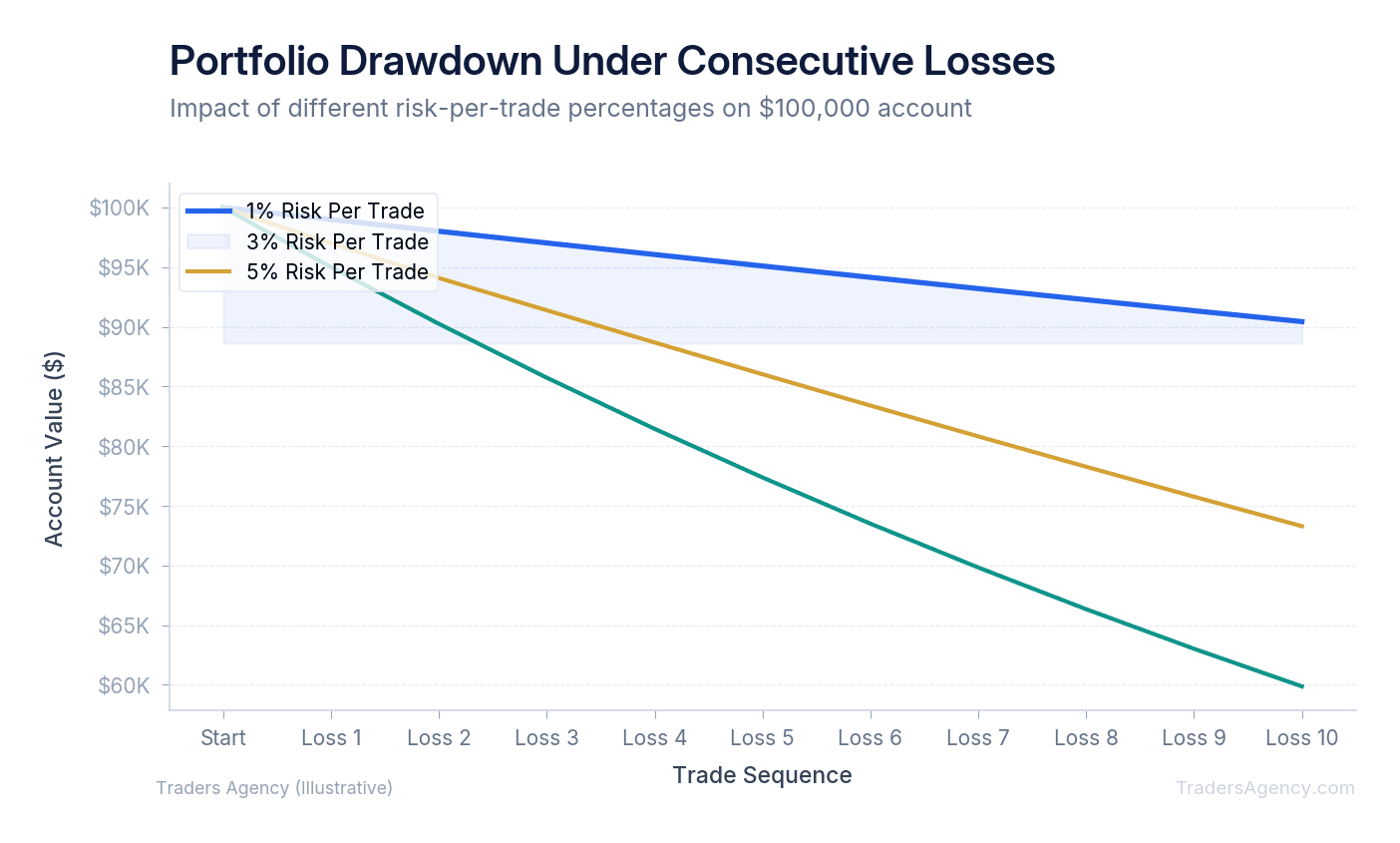
Here's exactly how we structure capital for different trading styles:
| Allocation Tier | Portfolio % | Description |
|---|---|---|
| Core Portfolio | 80-90% | Conservative investments, broad market index funds, and long-term holds |
| Swing Trading | 5-15% | Standard technical setups with strict stop losses and normal position sizing |
| Speculative / YOLO | 1-5% | High-risk, high-reward plays where you accept 100% loss potential |
If you want to execute an aggressive trade, you only pull from that 1% to 5% allocation. If that specific bucket goes to zero, your main portfolio remains completely intact. This separation is the foundation of any sustainable trading career.
Want expert trading insights delivered daily?
Join thousands of traders who rely on Traders Agency for market analysis and trade ideas.
Join Traders AgencyShould You Use Options or Stocks for a YOLO Trade?
Many traders try to execute aggressive bets by buying shares of a highly volatile stock on margin. This is a massive mistake. If the stock gaps down overnight, you can lose more than your initial margin deposit.
Instead, our team prefers using a YOLO trade defined-risk options structure. Buying calls or puts inherently caps your maximum loss to the premium paid.
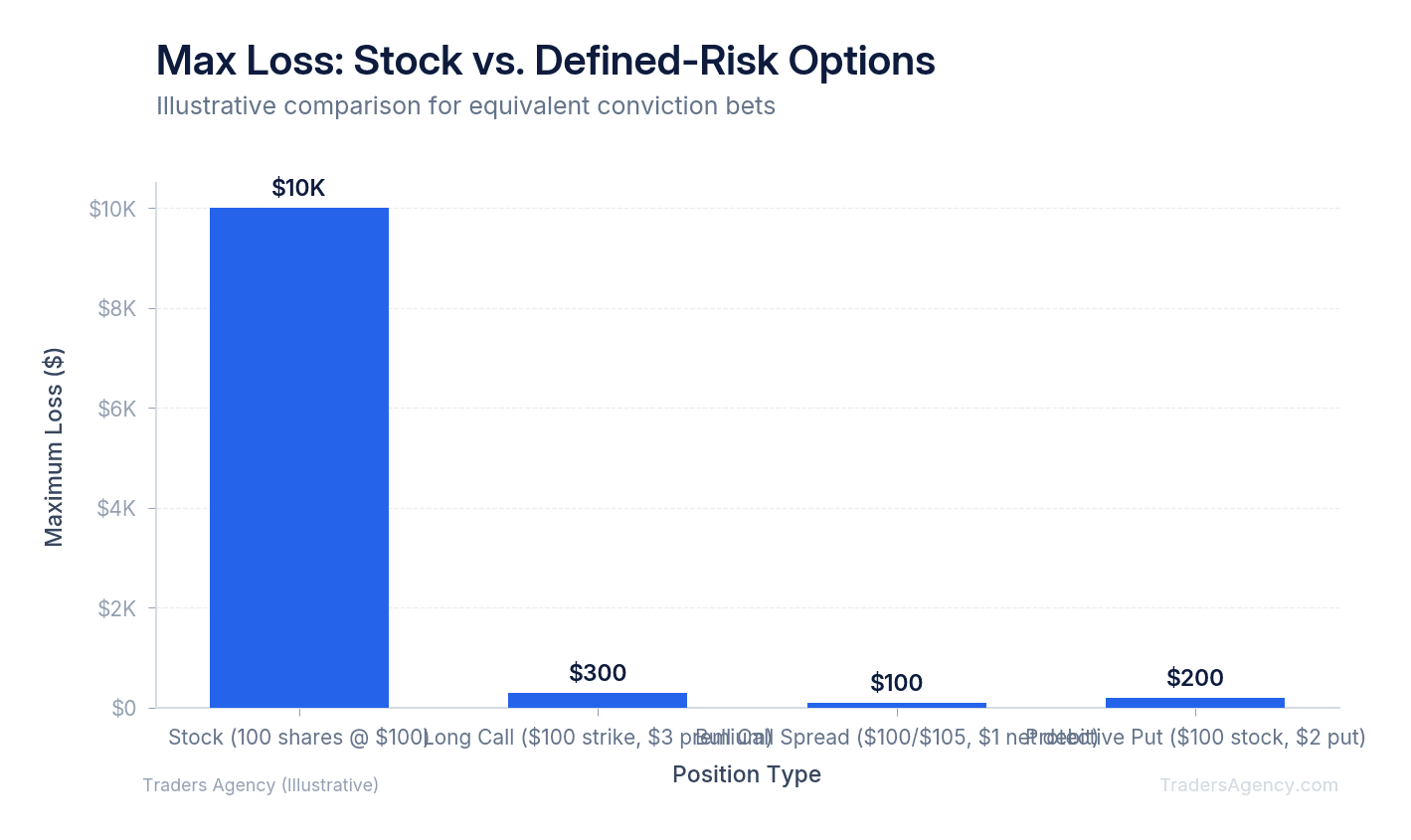
Scenario 1: Buying Stock on Margin
Imagine you want to bet aggressively on XYZ stock, currently trading at $100. You buy 1,000 shares on margin, controlling $100,000 worth of stock with roughly $50,000 in margin capital (under standard Reg T requirements).
If the company announces bankruptcy overnight, the stock might open at $20. You just lost $80,000, which far exceeds your $50,000 margin deposit. You now owe your broker money.
Scenario 2: Defined-Risk Options
Instead of buying shares, you buy 10 contracts of the $105 strike call options expiring in two weeks. The premium is $2.00 per contract.
| Parameter | Stock on Margin | Defined-Risk Options |
|---|---|---|
| Capital Controlled | $100,000 (1,000 shares) | 1,000 shares equivalent of upside exposure (10 contracts × 100 shares) |
| Total Cost / Capital at Risk | $50,000 (margin deposit for $100,000 position) | $2,000 (10 contracts × 100 × $2.00) |
| Maximum Loss | $100,000 (full position value, can exceed margin deposit) | $2,000 (strictly capped at premium paid) |
| Margin Call Risk | Yes | No |
If the stock goes to zero, your maximum loss is strictly capped at $2,000. This defined-risk structure is built into long options by design: you can never lose more than the premium you paid. This is the core of a functional YOLO trades risk management strategy.
Watch Out: Buying stock on margin for aggressive bets can result in losses that exceed your margin deposit. You can literally end up owing your broker money. Always use defined-risk options structures when making speculative plays.
Setting Stop Losses on Speculative Plays
Even when using defined-risk options, you don't always have to hold until expiration. Implementing stop losses on speculative plays preserves capital for the next opportunity.
Options premiums decay rapidly. If you buy a short-dated call and the stock doesn't move within three days, the option loses significant value due to theta decay.
Here are the two stop-loss methods we use for aggressive positions:
- Time-Based Stop Losses: If the anticipated market event doesn't occur within 48 hours, we close the trade. Holding and hoping is a guaranteed way to drain your account. Set a hard calendar deadline before you enter the position.
- Premium-Based Stop Losses: Set a hard stop at a 50% loss of the option premium. If you paid $2.00 for the contract, you sell immediately if the bid drops to $1.00. This approach requires extreme discipline. Many traders hold losing options hoping for a miraculous reversal, and that reversal rarely comes.
Key Concept: The best YOLO trade you'll ever make is the one where you cut your loss early and preserved capital for a better setup. Discipline on exits matters more than conviction on entries.
Why Does Social Media Make YOLO Trading Look More Profitable Than It Is?
Any comprehensive YOLO trades risk management review must address the psychological trap of social media. You log online and see a trader turning $1,000 into $50,000 overnight.
This creates a severe case of survivorship bias. People only post their massive winners. They quietly hide their devastating losses from the public eye.
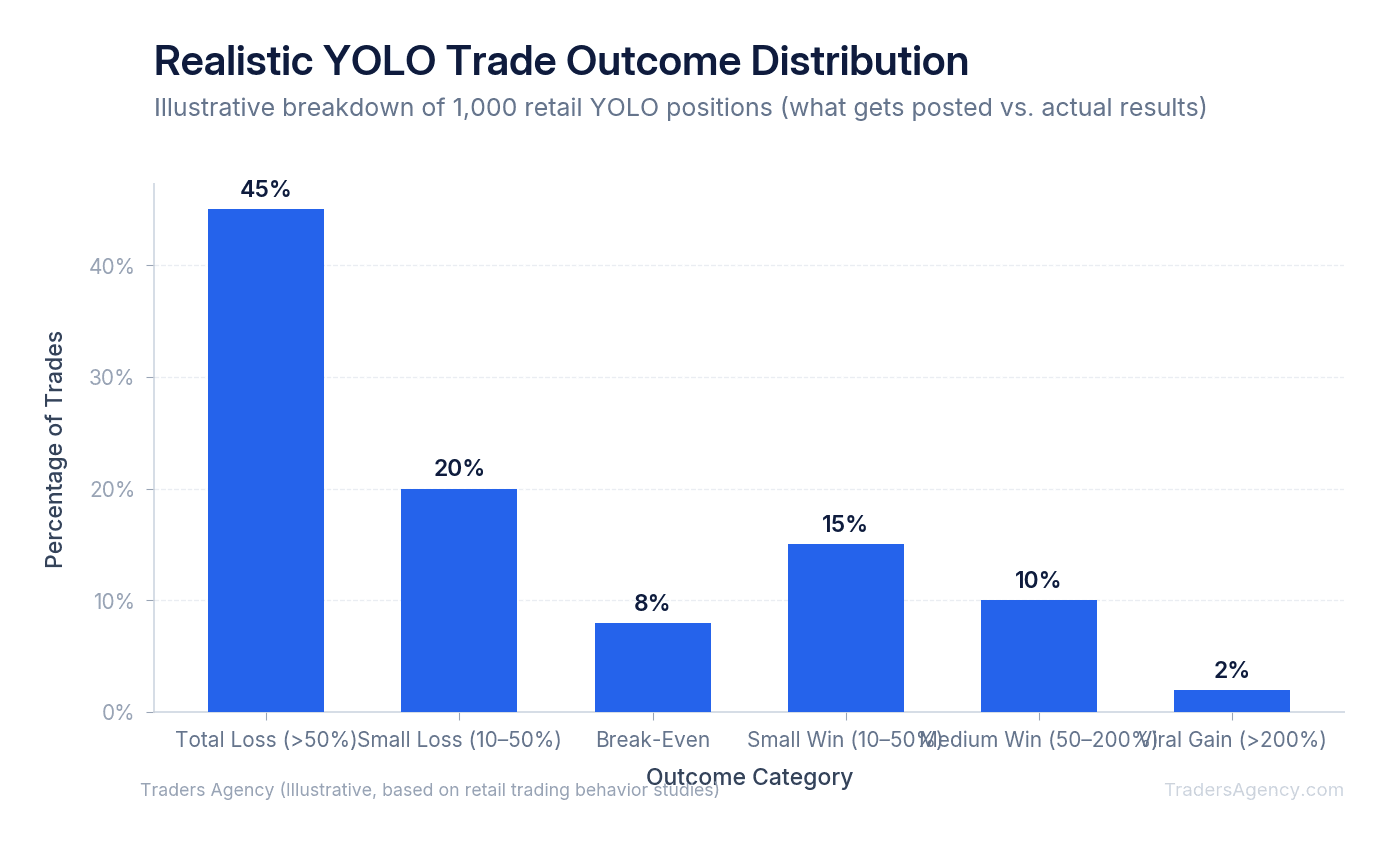
When you look at day traders losing money statistics, the reality is harsh. Retail trading industry surveys consistently show that the vast majority of undercapitalized traders blow up their accounts within the first year.
You're seeing the 1% of trades that worked out perfectly. You're ignoring the 99% of identical setups that expired worthless and wiped out the trader's account.
Watch Out: Every viral gain screenshot represents dozens (sometimes hundreds) of identical trades that failed. Before you size up based on someone else's win, ask yourself: "Would I be comfortable if this trade goes to zero?" If the answer is no, your position is too large.
When Should You Avoid a YOLO Trade?
You should avoid a YOLO trade when market volatility is already extremely high, making options premiums too expensive. You must also avoid these trades if you're trying to recover from previous losses. Revenge trading almost always leads to larger drawdowns and emotional decision-making.
Our team teaches that you should never force a speculative bet. The market doesn't care about your desire to make money quickly.
Here are the specific conditions where we tell our members to stay on the sidelines:
- High implied volatility environments: When the VIX is elevated, options premiums are inflated. You're paying more for the same bet, which destroys your risk-to-reward ratio.
- Major macroeconomic announcements: Federal Reserve rate decisions, CPI releases, and jobs reports create unpredictable price action that can trigger stop losses in both directions before establishing a clear direction.
- After a losing streak: If you've taken consecutive losses, step away. The urge to "make it back" with one big trade is the fastest path to blowing up your account.
- When the thesis is unclear: If you can't articulate your edge in one sentence, you don't have one. Skip the trade.
Keep your speculative bets rare. Wait for a massive dislocation in the market where the risk-to-reward ratio heavily favors your thesis. Protect your capital first, and the outsized gains will take care of themselves.
Our education team publishes new strategy guides and market analysis every week. If you're serious about building a structured approach to aggressive trading, we'd love to have you in the community.
Want expert trading insights delivered daily?
Join thousands of traders who rely on Traders Agency for market analysis and trade ideas.
Join Traders AgencyKey Takeaways
- A YOLO trade is defined by two conditions: extreme concentration in a single position and acceptance of a high probability of total loss in exchange for outsized upside.
- Defined risk through options (where max loss is capped at the premium paid) is structurally safer than taking a concentrated stock position with an undefined downside.
- Survivorship bias distorts how retail traders perceive YOLO success rates. Social media surfaces the wins and buries the blown accounts.
- If you cannot articulate your trade thesis in one sentence, the position lacks a real edge and should be skipped entirely.
- Speculative bets should be reserved for genuine market dislocations where the risk-to-reward ratio heavily favors your thesis, not deployed as a routine strategy.
DISCLAIMER: Traders Agency does not offer financial advice. The information provided is for educational purposes only and should not be considered financial advice. Traders Agency is not responsible for any financial losses or consequences resulting from the use of the information provided. Trading carries inherent risks and may not be suitable for all individuals. You are advised to conduct your own research and seek personalized advice before making any investment decisions, recognizing the potential risks and rewards involved.
See more from Traders Agency on Google
Make us a preferred source and our market analysis will appear more prominently in your Google Search, Top Stories, and AI results.
Add to Preferred Sources