

The US government is quietly taking massive equity stakes in publicly traded companies, creating a new wave of government backed penny stocks and large-cap winners in the process. Over the past 16 months, $21 billion has been deployed across 15 specific deals, and every single one of those stocks ripped higher the day the news broke.
Forget everything you learned about how the federal government works. The administration is no longer just handing out grants. They are taking equity, preferred stock, warrants, convertible notes, price floors, and revenue shares.
This isn't speculation. It is a documented pattern. The government deployed $21 billion across 15 specific deals in 16 months. The uranium sector is next, and three specific stocks are positioned directly in the crosshairs.
What Happens When the Pentagon Buys a Stake in a Penny Stock?
Bottom Line: The core argument is that the federal government has quietly shifted from grants to direct equity stakes, creating a repeatable, documented pattern where targeted stocks spike on announcement. With the uranium sector facing a 2028 Russian import ban and no domestic enrichment alternative locked in, Centrus, UEC, and URG are positioned as the most likely beneficiaries of the next deal. Spreading exposure across all three before any announcement is the risk-managed way to play the pattern.
On July 10th of last year, the Pentagon took a 15% stake in a rare earth company called MP Materials. The stock jumped 50% that day. It doubled inside two weeks. It finished up 338% on the year.
Since that MP Materials deal, Uncle Sam has executed this exact playbook 14 more times. The capital deployment is staggering:
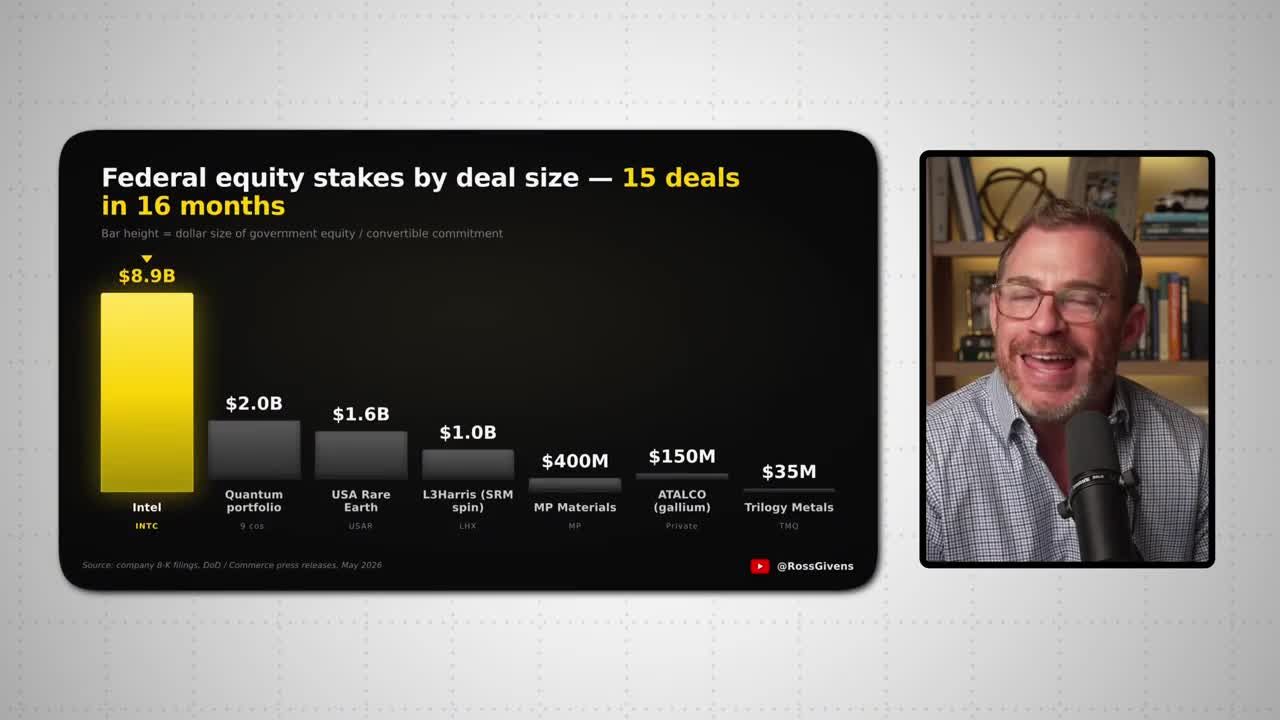
The key players orchestrating this capital are Howard Lutnik at Commerce, Scott Bent at the Treasury, and the Pentagon's Office of Strategic Capital. They are not throwing darts. They have a strict, repeatable pattern.
The Six-Box Checklist
Every single deal checks the exact same six boxes. Hit all six, you get a check from the federal government.
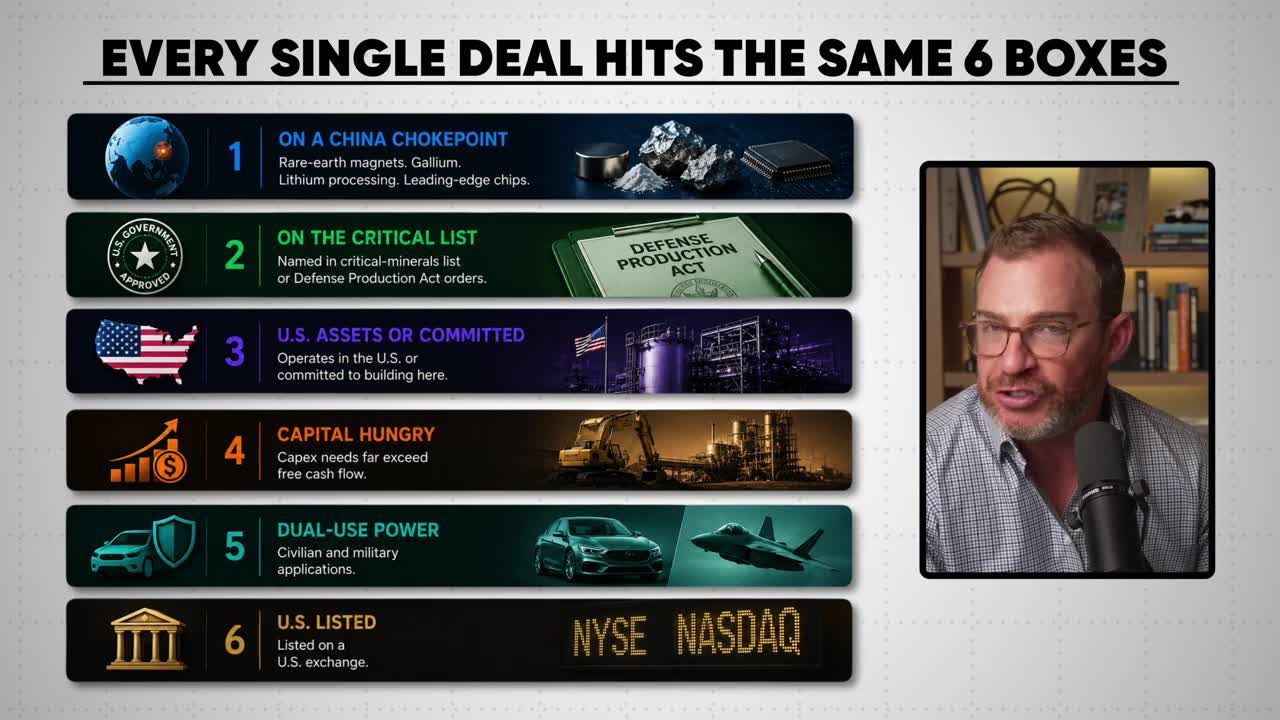
- Chinese supply chain choke point. The company must sit on a critical vulnerability: rare earth magnets, gallium, lithium processing, or leading-edge chips.
- Critical minerals designation. The asset is on the critical minerals list or explicitly named in a Defense Production Act executive order.
- Domestic footprint. US assets on the ground, or a full commitment to building them.
- Massive capital needs. Capex requirements that dwarf free cash flow. These companies are hungry for capital.
- Dual-use applications. The technology serves both civilian and military purposes.
- US exchange listing. The company trades on a US stock exchange.
The Pre-Deal Pattern
The sequence that precedes each equity stake is even cleaner. It happens the same way every time.
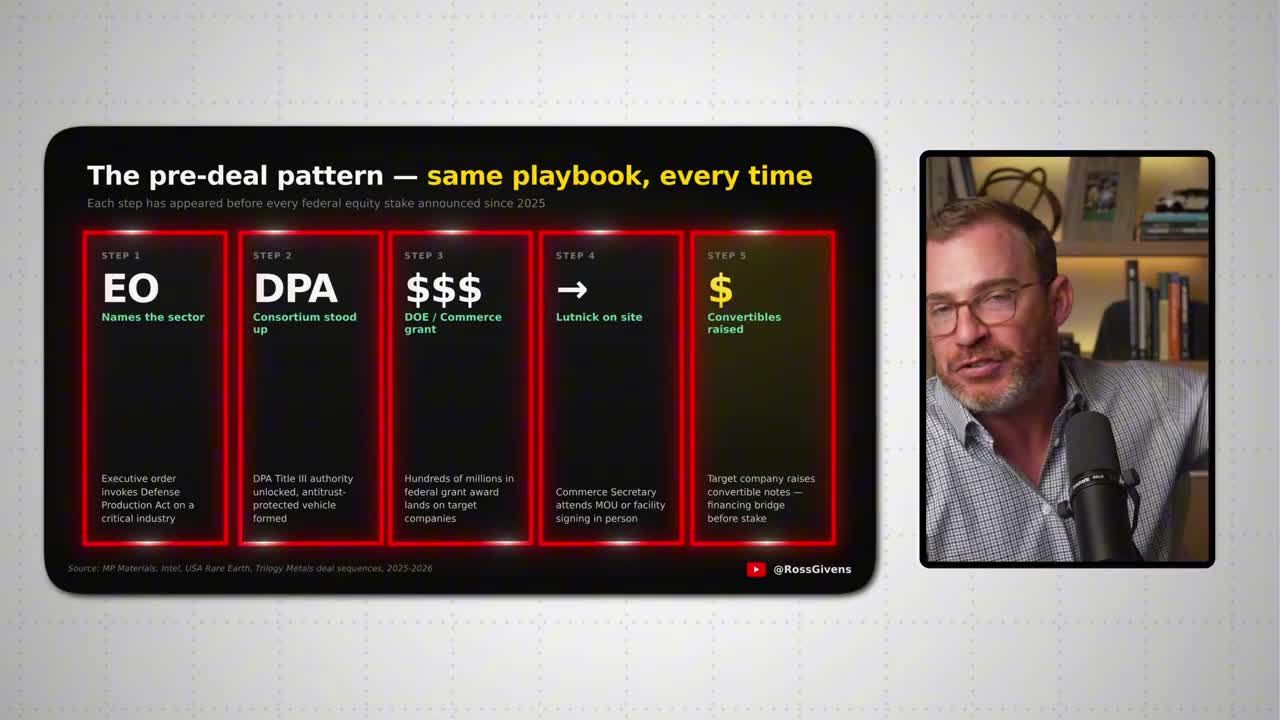
Step 1: An executive order is signed. Step 2: The Defense Production Act is invoked. Step 3: A Department of Energy or Commerce grant is awarded. Step 4: Howard Lutnik shows up at the physical site. Step 5: The company quietly raises convertible notes.
Then the big equity stake hits the tape, and the stock jumps 50% to 100%. Right now, that exact pattern is fully in place on one specific sector.
Why Is Uranium the Next Sector for a Government Equity Deal?
On May 23rd of last year, President Trump signed four executive orders on nuclear energy. One of them, called the Reinvigorating the Nuclear Industrial Base Act, explicitly invokes the Defense Production Act to secure agreements with domestic uranium enrichers. That is the exact same legal hook the administration used for MP Materials, Lithium Americas, and USA Rare Earth.
Then, in January of this year, the Department of Energy awarded $2.7 billion to restore American uranium enrichment. The capital was split three ways:
Same playbook as Intel. Grant first, equity after.
There is a hard deadline driving this urgency. The waiver that allows US utilities to keep buying Russian-enriched uranium expires in 2028. America needs domestic capacity online before then.
To make this setup even hotter: Howard Lutnik personally attended the signing of a memorandum of understanding between Centrus and two Korean energy companies to expand the Pickicket enrichment plant in Ohio. He showed up in person, just like he did with MP Materials and USA Rare Earth right before those deals were announced.
My best guess is that the next equity stake will hit within 90 to 100 days. Maybe sooner.
Get an entire year of live weekly mentoring sessions, my newsletter, indicators, bonus reports, tons more. Click the link and I'll see you in the next live session.
Join my Black Ops Trading ClubWhich Uranium Stocks Are Most Likely to Benefit from a Government Stake?
The uranium fuel cycle is the next domino. Based on the Pentagon's six-box checklist and the pre-deal pattern, these three names are positioned directly in the path of government capital.
1. Centrus Energy (LEU)
Centrus is the lead horse. They are the only American-owned company that can produce low-enriched uranium for power plants and high-enriched uranium for the Navy and the nuclear weapons stockpile. They operate the only working Halo enrichment cascade in the United States, located in Pickicket, Ohio.

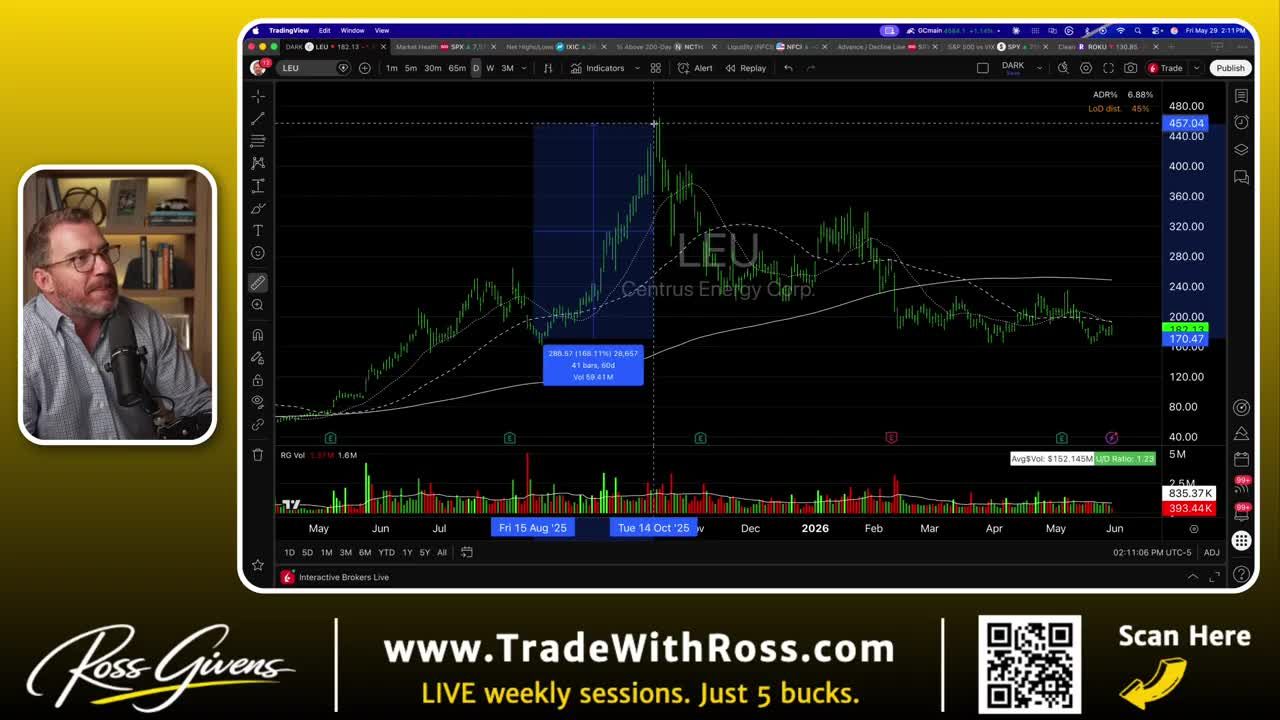
Market cap is around $4 billion. The stock has already proven it can make monster moves. It went more than 5x in a 12-month window. A 200% move in 46 days, followed by another 170% run in two months. It reached $470 a share six months ago, then violently reset.
That's exactly what you want to see. The big move happened once, but the next trigger hasn't hit yet. The stock is currently basing and forming a price floor in the $180 to $200 per share range. Volume is tightening up.
Every pre-deal tell is already in place for LEU. Sole source designation from the National Nuclear Security Administration. A $900 million DOE grant. Lutnik on site at the MOU signing in January. And in November of last year, Centrus raised $85 million in convertible notes.
That convertible note raise is the exact same financing bridge MP Materials used right before its government deal. Maybe it's coincidental. But this looks like a company quietly clearing its balance sheet for a buyer.
2. Uranium Energy Corp. (UEC)
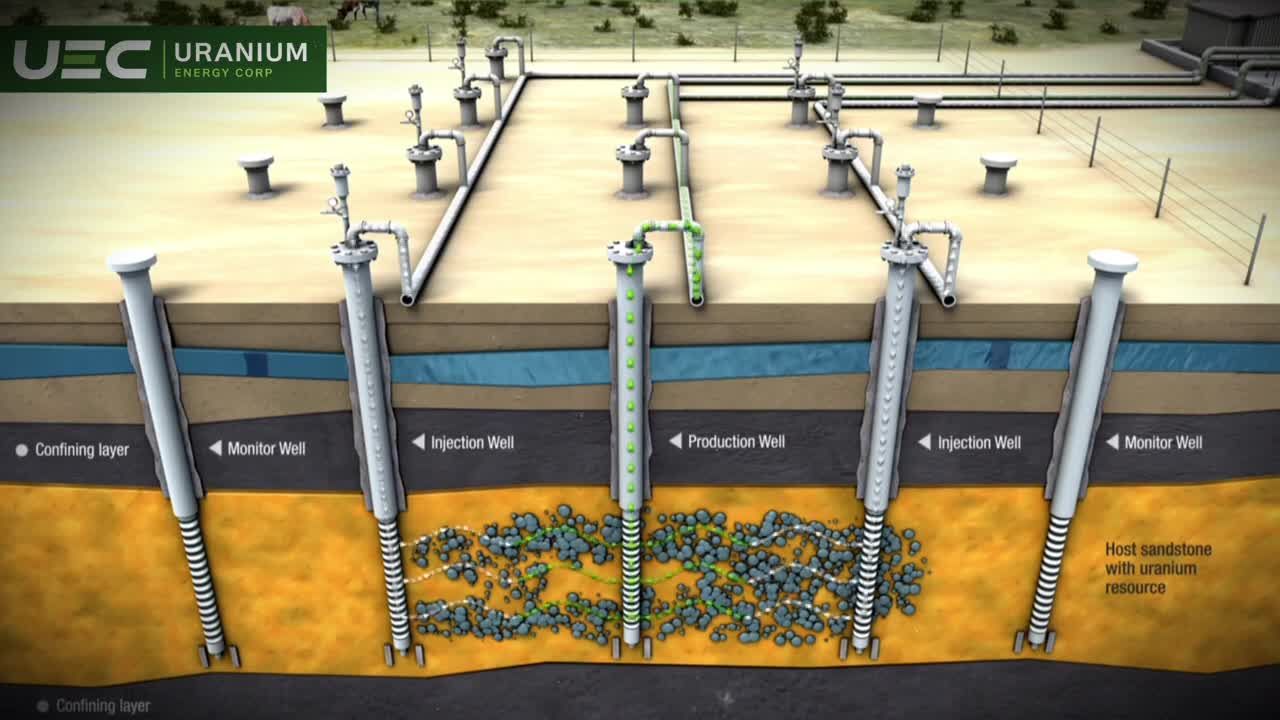
UEC is the upstream play. Centrus enriches the uranium. UEC mines it. They are the largest ISR uranium producer in the United States, with operations in Wyoming and South Texas and a licensed capacity of around 12 million pounds a year.
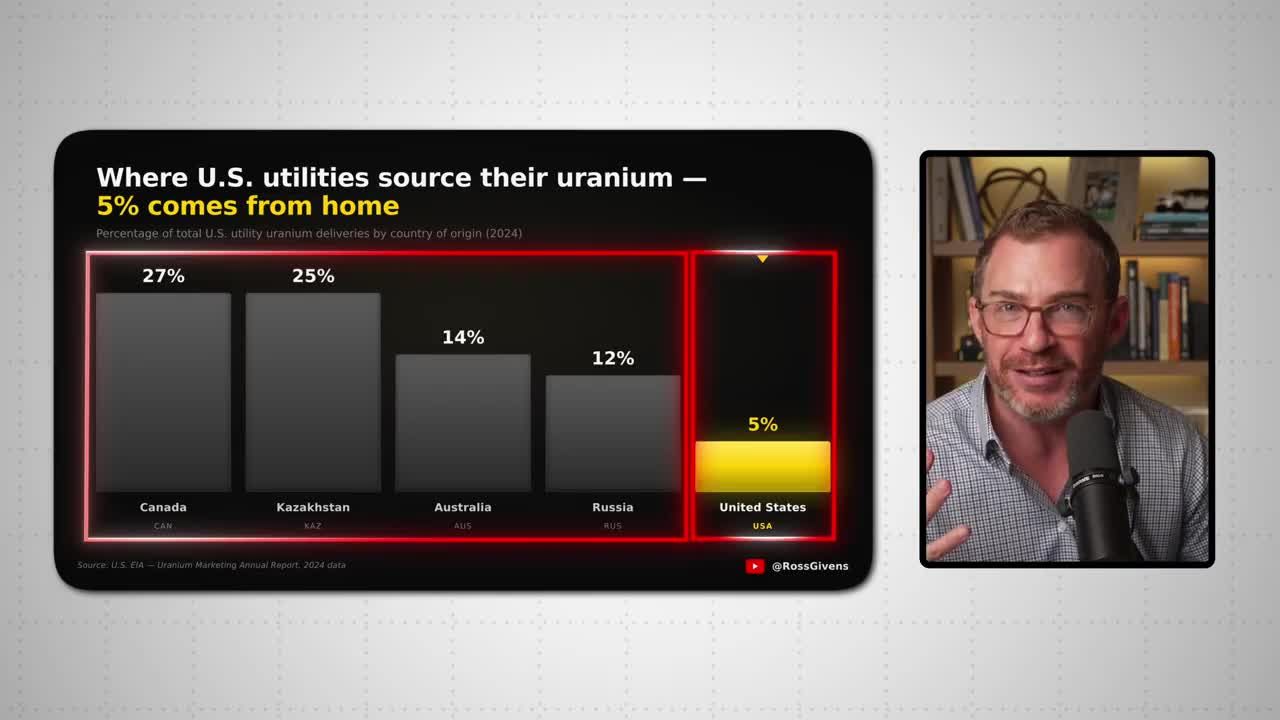
Right now, America imports almost all of its uranium. Only about 5% comes from domestic production. For the country that built the A-bomb, that is a massive national security vulnerability. That's the gap UEC fills.
Last September, UEC quietly spun up a new subsidiary called US Uranium Refining and Conversion Corp. There has been no commercial uranium conversion done on US soil since 2017, when Honeywell idled the Metropolis, Illinois plant. That gap must be filled for the Defense Production Act consortium to actually function. UEC is positioning to fill it.
The commodity backdrop is doing the heavy lifting. Uranium hit $101 a pound earlier this year. We are in a multi-year uptrend on the metal, making the equity even more attractive to the federal partner. UEC checks every single box.
3. Ur-Energy (URG)
This is the asymmetric kicker. Ur-Energy is a $600 million small cap. The stock trades under $2 a share. If you are looking for government backed penny stocks with explosive upside, this is the lottery ticket.
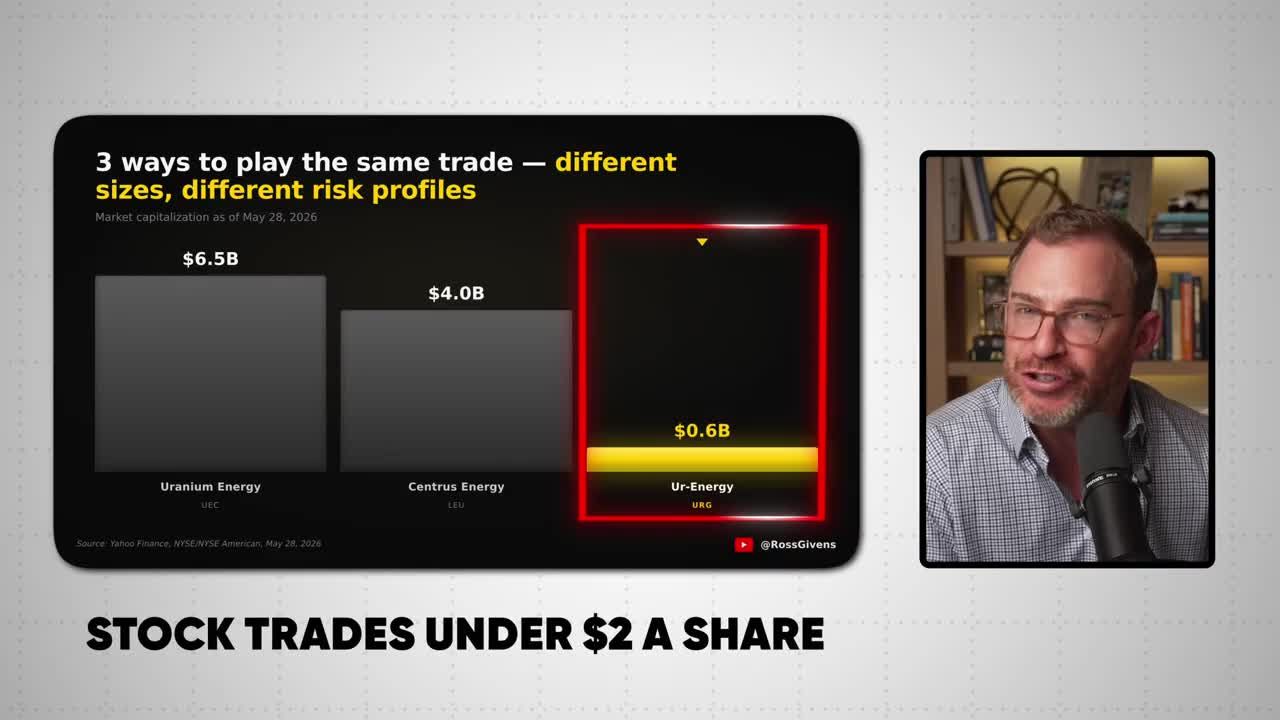
Ur-Energy already holds a Department of Energy uranium reserve contract. They are one of only five US companies qualified to sell uranium directly to the Federal Strategic Reserve.
Unlike companies still waiting on a roadmap or a study, Ur-Energy is producing right now. Their Lost Creek facility in Wyoming is actively producing. They are ramping deliveries from 440,000 pounds last year to 1.2 million pounds this year.
To achieve that scale, they need capital expenditures for the Shirley Basin expansion. This is the exact setup the administration loves: a producing asset, a national security designation, and a capital need that the company cannot fund alone. This is the kind of government backed penny stocks setup that has preceded every major equity deal so far.
Because risk and reward are both larger on a small cap like URG, don't size up too big until it proves itself. It's better to add to the position as the stock advances.
What Could Break This Trade
Two things would kill this thesis.
Risk #1: Loans instead of equity. Energy Secretary Wright has signaled a loans-only approach for small modular reactor builders. If the administration sticks to that treatment for the fuel side, no more MP-style equity deals happen. Personally, I expect the administration to keep doing exactly what they've been doing. But the policy risk is real.
Risk #2: Wall Street figures out the pattern first. Right now, nobody is positioning for this. But if institutional money catches on before the announcement, they'll start buying, and the price will rise in advance of the news. This window of opportunity will not stay open forever.
Both risks are manageable. Yes, this involves speculation on a future timeline. But the technology is real, and the pattern is crystal clear. This playbook has worked 15 times in a row.
The Next Domino to Fall
The US government has proven it is willing to deploy billions to secure domestic supply chains. They have already committed $21 billion across 15 deals, and the uranium sector is flashing every single pre-deal signal we've seen in the past. The emergence of government backed penny stocks in the uranium space could mirror the explosive gains seen in rare earths and critical minerals.
Centrus is the front door. UEC is the upstream backbone. URG is the asymmetric kicker.
Don't bet the farm on any single one of them. The smartest move is to spread your risk across all three names before the next equity stake hits the tape. The pattern is fully in place, and the clock is ticking toward that 2028 Russian import ban.
Get an entire year of live weekly mentoring sessions, my newsletter, indicators, bonus reports, tons more. Click the link and I'll see you in the next live session.
Key Takeaways
- The US government has deployed $21 billion across 15 equity deals in 16 months, with every single target stock rising sharply on announcement day.
- The MP Materials deal set the template: the Pentagon took a 15% stake on July 10th of last year, the stock jumped 50% that day, doubled within two weeks, and finished the year up 338%.
- Deal sizes range from $8.9 billion for Intel down to smaller commitments in rare earths and critical minerals, with instruments including preferred stock, warrants, convertible notes, and revenue shares.
- Three uranium stocks are flagged as the next likely targets: Centrus Energy as the front door play, Uranium Energy Corp as the upstream backbone, and Ur-Energy as the asymmetric, higher-risk kicker.
- The 2028 Russian uranium import ban is the hard deadline driving urgency, and the thesis is that a government equity stake in the uranium sector will follow the same pattern already documented 15 times.
DISCLAIMER: Traders Agency does not offer financial advice. The information provided is for educational purposes only and should not be considered financial advice. Traders Agency is not responsible for any financial losses or consequences resulting from the use of the information provided. Trading carries inherent risks and may not be suitable for all individuals. You are advised to conduct your own research and seek personalized advice before making any investment decisions, recognizing the potential risks and rewards involved.
See more from Traders Agency on Google
Make us a preferred source and our market analysis will appear more prominently in your Google Search, Top Stories, and AI results.
Add to Preferred Sources