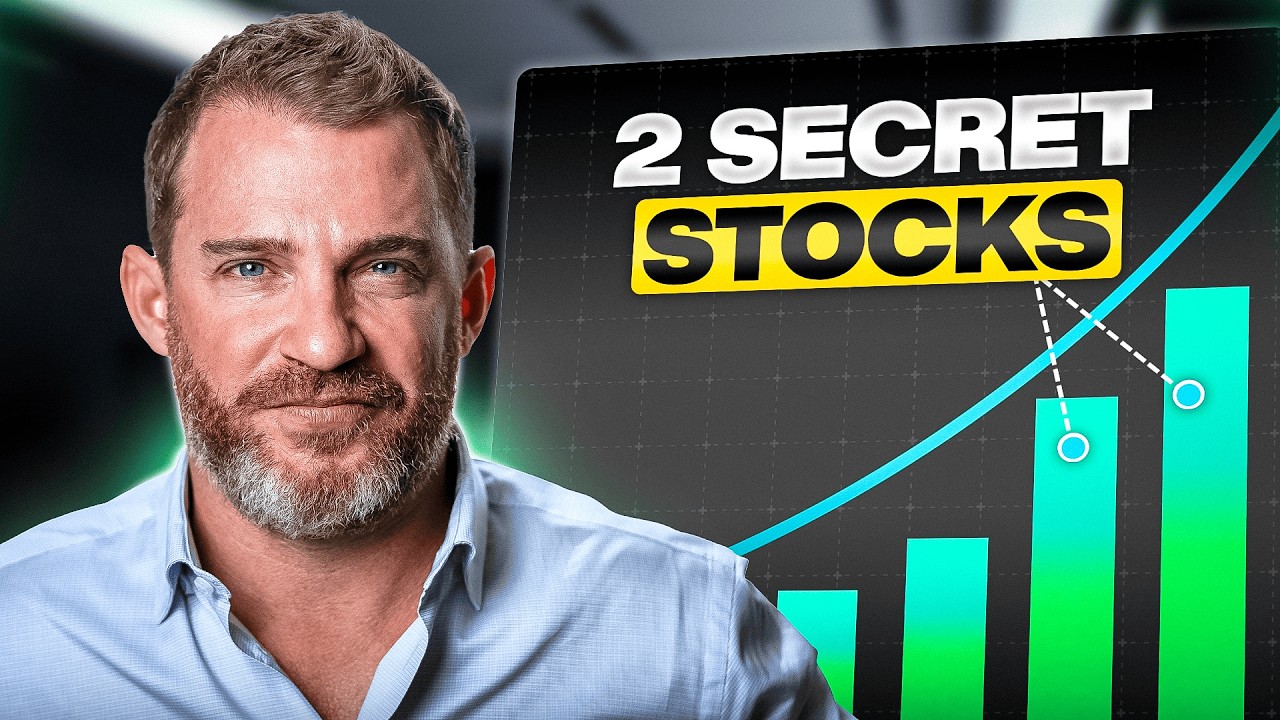
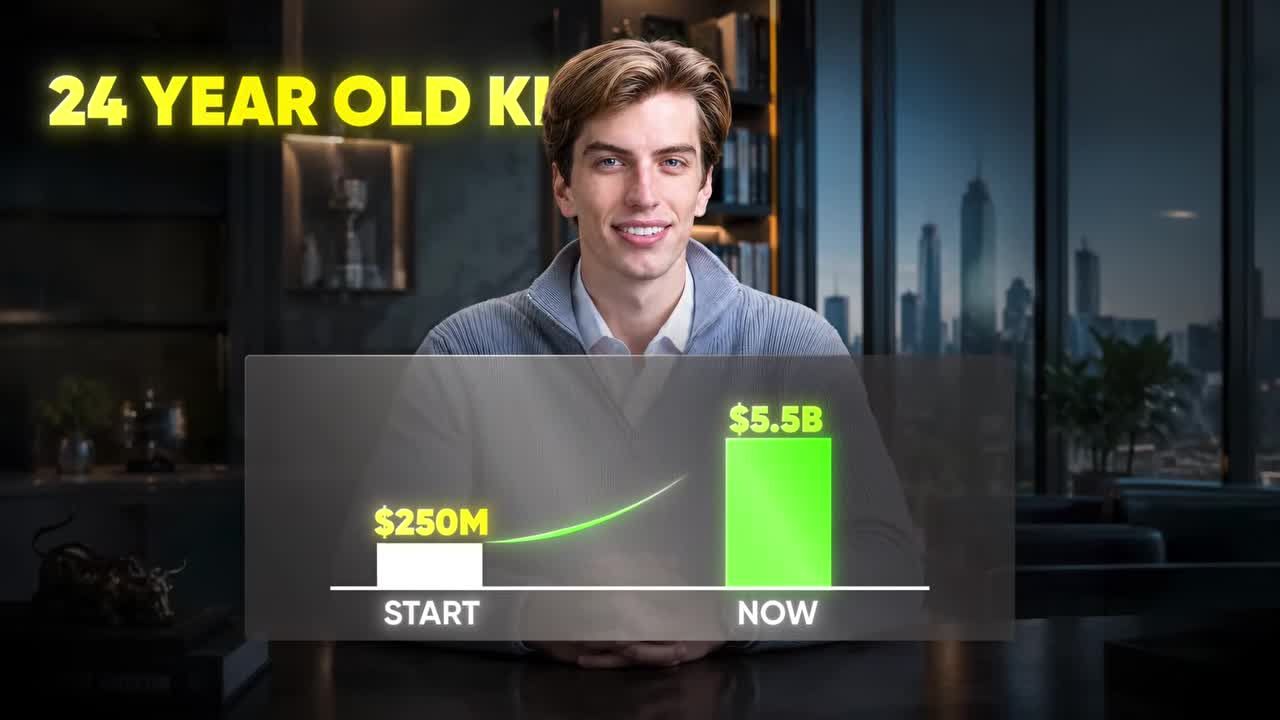
Eighteen months ago, a 24-year-old kid took $240 million of investor capital and turned it into $5.5 billion. He did it with one idea: artificial intelligence. Last week, he filed his newest stock picks with the SEC. His name is Leopold Aschenbrenner, and his latest leopold aschenbrenner stock picks reveal a stunning shift in how he's playing the AI boom.
He just placed an $8.5 billion bet against the AI chip trade that made him rich. At the same time, he's loading up on two new stocks he thinks will be the big winners of 2026.
Who Is Leopold Aschenbrenner?
Bottom Line: Aschenbrenner is no longer betting on who builds the AI chips. He is betting on who keeps the lights on. His two new positions in Riot Platforms and CleanSpark reflect a conviction that electricity and power infrastructure are the real constraint on trillion-dollar AI clusters, and that the chip trade has already peaked.
Two years ago, almost nobody knew this name. Aschenbrenner is a German-born prodigy who graduated from Columbia at 19, top of his class. He landed at OpenAI, working on their safety team.
In 2024, he was out. He published a now-famous essay called Situational Awareness. It made one argument: artificial intelligence was about to become the most powerful force in the global economy, and almost nobody was positioned for it.
Then he did something most essay writers never do. He put his money where his mouth is. In September 2024, he launched an investment fund. He raised roughly a quarter of a billion dollars. And the backers weren't nobodies. The Collision brothers who built Stripe. Nat Friedman. Daniel Gross. Silicon Valley's smartest money handed this kid their cash.
$240 Million to $5.5 Billion: Leopold Aschenbrenner Stock Picks That Delivered
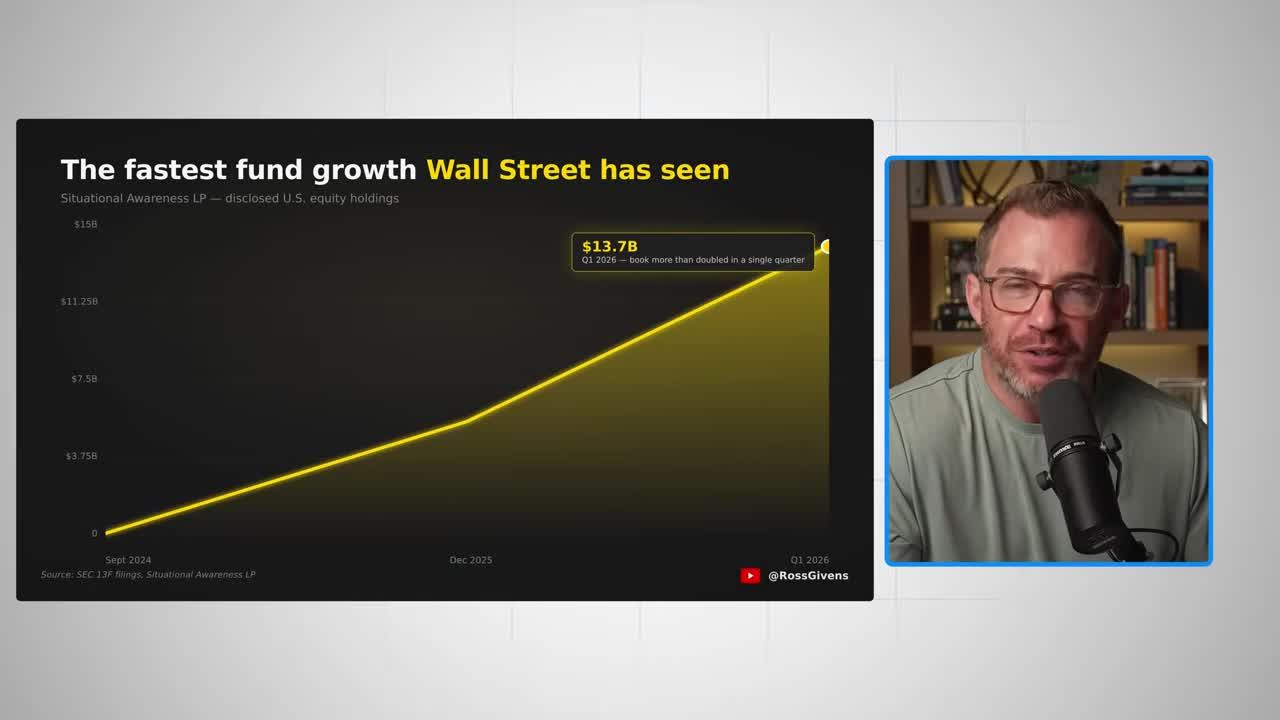
By the end of 2025, that fund's US stock holdings had ballooned to $5.5 billion. Today, the book is north of $13 billion. In a single year, this kid beat the S&P 500 by almost 100 percentage points. A once-in-a-generation performance year from a guy who can't rent a car without paying the young driver surcharge.
How did he do it? He didn't chase Nvidia like everybody else. He went one layer underneath the AI story, to the picks and shovels, the unglamorous stuff the whole boom actually runs on.
His track record is staggering:
- Bloom Energy: Fuel cells that power data centers when the grid can't keep up. Bought near $18 a share. Today it trades close to $300.
- SanDisk: Memory and storage. Bought around $42. Now north of $1,400.
- Lumentum: Optical gear that moves data inside AI data centers. Bought at $59. Now over $900 a share.
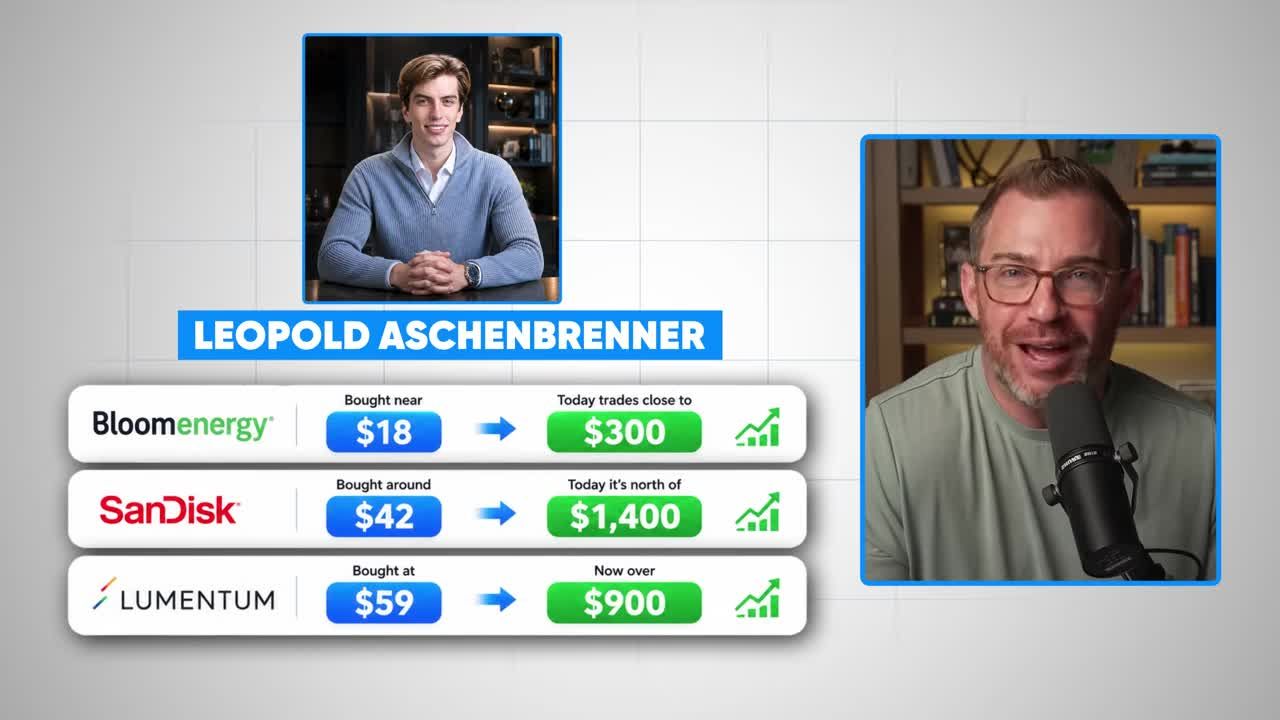
Three picks. Every one of them a monster. While Wall Street piled into the same five mega-cap names, this kid was quietly buying the infrastructure underneath them. And he got paid.
What Did Leopold Aschenbrenner's Latest SEC Filing Reveal?
Big funds are legally required to file a 13F form each quarter showing what they own. It's a peek inside the smart money's portfolio. Last week, Aschenbrenner filed his Q1 2026 13F, and it was one of the most watched filings of the quarter.
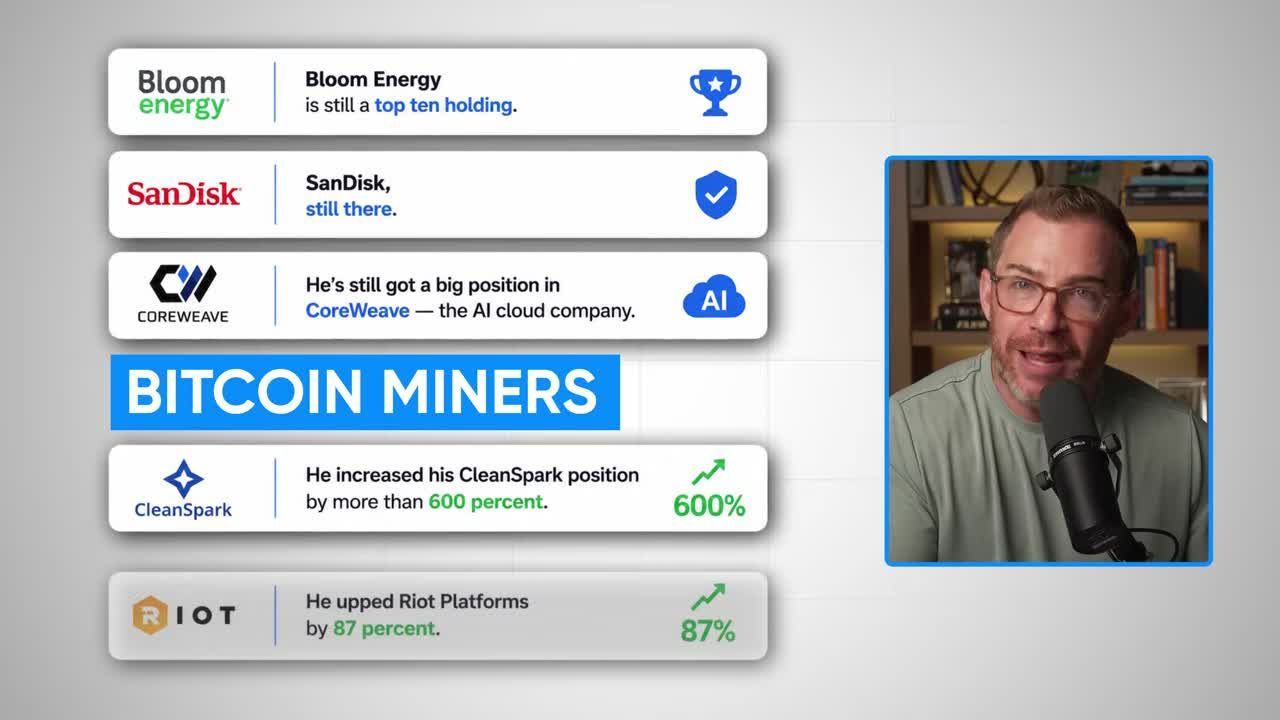
The first thing that jumps out: he did not abandon the AI infrastructure trade. Bloom Energy is still a top 10 holding. SanDisk is still there. He still has a position in CoreWeave, the AI cloud company. And he loaded up on something new.
Which 2 Stocks Is Leopold Aschenbrenner Buying Now?
The most surprising leopold aschenbrenner stock picks in the filing are two Bitcoin miners. He increased his CleanSpark (CLSK) position by 648%. He also upped his stake in Riot Platforms (RIOT) by 87%.
Why would an AI investor buy crypto miners? It has nothing to do with Bitcoin.
Those miners own something incredibly valuable right now: power, land, and ready-built data center shells. Half of them are pivoting away from mining Bitcoin and into hosting AI computing. He's not betting on crypto. He's betting on electricity.
The Trillion-Dollar Cluster
Why electricity is the real bottleneck
To understand these picks, you have to look at the math behind AI data centers. AI systems need a giant "brain gym" to get smarter. That brain gym is really just a huge collection of powerful computer chips packed into a building, all working together. The bigger the gym, the smarter the AI can get. The size of that gym is measured by two things: how many chips it holds and how much electricity it eats.
Computing power has been getting bigger at a steady, predictable pace for almost 10 years. Every year, the amount of computing power roughly triples. Aschenbrenner says it's so steady you could draw a line on a graph and it would go straight up.
Here's the exact progression he maps out:
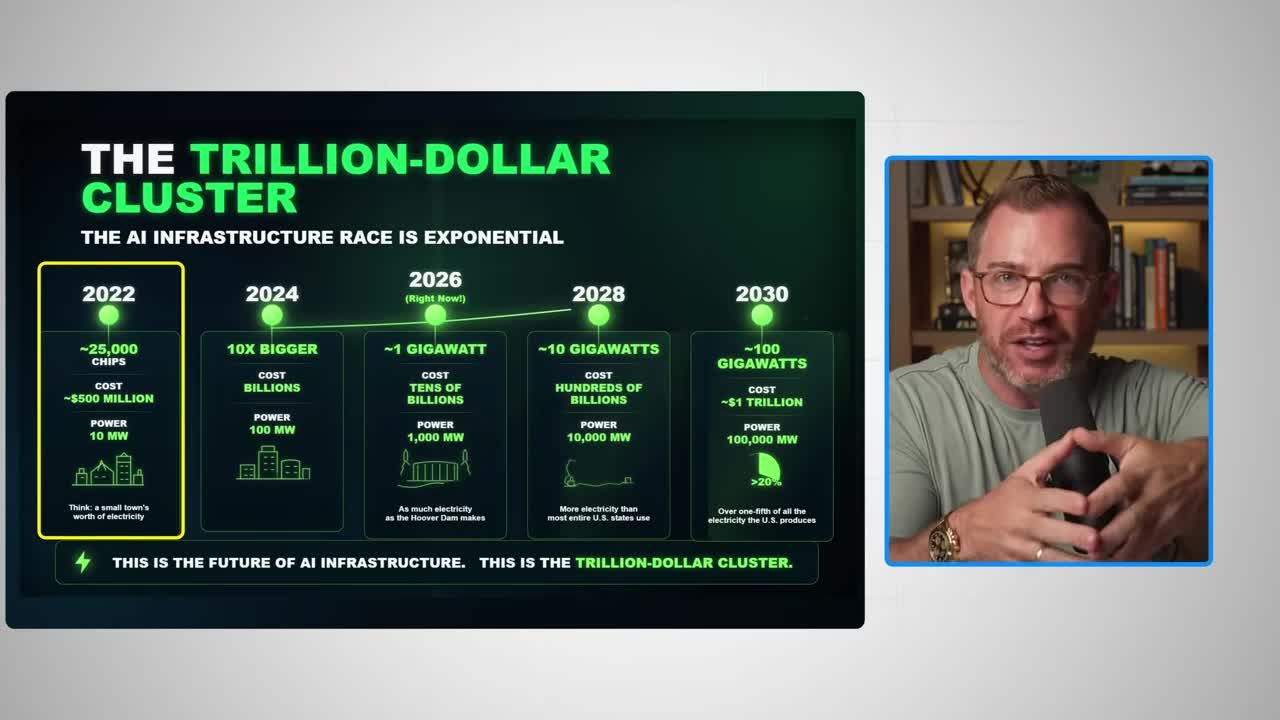
And that's just the training cluster. Once people are actually using the AIs every day, asking questions and getting answers (what he calls inference), you need even more chips on top of that. Meanwhile, US electricity production has been almost flat for decades. America barely builds new power plants.
The big puzzle he's solving is where on earth all this electricity will come from. That's exactly why he owns Bloom Energy, CleanSpark, and Riot Platforms.
Get an entire year of live weekly mentoring sessions, my newsletter, indicators, bonus reports, tons more. Click the link and I'll see you in the next live session.
Join my Black Ops Trading ClubWhy Is Aschenbrenner Betting $8.5 Billion Against AI Chips?
While he's buying power assets, he's aggressively betting against the hardware that runs on them. Aschenbrenner just opened $8.5 billion of notional value in brand new put options. Puts are bets that a stock will go down. And look at the list of what he's now betting against: basically every major chip and semiconductor name on the board.
An $8.5 billion bet against the exact trade that made him rich.
A quick note on how options math works here. The $8.5 billion reported on the SEC filings is the notional value, meaning how much stock the options represent. He did not actually spend $8.5 billion on these puts. In reality, these puts probably cost him a couple hundred million dollars. If he's wrong, he won't blow up his fund.
But it is still a big downside bet. The young man who saw the AI boom before anyone is now buying downside protection against the chip makers powering it.
Which Chip Stocks Are at Risk?
The list of his new put options reads like a roster of Wall Street's favorite tech stocks.
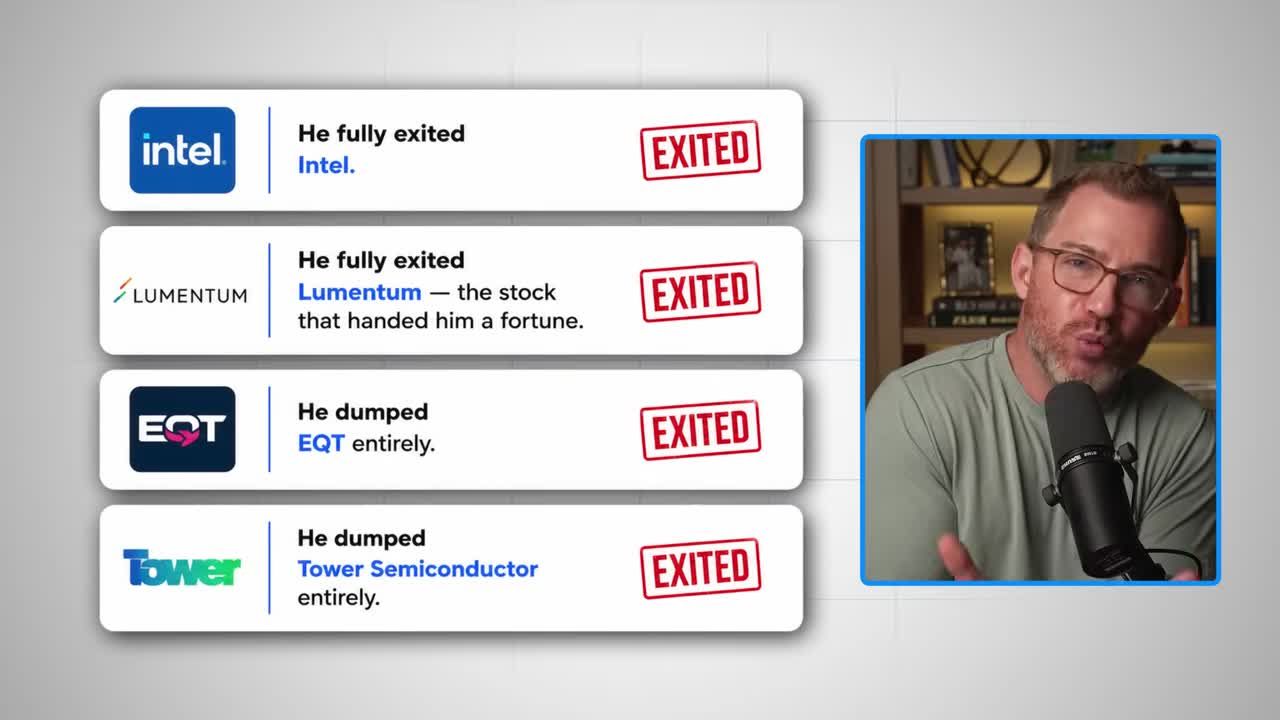
He also cleaned house on several former winners. He fully exited Intel. He dumped his entire stake in Lumentum, the very stock that just handed him a fortune. He also made full exits from EQT and Tower Semiconductor (TS).
He did buy call options on Micron (MU), calls on Taiwan Semi (TSM), and calls on SanDisk, showing he still sees selective upside in specific memory and manufacturing plays. But the overwhelming weight of his chip trades is now positioned for a drop.
Two Ways to Read This
1. The Responsible Hedge
His book doubled in three months. Any smart manager sitting on gains like that buys a little insurance. You keep your winners. You pay a small premium to protect the downside. It's boring, but it's responsible. That's probably what's going on.
2. Calling the Top on Chips
The second reading is much more aggressive. He thinks the chip stocks have run too far, too fast, and he's positioning for a fall while holding on to the power and infrastructure names that still have room to run.
Either way, the positioning is crystal clear. He kept his AI infrastructure stocks and went short big tech and semiconductors.
What Leopold Aschenbrenner Stock Picks Tell Us About the AI Trade Rotation
The complete summary: his new positions are all put options against SMH, Nvidia, Oracle, Broadcom, AMD, Micron, Taiwan Semi, and others. He also bought call options on Micron, Taiwan Semi, and SanDisk. His biggest increases were CleanSpark (CLSK), up 648%, and Riot Platforms (RIOT), up 87%, the two Bitcoin miners he believes will transition to the AI side.
His biggest trims: CoreWeave knocked down 83%. Bloom Energy trimmed by about a third. Full exits in Intel, Lumentum, EQT, and Tower Semiconductor (TS).
This kid just outran every professional on Wall Street, and he seems to have the pulse of the AI trade before it rotates. The latest leopold aschenbrenner stock picks say the real bottleneck is power, and he's placed big bets on Riot Platforms (RIOT) and CleanSpark (CLSK) to profit from it.
Get an entire year of live weekly mentoring sessions, my newsletter, indicators, bonus reports, and a ton more. Click the link and I'll see you in the next live session.
Key Takeaways
- Leopold Aschenbrenner grew his fund from $240 million to $5.5 billion in roughly 18 months by betting early on AI infrastructure stocks.
- His latest SEC filing reveals an $8.5 billion short position against AI chip stocks, a direct reversal of the trade that made him rich.
- He is now buying Riot Platforms (RIOT) and CleanSpark (CLSK), signaling his thesis that power and energy infrastructure are the next AI bottleneck.
- He fully exited Intel, Lumentum, EQT, and Tower Semiconductor, rotating out of chip-adjacent names entirely.
- Aschenbrenner's fund was backed by the Collison brothers (Stripe), Nat Friedman, and Daniel Gross, giving it serious Silicon Valley credibility from launch.
DISCLAIMER: Traders Agency does not offer financial advice. The information provided is for educational purposes only and should not be considered financial advice. Traders Agency is not responsible for any financial losses or consequences resulting from the use of the information provided. Trading carries inherent risks and may not be suitable for all individuals. You are advised to conduct your own research and seek personalized advice before making any investment decisions, recognizing the potential risks and rewards involved.
See more from Traders Agency on Google
Make us a preferred source and our market analysis will appear more prominently in your Google Search, Top Stories, and AI results.
Add to Preferred Sources