
There is a severe industrial metal shortage developing that no amount of money can fix quickly. A massive supply deficit in copper is forming, and the companies that see it early are already locking up supply. Finding the right copper stocks to buy is becoming the most urgent investment thesis of the year.
Commodities don't trade like stocks. Gold, oil, steel, copper. They do nothing for decades, then explode. Gold went nowhere for more than 10 years, then took off like a rocket. The move in silver was even bigger. Before that, cocoa exploded. But the big opportunity today isn't a currency metal like gold and silver. It's an industrial metal, the one that actually powers the economic growth everyone is betting on.
Copper is the physical backbone of the future.
We are in the early stages of a commodity super cycle. Inputs have been underpriced for decades. Inflation is going to be significantly higher in the years to come, and miners simply cannot produce enough copper to meet the massive wave of data center demand.
What Is Causing the Current Copper Shortage?
Bottom Line: The copper trade is not a short-term momentum play. It is a structural supply deficit story built on decades of underinvestment meeting an unprecedented wave of electrification and data center demand. The central conviction is that copper must reprice significantly higher, and the time to build a position is before that repricing becomes obvious to the broader market.
Surging data center demand meets a 25% supply shortfall
The current copper shortage is driven by a massive spike in data center demand colliding with a projected 25% shortfall in mining supply. Years of underinvestment in exploration, aging mines, and recent chemical export bans from China have severely restricted the ability to produce refined copper.
Stanley Druckenmiller, without question one of the greatest investors of all time, revealed that he holds a substantial position. He calls it a "big consensus trade with no meaningful supply for the next eight years."
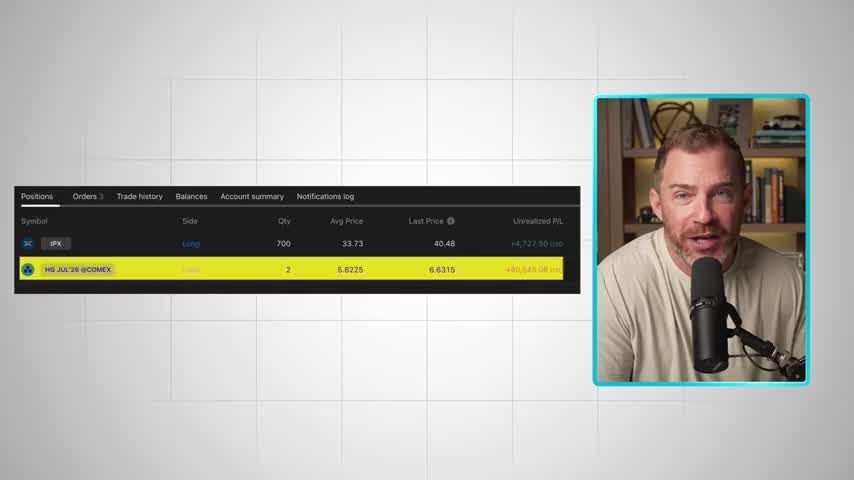
I'm not just talking about this. I own 50,000 pounds of copper through two July futures contracts. That position is currently up around $40,000 and counting. I am eating my own cooking, and I'm not selling any of it. I'm getting ready to buy more.
Amazon Bought a Dead Mine
And China just cut off the chemical you need to refine copper
Amazon Web Services is the backbone of the modern internet, and they recently took unprecedented action. Instead of buying copper on the open market, Amazon signed a direct supply deal with the mining giant Rio Tinto. The copper mine involved was completely dead. The Johnson Camp mine in Arizona had not produced copper in over a decade.
Amazon is resurrecting it because they don't believe the copper they need will be available later.
Rio Tinto is restarting this mine using experimental technology called bioleaching, a process that uses bacteria and acid to pull copper out of low-grade rock that miners used to throw in the trash. Amazon is the most sophisticated logistics company on Earth. If copper were easy to buy, they'd just buy it. Instead, they're bringing a mine back from the dead to lock up supply.
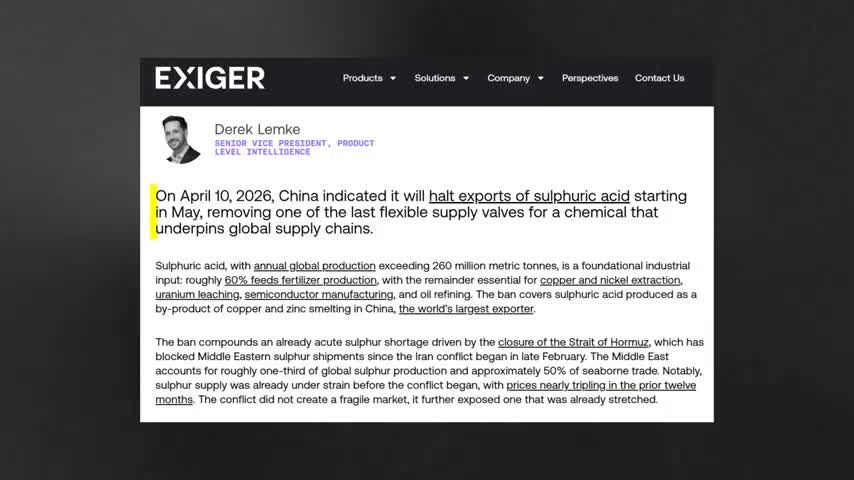
On the refining side, the situation is equally dire. Since the 1960s, the industry has used sulfuric acid to process lower-grade oxide ores and stretch the supply. You cannot refine copper without sulfuric acid anymore. Earlier this year, China, the world's largest exporter, banned sulfuric acid exports from May through at least December. Add in the Iran conflict in the Middle East and the closure of the Strait of Hormuz disrupting global shipments through the Red Sea, and the math gets very simple.
Less acid means less refined copper. The shortage is going to get even worse.
Why Is Copper Demand Soaring Right Now?
AI, electrification, and a $400 billion grid upgrade are all fighting over the same pile of red metal
Artificial intelligence is the modern version of the gold rush. Copper is both the picks and the shovels. Without copper, there is no AI.
When you save a document to Google Drive or back up your phone to iCloud, there is no magical cloud. You're storing it on servers in massive windowless concrete buildings packed with silicon chips that run hotter than a pizza oven. Every time you ask AI a question, a processor spins up, draws electricity, and creates heat. To keep that chip from melting, fans roar, coolant pumps cycle, and industrial air conditioning works overtime. All that electricity and heat requires infrastructure, and that infrastructure is copper.
A regular Google search uses a tiny amount of power. An AI query can use 10 to 100 times more. As chips get faster to handle increasing loads, they also get hotter. We've passed the limits of air cooling. Fans just don't cut it anymore. The next generation of data centers rely on liquid cooling, pipes running coolant directly across the chips. The best material for moving heat efficiently is copper.
Amazon doesn't just need copper for the wires. They need it for transformers, bus bars, heat exchangers, and cooling systems. Aluminum isn't good enough because it conducts less, expands more, and creates fire risk. Fiber moves data, not power. Silver could substitute, but it's 200 times the price.
Copper is non-negotiable. No copper means no data centers, and no data centers means big tech's AI dreams never become reality.
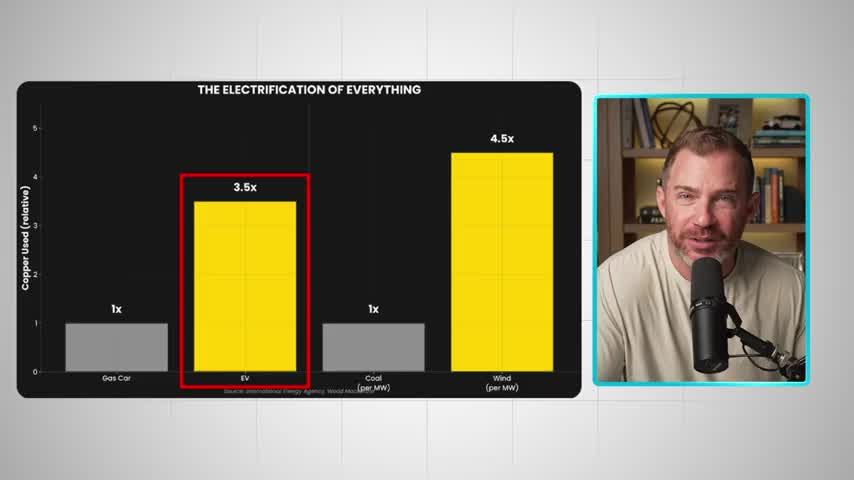
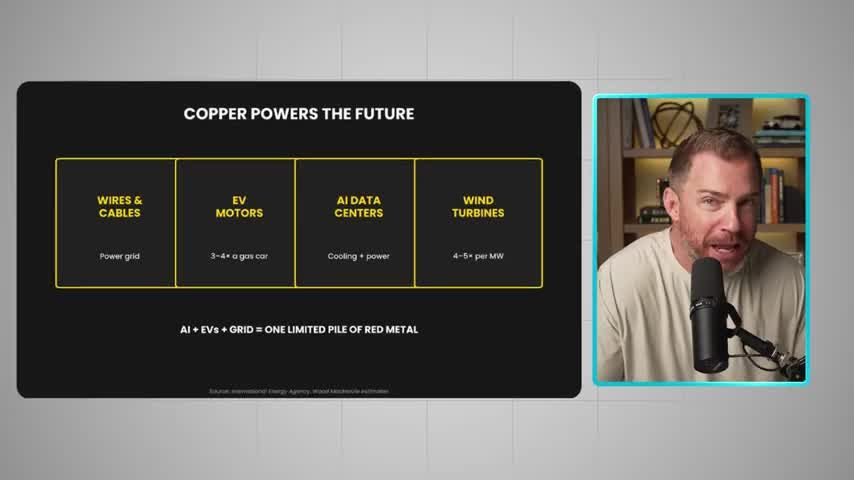
If it were just AI, we might manage. But we're electrifying everything. An EV uses three to four times more copper than a gas car. Wind turbines use four to five times more copper per megawatt than coal. The US power grid itself is ancient, and the federal government is investing over $400 billion upgrading it. By 2030, grid demand alone could reach 15 million tons of copper. They're all fighting over the same limited pile of the stuff.
Get an entire year of live weekly mentoring sessions, my newsletter, indicators, bonus reports, tons more. Click the link and I'll see you in the next live session.
Join my Black Ops Trading ClubWill Higher Copper Prices Actually Fix the Supply Problem?
Today's shortage was 15 years in the making
Basic economics suggests that higher prices should bring more supply. Mining doesn't work that way.
After the last commodity crash, miners cut exploration budgets. They fired geologists. They trimmed expenses and focused on dividends instead of discovery. Now we're paying the price. It takes 15 to 20 years to bring a major copper mine online. That timeline includes discovery, drilling, permits, infrastructure, power, and roads. Even if we started 10 massive projects today, they wouldn't produce meaningful copper until the late 2030s.
Existing mines are aging, and the easy copper is gone. Grades that were once 5% are now 0.5%. The supply simply cannot catch up to the demand curve.
Futures vs. Mining Stocks: Copper Stocks to Buy
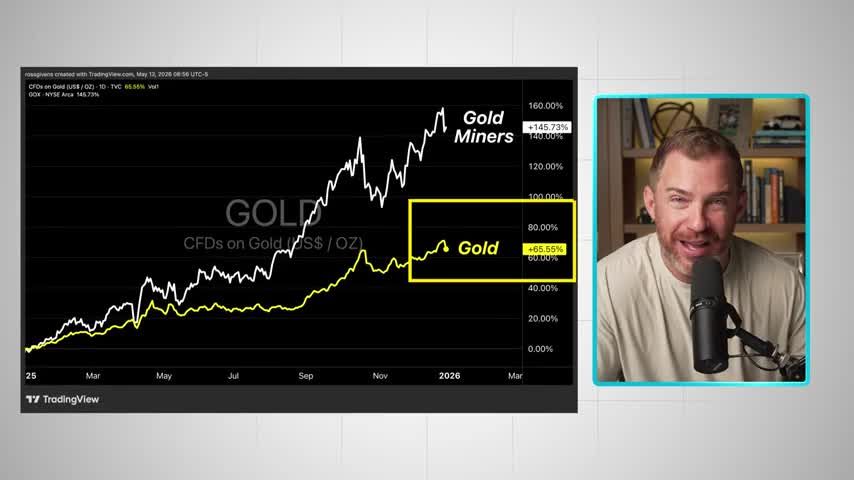
Why equities can outperform the metal itself
The hard part about owning physical copper is the storage. At $6.50 a pound, a $13,000 investment gets you a metric ton of the stuff. Where are you going to keep it?
I bought futures contracts. Each one is for 25,000 pounds of future delivery. The initial margin to buy one is around $30,000 per contract. But if you're not looking to pick up six figures worth of metal, I'd recommend playing the equities. Buy stock in the companies digging it out of the ground.
This gives you an additional advantage: operational leverage.
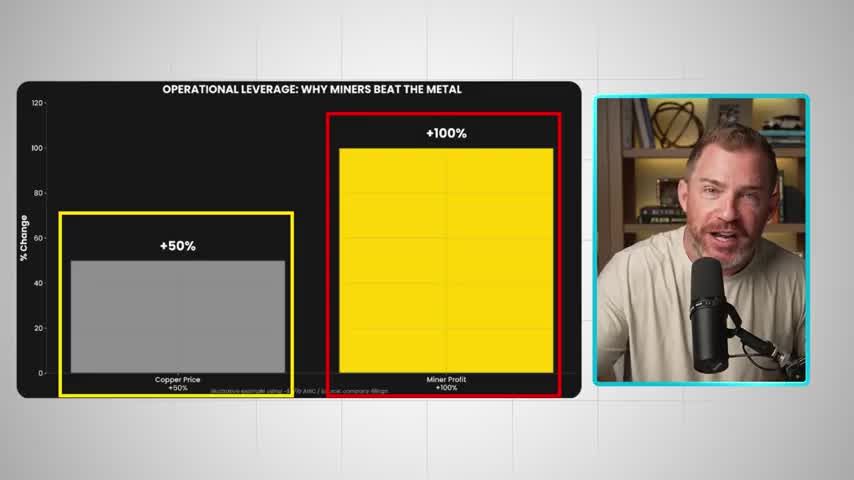
Say you buy copper and it goes from $6 to $9. That's a 50% gain. The copper mining stocks will do far better. Mining costs are mostly fixed: labor, equipment, royalties, environmental compliance. Companies track this as their All-In Sustaining Cost (AISC).
For Barrick, it's around $3 a pound. It costs them $3 to dig it out, and they sell it for $6. Their profit is $3 a pound. If copper rises another 50% to $9, their profit doubles to $6 a pound. Same three bucks to get it out of the ground, but instead of selling it for six, they're selling it for nine. A 50% rise in the price of copper is a 100% rise in their profits. When a company's profits double, the stock tends to do the same.
My Three Favorite Copper Stocks to Buy
1. Freeport-McMoRan (FCX)
The largest publicly traded US copper producer. They operate the massive Morenci mine in Arizona and are the clear industry leader. If copper is going where I think it's going, FCX is the bluest of the blue chips in this space.
2. Southern Copper Corporation (SCCO)
Number two by output, headquartered in Phoenix. Real revenue, a juicy dividend, and several new projects in the pipeline.
3. Hudbay Minerals (HBM)
This is probably the most exciting one. Hudbay is a smaller Canadian operator that just acquired Arizona Sonoran Copper for $1.5 billion. Combined with their existing Copper World project, that gives Hudbay one of the largest copper districts in North America. American assets, long life, low costs, and zero African geopolitical risk. This is the kind of name a major producer could swallow at a fat premium.
For diversification, the Copper Miners ETF (COP) holds all three of these, plus 58 others. If you want pure copper price exposure without a futures contract and without the miners, the US Copper Fund (CPER) holds a portfolio of copper futures contracts that will give you roughly a one-to-one return on the metal. These are all solid copper stocks to buy depending on your risk tolerance and portfolio goals.
You're Not Late to This Trade
If you think you missed the move, you haven't. What I'm seeing today is an early-stage breakout, not a top. Buying copper today is like buying gold at $2,000 or silver at $40.
Two years ago, gold broke through $2,300 an ounce right at the beginning of its meteoric rise. If you bought the breakout, you were handsomely rewarded. Copper looks exactly the same today.
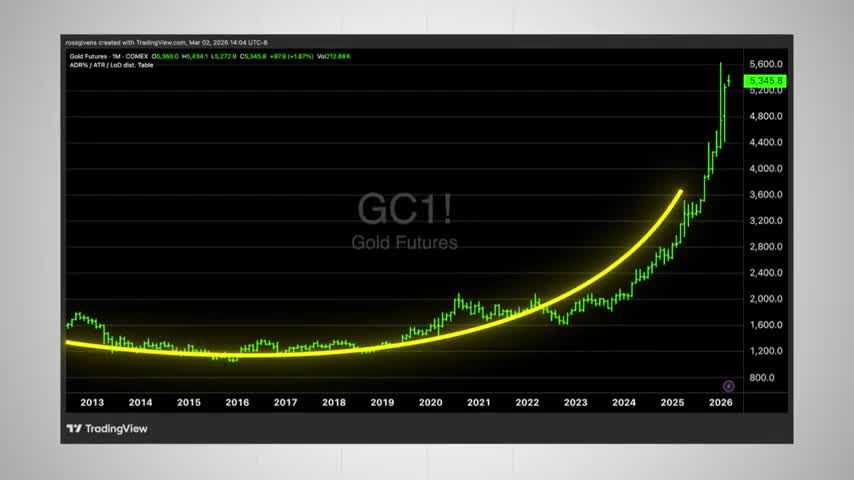
I expect this to be the big commodity trade of 2026 and 2027. My target is $10 to $12 a pound in the next 12 months, and that may end up being conservative. Industry analysts say copper likely needs to trade around $7 a pound just to incentivize the new mines we don't have. That's the floor for fixing the shortage, and we're not even there yet.
Unlike gold and silver, copper doesn't rise on speculation. It rises because it's required. You can skip a gold necklace. You can't skip wiring your house or powering a data center. Demand is inelastic. Whatever it costs, people will pay.
The Big Consensus Trade
Amazon wouldn't be getting its hands dirty in the copper mining business if they didn't think it was absolutely necessary. Stanley Druckenmiller wouldn't be sizing up into a trade with "no meaningful supply for eight years" if he didn't see the writing on the wall.
This isn't speculation. It's basic supply and demand. Demand is increasing rapidly. Supply is not. The market has no choice but to reprice it.
I own 50,000 pounds, and I'm not selling. My goal is to add on throughout the year and scale up to a sizable position. It is my opinion that every portfolio needs exposure to industrial metals, especially copper. Whether through futures, ETFs, or individual copper stocks to buy, the setup here is hard to ignore.
Get an entire year of live weekly mentoring sessions, my newsletter, indicators, bonus reports, tons more. Click the link and I'll see you in the next live session.
Key Takeaways
- A projected 25% shortfall in copper mining supply is colliding with surging demand from AI data centers, EVs, wind turbines, and power grid buildout.
- Years of underinvestment in exploration, aging mines, and Chinese chemical export bans have created a supply crunch that cannot be resolved quickly regardless of capital deployed.
- The position described is 50,000 pounds of physical copper with a stated plan to scale up further throughout the year.
- Copper fits the historical commodity super cycle pattern: gold, silver, cocoa, and oil all went dormant for years before explosive repricing. Copper is framed as the next in that sequence.
- Exposure can be built through futures, ETFs, or individual copper stocks, with the core thesis resting on a structural supply-demand imbalance that the market has not yet fully priced in.
DISCLAIMER: Traders Agency does not offer financial advice. The information provided is for educational purposes only and should not be considered financial advice. Traders Agency is not responsible for any financial losses or consequences resulting from the use of the information provided. Trading carries inherent risks and may not be suitable for all individuals. You are advised to conduct your own research and seek personalized advice before making any investment decisions, recognizing the potential risks and rewards involved.
See more from Traders Agency on Google
Make us a preferred source and our market analysis will appear more prominently in your Google Search, Top Stories, and AI results.
Add to Preferred Sources