
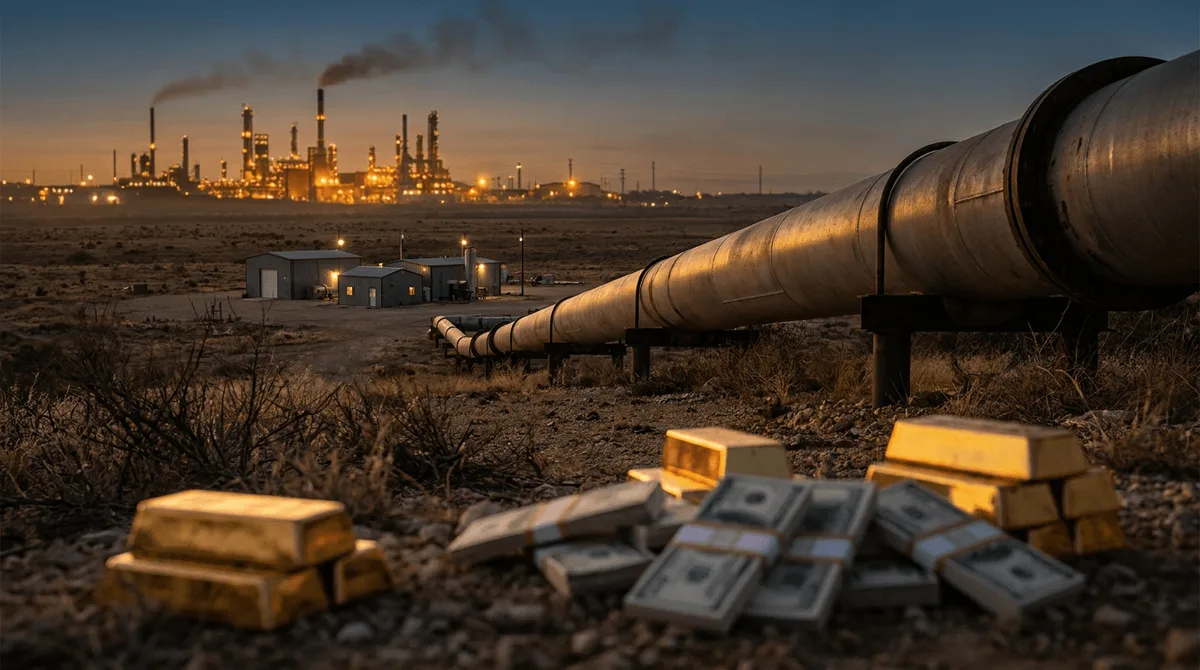

Chevron, Exxon, and ConocoPhillips are sitting on the biggest pile of cash big oil has seen since 2008. The upstream deals are done. Now, the supermajors need midstream plumbing. Finding the right Chevron acquisition target stock before the news breaks could be the single most profitable setup in the market right now.
My next-door neighbor is an oil trader for a big refinery. He just told me they've already hit their full-year 2026 cash flow target. It's May. If a midsized Alabama refiner is already eight months ahead of plan, you better believe the major players are absolutely printing money.
American oil companies are generating massive profits. The only question is what they're going to do with it.
$100 Billion in Excess Cash
Bottom Line: The core bet is straightforward: supermajors are generating cash faster than buybacks can absorb it, and midstream Permian infrastructure is the logical next acquisition target. Positioning in the right $20 stock before a deal is announced is the entire trade. If one name gets taken out, the second pick moves up on its own as investors reprice the remaining midstream group.
Why Chevron, Exxon, and ConocoPhillips have more money than they know what to do with
Brent crude is over $100 a barrel and probably going higher. The Strait of Hormuz is half shut or fully shut depending on the day of the week and who you ask. Iran and the US are nowhere close to an agreement.
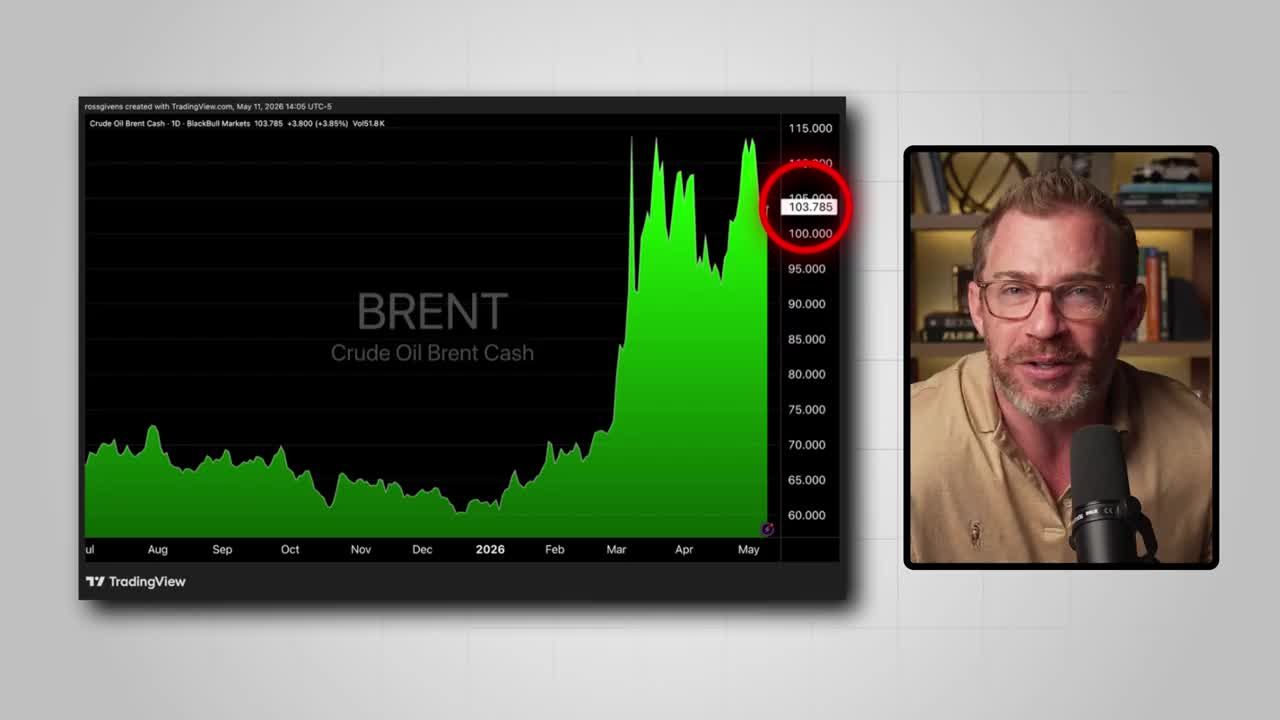
This environment is creating a generational pile of cash. The numbers tell the story:
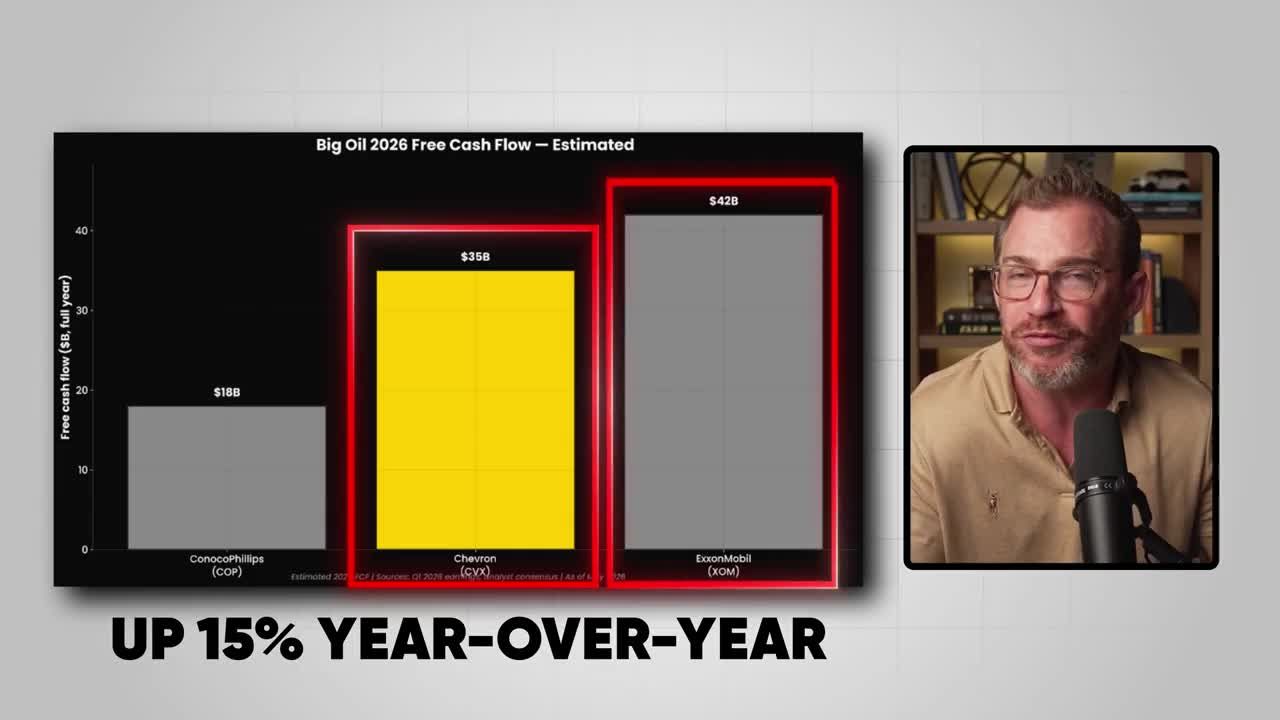
- Chevron production is up 15% year-over-year
- US refineries hit record throughput in March
- Exxon Mobil free cash flow is on pace for $40 billion-plus this year
- ConocoPhillips is on pace for another $15 to $20 billion
Buybacks Won't Cut It
Why oil executives will choose acquisitions every time
Wall Street wants buybacks. Shareholders want dividends. That's not what oil executives are going to do.
You don't grow a hundred-billion-dollar oil company with buybacks. You do it with acquisitions, ideally vertically integrated ones. It makes life simpler and generates a lot more profits. Buy the pipelines, gathering systems, processing plants, and export terminals. Connect the wells in West Texas to the refineries on the Gulf Coast, then to tankers heading to Asia.
Exxon already bought Pioneer. Chevron already bought Hess. The upstream consolidation is mostly done. But what's left? Midstream. The plumbing.
Follow the Executive Incentives
If an oil CEO makes an extra billion dollars this year, he can't just put it in his personal checking account. If he wants a raise, it has to be voted on by the board. But almost all of them have performance-based compensation bonuses tied to stock performance. They are financially incentivized to see their stock price go up.
Dividends don't make a stock go up. They make it go down. You're taking money out of the treasury and giving it away. Buybacks reduce share count, but the Inflation Reduction Act of 2022 put a federal tax on buybacks.
Acquiring another company? That is an expense that is tax-deductible, and it materially increases the company's value since that purchase will generate additional profits for years into the future.
Two Chevron Acquisition Target Stock Picks
Midstream companies likely to get a 30-50% premium
Two specific midstream companies fit this mold perfectly. Pure-play midstream operations sitting right in the middle of major production zones.
1. Plains All-American Pipeline (PAA)
Plains All-American is a sleepy midcap pipeline name sitting right in the middle of Chevron's biggest production region. At $20 a share, Plains is worth around $15 billion. That's less than one-twentieth the size of Chevron.

It pays a 7.5% dividend, making it a cash cow. Most retail investors have never heard of it.
Plains moves over 7 million barrels of crude oil and NGLs every single day. They own the largest crude oil gathering and pipeline network in the Permian Basin, the same Permian Basin where Chevron is the second largest producer behind only the Exxon-Pioneer combination.
For the last six months, Plains has been quietly transforming itself into the cleanest Chevron acquisition target stock in the entire industry:
- They're closing the sale of their Canadian NGL business to Kierra for $3.75 billion in all cash over the next two weeks
- They just bought 100% of the EPIC crude pipeline system for $1.3 billion
By mid to late May, Plains becomes a pure-play Permian crude oil midstream company with billions of dollars on the balance sheet. Maybe it's all coincidental, but this looks a lot like a company dressing itself up for a buyer.
Chevron picks up dedicated pipeline capacity for decades. They get an export terminal in Corpus Christi that lets them ship straight to buyers in India and South Korea, the ones paying premium prices.
Even at a 35% premium to the current share price, Chevron could acquire all of Plains for under $20 billion. Plains throws off roughly $2.7 billion in adjusted EBITDA. The deal pays for itself in synergies in about seven years. For a company like Chevron generating $4 billion a quarter in free cash flow, that is a no-brainer.
Get an entire year of live weekly mentoring sessions, my newsletter, indicators, bonus reports, tons more. Click the link and I'll see you in the next live session.
Join my Black Ops Trading Club2. Kinetik Holdings (KNTK)
Kinetik is the dark horse on this list. At about $48 a share, it seems expensive. But the market cap is just $8 billion. This is less than half the size of Plains, and tiny by big oil standards.
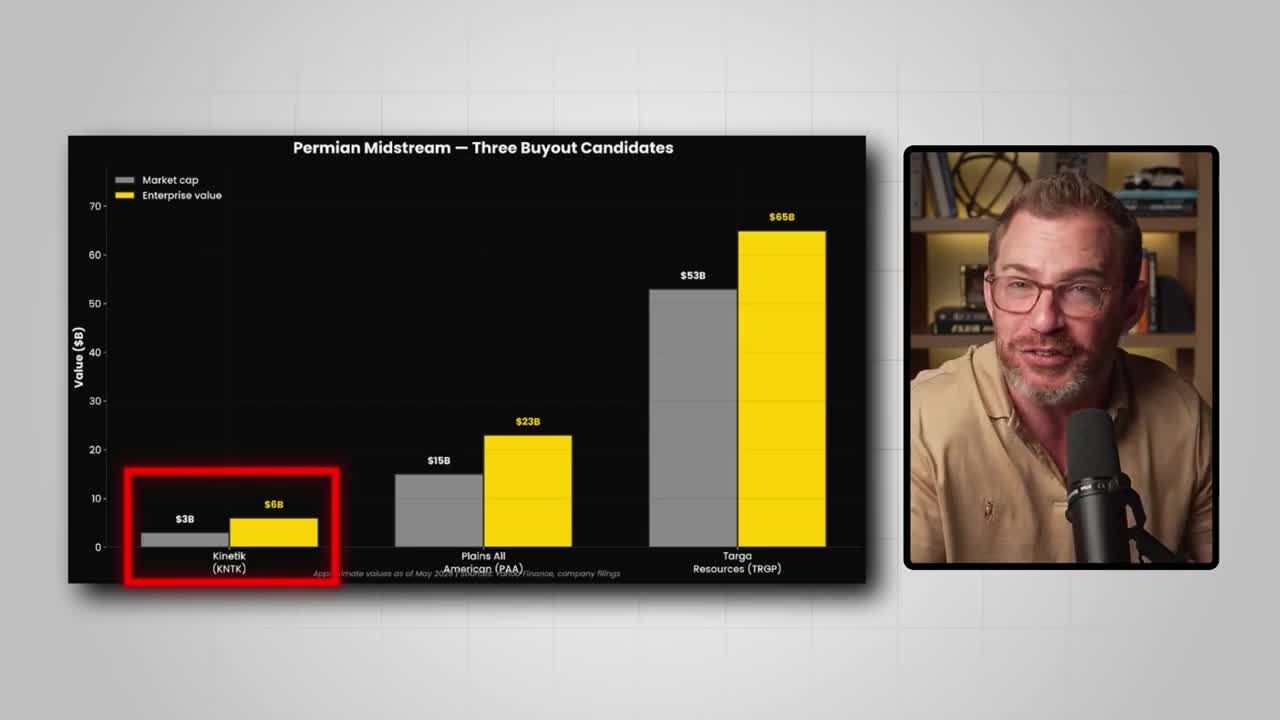
Kinetik owns gathering systems and processing plants in the Delaware Basin, the most prolific subbasin of the Permian. Their assets are literally adjacent to Chevron's most productive acreage in West Texas and Mexico.
A buyout here would be pocket change for Chevron. It would lock in midstream takeaway for some of the highest-margin barrels in the entire US oil patch.
Wells Fargo just upgraded Kinetik to overweight in March. Truist initiated coverage with a buy. The smart money is paying attention.
Why "Sleepy" Stocks Get Acquired
A sleepy oil stock is a quiet, highly profitable company that Wall Street largely ignores. Plains All-American fits this perfectly.
These are the companies that supermajors love to buy. No bidding war. No headline premium. Just a clean deal at a price that still represents a massive discount to the long-term value of the assets.
How Does an Acquisition Create a 50% Overnight Move in a Stock?
The move is almost instant. By the time a deal is announced, the stock will already be up 30 to 40%. Unless you have a T1 fiber line tied into the exchange and your finger on the mouse, you cannot wait until the news breaks.
You absolutely must be positioned in the stock before the news comes out. But if they do get bought out, it is impossible not to make money. You don't need to do any fancy tricks. You don't need to sell at just the right time.
Buyout offers always come at a price above where the stock is currently trading. This is the takeover premium, and it is always there every time. No board would ever approve a buyout for a price below market.
You'll typically see a 30 to 50% premium. If a stock is trading at $100 a share, the acquirer will offer to buy them for $140 or $150. The next morning, the stock gaps up to the buyout price and sits there until the deal goes through.
Finding a Chevron acquisition target stock before the announcement is how you capture that gain instantly.
Position Before the News
You absolutely must be positioned in the stock before the news comes out.
PAA stock is up on the year with the rest of the sector, but not much. The stock has been consolidating since early March. This is what it looks like when smart money quietly accumulates before a buyout.
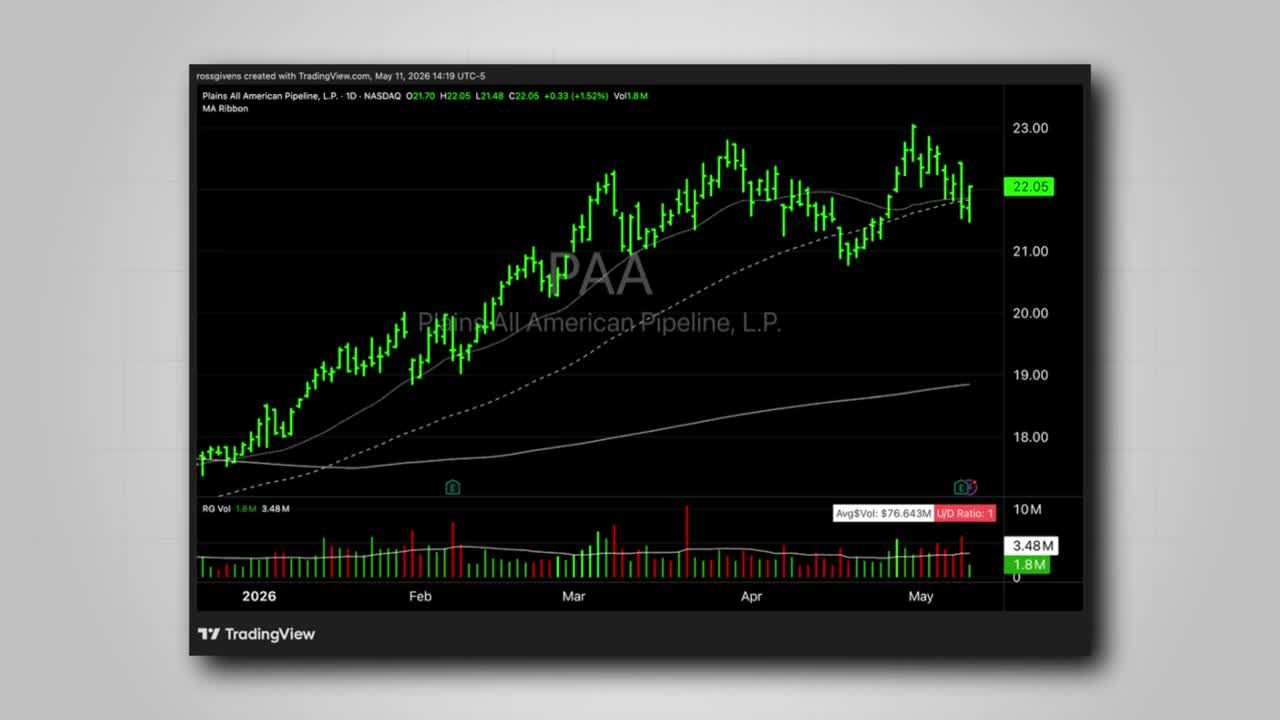
Kinetik is seeing similar institutional interest with those fresh analyst upgrades from Wells Fargo and Truist.
The Midstream Takeover Cycle
Which of these two stocks is the better bet? Personally, I like PAA a little better. It's the cleanest setup of the two. Cheap, profitable, strategically necessary. My neighbor believes this is the one definitely getting acquired.
The plan here is simple. You buy quietly and wait.
Kinetik is slightly more volatile, but it may have a little more upside if a deal happens. Keep an eye on both of them. As soon as one gets bought, the other will start to go up too. Investors will reprice the stock as a buyout target based on that takeover premium, and the whole midstream group in the Permian starts moving at once.
Position yourself in a Chevron acquisition target stock now, before the cash gets deployed.
Get an entire year of live weekly mentoring sessions, my newsletter, indicators, bonus reports, tons more. Click the link and I'll see you in the next live session.
Key Takeaways
- Exxon Mobil free cash flow is on pace for $40 billion-plus in 2026, while ConocoPhillips is tracking $15 to $20 billion, giving supermajors an unprecedented war chest for acquisitions.
- Brent crude above $100 per barrel, combined with a partially closed Strait of Hormuz and no US-Iran deal in sight, is the macro setup driving this cash accumulation.
- The thesis targets midstream Permian Basin infrastructure as the next acquisition frontier, after upstream deals have already been completed by the majors.
- Two specific picks are flagged: one described as a 'sleepy' stock trading around $20 with a projected 50% overnight move on acquisition news, and Kinetik as a higher-volatility alternative with potentially more upside.
- When one Permian midstream company gets acquired, the rest of the group reprices immediately as the market recalibrates takeover premiums across the sector.
DISCLAIMER: Traders Agency does not offer financial advice. The information provided is for educational purposes only and should not be considered financial advice. Traders Agency is not responsible for any financial losses or consequences resulting from the use of the information provided. Trading carries inherent risks and may not be suitable for all individuals. You are advised to conduct your own research and seek personalized advice before making any investment decisions, recognizing the potential risks and rewards involved.
See more from Traders Agency on Google
Make us a preferred source and our market analysis will appear more prominently in your Google Search, Top Stories, and AI results.
Add to Preferred Sources