The Cerebras Systems IPO just became the largest IPO by a U.S. tech firm in years, raising $5.55 billion before hitting immediate post-debut volatility. Shares surged on Thursday, then pulled back 2.6% in early Friday trading. Our team is watching this massive liquidity event closely as it stress-tests the market's appetite for new semiconductor plays.
How Big Was the Cerebras Systems IPO?
The data points on this one are still settling. Our tracking shows the stock closed around $331.07, marking a 68% jump and a roughly $95 billion market cap. The opening price came in at $350, representing an 89% surge and a $106.75 billion fully diluted valuation.
The Deal: The Sunnyvale, California-based firm sold 30 million shares at an initial price of $185, raising $5.55 billion. The company increased both the size and price range of the offering earlier in the week to manage surging demand. Cerebras initially rose around 6% in premarket trading Friday before paring those gains.
What Is the Wafer Scale Engine 3?
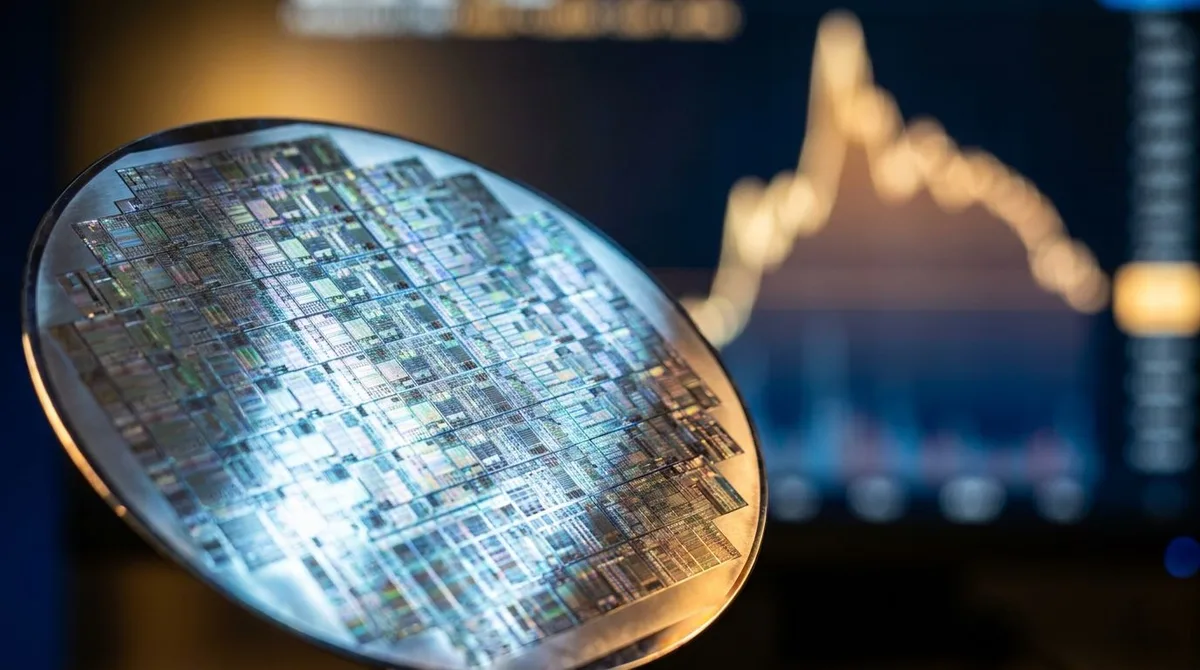
The Wafer Scale Engine 3 is a massive artificial intelligence processor built from an entire silicon wafer. Roughly the size of a dinner plate, this flagship product packs hundreds of thousands of compute cores onto a single processor to train and run AI models faster than traditional GPUs.
Unlike traditional GPU-based systems that rely on clusters of interconnected chips, Cerebras designed this hardware from the ground up for AI infrastructure. The company claims its Wafer Scale Engine 3 chips run faster than Nvidia's GPUs. While the company sells AI infrastructure, its specialty is inference, where models respond and interact directly with users.
Who Is Buying Cerebras Chips?
The buyer profile centers on organizations requiring massive AI infrastructure for inference and model training. CEO Andrew Feldman has stated that as AI models get smarter, the amount they are used will explode.
However, analysts at the Davidson investment banking group noted ahead of the debut that while the technology may deliver higher speed in some applications, the system is less flexible than existing AI chip setups, a concern we think traders should keep on their radar.
Want expert trading insights delivered daily?
Join thousands of traders who rely on Traders Agency for market analysis and trade ideas.
Join Traders AgencyWhy Are Analysts Questioning the Valuation?
The core issue is simple: the stock price jumped well above its initial $185 level, stretching future revenue multiples into uncomfortable territory. Nicholas Smith, senior research analyst at Renaissance Capital, noted the valuation looked reasonable at the $185 IPO price when looking out to 2028 sales (5.8x EV/sales), but at the current price, it is quite high even out to 2028.
Davidson analysts echoed this caution. After reviewing the S-1 filing and watching the roadshow, they described the product as "niche-y" and in the "early stages of maturity." Their advice to investors: don't get too excited despite the impressive technology.
Valuation Watch: At the IPO price of $185, the EV-to-sales multiple sat at a reasonable 5.8x on projected 2028 revenue. After the first-day surge, that multiple has stretched significantly, raising questions for value-conscious investors.
Market Context and Sector Impact
The Cerebras Systems IPO arrives during a massive surge in artificial intelligence spending. Tech giants are pouring hundreds of billions of dollars into the AI ecosystem. The Dow Jones U.S. Semiconductors Index has returned more than 107% over the past year, compared with the S&P 500's roughly 26% rise.
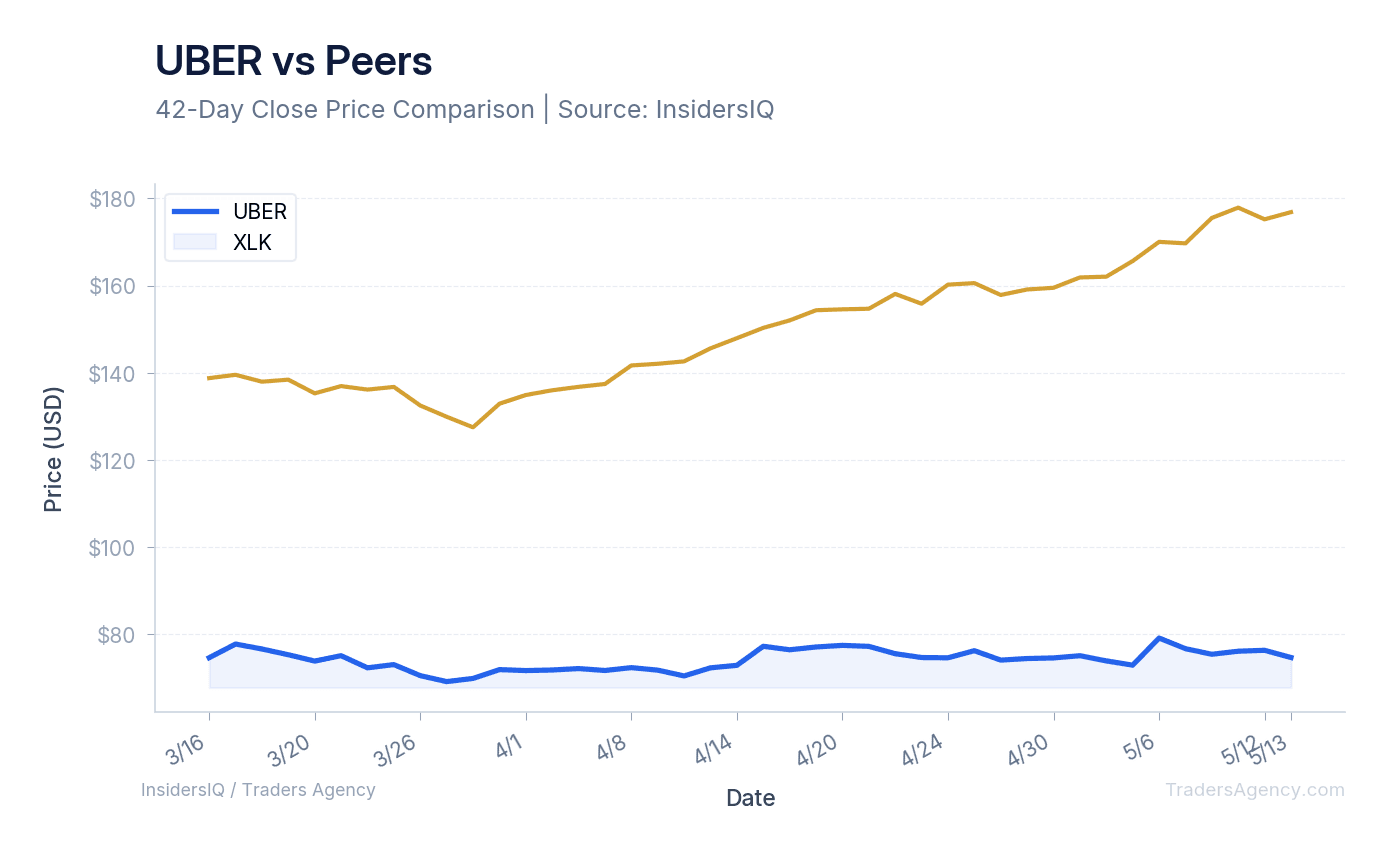
To put this capital raise in perspective, this is the largest tech debut since Uber in 2019. Our data shows Uber shares are up just +0.05% over the last 60 days, while the broader technology sector ETF (XLK) has climbed +27.43% in the same period. That kind of divergence tells us that a big IPO doesn't automatically translate into long-term outperformance.
What Should Traders Watch After the Cerebras IPO?
Our analysis points to several factors that will determine where this stock heads from here. We're tracking these specific elements:
- Price Discovery: Watch for stabilization after Friday's 2.6% pullback from premarket highs. The first few sessions of trading will set the tone for weeks to come.
- Insider Holdings: The debut made the company's top executives billionaires. CEO Andrew Feldman and CTO Sean Lie hold stakes worth $3.2 billion and $1.7 billion, respectively. Any early insider selling signals would be a major red flag.
- Sector Rotation: Monitor how capital flows between traditional chip heavyweights like Nvidia, Qualcomm, and Intel, and new wafer-scale entrants like Cerebras.
The Bottom Line
The initial frenzy surrounding this $5.55 billion offering shows massive retail and institutional appetite for AI hardware. However, conflicting valuations and analyst skepticism suggest extreme volatility will continue. Our team is waiting for the price action to settle before declaring this a long-term winner over established semiconductor giants. The technology is real, but the price needs to prove itself.
Want expert trading insights delivered daily?
Join thousands of traders who rely on Traders Agency for market analysis and trade ideas.
Join Traders AgencyKey Takeaways
- Cerebras priced its IPO at $185 per share, raising $5.55 billion by selling 30 million shares, making it the largest U.S. tech IPO in years.
- Shares opened at $350 on debut day, an 89% surge, pushing the fully diluted valuation to roughly $106.75 billion before pulling back 2.6% the following morning.
- The Wafer Scale Engine 3 is built from an entire silicon wafer, packing hundreds of thousands of compute cores onto a single processor, a fundamentally different architecture from Nvidia's GPU clusters.
- Cerebras increased both the offering size and price range before debut, signaling strong institutional demand heading into the listing.
- Analyst skepticism around conflicting valuations remains a key overhang, with the team at Traders Agency waiting for price action to stabilize before assessing it against established chip giants like Nvidia and Qualcomm.
DISCLAIMER: Traders Agency does not offer financial advice. The information provided is for educational purposes only and should not be considered financial advice. Traders Agency is not responsible for any financial losses or consequences resulting from the use of the information provided. Trading carries inherent risks and may not be suitable for all individuals. You are advised to conduct your own research and seek personalized advice before making any investment decisions, recognizing the potential risks and rewards involved.
See more from Traders Agency on Google
Make us a preferred source and our market analysis will appear more prominently in your Google Search, Top Stories, and AI results.
Add to Preferred Sources