The 10-year Treasury yield just hit 4.7% at Thursday's market close, its highest level since January 2025. This move is rippling through the debt markets, and traders are asking the same question: why have Treasury yields increased so fast?
We're watching this closely because it hits bond investors, borrowing costs, and consumer loan rates across the entire economy. The numbers point to rising inflation expectations and shifting monetary policy. Here is exactly what the data shows and how we're reading the current setup.
Why Have Treasury Yields Increased in 2026?
Treasury yields have moved higher because bond investors expect future inflation to rise and anticipate the Federal Reserve will keep tightening as inflation looks hot. Climbing oil prices are feeding these inflation anxieties, pushing investors to demand higher yields on long-term government debt.
The data we're tracking shows a clear flight from long-term bonds. The iShares 20+ Year Treasury Bond ETF (TLT) shows a 90-day price change of -3.29%. Because bond prices move inversely to yields, this drop illustrates the pressure building in the market. Market sentiment currently sits at a Fear & Greed index of 68, with WallStreetBets sentiment at 0.03 across 2,748 mentions.
The Number: The 10-year Treasury yield hit 4.7%, its highest since January 2025, while TLT has fallen -3.29% over 90 days.
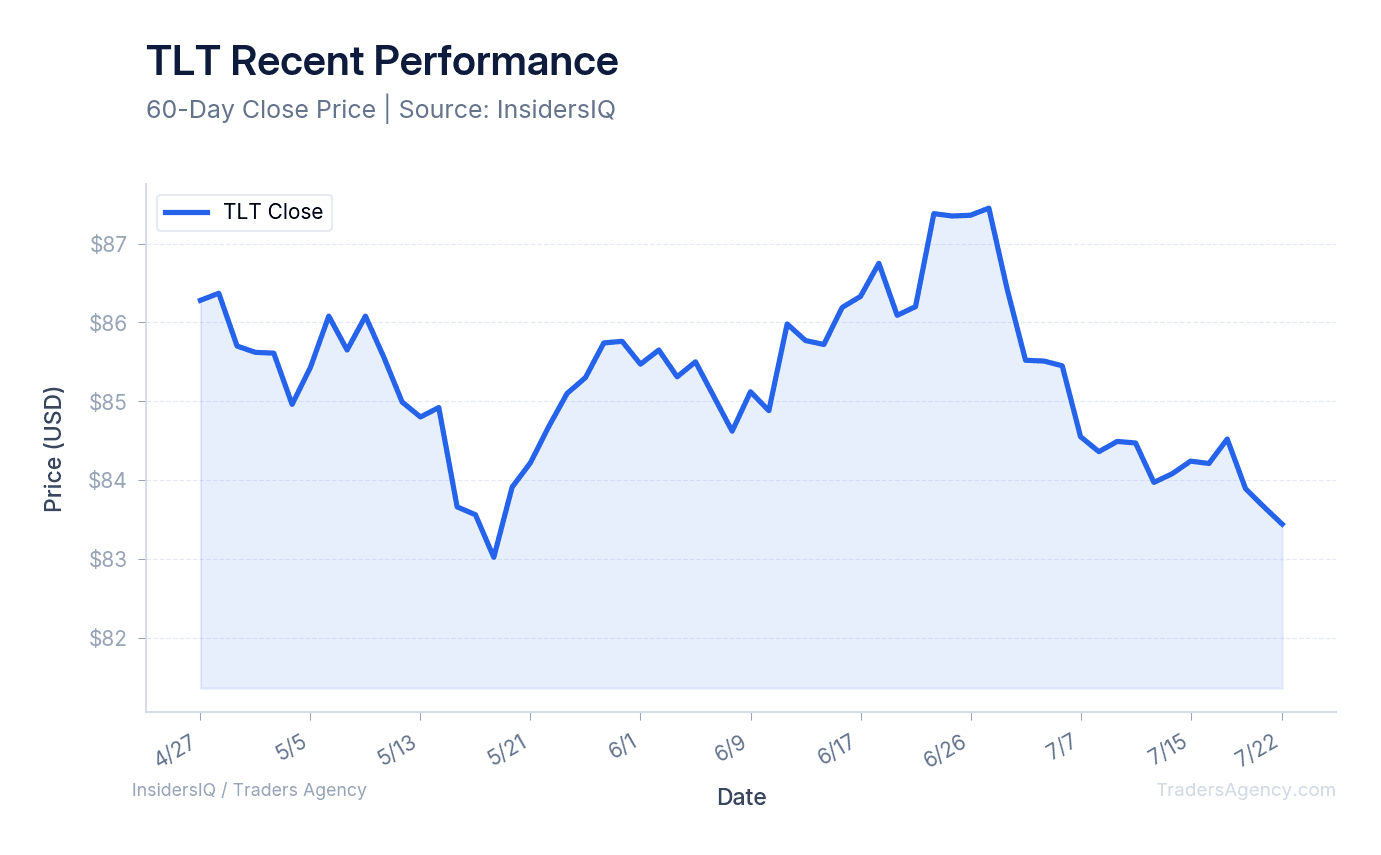
Traders are watching this chart and wondering whether 2026 will be a good year for bonds. Based on the current trajectory, the market is pricing in a reality where borrowing gets more expensive.
What Do Bond Investors Fear Most?
Bond investors fear sustained inflation eroding their future returns. When inflation expectations move higher on the back of geopolitical tension and rising energy costs, investors demand higher yields on longer-term Treasuries to compensate for that risk.
We're seeing several factors feeding this anxiety. Oil prices jumped sharply in July as tensions escalated in the Middle East. Average gasoline prices topped $4 a gallon again this week amid renewed tensions in the Iran war. Sustained high oil prices filter through the entire U.S. economy, raising the cost of airline tickets, transportation, and consumer goods.
With inflation sitting above the policymakers' target for more than five years, the market is reacting defensively.
How Does a Higher 10-Year Treasury Yield Affect Consumers?
The impact on consumers is immediate and severe, especially in the housing market. Many consumer loans peg their interest rates directly to 10-year U.S. Treasury bonds. When the yield goes up, consumer rates follow.
Rates on 30-year fixed mortgages hit 6.6% on Thursday, the highest level we've seen since August 2025. 15-year fixed-rate mortgages climbed to 6% this week, their highest point since June 2025. Mortgage rates are now more than double what they were during the Covid-19 pandemic.
Our analysis indicates these rates could push above 7%. That creates a lock-in effect in the housing market, where current homeowners feel trapped and refuse to sell.
Want expert trading insights delivered daily?
Join thousands of traders who rely on Traders Agency for market analysis and trade ideas.
Join Traders AgencyAre Tariffs and Inflation Pushing Household Costs Higher?
The pressure on household budgets goes beyond mortgages. The Trump administration imposed a slew of new tariffs on dozens of countries on Friday. These import taxes raise costs for consumers and businesses.
At the same time, the financial cushion from relatively high tax refunds this spring appears to have faded. Consumers who can't find an affordable rate for auto loans may simply forgo buying a new car. That dynamic slows overall spending because people have to borrow so much more to finance their purchases.
The Federal Reserve sets the federal funds rate, which directly affects shorter-term interest rates like credit cards and variable-rate loans. Capital Economics expects the Fed to raise interest rates three times this year, so the cost of carrying short-term debt could rise alongside long-term yields.
What Should Borrowers Do When Treasury Yields Climb?
We believe traders and consumers need to adapt to this high-rate environment. Here is what we're watching:
- Monitor the 10-year Treasury yield: This benchmark dictates fixed-rate mortgages. As long as it hovers near 4.7%, housing affordability stays constrained.
- Track Federal Reserve policy: The Fed's benchmark rate drives variable-rate loans. We're watching for the rate hikes expected this year.
- Watch energy and import costs: Keep an eye on $4 a gallon gasoline prices and the newly imposed tariffs, since these factors feed the inflation that drives bond yields higher.
The Bottom Line
The data explains why Treasury yields have climbed to their highest levels since January 2025. Between rising oil prices, new tariffs, and persistent inflation, bond investors are demanding higher returns to offset their risk. We're closely monitoring TLT and the 10-year Treasury yield to gauge exactly how high consumer borrowing costs go this year.
Want expert trading insights delivered daily?
Join thousands of traders who rely on Traders Agency for market analysis and trade ideas.
Join Traders AgencyKey Takeaways
- The 10-year Treasury yield hit 4.7% at Thursday's close, its highest level since January 2025, driven by rising inflation expectations and Fed tightening signals.
- TLT, the iShares 20+ Year Treasury Bond ETF, has dropped 3.29% over the past 90 days, reflecting sustained selling pressure in long-term government bonds.
- Climbing oil prices and newly imposed tariffs are the two primary cost pressures feeding inflation anxiety and pushing bond investors to demand higher yields.
- Market sentiment sits at a Fear and Greed index reading of 68, suggesting traders are leaning greedy even as bond markets flash warning signs.
- Traders should watch $4 per gallon gasoline as a threshold indicator, since energy costs feed directly into the inflation data that moves Treasury yields.
DISCLAIMER: Traders Agency does not offer financial advice. The information provided is for educational purposes only and should not be considered financial advice. Traders Agency is not responsible for any financial losses or consequences resulting from the use of the information provided. Trading carries inherent risks and may not be suitable for all individuals. You are advised to conduct your own research and seek personalized advice before making any investment decisions, recognizing the potential risks and rewards involved.
See more from Traders Agency on Google
Make us a preferred source and our market analysis will appear more prominently in your Google Search, Top Stories, and AI results.
Add to Preferred Sources