

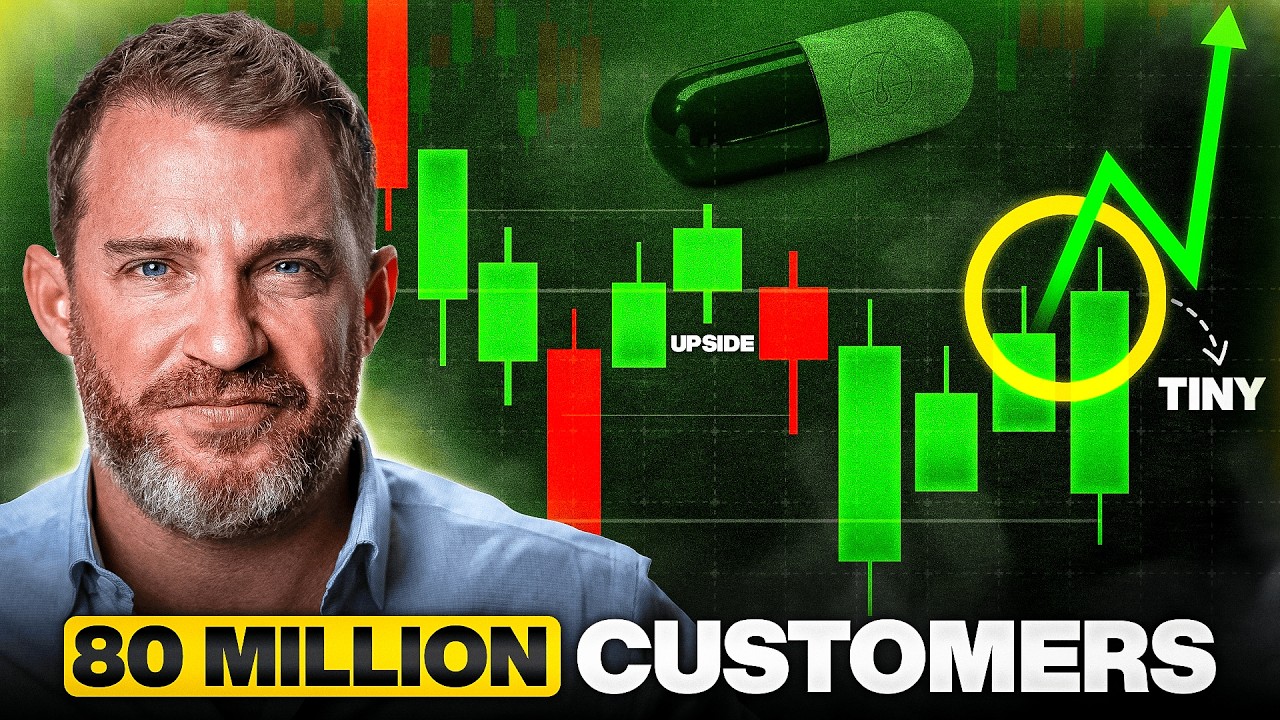
Veradermics Stock (MANE): The Hair Loss Trade Wall Street Just Woke Up To
Bottom Line: Veradermics (MANE) posted trial results showing hair growth over four times placebo, in a market with 80 million cash-paying customers and no new approved drug in 29 years. Two binary trial readouts, a men's trial due by year end and a women's trial in early 2027, will decide whether that setup pays off.
Real trial data, 80 million cash-paying customers, and one date that decides everything
Hey, Ross here:
Veradermics stock, ticker MANE, just posted trial results showing more than four times the hair growth of placebo. Wall Street is starting to pay attention. The company is sitting on a market nobody else wanted to touch: 80 million Americans with a condition that hasn't seen a new FDA-approved drug in nearly three decades.
Real clinical data plus a massive cash-paying customer base. That combination is why I think Veradermics stock is one of the more interesting pharmaceutical stories on the market right now.
The timing is what makes it urgent. A confirming phase three trial in men is due before the end of this year, and a women's trial follows in the first half of 2027. Both are binary events that can send this stock hard in either direction. I'd rather understand the setup before those results print than scramble afterward.
What Is Veradermics Stock (MANE)?
Veradermics trades under the hair loss stock symbol MANE. Yes, that spells "Maine." Sometimes these companies get cute with the ticker. And yes, the company has done something nobody else has managed in 29 years: produced real clinical proof that a new hair loss drug works.
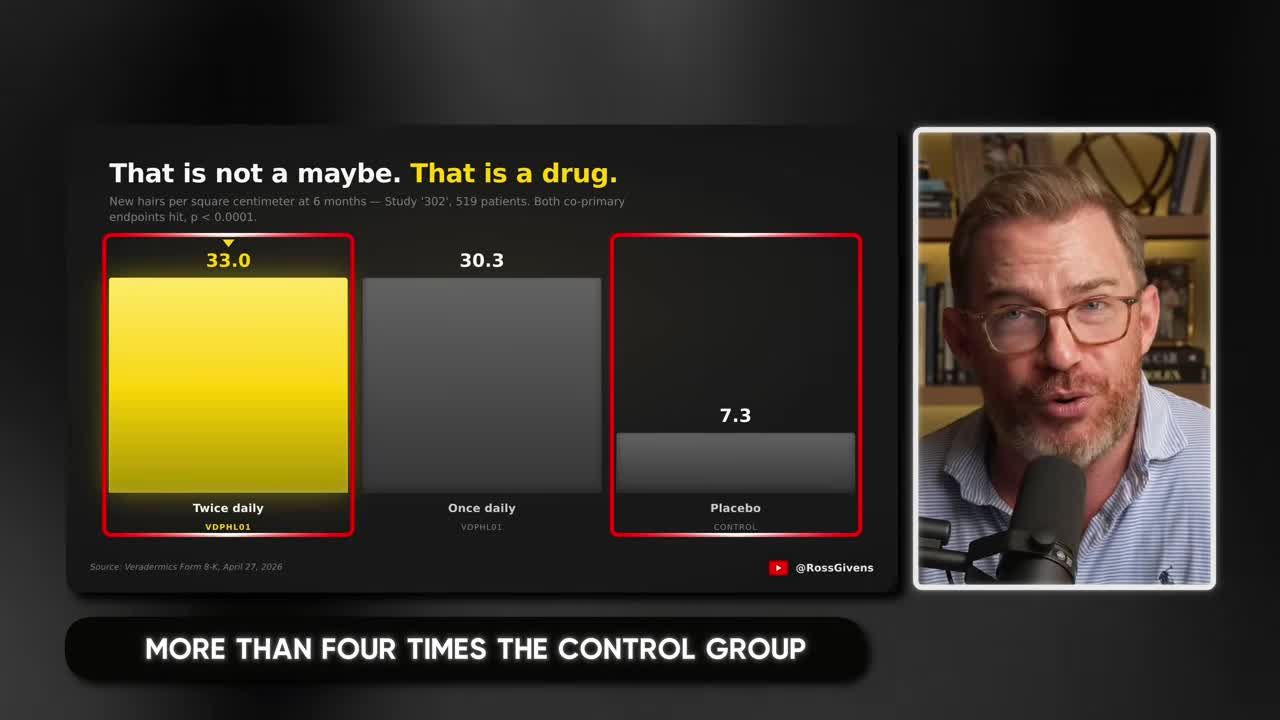
On April 27th, Veradermics published results from a major human trial. Patients taking the pill grew 33 new hairs per square centimeter. The placebo group grew seven. That's more than four times the control group, and the odds of that being random are less than one in 10,000. Both primary goals of the trial were hit.
The number isn't the whole story. What matters is how they got there.
Veradermics took minoxidil, the drug that works best but has to be rubbed into your scalp twice a day forever, and put it into a time-release pill. They didn't invent a new molecule. They took a proven compound and fixed its single biggest weakness: compliance.
That distinction matters for anyone tracking MANE stock news. This is not a speculative new chemical entity. It's a delivery improvement on a drug that already gets prescribed off-label roughly three million times a year.
A Market Waiting 29 Years for a Cure
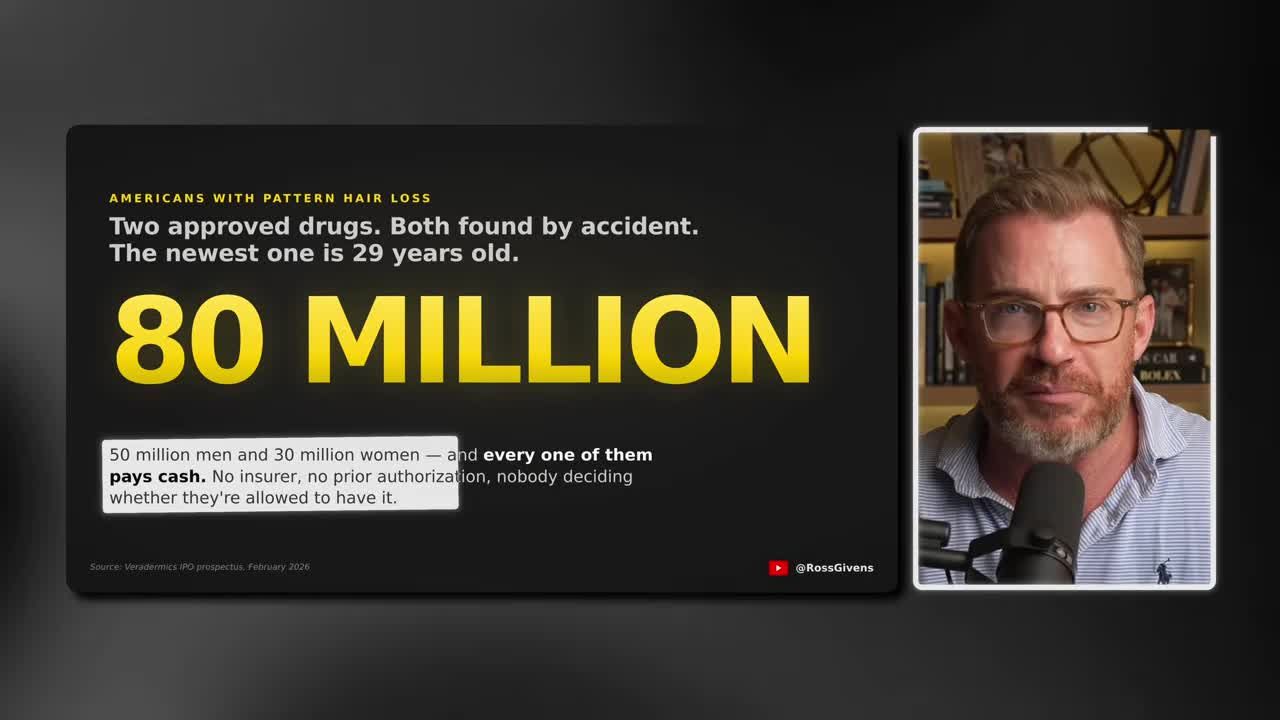
The FDA has approved exactly two drugs for pattern hair loss in American history. Minoxidil in 1988. Finasteride in 1997. That's the entire list.
Both were accidents. Minoxidil started as a blood pressure medication. Finasteride started as a prostate drug. Doctors noticed patients growing hair as a side effect and worked backward. Nobody set out to cure baldness. They tripped over it twice, and then for 29 years, nothing.
Big pharma walked away entirely. Merck, Pfizer, Johnson & Johnson. None of them have a hair loss program. They chased cancer, cholesterol, and obesity instead. Maybe that was the right business call. It also left 80 million cash-paying customers sitting at the table with nothing.
That vacuum is what Veradermics stepped into, and the demand signals were already flashing:
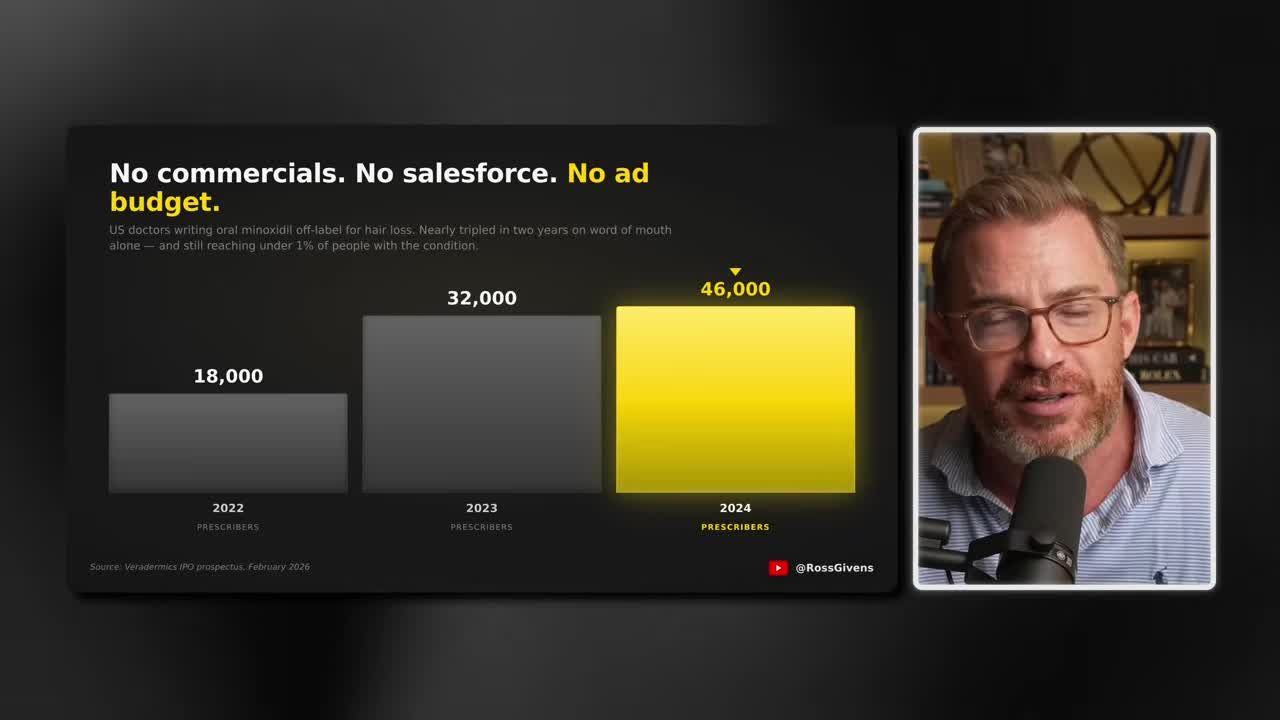
- Off-label prescribing has exploded. The number of doctors writing the older version of this pill off-label went from 18,000 in 2022 to 32,000 in 2023 to 46,000 in 2024.
- No sales force, no ad budget. You can't advertise a generic drug, so that growth is pure word of mouth.
- Still barely a rounding error. All of it reaches only about half of one percent of people with this condition.
Doctors don't need convincing. Patients don't need convincing. The market is already standing there with a credit card, waiting for something legitimate and FDA-approved to arrive.
The "Next Ozempic" Setup in Hair Loss
Wall Street thinks it may have found the next Ozempic, except this one isn't for weight loss, it's for baldness. That's the comparison being made around the Veradermics hair loss pill.
Roughly 5 million Americans use the over-the-counter topical version every year. 86% of them quit within 12 months. Not because it fails. Because rubbing foam into your scalp twice a day for the rest of your life is miserable.
That's about 4 million people a year who wanted the problem fixed, spent the money, and walked away frustrated. A pill doesn't have to sell them on anything. It just has to exist.
The Half of the Market Nobody Talks About
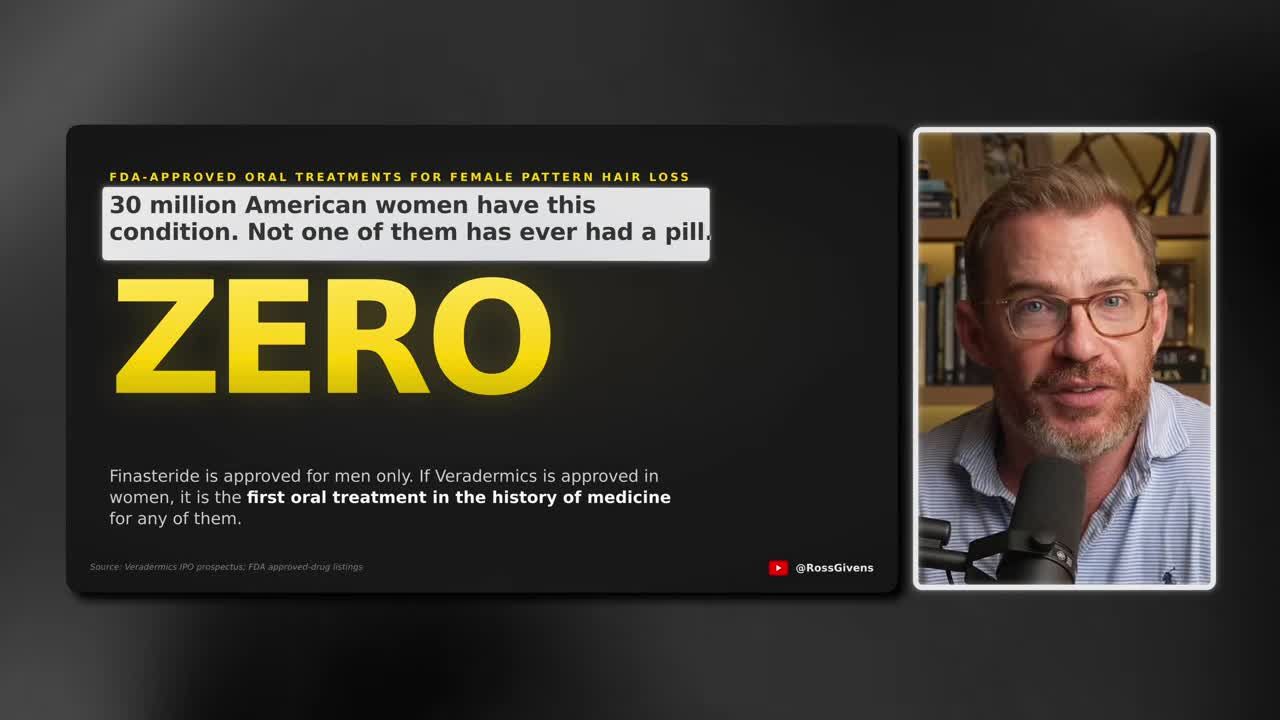
30 million American women have pattern hair loss, and there has never been an approved pill for them. Not one, in the entire history of medicine. Finasteride is approved for men only, since it can't be given to women who might become pregnant. A woman's only approved option is the same foam.
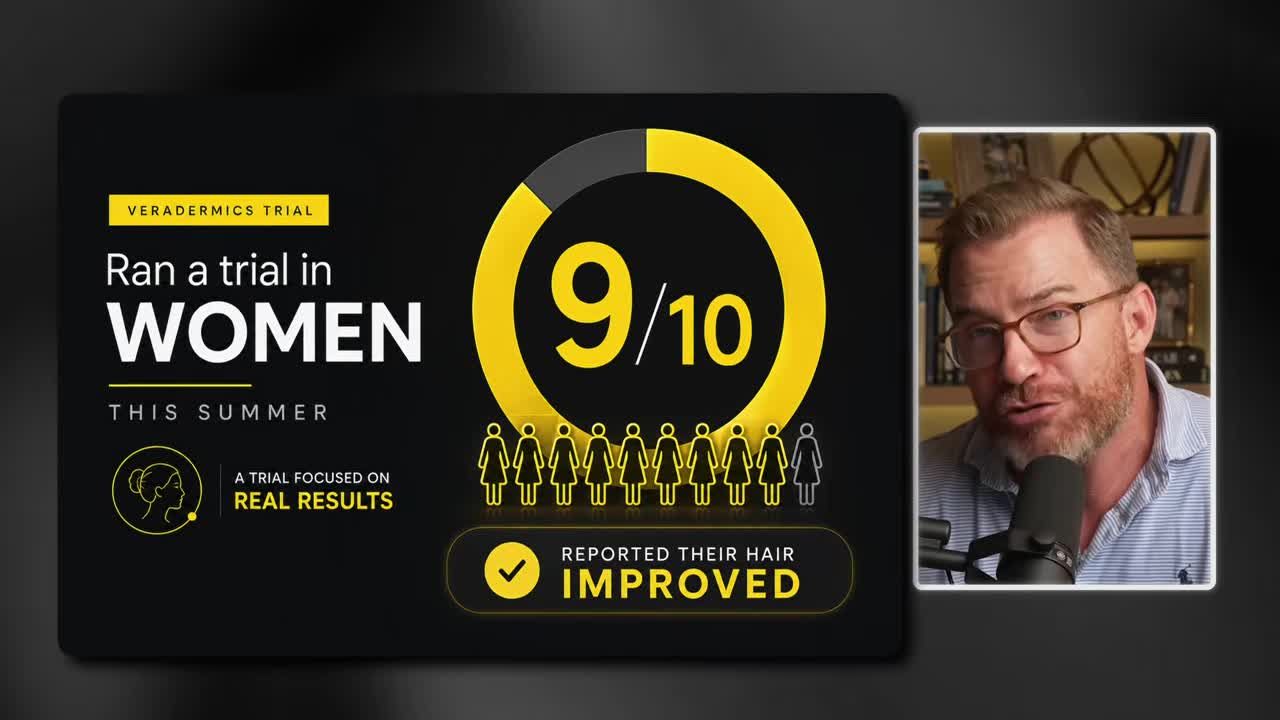
Veradermics ran a trial in women this past summer. Nine out of ten reported their hair improved.
If this drug gets approved specifically for women, Veradermics isn't competing for market share in that segment. They are the market. There's nothing else on the shelf.
Get an entire year of live weekly mentoring sessions, my newsletter, indicators, bonus reports, tons more. Click the link and I'll see you in the next live session.
Join my Black Ops Trading ClubWhy Did MANE Stock Pull Back?
A supply story, not a science story
Veradermics stock is down over the last 60 days, roughly in the 25 to 30% range. The drop has nothing to do with the drug.
Veradermics IPO'd on February 3rd. Standard rules block insiders from selling for 180 days. That clock ran out on August 2nd, when 20 million shares came free and the early backers started taking profits, as they always do. Nothing about the trial data changed. Nothing about the mechanism changed.
The price action makes it clear. Most IPOs pop on hype and then get clobbered during price discovery. MANE came out of the gate running, climbing from $30 to $130 in about four months without a real pullback. When the lockup expired in August, selling pressure showed up, and the stock still held up reasonably well.
The prior drawdown, while the stock was still making new highs, was about 27%. The current dip of 25 to 30% sits right in that same range. Nothing crazy.
The chart isn't the real question anyway. The calendar is. The confirming phase three trial in men is due before the end of this year. If it matches what we saw in April, Veradermics files with the FDA and becomes the first new hair loss drug approved in a generation.
What Is Veradermics' Market Cap and Valuation?
So is Veradermics stock a buy right now? Here's the plain math.
That puts Veradermics in an awkward middle zone. It's not a little penny stock. It's not Pfizer either. Pricing a company with no sales that's walking into a market this size is genuinely hard. Should it be worth $2 billion? $20 billion? I don't know, and I don't think anyone does yet.
What I do know is that the balance sheet kills one major risk. They don't need to raise any money before the next trial reads out. That's a real edge over earlier-stage biotechs burning cash while they wait on data.
There's also upside the current targets probably don't capture. If the women's trial hits, $163 is going to look conservative, because almost nobody is modeling those 30 million women who currently have zero options.
MANE vs. Absci: Data vs. Lottery Ticket
The other name Wall Street is pushing in this space is Absci, ticker ABSI, up more than 300% this year on the hair loss drug story. Before you buy either one, you should understand how different these two companies actually are.
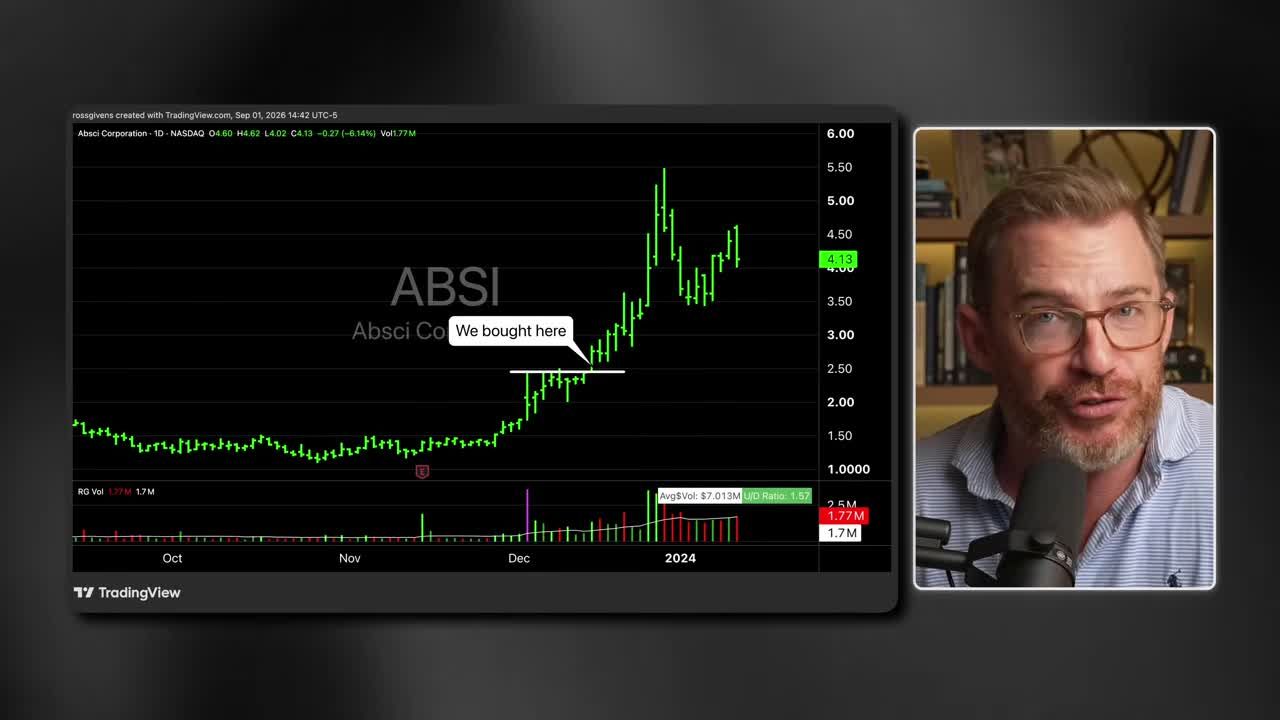
I traded ABSI a couple of years ago on a breakout recommendation to my members, and it worked. It more than doubled in about two weeks. The stock is moving again now, Eli Lilly has put money into the company, and 10 analysts cover it. On paper, compelling.
Then there's the problem. ABSI's drug has never grown a single hair on a human being. Not one strand. Everything published so far is safety data from 32 healthy volunteers.
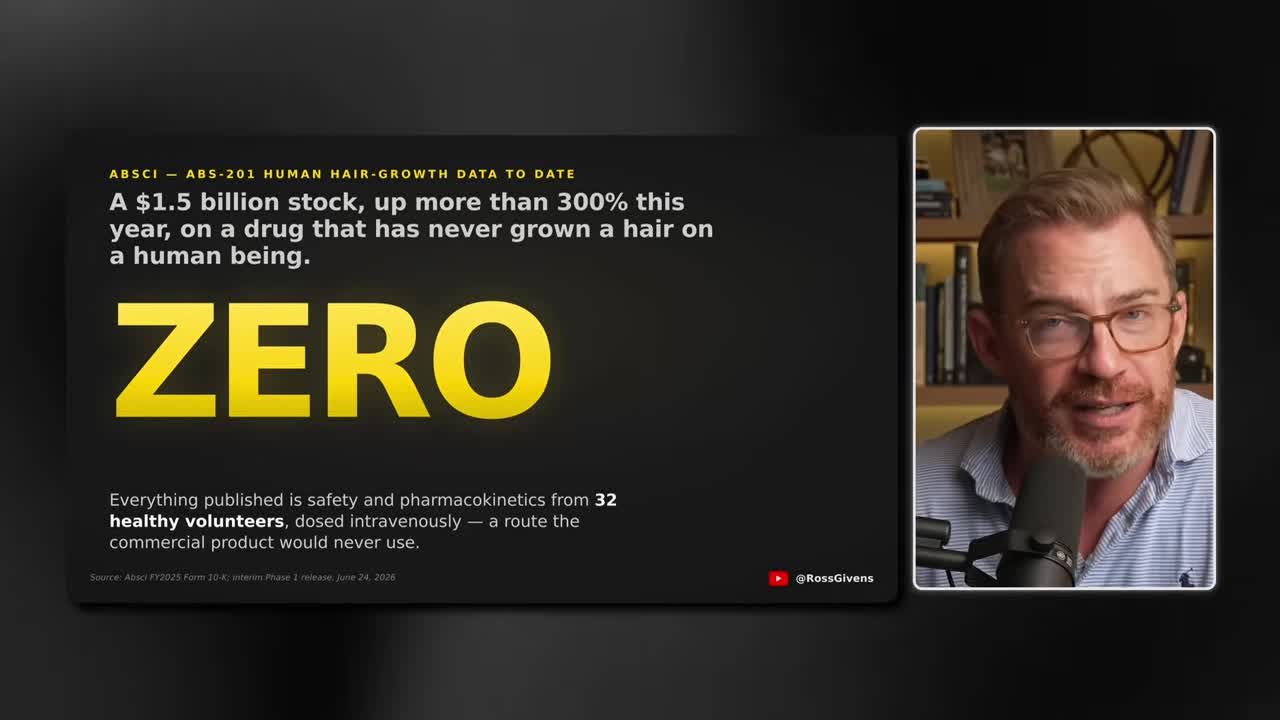
The company's own annual report states that the drug's effects "have not been demonstrated in any clinical studies to date." That's not my read on it. That's their words, straight out of the filing.
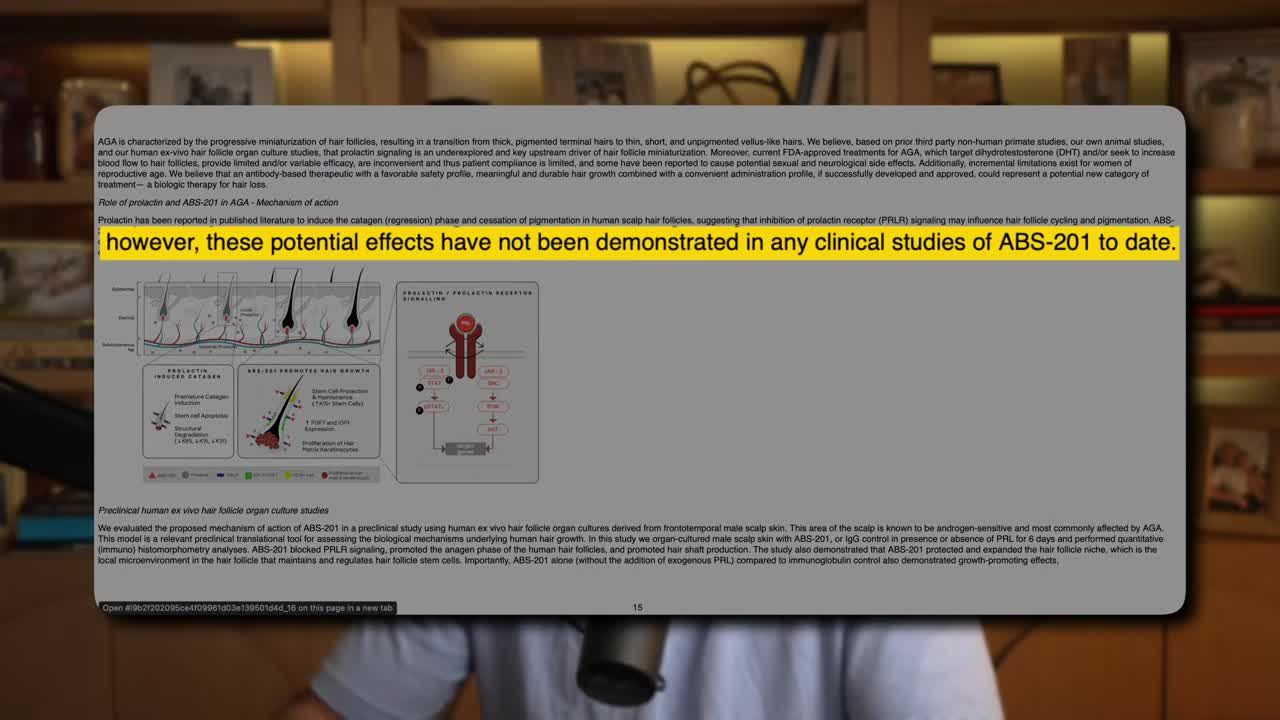
It might work. I hope it does. I hope every investor in it gets rich. But right now ABSI is a bit of a lottery ticket trade. It either wins big or fails big, and there's no human hair-growth data to anchor an opinion either way.
Veradermics is a different animal. Completed trial. Statistically significant result. A specific approach, a time-release minoxidil pill, built on a molecule that's been used for decades.
| Factor | Veradermics (MANE) | Absci (ABSI) |
|---|---|---|
| Human hair growth data | Yes: 33 new hairs/cm² vs. 7 placebo | None published |
| Molecule basis | Existing minoxidil, reformulated | Not discussed |
| Market cap | ~$4 billion | Not discussed |
| Cash position | $820 million, funded to 2030 | Not discussed |
| Risk profile | Data-backed, binary trial ahead | Lottery ticket, no efficacy data |
MANE Stock Forecast: The Dates That Matter
What's the MANE stock forecast heading into next year? It comes down to two prints. The confirming phase three trial in men lands before the end of this year. The women's trial follows in the first half of 2027.
Analysts currently model an average target near $163 a share, and almost nobody is modeling the women's market. That's the gap I'm watching. If the confirming trial matches what was already seen in April, the company files with the FDA and becomes the first new hair loss drug in a generation.
There's a competitive risk worth naming honestly: the generic version of this molecule is cheap, and that's a real competitive question.
But generics don't run commercials. Generics aren't marketed to 46,000 prescribers by a professional sales force. And generics aren't approved for the 30 million women who make up nearly half of this market. That's the moat, if it holds.
Why Finasteride Left Half the Market Behind
Finasteride is one of only two hair loss drugs the FDA has ever approved, and it's approved for men only, since it can't be given to women who might get pregnant. Which means it has never addressed half of the total hair loss market.
That gap is exactly why 30 million American women have been locked out of any approved pill option for their entire lives. It's also why Veradermics running a trial in women, with nine out of ten reporting improved hair, is such a meaningful data point for Veradermics stock.
Is Veradermics a Public Company?
Yes. Veradermics IPO'd on February 3rd and trades under the ticker MANE. Unlike most IPOs that jump on hype in the first couple of weeks and then get clobbered in price discovery, the stock ran from around $30 to $130 over roughly four months with no major pullback until the insider lockup expired in August.
Where Veradermics Stock Goes From Here
Veradermics offers a rare combination in biotech: real trial data, a fully funded balance sheet, and 80 million cash-paying customers nobody else is servicing. This isn't speculation dressed up as a story. It's a company that took an old, proven drug, fixed its worst usability flaw, and produced a statistically significant result in a major human trial.
The near-term risk is real. The confirming phase three trial in men can go either way. The women's trial isn't due until the first half of 2027. The cheap generic version of this molecule is a legitimate competitive question. This is in no way a sure thing.
But 29 years of nothing, 80 million people paying cash, and one company with the data and the balance sheet to take it. That's a setup worth watching closely.
What's it worth today? I have no idea. There hasn't been a hair loss drug in a generation and there are plenty of variables. But this could be huge. And if it is, I want to own Veradermics stock before the trial results go public, not after.
Get an entire year of live weekly mentoring sessions, my newsletter, indicators, bonus reports, tons more. Click the link and I'll see you in the next live session.
DISCLAIMER: Traders Agency does not offer financial advice. The information provided is for educational purposes only and should not be considered financial advice. Traders Agency is not responsible for any financial losses or consequences resulting from the use of the information provided. Trading carries inherent risks and may not be suitable for all individuals. You are advised to conduct your own research and seek personalized advice before making any investment decisions, recognizing the potential risks and rewards involved.
See more from Traders Agency on Google
Make us a preferred source and our market analysis will appear more prominently in your Google Search, Top Stories, and AI results.
Add to Preferred Sources