


Among recent Pelosi stock trades, Nancy Pelosi just made a $7 million bet on a stock she had never owned before. It was calculated, it was leveraged, and the timing tells a story worth reading closely.
On July 22nd, the House voted 232 to 198 to ban members of Congress from buying individual stocks. Pelosi voted no. Two days later, she went shopping.
This is not a small speculative position. She took a large position in Bloom Energy right before a record-breaking earnings report, and she paired it with a leveraged bet on Intel. Both trades are structured to expire months after she leaves office.
It is one of the most aggressive trades I have ever seen her make. The data is public. The legislative connections are clear. And the opportunity to follow the money is sitting in plain sight.
Why Did Pelosi Vote Against the Stock Ban and Then Buy Stocks Two Days Later?
Bottom Line: Pelosi's disclosed trades in Bloom Energy and Intel stand out for their size, leverage, and timing relative to her vote against a congressional stock ban. Both positions are currently underwater, so the trade is a thesis in progress, not a confirmed winner.
The timing between the ban vote and the trade is impossible to ignore
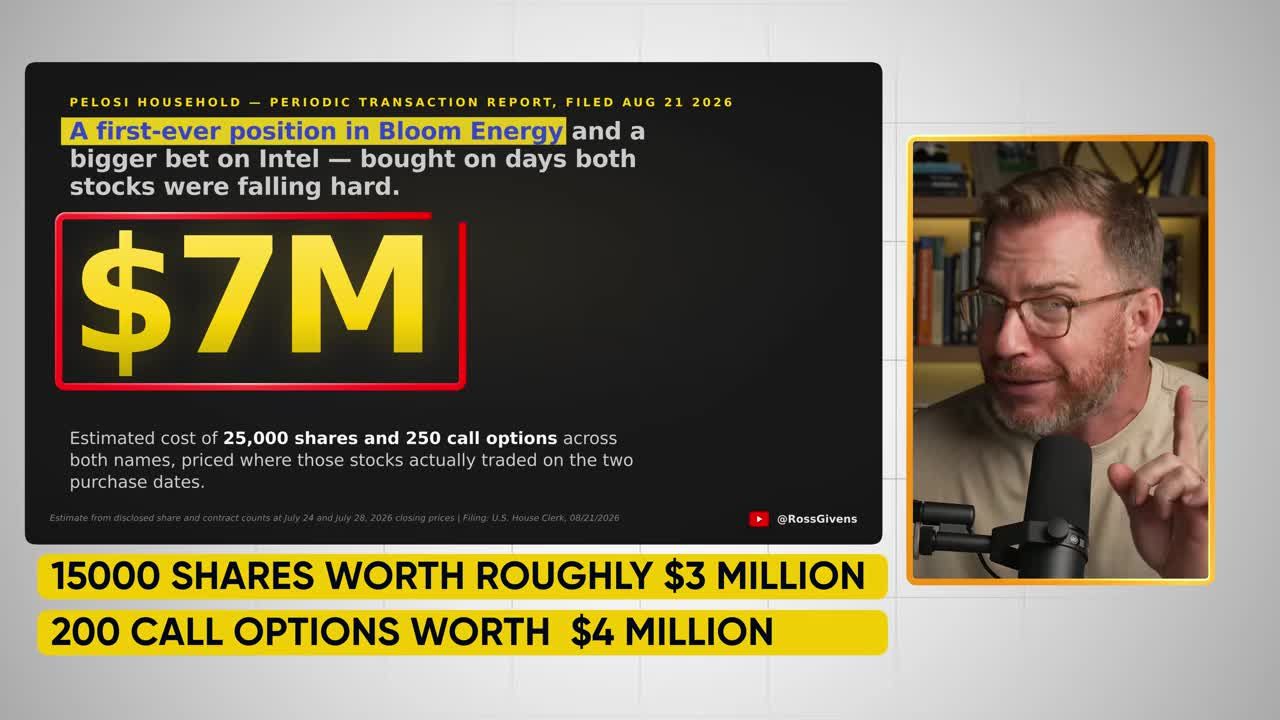
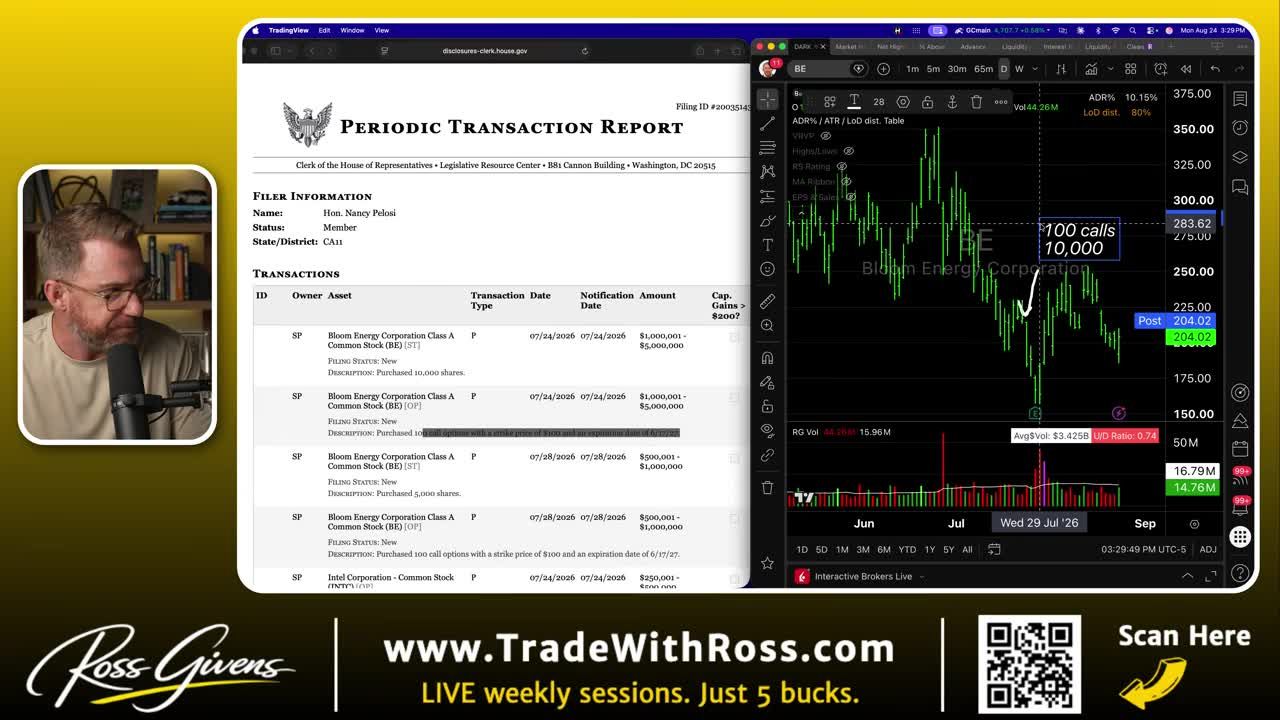
Right after the congressional stock ban vote, Pelosi executed a $7 million leveraged trade in Bloom Energy and Intel. She bought 15,000 shares of Bloom Energy and 200 deep in-the-money call options, days before a record earnings report.
The official periodic transaction report was filed with the clerk of the House and went public on Monday, August 24th. Thanks to the Stock Act, Congress typically has 45 days to report trades. She gave us this disclosure a little early, a parting favor in her final year in office.
She is building positions in these stocks, but using options to lever up.
The Numbers Behind the Pelosi Stock Trades
Bloom Energy (BE)
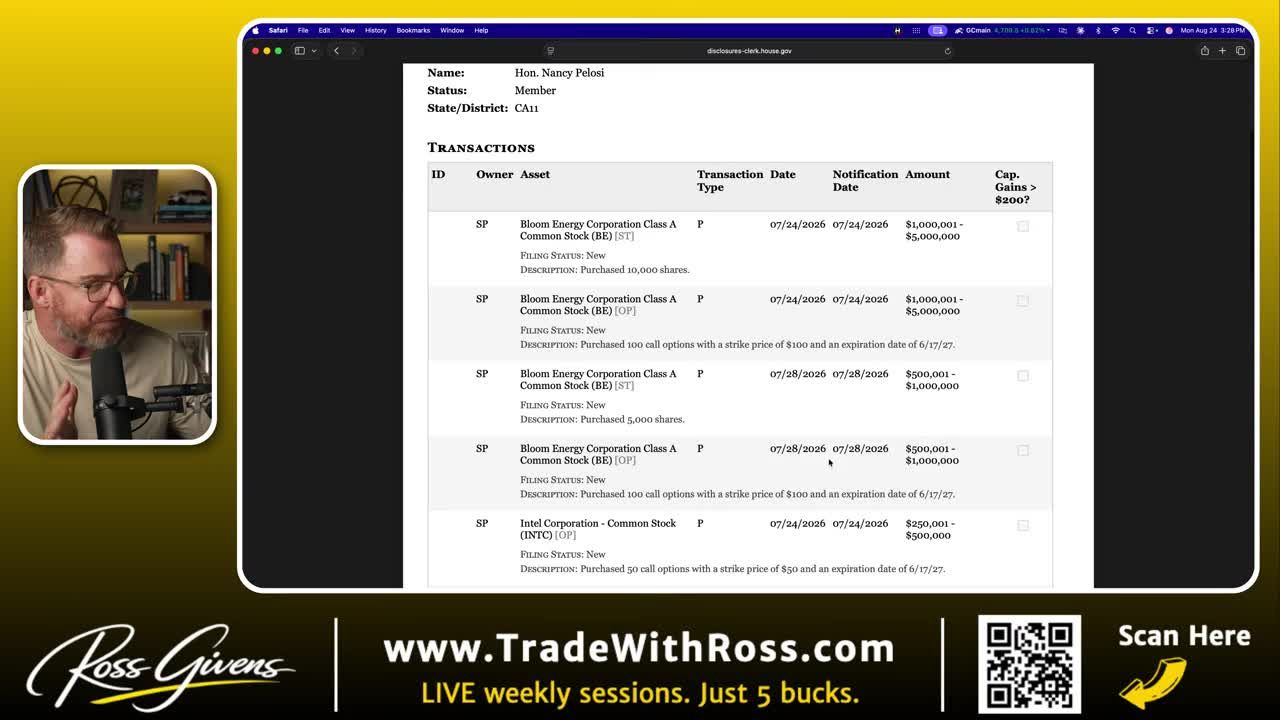
On July 24th, she purchased 10,000 shares of Bloom Energy while the stock traded somewhere between $185 and $215. Four days later, on July 28th, the stock fell ahead of earnings. She doubled down, adding another 5,000 shares at roughly $175, close to $1.7 million more.
Her total stock position reached 15,000 shares, worth roughly $3 million.
Intel (INTC)
On that same day, July 24th, she bought 10,000 shares of Intel. The stock had a phenomenal first half of 2026 before pulling back hard in July along with the rest of the semiconductor and memory names. She put roughly $1 million into Intel shares while it traded around $92.
These Weren't Lottery Tickets
A professional strategy called stock replacement
She did not just buy shares. She used a strategy the pros call stock replacement.
When most people buy call options, they are buying lottery tickets. Cheap, out-of-the-money bets that either pay ten to one or, far more often, expire worthless. That is not what happened here.
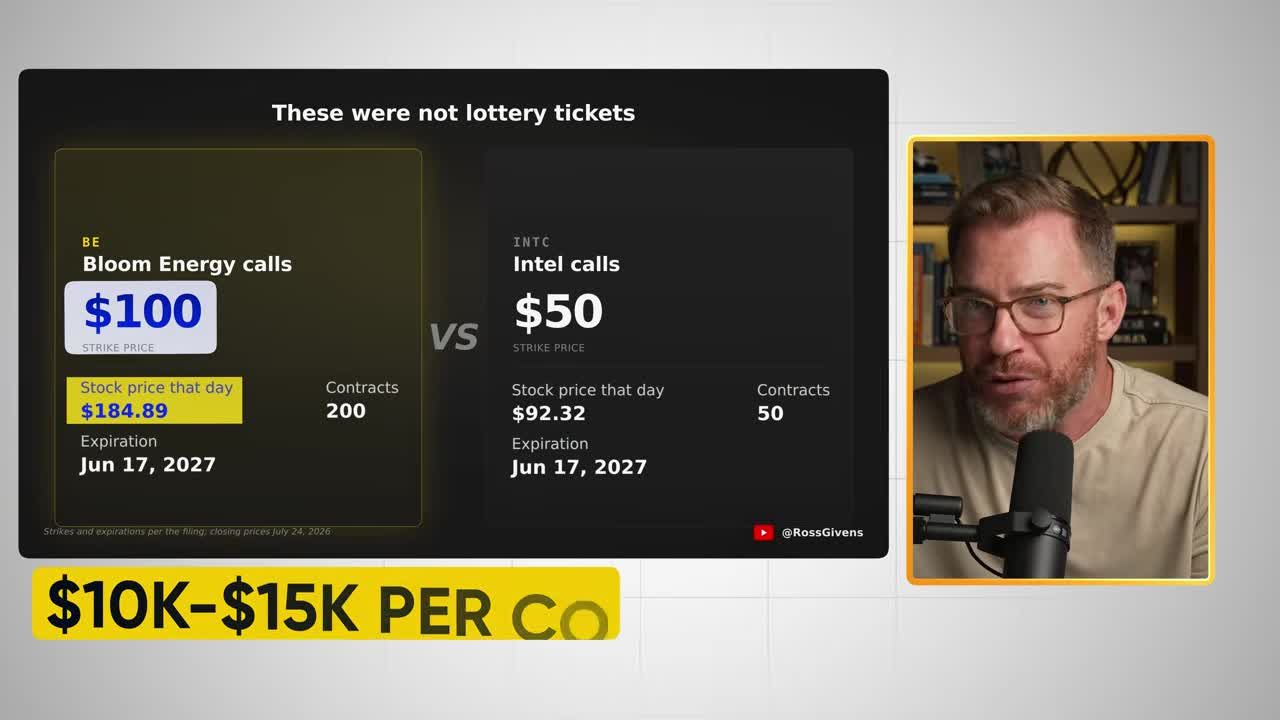
- She bought 200 call options on Bloom Energy with a $100 strike price while the stock traded at $185.
- These contracts were deep in the money, costing $10,000 to $15,000 each.
- She bought 50 call options on Intel with a $50 strike while Intel traded around $92.
This is heavy leverage with almost a year of runway on the clock. It turns a $3 million stock position into a $7 million leveraged bet.
Why Bloom Energy, Right Now?
Washington was writing legislation for her exact business model
Why buy a stock she had never owned, right before an earnings report? Because the House Energy and Commerce Committee was actively marking up legislation that directly benefited Bloom Energy's business.
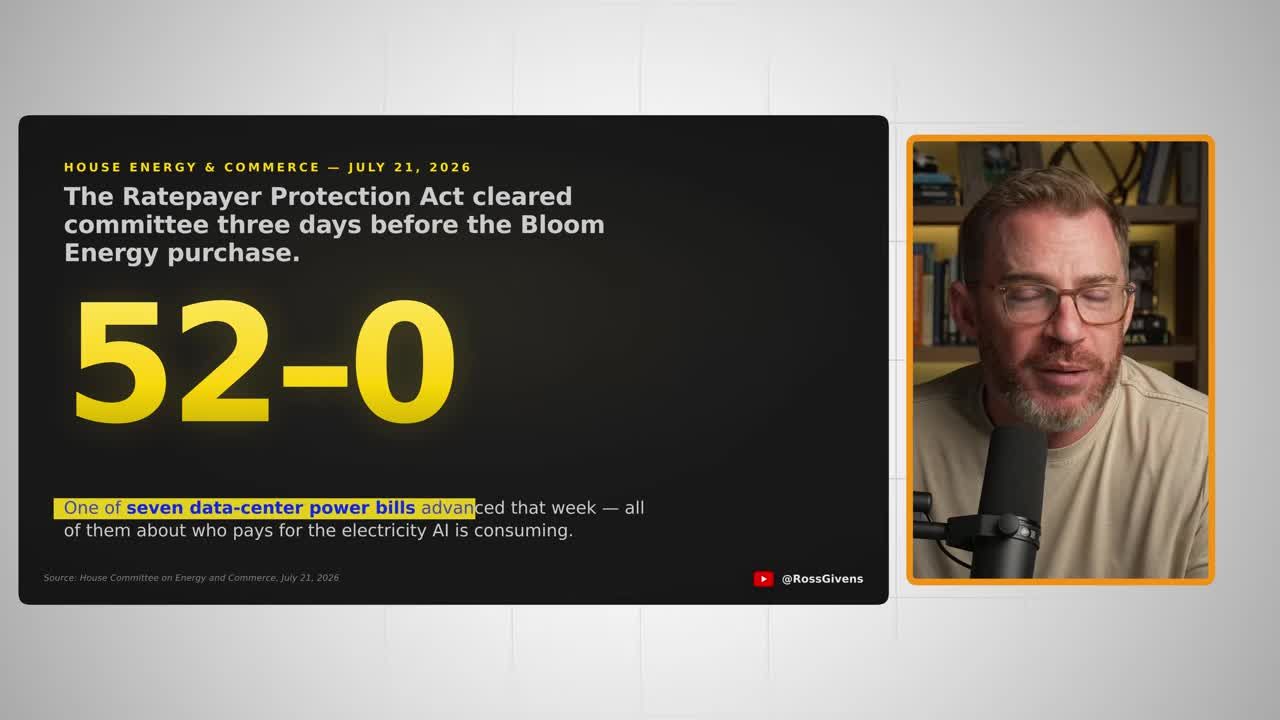
The week before these trades, the committee marked up seven separate bills. One focused on who pays for the electricity that AI data centers are swallowing. On July 21st, the Rate Payer Protection Act cleared committee 52 to 0. This Congress cannot agree on lunch, yet it voted 52 to 0 on this one.
During that markup, a California congressman argued out loud that on-site power generation could bring everyone else's electricity bill down. On-site power generation is exactly what Bloom Energy sells. They build fuel cells that sit right next to data centers and make electricity on the spot, so the operator never has to wait for the grid.
Then, the very night of her second purchase, Bloom Energy reported earnings. They beat on revenue. They raised full-year guidance on strong AI demand. It was the biggest quarter in company history. The next day, the stock rallied from $167 all the way to $250.
Get an entire year of live weekly mentoring sessions, my newsletter, indicators, bonus reports, tons more. Click the link and I'll see you in the next live session.
Join my Black Ops Trading ClubThe Lobbying Trail
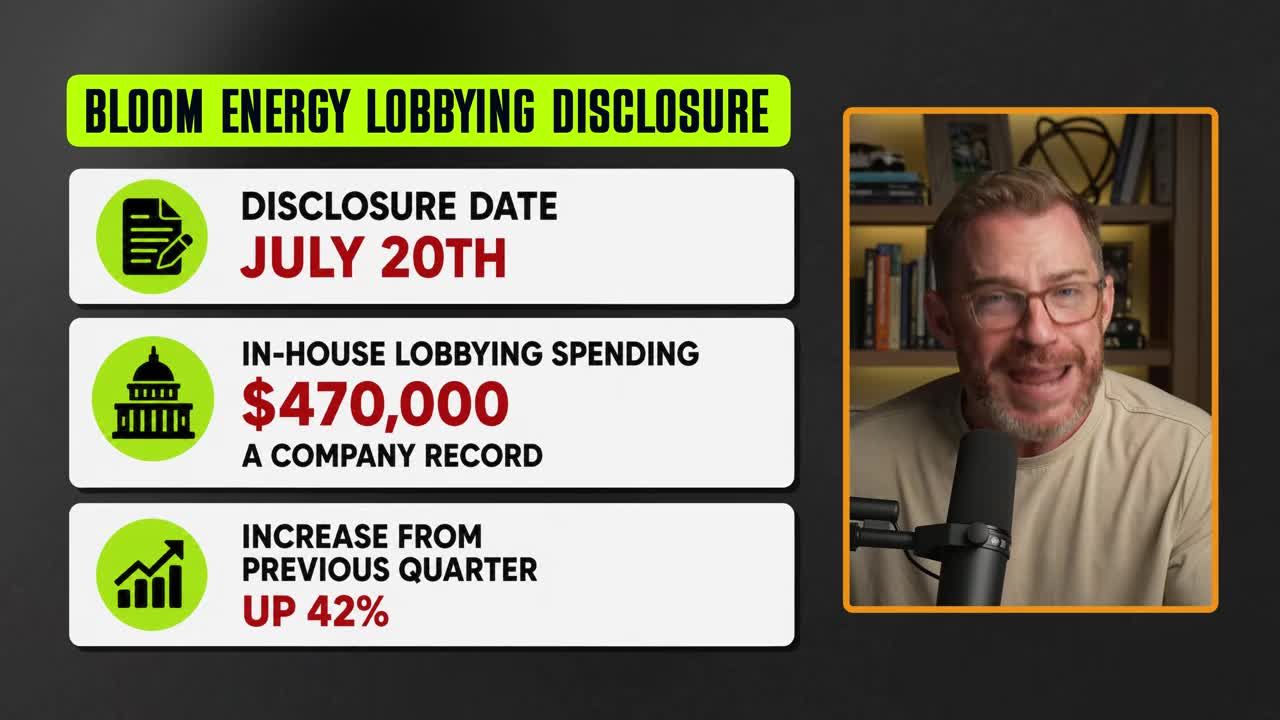
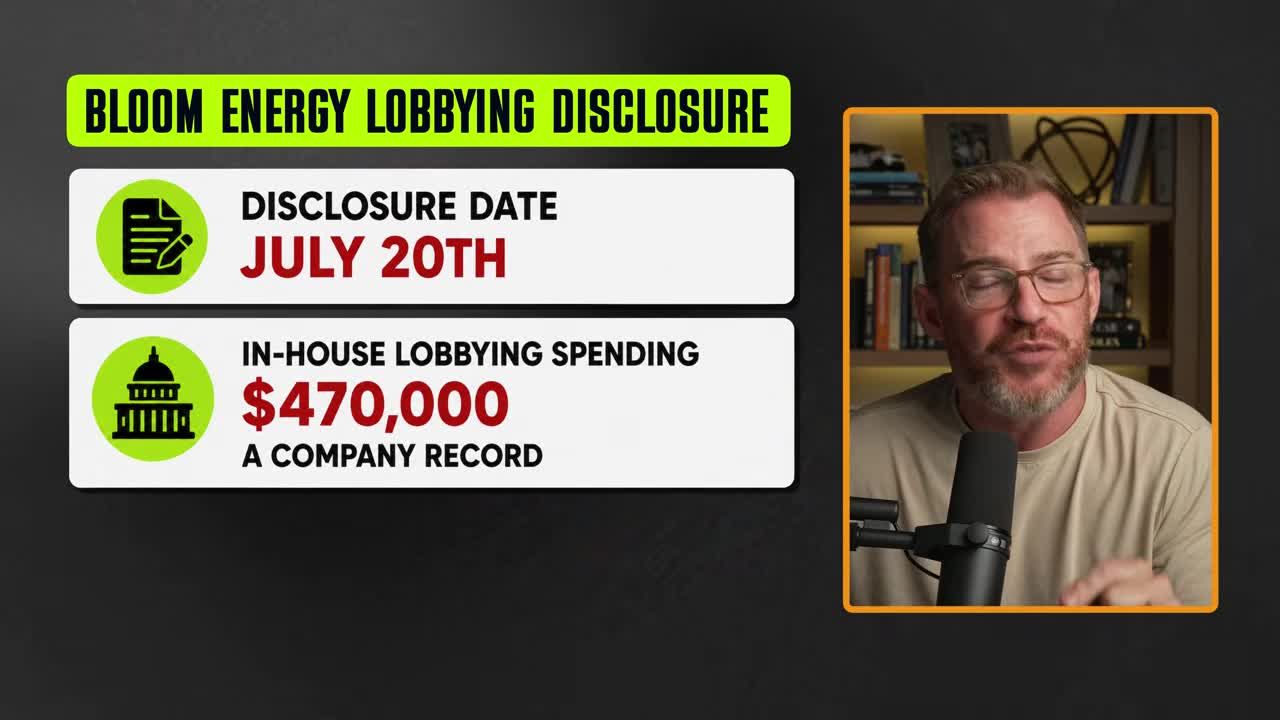
Bloom Energy's lobbying disclosure for the quarter posted on July 20th. Their in-house spending, the money aimed at influencing politicians, came in at $470,000. That was a company record, up 42% from the quarter before. And that filing named the Rate Payer Protection Act for the very first time.
All of it happened in the same week as her purchases.
What Is the Intel Position in Pelosi's Latest Trade Filing?
The same story from the other direction
Washington has its hands firmly on Intel too. The United States government owns a piece of the company: 435 million shares, bought around $20 and change back in August 2025. That is just under 10% of Intel. By late July, the stake was worth roughly $42 billion.
Congress created the program that made it happen. Congress writes the tariffs protecting Intel's factories. Congress funds the defense chip program that releases the rest of those shares.
One filing, two stocks. One powers AI data centers. The other makes the chips that go inside them. Washington has its hands on both.
The Expiration Date Nobody Talks About
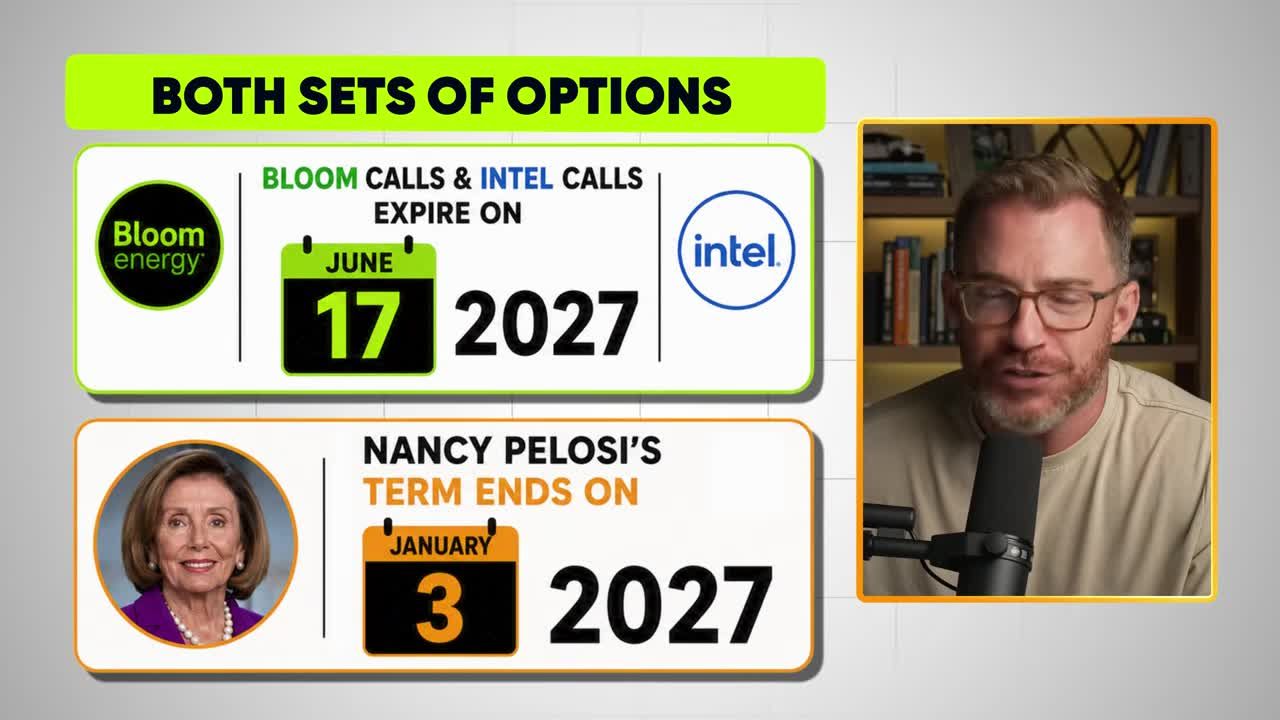
This is the part to sit with. Both the Bloom Energy calls and the Intel calls expire on June 17, 2027. Her congressional term ends January 3, 2027.
In about four months, she will no longer be a member of Congress. She will not be covered by the Stock Act. There will be no disclosure when she sells. Whatever happens to those options between January and June of 2027, nobody outside the Pelosi house will know.
I am not telling you that is why she picked the date. I have no idea why she picked it. I am telling you what it means.
The Pelosi Stock Trades Are All Public Record
You do not need a special tracker to find any of this. Every single detail in these Pelosi stock trades is public record.
- The committee markup was on the public calendar.
- The 52 to 0 vote count is posted on the committee website.
- The lobbying disclosure sits in a free, searchable government database.
None of it is hidden. It is just scattered across obscure locations, and most people never take the time to look.
Why Anyone Follows Her At All
Pelosi has one of the best investment track records in Congress. Frankly, one of the best on Wall Street. She has vastly outperformed the market for more than a decade.
She does not sit on Energy and Commerce. She has no committee assignments at all this Congress. She does not need any. She ran that chamber for eight years and remains the most influential person in Washington. When she makes a move of this size, the market pays attention. Tens, if not hundreds, of millions of dollars in autopilot programs trace her trades.
Following the Money
I am not saying run out and buy Bloom Energy right now just because she did. There are no guarantees in this market. But a family with 38 years of experience reading that town just put $7 million in leverage behind a specific idea, in a company they had never owned a single share of. These Pelosi stock trades deserve a close look.
Both of these stocks have since pulled back and now trade near or below where she bought them. The chance to piggyback on what could be some of her biggest and final trades in office is sitting right in front of us.
Get an entire year of live weekly mentoring sessions, my newsletter, indicators, bonus reports, tons more. Click the link and I'll see you in the next live session.
Key Takeaways
- Two days after voting against a congressional stock trading ban on July 22nd, Pelosi executed a roughly $7 million leveraged trade in Bloom Energy and Intel.
- The Bloom Energy position included 15,000 shares plus 200 deep in-the-money call options, entered just before the company posted a record-breaking earnings report.
- Both positions have since pulled back and now trade near or below her entry price, meaning the trade has not yet paid off.
- The options are structured to expire after she leaves office, making these among the longest-dated and most aggressive trades in her disclosed history.
- The core thesis connecting both stocks is data center power demand: AI infrastructure needs electricity faster than the grid can supply it, and Congress is currently writing the rules on who funds that buildout.
DISCLAIMER: Traders Agency does not offer financial advice. The information provided is for educational purposes only and should not be considered financial advice. Traders Agency is not responsible for any financial losses or consequences resulting from the use of the information provided. Trading carries inherent risks and may not be suitable for all individuals. You are advised to conduct your own research and seek personalized advice before making any investment decisions, recognizing the potential risks and rewards involved.
See more from Traders Agency on Google
Make us a preferred source and our market analysis will appear more prominently in your Google Search, Top Stories, and AI results.
Add to Preferred Sources