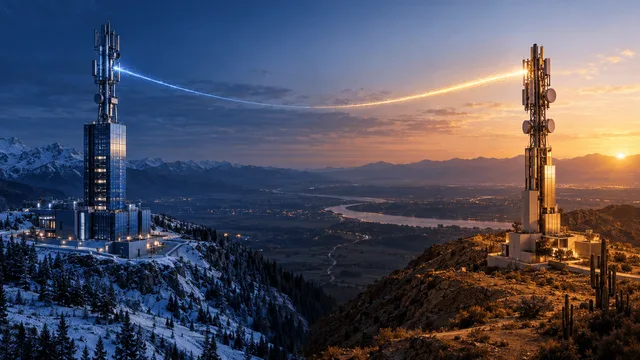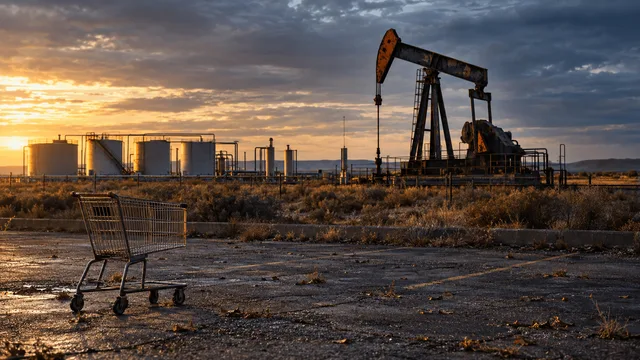
The US-Iran conflict is rattling global trading desks this morning. Over the weekend, the US renewed strikes near the Strait of Hormuz, and Iran retaliated by targeting US allies in Kuwait, Jordan, and Qatar. Our team is watching a major shift in equity futures and energy markets as these geopolitical tensions escalate. President Trump indicated that while talks to end the war are ongoing, he considers the ceasefire effectively over. This development requires immediate attention from anyone holding tech, energy, or broad market index positions.
What Is the Stock Market Doing Today?
The stock market is experiencing a broad selloff in early trading as geopolitical fears pressure equities. Nasdaq 100 futures (NQ=F) are leading the decline with a 0.8% drop, while S&P 500 futures (ES=F) have fallen nearly 0.3%. Dow Jones Industrial Average futures (YM=F) are down slightly by less than 0.1%.
These declines threaten the momentum from last week, where the S&P 500 and Nasdaq barely managed to eke out gains. The data we're tracking shows a clear rotation out of risk assets. AI stocks are under specific pressure this morning as investors reduce exposure.
Key Moves: Nasdaq 100 futures down 0.8%, S&P 500 futures down 0.3%, and Dow futures down less than 0.1% as geopolitical risk slams equity markets.
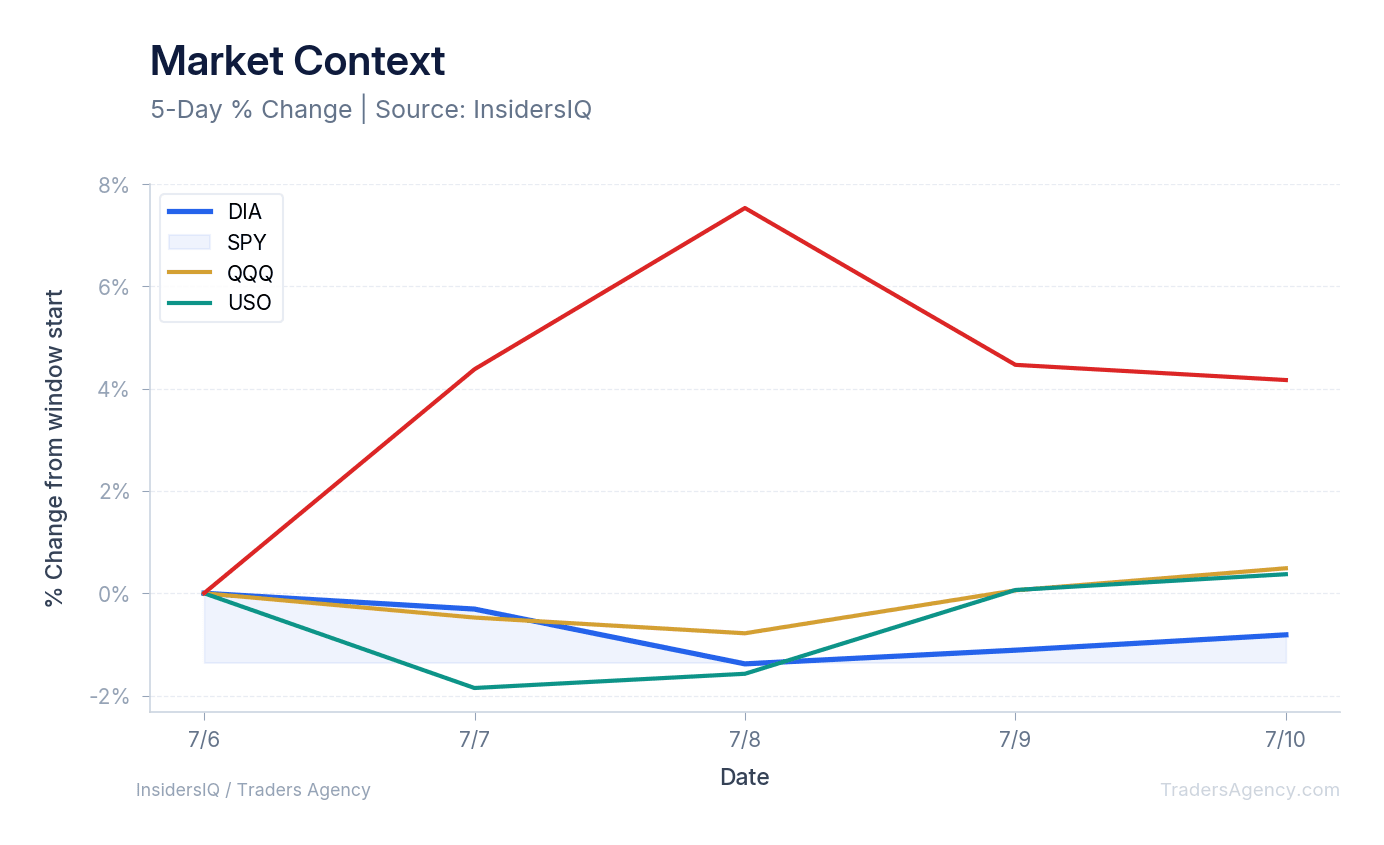
Looking at verified 10-day price changes, the DIA is down 0.81%. In contrast, SPY and QQQ are still holding 10-day gains of +0.49% and +0.37% respectively. Today's pre-market action directly threatens those recent gains.
How Will the US-Iran Conflict Affect Oil Prices?
The most direct US Iran conflict market impact is happening right now in the energy sector. Brent crude (BZ=F) is surging and nearing the $80 per barrel mark following aggressive statements from Iranian forces.
This price action follows a direct threat from the IRGC, which stated that the Strait of Hormuz will be closed until further notice. They declared that no vessels will be allowed to transit the strait until the end of American interventions in the area. The US insists that the strait remains open.
Our analysis shows this standoff is creating massive volatility in oil markets. The USO oil fund reflects this surge perfectly, posting a 10-day price change of +4.17%.
Oil Surge: Brent crude (BZ=F) is approaching $80/barrel, and the USO oil fund has gained +4.17% over the past 10 days as Strait of Hormuz tensions intensify.
What Does This Mean for Traders?
Traders need to prepare for a highly volatile week where geopolitical headlines overshadow traditional market fundamentals. The resumption of hostilities in the Middle East has completely changed the risk profile for the days ahead.
We see three primary market implications:
1. Energy Sector Volatility
Oil prices will likely react violently to any new statements regarding the Strait of Hormuz. The conflicting statements between the IRGC and the US government create a highly unpredictable environment for energy traders.
2. Tech Sector Weakness
AI stocks are already showing weakness today. The 0.8% drop in Nasdaq futures indicates tech is bearing the brunt of the risk-off sentiment.
3. Inflation Anxiety
Rising oil prices are immediately reviving inflation worries across the market. Higher energy costs directly feed into the economic data the Federal Reserve monitors.
Want expert trading insights delivered daily?
Join thousands of traders who rely on Traders Agency for market analysis and trade ideas.
Join Traders AgencyWhy Are Inflation Reports So Important This Week?
The timing of this geopolitical escalation perfectly collides with critical economic data. The market is set to receive two major inflation reports that will dictate the next trend for interest rates.
The Consumer Price Index arrives on Tuesday, followed by the Producer Price Index on Wednesday. These readings will provide fresh signals on the likelihood of Fed interest rate hikes this year.
If the conflict continues to push oil prices higher, future inflation data could run hot. Traders should expect elevated volatility around the Tuesday and Wednesday morning data releases.
Which Earnings Reports Should Traders Watch?
Beyond the macro data, the unofficial kick-off of earnings season begins this week. The financial sector will take the spotlight first, setting the tone for the broader market.
We're closely monitoring big bank results from JPMorgan Chase (JPM), currently trading at $336.47, and Goldman Sachs (GS), priced at $1,055.18. Bank of America (BAC) will also report, providing a comprehensive look at the banking sector.
Tech and healthcare traders also have major events on the calendar:
- Taiwan Semiconductor Manufacturing Company (TSM) will report quarterly results, offering a highly anticipated signal on AI demand.
- Netflix (NFLX) will provide updates on the consumer streaming sector.
- UnitedHealth (UNH) will report, directly impacting the Dow given its weight as a major index component.
The Bottom Line
Our research team is treating this week as a high-risk environment. The combination of Middle East escalation, surging oil prices, and a heavy data calendar creates a dangerous setup for unprepared traders.
We're keeping a close eye on the $80 level for Brent crude and the critical CPI data dropping on Tuesday. Protect your capital, watch your position sizing, and wait for clear technical signals before committing to new trades.
Want expert trading insights delivered daily?
Join thousands of traders who rely on Traders Agency for market analysis and trade ideas.
Join Traders AgencyKey Takeaways
- Nasdaq 100 futures (NQ=F) are leading the equity selloff with a 0.8% drop, while S&P 500 futures (ES=F) are down 0.3% and Dow futures (YM=F) are barely negative, signaling tech-heavy portfolios face the most immediate pressure.
- Despite today's pre-market weakness, SPY and QQQ still hold 10-day gains of +0.49% and +0.37% respectively, meaning the broader trend has not broken yet.
- US strikes near the Strait of Hormuz and Iranian retaliation targeting US allies in Kuwait, Jordan, and Qatar are the specific triggers driving the risk-off move this morning.
- The $80 level for Brent crude is the key price point traders are watching as a potential inflection for energy market positioning.
- Tuesday's CPI release lands in the middle of an already volatile week, creating a compounding risk for traders holding positions through both the geopolitical and macro data events.
DISCLAIMER: Traders Agency does not offer financial advice. The information provided is for educational purposes only and should not be considered financial advice. Traders Agency is not responsible for any financial losses or consequences resulting from the use of the information provided. Trading carries inherent risks and may not be suitable for all individuals. You are advised to conduct your own research and seek personalized advice before making any investment decisions, recognizing the potential risks and rewards involved.
See more from Traders Agency on Google
Make us a preferred source and our market analysis will appear more prominently in your Google Search, Top Stories, and AI results.
Add to Preferred Sources