The price of oil is collapsing. Down from $120 a barrel in March to just $70 today. But while the whole world stares at the barrel, they are completely missing the real story.
The real money during the Hormuz crisis is not in the oil itself. It is in the boats that carry it. Right now, oil tanker stocks are quietly minting cash, and the underlying rates driving their profits have reached absurd levels.
Falling Oil, Rising Profits for Oil Tanker Stocks
The amount of oil actually moving on these supertankers is down about 36% since the strait shut down. Fewer barrels, less cargo. So if there is less demand to ship oil, why are shipping rates at record highs?
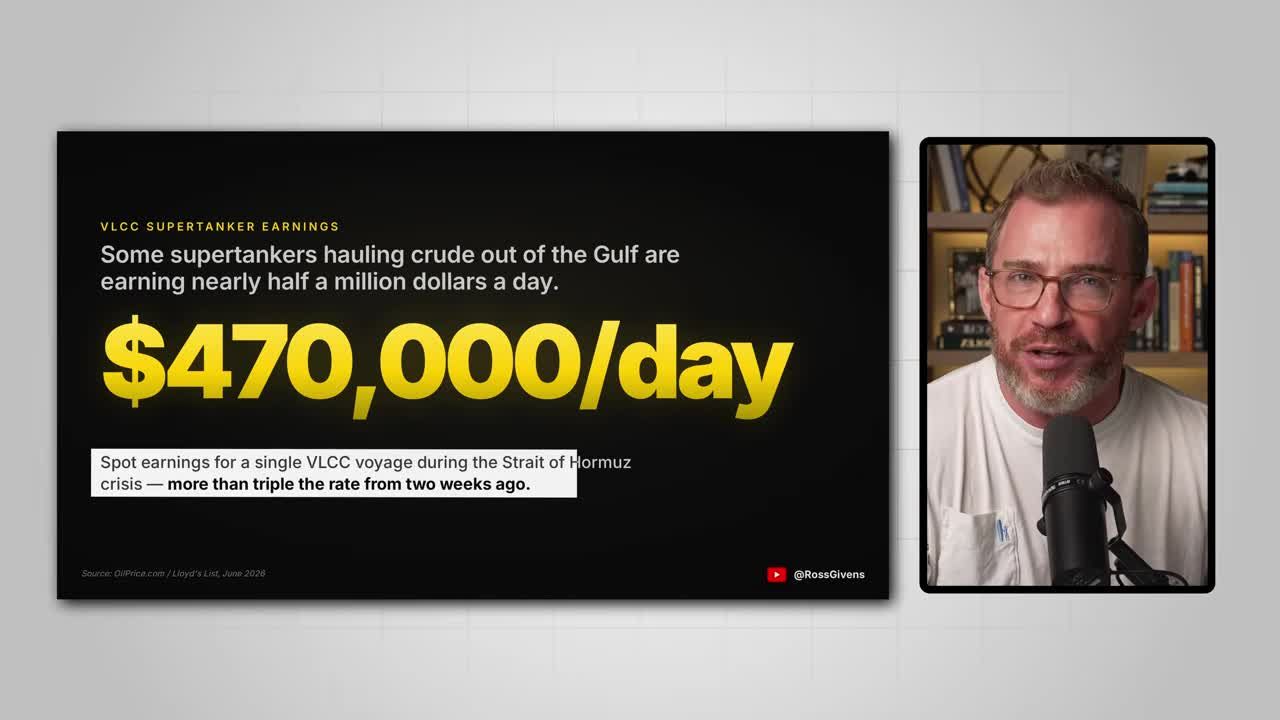
Day rates for the world's largest oil tankers have more than tripled since June 11th. Some of these ships are now earning nearly $470,000 a day, and then on Monday they spiked again.
The numbers across the board are absurd. Last year, these oil tankers were earning around $47,000 a day. Compare that to the rates today:
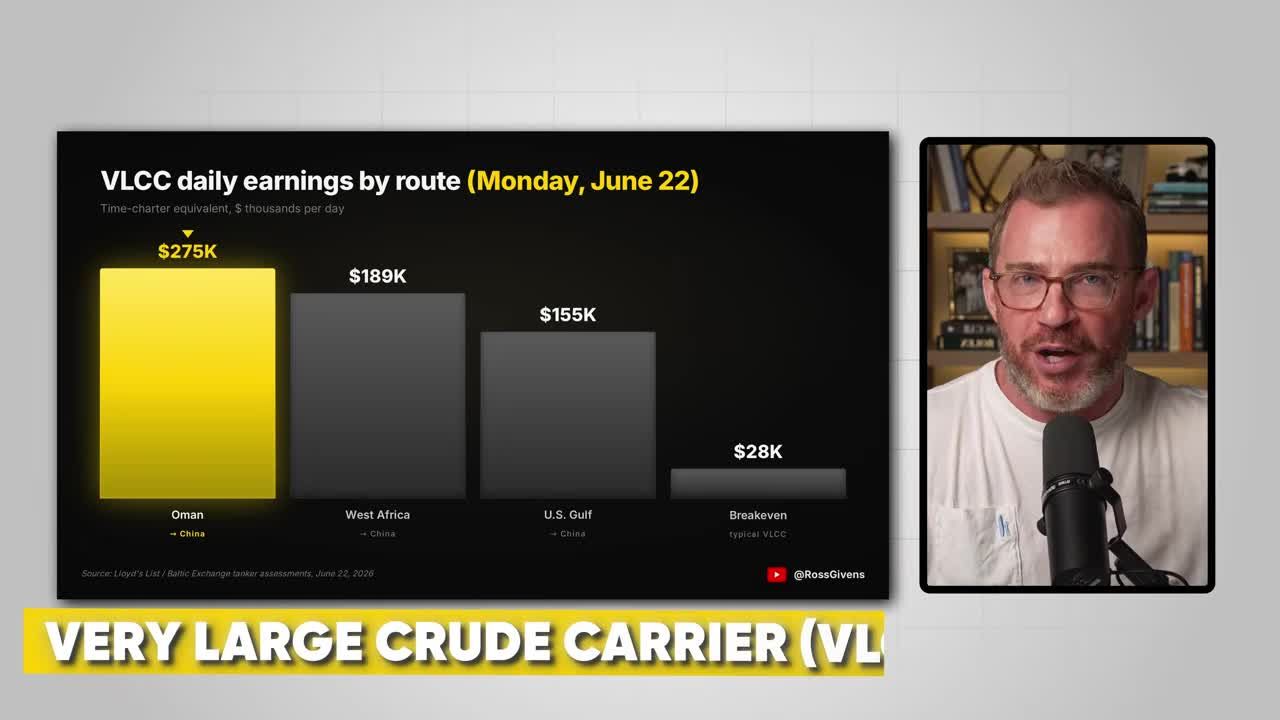
- Middle East Gulf to China: $275,000 a day (an 82% spike in a single week)
- West Africa to China: $189,000 a day (the highest level since March)
- US Gulf to China: $155,000 a day
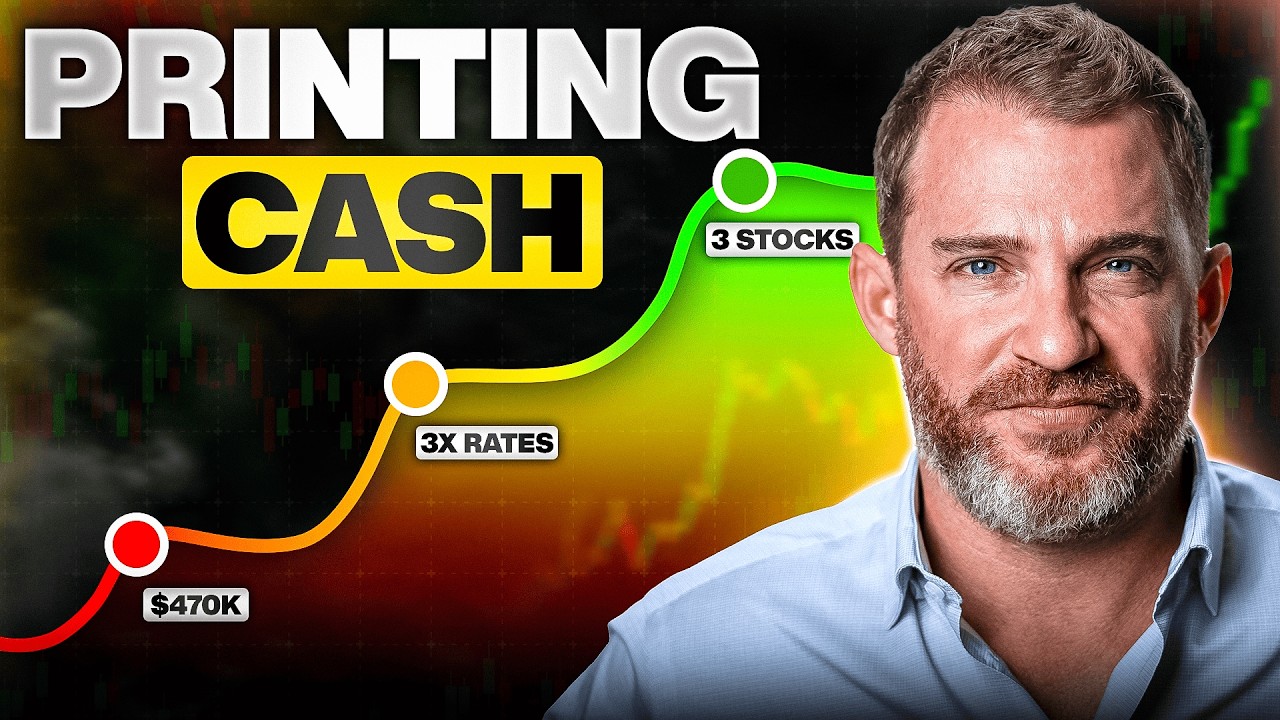
These companies are not just making money. They are printing it.
What Are VLCC Day Rates and Why Do They Matter for Tanker Stocks?
To understand the massive profit margins here, you have to look at the breakeven costs for a VLCC.
VLCC stands for Very Large Crude Carrier. The breakeven is simply what it costs a company to operate one of these massive ships per day. Right now, that number sits around $28,000.
This spike in crude carrier earnings is not a random glitch. It is the direct result of a massive disruption in global shipping routes.
The Strait of Hormuz Crisis
Back on February 28th, the Strait of Hormuz effectively shut down. The strait is the chokepoint at the mouth of the Persian Gulf.
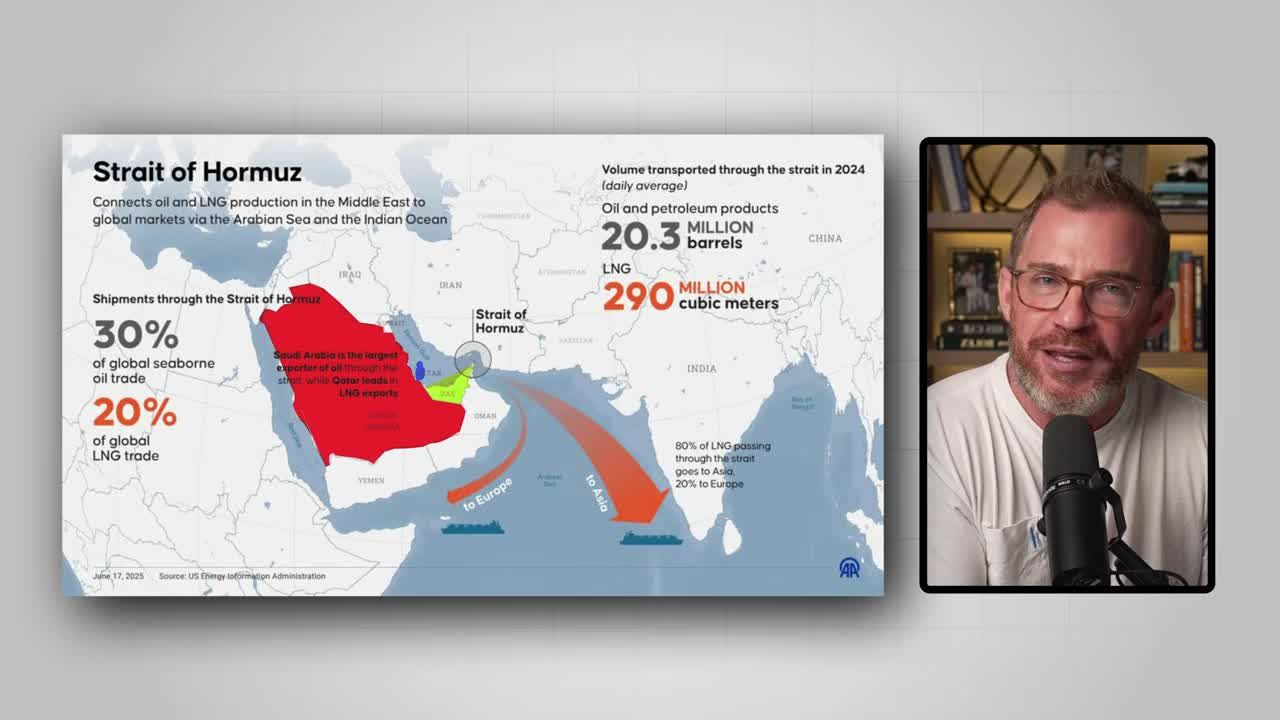
Roughly one-fifth of the world's oil has to pass through it. It connects oil-rich nations like Qatar, Saudi Arabia, and the UAE to the rest of the world. Then, Iran declared it closed.
Insurers started pulling risk coverage. Ships stopped going in, and the ones already inside could not get out.
On June 14th, mediators announced a deal, a memorandum meant to end the conflict within 60 days. The strait reopened, and oil prices came down as a result. But the reality on the water is entirely different. The freight market is not staring at the barrel. The freight market is staring at the map.
How Does Longer Shipping Distance Translate Into Higher Tanker Profits?
Shipping does not get priced in barrels. It gets priced on barrels multiplied by miles. The industry calls this metric "ton-miles," measuring how much cargo you move and how far you move it.
Right now, the "how far" part of that equation just blew up.
Think about the situation from Asia's perspective. China, India, Korea, Japan. The bulk of their imported oil came through the strait. When it stopped coming, their demand did not go anywhere. They still needed oil. But would you bet a $120 million supertanker and 2 million barrels of crude oil on a safe trip through an active war zone after your insurer just canceled your policy? Of course not.
So they are doing the only logical thing. They are buying oil from the other side of the globe, from the Western Hemisphere. Crude out of the US Gulf, out of Brazil, out of Guyana.
A barrel shipped across the Atlantic costs more and takes longer to get there. But at least you know it is going to get there. Certainty beats cheap. A barrel you can actually count on getting beats a cheaper one stuck behind a minefield.
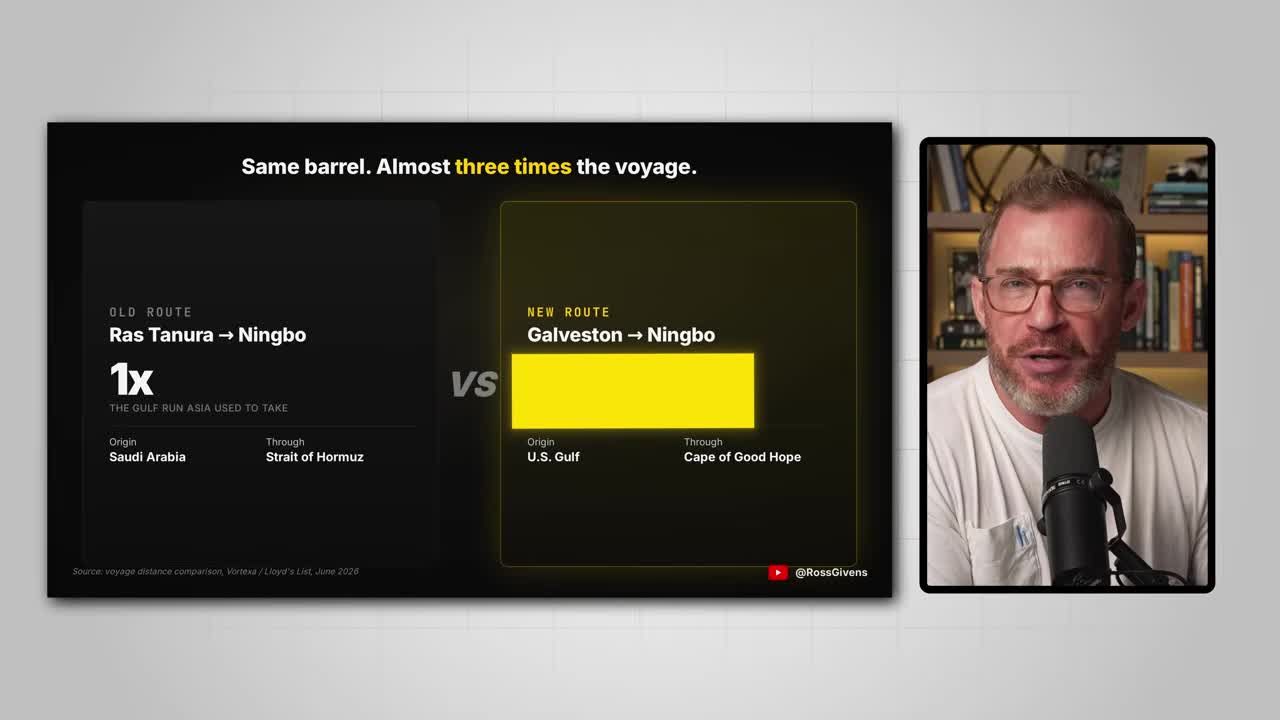
Every one of these long hauls ties up a supertanker for two to three times as long. That means two to three times fewer ships are available for everybody else. Long-haul Atlantic to Pacific voyages have jumped from about 22% of VLCC crude exports to 35% in just the last eight weeks.
Fewer ships available chasing the same demand. Rates explode. Basic supply and demand.
Get an entire year of live weekly mentoring sessions, my newsletter, indicators, bonus reports, tons more. Click the link and I'll see you in the next live session.
Join my Black Ops Trading ClubWhich Oil Tanker Stocks Are Benefiting Most From the Hormuz Crisis?
The companies that own and operate these boats are raking in record profits. Even if the strait opens up tomorrow, it is going to be years before Europe and Asia trust that supply chain again. The fragility of that narrow passageway along the coast of Iran has been exposed. These longer routes are becoming the new standard for reliable crude, and these companies are going to benefit from this new global shipping order.
1. Frontline (FRO): The Big Dog
Frontline is one of the largest crude tanker operators on earth. The operating leverage here is incredible.
In the first quarter of this year, Frontline posted earnings of $2.51 a share, up from $0.15 the year before. Revenues jumped 67%. That was their strongest first quarter since 2004, and that happened before rates tripled this month.
When a ship breaks even at $30,000 a day and it is earning $280,000 a day, that gap, almost all of it, goes straight to the bottom line. Straight profit. That is the leverage.
The stock chart shows a textbook breakout trade. Strength as buyers position early, followed by weeks or months of consolidation. It tightens up, absorbs supply, and shakes out weak hands. Coming through $40, this stock could see $60, $70, or $80 over the coming months.
2. DHT Holdings (DHT): The Pure-Play VLCC Bet
DHT Holdings is as pure a play as you will find in crude oil transport. This company owns nothing but VLCCs, nothing but supertankers. It is the single most direct bet on this exact rate.
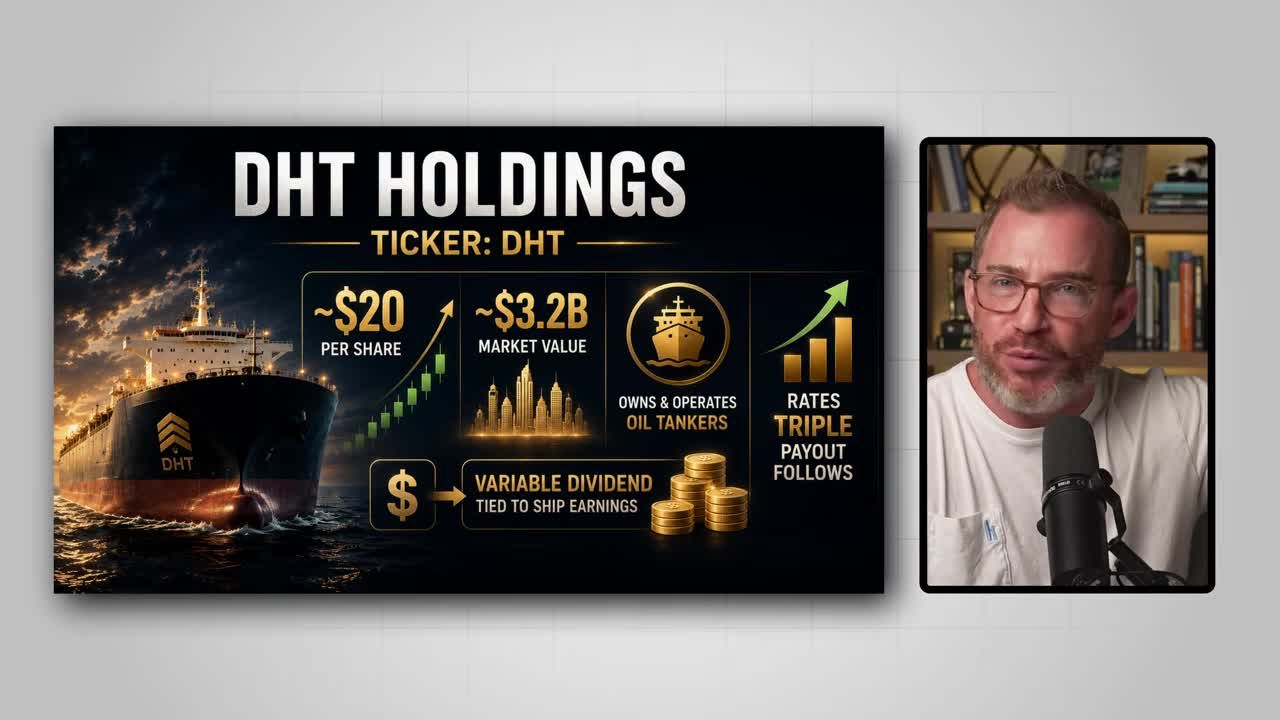
The stock trades around $20 a share. With a $3.2 billion value, it sits on the low end of the midcap range, leaving plenty of room to grow.
DHT also pays a variable dividend tied directly to what their ships earn. When rates triple, the payout follows. The next payment is currently expected to be a whopping 7.36% yield.
Price action has repeatedly tested resistance around $20. Think of these resistance levels like a brick wall. Hit it with a hammer, it bounces back. Hit it again, you take a chunk out. The more you hit that level, the better the odds it breaks.
DHT recently saw a 25% rally in just 20 days. That move happened on massive, above-average volume. High volume on the way up and declining volume on pullbacks is typically a sign of institutional activity piling into the stock.
3. International Seaways (INSW): The Diversified Option
International Seaways is a little pricier, around $90 a share, but it is the diversified option.
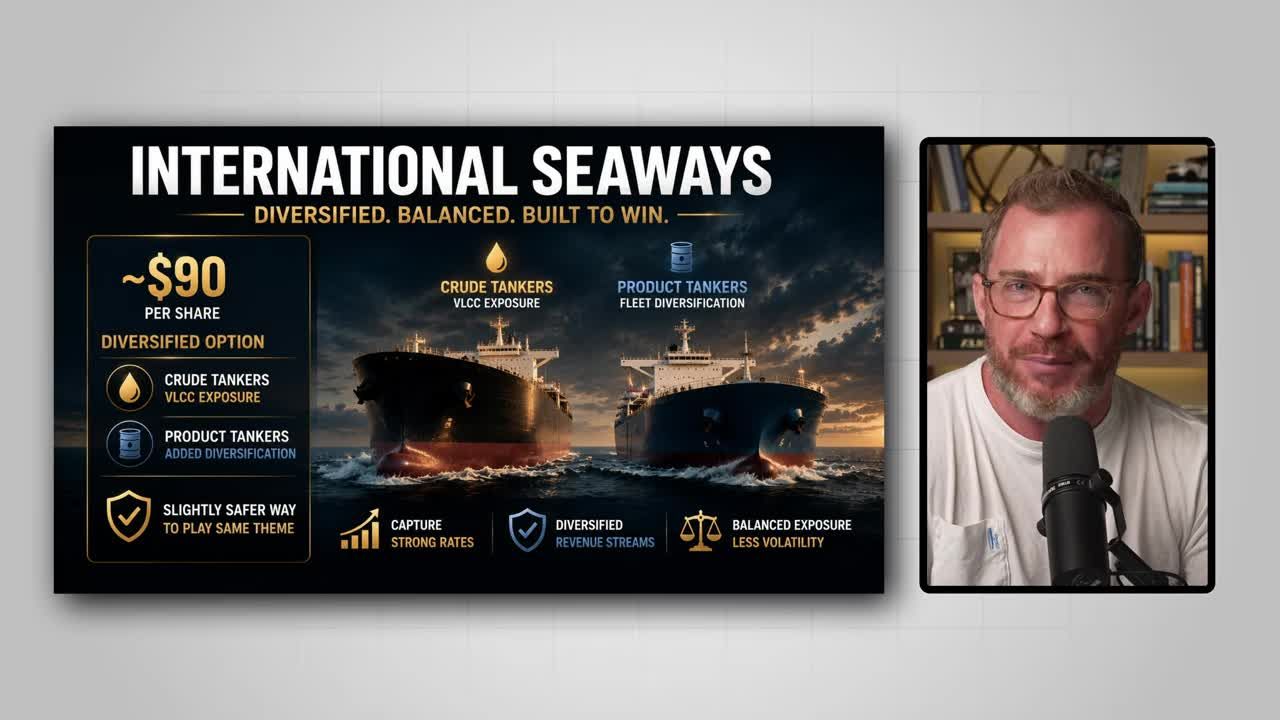
They run both crude tankers and product tankers. You get the VLCC exposure with some cushion spread across a broader fleet. It is a safer way to play the same theme.
The Global Shipping ETF Play
If you want to catch the entire basket of global shipping stocks, there is the BOAT ETF.
This exchange-traded fund is setting up in a beautiful breakout pattern. Over the last four months, it has been hammering on the $42 to $44 resistance area.
The pullbacks are getting shallower. These smaller dips show there are fewer and fewer sellers in the market. It looks like it is setting up for a breakout move higher, which would be a group move lifting the entire shipping sector.
What Could Go Wrong
Every trade carries risk. This entire move is built on one thing: the strait being dangerous.
Right now, ships are literally bunched up off the coast of Oman, waiting to see if they can make a run through the strait. The whole reason rates are at record highs is that ships are taking the long way around. If the US, Israel, and Iran suddenly make peace, those ton-miles collapse. Rates will fall just as fast as they shot up.
That does not look likely. The strait reopening is looking much less stable than people thought even a few days ago.
After the US and Iran agreed to reopen the strait and extend the ceasefire, Iranian Revolutionary Guard officials declared the strait shut again in a couple of days in response to Israeli attacks in Lebanon.
Shipping traffic slowed almost instantly. Some traffic has resumed, but it is only a fraction of pre-crisis volumes. Before the conflict, roughly 125 ships per day went through the strait. Right now, it is closer to 20.
Even when the ceasefire is enforced, the maritime environment is far from normal:
- Shipping lanes are reportedly still dealing with mine risks.
- Traffic patterns are being rerouted.
- Maritime operators are being instructed when and where they can sail.
Even if Iran says the strait is fully reopened tomorrow, ship captains do not want to risk their lives to find out. Refiners are not going to risk losing an uninsured $150 million load. The fragility of that narrow passageway along the coast of Iran has been exposed. It will be years before Europe and Asia fully trust that supply chain again.
A Safer Bet Than Crowded Tech
The AI trade is getting crowded. Semiconductor stocks have reached lofty valuations.
In contrast, the massive profits generated by oil tanker stocks are backed by hard data, basic supply and demand, and a geographical reality that cannot be fixed overnight.
These companies are printing cash right now, and I expect to see money flow into these oil tanker stocks in the coming months, regardless of what the price of a barrel of oil does.
Get an entire year of live weekly mentoring sessions, my newsletter, indicators, bonus reports, tons more. Click the link and I'll see you in the next live session.
Key Takeaways
- VLCC supertankers are earning up to $470,000/day as of late June, compared to roughly $47,000/day a year ago, a nearly 10x increase in daily earnings.
- The Oman-to-China route is generating $275,000/day against a $28,000 breakeven rate, meaning these ships are running at nearly 10x their cost floor.
- Oil volumes through the Strait of Hormuz are down 36%, yet tanker day rates have more than tripled since June 11th. Scarcity of safe routing, not cargo volume, is driving the spike.
- The Middle East Gulf to China route spiked 82% in a single week, signaling that rate acceleration is still in progress, not plateauing.
- Unlike crowded AI and semiconductor trades, oil tanker stock profits are driven by real-time supply and demand data and a geographic bottleneck that cannot be resolved quickly.
DISCLAIMER: Traders Agency does not offer financial advice. The information provided is for educational purposes only and should not be considered financial advice. Traders Agency is not responsible for any financial losses or consequences resulting from the use of the information provided. Trading carries inherent risks and may not be suitable for all individuals. You are advised to conduct your own research and seek personalized advice before making any investment decisions, recognizing the potential risks and rewards involved.
See more from Traders Agency on Google
Make us a preferred source and our market analysis will appear more prominently in your Google Search, Top Stories, and AI results.
Add to Preferred Sources