
The NASDAQ Index is being hijacked. If you hold passive index funds, you are about to be forced into buying very speculative, overvalued companies. The SpaceX IPO NASDAQ listing is the headline event, but it also involves Anthropic, OpenAI, and all the big AI stocks. These are very speculative investments that you could soon be forced to make.
NASDAQ proposed two rule changes designed to attract the biggest IPOs in history. Those rules have a direct impact on your retirement account. They create a forced buying mechanism that benefits only the people who got in early, and the tab gets picked up by passive investors who don't even know what's happening.
I'm going to explain exactly what changed, why it matters, and who this really benefits. Because it is not you.
I'll also give you a simple way to protect your investment account from what's coming. This could have a massive impact on your retirement funds in the future.
OpenAI, Anthropic, and the IPO Pipeline
Bottom Line: The core argument is that NASDAQ's proposed fast-entry rules turn passive index funds into a forced-buying mechanism for speculative, money-losing companies at peak valuations, effectively making retail retirement savers the exit liquidity for venture capital. The practical takeaway is straightforward: switching from market-cap-weighted to equal-weighted index funds (QQQE, RSP) limits your automatic exposure when high-profile IPOs like SpaceX land in the index at inflated weights.
Billions in losses, hundreds of billions in valuation
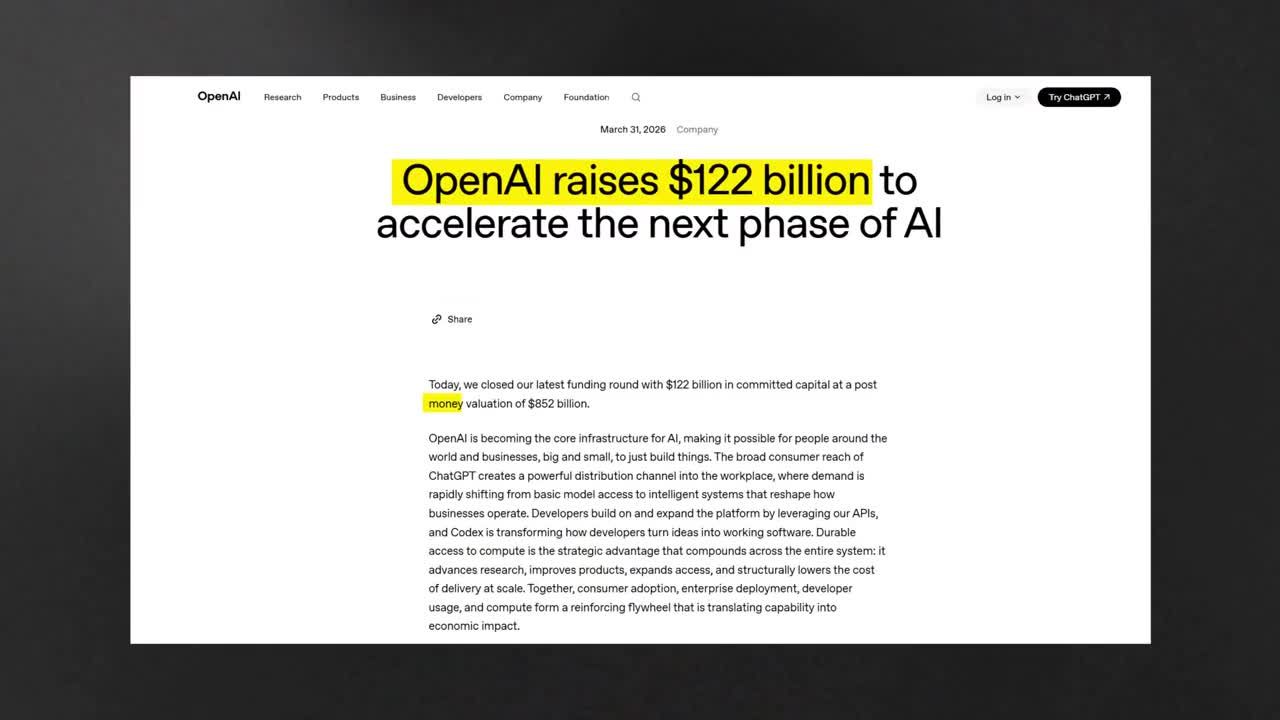
OpenAI just raised $122 billion in seed funding at a valuation of $852 billion. Last year, OpenAI did $20 billion in total revenue. On that $20 billion in revenue and sales, their profit for the year was negative $15.6 billion.
The numbers may improve, and the company is seeing big growth. But right now, those are the facts.
Then there's Anthropic, the company behind the Claude AI model. Its last valuation was $380 billion, roughly the size of Netflix. Just like OpenAI, Anthropic is still losing billions every year. And just like OpenAI, it is set to go public this year.
The third big IPO, and this will be the largest one in history by a mile, is of course SpaceX. It is expected to go public with a $1.75 trillion market cap, roughly 218 times last year's earnings.
These are huge. They are crown jewel listings. NASDAQ wants them, and they changed the rules to get them.
What Is NASDAQ's Fast-Entry Rule for the SpaceX IPO?
NASDAQ wants to drop the IPO waiting period to just 15 trading days
Right now, when a company goes public, it has to wait before it can enter a major index like the NASDAQ 100 or the S&P 500. That waiting period is typically months, sometimes up to a year or more. It exists for a very specific reason: price discovery.
Price discovery lets the stock trade. It gives the market time to figure out what the company is actually worth before trillions of dollars in passive funds are forced to buy it. The market, everyday investors, needs a chance to properly price the stock.
Under NASDAQ's new proposal, that waiting period drops to just 15 trading days. 15 days.
This rule is specifically designed to target flagship listings like SpaceX. It states that a newly listed company ranking in the top 40 of the NASDAQ by market cap can enter the index in two weeks. At $852 billion, OpenAI would instantly qualify. At $1.75 trillion, SpaceX would be in on day one. So would Anthropic.
SpaceX IPO NASDAQ Inclusion: Day One
A $1.75 trillion IPO that skips the line
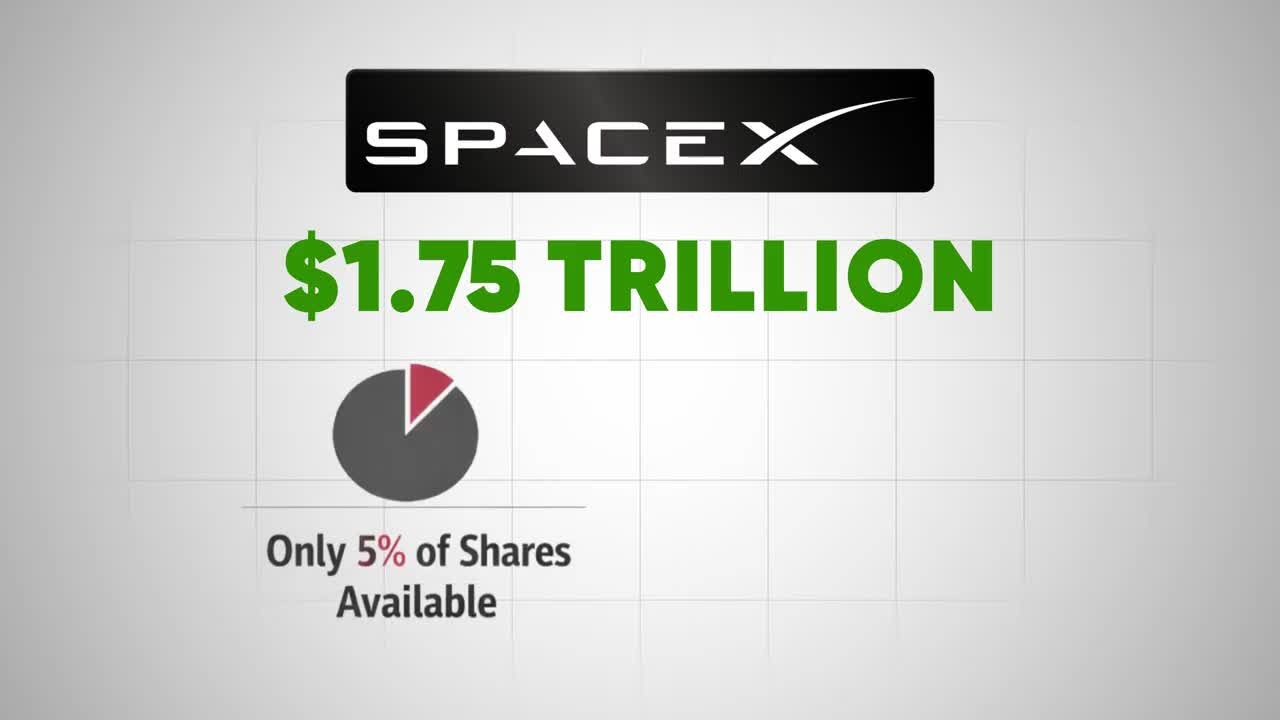
When a company of this size bypasses the traditional waiting period, there is no time to see if that $1.75 trillion valuation is accurate. No time for the market to digest the reality of a company trading at 218 times earnings. The stock lists, 15 days pass, and the forced buying begins.
How Does a SpaceX NASDAQ IPO Affect Your 401(k)?
$1.4 trillion in passive capital forced to buy at inflated prices
This is where it gets dangerous. The primary NASDAQ ETF, the QQQ, manages roughly $400 billion. That is the total assets in this fund that blindly follows the NASDAQ index.
But it gets much bigger. The entire NASDAQ 100 ecosystem, your ETFs, mutual funds, all of it, represents over $1.4 trillion.
When a company enters the index, every single fund tracking that index has no choice but to buy it. A trillion and a half dollars of automatic, forced buying hits the stock all at once.
Most CEOs and corporate bonuses are based on their stock's performance. This would be a heck of a tailwind propping up that stock.
Get an entire year of live weekly mentoring sessions, my newsletter, indicators, bonus reports, tons more. Click the link and I'll see you in the next live session.
Join my Black Ops Trading ClubWhat Is the Float Problem With SpaceX's NASDAQ Listing?
5% of shares available, but the index pretends it's 15%
This second rule change is even worse than the first. You need to understand how float works to see the danger.
A company's float is the number of shares actually available for trading. When a company goes public, they don't sell the whole company. Elon Musk owns 15 to 20% of Tesla. That is not part of the float. You can't buy his stock. It's not for sale.
Typically, when a company first IPOs, they only offer a chunk of the company. If a company is worth a trillion dollars, they may offer $100 billion, or 10% of the company in stock. The rest is owned by founders and executives, or held as treasury stock the company can sell later to raise additional cash.
Under NASDAQ's proposal, companies with less than 20% public float could get a 3x multiplier on their weighting. They are calling this "phantom market cap," and it could lead to a massive bubble.
You have hundreds of billions in passive capital chasing $87.5 billion worth of available stock.
Who Actually Benefits
The three-step wealth transfer from your 401(k) to early insiders
If you want to see how this plays out, follow the timeline.
Step One: The Insiders Lock In. Venture capital, employees, and institutional investors get in early. These are the people who bought at $20 billion, $50 billion, or $100 billion valuations. They are locked in.
Step Two: The Company IPOs. It goes public. All that stock they bought at five or ten dollars a share is now worth $100 or $200 a share. They are ready to cash out. But they can't dump it immediately, that would crash the stock. Because of this, the underwriters impose a lock-up period. They are typically not allowed to sell for 180 days.
A lot can happen in 180 days. They priced these IPOs as high as the market will accept. They're trying to get as much money as they can. OpenAI is going public at nearly a trillion dollars and has never shown a penny in profit.
Step Three: The Forced Buying Begins. But now, 15 days later, the stock enters the NASDAQ 100 Index. $1.4 trillion in passive capital is forced to buy. This buying pressure props up the stock, allowing insiders and early investors to have a massive exit at much higher prices.
Who is on the other side of that trade? Who is buying this grossly overvalued company that has not been given a chance for free market price discovery?
You. Me. Every passive investor in a NASDAQ ETF. Every 401(k) that holds a NASDAQ index mutual fund.
NASDAQ changed the rules for one reason, and one reason only: to attract the biggest IPOs in history. Those rules create a forced buying mechanism that benefits only the people who got in early. The tab gets picked up by passive investors who don't even know what's happening.
How to Protect Yourself From the SpaceX IPO NASDAQ Trap
Equal-weighted ETFs remove you from the forced buying trap
Am I just here to scare you? Of course not. There is a specific strategy you can use to bypass this trap. The whole game is centered around weightings.
With traditional indexes, the largest companies get the largest weight. The NASDAQ 100, for example, is 13% Nvidia. Nvidia is just one of the 100 stocks, but it commands a massive portion of the capital. If one of the big guys takes a hit, so does your account. Same situation in the S&P 500.
But there are also equal-weighted indexes. In these funds, every stock is weighted the same. Whether it's Apple, Microsoft, or Bob's Bait and Tackle Shop, they hold the same percentage. You are not overexposed to any one stock or sector.
1. Shift to QQQE for Tech Exposure
QQQE is the ticker for the NASDAQ 100 equal-weighted ETF. Each of the 100 stocks gets equal weight. 1% of your account is in each of those 100 stocks, regardless of size.
2. Shift to RSP for Broad Market Exposure
There is also an equal-weighted ETF for the S&P 500. The ticker is RSP. You can buy these in any account, just like you would the QQQ or any regular stock.
3. Maintain Control Over Your Capital
This is what I use for my equity exposure in my retirement account. Yes, these equal-weighted funds are still going to buy SpaceX and Anthropic and all the stocks that enter the index. But they will represent a fraction of what they would in traditional market-cap-weighted index ETFs.
The New Reality of Index Investing
Indexes were designed to be a barometer of the U.S. economy. These new rules make them a mechanism of wealth transfer, a tool to move your hard-earned dollars into the pockets of early seed investors.
You cannot stop SpaceX from listing. You cannot stop the exchange from changing their rules. But you can control where your money goes.
By moving away from market-cap-weighted funds and into equal-weighted ETFs like QQQE and RSP, you remove yourself from the forced buying trap. Do not let your retirement account become the exit liquidity for venture capitalists. Take control of your weightings today.
Get an entire year of live weekly mentoring sessions, my newsletter, indicators, bonus reports, tons more. Click the link and I'll see you in the next live session.
Key Takeaways
- NASDAQ proposed rule changes that would allow mega-IPOs like SpaceX to enter major indexes on Day One of listing, bypassing the traditional seasoning period that protects passive investors from immediate forced exposure.
- OpenAI lost $15.6 billion on $20 billion in revenue while carrying an $852 billion valuation, the kind of fundamentals passive index investors could be forced to buy at scale if these companies list and fast-track into indexes.
- When a stock enters a market-cap-weighted index like the NASDAQ-100, every fund tracking that index must buy it automatically, regardless of price, creating a built-in demand surge that benefits early venture investors exiting their positions.
- Equal-weighted ETFs like QQQE (equal-weight NASDAQ-100) and RSP (equal-weight S&P 500) are presented as a practical hedge, since they cap exposure to any single new entrant regardless of its market cap.
- The presenter frames this as a structural wealth transfer: early-stage VC and seed investors in SpaceX, OpenAI, and Anthropic use index inclusion as an exit ramp, with retirement account holders as the unwitting buyers.
DISCLAIMER: Traders Agency does not offer financial advice. The information provided is for educational purposes only and should not be considered financial advice. Traders Agency is not responsible for any financial losses or consequences resulting from the use of the information provided. Trading carries inherent risks and may not be suitable for all individuals. You are advised to conduct your own research and seek personalized advice before making any investment decisions, recognizing the potential risks and rewards involved.
See more from Traders Agency on Google
Make us a preferred source and our market analysis will appear more prominently in your Google Search, Top Stories, and AI results.
Add to Preferred Sources