
What is a YOLO trade? A YOLO trade is a highly speculative, concentrated investment where a trader allocates a significant portion of their portfolio into a single, high-risk position. You've probably seen this happen on social media: traders posting screenshots of massive overnight gains. Understanding the risks of YOLO investing is essential before you put your own capital on the line, and that's exactly what we're going to cover here.
The rise of zero-commission brokers and mobile trading apps has made it easier than ever for retail traders to access the options market. While this accessibility is great, it also allows inexperienced traders to take on massive amounts of risk without fully understanding the underlying mechanics. We frequently see new traders treat the stock market like a casino, hoping for a single trade to change their financial situation.
We'll walk you through exactly how these speculative trades function mechanically in the market. Our team teaches traders how to identify these setups, understand the math behind them, and manage the extreme volatility involved. By the end of this guide, you'll know how retail options flow impacts stock prices, how to size these trades responsibly, and exactly when to walk away.
What Is a YOLO Options Trade?
Bottom Line: The core lesson here is that retail options flow can move markets, but most traders enter these setups too late and without a plan for managing the volatility. Understanding how these trades work mechanically, sizing positions responsibly, and recognizing when you are likely the exit liquidity rather than the early mover are the skills that separate speculative trading from outright gambling.
A YOLO options trade is a high-risk, all-or-nothing position typically built using short-term, out-of-the-money call options. Traders buy these cheap options hoping for a massive, immediate price spike in the underlying stock. If the stock fails to move quickly in the desired direction, the options expire completely worthless.
Many traders ask us about the popular YOLO options trading strategy they see online. The core logic relies on massive leverage. Because out-of-the-money options cost very little upfront, a small amount of capital controls a large number of shares. For example, instead of buying 100 shares of a $100 stock for $10,000, a trader might buy a call option controlling 100 shares for just $50.
Key Concept: Think of a YOLO options trade like buying a lottery ticket that expires on Friday afternoon. The probability of winning is extremely low, but the payout can be astronomical if the specific conditions are met. A true investment relies on fundamental growth over time, whereas a YOLO trade relies entirely on short-term price momentum and market psychology.
We prefer to treat these setups as pure speculation rather than core investments. If you're going to take these trades, you need to understand exactly what you're getting into and size them accordingly.
How Do Retail Traders Move Markets with OTM Calls?
When thousands of retail traders buy out-of-the-money (OTM) calls on a single stock, they force market makers to react mechanically. Market makers sell these calls to the retail crowd and must immediately hedge their own risk by buying shares of the underlying stock. This creates a powerful feedback loop known as a gamma squeeze.
As the stock price rises closer to the strike price of the options, the mathematical exposure of the market maker increases. To remain neutral, they must buy even more shares of the stock. This forced buying pushes the stock price higher, which in turn forces more hedging. This concentrated options activity can temporarily detach a stock from its fundamental value, as outlined in SEC educational resources on market structure.
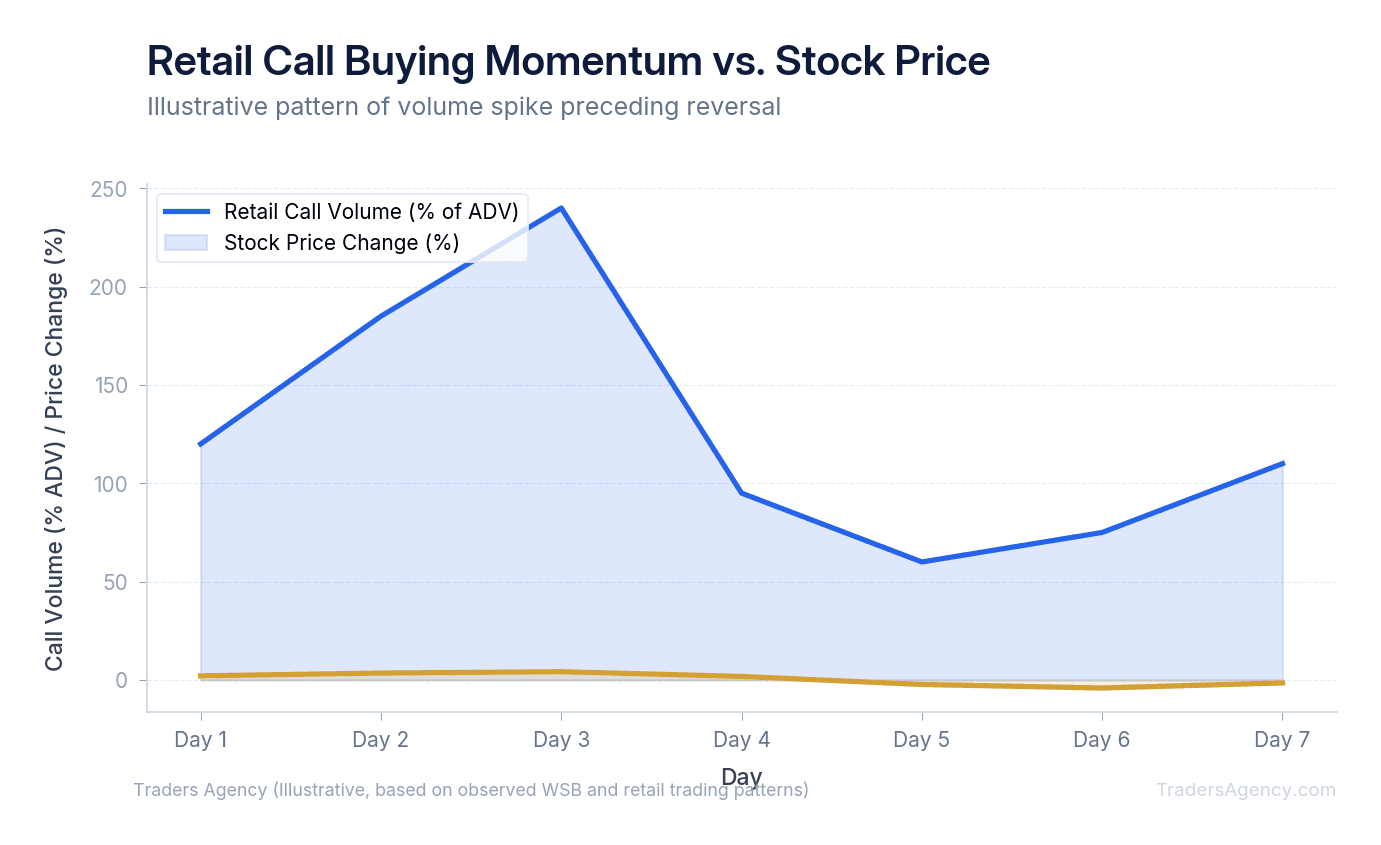
Once the buying pressure stops, the feedback loop reverses violently. As the options expire or traders sell to close their positions, market makers unhedge their books by selling the shares they previously bought. This massive wave of selling pressure causes the stock to crash just as quickly as it rose, leaving late buyers with heavy losses.
Watch Out: The gamma squeeze works both ways. The same mechanics that drive explosive rallies also cause devastating crashes when the buying pressure dries up. If you're late to the trade, you're likely providing exit liquidity for those who got in early.
Why Do 90% of Option Traders Lose Money?
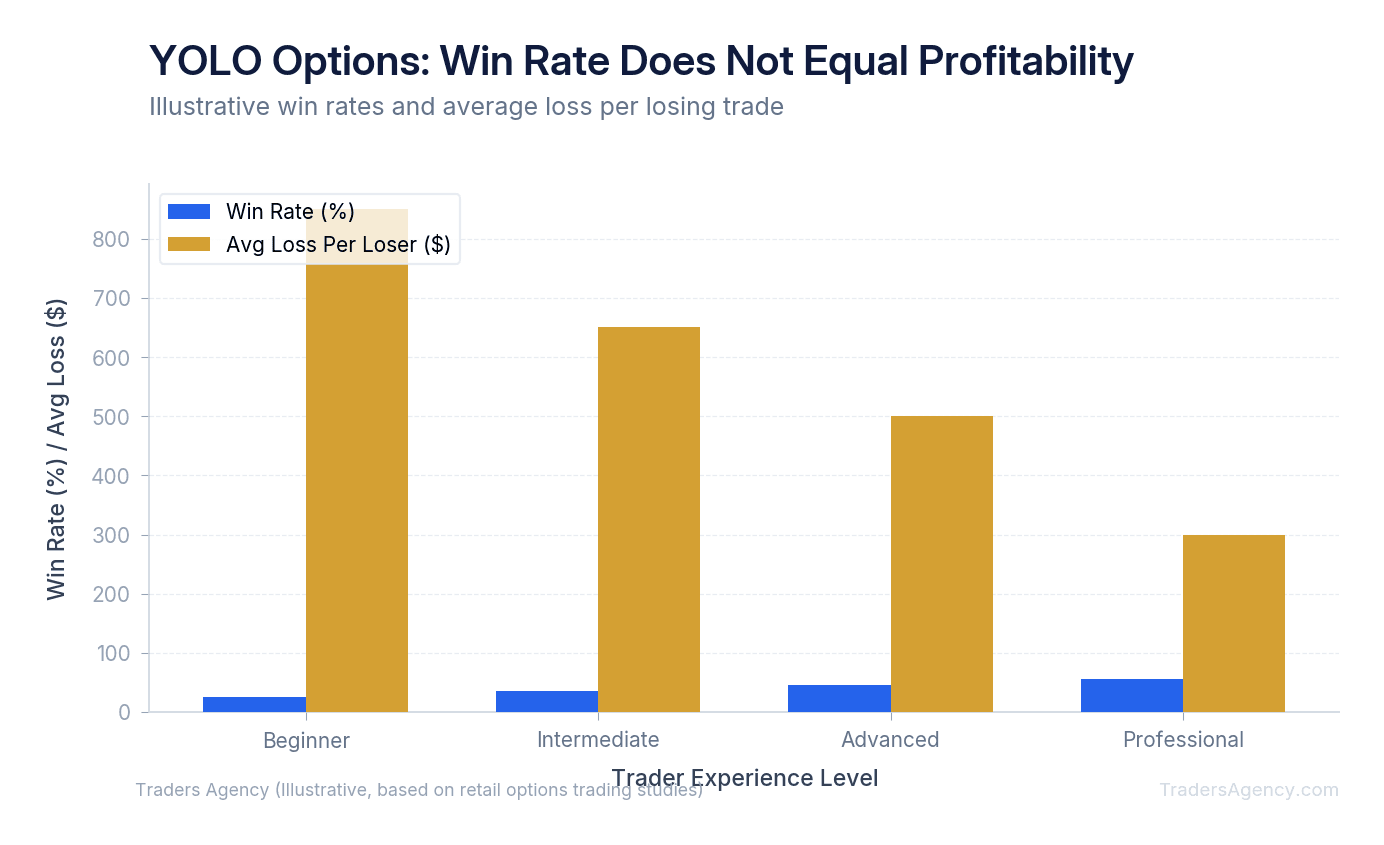
Most options traders lose money because they consistently buy short-term, out-of-the-money options that suffer from rapid time decay. They underestimate the mathematical probability of these options expiring worthless and fail to implement strict risk management rules for their trading accounts.
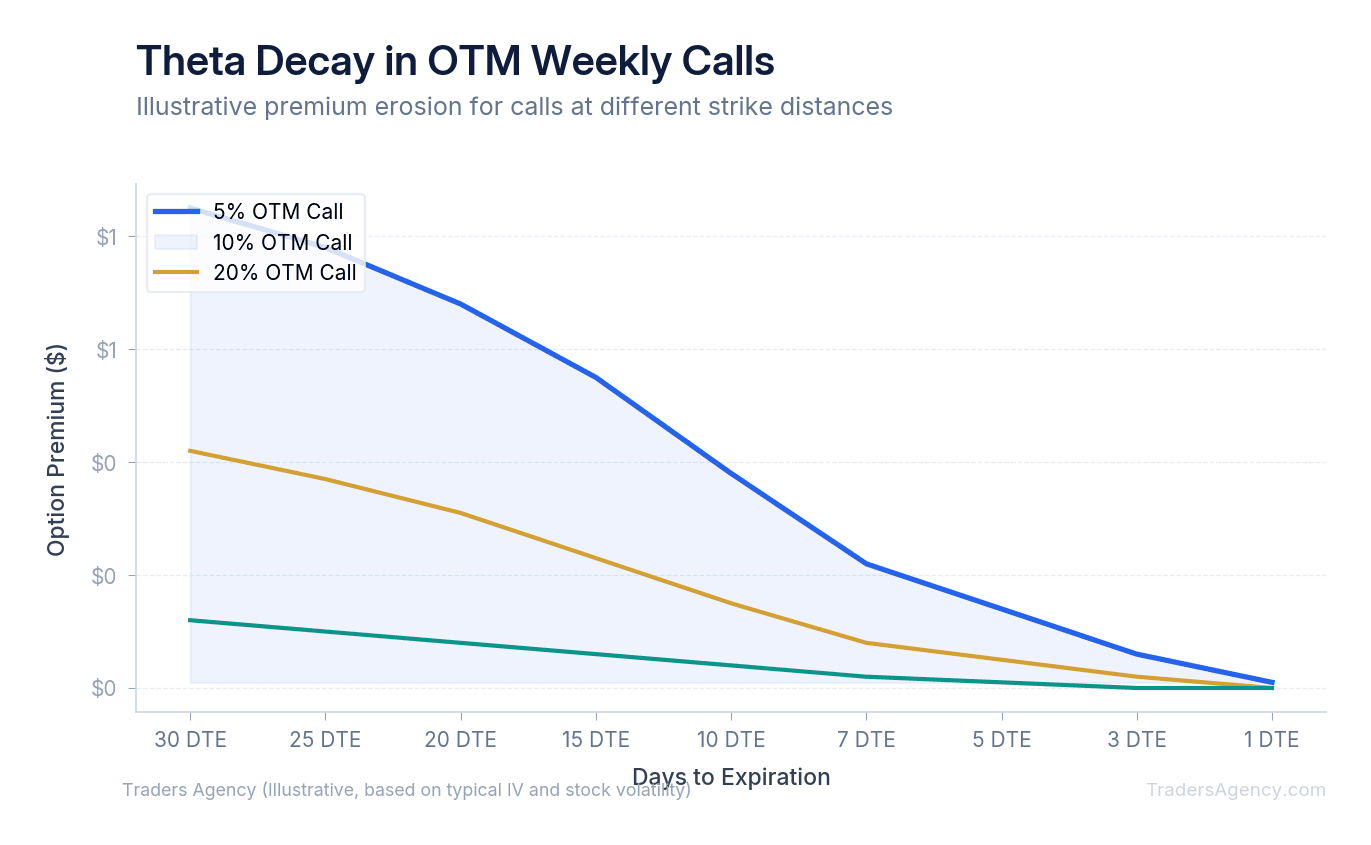
Our education team frequently reviews trading logs from new members who have blown up their accounts. The most common error is holding options too close to expiration. Options are decaying assets. As Friday approaches, the premium value of an OTM option drops to zero at an accelerating rate. This is a concept known as theta decay.
Many beginners ask: can I make $100 a day trading? While daily profits are possible with disciplined, high-probability strategies, trying to hit daily targets using YOLO options usually leads to disaster. The asymmetric payoff structure of these trades means one large loss will easily wipe out dozens of small wins. Consistency requires a mathematical edge, which speculative gambling simply does not provide.
What Are the Risks of YOLO Investing?
The primary risks of YOLO investing include total loss of capital, extreme price volatility, and the devastating effects of implied volatility crush. Because these trades rely heavily on short-term options, a trader can lose their entire investment in a matter of hours if the stock moves against them or simply fails to move enough.
Another massive risk is implied volatility (IV) crush. When a stock becomes a popular social media target, the demand for its options spikes aggressively. This demand drives up the premium prices, meaning you are paying a massive markup just to enter the trade. You are essentially buying insurance during a hurricane.
If the stock price stays flat or the anticipated event passes, the implied volatility drops rapidly. When IV drops, the option loses a significant portion of its value instantly, even if the stock price itself has not moved. We teach our members that buying options when IV is at historical highs is a mathematical trap that benefits the option sellers.
Risk Warning: IV crush can destroy your position even when you're right about direction. If you buy calls before earnings and the stock moves up 3%, but implied volatility drops from 120% to 60%, your option can still lose 50% of its value overnight.
Want expert trading insights delivered daily?
Join thousands of traders who rely on Traders Agency for market analysis and trade ideas.
Join Traders AgencyStep-by-Step: Setting Up a Speculative Options Trade
If you decide to allocate a small portion of your portfolio to a speculative play, you need a highly mechanical process. Trading without a plan is just gambling. Here is exactly how our team recommends structuring and executing the trade.
- Step 1: Identify the Setup and Timeline – Define the specific event driving the trade. This could be an impending product launch, a highly anticipated earnings report, or a massive spike in unusual options volume detected on the tape. You must know exactly when the event will occur so you can select the correct expiration date.
- Step 2: Select the Option Contract – Choose your strike price and expiration based on the expected move. You want enough time for the trade to work, but not so much time that you're overpaying for premium. Select a strike that gives you realistic probability of profit given the expected event.
- Step 3: Execute and Manage the Trade – Once you enter the trade, set strict exit parameters and stick to them without emotion. Define your profit target, your stop-loss level, and the time-based exit if nothing happens.
Example Trade Setup
Here's a concrete example using a hypothetical stock, XYZ, currently trading at $50 per share. You expect a massive breakout by next week.
| Parameter | Value |
|---|---|
| Stock | XYZ at $50.00 |
| Action | Buy the $55 Call Option expiring in two weeks |
| Premium Paid | $1.50 per contract ($150 total) |
| Breakeven | $56.50 ($55 strike + $1.50 premium) |
Outcome Scenarios
| Scenario | Stock Price | Option Value | Profit/Loss |
|---|---|---|---|
| Best Case | XYZ spikes to $65 in 3 days | ~$10.50 | +$900 per contract |
| Worst Case | XYZ drops to $45 | $0.00 (expires worthless) | -$150 (total loss) |
| Most Likely | XYZ drifts to $52 | ~$0.75 (theta decay) | -$75 (exit early) |
Do you need $25,000 to trade options? You do not need $25,000 to trade options unless you are executing more than three day trades in a rolling five-day period. This triggers the Pattern Day Trader (PDT) rule. You can swing trade options over multiple days with a much smaller account balance, making it accessible for retail traders.
How to Size a Speculative Position Without Blowing Up Your Account
The biggest difference between professional traders and amateur gamblers is strict position sizing. When you take a highly speculative trade, you must assume the entire allocated amount will go to zero. You have to size the trade so that a total loss does not impact your ability to trade the next day.
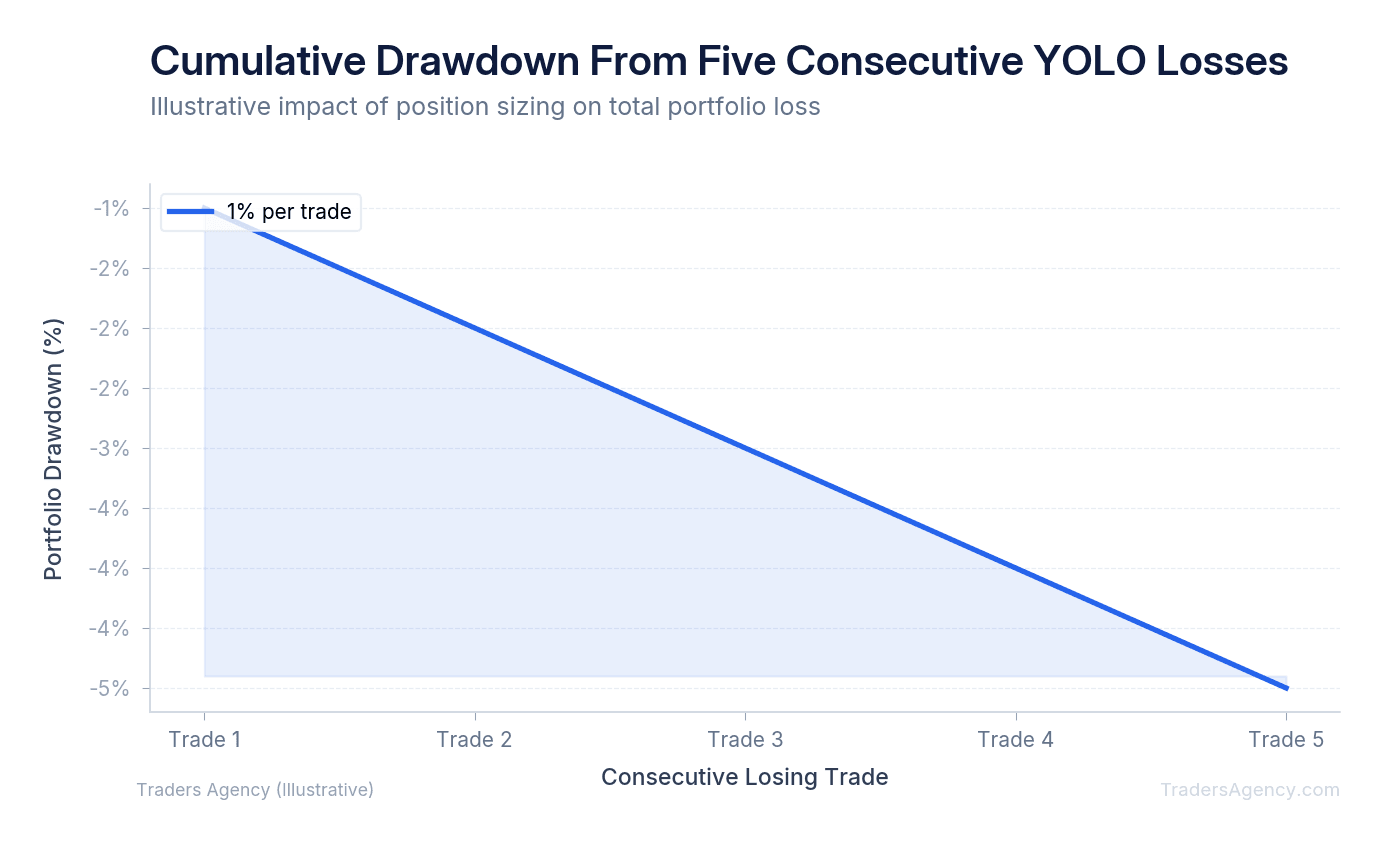
We recommend allocating no more than 1% to 2% of your total trading capital to a single YOLO trade. If you have a $10,000 account, your maximum risk on a speculative options play should be $100 to $200. This ensures that even a string of five consecutive losses will only draw down your account by 5% to 10%.
Here are the specific criteria we use for risk management:
- Never use margin or borrowed money for speculative options trades.
- Size the position based on the maximum possible loss, not the potential gain.
- Cut the position immediately if the underlying stock breaks its technical support level.
- Take partial profits by selling half your position if the option doubles in value.
Key Concept: Position sizing is your survival mechanism. If you risk 10% of your account on every YOLO trade, five consecutive losses will cut your account in half. At 2% risk per trade, those same five losses only cost you 10%. The math is simple: survive first, profit second.
When Should You Stay Away from a YOLO Trade?
Knowing when to avoid a trade is just as important as knowing when to enter. The most dangerous time to buy is when a stock is already trending heavily on Reddit boards or mainstream financial news networks. By the time everyone is talking about it, the opportunity has usually passed.
By the time a massive short squeeze makes headline news, the smart money has already exited their positions. The options premiums are incredibly expensive, and the risk-to-reward ratio is terrible for new buyers. We call this phase momentum exhaustion, and it is the worst possible time to risk your capital.
You should avoid these trades entirely under the following conditions:
- The stock has already rallied more than 100% in a matter of days.
- Implied volatility is trading in the 99th percentile of its historical range.
- Trading volume is beginning to decline while the price stalls.
- You are feeling FOMO (Fear Of Missing Out) because of social media posts rather than technical analysis.
Our team prefers to look for quiet setups before the crowd arrives. If you are buying at the absolute peak of retail euphoria, you are likely providing exit liquidity for the institutional traders and early buyers who are cashing out. Protect your capital, wait for high-probability setups, and leave the gambling to the amateurs.
The Traders Agency education team publishes new strategy guides and market analysis every week. If you want to learn how to identify these setups before they go viral, and more importantly, how to manage risk like a professional, our membership gives you everything you need.
Want expert trading insights delivered daily?
Join thousands of traders who rely on Traders Agency for market analysis and trade ideas.
Join Traders AgencyKey Takeaways
- YOLO options trades are typically built using short-term, out-of-the-money call options chosen for their low cost and potential for outsized returns, which also makes them likely to expire worthless.
- Zero-commission brokers and mobile trading apps have made it easier for inexperienced traders to take on significant options risk without fully understanding the underlying mechanics.
- Buying into a speculative position at peak retail euphoria often means providing exit liquidity for institutional traders and early buyers who are already cashing out.
- Responsible position sizing is central to surviving speculative trades. The article frames this as the difference between a calculated risk and blowing up an account.
- Knowing when to walk away is treated as a core skill, not an afterthought. The article identifies specific conditions where avoiding a YOLO setup entirely is the higher-probability decision.
DISCLAIMER: Traders Agency does not offer financial advice. The information provided is for educational purposes only and should not be considered financial advice. Traders Agency is not responsible for any financial losses or consequences resulting from the use of the information provided. Trading carries inherent risks and may not be suitable for all individuals. You are advised to conduct your own research and seek personalized advice before making any investment decisions, recognizing the potential risks and rewards involved.
See more from Traders Agency on Google
Make us a preferred source and our market analysis will appear more prominently in your Google Search, Top Stories, and AI results.
Add to Preferred Sources