
Lithium stocks are shares of companies that mine, refine, or process lithium and other battery metals used to build electric vehicle batteries and large-scale energy storage systems. These companies range from pure-play miners to diversified chemical producers, and their share prices tend to track lithium commodity prices, EV demand forecasts, and battery technology shifts. We put this guide together because so many traders ask us the same question: are lithium stocks still a good idea after the wild price swings of the last few years, or has that window closed?
By the end of this article, you'll understand what actually drives lithium stock prices, how to evaluate specific names and ETFs, and where this asset class realistically fits inside a diversified trading account. We'll also walk through the boom-bust price cycle that burned a lot of traders who bought at the top in 2022, and we'll show you how to think about entries and exits instead of just buying and hoping.
Key Concept: Lithium stocks are cyclical commodity equities, not secular growth stocks. Their earnings rise and fall with the price of lithium carbonate and lithium hydroxide, which means entry timing and position sizing matter far more here than in most other equity sectors.
What Is the Best Lithium Stock to Buy?
Bottom Line: Lithium stocks are cyclical commodity plays, not steady growth stocks, so returns depend heavily on buying when prices are depressed and trimming during euphoric spikes rather than holding long term. Treat lithium exposure as a small, actively managed satellite position with a defined stop, not a core holding.
There isn't one universal "best" lithium stock, because the right pick depends on your risk tolerance, time horizon, and whether you want pure lithium exposure or a diversified battery metals producer. Albemarle (ALB), SQM, and Livent (LTHM) are the three names most traders research first when building a lithium stocks list.
Albemarle is one of the largest lithium producers by market capitalization and operates across lithium, bromine, and specialty chemicals, which gives it some revenue diversification outside of lithium pricing alone. SQM is a Chile-based producer with exposure to both lithium and agricultural fertilizers, and its stock has historically been more sensitive to lithium price swings because lithium represents a larger share of its earnings. Livent's operations have since been folded into a larger producer through a merger, so the standalone LTHM ticker no longer trades; it is worth knowing as a historical reference point for how a smaller, higher-beta producer traded the same theme rather than as a current entry.
| Name | Profile | What It Means for Traders |
|---|---|---|
| Albemarle (ALB) | One of the largest producers by market cap; lithium, bromine, specialty chemicals | Most diversified revenue base of the three; still highly sensitive to lithium pricing |
| SQM | Chile-based; lithium plus agricultural fertilizers, trades as an ADR | Historically a higher-sensitivity play on lithium prices and Chilean policy risk |
| Livent (LTHM) | Smaller producer; operations merged within the sector, standalone ticker no longer trades | Traditionally higher beta, which cuts both directions; now a historical reference, not a live entry |
If you're searching for lithium stocks Nasdaq listings specifically, note that the largest US-traded names are spread across exchanges: Albemarle trades on the NYSE and SQM trades as a NYSE-listed ADR, so a Nasdaq-only screen will miss much of the sector. Here is the checklist we walk through before adding any single name to a "lithium stocks to buy now" screen:
- Step 1: Check revenue concentration: figure out how much of the company's total revenue comes from lithium versus other products. The higher the concentration, the more the stock behaves like a leveraged bet on one commodity price.
- Step 2: Read the balance sheet: debt levels matter enormously during price downturns when margins compress. Heavily levered producers are the first to cut guidance and dividends.
- Step 3: Compare production cost per ton: low-cost producers survive downturns; high-cost operators idle capacity and burn cash.
- Step 4: Map geographic exposure: note where the mines and processing facilities physically sit, because policy risk is priced by jurisdiction.
You can pull most of this directly from company filings rather than secondhand commentary. We teach our members to go to the primary documents on SEC EDGAR and read the risk factors and segment breakdowns themselves.
What Key Data Points Should You Track for Lithium and Battery Metal Stocks?
Lithium stocks don't move in a straight line, and understanding the boom-bust price cycle is probably the single most useful thing we can teach you about this sector. Lithium carbonate prices surged dramatically in 2021 and 2022 as EV demand outpaced supply, then fell sharply through 2023 and 2024 as new production came online and demand growth slowed.
This cycle matters because lithium miners carry high fixed costs and relatively slow production ramp-up times. When prices spike, it takes a year or more for new supply to catch up, which is exactly why the stocks rally so hard on the way up. When prices crash, the same lag works against producers: margins compress fast, and stock prices often fall even harder than the commodity itself because earnings estimates get cut again and again.
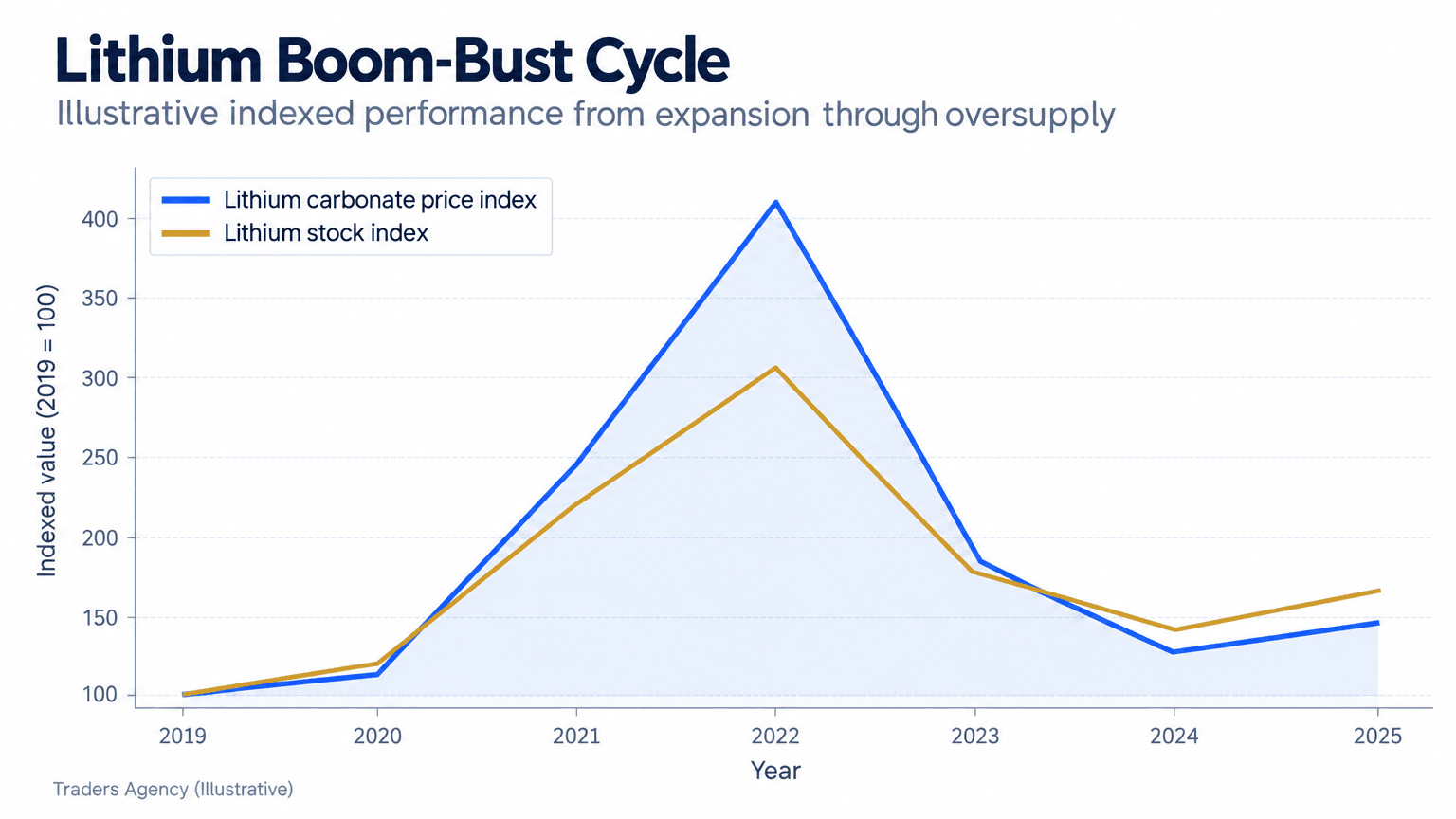
Our team generally treats a sharp lithium price spike as a signal to trim exposure rather than add to it. We treat extended price depression, once inventories and producer guidance start showing signs of stabilizing, as the more interesting entry window. That is the opposite instinct of chasing a lithium stocks Reddit thread after a 30% monthly rally, and it's worth sitting with that discomfort before you act.
Watch Out: In commodity equities, the most comfortable time to buy is usually the worst time to buy. If a lithium name has already run 30% in a month on price-spike headlines, you are buying into peak earnings estimates, not a fresh trend.
Is It Worth Investing in Lithium Stocks?
Lithium stocks can absolutely be worth trading for people who understand the cyclical, commodity-driven nature of the sector and size positions accordingly, but they carry meaningfully more volatility than broad equity indexes. The "is lithium still worth investing in" question really comes down to time horizon and risk tolerance rather than a simple yes or no.
The long-term demand story for EV batteries and grid storage remains intact, but two specific risks deserve your attention before you commit capital.
1. Geographic Supply Concentration
Lithium mine supply is concentrated in a small number of countries, primarily Australia, Chile, and China. That concentration creates political and regulatory risk that simply doesn't exist in more geographically diversified commodities.
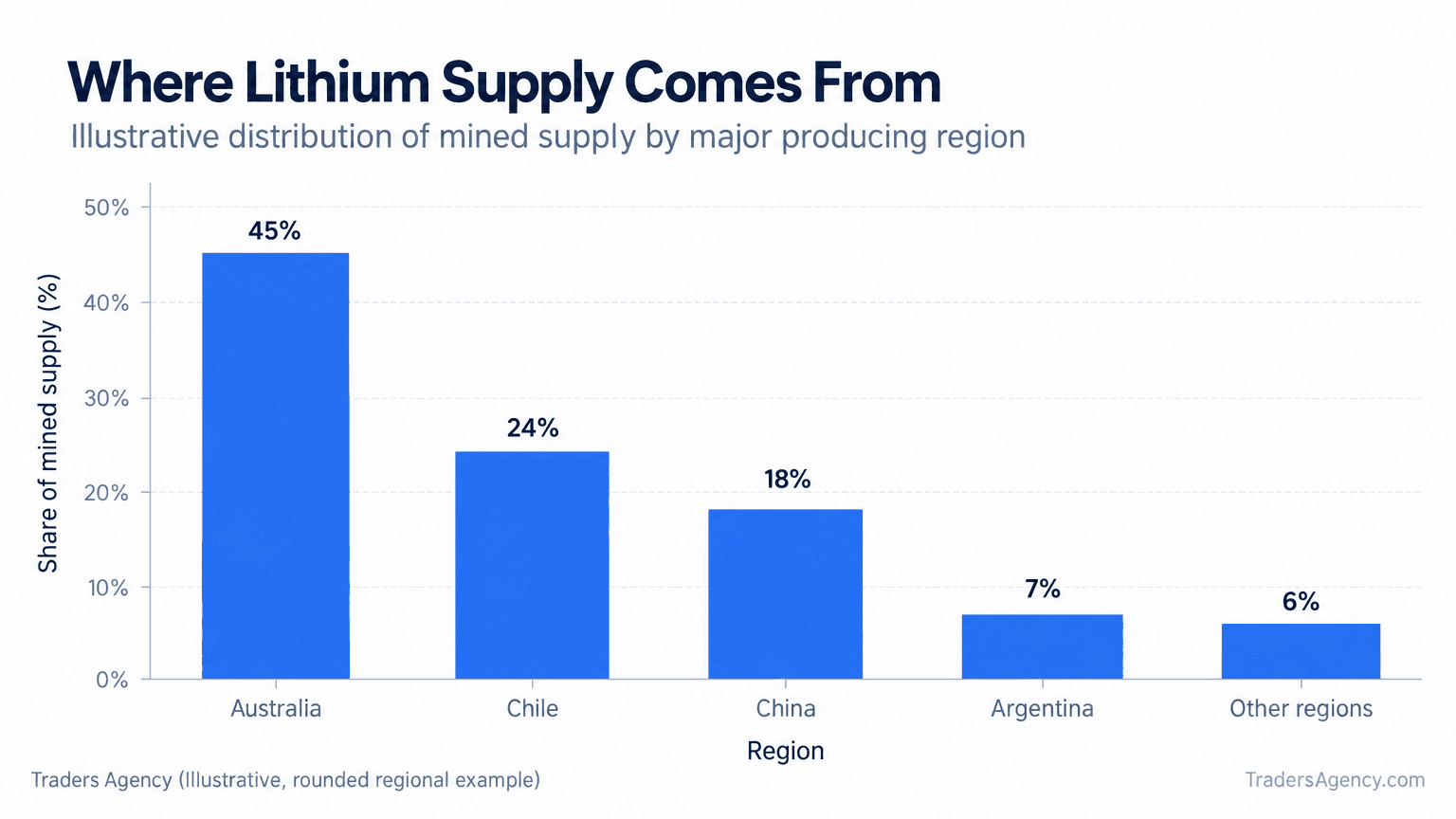
A royalty change in Chile, an export restriction in China, or a permitting delay in Australia can move lithium stock prices in a single trading session, independent of anything happening with EV demand. We tell our members to treat this as a live, ongoing risk factor rather than a tail-risk footnote buried at the bottom of a research note.
2. Battery Technology Evolution
The second risk is technological. The battery chemistry used in EVs has been shifting, with LFP (lithium iron phosphate) batteries gaining share relative to NMC (nickel manganese cobalt) chemistries in several major markets.
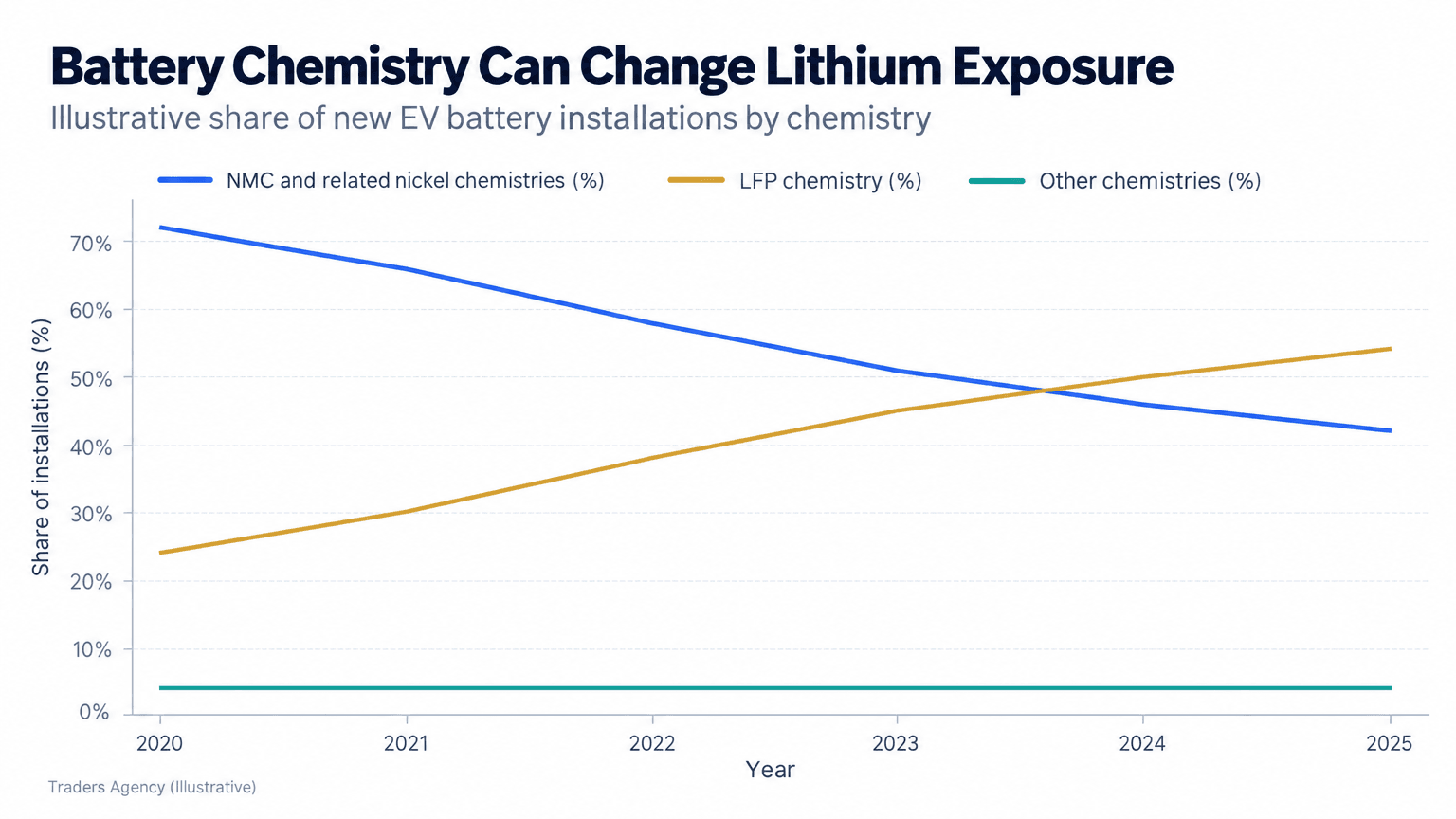
LFP batteries still require lithium, so this shift isn't a direct threat to lithium demand itself, but it does change the demand mix for other battery metals like cobalt and nickel. Any emerging technology that reduces lithium intensity per vehicle, including solid-state research still in early stages, belongs on your watch list as a long-term risk to the entire sector's growth assumptions.
Want expert trading insights delivered daily?
Join thousands of traders who rely on Traders Agency for market analysis and trade ideas.
Join Traders AgencyCan Lithium Stocks Pay Dividends?
Some lithium stocks do pay dividends, but they're generally not held primarily for income because payouts can shrink or disappear during price downturns. Albemarle has historically paid a dividend, though the yield is modest and the company has adjusted its payout in response to earnings pressure during weak lithium pricing periods.
We'd caution against building an income strategy around lithium miners, because the underlying commodity cycle creates earnings volatility that makes dividend sustainability much harder to count on than, say, a utility or a consumer staples name. If dividend income is your primary goal, lithium exposure should be a small satellite position, never a core holding.
Is There an ETF for Lithium?
Yes. There are exchange-traded funds that provide diversified exposure to lithium and battery metal producers without requiring you to pick individual stocks. These ETFs typically hold a basket of mining, refining, and battery supply chain companies rather than a single name.
Using an ETF reduces single-stock risk, which matters a lot in a sector where one bad earnings report or one country-specific regulatory headline can move an individual stock 15% or more in a single day. For traders building out a "top 10 lithium stocks" style watchlist, an ETF is often a more practical starting point than trying to research and monitor ten individual companies at once.
What Lithium Company Does Tesla Use?
Tesla has signed supply agreements with multiple lithium producers over the years rather than relying on a single supplier, including arrangements tied to producers in regions like Australia and North America, and the company has also explored direct lithium extraction and refining investments of its own. This diversified sourcing approach is common among large EV manufacturers because it reduces dependence on any one producer or region.
Traders sometimes assume a Tesla supply deal automatically makes a stock a buy, but the actual financial impact of these agreements varies widely and the terms aren't always fully disclosed. We'd encourage you to read the actual filing language around any announced supply agreement before treating it as a reason to size up a position.
Is Warren Buffett Investing in Lithium?
Berkshire Hathaway has not made lithium mining or battery metal producers a visible, publicly disclosed core holding in its equity portfolio based on its regular 13F filings. Buffett's public commentary has generally focused more on energy infrastructure and traditional utilities than on direct lithium mining exposure.
That said, Berkshire's broader energy subsidiary has had involvement in geothermal brine resources that include lithium extraction research in California, which is a very different kind of exposure than owning shares of a pure-play lithium miner. Traders following lithium discussion threads sometimes conflate those two things, so be precise about the distinction before you build a thesis on it.
How Should You Build a Position in Lithium Stocks and Manage Risk?
Lithium and battery metal stocks tend to correlate more closely with broader commodity cycles and growth-stock sentiment than with defensive equity sectors. That means they don't offer the same diversification benefit as adding bonds or utilities to an equity-heavy portfolio.
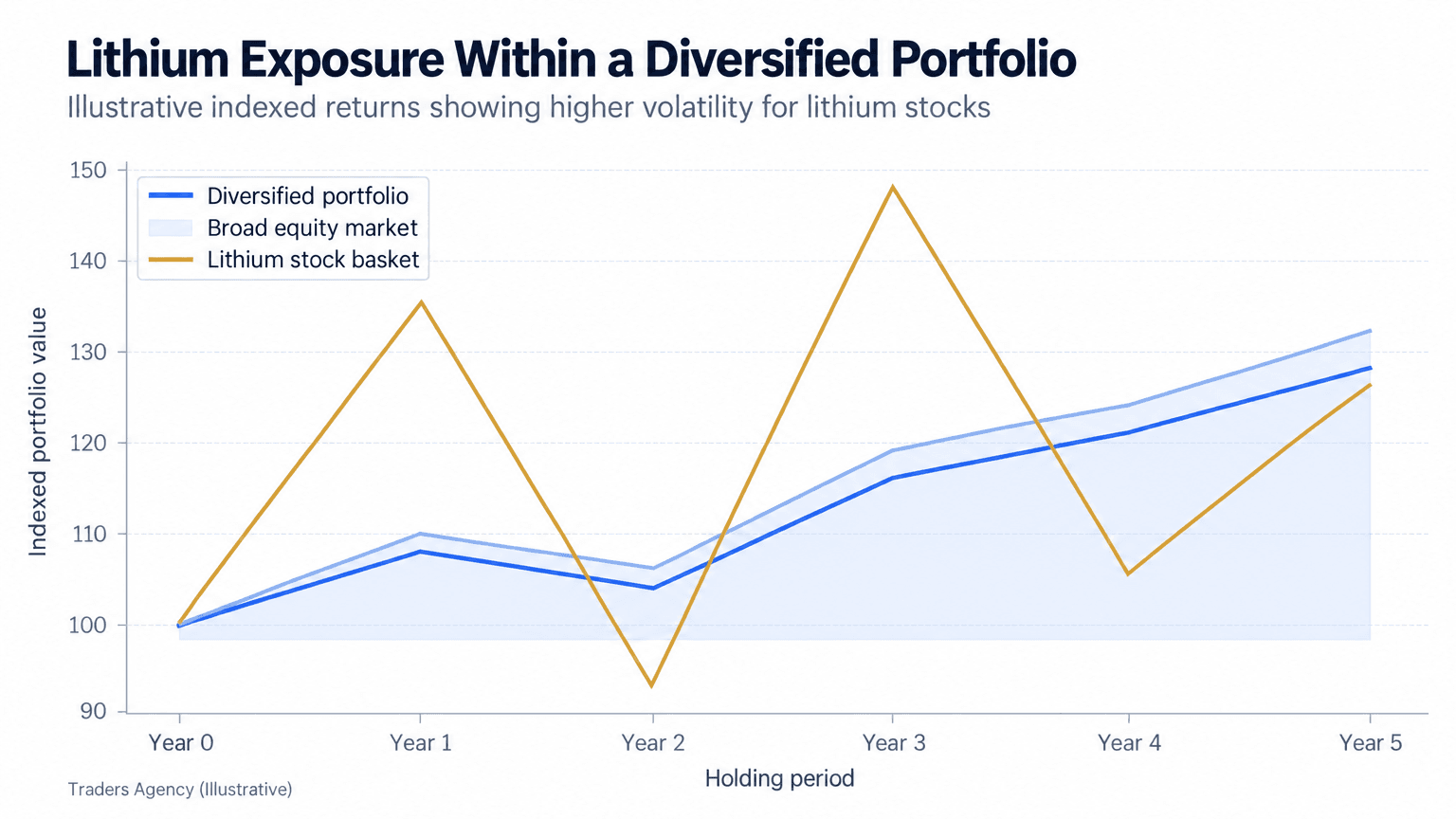
Our general approach is to treat lithium stocks as a satellite position, not a core holding, typically capped at a small percentage of total portfolio value. Here are the guardrails we teach:
- Set a hard stop loss before you enter, especially given how fast these names move on commodity price headlines
- Avoid averaging down repeatedly during a confirmed price downtrend without a clear reason to expect a reversal
- Keep your "5 best lithium stocks" watchlist research separate from your actual position sizing decisions
- Reassess exposure whenever a major battery chemistry announcement or geographic supply disruption hits the tape
The Most Common Mistake: Traders treat lithium stocks like a long-term buy-and-hold growth investment, the way they might treat a software company, when the sector behaves much more like a traditional cyclical commodity play. Position sizing and exit discipline matter more here than in almost any other equity sector.
How Can You Stay Informed About Lithium Market Trends?
Staying current on lithium stocks means tracking commodity price data, company earnings calls, and supply chain announcements rather than relying on price action alone. Lithium carbonate and lithium hydroxide spot prices, production guidance updates from major producers, and EV sales data by region are the recurring data points we keep in front of us.
| Data Point | Why We Track It | Frequency |
|---|---|---|
| Lithium carbonate / hydroxide spot prices | The primary driver of producer margins and earnings revisions | Weekly |
| Producer guidance and earnings calls | Management teams often flag pricing trends first | Quarterly |
| Regional EV sales data | Real demand signal behind the forecasts | Monthly |
| Mine production and reserve figures | Shows how fast new supply is actually arriving | Annual / periodic |
For mine production and reserve figures, the U.S. Geological Survey National Minerals Information Center is a free, dependable resource worth bookmarking. Pair that with earnings commentary read directly from producers like Albemarle and SQM, since management often gives the clearest read on near-term pricing well before it shows up in broad financial media coverage.
Remember This: Lithium exposure works best as a small, actively managed satellite position with a predefined stop and a cycle-aware entry. Buy into depressed pricing that is showing signs of stabilizing, trim into euphoric spikes, and never size it like a core holding.
Want expert trading insights delivered daily?
Join thousands of traders who rely on Traders Agency for market analysis and trade ideas.
Join Traders AgencyDISCLAIMER: Traders Agency does not offer financial advice. The information provided is for educational purposes only and should not be considered financial advice. Traders Agency is not responsible for any financial losses or consequences resulting from the use of the information provided. Trading carries inherent risks and may not be suitable for all individuals. You are advised to conduct your own research and seek personalized advice before making any investment decisions, recognizing the potential risks and rewards involved.
See more from Traders Agency on Google
Make us a preferred source and our market analysis will appear more prominently in your Google Search, Top Stories, and AI results.
Add to Preferred Sources