


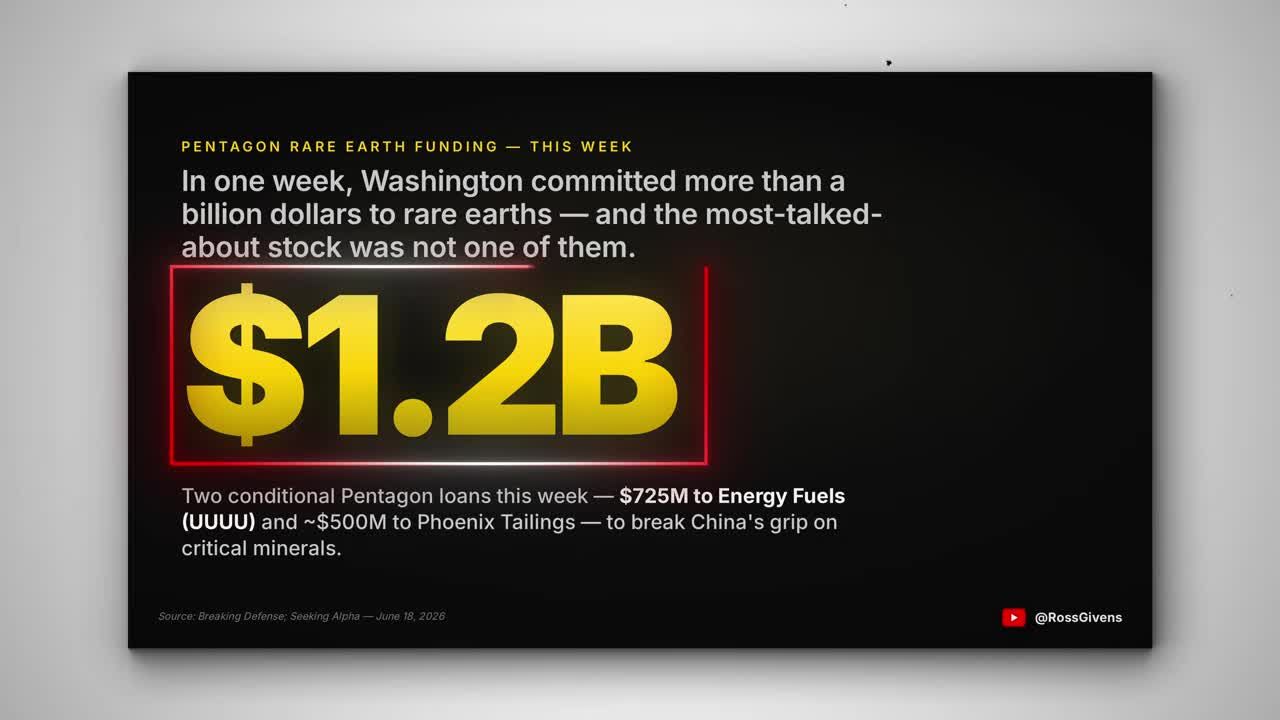
The Pentagon quietly wrote checks for $1.2 billion this week.
Not for jets. Not for missiles. For rare earths, the obscure little metals that go inside the missiles and fighter jets. The same materials required inside every EV motor, wind turbine, and AI server on the planet. If you're looking at rare earth supply chain stocks, this is the moment to pay attention.
Most investors have been piling into MP Materials for rare earth exposure. It's the big name everyone talks about in financial media.
But MP Materials did not get the money this week. Three other companies did.
These are smaller companies, and almost nobody is talking about them. Below is exactly where Uncle Sam's money is going in the rare earth sector right now, including a $7 name most investors have never heard of.
This is, in all likelihood, a multi-year trend that could make early investors very rich.
Why Is the Pentagon Funding Rare Earth Supply Chain Stocks Right Now?
Bottom Line: The Pentagon's $1.2 billion rare earth commitment signals a structural, multi-year shift in how the U.S. sources materials critical to defense, EVs, and AI infrastructure. The funding bypassed the obvious retail favorite and went to smaller, less-followed companies, which is where the asymmetric opportunity sits. Investors tracking rare earth supply chain stocks should follow the fresh government contracts, not the names already priced into financial media coverage.
One word: China.
Through early 2026, Beijing tightened its grip on the market to the most extreme level we've ever seen. Export controls on seven different rare earth elements, plus the magnets. They even added a trace content rule, meaning if a product has even a tiny bit of Chinese-origin material in it, it gets caught in the net. The heavy stuff, elements like dysprosium, basically dried up overnight.
China doesn't control most of the rare earth supply chain. It controls all of it.

Think about that from the Pentagon's seat. The United States builds the most advanced military on Earth, yet the raw materials required to build it come from the country we're constantly fighting with.
That is not a supply chain. That is a leash.
The Department of Defense set a hard goal to fix this: a complete American mine-to-magnet supply chain by 2027. In the last week, they opened the checkbook to make it happen.
Why Didn't MP Materials Get Pentagon Funding This Round?
And where Washington's money actually went
If you want to find the best MP Materials alternatives, follow the federal dollars.
Everybody is anchored on a $400 million deal MP Materials received from the government. The problem? That deal is almost a year old. Meanwhile, the government has been quietly funding the rest of the field with bigger checks more recently.
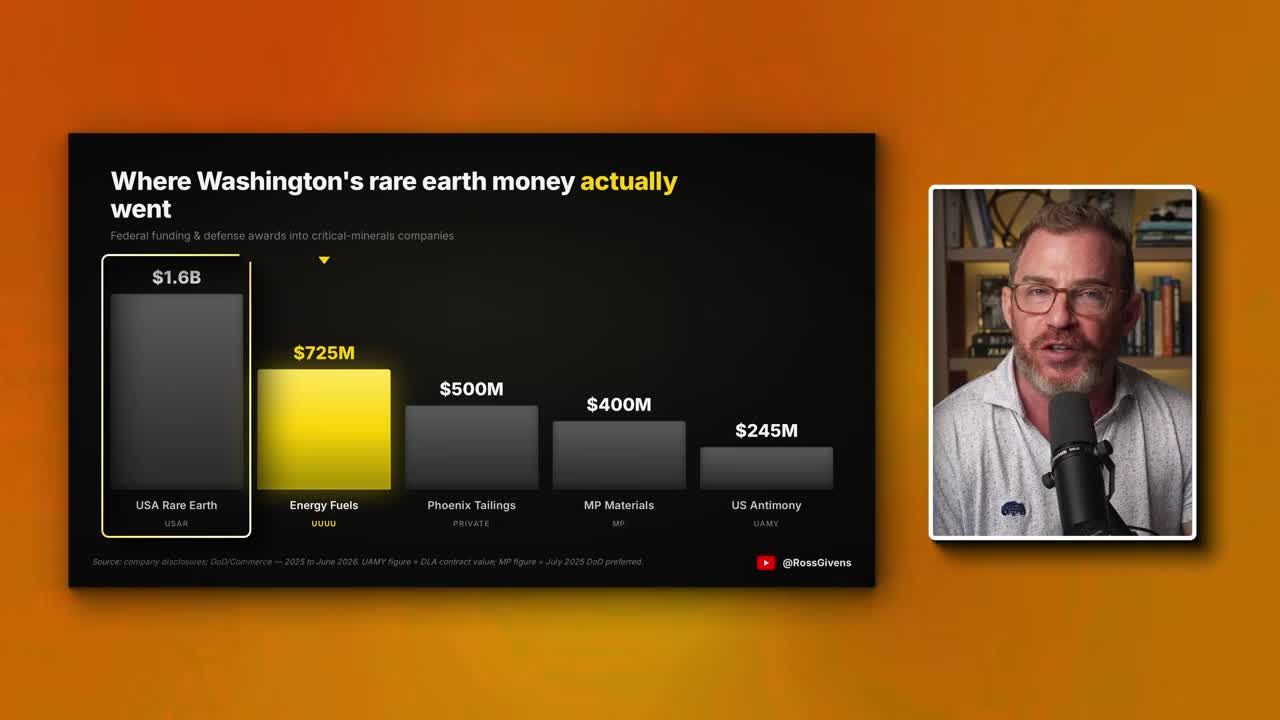
- USA Rare Earth: $1.6 billion in backing
- Energy Fuels: $725 million loan signed this week
- Phoenix Tailings: $500 million (private company)
- MP Materials: $400 million (almost a year old now)
- US Antimony: $245 million defense contract
The gap in coverage is massive. Financial media is focused on last year's news. The real opportunity sits in the companies that just received fresh capital.
Get an entire year of live weekly mentoring sessions, newsletters, indicators, bonus reports, and more.
Join my Black Ops Trading ClubThe 3 Pentagon-Funded Rare Earth Supply Chain Stocks
1. Energy Fuels (Ticker: UUUU)
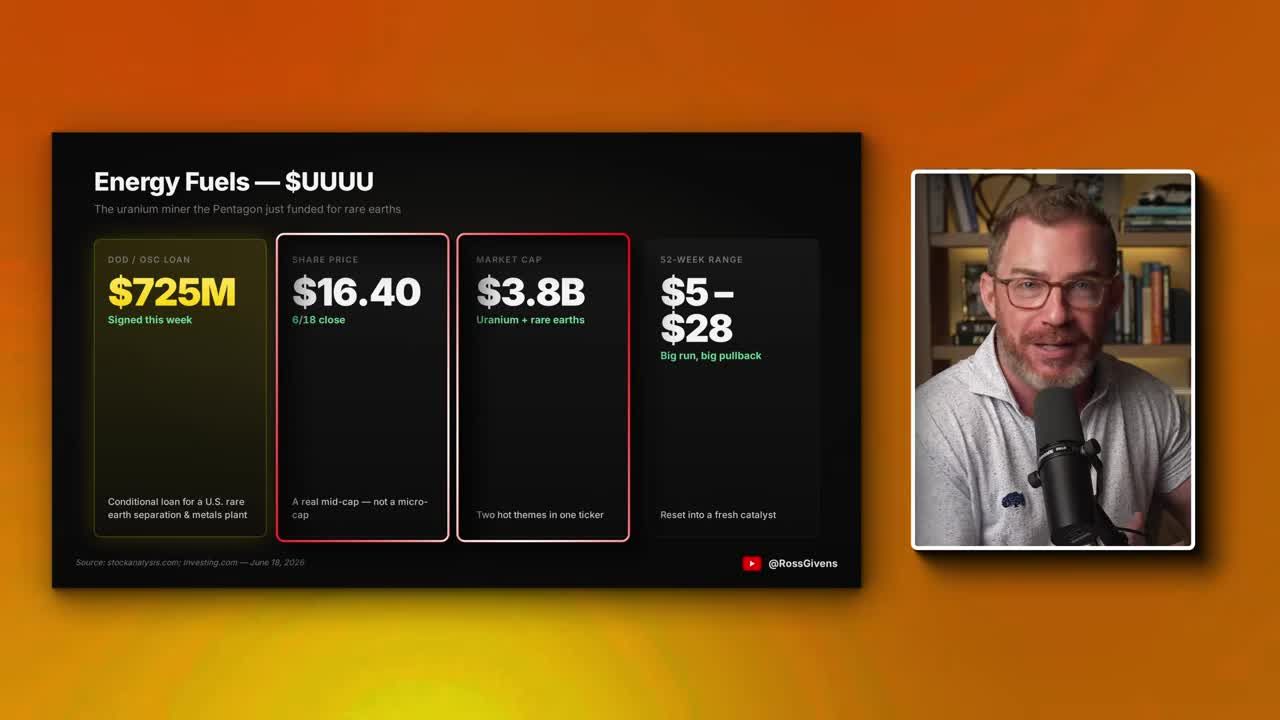
This is the company that got the fresh check. The Pentagon's Office of Strategic Capital announced a $725 million conditional loan commitment this week. The money is earmarked to build a U.S. rare earth separation and metallization plant.
No one seems to have caught on yet. Energy Fuels isn't even known as a rare earth company. For years, it was a uranium miner. Most investors have it filed in the wrong category entirely.
But they've quietly been producing separated NDPR (the magnet material) at their mill in Utah since 2024. They're targeting heavy rare earth production by the end of this year. They also claim some of the lowest-cost NDPR production in the world.
A company sitting on two of the hottest themes in the market at once: uranium and rare earths. And the U.S. government is now writing the checks.
The price action tells the story. Massive run-up in 2025, ripping from around $3 to $28. Volatile all through 2026. But there's a consistent area of demand. A clear support zone in the $13 to $18 range. Every time the stock pulls back and gets eviscerated, buyers step right back in at this level. It finds support, rips to the top, and repeats the cycle.
It's currently trading right inside that demand zone. For long-term investors, that's a pretty attractive entry point.
2. US Antimony (Ticker: UAMY)
This is the $7 stock.
Quick clarification on terminology: antimony is not technically a rare earth. It's a critical mineral. It hardens the metal in armor and ammunition, and it's in flame retardants and batteries. But the story is exactly the same. China dominates supply. The Pentagon is panicking. The dollars are flowing to the one American producer.

US Antimony locked in a sole-source contract with the Defense Logistics Agency worth up to $245 million. Add in a $170 million commercial supply deal and some Defense Production Act money, and you're looking at well over $300 million in new business for a company worth just over a billion dollars.
But be prepared for volatility. The stock ran from $2 to $20 in about four months last year. The average daily range is 8.29%, meaning the stock moves over 8% a day from low to high on average. This thing can move.
3. USA Rare Earth (Ticker: USA)
This stock is the proof that the entire playbook works.
The U.S. government took a direct equity stake in this company. $1.6 billion in total backing, including a CHIPS Act loan, plus shares and warrants to give Uncle Sam somewhere in an 8 to 15% ownership stake.
The federal government is now literally a shareholder.
The market has already figured this one out. The stock is up roughly 90% this year. The company is worth three to four times what the other two are. This is not a hidden gem nobody has noticed.
What it is, though, is the template. The clearest proof that when Washington decides to reshore a supply chain, they back it with real money, real ownership, and the stock reacts accordingly. It tells us the trend is completely real.
A Speculative Bonus: Critical Metals
One more small player belongs in this group.
Critical Metals (ticker: CRML) controls 92.5% of a deposit in Greenland called Tan Breeze, one of the biggest underdeveloped heavy rare earth deposits on Earth.
They haven't received a government check yet. It wouldn't be surprising to see them get one soon. The stock trades at about $10 a share. This is the early-stage, more speculative play of the group.
Which Stock Is the Best Buy?
None of this funding is 100% guaranteed on day one. These are conditional commitments. The Energy Fuels loan, and most of these deals, still have to clear due diligence before the money actually hits.
But given the demand for rare earths and this administration's track record of backing domestic supply chains, the odds are pretty good things move forward.
These stocks give you exposure to a multi-year reshoring buildout. This is a structural trend. The tailwind is the United States government deciding it cannot afford to depend on China for the materials that build our military.
That doesn't make these stocks crash-proof. It does mean the dips are more likely worth buying instead of panicking during a pullback.
Search for rare earth supply chain stocks and you'll find a hundred analysts talking about MP Materials. Meanwhile, the government just spent over a billion dollars somewhere else. They funded a uranium miner reinventing itself. They funded a $7 antimony stock. They took direct ownership in a third company.
Those are the bets worth making.
The Reshoring Mega-Trend
The data speaks for itself. The Department of Defense is actively buying an American supply chain, and they are doing it right now. For investors tracking rare earth supply chain stocks, the signal could not be clearer.
Stop following the retail crowd into old news. The real money is made by tracking where the Pentagon is writing fresh checks today. Position yourself in the companies actually securing the capital required to build the future of American defense.
Get an entire year of live weekly mentoring sessions, newsletters, indicators, bonus reports, and more.
Key Takeaways
- The Pentagon deployed $1.2 billion in rare earth funding in a single week, including $725M to Energy Fuels (UUUU) and approximately $500M to Phoenix Tailings.
- China's 2026 export controls cover seven rare earth elements plus finished magnets, with a trace content rule that effectively blocks any product containing even minimal Chinese-origin material.
- MP Materials, the most widely held retail rare earth stock, received none of this latest round of Pentagon funding. The capital went to smaller, less-covered companies.
- Heavy rare earth elements like dysprosium, critical for defense-grade magnets, have effectively dried up from Chinese supply, making domestic sourcing a national security priority rather than just an investment theme.
- A sub-$10 stock ticker is identified as a speculative play in the critical metals space, positioned as an early-stage beneficiary of the broader reshoring capital cycle.
DISCLAIMER: Traders Agency does not offer financial advice. The information provided is for educational purposes only and should not be considered financial advice. Traders Agency is not responsible for any financial losses or consequences resulting from the use of the information provided. Trading carries inherent risks and may not be suitable for all individuals. You are advised to conduct your own research and seek personalized advice before making any investment decisions, recognizing the potential risks and rewards involved.
See more from Traders Agency on Google
Make us a preferred source and our market analysis will appear more prominently in your Google Search, Top Stories, and AI results.
Add to Preferred Sources