
You've probably seen the screenshots: a trader bets their entire account on one stock and walks away with life-changing money. These viral posts make trading look like a lottery where the boldest players win the biggest prizes. But here's what those posts never show you. For every massive win, there are thousands of blown accounts hidden behind deleted posts and quiet shame. We're going to walk you through the exact math behind sustainable position sizing trading so you can understand why position sizing is the single most important skill separating professionals from gamblers.
What Is Position Sizing Trading and Why Does It Matter?
Bottom Line: Sustainable trading is not about finding the biggest trade. It is about staying in the game long enough for your edge to compound. The traders who last are the ones who treat position sizing as a non-negotiable system, not an afterthought, because one oversized loss can erase months of disciplined gains.
Position sizing is a risk management strategy where you calculate the exact number of shares or contracts to buy based on your total account value and your specific stop-loss level. It matters because it protects your trading account from being wiped out by a single bad trade.
Think of bankroll management in professional poker. Professional poker players never shove all their chips into the pot on a single hand before the flop. They bet a small, calculated percentage of their total bankroll based on the strength of their hand. We apply this exact same logic to the stock market.
Diversification and strict risk control are foundational to avoiding total capital loss. The SEC's investor education resources reinforce this point. If you risk all your money on one trade and lose, you're out of the game. You no longer have the capital required to take advantage of the next great setup.
Key Concept: Position sizing is not about how much stock you buy. It's about how much you stand to lose if the trade goes wrong. By controlling your trade size, you control your emotional state. When you only risk a tiny fraction of your account, a losing trade becomes a minor business expense, not a catastrophe.
Why Do Most YOLO Plays Fail?
Most YOLO plays fail because they ignore basic probability and risk management. A YOLO trade puts an entire account balance into one highly speculative position. If that single trade goes against you, you lose all your capital and lose the ability to make future trades.
Social media is saturated with YOLO trading risk that gets disguised as inspiration. You see a trader turn $5,000 into $100,000 overnight using short-dated, out-of-the-money options. The mechanics of these trades are incredibly dangerous. Options contracts lose value every single day due to time decay (also called theta). If the stock doesn't make a massive, explosive move in the exact right direction immediately, those contracts expire completely worthless.
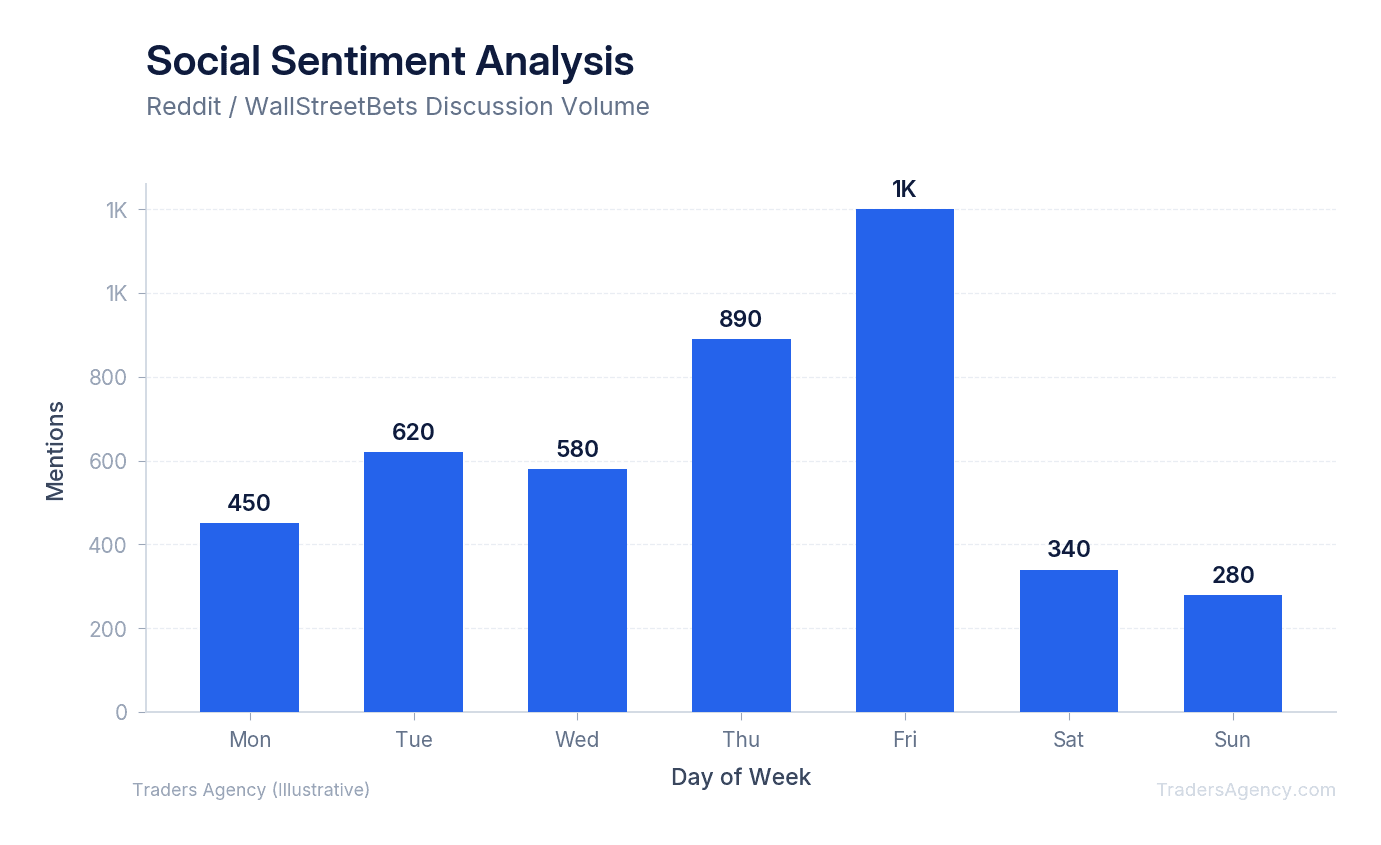
What you don't see on social media are the thousands of blown accounts. This is a classic example of survivorship bias. People only post their winning lottery tickets. They hide the losing tickets out of shame.
When you base your strategy on screenshots of massive gains, your perception of risk becomes completely distorted. You start believing that a 1,000% return is normal. We teach our members to ignore the noise and focus on consistent, repeatable math. Proper position sizing trading habits are what keep you in the game long enough for your edge to work.
Watch Out: Survivorship bias is one of the most dangerous psychological traps in trading. For every viral screenshot of a 10x gain, there are hundreds of traders who took the same bet and lost everything. You never see their posts because they never make them.
What Is the 2% Rule in Position Sizing Trading?
The 2% rule is simple and highly effective. You never risk more than 2% of your total account capital on any single trade. This is the industry standard for retail traders who want to survive their first year in the markets.
If you have a $10,000 trading account, your maximum risk per trade is $200. This doesn't mean you only buy $200 worth of stock. It means you set your exit plan so that your maximum potential loss is capped at exactly $200.
Let's look at the math of drawdowns to understand why this rule exists:
| Risk Per Trade | 5 Consecutive Losses | Capital Remaining | Gain Needed to Recover |
|---|---|---|---|
| 20% per trade | -67% | $3,277 | +205% |
| 10% per trade | -41% | $5,905 | +69% |
| 5% per trade | -23% | $7,738 | +29% |
| 2% per trade | -9.6% | $9,039 | +11% |
The numbers tell the whole story. Recovering from a 10% drawdown requires an 11% gain on your remaining capital. Recovering from a 50% drawdown requires a 100% gain just to get back to breakeven. The deeper the hole, the harder it is to climb out. The 2% rule keeps you from ever digging a hole you can't escape.
How Do You Calculate Your Position Size Before a Trade?
You calculate position size by dividing your maximum dollar risk per trade by your risk per share. Here's the exact formula we teach our members, and you can do it on paper or in a simple spreadsheet.
- Determine Your Maximum Dollar Risk. Start with your total account balance. Let's say you have a $10,000 account. Apply the 2% rule: multiply $10,000 × 0.02. Your maximum allowable loss for this specific trade is $200.
- Identify Your Entry Price and Stop Loss. You find a solid setup on AAPL. You want to buy shares at $150. You analyze the chart and determine your stop-loss level is $145. Your risk per share is $5.00 (the $150 entry minus the $145 stop loss).
- Calculate Your Share Count. Take your maximum dollar risk ($200) and divide it by your risk per share ($5.00). The result is 40. You can safely buy 40 shares of AAPL.
- Review the Final Numbers. You'll spend $6,000 to buy the 40 shares. However, your actual risk is strictly limited to $200. If the trade goes wrong and hits your stop loss at $145, you sell for $5,800. You took a loss, but your account is perfectly safe.
| Parameter | Value |
|---|---|
| Account Balance | $10,000 |
| Risk Percentage | 2% |
| Max Dollar Risk | $200 |
| Entry Price (AAPL) | $150.00 |
| Stop-Loss Price | $145.00 |
| Risk Per Share | $5.00 |
| Position Size | 40 shares |
| Total Capital Deployed | $6,000 |
| Worst-Case Loss | -$200 (2% of account) |
Want expert trading insights delivered daily?
Join thousands of traders who rely on Traders Agency for market analysis and trade ideas.
Join Traders AgencyKelly Criterion Position Sizing for Retail Traders
As you gain experience and track your data, you might want a more dynamic way to allocate capital. This is where the Kelly Criterion comes into play. The Kelly Criterion is a mathematical formula used by professional gamblers and quantitative traders to determine the optimal size of a series of bets.
The formula factors in two specific metrics from your trading journal: your historical win rate and your average reward-to-risk ratio. If you win 60% of your trades, and your average winner makes $400 while your average loser costs $200, the formula tells you exactly how much to risk to compound your money at the fastest possible rate.
Here's the catch. The pure Kelly formula often suggests risking highly aggressive amounts. Depending on your stats, it might tell you to risk 15% or 20% of your account on a single setup. That level of volatility is too stressful for most retail traders, and a bad streak can create devastating drawdowns.
Our team recommends using a "Half-Kelly" or "Quarter-Kelly" approach instead. You run the formula to find the optimal size, then divide that number by two or four. This gives you the mathematical edge of the formula while smoothing out the inevitable rough patches. It's the best of both worlds: data-driven sizing with a built-in safety margin.
Setting Max Loss Per Trade and Per Week
A complete risk management plan goes beyond individual trades. You need circuit breakers for your entire account. We've already established the max loss per trade at 2%. But you also need to protect yourself from systemic market events and emotional spirals.
What happens if the overall market crashes and stops you out of five different trades on the same morning? If you only have a per-trade limit, you could easily lose 10% of your account in a single hour.
This is why we teach our members to set a weekly maximum loss limit. We prefer to cap total weekly losses at 6% of total account value.
If your $10,000 account drops by $600 in a single week, you stop trading completely. Close the platform and walk away until the following Monday. This hard rule prevents "tilt," the emotional urge to revenge-trade and win your money back immediately. Revenge trading almost always leads to larger losses. Forcing yourself to take a break resets your psychology and protects your remaining capital. Disciplined position sizing trading rules like these are what separate long-term survivors from short-term gamblers.
Watch Out: Revenge trading after a losing streak is one of the fastest ways to blow up an account. If you hit your weekly loss limit, the best trade you can make is no trade at all. Walk away, reset, and come back fresh.
How Do You Allocate a Speculative Trading Account Without Blowing Up?
We know that high-risk, high-reward trading is exciting. Taking a shot on a volatile meme stock or a cheap options contract is part of the appeal for many retail traders. You don't have to ignore these setups entirely. You just need a system that keeps the excitement from destroying your core portfolio.
- Separate the Capital. Take 5% of your total trading capital and move it to a completely separate brokerage account. If you have $10,000 total, your speculative bankroll is exactly $500. Your core $9,500 stays in your main account and strictly follows the 2% rule.
- Expect Total Loss. Treat this $500 as an entertainment expense. Assume it will go to zero. When you buy a highly speculative option contract with this money, you're buying a lottery ticket. Expecting a total loss removes the emotional stress from the trade.
- Never Replenish from Core Capital. This is the most critical rule. If you blow up the $500 speculative account, you're done with YOLO plays for the rest of the year. You do not transfer more money from your core account to chase losses. Period.
By isolating your risk, you protect your main portfolio. You can still swing for the fences occasionally, but you do it with money you can actually afford to lose. This balanced approach is what separates professional retail traders from gamblers.
Key Concept: The "play money" allocation strategy lets you scratch the itch for high-risk trades without putting your financial future on the line. 5% in a separate account, strict no-replenishment rule, 95% protected by the 2% rule. That's the formula.
Preserving your capital is your primary job as a trader. Making money comes second. Every concept we've covered here, the 2% rule, the position size formula, weekly loss limits, and the speculative allocation strategy, exists to keep you in the game long enough for your edge to play out. The traders who last aren't the ones who swing biggest. They're the ones who master position sizing trading and manage risk best.
Want expert trading insights delivered daily?
Join thousands of traders who rely on Traders Agency for market analysis and trade ideas.
Join Traders AgencyKey Takeaways
- The 2% rule limits any single trade risk to 2% of your total account value, meaning a $10,000 account should never risk more than $200 on one position.
- Position size is calculated using your account value, your risk percentage, and your specific stop-loss distance, not gut feeling or how much you 'believe' in a trade.
- Weekly loss limits act as a circuit breaker, stopping you from revenge trading after a bad streak wipes out what the 2% rule was protecting.
- A speculative allocation strategy lets you take high-risk plays without threatening your core capital by ring-fencing a small percentage of your account for YOLO-style trades.
- The Kelly Criterion helps retail traders size positions based on their actual win rate and reward-to-risk ratio, not arbitrary round numbers.
DISCLAIMER: Traders Agency does not offer financial advice. The information provided is for educational purposes only and should not be considered financial advice. Traders Agency is not responsible for any financial losses or consequences resulting from the use of the information provided. Trading carries inherent risks and may not be suitable for all individuals. You are advised to conduct your own research and seek personalized advice before making any investment decisions, recognizing the potential risks and rewards involved.
See more from Traders Agency on Google
Make us a preferred source and our market analysis will appear more prominently in your Google Search, Top Stories, and AI results.
Add to Preferred Sources