Oil futures moved higher late Thursday after the U.S. and Iran exchanged fire in the Persian Gulf. At the same time, stock-index futures remained quiet after a federal court struck down President Donald Trump's backup tariff plan. A direct military exchange in a major energy corridor demands immediate attention from anyone trading commodity contracts. Our team is watching a sharp divergence across asset classes, and the numbers tell a clear story about where the real risk sits right now.
Why Did Oil Futures Spike After the Persian Gulf Military Exchange?
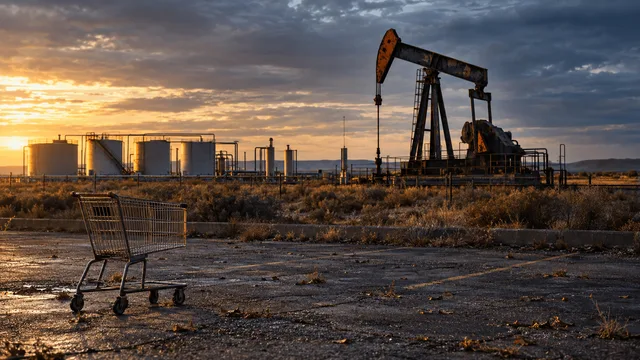
Oil futures pushed higher late Thursday following a direct exchange of fire between the U.S. and Iran in the Persian Gulf. This military action immediately impacted energy markets, driving up crude contracts as traders priced in potential supply disruptions.
The Persian Gulf is a primary artery for global energy. Any military action there forces traders to reassess supply risks in real time. The immediate upward movement in oil futures reflects this exact risk premium entering the market.
Energy traders do not wait for shipping lanes to close. They buy the rumor of a disruption and price the risk into the futures curve immediately. Our team expects this sensitivity to persist as long as tensions remain elevated in the region.
Why Did Stocks Barely React to the Trump Tariff Court Ruling?
A federal court struck down President Donald Trump's backup tariff plan, but stock-index futures remained largely unchanged. The muted reaction suggests equity markets had already priced in the legal challenges or are currently more focused on the geopolitical tensions in the Middle East.
The rejection of the backup tariff plan is a development in ongoing trade policy disputes. However, the lack of movement in stock futures tells a distinct story: equity traders are keeping their powder dry.
The quiet reaction in the futures market indicates that the court's decision did not trigger a massive repricing of corporate earnings expectations. Broad equities are simply ignoring the headline.
The Data We're Watching: Equity Market Resilience
Despite the geopolitical tension in the Persian Gulf, the broader market shows significant underlying strength. Our data shows SPY boasts a 30-day price change of +8.55%. This upward trajectory provides a massive cushion for equities.
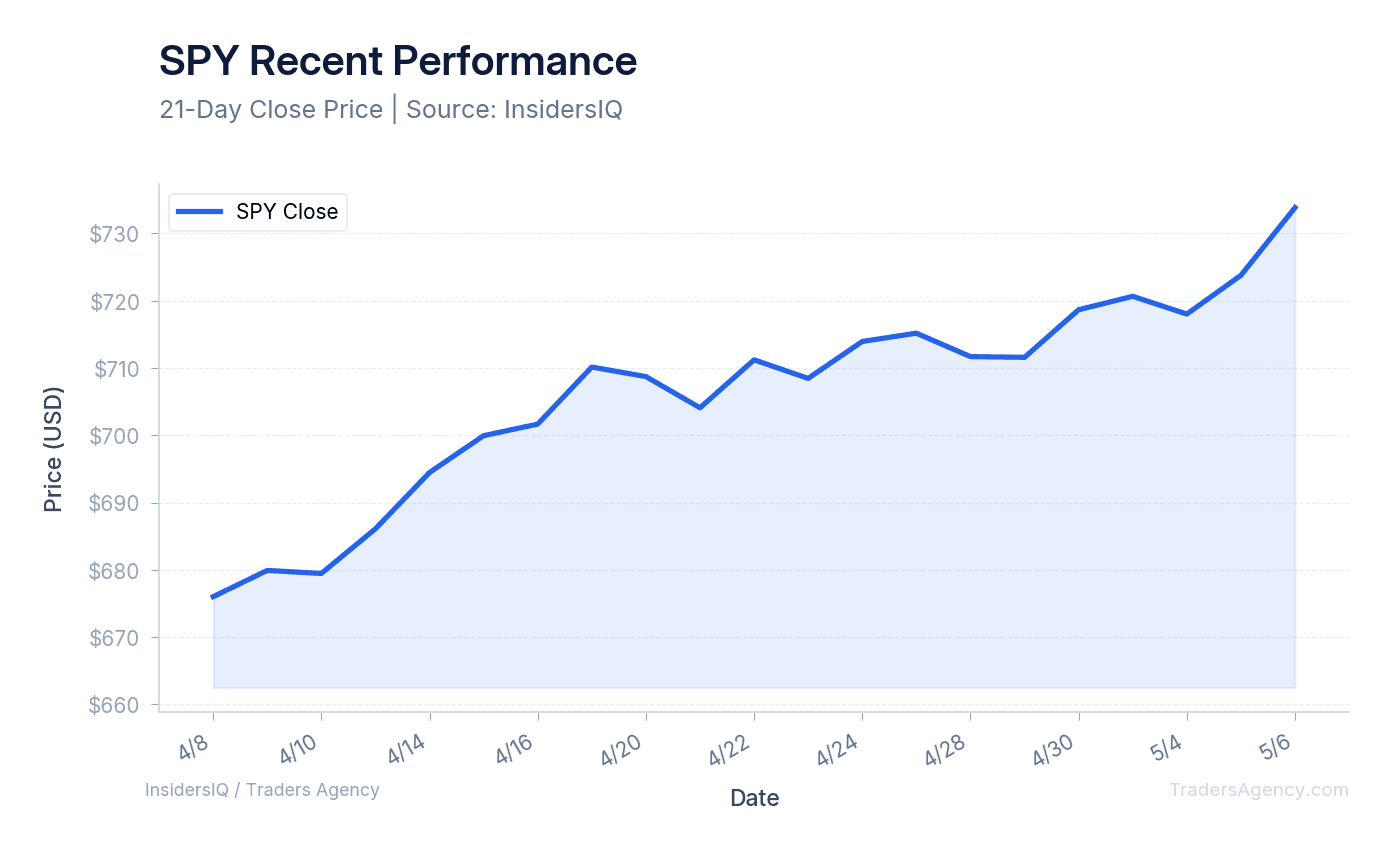
Key Number: SPY has gained +8.55% over the last 30 days. That kind of momentum doesn't break easily on a single geopolitical headline.
A gain of +8.55% over just 30 days is a powerful technical signal. It shows that buyers have been in firm control leading up to Thursday's events. The fact that stock-index futures stayed quiet after the tariff ruling confirms that this bullish momentum is not easily derailed.
Market sentiment indicators align perfectly with this price action. The Fear & Greed index currently sits at 68, placing the market firmly in "Greed" territory. A reading of 68 means the market has a thick buffer of optimism before fear takes over.
Sentiment Check: Fear & Greed Index at 68 (Greed). WallStreetBets tracking 2,748 mentions with a sentiment score of 0.03 (neutral). The retail crowd is watching closely but not panicking.
Want expert trading insights delivered daily?
Join thousands of traders who rely on Traders Agency for market analysis and trade ideas.
Join Traders AgencyWhat This Means for Traders Right Now
Traders must prepare for a split market environment where energy futures experience high volatility while broad equities remain stable. The combination of Persian Gulf military action and the tariff court ruling creates distinct trading setups across different asset classes.
Our analysis points to a clear divergence. The energy complex is reacting to physical supply threats, while equities are digesting legal and trade developments. Here is how we break down the immediate market impacts.
1. Energy Sector Volatility
The exchange of fire in the Persian Gulf guarantees elevated attention on energy contracts. Traders should expect rapid intraday swings in crude futures. The upward move late Thursday is likely just the beginning of a highly reactive trading environment for oil.
2. Broad Market Stability
The +8.55% gain in SPY over the last 30 days shows that equities have serious momentum. The quiet reaction to the tariff court ruling reinforces this stability. Traders looking for safety might find it in the very index funds that are ignoring the geopolitical noise.
3. Retail Sentiment Holding Steady
The WallStreetBets data reveals a neutral to slightly positive sentiment score of 0.03 across 2,748 mentions. Retail traders are discussing the news, but they are not dumping shares. This aligns with the Fear & Greed reading of 68, showing that systemic fear has not entered the broader market.
Why Does a Military Exchange in the Persian Gulf Matter for Oil Prices?
The specific location of Thursday's military exchange is the primary driver for the energy market's reaction. The Persian Gulf is the most sensitive geographic chokepoint for global crude delivery.
Any military engagement in this specific body of water forces commercial vessels and energy producers to evaluate their operational safety. This geographic sensitivity will dominate energy trading sessions in the coming days.
Understanding oil prices during iran war tensions requires knowledge of this specific geography. A localized exchange of fire translates directly into global pricing models. Our team expects energy futures to remain highly sensitive to any further news out of the region.
What Traders Should Watch Next
We're keeping a close eye on the divergence between commodities and equities. The primary focus will be on whether the military exchange in the Persian Gulf escalates into a sustained conflict.
Here are the specific signals our team is monitoring:
- Oil futures: Further upward movement following Thursday's late session spike
- SPY momentum: The ability to maintain its +8.55% 30-day gain in the face of geopolitical headlines
- Fear & Greed shifts: Any movement from its current level of 68
- Retail sentiment: Changes in WallStreetBets tone, which currently sits at a calm 0.03 despite 2,748 active mentions
- Sector rotation: Delayed reactions in specific equity sectors to the federal court striking down the backup tariff plan
If the situation in the Persian Gulf worsens, the initial spike in oil futures could transform into a longer-term trend. Conversely, we're watching to see if equity markets continue to treat the tariff ruling as a non-event.
The Bottom Line
Our research team sees a market divided by two distinct headlines. Oil futures are pricing in the immediate risk of the U.S. and Iran exchanging fire in the Persian Gulf. Stock futures are holding steady after the federal court rejected the backup tariff plan. We're adjusting our energy watchlists for high volatility while respecting the established uptrend in broad equities. The divergence is the trade here, and we'll be watching it closely in the sessions ahead.
Want expert trading insights delivered daily?
Join thousands of traders who rely on Traders Agency for market analysis and trade ideas.
Join Traders AgencyKey Takeaways
- Oil futures moved higher late Thursday after a direct U.S.-Iran military exchange in the Persian Gulf, with traders immediately pricing in supply disruption risk.
- Stock-index futures remained largely unchanged after a federal court struck down Trump's backup tariff plan, signaling equity markets treated the ruling as a non-event.
- The Persian Gulf is a primary corridor for global energy supply, meaning any military action there forces real-time reassessment of crude contracts across the futures curve.
- Energy traders priced in risk before any shipping lanes closed, reflecting the standard market behavior of buying the rumor of disruption rather than waiting for confirmation.
- The key divergence to watch is oil futures spiking while broad equities hold steady, which the research team identifies as the central trade setup in the sessions ahead.
DISCLAIMER: Traders Agency does not offer financial advice. The information provided is for educational purposes only and should not be considered financial advice. Traders Agency is not responsible for any financial losses or consequences resulting from the use of the information provided. Trading carries inherent risks and may not be suitable for all individuals. You are advised to conduct your own research and seek personalized advice before making any investment decisions, recognizing the potential risks and rewards involved.
See more from Traders Agency on Google
Make us a preferred source and our market analysis will appear more prominently in your Google Search, Top Stories, and AI results.
Add to Preferred Sources