

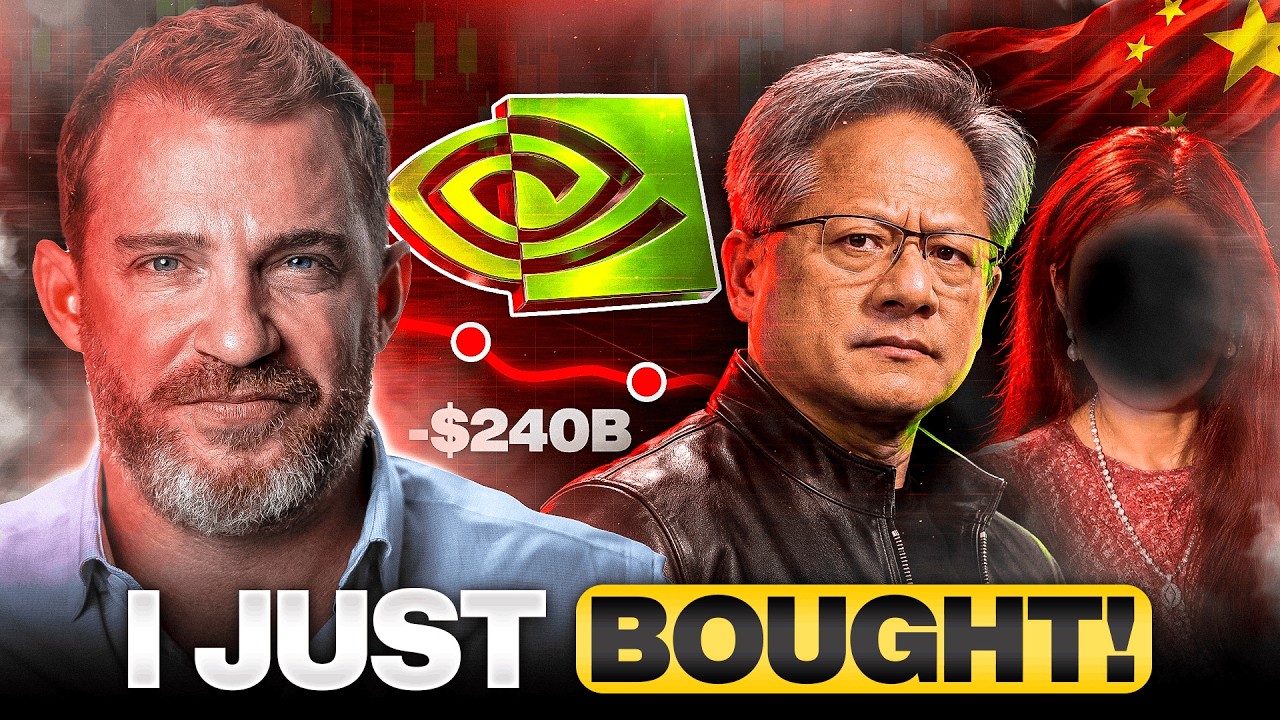
The Nvidia stock sell-off that erased more than $240 billion in market value this week has nothing to do with chips, earnings, or AI demand. It has to do with CEO Jensen Huang admitting to an affair. And if history is any guide, this sell-off is a buying opportunity, not a warning sign.
On Sunday, November 8th, Huang sent an email to every Nvidia employee admitting, "I was unfaithful to my wife." The next morning, Nvidia stock dropped 9% in the first five minutes of trading. Meanwhile, the Nasdaq rallied 3% that same Monday, and AMD, Qualcomm, and Intel all traded higher. Nvidia was the only major name in the red.
That divergence matters. When an entire sector moves up and one stock craters on personal scandal rather than business fundamentals, that's a signal worth paying attention to.
Why Did the Nvidia Stock Sell-Off Happen?
Bottom Line: The Nvidia stock sell-off tracks a personal scandal involving Jensen Huang, not any change in chip demand or earnings, since the rest of the chip sector rose the same day. Similar scandal-driven drops in other big tech names have historically been followed by recoveries, which is why this decline is being treated as a buying opportunity rather than a warning about Nvidia's business.
Nvidia's stock sold off after founder and CEO Jensen Huang admitted, in a company-wide email, to having an affair, with reports suggesting the woman involved may have ties to Chinese intelligence. The stock dropped 9% in the first five minutes of trading.
For weeks before the confirmation, rumors had circulated that Huang was involved with a woman the NSA believed could be a Chinese spy reporting back to Beijing. On November 8th, Huang made it official in an email to staff. By the next morning, the Nvidia stock sell-off was already in full swing.
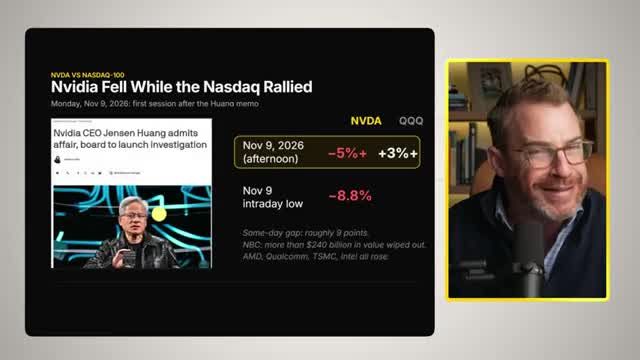
Nvidia's board has since opened an independent investigation into Huang. That sounds serious, and it's being treated seriously. But the board itself stated it has "no reason to believe national security or Nvidia secrets are compromised." Huang says he supports the investigation and will cooperate fully. As of now, he remains CEO.
Even President Trump weighed in when asked whether Huang should stay in his job. His answer: "I think so."
What Happened With Jensen Huang and Nvidia?
The woman at the center of this is identified in reporting as Alice Hong, also referred to as Wong Lee. She is not related to Huang. She's a top executive at Megaspeed, a data center company based in Singapore that was spun off from a Chinese gaming company a few years back. Megaspeed is also an Nvidia customer.
Here's the timeline:
- October 29th: The New York Times reported that US intelligence had been watching Hong because officials believed she could be gathering information for Beijing.
- Then: The Financial Times reported on a classified US memo stating Hong and Huang were romantically involved.
- November 8th: Huang confirmed the affair directly to Nvidia employees via email.
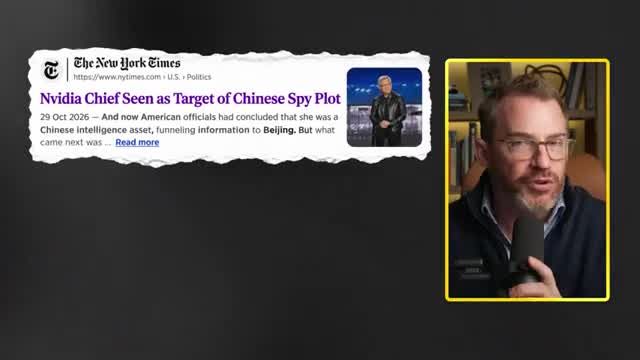
All of the intelligence reporting comes from unnamed sources. China has called the spy claims smears, though it's hard to imagine they'd confirm it if it were true. But Nvidia is a $4 trillion company and arguably the most important name in the AI arms race. True or false, this story was always going to draw attention.
There's an added wrinkle. US and Singapore officials reportedly looked at Megaspeed over the possibility that advanced Nvidia chips were being routed into China. Nvidia says those claims were investigated and debunked. But Huang has also spent years lobbying against the export rules that keep Nvidia chips out of China. A CEO who fights export controls, tied romantically to someone connected to a company examined over chip routing, is a story that was always going to make headlines.
But we're traders and investors, not judges of personal conduct. The only question that matters for your portfolio: does this change Nvidia's future sales and profits, or is it noise that fades?
Get an entire year of live weekly mentoring sessions, my newsletter, indicators, bonus reports, tons more. Click the link and I'll see you in the next live session.
Join my Black Ops Trading ClubDo Stocks Recover After CEO Scandals?
What happened to Amazon, Microsoft, and Google stock after similar scandals
Big tech CEO affairs have a strange history of being followed by stock rallies, not crashes. This has happened at least three times before, and in every single case, the stock ran higher in the months that followed. I call this the Affair Rally, and the pattern is hard to ignore once you line up the dates.
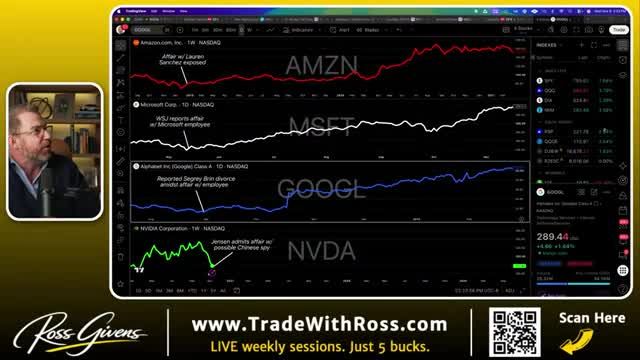
Amazon, January 9th, 2019. Jeff Bezos announced his divorce from his wife, MacKenzie. Hours later, the National Enquirer published his text messages with his girlfriend, Lauren Sanchez, and promised photos of the affair. Bezos was the founder, the CEO, and the largest shareholder, just like Huang is at Nvidia. Amazon dipped slightly at first, then went on to double over the next 18 months.
Microsoft, May 16th, 2021. The Wall Street Journal reported that Bill Gates had left Microsoft's board while the company investigated a past relationship with an employee. A spokesperson called it an affair that ended amicably. Six months later, Microsoft stock was up another 40%.
Google, 2013. A publication called All Things D reported that Sergey Brin and his wife had split, and that Brin had become involved with a Google employee. Shareholders didn't seem bothered. The stock soared for the next two quarters.
Three of the most important founders in Silicon Valley, three personal scandals, and in every single case the stock went on to run. I don't fully know why. Maybe it's just the market shrugging off temporary bad press once the headlines fade. But the pattern is real, and it's the exact precedent I'm applying to the current Nvidia stock sell-off.
Huang's Response So Far
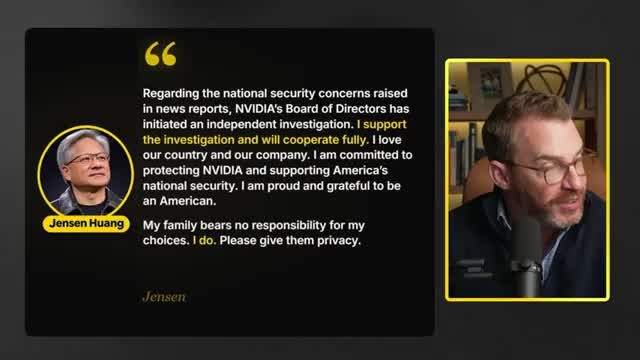
Nobody is pushing Huang out the door. I don't think you'll find a single shareholder who wants him gone. He co-founded Nvidia in 1993 and has run it every day since, and he has created more shareholder value than almost anyone in stock market history. The idea that the board sends him packing over a personal affair just doesn't match how this usually plays out.
Is Nvidia a Good Buy Right Now?

Nvidia is worth buying right now if you believe this scandal is temporary bad press rather than a real threat to future sales and profits. I entered a position of 200 shares, roughly $35,000 at current prices, because the stock is trading at levels not seen since July 2025 despite no change to the underlying business.
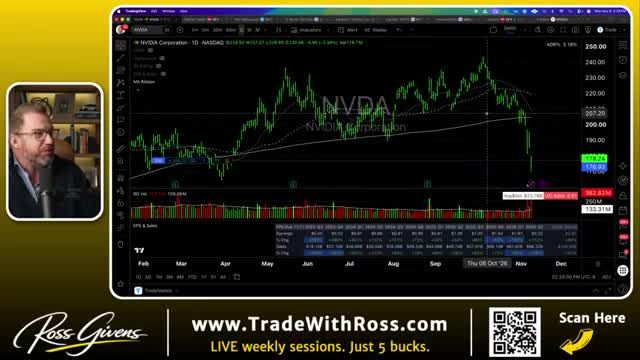
The stock has done essentially nothing since mid-2025, swinging from 180 up to 220, then 240, then rolling back over. You're buying today at July 2025 prices. The only other time it's been this cheap in the last year and a half was during the period tied to the war with Iran, and a week after that dip, the stock had already bounced back.
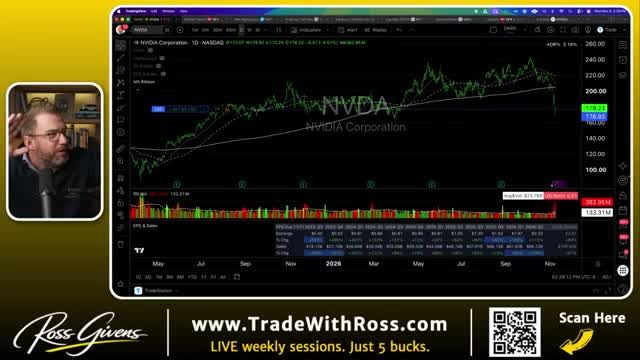
Three separate pressures have stacked up on Nvidia:
- The broader AI sector sell-off over the summer
- A single-day bloodbath last Thursday where the stock fell 9% and then traded back inside the next day
- The weekend news of Huang's affair, which knocked the stock down again
Add it up and Nvidia is off 30% from its highs. Historically, buying mega-cap leading stocks every time they dip 30% has worked out pretty well. That's the trade I'm making here.
Will Nvidia Stock Crash?
Nvidia's stock price isn't likely to crash from this scandal alone, unless the affair reveals an actual national security or business problem, which the board has stated it has no reason to believe exists. If you think Huang's personal life is going to permanently damage a $4 trillion company's value, this isn't the trade for you.
But if you've been waiting for an entry point to add to or start a position in Nvidia, the current setup hands you one. The combination of the summer AI sell-off, last week's single-day drop, and this weekend's scandal has created exactly the kind of overreaction that tends to reverse once the headlines move on.
What NVDA Investors Should Watch
For Nvidia investors, the core question isn't whether the affair was wrong. It was. It's whether it changes the business. I don't think it does, and the historical pattern across Amazon, Microsoft, and Google backs that view. I'm firmly in the camp that treats this as a buying opportunity.
The board's investigation is ongoing, but Huang has said he'll cooperate fully, and nothing so far suggests the core business, chip demand, or national security concerns are compromised. Keep an eye on a few things:
- Any update from the independent investigation committee
- Whether Huang remains CEO through the coming weeks
- How the stock behaves relative to AMD, Qualcomm, and Intel going forward
- Whether the 30% dip from highs holds as support
Trading Disclosure and Risk
I entered 200 shares of Nvidia, about $35,000 at current prices, as a direct bet that this sell-off follows the same pattern as past tech CEO scandals. I'm not going in heavy on this position, and I'm not telling you it's risk-free.
This is a $4 trillion company facing an active board investigation, reports tying its CEO to a person US intelligence has scrutinized, and questions about chip export routing that Nvidia says were already investigated and debunked. None of that is nothing. Do your own homework before sizing a position.
Does the Nvidia Stock Sell-Off Threaten the AI Trade?
The Nvidia stock sell-off looks a lot more like a pattern than a crisis. Jeff Bezos, Bill Gates, and Sergey Brin all went through personal scandals at big tech companies they founded, and in every case the stock rallied in the months after. Nvidia's drop of 9% in minutes, paired with a 3% rally in the Nasdaq and gains in AMD, Qualcomm, and Intel the same day, tells you this is a Nvidia-specific story, not a sector problem.
The board says there's no reason to believe national security or company secrets are compromised. Huang remains CEO and says he'll cooperate fully with the investigation. Trump himself said he thinks Huang should stay. None of that sounds like a company on the verge of falling apart.
I bought into this dip because the setup matches a pattern I've watched play out three times before in big tech. You can do with this information what you will, but historically, these situations have been good times to buy.
Get an entire year of live weekly mentoring sessions, my newsletter, indicators, bonus reports, tons more. Click the link and I'll see you in the next live session.
DISCLAIMER: Traders Agency does not offer financial advice. The information provided is for educational purposes only and should not be considered financial advice. Traders Agency is not responsible for any financial losses or consequences resulting from the use of the information provided. Trading carries inherent risks and may not be suitable for all individuals. You are advised to conduct your own research and seek personalized advice before making any investment decisions, recognizing the potential risks and rewards involved.
See more from Traders Agency on Google
Make us a preferred source and our market analysis will appear more prominently in your Google Search, Top Stories, and AI results.
Add to Preferred Sources