

Gold's Next Big Rally Is Coming: Why I Just Bet $30,000 on This Mining Stock
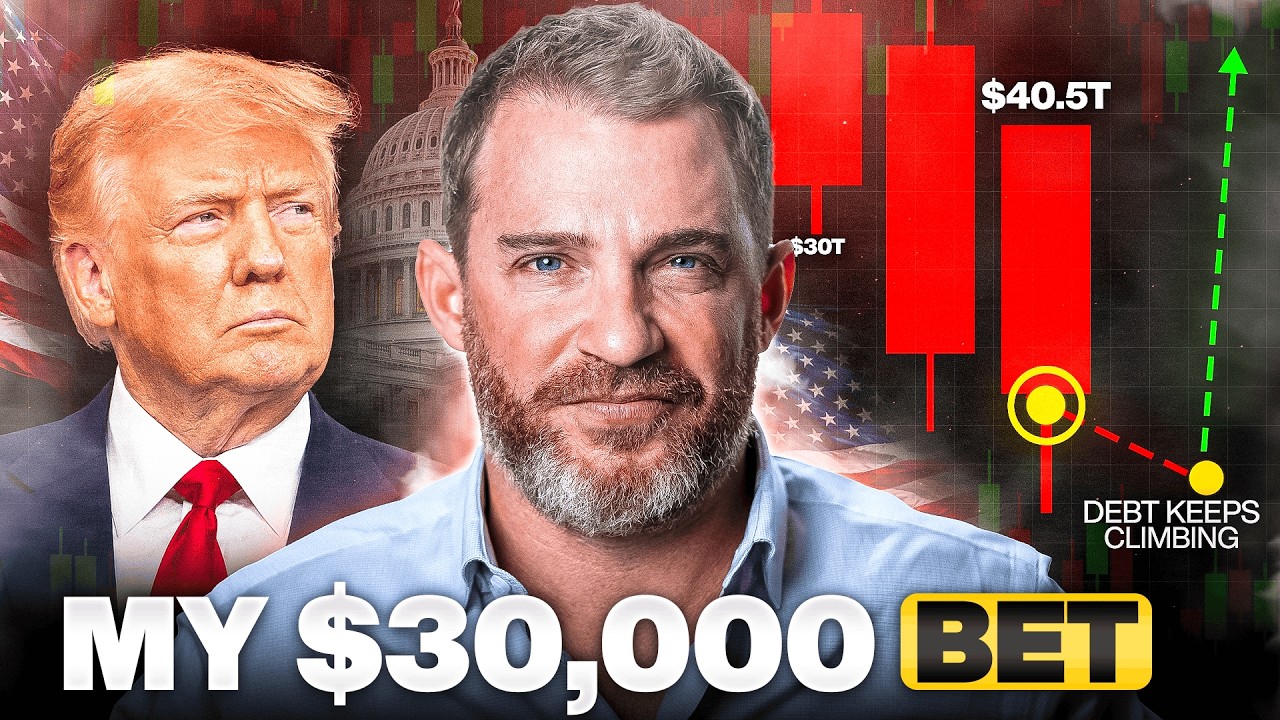
Gold mining stocks just got a clear signal from Washington. The day after Democrats took both houses of Congress, gold jumped more than 3%, its biggest one-day gain since early August, while silver spiked more than 5%. That same day, I bought 2,000 shares of an American mining stock trading around $15 a share.
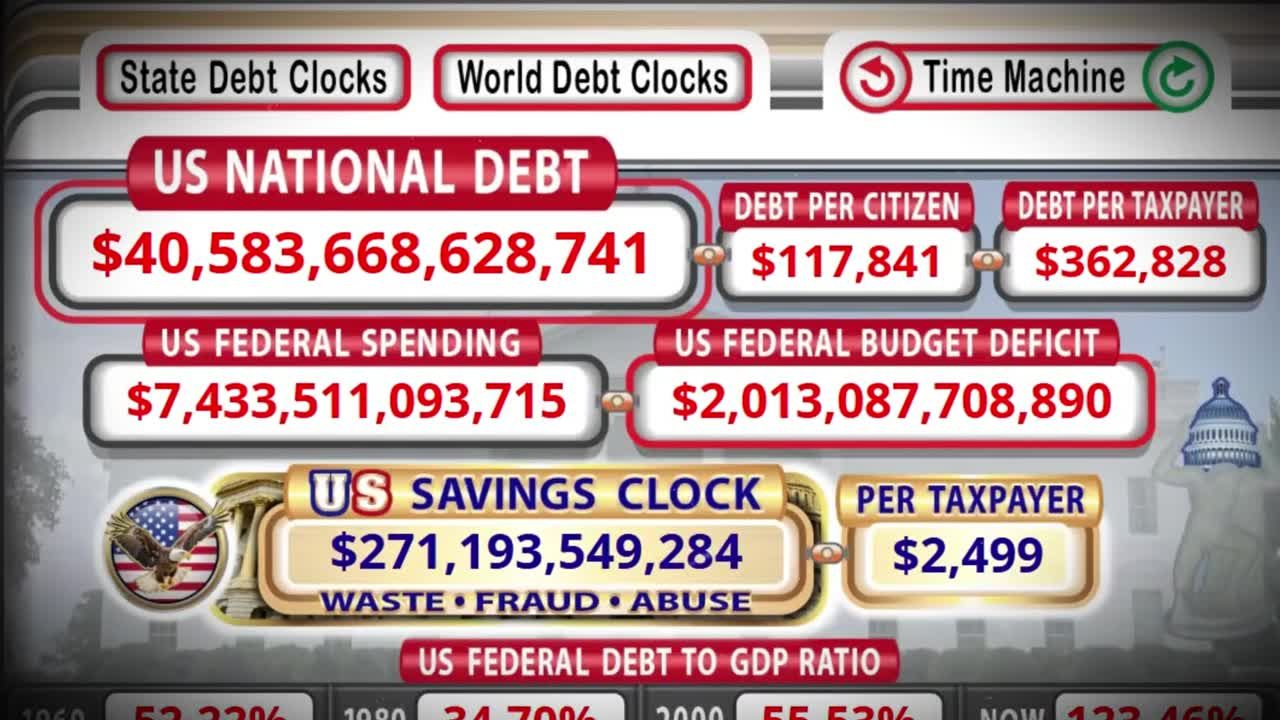
Why would an election move gold and silver this hard? Washington now owes more than $40 trillion, and the people who move big money just figured out nobody in D.C. is going to fix that anytime soon. Not with spending cuts. Not with tax hikes. There's only one quiet way out, and it's the same way out Uncle Sam used after World War II.
Gridlock in Washington pushes policymakers toward inflating debt away rather than paying it down. That's bullish for gold, bullish for silver, and especially bullish for the gold mining stocks that turn metal price gains into outsized profit.
Why Are Gold Mining Stocks Rallying Now?
A split government just killed any chance of fiscal reform
The midterms produced a split government with no realistic path to major fiscal reform, which means nothing big is going to pass. The dollar fell to a new one-month low, Treasury yields dropped, and gold took off within a day.
Democrats won the House and the Senate, but the president still holds the veto pen. Neither side has anywhere near the votes to override him or break a filibuster. That means:
- No major spending cuts
- No major tax increases
- At least two years of political bickering and blame games
The debt problem nobody is fixing is enormous. The Treasury's own count puts total federal debt at about $40.5 trillion. Paying that down honestly would require years of budget surpluses, and Washington hasn't run a single one since 2001. With a split government now in place, the odds of finding one just went from small to zero.
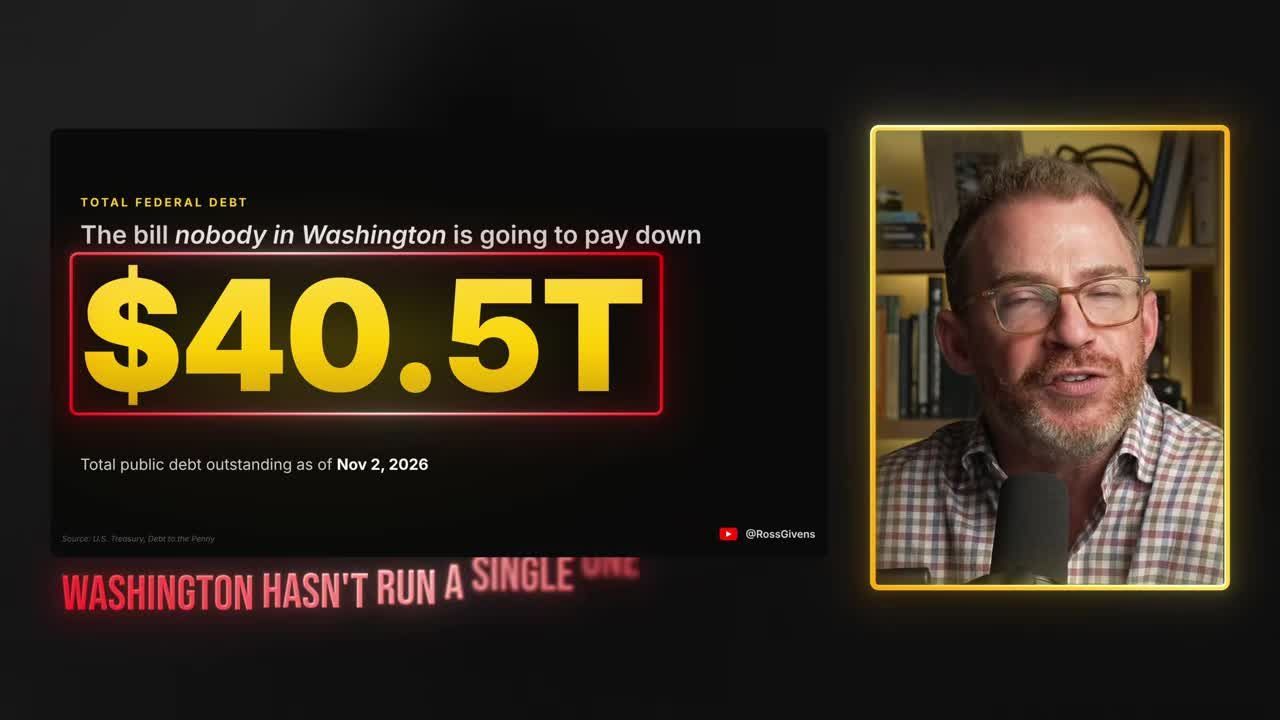
Kitco Research looked at every midterm year since 1974, the period since the U.S. went off the gold standard. Across those 13 midterms, gold rose in the following year eight times, with an average move of about 14%. That's close to a coin flip on seasonality alone. But there's a specific reason this time is more likely to land in the plus column, and it has nothing to do with seasonality.
The Playbook Driving the Rally
Financial repression already worked once
The next gold rally is being driven by a documented economic playbook called financial repression, where the government keeps interest rates on its own bonds below the inflation rate. That lets debt shrink relative to the economy without ever being paid off directly. The U.S. has already run this play once, successfully.
At the end of World War II, America's debt held by the public was about 106% of the entire economy, bigger than everything the country produced in a year. By 1975, that number was under 25%. Washington didn't pay the debt off. It shrank it.
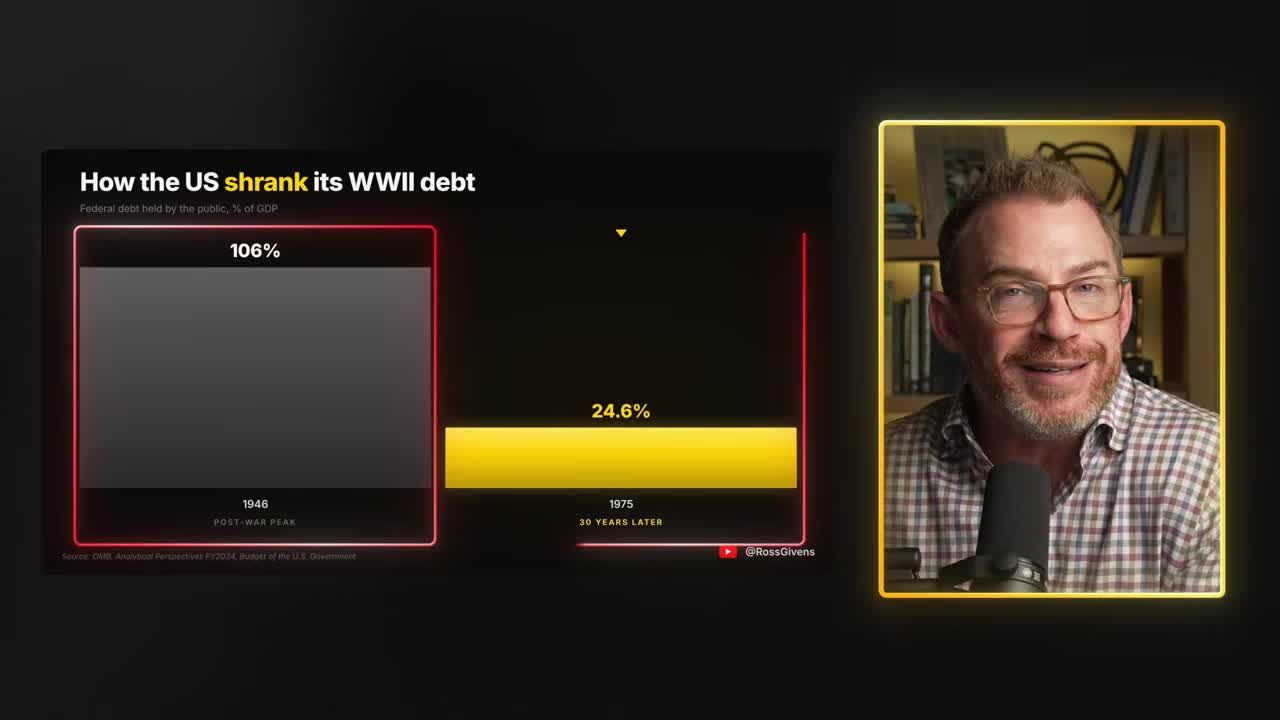
Here's how it works in practice. Lend your buddy money and he pays a little interest each year, but if prices rise faster than that interest, your money buys less by the time he pays you back. He wins, you lose, and you barely notice. Now swap "your buddy" for the U.S. government, and swap "you" for every saver and bondholder in America.
Inflation pushes up wages, prices, and tax collections. The economy grows bigger in dollar terms. The debt stays roughly the same in dollar terms. So the debt shrinks compared to everything else around it.
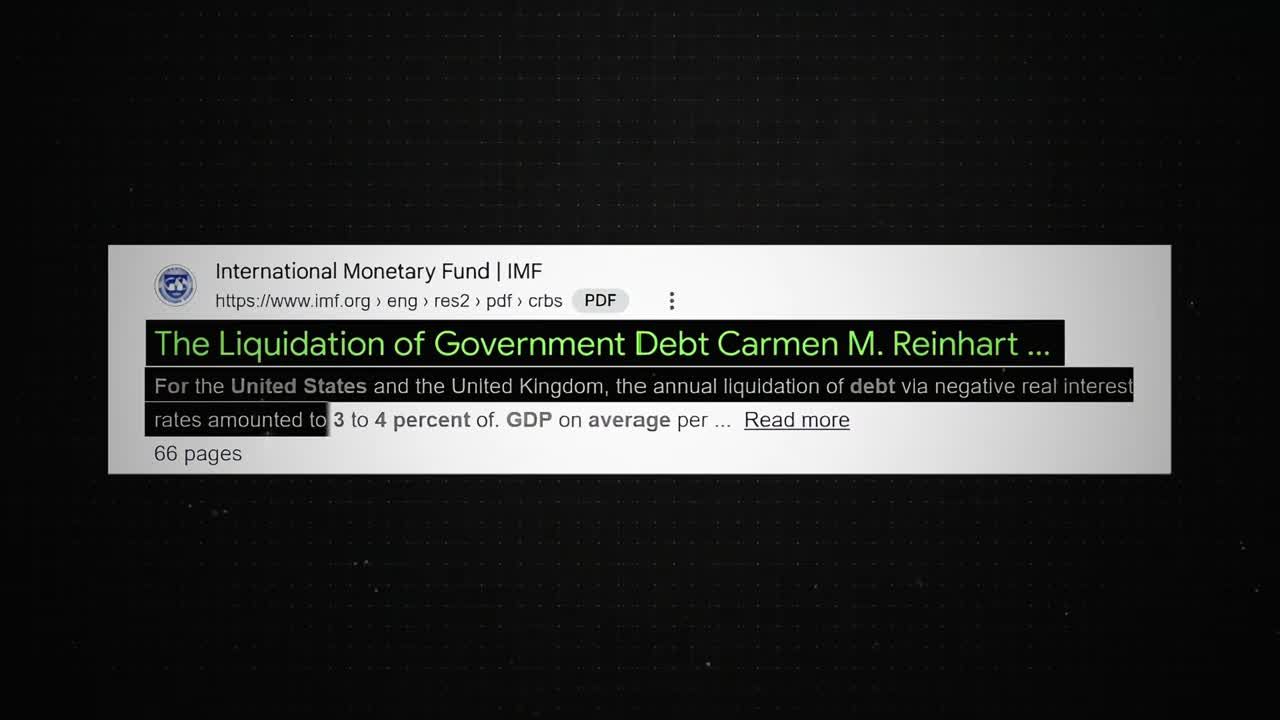
Economists Carmen Reinhart and Belen Sbrancia estimated this process quietly wiped out the equivalent of 3 to 4% of GDP per year in U.S. debt between 1945 and 1980. That's the play. And when Washington runs it, you want to be holding the asset that rises with inflation, not the IOU that loses to it.
So why gold specifically, if gold doesn't pay any yield at all?
Gold and bonds are competing for the same job: being the place where big money parks safely. Warren Buffett's Berkshire Hathaway holds $365 billion in cash. That kind of capital doesn't sit in a checking account; it goes into bonds, patiently collecting yield. Gold can't compete with that under normal conditions.
But when inflation runs hotter than what the bond pays, that bond is losing you money every single year. Gold still pays zero, but zero beats losing.
Get an entire year of live weekly mentoring sessions, my newsletter, indicators, bonus reports, tons more. Click the link and I'll see you in the next live session.
Join my Black Ops Trading ClubWho Is Already Positioning in Washington?
Three hires worth watching at Treasury and the Fed
None of this is confirmed as policy today, but the pattern of who got hired, and when, is worth paying attention to.
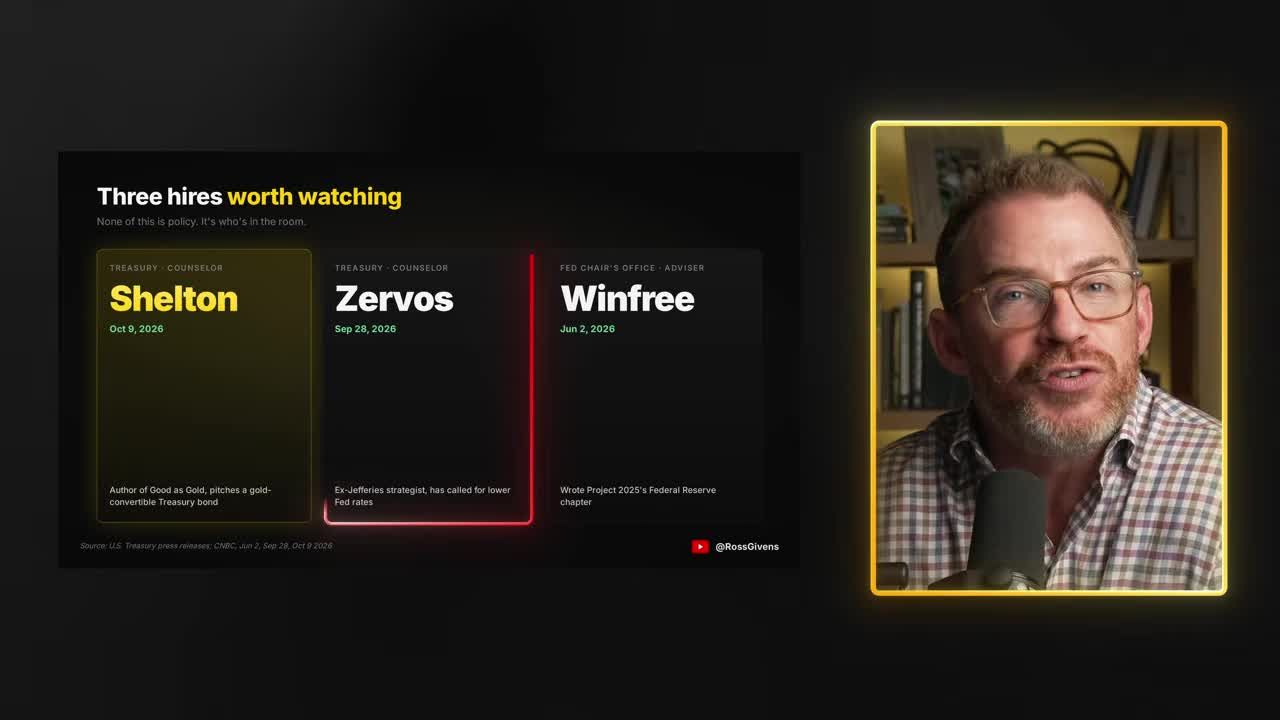
On October 9th, Treasury Secretary Scott Besant named Judy Shelton as a counselor in his office, a move Treasury confirmed in a press release. Trump tried to put Shelton on the Fed back in 2019, and the Senate blocked her nomination, partly over her support for the gold standard. She also wrote a book called Good as Gold, in which she pitches a treasury bond that lets holders choose, at maturity, to be paid in dollars or in a set amount of gold. A gold-backed government bond. The woman who designed that concept now has an office inside the Treasury. Officially, her role is advising on currency policy, mainly related to China. But you don't hire the gold bond architect by accident.
Eleven days earlier, on September 28th, Besant named David Zervos as a second counselor. Zervos spent about 16 years as Chief Marketing Strategist at Jefferies and has a reputation as a financial repression advocate: keep savers' returns below inflation, let inflation shrink the debt. That's the exact playbook described above, and now he's sitting next to the Treasury Secretary.
Over at the Fed, new Fed chair Kevin Warsh brought in Paul Winfrey as an advisor in June. Winfrey wrote the Federal Reserve chapter of Project 2025, where he lays out a menu of options. His first preference is something called free banking, essentially abolishing the Fed. But one of the paths he outlines involves backing the dollar with gold through a gold convertible treasury bond, the same concept Shelton designed.
To be clear: none of this is official policy yet. There's been no new bill and no rule change. Besant himself brushed off the idea of revaluing America's gold back in early 2025. But the investments that pay off are the ones you spot before everyone else, and the logic here holds up.
The U.S. government reportedly owns 261 million ounces of gold in Fort Knox, and by law it still carries that gold on its books at $42.22 an ounce, the statutory price from 1973. On paper, that makes the entire stockpile worth about $11 billion. At today's market price, it's worth more than a trillion dollars.
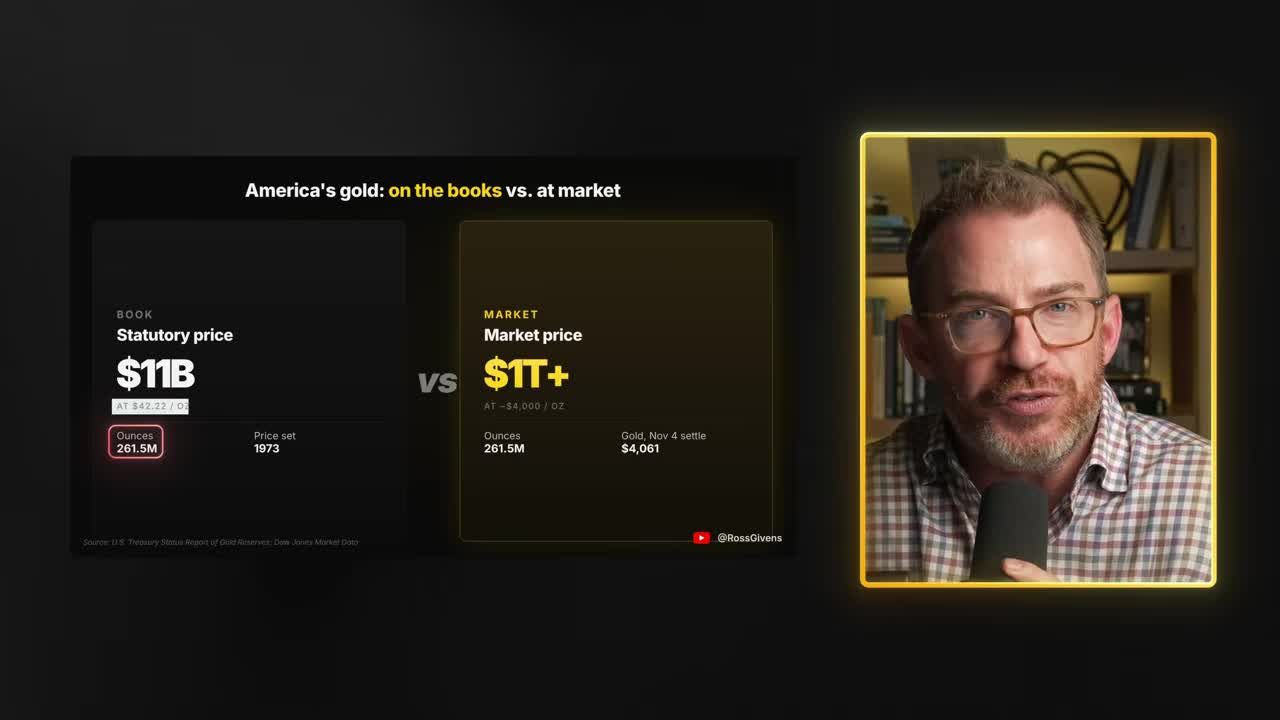
If Congress ever updated that $42 number to reflect market value, Treasury could book the difference as new cash without selling a single ounce. A trillion dollars isn't going to fix a $40 trillion debt. But a government marking up its gold to raise cash is a government admitting the dollar is being diluted, and that's precisely why people buy gold in the first place.
Why Do Miners Beat Bullion Here?
Gold mining stocks look good right now for investors who want leveraged exposure to rising metal prices, because miners' costs don't rise nearly as fast as the metal price does. That means extra revenue flows almost directly to profit. A 20 to 30% move in the price of gold can increase mining profits by 50% to 100%.
That math is the entire reason to own gold mining stocks instead of, or alongside, physical gold. I own gold myself and think everyone should own some. But miners offer something bullion simply can't: operating leverage. When the metal price rises and production costs stay roughly flat, nearly every incremental dollar drops straight to the bottom line.
My Pick: Hecla Mining (HL)
The stock I put $30,000 into
The mining stock I bought with that $30,000 is Hecla Mining, ticker HL, the largest silver producer in the United States, mining since 1891, with its flagship Greens Creek mine located in Alaska. Hecla also produces gold, zinc, and lead alongside its silver output.
If the big story here is gold, why buy a silver-first company? Because silver is gold's wild little brother. The same macro forces, a weaker dollar and rates held below inflation, lift both metals, but silver typically moves harder in both directions.
During the 2024 to 2025 run, gold climbed 160% while silver climbed 400%. On the way down, the correction hit silver worse too: silver is currently down 58% from its highs, while gold is only down about half that, around 27%. Hecla gives you gold's macro story with silver's volatility, plus the miner's leverage stacked on top.
- 69% of last quarter's revenue came from silver
- 15% came from gold
- The remainder came from zinc, lead, and other byproducts
The cost structure is what makes this stock compelling. Hecla sells the gold, zinc, and lead it digs up alongside silver, and that revenue helps pay for the mining itself. Last quarter, the company's cash cost to produce an ounce of silver was actually below zero, negative $3.20. Even counting all-in costs to keep the mines running, that figure comes to about $14 an ounce.
Why the Earnings Report Changed the Picture
Hecla just reported a quarter that reframes the entire bull case:
- Free cash flow hit a company record, nearly triple what it made a year earlier
- Earnings came in at 22 cents a share, versus a Wall Street estimate of 14 cents
- Revenue hit $395 million, versus a street estimate of $340 million
- The balance sheet shows $692 million in cash and zero long-term debt outside of equipment leases
- Management raised the lower end of silver production guidance and improved cost guidance for the year
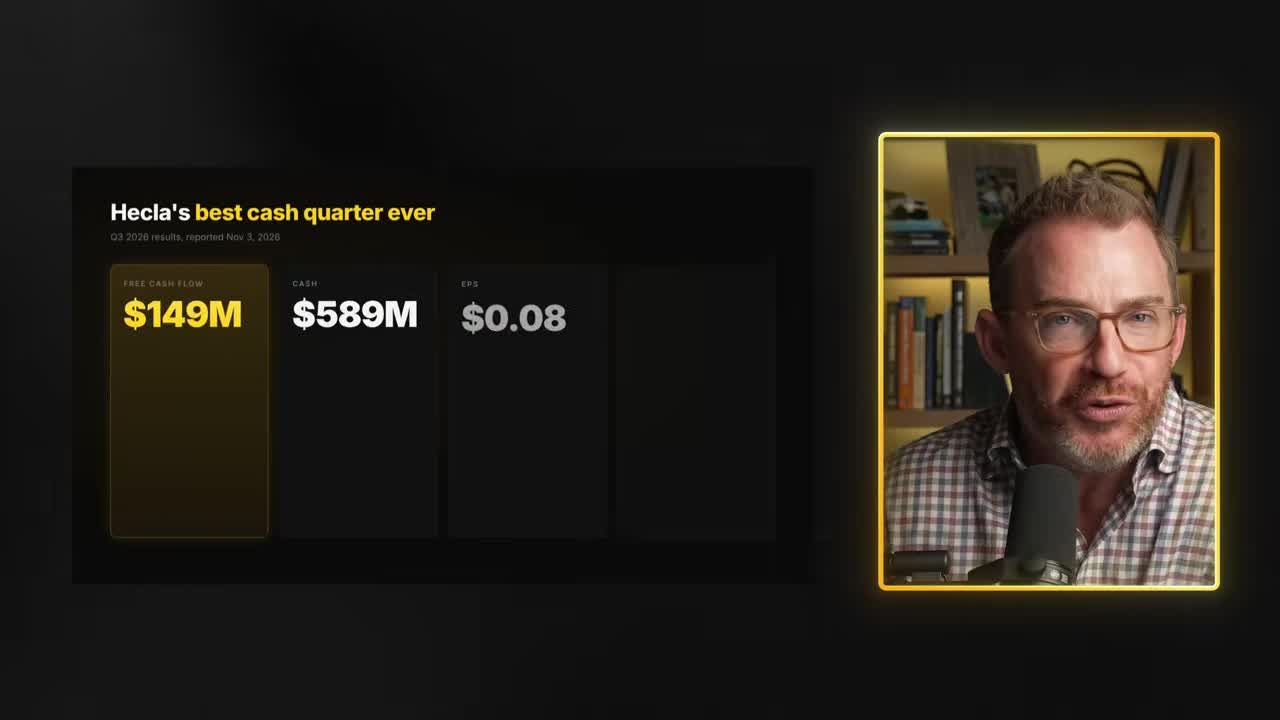
Miners typically die the way every leveraged business dies: through debt, especially when metal prices fall. Hecla doesn't have that problem anymore.
Why the Stock Is Still Cheap
Hecla is cheap because silver crashed, not because the business is struggling. The stock hit about $34 a share in late January when silver was flying, then fell with silver all the way down to a low of about $12. I bought in around $14.80 a share, more than 55% below the January high.
For six months, this stock traded like a company in trouble. Then it turned in the best quarter in its history. That doesn't sound like trouble to me.
Where I Could Be Wrong
The entire trade rests on one assumption: that the sell-off in gold and silver is over, and that investors start viewing Washington's gridlock for what it actually is, a guarantee the debt problem gets worse rather than better. If that assumption holds, this stock shouldn't trade below its 2026 low of $12 a share for long. If it does, I'll need to reevaluate the position.
Miners swing harder than the metal itself. If silver drops 10%, Hecla can drop more than that. That leverage cuts both ways, though. If silver rises 10%, Hecla is likely to rise a lot more than that.
Price Targets for HL
My first target sits in the low $20s, roughly 50 to 60% above where the stock trades today. Beyond that, the old high near $34 is the bigger target. If any bill in Congress moves to change that $42 statutory gold price, or if Treasury announces any form of gold-backed bond, that's the moment this trade really accelerates into round two, three, and four of the gold and silver boom that played out last year.
The Bottom Line
Gridlock means nobody fixes the debt. A debt nobody fixes gets inflated away. And Treasury and the Fed have just hired people who know exactly how that process works. When that plays out, savers lose, and gold and silver win.
A debt-free miner that just posted record cash while sitting at less than half its high is not a bad place to be positioned when that happens.
The setup is simple: gridlock in Washington removes any realistic path to paying down $40.5 trillion in debt, which leaves inflation as the only politically survivable option left. Treasury and the Fed have already brought in people with direct ties to that exact playbook. Markets reacted within a single trading day of the midterm results, and gold mining stocks like Hecla sit at the center of that reaction.
This isn't a prediction with no backing. It's a pattern that already played out once, from 1945 to 1980, documented by economists and now mirrored in recent hiring decisions at the highest levels of U.S. financial policy. Hecla Mining gives exposure to both gold's macro story and silver's sharper volatility, backed by a balance sheet that just posted record free cash flow and zero long-term debt.
If Washington runs the playbook I expect it to run over the next couple of years, the first target in the low $20s is just the opening move. The bigger move comes if Congress or Treasury ever touches that $42 gold valuation on the books.
Further reading: Federal Reserve policy actions, and Hecla Mining's filings via SEC EDGAR.
Get an entire year of live weekly mentoring sessions, my newsletter, indicators, bonus reports, tons more. Click the link and I'll see you in the next live session.
DISCLAIMER: Traders Agency does not offer financial advice. The information provided is for educational purposes only and should not be considered financial advice. Traders Agency is not responsible for any financial losses or consequences resulting from the use of the information provided. Trading carries inherent risks and may not be suitable for all individuals. You are advised to conduct your own research and seek personalized advice before making any investment decisions, recognizing the potential risks and rewards involved.
See more from Traders Agency on Google
Make us a preferred source and our market analysis will appear more prominently in your Google Search, Top Stories, and AI results.
Add to Preferred Sources