

Thursday was the worst day for stocks in years. The NASDAQ posted its worst single-day performance since 2020, and by the time the dust settled, a trade that had been priced for perfection was under pressure. But the broader market barely blinked, and if you're hunting for AI stocks to buy after the dip, that gap between what happened underneath and what the S&P showed on the surface is the whole story.
The market has been ripping higher since that blood bath. I'm buying two stocks today in what I believe is one of the new leading sectors, and understanding why the selloff happened is the key to understanding why those two trades make sense right now.
Why Did AI Stocks Get Crushed?
Bottom Line: Thursday's selloff hit AI data center and chip names hard because of a Texas moratorium threat, but the broader market held up, showing the damage was narrow, not systemic. That gap points to rotation within AI trades rather than a collapse of the AI theme, with capital now moving toward names outside the hardest-hit NEO cloud and semiconductor group.
A Texas political shift hit a trade priced for perfection
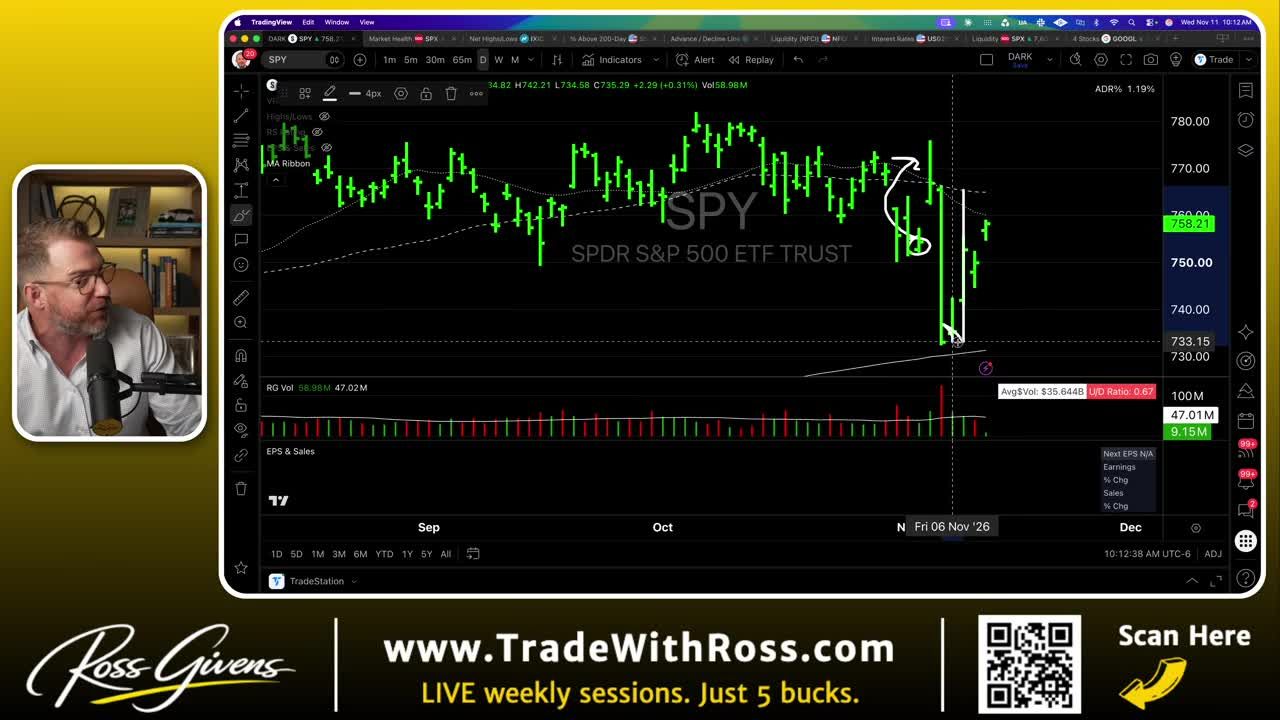
The midterm elections brought a blue wave, and the market gapped up the next day on that news. Then it reversed completely. Everything sold off on Thursday.
I think the real trigger was the political shift in Texas, where a newly elected Democrat governor ran on a moratorium that would freeze all data center construction. Roughly 20 to 28% of data centers are being built there. That single development put real fear into a trade that had zero room for bad news priced in.
Traders took the profit and ran. NEO cloud names and semiconductors got hammered, and once that starts, it drags the rest of the market down with it.
The Damage Under the Surface
Six months of carnage the index never showed you
This wasn't a one-day event. The last six months have been brutal for data center names, even while the headline indexes stayed near their highs.
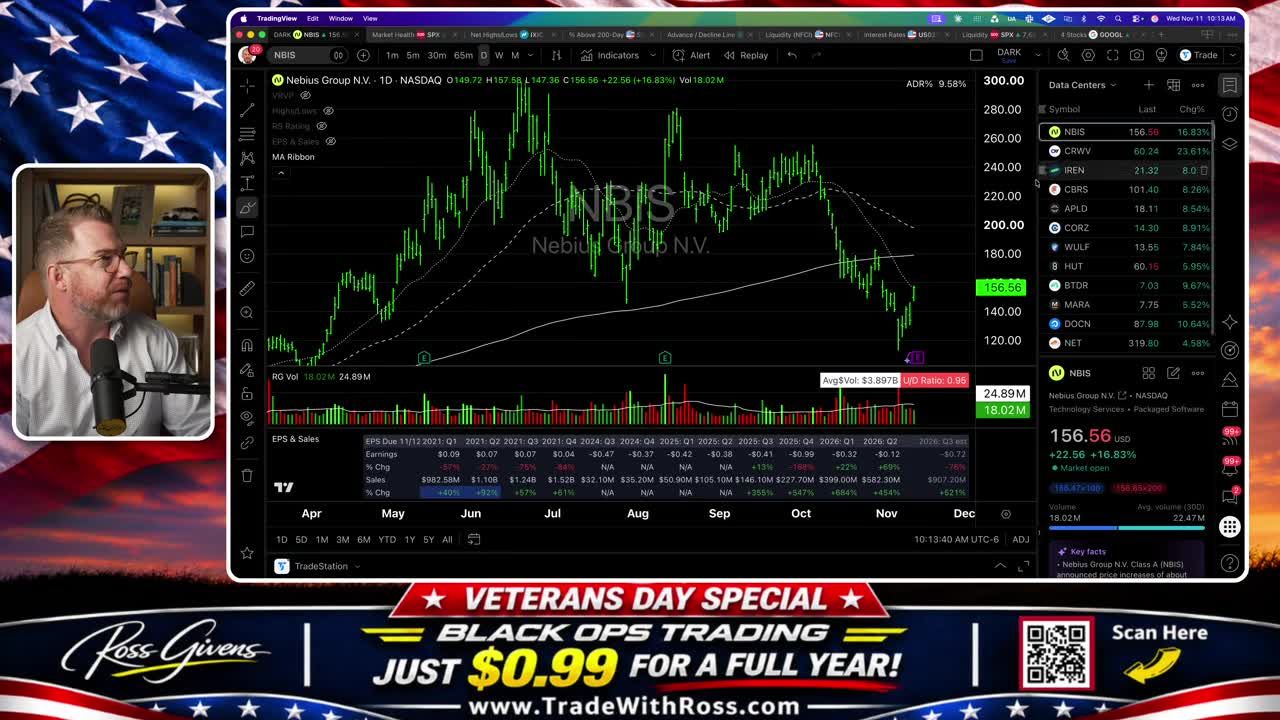
Terawulf, HUT 8, MARA, Digital Ocean, and NET all took hits too, though NET has bounced back faster than the rest. That's not a dip. That's a sector-wide repricing, and it happened while most people were still celebrating the S&P sitting near all-time highs.
Is the AI Bubble Bursting?
What the broader market internals are actually saying
No, not based on what's showing up underneath the hood. The S&P is still sitting within 3% of all-time highs despite the Neocloud ETF falling 58% since August and individual names getting cut by 60 to 70%.
That gap, massive destruction at the sector level and total calm at the index level, is the most important data point right now. It tells you the selling was concentrated, not systemic. And the way the market has recovered since Thursday, with improving breadth and internals beneath the surface, is a genuinely bullish sign.
Where Is the New Market Leadership Hiding?
Capital didn't leave. It rotated.
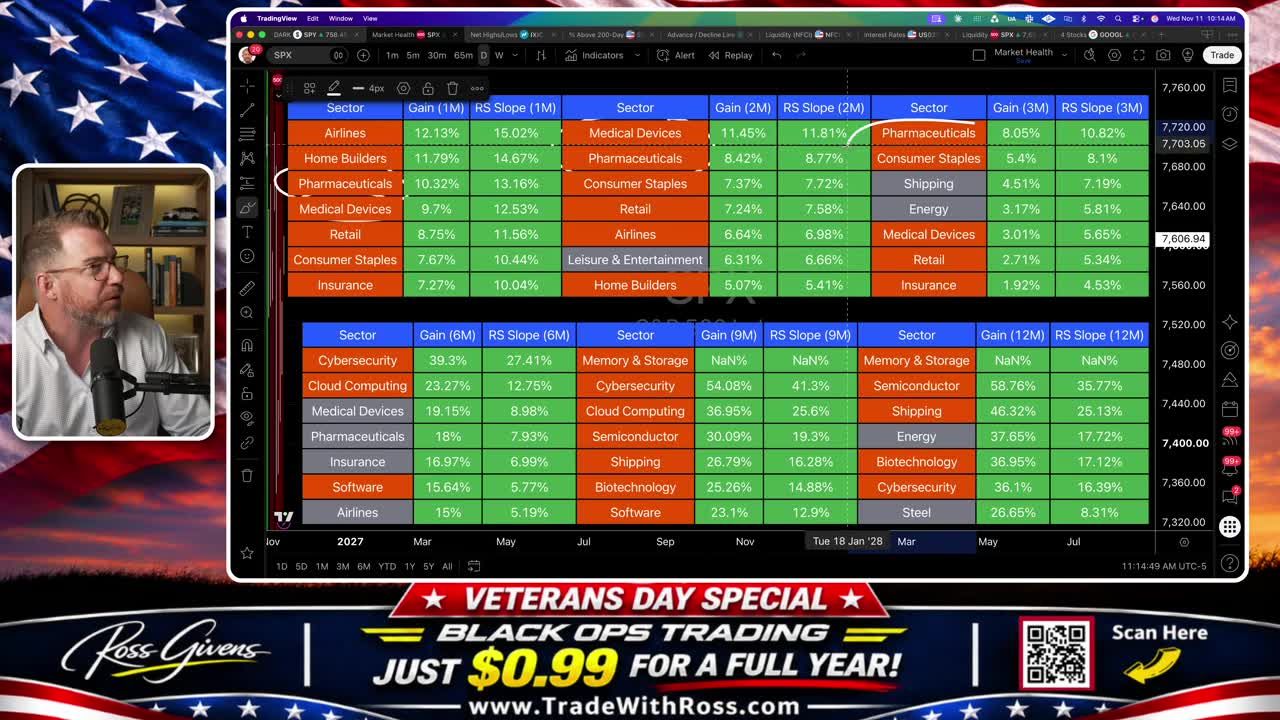
I track 40 different sectors and subsectors, and right now the leadership board is dominated by one theme: medical devices, pharmaceuticals, and biotechnology keep showing up at the top. That's the signal. The names that led for the last four years are not the names that are going to lead the next stretch.
New leadership emerging outside of AI, right as the AI trade gets hit, usually means the market absorbed a shock and is rotating, not breaking down.
Get an entire year of live weekly mentoring sessions, my newsletter, indicators, bonus reports, tons more. Click the link and I'll see you in the next live session.
Join my Black Ops Trading ClubTwo Stocks I'm Buying Now
One boring and stable, one fast and explosive
I'm not shopping for AI stocks to buy after the dip among the beaten-down data center names. Instead, I'm putting new money where the strength is actually showing up: biotechnology.
Pfizer (PFE)
I just took a position in Pfizer, 1,000 shares. The setup has two things going for it: a retest of a prior breakout level and a pullback to the 50-day moving average.
Pfizer ran up to resistance around 29, broke out, then got hit along with everything else on Thursday. But notice where it stopped: right at that same breakout level. An area that was resistance before the breakout often turns into support once the stock has run higher, and that's exactly what happened here. The stock is also sitting right on its 50-day moving average, which in a healthy stage-two uptrend tends to be where buyers step back in.
GMAB
This one's a mover. GMAB is setting up in a textbook high tight flag pattern, a setup made famous by Investor's Business Daily founder William O'Neal back in the 1980s. O'Neal traded it on weekly charts, but things move faster now, so I trade this pattern on dailies.
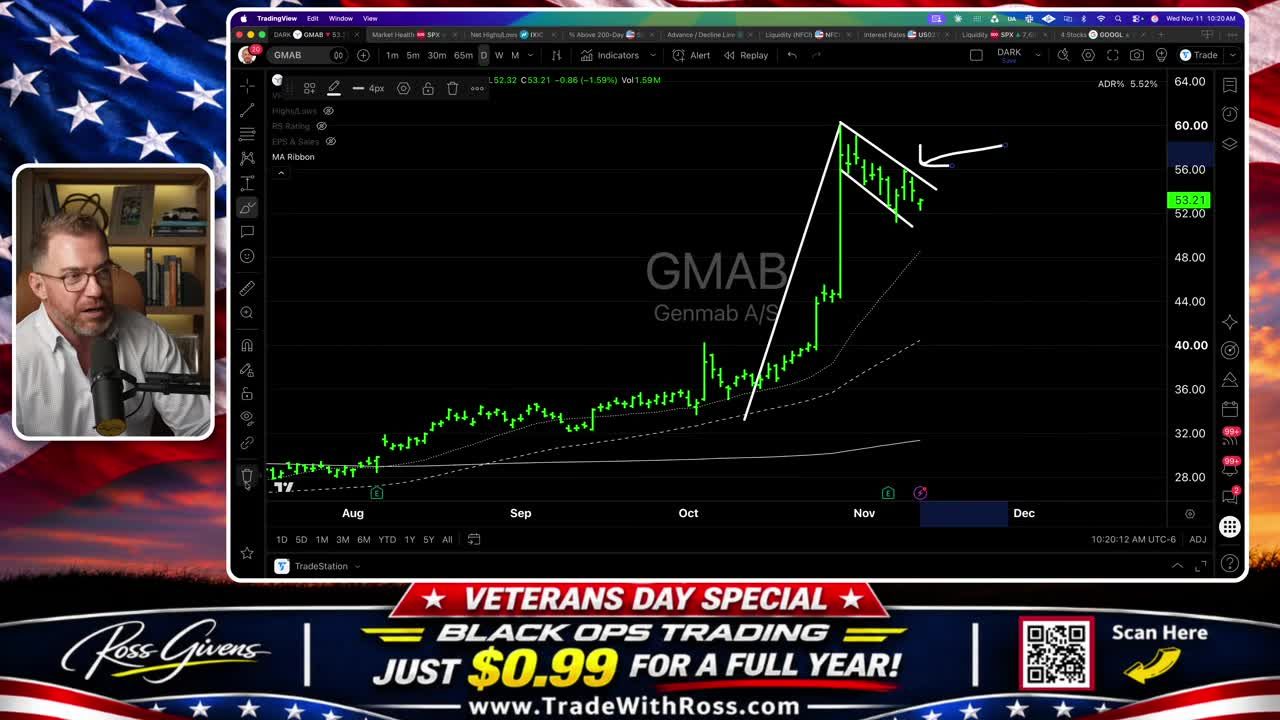
The idea is simple. A big run up, 50, 80, even 100-plus percent, forms the flag pole. Then the stock settles into a shallow, controlled retracement, the flag itself. The buy trigger comes when price breaks above the top of that flag.
GMAB went from 30 to 60 in a month, doubling in value. That kind of move doesn't happen off a good earnings report. Something real shifted with this company, and if that shift sticks, this move is just the start.
After a stock doubles, my instinct is to sell. But when other holders don't sell, when new buyers keep stepping in and preventing the dip, that's what forms the tight flag. It tells you smart money thinks there's more room to run.
I set an alert on the trend line itself rather than a fixed price, since the breakout level moves lower each day the flag continues. If GMAB breaks through, my stop goes at the low of the flag, around $51. Long at 54.50 with a stop at 51 puts my risk at 6.5%. GMAB has a 5.5% average daily range, so this is a high-alpha, fast-moving stock. Get in with a tight stop on something like this, and three, four, even five times your risk is realistic.
Are There AI Stocks to Buy After the Dip?
Selective, not aggressive
Not the beaten-down ones, not yet. The data center and NEO cloud names took 60 to 70% hits and need to rebuild a base before they're buyable again.
The real story is the S&P holding within 3% of all-time highs while all that damage happened underneath. Capital didn't leave the market, it moved, and right now it's moving into medical devices, pharmaceuticals, and biotechnology. That's where Pfizer and GMAB come in.
Is This a Rotation or a Collapse?
Thursday wasn't a market-wide collapse. It was a concentrated repricing of an AI trade that had run too far, too fast. The Texas data center moratorium gave traders a reason to take profits in NEO clouds and semis, and the damage was real: the Neocloud ETF down 58% since August, individual names cut by 60 to 70%.
But the S&P sitting within 3% of all-time highs while that happened underneath tells you something important. Money didn't flee, it rotated. Medical devices, pharmaceuticals, and biotechnology are the new leadership across the 40 sectors and subsectors I track.
That's why my new capital is going into Pfizer, with GMAB queued up on a breakout alert, instead of trying to catch the falling knife in NEO cloud names. One is a slow, clean large-cap setup with a tight 2.9% risk. The other is a high-momentum flag pattern with real upside if it breaks. If you're still screening for AI stocks to buy after the dip, remember that both of these sit where the strength is actually building, not where it used to be.
Get an entire year of live weekly mentoring sessions, my newsletter, indicators, bonus reports, tons more. Click the link and I'll see you in the next live session.
DISCLAIMER: Traders Agency does not offer financial advice. The information provided is for educational purposes only and should not be considered financial advice. Traders Agency is not responsible for any financial losses or consequences resulting from the use of the information provided. Trading carries inherent risks and may not be suitable for all individuals. You are advised to conduct your own research and seek personalized advice before making any investment decisions, recognizing the potential risks and rewards involved.
See more from Traders Agency on Google
Make us a preferred source and our market analysis will appear more prominently in your Google Search, Top Stories, and AI results.
Add to Preferred Sources