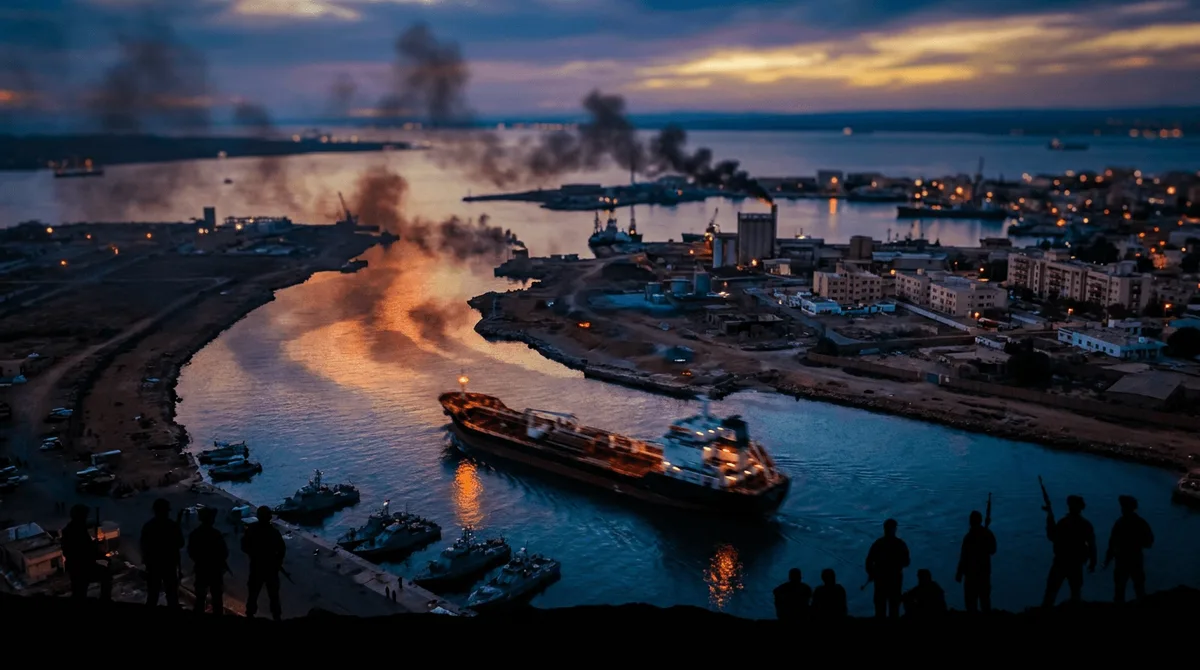
Iran-backed Houthi rebels took control of the Yemeni Red Sea port city of Mokha on Thursday, September 10, 2026, after fierce overnight clashes with pro-government forces, according to Houthi and Yemeni officials cited by the Associated Press. A Yemeni military source separately told AFP, in reporting carried by the BBC, that Houthi fighters also seized Zuqar Island in the Red Sea after a rocket barrage and a boat-borne ground assault. Oil benchmarks eased slightly Friday morning but remained on course to close the week above $100 a barrel for the first time since mid-May, according to CNBC.
What happened in Mokha
Mokha residents told the BBC that Houthi fighters moved into the city after fierce clashes with forces aligned with Yemen's internationally recognized government on Wednesday night, prompting many families to flee their homes. The takeover was confirmed to the AP by Ahmed Baash, a commander with the National Resistance Forces allied with the Yemeni government, and by Hazam al-Assad, a member of the Houthis' political bureau. The Houthis themselves did not immediately confirm capturing the city, though their Supreme Political Council said in a statement, carried by Houthi-run Al Masirah TV, that clashes had "ceased in the western coast districts after the expulsion of Saudi enemy mobilisations." CNBC said it could not independently confirm the AP report.
The BBC's account of the Zuqar Island seizure, attributed to a Yemeni military source speaking to AFP, does not appear in the AP-sourced reporting and remains a single-source claim at this stage.
The AP reported that Mokha represents the Houthis' biggest territorial gain since the 2022 truce that paused a civil war stretching back more than a decade; the city had long been held by government-aligned forces. Three doctors told the AP they fled a Mokha hospital after it was seized, speaking anonymously out of fear for their safety, and said other residents were heading south toward Aden, which remains under Saudi-backed control. One woman told BBC Arabic: "We fled with our children and kept running. We have no bedding, no home, nothing with us. Everything was destroyed within an hour. They didn't even give us a chance or warn us beforehand."
Proximity to Bab el-Mandeb and strategic geography
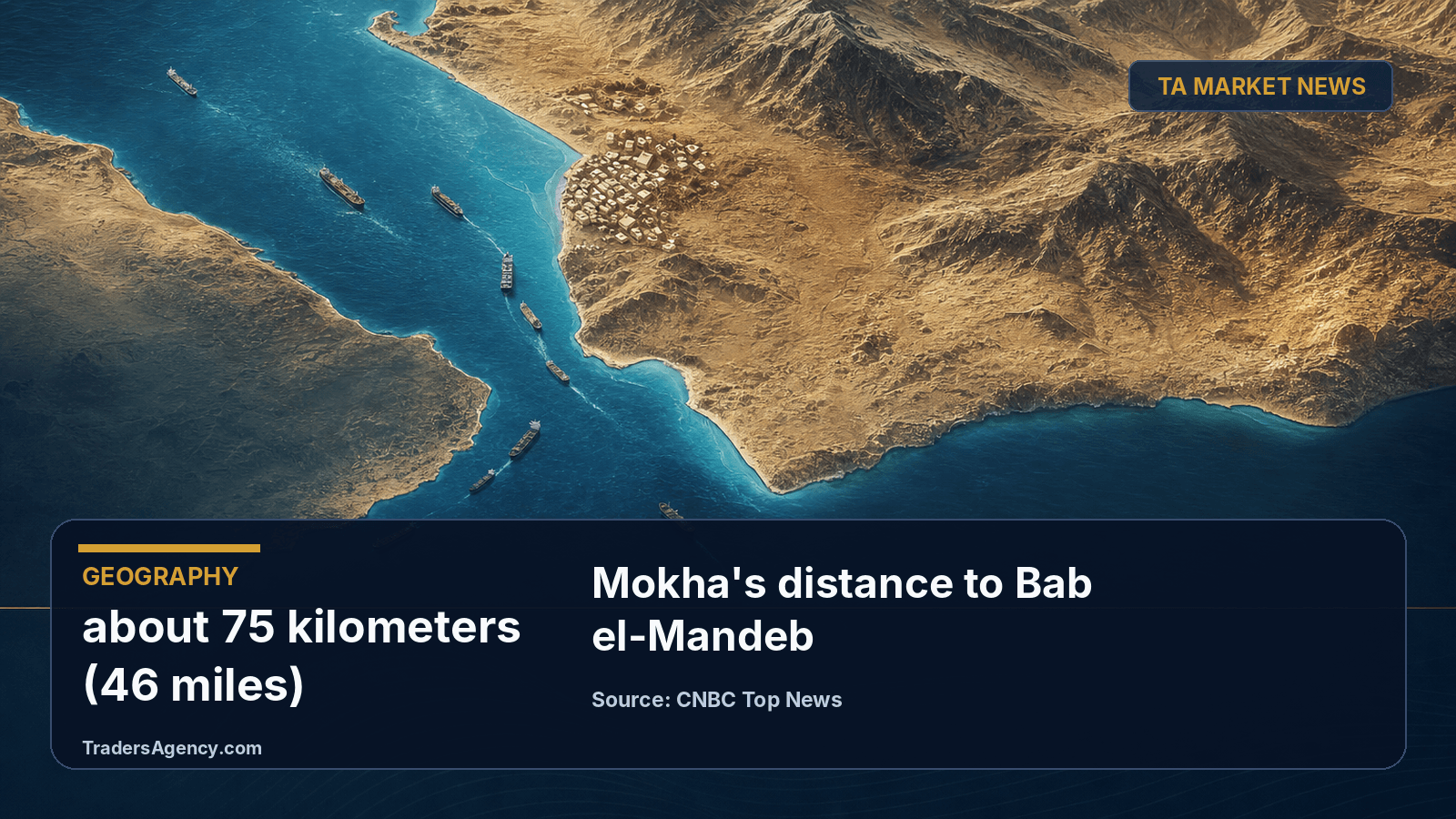
Sources differ slightly on distance: CNBC put Mokha about 75 kilometers (46 miles) north of the Bab el-Mandeb Strait, while the AP and NPR cited roughly 80 kilometers (50 miles). The strait connects the Red Sea to the Gulf of Aden and, per the AP, carries about 12% of the world's goods.
Analysts cited by CNBC framed the capture as a geographic escalation. Hamish Kinnear, principal Middle East and North Africa analyst at Verisk Maplecroft, called it a "major blow" to Saudi Arabia, saying in a research note that "the Houthis were already threatening Saudi shipping from previous positions, but their capture of Mocha opens up the possibility of further advances towards the Bab el-Mandeb coastline and a tighter grip on the chokepoint." Baraa Shiban, an associate fellow at the Royal United Services Institute in London, told the AP that the mountainous terrain around Taiz gives the Houthis a strategic area overlooking Yemen's west coast, and said the group could potentially make Red Sea shipping more hazardous by laying mines, drawing a comparison to tactics used by Iran's Revolutionary Guard in the Strait of Hormuz. Neither analyst, in the reporting cited, identified specific new missile or drone launch sites tied to Mokha or Zuqar Island.
Market reaction: oil holds above $100
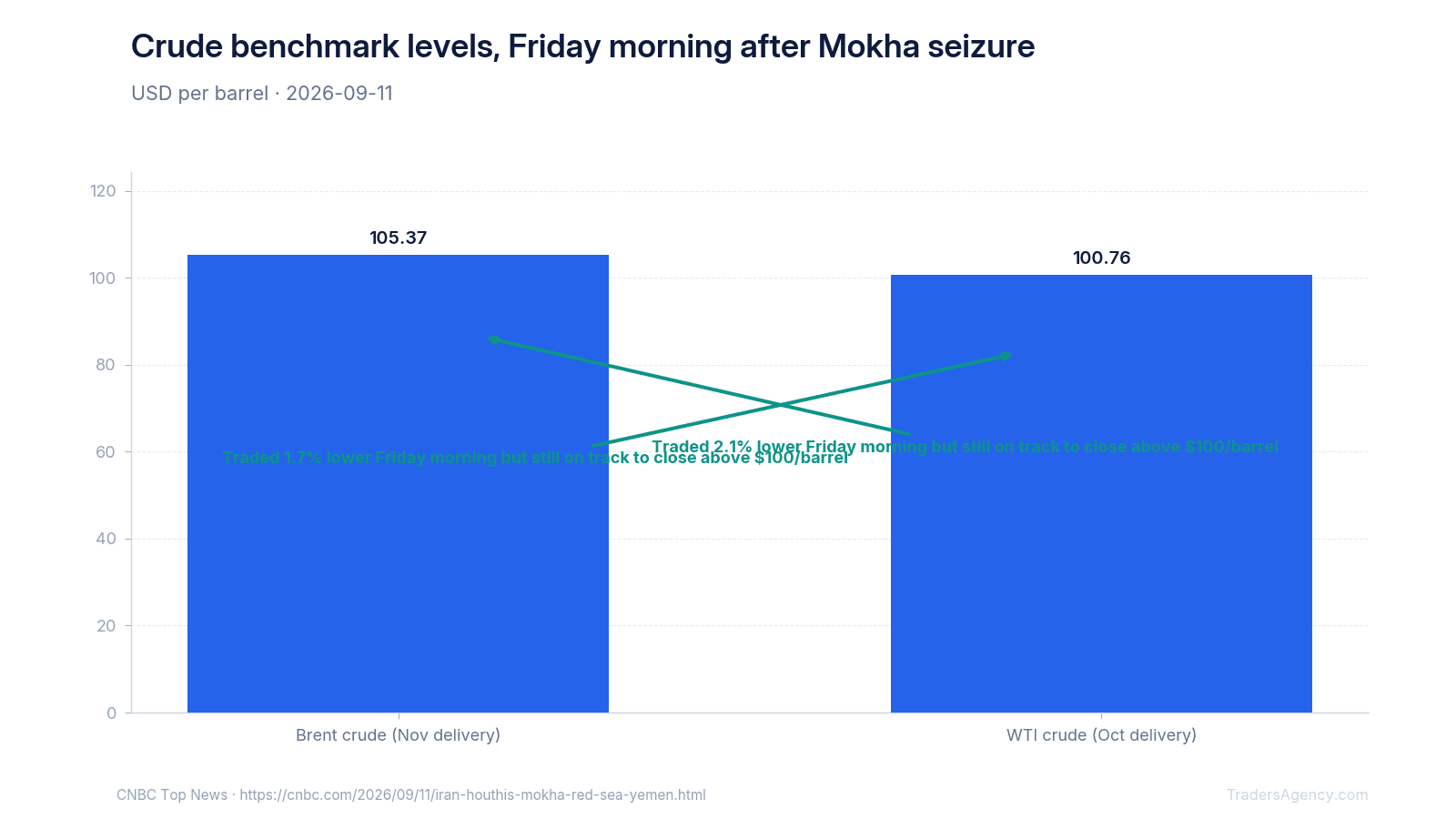
Brent crude futures for November delivery traded 2.1% lower at $105.37 a barrel Friday morning, while U.S. West Texas Intermediate futures for October delivery were 1.7% lower at $100.76, CNBC reported. That leaves a gap of $4.61 between the two benchmarks, a difference of roughly 4.6% relative to the WTI price (our calculation: $105.37 minus $100.76, divided by $100.76). Both benchmarks were still on track to finish the week above $100 for the first time since mid-May, according to CNBC.
ING strategists Warren Patterson and Ewa Manthey wrote in a Friday research note cited by CNBC that "Saudi energy infrastructure and crude oil exports from the Red Sea are increasingly at risk, with the Houthis in Yemen targeting Saudi Arabia," adding that the Mokha takeover "increases the threat to shipping around the Bab al-Mandeb Strait." Kinnear told CNBC a new truce looks unlikely for now because both Tehran and Washington believe time favors them, and that "oil and gas prices, and more specifically refined products such as diesel, will continue to tick upwards while that remains the case, even if US convoys and Strait of Hormuz export alternatives cushion the price impact."
On shipping volumes, the AP reported that transits through the Bab el-Mandeb have fallen by about 60% since the Houthis began attacking vessels there in late 2023, prompting many companies to abandon the route; the strait typically carries about 12% of the world's goods, according to the AP. Transit volumes briefly rose this year after Saudi Arabia redirected oil by pipeline to the Red Sea port of Yanbu as an alternative to the Strait of Hormuz, but Lloyd's List Intelligence told the AP that "renewed Houthi threats have curtailed" that activity.
Saudi-led coalition response and fighting elsewhere
The spokesman for the Saudi-led coalition said Wednesday evening it would respond to a series of Houthi missile and drone attacks on the southwestern Saudi cities of Khamis Mushait, Abha and Jazan, though the BBC reported there was no immediate Saudi military comment on the Mokha fighting itself. Saudi Arabia's U.N. ambassador, Abdulaziz Alwasil, said the kingdom remains supportive of peace in Yemen but would "take all measures necessary to deter Houthi attacks," according to the AP.
The BBC reported that Tuesday's Houthi drone and missile barrage on southern Saudi Arabia injured 73 civilians and sparked fires at several oil facilities, temporarily halting operations, according to Saudi authorities. Houthi military spokesman Yahya Sarea said Saudi warplanes carried out 64 strikes across Taiz, Hudaydah, Marib and Jawf in the prior 24 hours, per the BBC; separately, Houthi-run Al-Masirah TV claimed 40 Saudi-backed airstrikes across similar provinces, a claim the AP said it could not independently verify. Yemeni government forces launched airstrikes targeting Houthi reinforcements west of Taiz, according to several Mokha residents cited by the AP, and the Yemeni military urged civilians to avoid roads between Taiz and Mokha. The AP also reported that the Houthis seized the al-Shaqira area in Taiz province, an important supply route for government forces in south Hodeida, according to a Yemeni army trooper and a member of Saudi-backed forces.
Rashad al-Alimi, head of Yemen's Presidential Leadership Council, urged Arab states and other countries to help protect Yemen's coasts and restore state control, the BBC reported. Tarek Salah, leader of the pro-government National Resistance Forces, said he had moved his west coast command centre to a "safe location" after his forces paid "a heavy price in recent days in the face of a Houthi offensive that was planned and supported by Iran." U.N. special envoy Hans Grundberg told an emergency Security Council meeting Thursday that the renewed fighting "effectively marks the end of the relative calm that Yemen has experienced for over four years since the U.N.-brokered truce," according to the AP.
Farea al-Muslimi, a research fellow at Chatham House specializing in Yemen and the Gulf, told the AP that the advance on Mokha potentially gives Iran added leverage in its months-long standoff with Washington, a point CNBC also raised in framing the seizure as bringing Tehran closer to another point of leverage in that conflict.
Bottom Line
The Houthis' capture of Mokha, reported by the AP and relayed by CNBC, and the separate AFP-sourced claim that Zuqar Island was also seized, mark what the AP describes as the group's biggest territorial gain since the 2022 truce. Oil markets have taken note: Brent and WTI both traded lower Friday morning but remained on course to end the week above $100 a barrel for the first time since mid-May, according to CNBC. Analysts quoted by CNBC and the AP interpret the move as expanding Houthi leverage over Red Sea shipping and over Saudi Arabia specifically — Verisk Maplecroft's Hamish Kinnear called it a "major blow" to the kingdom — though the reporting reviewed does not confirm a Saudi-led counter-offensive beyond the coalition's stated intent to respond to earlier missile and drone attacks. The situation remains fluid, with government forces reportedly still striking Houthi reinforcements west of Taiz and U.N. envoy Hans Grundberg warning that the renewed fighting "effectively marks the end of the relative calm" Yemen has seen since the U.N.-brokered truce.
DISCLAIMER: Traders Agency does not offer financial advice. The information provided is for educational purposes only and should not be considered financial advice. Traders Agency is not responsible for any financial losses or consequences resulting from the use of the information provided. Trading carries inherent risks and may not be suitable for all individuals. You are advised to conduct your own research and seek personalized advice before making any investment decisions, recognizing the potential risks and rewards involved.
- CNBC Top News: Houthis seize Yemen port, raising threat to oil and shipping · accessed Sep 11, 2026
- NPR / Associated Press: Iran-backed Houthi rebels seize strategic Red Sea port in Yemen · accessed Sep 11, 2026
- BBC News: Yemen's Houthis seize strategic Red Sea port of Mokha · accessed Sep 11, 2026
See more from Traders Agency on Google
Make us a preferred source and our market analysis will appear more prominently in your Google Search, Top Stories, and AI results.
Add to Preferred Sources