

Copper is sitting at fresh all-time highs, and Wall Street is finally waking up to a massive supply shortage. Money is piling into this trade. I believe copper is going to double, if not triple, from current levels. The recent Goldman Sachs copper target hike is just one signal that the street is scrambling to catch up.
The biggest mines on the planet are missing production. The United States is sucking up physical copper at a pace we have never seen before. This is just the beginning of one of the biggest commodity trends of the decade.
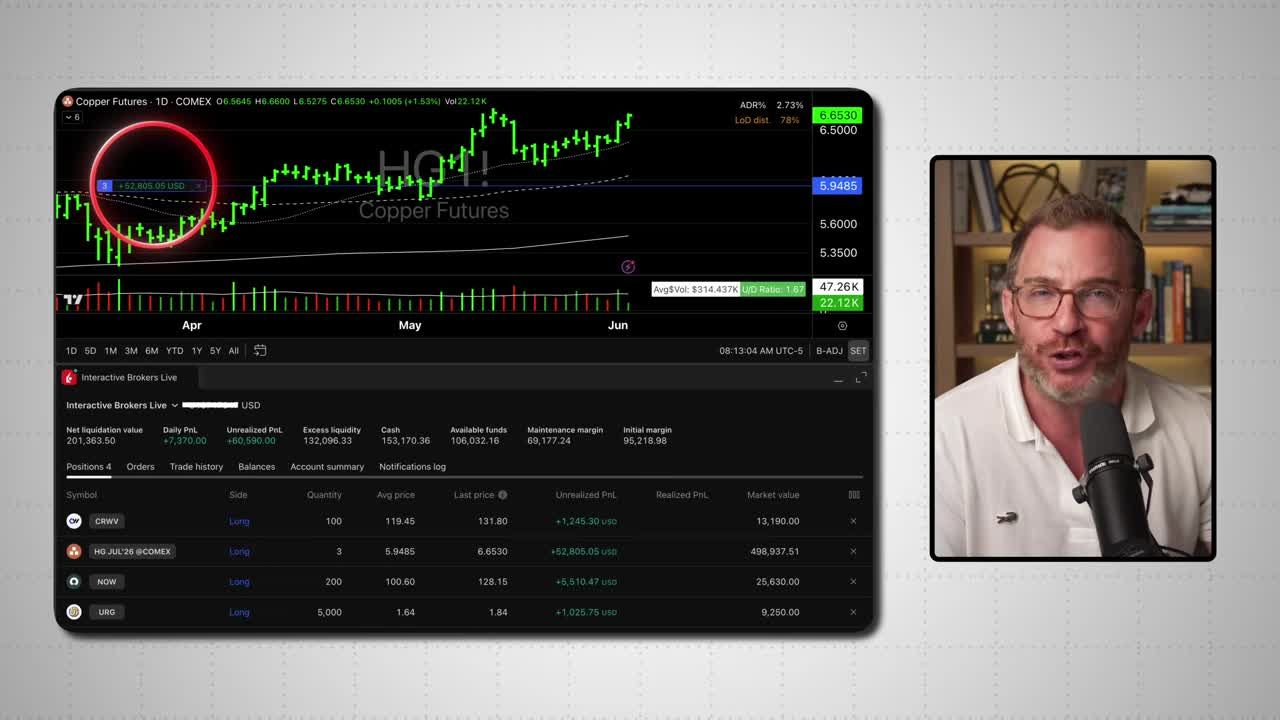
I currently own $75,000 of copper via three option contracts in a Comex exchange. Right now, I am up around $52,000 on the trade. I am not selling a single pound.
This is still the early stages.
What Is the Goldman Sachs Copper Target and Why Did Wall Street Raise It?
Bottom Line: Copper's supply deficit is structural, not cyclical. With Goldman Sachs and Citi both lifting price targets well above current spot levels, and US import demand hitting historic highs, the commodity is being repriced as a strategic asset. The trade thesis rests on mines underdelivering and demand accelerating, a combination that price targets alone do not fully capture yet.
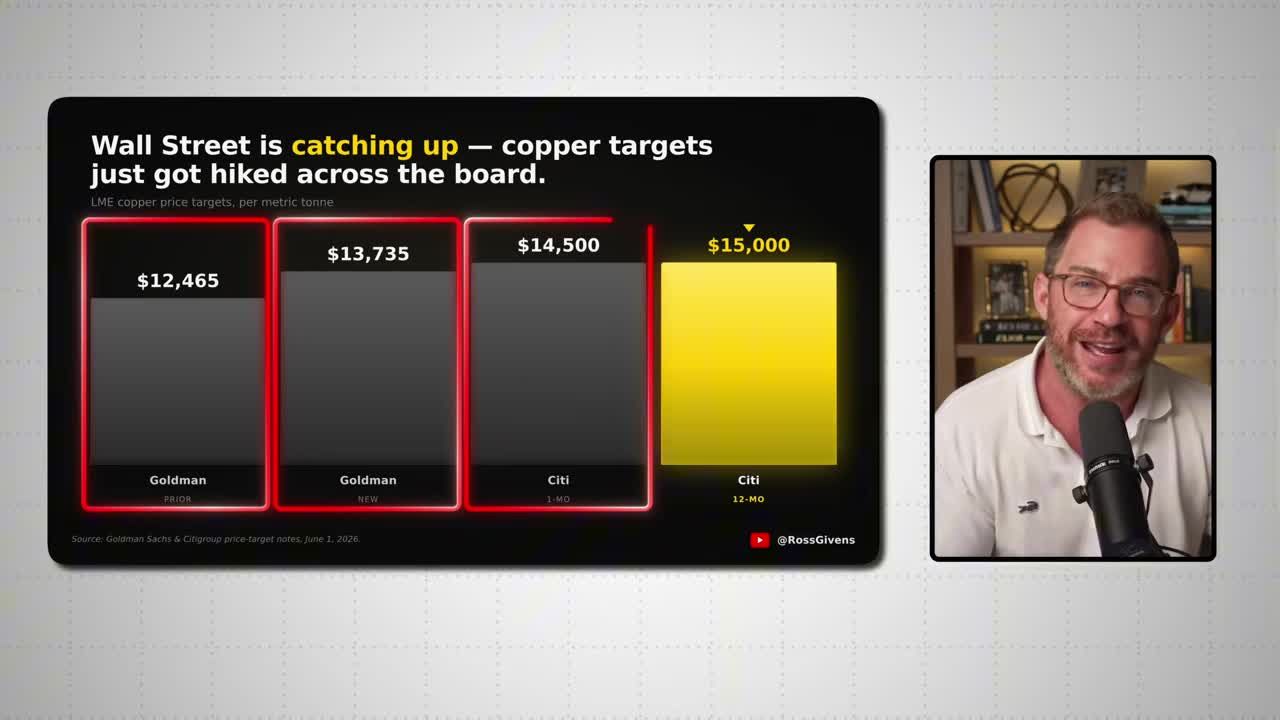
On Monday, Goldman Sachs raised its year-end 2026 LME copper target to $13,735 a ton, up from $12,465 a ton previously. That works out to about $6.25 a pound. Citigroup went even bigger, calling for $14,500 a ton this month (about $6.60 a pound) and $15,000 a ton within a year.
Wall Street raising price targets is not what makes a market.
If you think these analysts at Citigroup and Goldman are trying to help you, you are sorely mistaken. These guys are almost always late. Not because they are dumb, but because they are working on behalf of the banks' traders.
Think about their recent track record. These are the same banks that called for copper to "fade" once tariff clarity arrived. They told everyone it would go down. Why? To get you to sell so they could buy more on the cheap.
The price did not fade. It rallied.
Now they are updating their spreadsheets to match the price action. They are playing catch-up to try and save face.
They are chasing a market that is running away from them.
Record US Copper Imports
So why are they catching up now? In the first quarter of this year, US copper imports more than doubled. We pulled in 533,000 tons of physical copper, more than twice what we imported in the first quarter of last year.
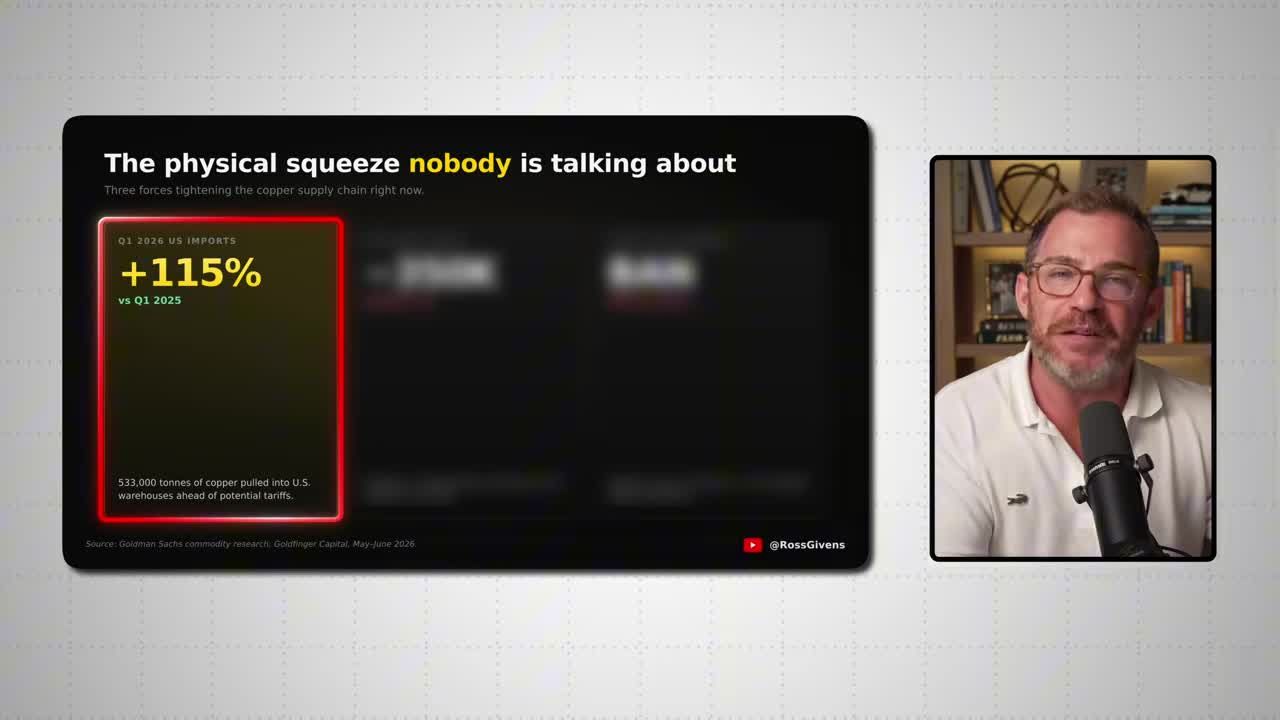
This filled the reserves. It made it look like we had ample supply. And for a little bit, we did.
But the underlying reason for this aggressive importing reveals a much tighter market. The US is stockpiling ahead of potential refined copper tariffs. Buyers are vacuuming up the physical metal, dragging it onto American soil, and storing it in ECM warehouses.
This creates a massive problem for the rest of the globe.
The analysts are not waking up to this reality, or at least they refuse to admit it. This is exactly what a slow-motion squeeze looks like before it gets crazy.
How Are Mine Failures and the Acid Ban Affecting Copper Supply?
You do not need to overcomplicate this stuff. It is all about supply and demand. Right now, the supply side is broken.
Goldman just cut its 2026 global mine supply forecast by 350,000 tons. The reason comes down to two specific mines.
Grasberg, Indonesia. The second largest copper miner on the planet. Freeport-McMoRan declared force majeure after a serious incident. They just cut their 2026 production guidance by 35 percent. They are not getting back to full capacity until 2028.
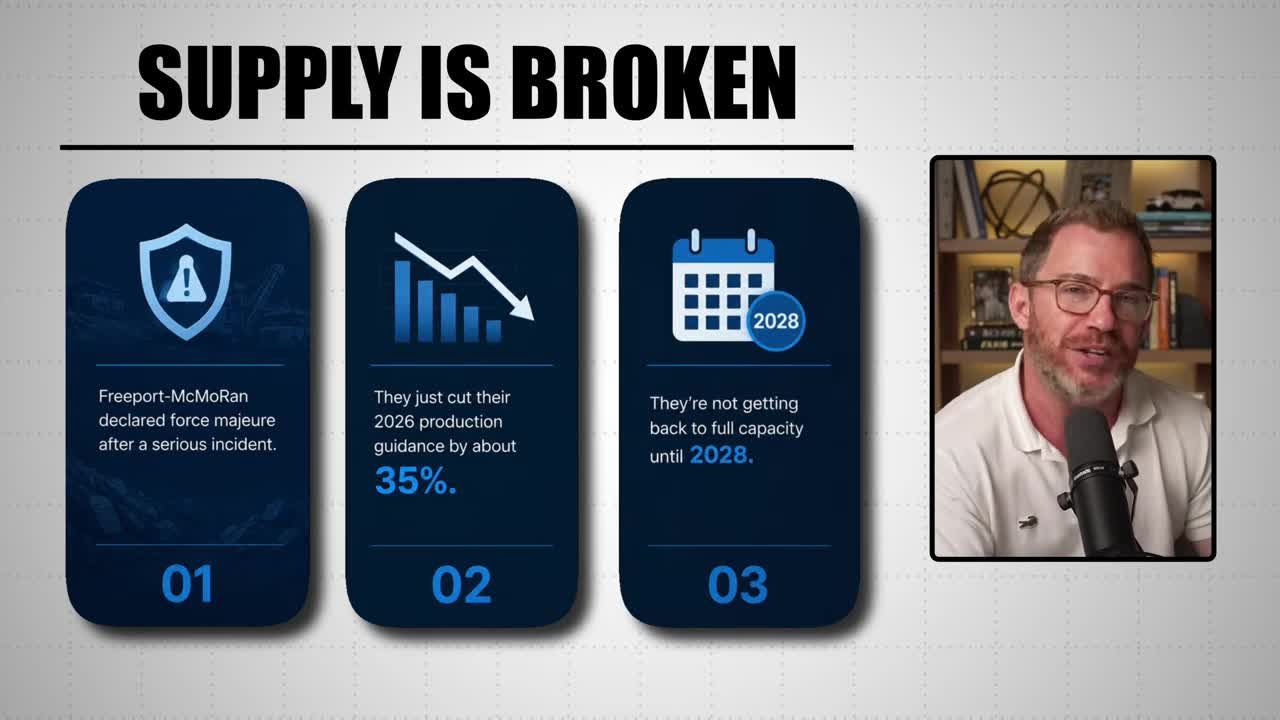
Kamoa-Kakula, Democratic Republic of Congo. After a seismic event last year, Ivanhoe slashed their 2026 guidance from roughly 400,000 tons down to 300,000 tons. Also not back to full capacity until 2028.
Two of the most important copper mines in the world are both broken. Neither one is getting back to full capacity for two years.
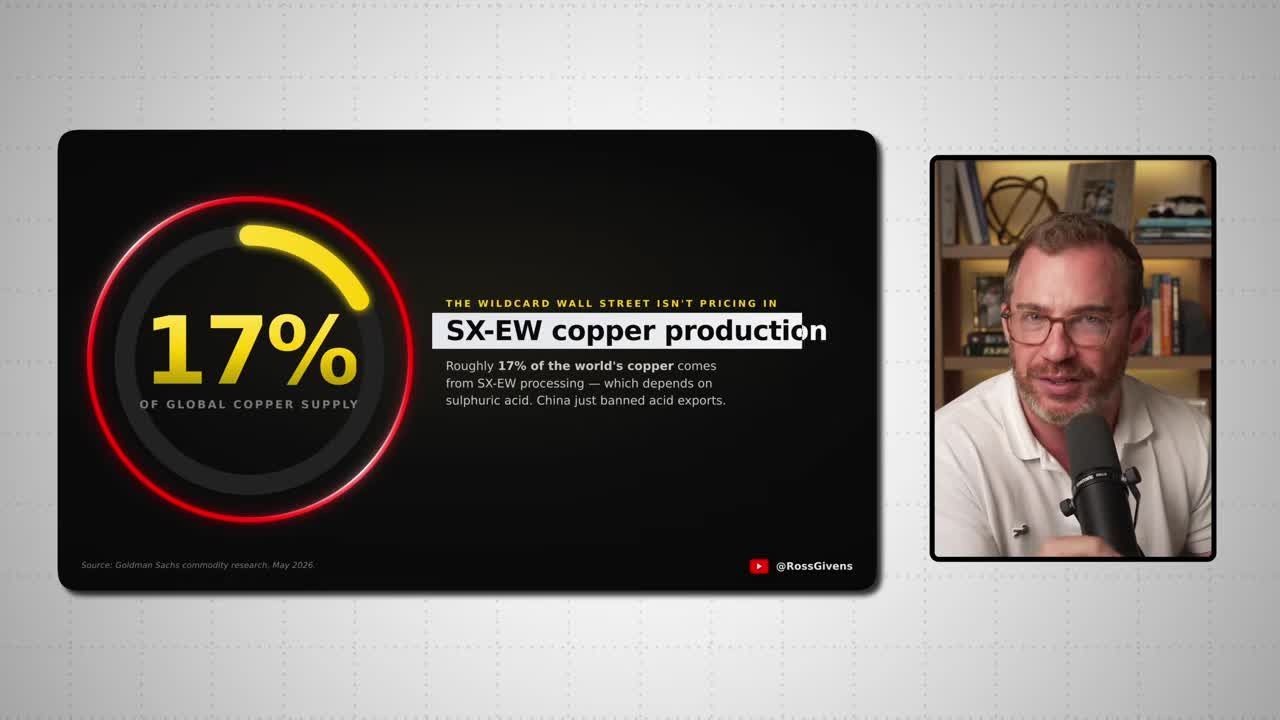
Now stack a wildcard on top that is just starting to get priced in: sulfuric acid. About 17 percent of global copper supply comes from SX-EW processing. That process needs acid. China just put an export ban on sulfuric acid that went into effect May 1st.
And logistics through the Strait of Hormuz is still a mess. So if the availability of sulfuric acid tightens, which it is, that means even less new copper coming out of the mines.
This could be a perfect storm.
Get an entire year of live weekly mentoring sessions, my newsletter, indicators, bonus reports, tons more. Click the link and I'll see you in the next live session.
Join my Black Ops Trading ClubCopper Is Now a Strategic Asset
Most people do not understand this yet. Copper is no longer just another industrial metal that goes up and down with the business cycle.
Copper has become strategic.
Everything driving the modern economy requires massive amounts of this metal: grid security, reshoring production back to the US, defense, AI data centers, the electrification of pretty much everything, massive transmission infrastructure to get our grid up to speed. All of it runs on copper. Thousands and thousands of pounds of it.
The real question is no longer how much copper the world needs. The question is where on the planet that copper is actually going to come from.
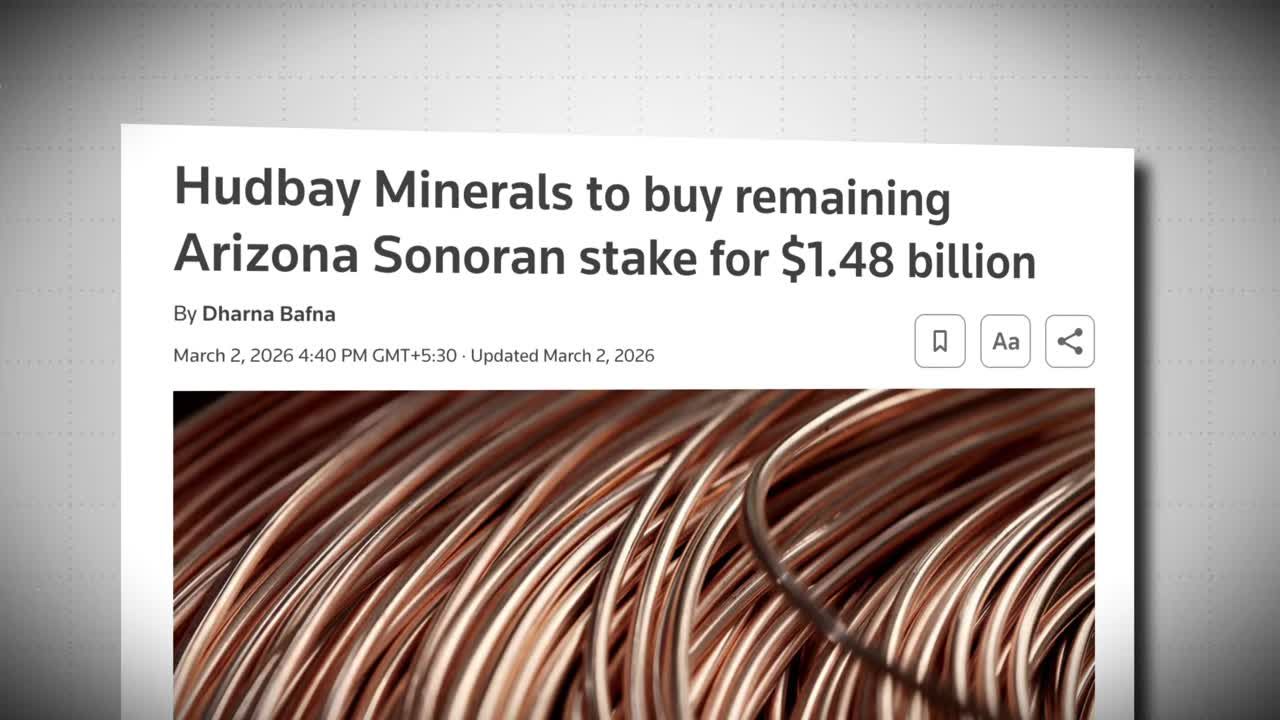
That is why Hudbay Minerals just paid $1.5 billion to acquire Arizona Sonoran Copper. That is not a one-off. That is the starting gun for a wave of M&A across a tiny short list of safe jurisdiction copper assets.
Should You Use Stocks or Options to Get Copper Exposure?
You do not have to bet the farm on the futures market to profit from this trend. You do not have to buy 25,000 pounds at a time like I am doing with my Comex contracts.
You can buy the mining companies that mine the copper. Their profits will increase as the price of the metal does. And there are two I have been watching closely. Super clean setups. Both are triggering fresh breakout moves higher right now.
Freeport-McMoRan (FCX)
FCX is the number one domestic producer and the big leader in copper. The stock is grinding higher right alongside the metal.
It is the exact pattern I look for. A huge 60 to 70 percent move up through December and January, then it stalls around the $70 mark and forms a textbook shallow consolidation. Supply is being sucked out of the market. Now it is breaking out to fresh highs through about $70 a share. I entered this position coming through about $71 a share.
Hudbay Minerals (HBM)
This is a stock I bought back in December. It shows a massive sign of strength.
A leadership stock has to exhaust and absorb supply before it is fresh to run higher. We saw a three to four month consolidation from $18 to $30. As the bulls tightened their grip, the pullbacks became less and less and less. The stock coiled its energy and is now breaking out.
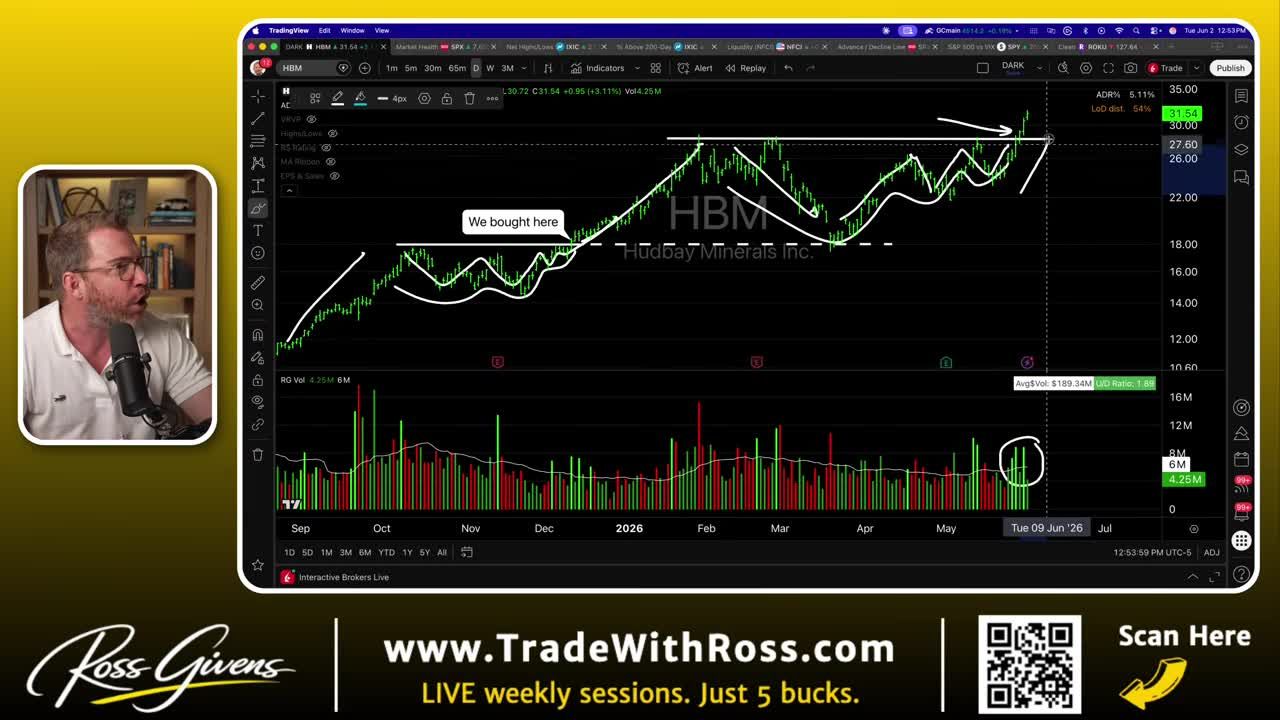
And the volume tells the story. Days with double the average volume on the breakout. Exactly what you want to see. These charts are what leadership stocks do at the beginning of a new uptrend. They push through resistance into new highs on above-average volume. Classic textbook breakout.
What Kills the Bull Case?
What about the risks? What conditions would signal the bull thesis is broken?
A major recession would obviously hurt industrial demand, just like it would hurt demand for just about everything else.
Alternatively, the administration could have a change of heart and pull all the tariffs. In that scenario, we could see a bunch of physical copper getting re-exported out of the US, since it would no longer make sense to pay to store it here.
To me, neither of those looks very likely.
The data center buildout is not something I can imagine any of the tech companies slowing down and losing the lead. Google, which prints money, is selling another $80 billion worth of new stock just to finance more data center construction.
And Trump and his administration, as we know, are in love with tariffs. It has been the number one weapon of this administration. I just cannot see them changing course here.
First Inning of a Generation: Why the Goldman Sachs Copper Target Is a Lagging Indicator
The wind is finally shifting for North American mining. After 20-plus years of headwinds and underfunded production, this industry is staring at a tailwind for the first time in a generation.
We now have government support for critical minerals. Permitting is being reformed to make it cheaper and faster to get new mines up and running. And there is now ample financing available for these critical minerals.
The Goldman Sachs copper target upgrade is just a lagging indicator of a supply squeeze that is already well underway. Position yourself in the right assets, manage your risk, and let the supply shortage do the heavy lifting.
For the record, this is not investment advice. I was a vice president at JPMorgan Chase. I have held a securities license, been a licensed financial advisor, and I have been trading for 20 years. I let all my fancy licenses expire because it is a heck of a lot more fun helping traders directly than wearing a necktie every day and dealing with compliance and KYC rules. But I do have to give you that disclaimer.
Get an entire year of live weekly mentoring sessions, my newsletter, indicators, bonus reports, tons more. Click the link and I'll see you in the next live session.
Key Takeaways
- Goldman Sachs raised its year-end 2026 LME copper target to $13,735 per ton (roughly $6.25/lb), up from $12,465 per ton previously.
- Citigroup went further, projecting $14,500 per ton near-term and $15,000 per ton within 12 months, approximately $6.60 to $6.80 per pound.
- A $75,000 copper position via three Comex option contracts entered near $5.9485 per pound is now up over $52,800 in unrealized gains as price trades near $6.65.
- Two major mines are missing production targets and a US acid ban is compounding the supply crunch, tightening an already strained global copper market.
- Record US physical copper imports signal that domestic demand is outpacing supply at a pace not seen before, reinforcing the structural bull case.
DISCLAIMER: Traders Agency does not offer financial advice. The information provided is for educational purposes only and should not be considered financial advice. Traders Agency is not responsible for any financial losses or consequences resulting from the use of the information provided. Trading carries inherent risks and may not be suitable for all individuals. You are advised to conduct your own research and seek personalized advice before making any investment decisions, recognizing the potential risks and rewards involved.
See more from Traders Agency on Google
Make us a preferred source and our market analysis will appear more prominently in your Google Search, Top Stories, and AI results.
Add to Preferred Sources