

If you want to buy SpaceX shares, ignore the rockets and focus on the calendar.
SpaceX is officially trading. The initial retail frenzy is over. What comes next are forced index buying and massive insider lockup expirations, and both will create predictable price swings between now and the end of the year.
If you are looking to build a long-term position, there is one specific week when this stock will likely be the cheapest. Here is the exact data you need to time your entries and exits.
What Happened on SpaceX's First Day of Trading?
The first day was driven by an extreme supply and demand imbalance. The IPO price was set at $135 a share. The first trade came in at $150, and the stock topped out around noon at $176, giving the company a peak valuation of $2.31 trillion.
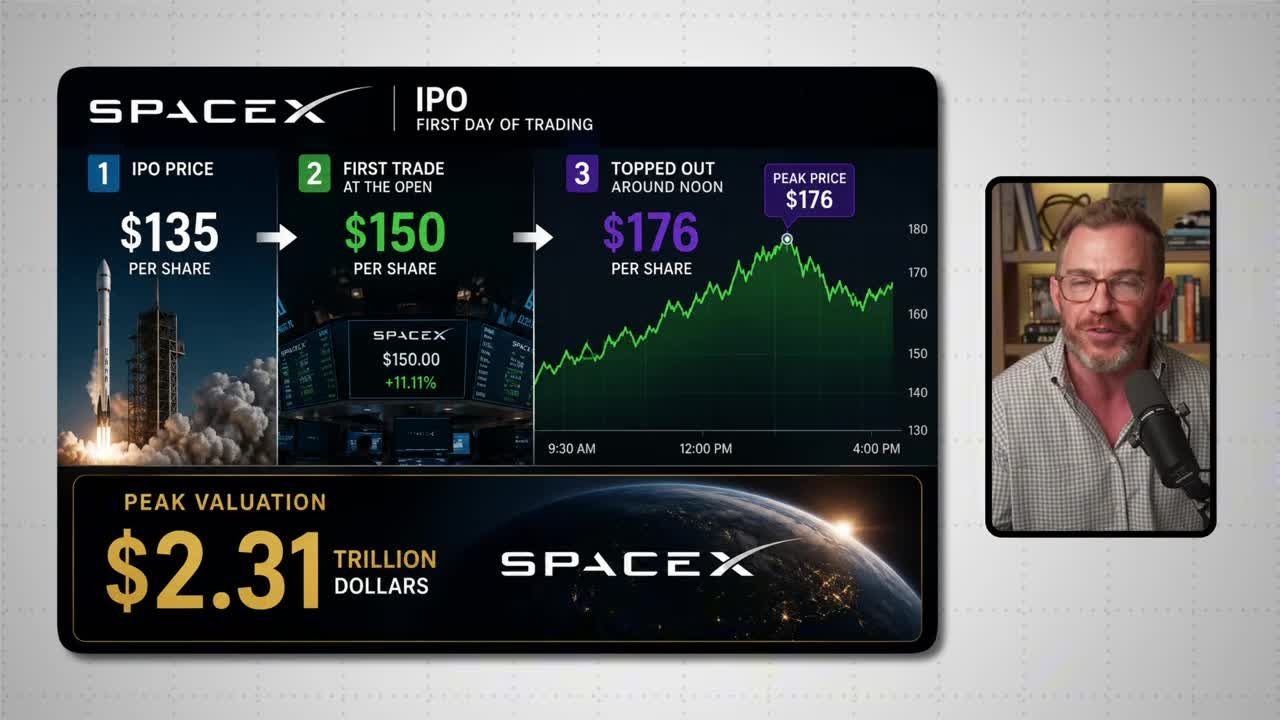
The underwriters allocated $20 billion worth of stock to retail investors through five brokerages. They had $100 billion worth of orders. That left an $80 billion chunk of demand waiting on the open market, which is exactly why the stock ran up so aggressively on day one.
My Fidelity IPO Allocation
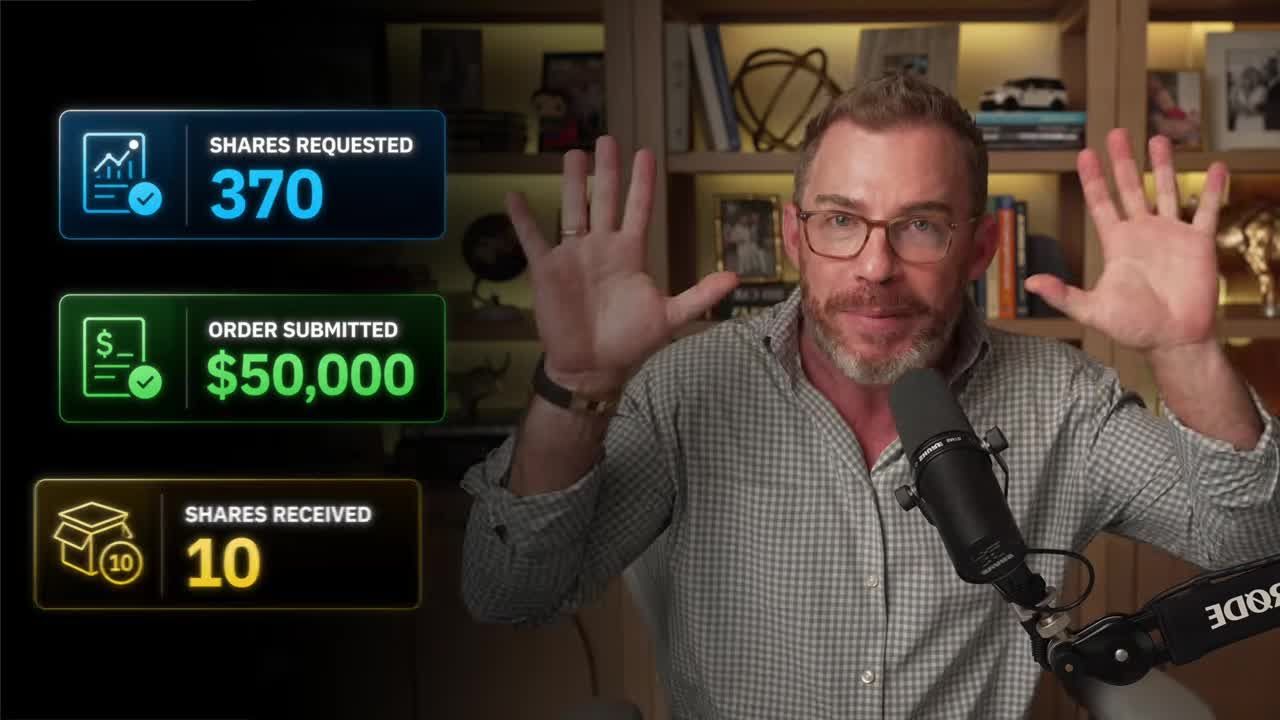
I applied to buy 370 shares of the IPO through Fidelity for roughly $50,000. We are never guaranteed the full allocation. I ended up receiving a whopping 10 shares.
Since the allocation was so small, I decided to day trade the stock instead. Here is exactly how the opening action played out:
- Bought 200 shares at $151 right out of the gate with a standing stop limit order
- Added another 100 shares coming out of a high tide flag formation
- After about the first 40 minutes, a shallowing breakout move developed, so I tacked on another 100 shares at $167
- Cashed it all out at $172.77
The Calendar Dates That Matter If You Want to Buy SpaceX Shares
Forced buying and insider unlocks will dictate the next major moves.
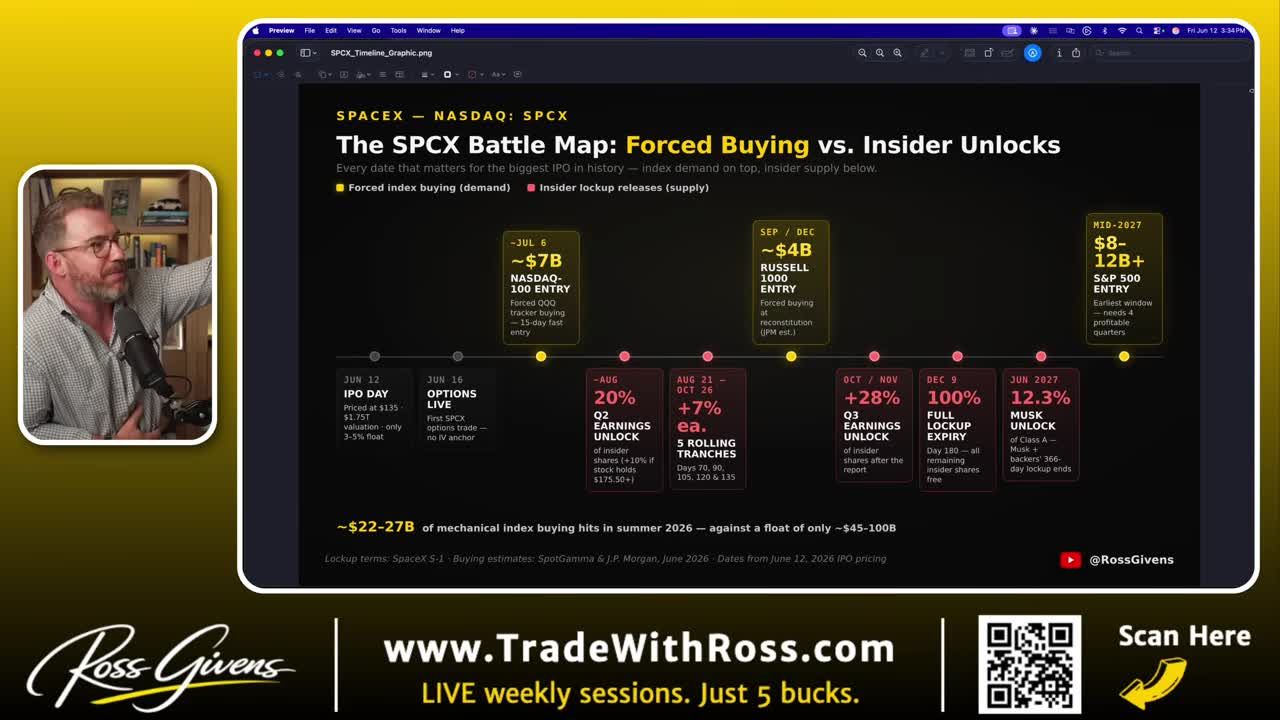
The next move in SpaceX's stock price will be dictated by forced buying. Options (calls and puts) begin trading on Tuesday, June 16th. The stock is being added to the NASDAQ 100 on a 15-day fast track on July 6th.
Typically, an IPO goes through a seasoning process of six to 12 months before being added to a major index like the NASDAQ 100 or the S&P 500. This allows for proper price discovery so investors can grapple with what the company is worth.
They changed all the rules for SpaceX.
When the stock is added to the index on July 6th, the QQQ, mutual funds, and passive funds tracking the NASDAQ will be forced to buy it. SpaceX only offered $85 billion worth of their stock out of the $1.77 trillion valuation. Based on the current float and a three times float multiplier, it will only make up about 0.5% of the NASDAQ 100.
This July 6th date is the last time you will see massive buying demand come in.
Get an entire year of live weekly mentoring sessions, my newsletter, indicators, bonus reports, tons more. Click the link and I'll see you in the next live session.
Join my Black Ops Trading ClubWhen Is the Best Time to Buy SpaceX Shares?
If you want to buy SpaceX shares at a discount, mark your calendar for the first week of August. This is when the first massive wave of insider selling will flood the market and drive the price down.
Right now, the other $1.7 trillion of this stock cannot be sold. It is held in lockup, meaning big insiders and early investors are restricted from selling. Historically, companies do this at the six-month or 12-month mark, resulting in one day where everyone sells and the stock gets massively hammered.
SpaceX staggered these unlocks into tranches. Here is the breakdown of the selling pressure coming to market.
1. The August Earnings Dump
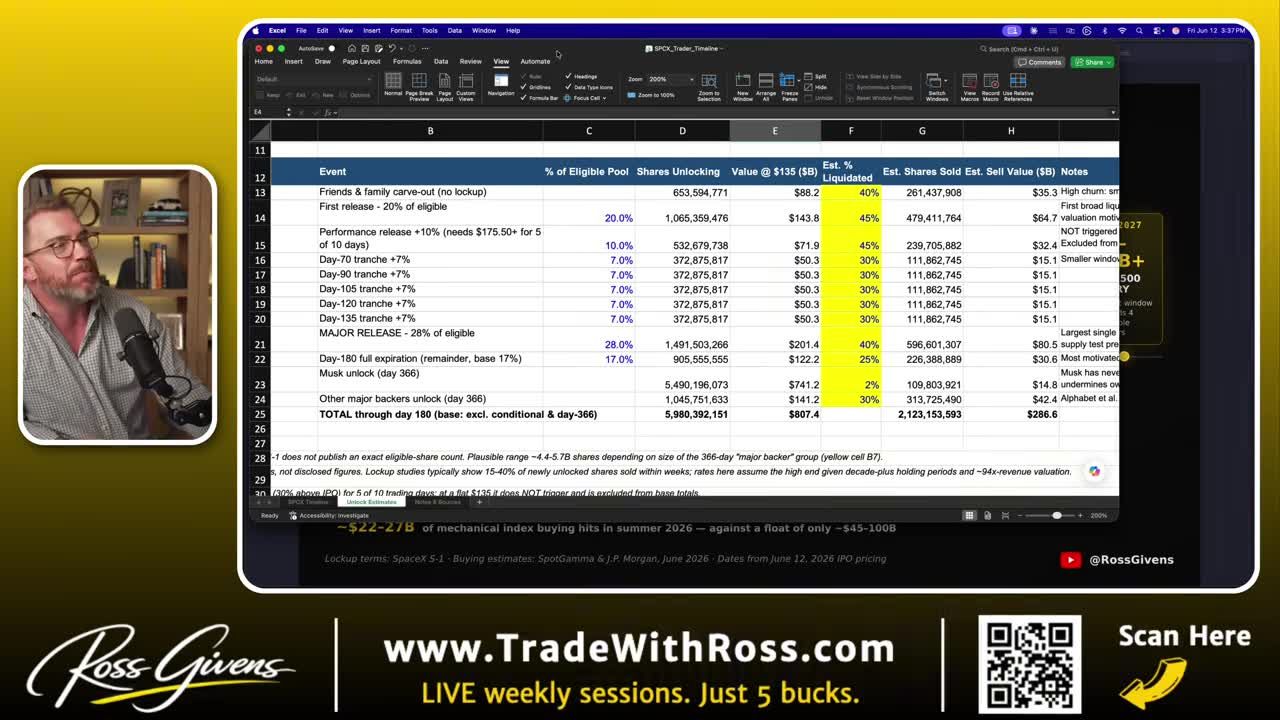
Two days after the second quarter earnings report drops in early August, 20% of the eligible shares will unlock. Based on the $135 IPO price, that is roughly $64 billion to $70 billion worth of stock hitting the market.
You will not miss this date. It will be on every major news cycle.
2. The 30% Price Clause
SpaceX added a specific clause. If the stock is up at least 30% from the IPO price, sitting above $175.50, another 10% unlocks. That adds another $32 billion to $40 billion in selling pressure.
3. The Venture Capital Exodus
Think about who is selling. VC funds that have held this for 10-plus years. They are sitting at a 90x revenue multiple that is nowhere near justified. Companies like Google and Microsoft invested in early A or B rounds. They are up thousands and thousands of percent, billions and billions of dollars. They will dump their shares regardless of the price.
Whether the stock is at $170 or $200 or $90, they don't care. They have made an absolute mountain of money either way.
Where Should Current SpaceX Holders Consider Selling?
If you are holding IPO shares right now, you need an exit strategy. Most brokers enforce a 15 to 60-day hold on these shares. I would look to exit going into July 6th.
The NASDAQ inclusion is a classic buy the rumor, sell the news situation. The $8 billion to $9 billion in forced buying will largely happen through things like dark pools, which don't actually move the market.
Everyone knows it is getting added to the NASDAQ index. Retail traders are buying in anticipation of that and driving the price too high. It is going to correct right afterward.
The Full Picture Through Year-End
Do not rush to buy SpaceX shares today. The initial retail demand is satisfied, and the upcoming lockup expirations will create a massive wave of sellers.
After the August dump, smaller 7% tranches will unlock at 70, 90, 105, 120, and 135-day periods. Each of these will release about $15 billion. These are not going to move the needle like the big August window.
The next major release comes in the first week of November, after the third-quarter earnings report, dumping another roughly $80 billion onto the market. At 180 days, the rest can be released. Musk's lockup is a year from now. He has $740 billion and is not going to sell any of it.
Wait for the mid-to-late August window to enter your long-term positions.
Get an entire year of live weekly mentoring sessions, my newsletter, indicators, bonus reports, tons more. Click the link and I'll see you in the next live session.
Key Takeaways
- SpaceX IPO priced at $135, opened at $150, and peaked at $176 on day one, hitting a $2.31 trillion valuation driven by $80 billion in unmet retail demand.
- A $50,000 IPO application for 370 shares through Fidelity resulted in only 10 shares being filled, illustrating how severely retail allocations were rationed.
- The first major lockup expiration drops roughly $80 billion in insider supply onto the market in early November, after the Q3 earnings report.
- The mid-to-late August window is identified as the best entry point for long-term buyers, when lockup-driven selling pressure is expected to peak.
- Elon Musk holds $740 billion in SpaceX shares with a one-year lockup and is not expected to sell, meaning his position is not a near-term supply risk.
DISCLAIMER: Traders Agency does not offer financial advice. The information provided is for educational purposes only and should not be considered financial advice. Traders Agency is not responsible for any financial losses or consequences resulting from the use of the information provided. Trading carries inherent risks and may not be suitable for all individuals. You are advised to conduct your own research and seek personalized advice before making any investment decisions, recognizing the potential risks and rewards involved.
See more from Traders Agency on Google
Make us a preferred source and our market analysis will appear more prominently in your Google Search, Top Stories, and AI results.
Add to Preferred Sources