
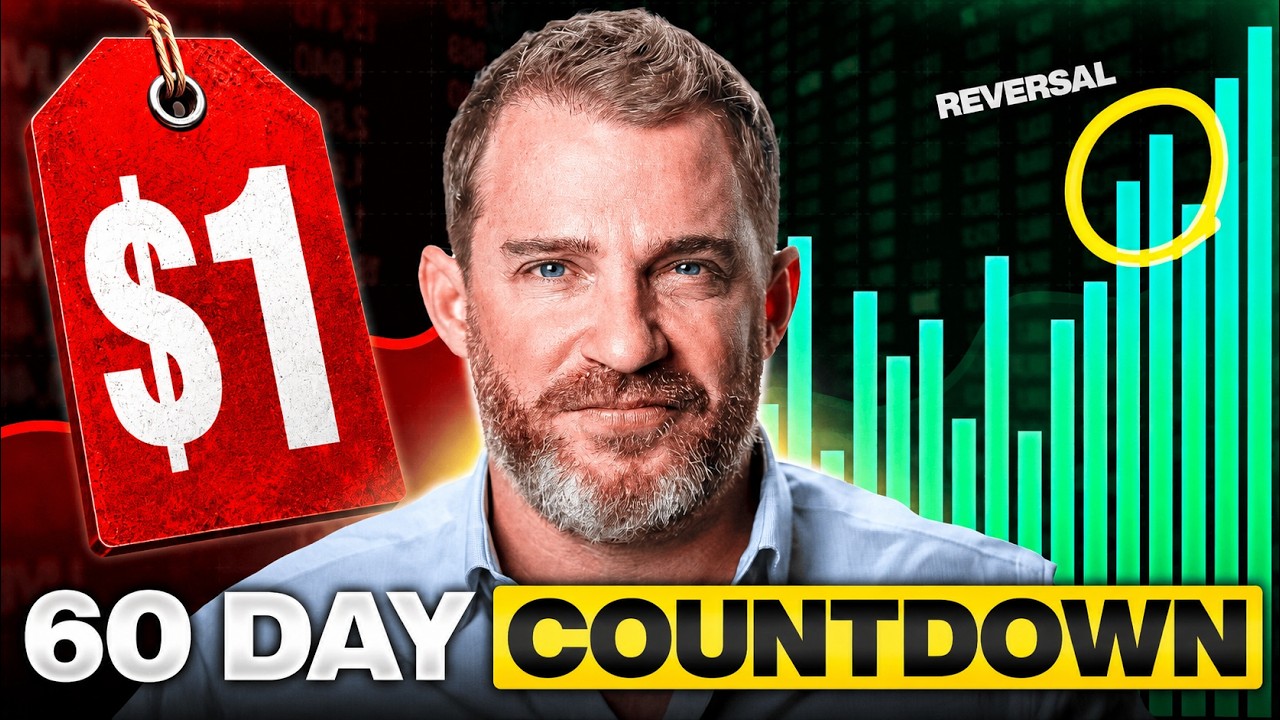
Three years ago, Outlook Therapeutics traded for $40 a share. Last month, the stock collapsed to just 20 cents. The market left this small pharmaceutical company for dead after the FDA rejected its drug twice. This kind of FDA drug rejection reversal almost never happens, but that's exactly what occurred here.
Then something that almost never happens, happened. The FDA reversed their decision.
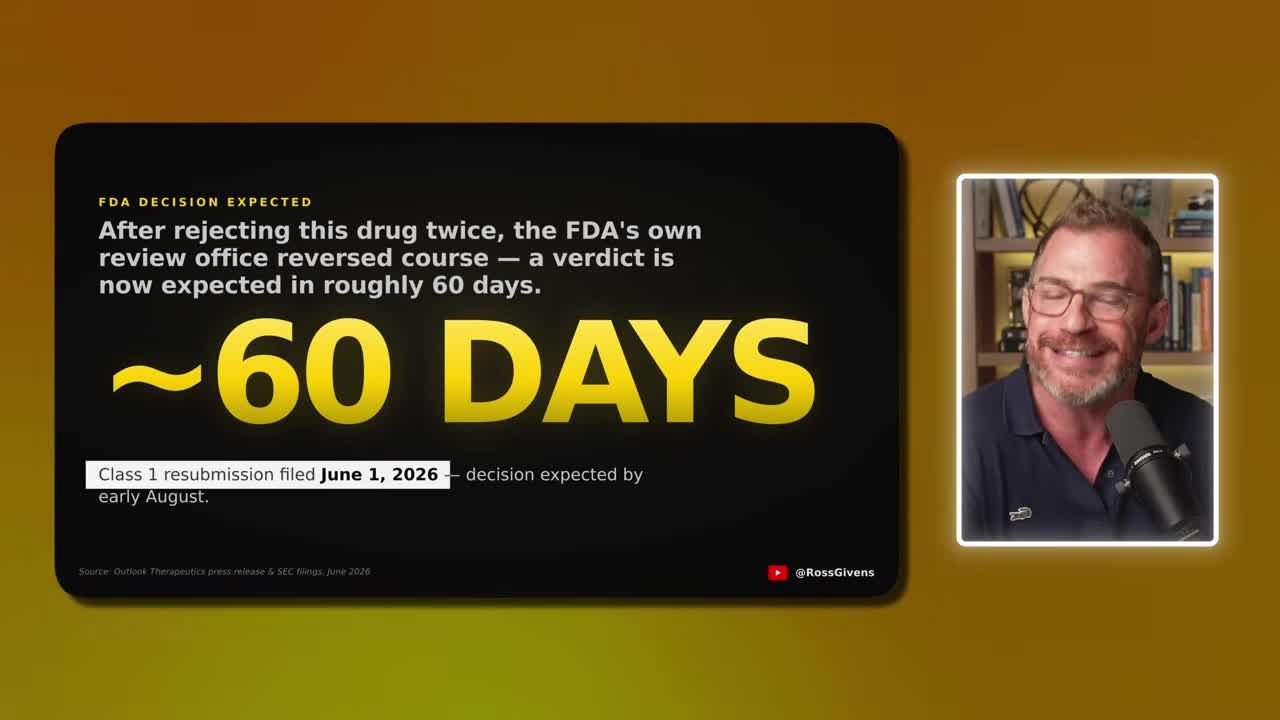
The company formally refiled their application on June 1st. Because of the way it was filed, the FDA has to give them an answer in less than 60 days. Not the typical six-month review. No drawn-out waiting game. The stock surged on the news, but it still trades for less than $1 a share.
What Is an FDA Drug Rejection Reversal?
Bottom Line: Outlook Therapeutics sits at a rare inflection point where an FDA drug rejection reversal has already been confirmed, and a final approval decision is legally required within 60 days of the June 1 resubmission. The core argument is simple: a sub-$90 million company with a validated drug and a hard deadline creates asymmetric upside if approval comes through. The risk is equally clear, two prior rejections and a binary outcome mean this is speculation, not a sure thing.
And why does it almost never happen?
To sell a drug in America, you need the FDA's approval. They are the referee. They have to say yes. They told Outlook no. Twice. They didn't think the proof was strong enough.
For most companies, that's the end of the story. You lick your wounds, move on, and try again. But Outlook did something different. They filed a formal appeal requesting a higher authority inside the FDA to review it. These appeals are rare, and they almost never work.
This time, it did.
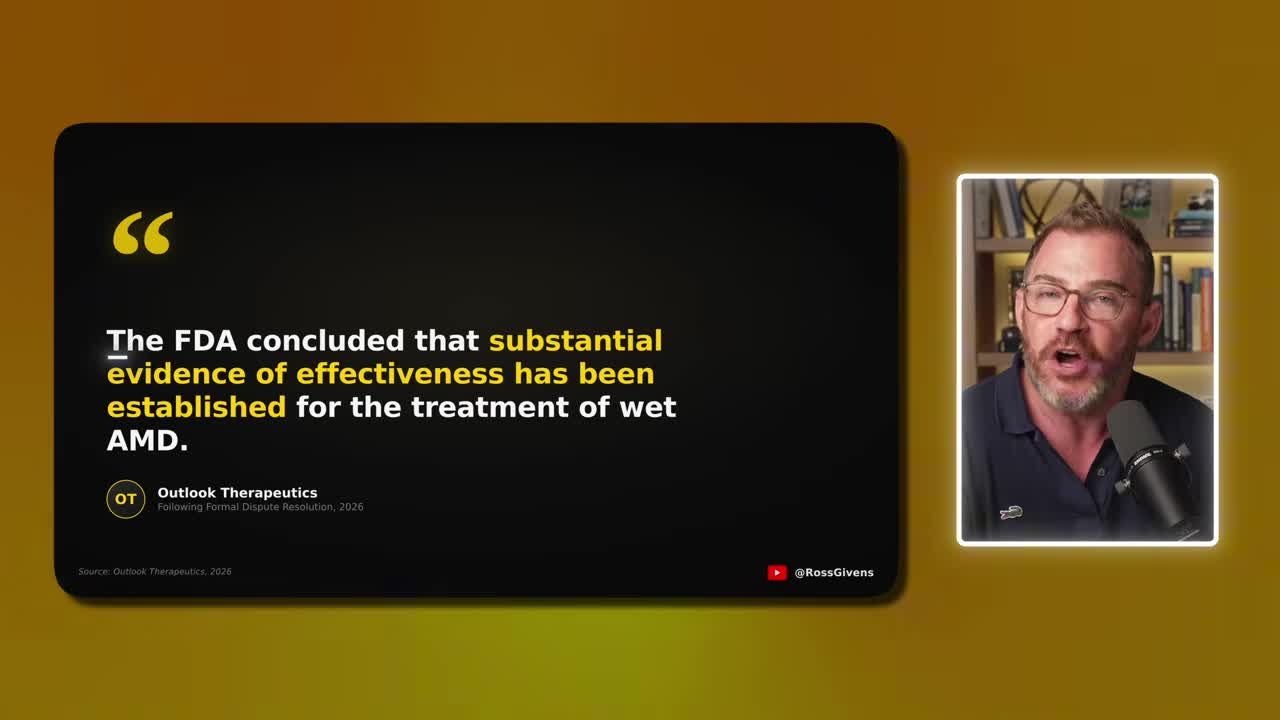
The review office agreed the company showed enough evidence that the drug works. Suddenly, every headline read that the FDA reversed itself. For a company this small, that's huge news. Outlook Therapeutics went from a rejected company heading for bankruptcy to a business expecting a final approval decision in a couple of weeks.
If and when that approval comes through, this stock could double or triple from here.
From $40 to 20 Cents
Outlook Therapeutics, ticker OTLK, held a half-billion-dollar valuation a few years ago. Today, the company has a market cap of just $87 million, a fraction of that former value.
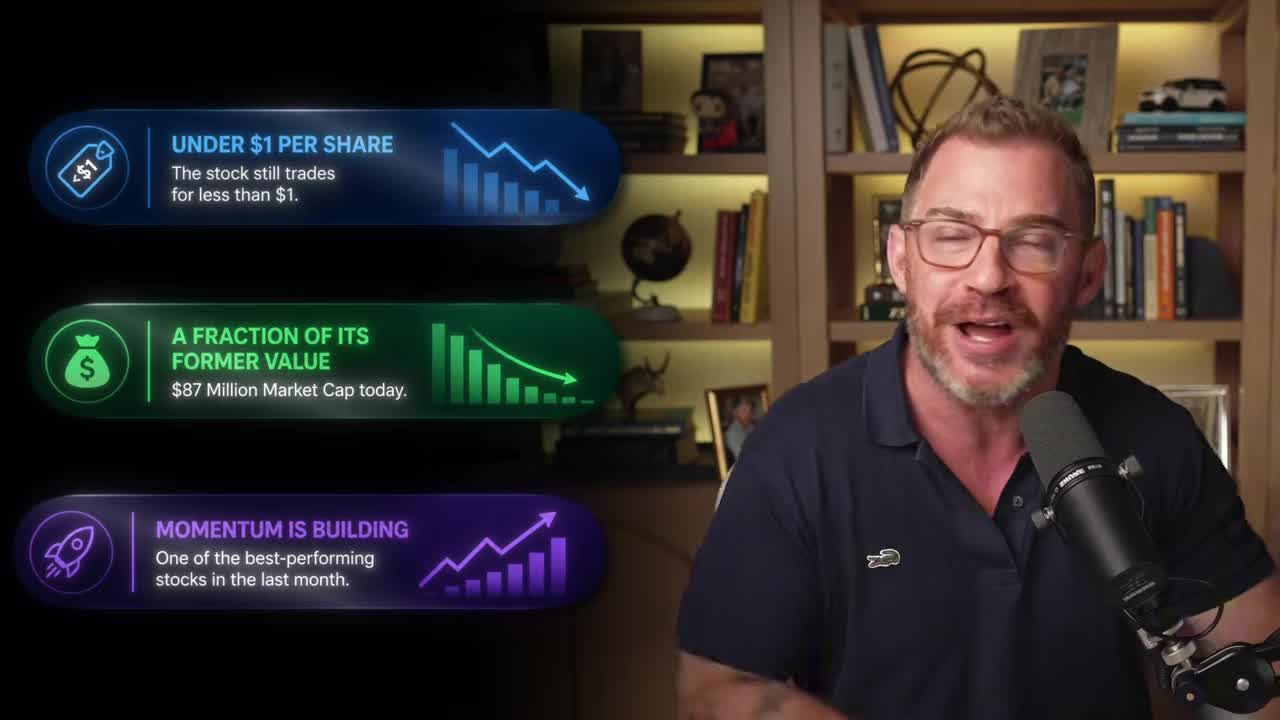
The massive drop came strictly from those two prior rejections. The referee said no, and that destroyed the stock price.
The recent FDA drug rejection reversal sparked a massive rally. The stock was one of the top-performing stocks in the world last month. Despite that momentum, not one in 10,000 investors has ever heard of it. It remains a highly speculative microcap stock with huge upside and a big downside.
What Is Wet AMD?
And why is this drug different?
Wet AMD stands for age-related macular degeneration. It mostly hits older folks and slowly destroys the central part of their vision, the part you use to read words, recognize faces, and look at a screen. It happens because tiny leaky blood vessels start growing behind the eye where they shouldn't be.
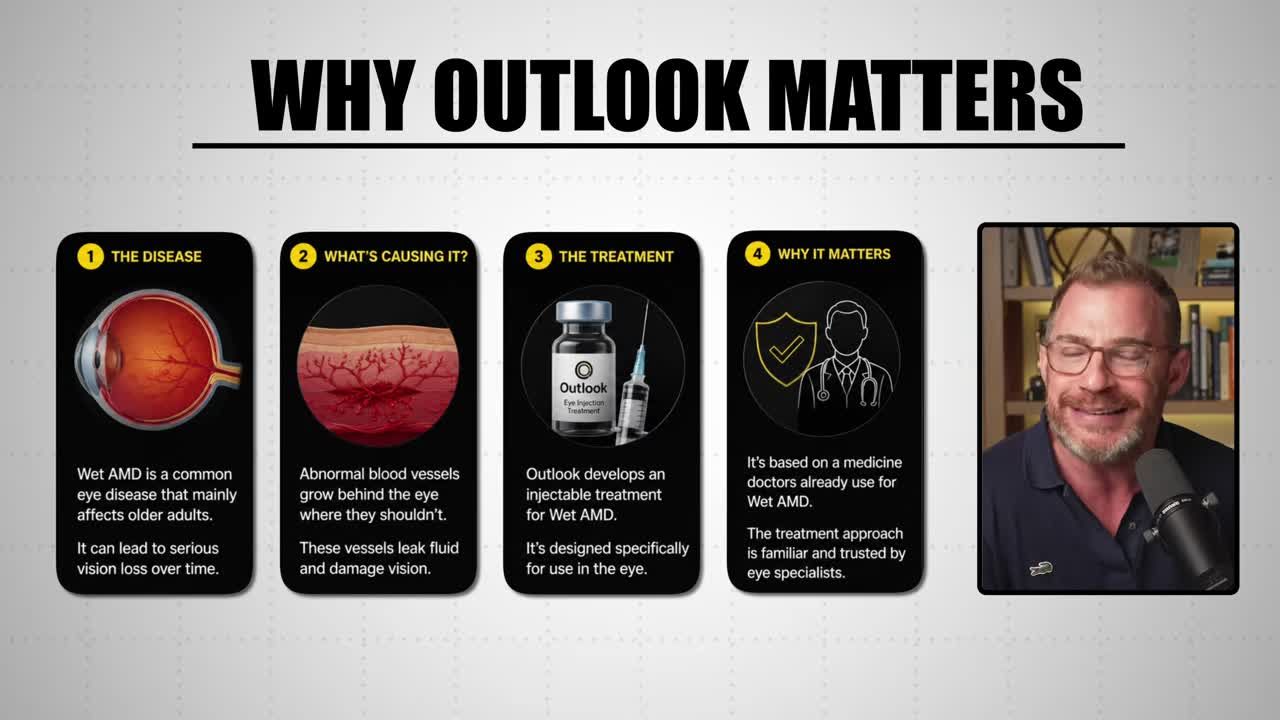
Outlook makes an eye injection drug to treat this exact problem. The drug is called ONS-5010, with the brand name Lytenava. It's basically a cleaned-up, eye-specific version of a medicine that eye doctors already use today. Doctors trust it. They know it works. Right now, they're using it off-label, kind of borrowing it for another use.
Outlook simply wants the official FDA stamp to sell Lytenava as a proper, approved, labeled eye drug. Same medicine the eye doctors already believe in, just finally with the government's blessing on the box so insurance companies will pay for it. That's pretty much the whole business. One drug for one disease. One approval standing between this company and a scalable product.
Why Does the FDA Only Have 60 Days to Decide?
Why the review window changes everything
When they filed on June 1st, they filed as what's called a class one resubmission. All that means is when the FDA already gave you a list of fixes and you come back having addressed them, the agency doesn't get to take six months to mull it over again. They get 60 days.
This tight, known window is what makes this so tradable. This isn't a "maybe someday" situation. The clock runs out in weeks.
And here's what matters about these news-driven events: when the decision comes out, the move happens almost instantly. If it's a yes, the stock starts moving that second. If it happens after hours when the market is closed, the stock will almost certainly gap higher. You don't get a chance to read over the press release, think about it over coffee, and calmly place your order. The news hits, the move happens, and it's instant.
You have to be positioned before the decision. Otherwise, you'll probably miss it.
Get an entire year of live weekly mentoring sessions, my newsletter, indicators, bonus reports, tons more. Click the link and I'll see you in the next live session.
Join my Black Ops Trading ClubThe High Tight Flag Setup
How an FDA drug rejection reversal looks on the chart
An FDA reversal often creates a high tight flag pattern on a stock chart. Outlook Therapeutics quadrupled in about 12 days during May following the positive news. Instead of selling off, the stock paused and formed an orderly pullback over roughly five trading days.
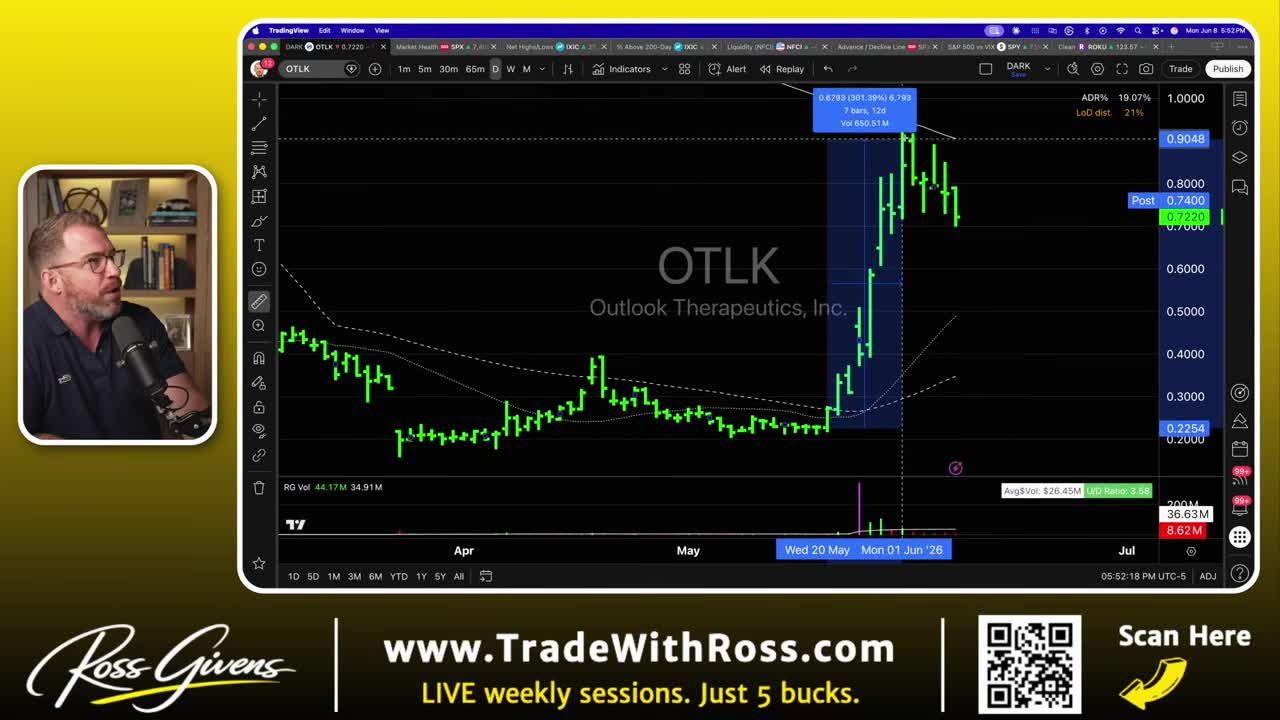
William O'Neil, the founder of Investor's Business Daily, initially developed the high tight flag. It was his favorite setup. He traded it on a weekly chart, looking for a stock to run and pause for a few weeks.
Information moves instantly now. We don't get that kind of time. OTLK surged roughly 300% in two weeks. Usually, stocks that quadruple in a couple of weeks capitulate and roll over. People take their profits, and the run is done.
That's not happening here. People quadrupled their money, and the stock isn't selling off. It's holding near the top and flagging out, pulling right back into its 10-day moving average. For a very fast-moving stock, that 10-day is your first line of support.
Trading the Breakout
A 30-minute chart approach
Trading a high tight flag is tough, but you want to buy as soon as the price breaks out of the flag formation.
1. Dial In the Timeframe
Move down to a 30-minute chart. This makes it easier to see the orderly channel forming during the pullback. You want to buy when the price breaks through the top of this channel.
2. Set a Trend Line Alert
Draw a downward trend line across the top of the flag. The science isn't perfect, but you want at least three touches on the line. If you use a charting platform like TradingView, you can set an active alert directly on that trend line. Set the condition to notify you when the price crosses up above the line: text, email, or a toast notification that pops up on your browser.
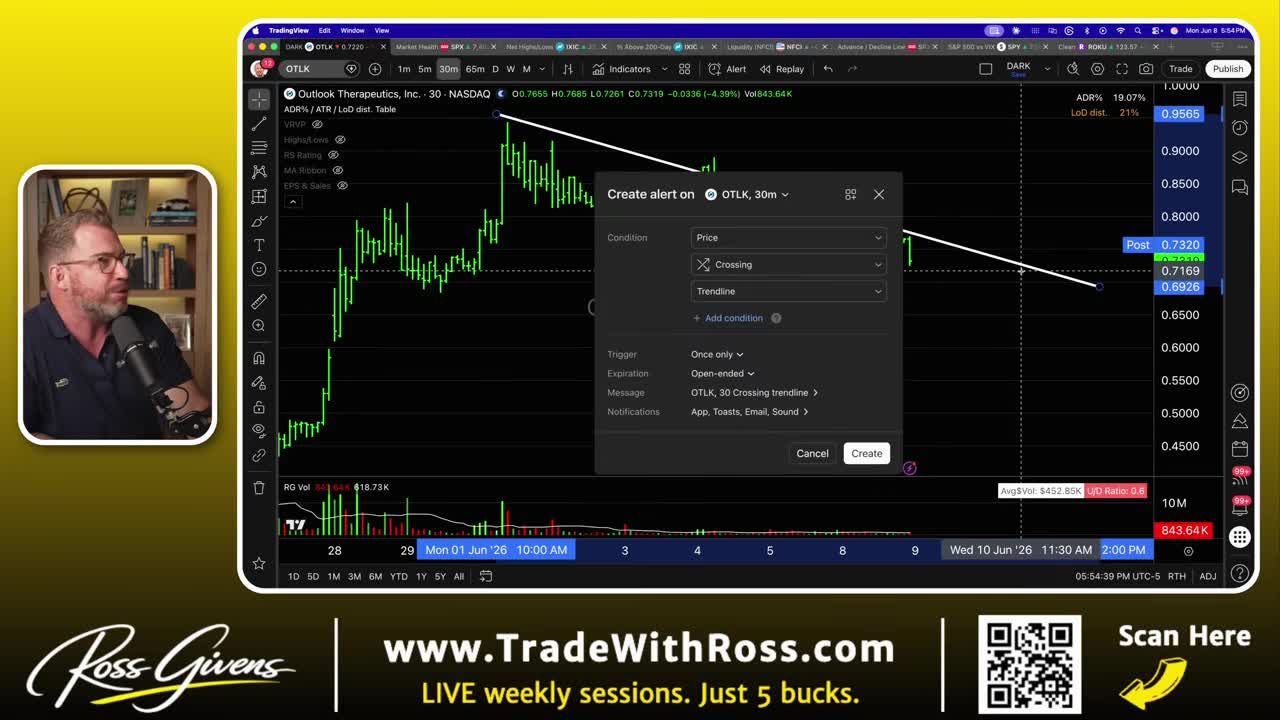
If the news drops unexpectedly, the stock could go from 80 cents to a dollar in 10 minutes.
3. Use Buy Stops for Automation
If you can't watch the chart all day, place a buy stop. You might set one at 78 cents. If the stock keeps pulling back, follow the trend line down and adjust your buy stop each day. This will automatically buy the stock if it crosses through your target.
4. Attach a Stop Loss
This is a more active setup. Attach a stop loss to your order at a 10% risk level. You cannot just buy this and check on it next week. It is a 75-cent stock with big volatility on both sides.
What Are the Real Risks of Trading an FDA Reversal?
This is not a lottery ticket, but it carries real risk. If the FDA says no again, it's look out below.
There's also the possibility of dilution. Outlook is a small company with no money coming in. They're burning cash. They just sold a big slug of new stock at the end of May to raise money.
This is how a lot of these smaller companies operate in the beginning. Instead of taking on a bunch of debt, they issue more stock to raise capital. This increases the share count and makes every other share worth a smaller percentage of the company. That's dilution. They already did that in May. They got a good chunk of cash that should let them operate for a while. Since this trade is focused purely on the FDA decision, that shouldn't be an issue.
The Last Domino
The U.S. approval is the last domino for this company. This drug is not some unproven science experiment. It's real, and it already works.
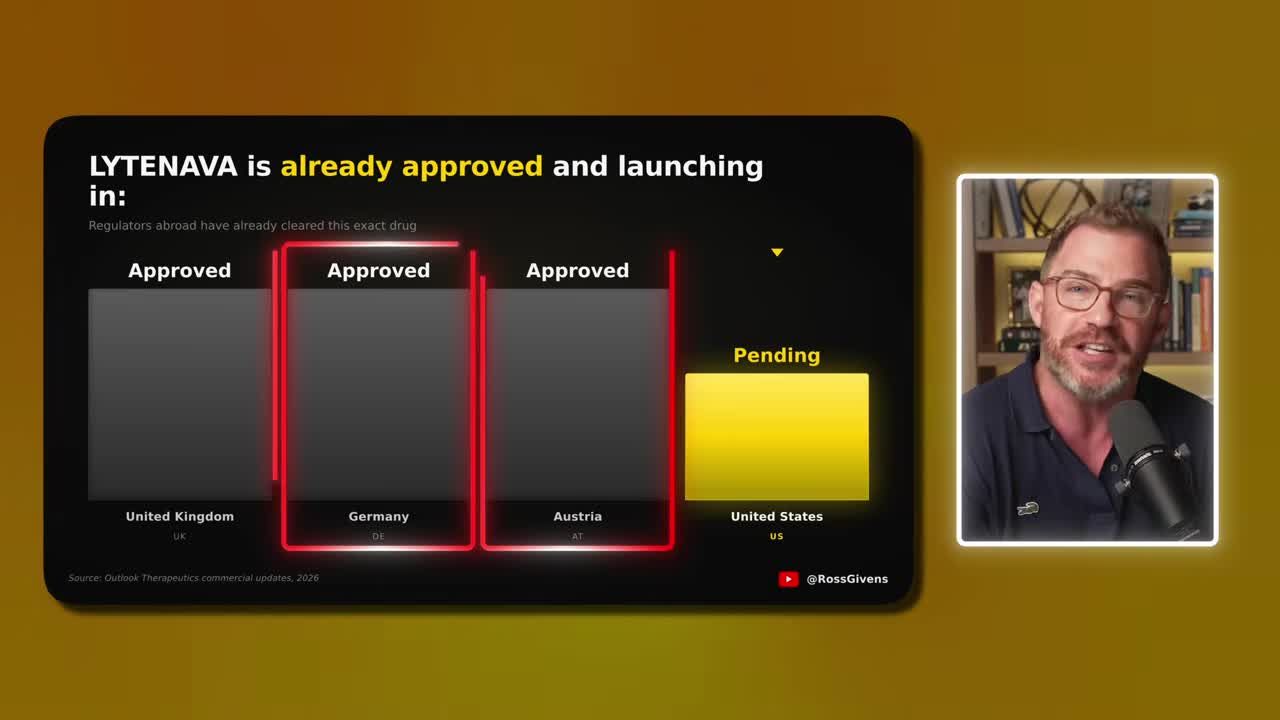
Outlook already got the green light in Europe and the UK. They started selling in Germany, Austria, and the United Kingdom. Regulators on the other side of the Atlantic looked at this exact drug and said they're good to go. The science has already cleared a real regulatory bar somewhere.
Foreign approval doesn't guarantee the FDA will do the same. It's a different agency with different rules. But it's a pretty good sign. And the FDA itself just admitted the evidence is there. This FDA drug rejection reversal could be the turning point that changes everything for OTLK.
The clock runs out in about 52 to 53 days.
Get an entire year of live weekly mentoring sessions, my newsletter, indicators, bonus reports, tons more. Click the link and I'll see you in the next live session.
Key Takeaways
- Outlook Therapeutics (OTLK) fell from $40 to 20 cents after two FDA rejections, leaving the company valued at under $90 million total.
- The FDA reversed its rejection following a formal appeal, a rare outcome that almost never succeeds, with the review office confirming sufficient evidence that the drug works.
- The company filed a Class 1 resubmission on June 1, which legally requires an FDA decision within roughly 60 days rather than the standard six-month review timeline.
- The stock remains under $1 per share despite the reversal news, meaning the market has not yet priced in a full approval outcome.
- The thesis is framed as a binary event: approval could drive a substantial move given the sub-$90 million market cap, but the outcome is described as a coin flip with real downside risk.
DISCLAIMER: Traders Agency does not offer financial advice. The information provided is for educational purposes only and should not be considered financial advice. Traders Agency is not responsible for any financial losses or consequences resulting from the use of the information provided. Trading carries inherent risks and may not be suitable for all individuals. You are advised to conduct your own research and seek personalized advice before making any investment decisions, recognizing the potential risks and rewards involved.
See more from Traders Agency on Google
Make us a preferred source and our market analysis will appear more prominently in your Google Search, Top Stories, and AI results.
Add to Preferred Sources