
The July PCE inflation report just landed, and the bond market's reaction tells the story: core inflation hit forecasts exactly, keeping Treasury yields pinned in a tight range. We're watching treasury yields inflation today closely because this data sets the tone heading into the Federal Reserve's Jackson Hole conference later this week.
What Did the July PCE Inflation Report Show?
The latest inflation numbers show a mixed but manageable picture. July headline PCE rose 0.2% for the month and 3.7% year-over-year. Both figures came in 0.1 percentage point above the Dow Jones consensus estimate.
The more telling metric, however, is core PCE, which strips out volatile food and energy prices. Core rose 0.2% monthly and 3.3% annually, landing perfectly in line with forecasts. Central bank policymakers typically view core inflation as a better gauge of longer-term price trends, and today's in-line reading may factor into the Fed's next rate decision.
Key Reading: Core PCE inflation printed at 3.3% annually, matching consensus exactly. The 10-year Treasury note yield ticked up slightly to 4.66%, while total US public debt has now surpassed $40 trillion for the first time.
Additional economic data showed strength elsewhere. Consumer spending and income came in slightly above forecasts. Separate data showed US GDP grew 1.5% in the second quarter as initially estimated, while July durable goods orders rose 1.1%, easily beating expectations of 0.5%.
Do Treasury Yields Rise With Inflation?
Treasury yields typically rise with inflation because investors demand higher returns to offset the loss of purchasing power. When inflation data prints hotter than expected, bond prices usually fall and yields increase. Today, because core inflation matched forecasts, the bond market reaction remained muted and yields stayed relatively flat.
Here's where treasury yields inflation today settled across the curve:
- 30-year Treasury bond: Up more than 1 basis point to 5.187%
- 10-year Treasury note: Slightly higher at 4.66%
- 2-year Treasury note: Up 2 basis points to 4.224%
Traders maintained bets on a quarter-point Fed hike this year, with Bloomberg reporting a greater than 60% chance of a second hike by the middle of next year.
Market Implications for Traders
Our analysis points to several crosscurrents in the bond market right now. Bloomberg reports that a surge in AI-related corporate debt issuance may be crowding out Treasury demand, adding pressure to the long end of the curve.
Bloomberg reports that Treasury Secretary Scott Bessent announced a plan last week to buy back long-term US debt. Bessent stated that investors are acting on "bad information" while he has "asymmetric" access to the real picture.
This plan has drawn sharp criticism from major market participants. Billionaire investor Stanley Druckenmiller argues the buyback plan undermines the credibility of the Treasury market. He believes the move misses an opportunity for meaningful debt reform.
Want expert trading insights delivered daily?
Join thousands of traders who rely on Traders Agency for market analysis and trade ideas.
Join Traders AgencyHow Does the 10-Year Treasury Yield Compare to Inflation?
The 10-year Treasury yield currently sits at 4.66%, while the annual headline inflation rate is 3.7%. This spread creates a positive real yield environment for investors, meaning bondholders are earning returns above the rate of inflation.
Real Yield Spread: With the 10-year at 4.66% and headline PCE at 3.7%, investors are earning roughly 96 basis points of real return. Trading Economics data shows the 10-year yield is 0.43 points higher than a year ago.
For historical context, the 10-year yield reached an all-time high of 15.82% in September 1981. Current levels remain well below that peak but represent a significant shift from the near-zero rate environment of recent years.
Benjamin Jones, global head of research at Invesco, has noted that the path of least resistance may be for higher US yields.
Oil Prices and Broader Market Performance
Energy markets offered some relief on the inflation front this week. Brent futures fell 1% to trade above $87 per barrel. US West Texas Intermediate crude also dropped 1% to above $81 a barrel.
These declines follow reports that Iran and Oman are nearing a deal to secure safe transit through the Strait of Hormuz. Lower oil prices help cap gains in Treasury yields by easing concerns over near-term inflation pressures.
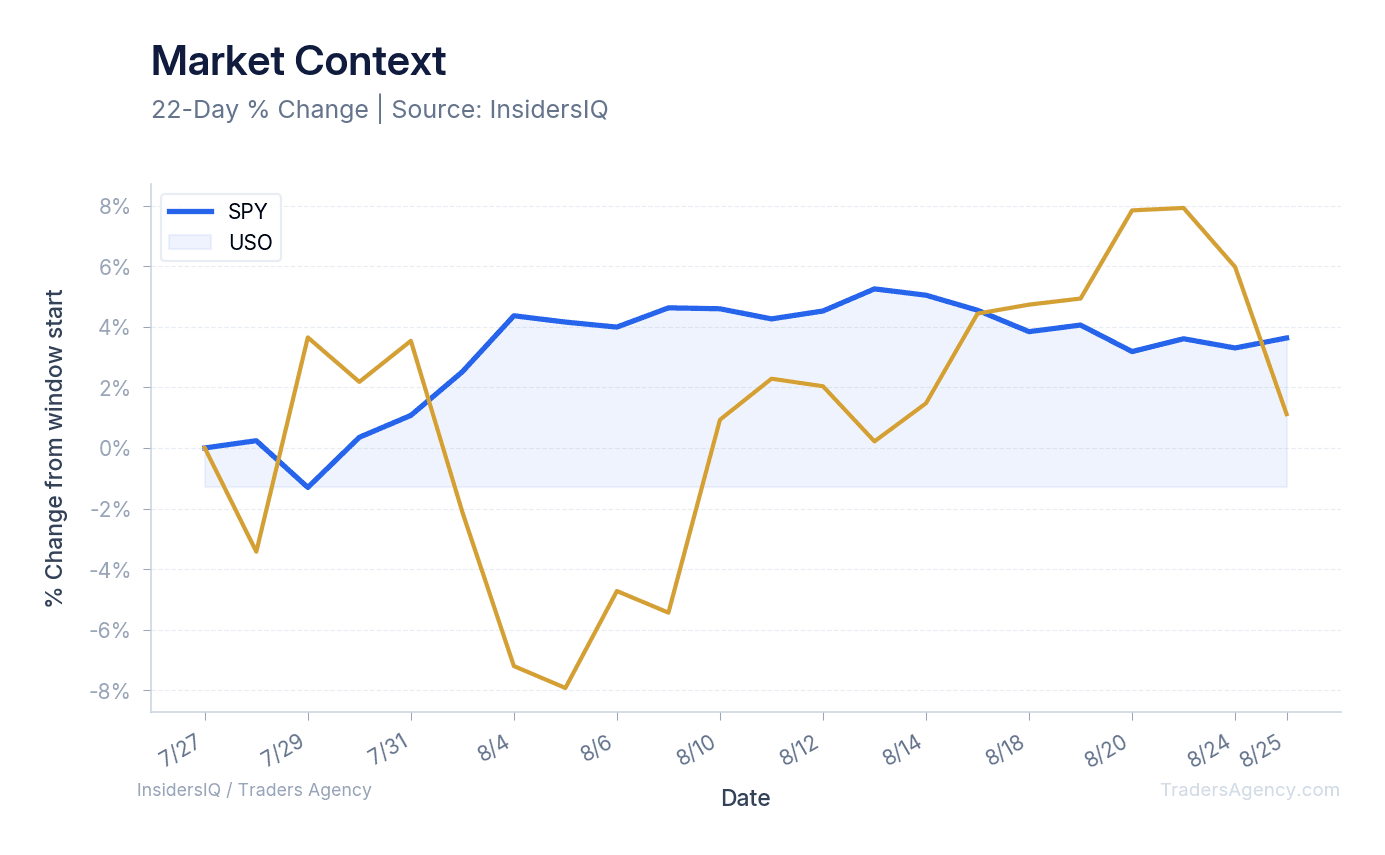
Our verified market data shows USO with a 30-day price change of +1.11%. In contrast, the broader equity market remains resilient, with SPY posting a 30-day gain of +3.63%.
What Should Traders Watch After the PCE Report?
The focus now shifts to the Federal Reserve. Here are the specific events and indicators our team is monitoring:
- The Jackson Hole Symposium: The economic policy event starts Thursday.
- Fed Chair Speech: Kevin Warsh is scheduled to deliver a keynote speech on Friday. He is expected to address persistently high inflation and conflict in the Middle East.
- TIPS and Breakevens: We're watching the 10-year TIPS yield and the 5-year TIPS yield for real-time reactions to the speech. Any sudden movement in the inflation breakeven rate could signal a shift in long-term expectations.
Carmignac investment committee member Kevin Thozet noted that the timing is delicate: a speech offering little guidance could see pressure on the long end intensify.
The Bottom Line
Today's PCE data keeps the conversation around treasury yields inflation today front and center. Because core inflation met expectations, the bond market avoided a major selloff, but underlying pressures remain. Our team is watching the 4.66% level on the 10-year note closely as Fed Chair Warsh prepares to speak on Friday. The combination of record public debt, AI-driven corporate issuance, and geopolitical uncertainty means this is no time to be complacent in fixed income.
Want expert trading insights delivered daily?
Join thousands of traders who rely on Traders Agency for market analysis and trade ideas.
Join Traders AgencyKey Takeaways
- Core PCE inflation rose 0.2% monthly and 3.3% annually in July, matching consensus forecasts exactly, which kept the bond market from selling off sharply.
- The 10-year Treasury yield ticked up slightly to 4.66% following the report, with traders watching that level closely ahead of the Fed Chair's Friday speech at Jackson Hole.
- Headline PCE came in 0.1 percentage point above estimates at 3.7% year-over-year, a modest miss that did not trigger significant market movement on its own.
- Supporting data showed consumer spending, income, and durable goods orders all beat forecasts, while Q2 GDP was confirmed at 1.5% growth.
- Total US public debt surpassed $40 trillion for the first time, adding a longer-term supply pressure on Treasuries alongside AI-driven corporate issuance and geopolitical uncertainty.
DISCLAIMER: Traders Agency does not offer financial advice. The information provided is for educational purposes only and should not be considered financial advice. Traders Agency is not responsible for any financial losses or consequences resulting from the use of the information provided. Trading carries inherent risks and may not be suitable for all individuals. You are advised to conduct your own research and seek personalized advice before making any investment decisions, recognizing the potential risks and rewards involved.
See more from Traders Agency on Google
Make us a preferred source and our market analysis will appear more prominently in your Google Search, Top Stories, and AI results.
Add to Preferred Sources