
Treasury Secretary Scott Bessent is executing a historic intervention to suppress long-term borrowing costs, and our team believes this could set up a significant collision between fiscal policy and central bank independence. The Treasury Department announced on Wednesday it would increase its buybacks of long-term debt, raising the maximum it will buy from $2 billion to at least $4 billion. We're watching this closely because the implications for the treasury yields federal reserve forecast, equities, and currencies are immediate.
Why Are Treasury Yields Going Up?
Treasury yields are going up as a selloff in the Treasury market has pushed up yields to uncomfortable levels in recent days. Investors worry that rising Treasury yields would worsen an affordability crisis for consumers, complicate businesses' borrowing plans, threaten stock-market gains, and make it more expensive for the government to finance its growing debt. The federal budget deficit is on track to hit $2.1 trillion this year, according to the Congressional Budget Office.
Since the outbreak of the Iran war, the 10-year yield has risen by nearly 70 basis points, topping out recently at 4.74% and pushing up 30-year mortgage rates to around 6.75%. The selloff threatens stock market gains and makes financing the $32.2 trillion in publicly held debt much more expensive.
How Does the Treasury Buyback Program Work?
The Treasury is specifically targeting longer-term maturities of 10 to 30 years. For context, a 30-year Treasury bond issued in May 2020 recently traded at roughly 45 cents on the dollar. By removing these older, less-liquid securities from the market, the government frees up institutional balance sheets to buy the more liquid issues, which could put downward pressure on rates.
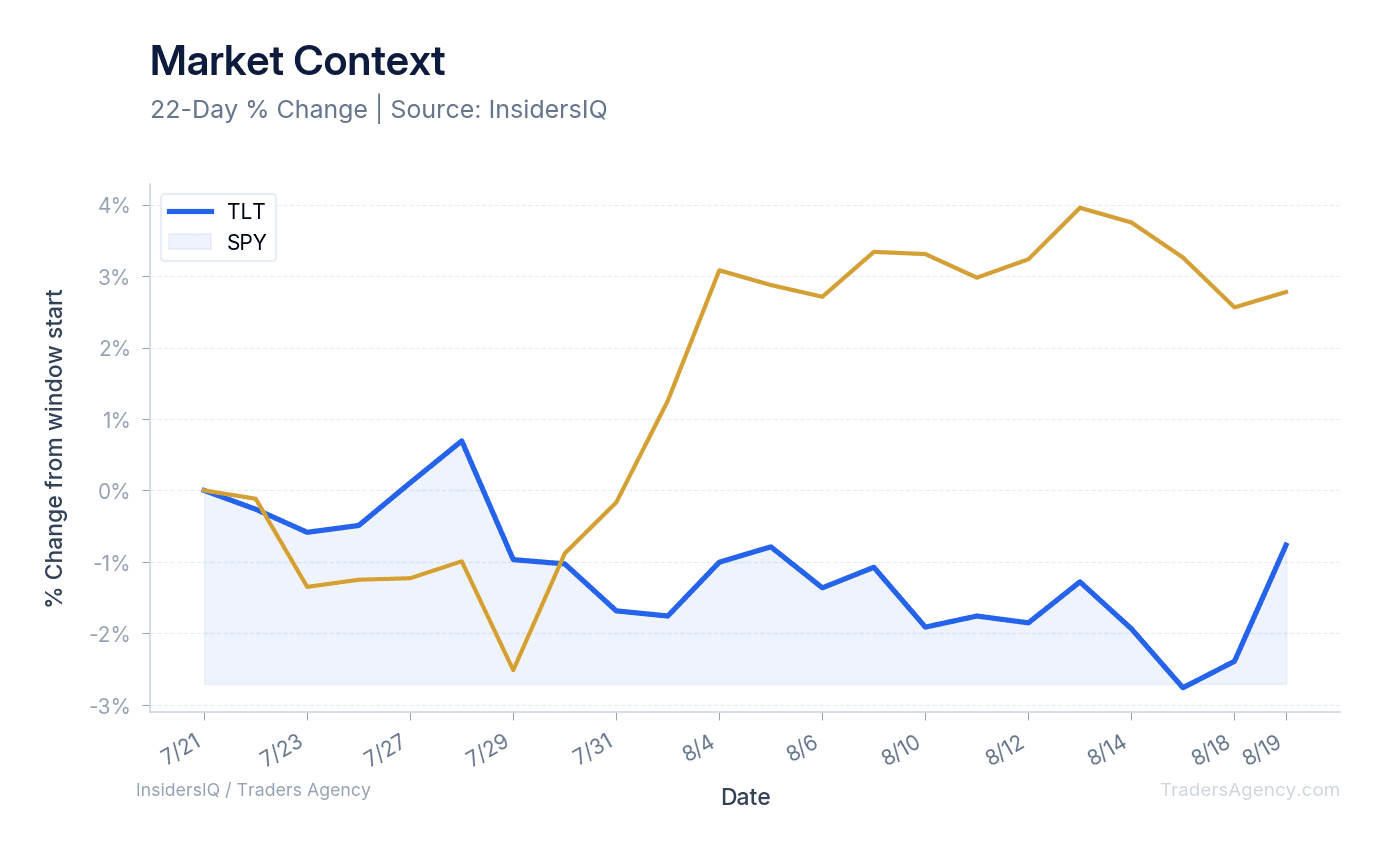
We are tracking how this impacts bond ETFs. Over the last 30 days, we have seen a TLT price change of -0.77%, while the broader equity market shows a SPY price change of +2.78%.
How Does This Impact the Treasury Yields and Fed Forecast?
This intervention complicates the outlook for treasury yields federal reserve forecast by artificially suppressing long-term rates. If the Treasury replaces long-term bonds with short-term bills, it manipulates the yield curve and could accelerate inflation, which might force the Fed to maintain higher interest rates for longer.
Fed Chairman Kevin Warsh has kept rates steady. At his most recent press conference on July 29, he said he was concerned about inflation that had remained above the Fed's 2% target for more than five years, but didn't raise interest rates and didn't clearly articulate what might prompt him to change his mind. Warsh also suggested the market had done his work for him in raising long-term bond yields. Now, Bessent's actions could cloud those market signals.
Key Number: The Treasury is raising its buyback maximum to at least $4 billion, targeting bonds trading as low as 45 cents on the dollar. The 10-year yield dropped from 4.74% to 4.65% on the news.
Want expert trading insights delivered daily?
Join thousands of traders who rely on Traders Agency for market analysis and trade ideas.
Join Traders AgencyWhat Happens When 30-Year Treasury Yields Rise?
When 30-year Treasury yields rise, borrowing costs increase across the entire economy. This worsens affordability for consumers, complicates corporate borrowing plans, and rapidly inflates the government's own debt servicing costs.
The federal government has already made $963 billion in net interest payments in the first 10 months of fiscal year 2026. Debt payments now account for about 15% of fiscal spending. By shifting more debt to shorter maturities to fund these buybacks, the Treasury makes these payments highly sensitive to any future rate hikes. T-bills currently make up 22.2% of outstanding Treasury debt, exceeding the 20% ceiling recommended by the Treasury Borrowing Advisory Committee.
Debt Servicing Alert: Net interest payments have hit $963 billion in just 10 months, now consuming 15% of all fiscal spending. Short-term bills already exceed the TBAC's recommended 20% ceiling at 22.2%.
Market Signals: Treasury Yields and the Fed Today
Looking at the immediate market reaction, the announced buybacks quickly reversed the recent bond selloff. The 10-year yield fell as low as 4.63% after the news broke and finished the day at 4.65%.
Any trader analyzing a 10-year Treasury yield chart can see the abrupt reversal caused by this policy shift. The intervention also hit the currency markets, prompting the dollar to fall by nearly 0.8% against a basket of other currencies on Wednesday. This weaker dollar could increase inflation by making imports more expensive.
We are monitoring broader sentiment metrics alongside the price action. Current data shows a Fear & Greed index at 68, with WallStreetBets sentiment at 0.03 across 2,748 mentions.
What Should Traders Watch After the Treasury Buyback Announcement?
The historical precedent of this intervention points to growing tension between fiscal objectives and monetary policy. Political pressure on the central bank has often led to market distortions. Here is what our team is watching:
1. Jackson Hole
Warsh will have an opportunity to address these issues at an annual gathering of central banks in Jackson Hole, Wyoming, next week. We are watching for any signals on how the Fed may respond to this Treasury intervention.
2. Inflation Data
Keeping long-term rates artificially low could boost economic activity and make inflation sticky. This might force the Fed to hold rates higher for longer than the market currently expects.
3. Yield Curve Manipulation
The Treasury has not explicitly stated how it will fund these buybacks. We are watching for increased issuance of short-term bills, which could indicate a strategy of managing the yield curve.
The Bottom Line
The Treasury's decision to raise its buyback maximum to at least $4 billion is a direct attempt to cap rising yields. While it provided immediate relief to the bond market, it puts significant pressure on the Federal Reserve and could risk reigniting inflation. Our team is positioning for continued volatility in both bond and currency markets as these two government entities work through conflicting objectives.
Want expert trading insights delivered daily?
Join thousands of traders who rely on Traders Agency for market analysis and trade ideas.
Join Traders AgencyKey Takeaways
- The Treasury Department raised its long-term debt buyback maximum from $2 billion to at least $4 billion, targeting maturities of 10 to 30 years.
- The 10-year yield has risen nearly 70 basis points since the outbreak of the Iran war, recently topping 4.74%, while 30-year mortgage rates have climbed to around 6.75%.
- The federal budget deficit is on track to hit $2.1 trillion this year per the CBO, with $32.2 trillion in publicly held debt making elevated yields a direct fiscal cost.
- The buyback program provided immediate relief to the bond market but could risk reigniting inflation, putting the Treasury's objectives in tension with the Federal Reserve's mandate.
- Traders should watch for increased short-term bill issuance, which could signal a deliberate yield curve management strategy is underway.
DISCLAIMER: Traders Agency does not offer financial advice. The information provided is for educational purposes only and should not be considered financial advice. Traders Agency is not responsible for any financial losses or consequences resulting from the use of the information provided. Trading carries inherent risks and may not be suitable for all individuals. You are advised to conduct your own research and seek personalized advice before making any investment decisions, recognizing the potential risks and rewards involved.
See more from Traders Agency on Google
Make us a preferred source and our market analysis will appear more prominently in your Google Search, Top Stories, and AI results.
Add to Preferred Sources