
Rising Treasury yields are threatening to temporarily derail the recent rally that pushed U.S. equities into record territory. Strong earnings growth over the past few quarters helped lift stocks to these new highs, but the bond market is now pushing back hard. Our team is watching this shift closely, and the implications extend well beyond fixed-income portfolios.
Why Do Rising Treasury Yields Threaten the Stock Rally?
Here is what we know based on the latest market data. The recent surge in U.S. stocks relied heavily on strong earnings growth over the last several quarters. That upward momentum is now facing a direct challenge from the bond market.
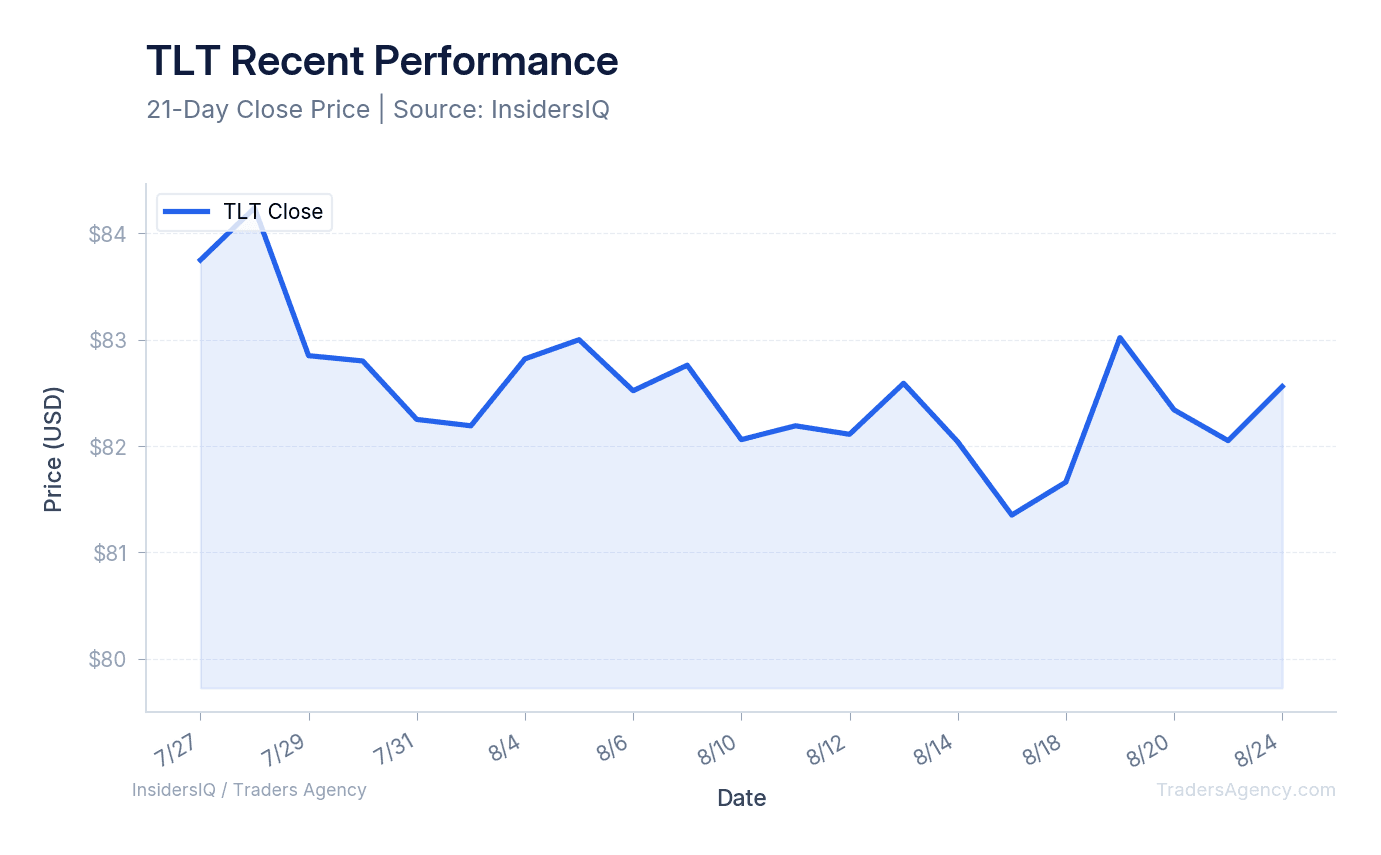
Treasury yields are climbing, creating pressure across major indices. To illustrate this trend, we are tracking TLT, the exchange-traded fund that tracks long-term Treasury bonds. TLT has recorded a 30-day price change of -1.42%. Because bond prices move inversely to yields, this decline highlights the upward trajectory of interest rates.
Key Signal: TLT has declined -1.42% over the past 30 days. Since bond prices move inversely to yields, this suggests that long-term interest rates have been climbing, putting direct pressure on equity valuations.
Are Rising Bond Yields Good for Stocks?
The current market data indicates that rising Treasury yields could temporarily derail the recent stock rally. While strong earnings growth over the past few quarters helped lift U.S. stocks into record territory, climbing yields now present a direct challenge to equities.
Our analysis shows that this dynamic forces traders to reevaluate their exposure. The core question: can the corporate performance of the past few quarters offset the pressure from higher yields? In general, stocks may be able to absorb moderately rising rates when earnings growth is strong enough, but there can be a threshold where the math breaks down.
How Could Rising Yields Affect the Broader Market?
The current setup suggests that traders need to be highly selective. When yields rise, investors typically search for sectors and individual names that can withstand the pressure from higher borrowing costs and increased competition from fixed-income alternatives.
Our team is watching three specific implications:
- Rally risk: The direct threat that rising Treasury yields pose to the current stock market advance
- TLT weakness: The recent -1.42% decline over the past 30 days signals rates may still have room to climb
- Earnings dependency: The market's reliance on continued strong earnings growth to justify current valuations in record territory
Want expert trading insights delivered daily?
Join thousands of traders who rely on Traders Agency for market analysis and trade ideas.
Join Traders AgencyWhat Do Rising Yields Mean for Income-Focused Traders?
Income investors seeking consistent returns from dividend-paying stocks face a changing calculation. Climbing Treasury yields change the math for these strategies in a meaningful way.
When government bonds offer higher payouts, the relative appeal of high-dividend equities can diminish. Traders comparing dividend yields against the rates provided by Treasuries now need to factor in the declining price of long-term bonds like TLT. If you are building a portfolio designed to generate monthly income, the rising-rate environment demands a fresh look at whether your dividend names still offer a compelling spread over risk-free alternatives.
Which Assets Should Traders Monitor?
The data we are watching points to a clear action plan for the coming weeks. Traders should identify companies with the pricing power and balance-sheet strength to survive higher rates.
Here are the key elements our team is tracking:
1. TLT Price Action
We are closely monitoring TLT for further declines beyond its recent -1.42% drop. Because long-term Treasury bond prices are inversely related to yields, continued weakness here signals that rates are still climbing. A sustained move lower in TLT would increase the pressure on equity valuations across the board.
2. Earnings Growth Sustainability
The push into record territory for U.S. stocks was built on strong earnings growth over the past few quarters. We are watching closely to see if companies can maintain this momentum. Any deceleration in earnings while yields continue rising could create a particularly difficult environment for stocks.
3. The Threat to the Broader Rally
Traders should watch Treasury yield levels to determine if they temporarily derail the broader market advance. The relationship between rates and equities is not linear: stocks may absorb gradual increases, but sharp moves higher in yields can trigger rapid repricing.
The Bottom Line
The recent climb in Treasury yields threatens to temporarily derail the stock market rally that pushed equities into record territory. With TLT showing a -1.42% decline over the last 30 days, the pressure on stocks is real and measurable. Our team is focusing on companies with strong earnings growth that can weather this shifting interest rate environment. Selectivity matters more than ever right now.
Want expert trading insights delivered daily?
Join thousands of traders who rely on Traders Agency for market analysis and trade ideas.
Join Traders AgencyKey Takeaways
- TLT, the long-term Treasury bond ETF, has declined 1.42% over the past 30 days, suggesting that long-term interest rates have been climbing.
- Because bond prices move inversely to yields, TLT's drop is a direct, measurable signal of upward yield pressure rather than an abstract concern.
- The recent U.S. equity rally into record territory was driven largely by strong earnings growth over several quarters, and that foundation is now being tested by the bond market.
- Stocks may absorb gradual yield increases, but sharp moves higher can trigger rapid repricing across major indices.
- The article flags selectivity as the key response: companies with strong earnings growth may be better positioned to weather a rising rate environment than the broader market.
DISCLAIMER: Traders Agency does not offer financial advice. The information provided is for educational purposes only and should not be considered financial advice. Traders Agency is not responsible for any financial losses or consequences resulting from the use of the information provided. Trading carries inherent risks and may not be suitable for all individuals. You are advised to conduct your own research and seek personalized advice before making any investment decisions, recognizing the potential risks and rewards involved.
See more from Traders Agency on Google
Make us a preferred source and our market analysis will appear more prominently in your Google Search, Top Stories, and AI results.
Add to Preferred Sources