
The U.S. Treasury has announced buybacks, and pressure on bonds has shown signs of easing across the market. Our team is watching this shift in fixed income closely because it carries direct implications for equity traders. The SPY has posted a +3.31% gain over the last 60 days, and market sentiment sits at a Fear & Greed index level of 68, with WallStreetBets sentiment at 0.03 across 2,748 mentions. Here's what we're seeing and what comes next.
Key Market Snapshot: SPY up +3.31% over 60 days. Fear & Greed Index at 68. Bond pressure easing following the Treasury buyback announcement.
What Are Treasury Bond Buybacks?
With treasury bond buybacks explained in simple terms, a buyback means the U.S. government is purchasing its own previously issued debt before maturity. This process can help relieve trading pressure on bonds and improve market function. Traders monitor these operations because they directly influence yield curves and overall market stability.
When the government initiates a buyback program, it targets specific bonds to improve market function. Our analysis shows this recent announcement has eased the immediate pressure on bonds. We believe this structural support may provide a floor for fixed-income assets in the near term. The data we're watching suggests this intervention changes the immediate trading environment for both bond and equity operators.
Why Have Treasury Bonds Been Falling?
Treasury bonds have been declining primarily due to shifting supply and demand dynamics, coupled with broader macroeconomic pressures. When the market absorbs massive amounts of new debt issuance without sufficient buyer demand, bond prices fall and yields rise. The announced buybacks specifically aim to help counter this downward price action.
Traders frequently ask how much a $100 Treasury bond is worth after 30 years. The exact value depends on the coupon rate established at issuance and the compounding interest over those three decades. However, the current price action in the secondary market dictates immediate trading opportunities. We're tracking Treasury bond latest rates closely to gauge exactly how the buyback announcement may alter the current yield trajectory.
What Global Pressures Have Been Pushing Treasury Bonds Lower?
The bond market does not operate in isolation. A common question we see from traders: who does the U.S. owe 38 trillion in debt to? The answer includes a mix of domestic and foreign holders across various institutions.
Foreign participation remains a massive variable for bond stability. Whether Japan is selling U.S. bonds is a question we're watching closely. Any reduction in foreign demand forces domestic buyers to absorb more supply, which historically pushes bond prices lower. The Treasury's decision to step in with buybacks could help mitigate the risk of sudden drops in foreign demand.
Want expert trading insights delivered daily?
Join thousands of traders who rely on Traders Agency for market analysis and trade ideas.
Join Traders AgencyMarket Implications for SPY and Equities
The relief in the bond market directly impacts equities. We've been tracking the relationship between fixed-income stability and stock market performance. Over the last 60 days, the SPY has posted a +3.31% price change.
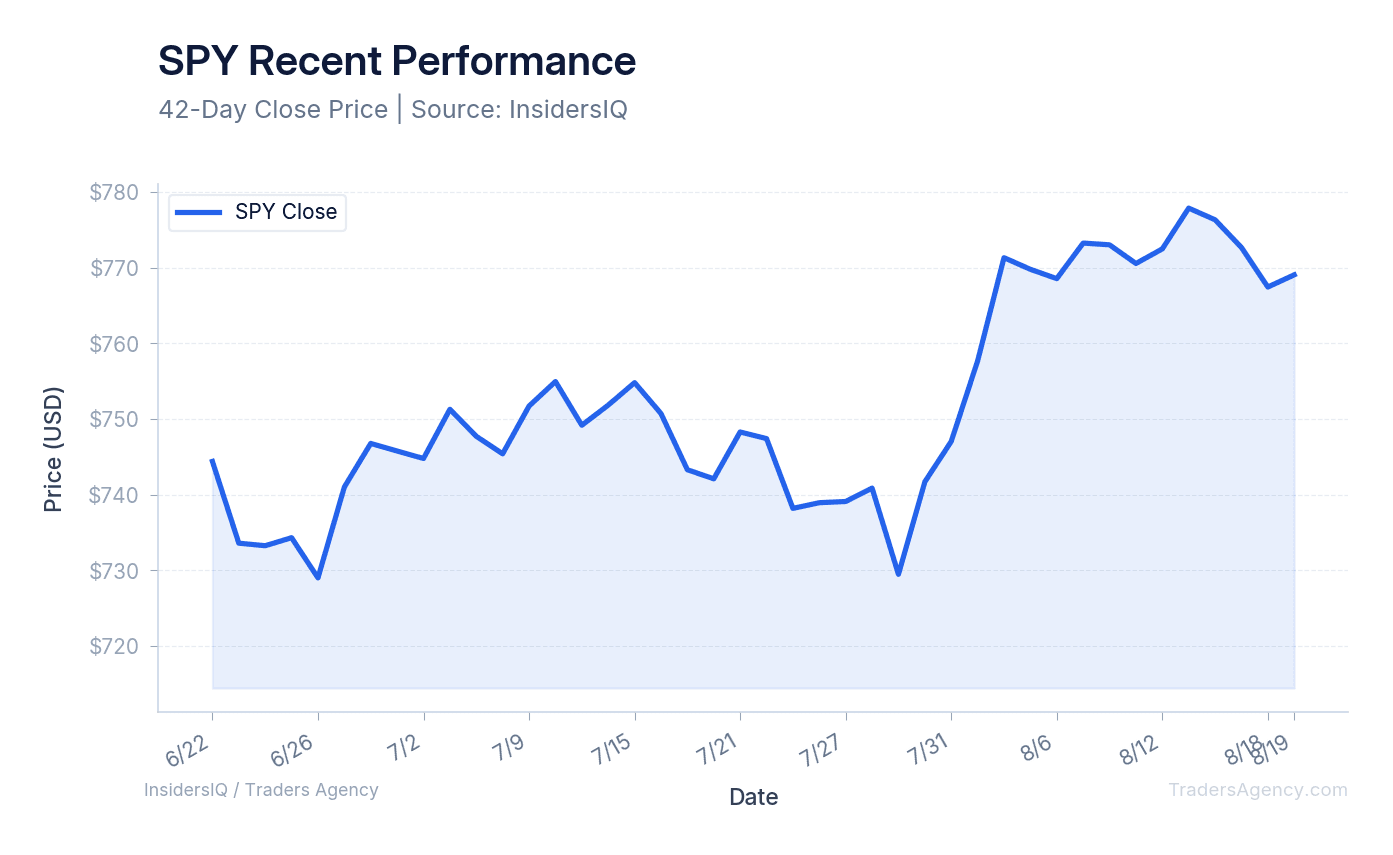
When bond volatility drops, equity traders typically gain confidence. The Fear & Greed index at 68 indicates that buyers are actively participating in the current market environment. Retail interest also remains steady, with WallStreetBets showing 2,748 mentions and a sentiment score of 0.03. We believe the Treasury's intervention may remove a significant layer of uncertainty for stock operators.
What Should Traders Watch After the Treasury Buyback Announcement?
Our team is monitoring several specific developments following this announcement. The mechanics of the buybacks could influence the next major trading setups.
1. Buyback Execution Dates
Traders should watch the exact schedule of government purchases. The days when the Treasury actively buys bonds often feature increased intraday liquidity and tighter bid-ask spreads.
2. Yield Curve Reactions
We're keeping a close eye on the long end of the curve. The buybacks target specific maturities, which could lead to sudden shifts in the yield curve spread.
3. Equity Sector Rotations
With bond pressure easing, dividend-yielding sectors often see renewed interest. Capital flows could shift if fixed-income yields stabilize.
Key Signals We're Tracking:
- Changes in the Fear & Greed index from its current level of 68
- Fluctuations in SPY following the recent +3.31% gain
- Updates on retail sentiment metrics, specifically the 2,748 mentions we observed today
The Bottom Line
The Treasury's announcement has shown signs of easing immediate pressure on the bond market. We view this treasury buyback program as a potentially significant structural development that traders may want to factor into their near-term strategies. Our team will continue tracking the execution of these purchases and their potential impact on both fixed income and broader equities. The window to position ahead of any next leg of this move may be open right now.
Want expert trading insights delivered daily?
Join thousands of traders who rely on Traders Agency for market analysis and trade ideas.
Join Traders AgencyKey Takeaways
- The U.S. Treasury announced a bond buyback program, purchasing previously issued debt before maturity, which has eased immediate pressure on the bond market.
- SPY has gained +3.31% over the past 60 days, with the Fear & Greed Index sitting at 68, reflecting a moderately greedy market environment.
- WallStreetBets sentiment registered at 0.03 across 2,748 mentions, providing a baseline retail sentiment reading at the time of this analysis.
- Treasury buybacks target specific bonds to improve market function and influence yield curves, making them relevant to both fixed-income and equity traders.
- The article flags the buyback program as a structural shift that traders should factor into near-term strategies, though execution and follow-through remain key variables to monitor.
DISCLAIMER: Traders Agency does not offer financial advice. The information provided is for educational purposes only and should not be considered financial advice. Traders Agency is not responsible for any financial losses or consequences resulting from the use of the information provided. Trading carries inherent risks and may not be suitable for all individuals. You are advised to conduct your own research and seek personalized advice before making any investment decisions, recognizing the potential risks and rewards involved.
See more from Traders Agency on Google
Make us a preferred source and our market analysis will appear more prominently in your Google Search, Top Stories, and AI results.
Add to Preferred Sources