
A dangerous combination of rising inflation expectations and bond yields that have not risen sufficiently to compensate investors is creating serious risk for equity markets. Our research team is tracking the disconnect between stock valuations and fixed-income conditions, and the data points to a potential 15% drop in the S&P 500 over the next three to six months. This toxic cocktail threatening stocks demands attention. Traders holding long equity positions need to evaluate their exposure immediately, before this thesis becomes mainstream consensus.
The Warning: The Zweig-DiMenna hedge fund's proprietary model projects rising inflation over the next three to six months while bond yields remain too low to compensate investors. Their analysis points to a potential 15% decline in the S&P 500.
What Is the "Toxic Cocktail" Threatening Stocks Right Now?
The threat is a dangerous combination of rising inflation and bond yields that simply aren't keeping pace. The Zweig-DiMenna hedge fund's proprietary model projects inflation will accelerate over the next three to six months, while current bond yields have not risen sufficiently to compensate investors for that incoming risk.
Our team has been analyzing the mechanics of this setup. When inflation accelerates, fixed-income instruments typically need to offer higher yields to attract capital and protect purchasing power. The source data suggests this adjustment is not happening at the pace it should. Investors face an environment where both equities and bonds carry elevated risk from the macroeconomic shifts ahead.
We see this as a clear warning sign for the broader market. The projection of a 15% drop in the S&P 500 aligns with the pressure building across the financial system. This kind of imbalance rarely resolves without significant volatility. Traders should prepare for a rocky three to six months as inflation data becomes public reality and forces a market repricing.
Dissecting the Data Behind the Warning
Here is what we know based on the market data we track. The Zweig-DiMenna model explicitly forecasts rising inflation over the next three to six months. At the same time, our verified market data shows the SPY ETF has recorded a massive 60-day price change of +13.10%.
Equities have surged while the bond market tells a completely different story. The TLT ETF, which tracks long-term Treasury bonds, shows a 60-day price change of -2.87%. This divergence is the mathematical foundation of the warning. Bond prices are falling, but the resulting yields are still not high enough to offset the inflation that models project.
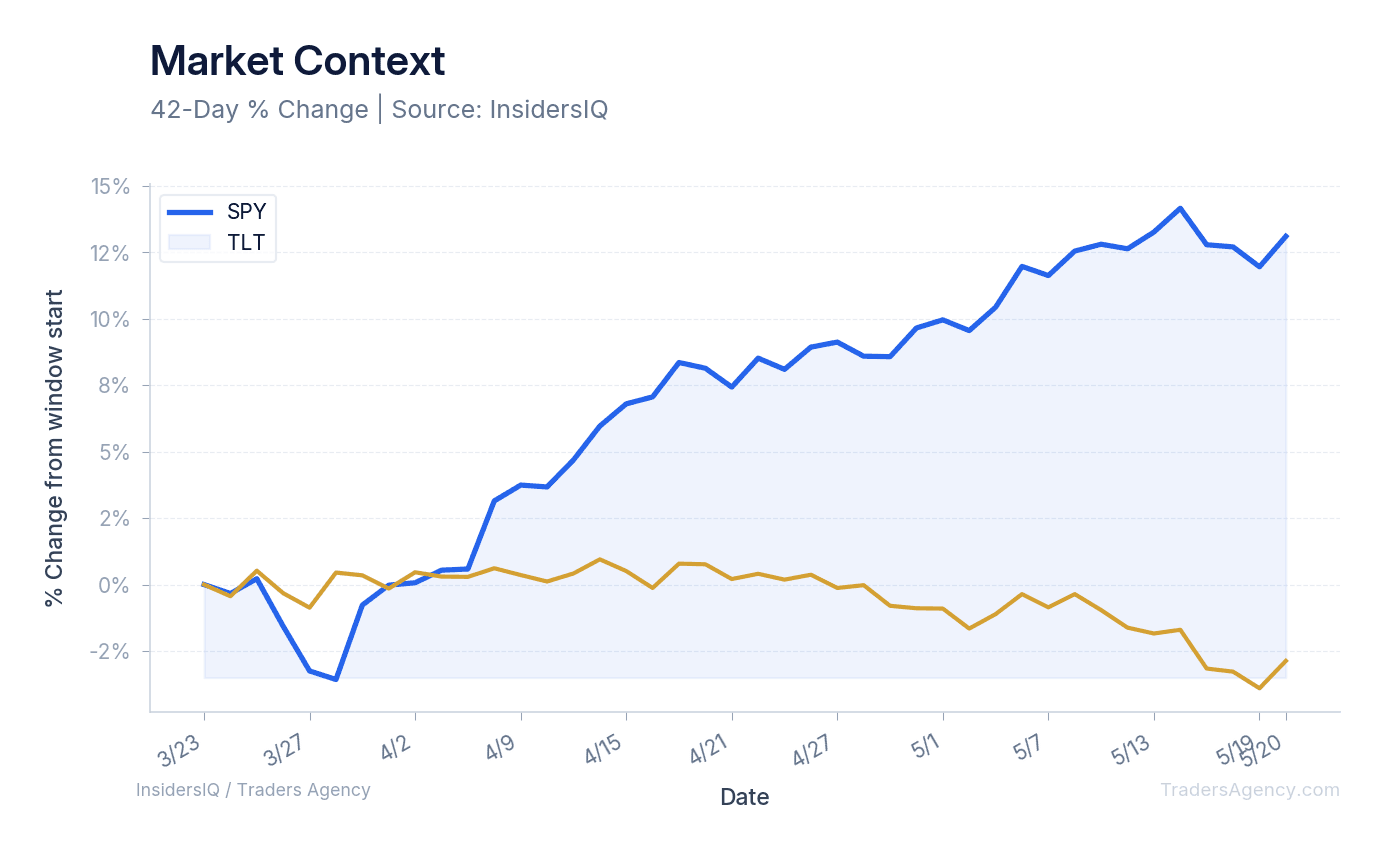
The data we're watching suggests that the +13.10% rally in SPY is built on borrowed time. When a major fund calls out insufficient bond yields, they are signaling that the cost of capital is fundamentally mispriced. Our analysis indicates that this mispricing cannot last indefinitely.
Could the S&P 500 Really Drop 15%?
Yes, and the math supports it. With the SPY ETF already up +13.10% over the last 60 days, equity markets are highly extended. A sudden realization of rising inflation could easily trigger a 15% correction from these elevated levels.
Sentiment Check: The Fear and Greed Index sits at 68, placing the broader market firmly in "Greed" territory. When this reading follows a double-digit percentage rally, downside risk multiplies. Traders are complacent, and complacency breeds aggressive sell-offs.
A 15% drop would wipe out the entire 60-day gain of +13.10% and push the index into negative territory for the quarter. We believe this projection is a real mathematical probability if inflation rises over the next three to six months without a corresponding adjustment in bond yields. The higher the market climbs in a state of greed, the harder the eventual reversion to the mean will be.
How Do Rising Bond Yields Affect Stock Prices?
Rising bond yields affect stock prices by offering a competing, lower-risk return for investors. When inflation rises, bond yields typically follow. The current problem is that yields have not risen sufficiently, meaning investors are taking on excessive equity risk without adequate fixed-income alternatives.
The relationship between SPY and TLT is currently fractured. Normally, if inflation is expected to rise, bond yields spike aggressively to compensate. While TLT is down -2.87%, indicating some yield increase, it is simply not enough. The toxic cocktail exists exactly in this yield gap.
If bond yields suddenly spike to catch up with inflation forecasts, capital will rapidly drain from equities. A sudden exit from SPY to capture higher yields is exactly what triggers a 15% drop. Our team views the current -2.87% move in TLT as just the beginning of a much larger fixed-income repricing event that will drag equities down with it.
Want expert trading insights delivered daily?
Join thousands of traders who rely on Traders Agency for market analysis and trade ideas.
Join Traders AgencyIs the 60/40 Portfolio in Trouble Right Now?
The traditional 60/40 portfolio faces severe risk under this inflation forecast. With equities up +13.10% and bonds down -2.87%, the balanced portfolio is entirely dependent on the stock market holding its inflated value. If the equity side fails, the bond side currently offers no protection.
Retail traders appear largely unaware of the impending shift. Our sentiment tracking shows WallStreetBets sentiment at a completely neutral 0.03, accompanied by 2,748 mentions. A sentiment score of 0.03 indicates that retail traders lack strong conviction in either direction, despite the massive 60-day rally in the broader market.
The 2,748 mentions across retail boards show that people are talking, but the low sentiment score reveals deep confusion. We read this as a sign of retail exhaustion. If the S&P 500 begins its projected 15% drop, there is no retail buying pressure waiting to catch the falling knife. The 60/40 portfolio risk is amplified because both the equity and fixed-income sides are vulnerable during the three-to-six-month inflation window.
What Should Traders Watch Over the Next 3 to 6 Months?
Our research team is monitoring specific data points as this situation develops. The three-to-six-month timeline gives traders a specific window to adjust their positions. We are treating this timeframe as a countdown to a major volatility event.
We are watching the following developments closely:
1. SPY Support Levels
The SPY ETF must defend the gains made during its +13.10% 60-day run. If inflation data prints higher than expected, we expect immediate selling pressure. Traders should watch for breaks below recent consolidation zones, as a 15% drop will happen in rapid technical stages.
2. TLT Price Action
The TLT ETF is already down -2.87%, but the warning is clear: yields are still not high enough. This means TLT likely has much further to fall. Traders should monitor long-term bond ETFs for accelerated selling, which will confirm the inflation thesis.
3. Sentiment Shifts
The Fear and Greed Index at 68 represents a major vulnerability. We are watching for a rapid shift from Greed to Fear. We're also monitoring WallStreetBets activity. If the 2,748 mentions spike alongside a drop in the 0.03 sentiment score, it will signal retail panic and accelerate downside momentum.
4. Institutional Confirmation
While the Zweig-DiMenna model provides the specific three-to-six-month timeline, their thesis aligns with broader institutional warnings that asset bubbles eventually crack under inflationary pressure. We are watching for other institutional models to confirm the inflation data and timeline.
The Bottom Line
Our research team views this warning as a highly credible threat to current equity valuations. A toxic cocktail is actively brewing between rising inflation expectations and bond yields that have not risen sufficiently to compensate. The math simply does not support current market pricing.
With SPY up +13.10% and the Fear and Greed Index sitting at 68, the market is perfectly positioned for a sharp reversal. We are preparing for the possibility of a 15% drop over the next three to six months. Traders should evaluate their exposure to both equities and long-term bonds immediately.
Want expert trading insights delivered daily?
Join thousands of traders who rely on Traders Agency for market analysis and trade ideas.
Join Traders AgencyKey Takeaways
- The Zweig-DiMenna hedge fund's proprietary model projects a potential 15% decline in the S&P 500 over the next three to six months, driven by accelerating inflation and lagging bond yields.
- SPY is currently up 13.10% and the Fear and Greed Index sits at 68, a combination the analysis flags as positioning the market for a sharp reversal rather than continued gains.
- The core risk is a timing mismatch: inflation is expected to accelerate while bond yields have not risen enough to compensate investors for that incoming purchasing power erosion.
- The 60/40 portfolio faces compounded pressure because long-term bonds are also vulnerable in this environment, meaning the traditional hedge may not provide the protection investors expect.
- Traders with long equity exposure are advised to evaluate their positions before this thesis reaches mainstream consensus, when repositioning becomes more costly and crowded.
DISCLAIMER: Traders Agency does not offer financial advice. The information provided is for educational purposes only and should not be considered financial advice. Traders Agency is not responsible for any financial losses or consequences resulting from the use of the information provided. Trading carries inherent risks and may not be suitable for all individuals. You are advised to conduct your own research and seek personalized advice before making any investment decisions, recognizing the potential risks and rewards involved.
See more from Traders Agency on Google
Make us a preferred source and our market analysis will appear more prominently in your Google Search, Top Stories, and AI results.
Add to Preferred Sources