Hey, Ross here:
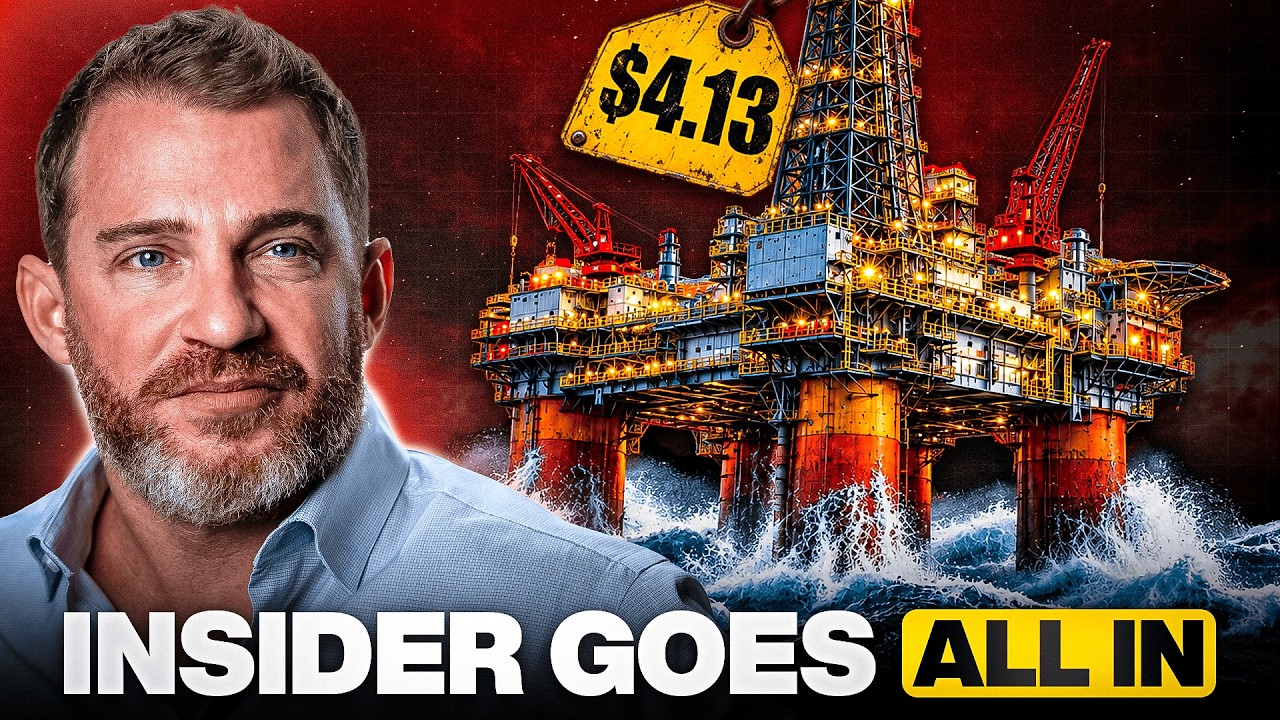
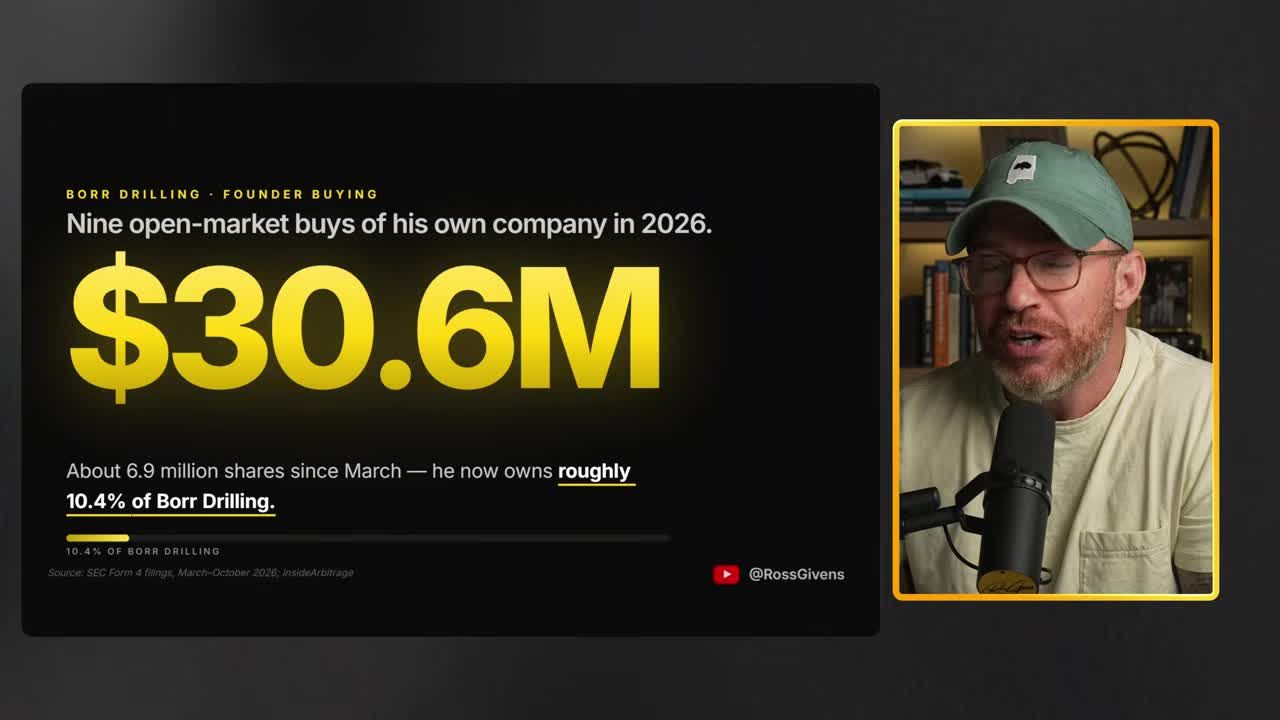
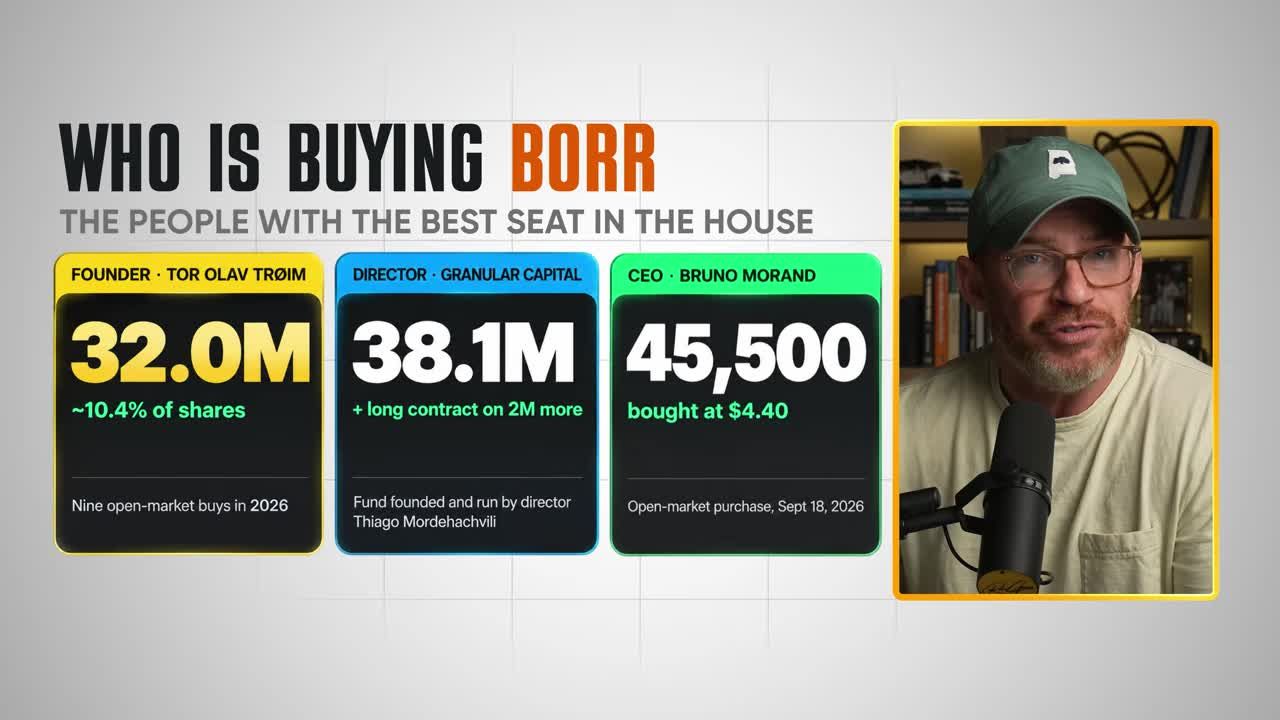
Borr Drilling insider buying just hit a level that should grab every trader's attention. Tor Olav Troim, one of the founders of Borr Drilling (ticker: BORR), bought 1.5 million shares of his own company's stock four days ago for roughly $6.5 million. Since March, he's poured more than $30 million of his own money into this $4 stock, and the lower the price drops, the bigger his buys get.
That's not a coincidence. That's conviction.
The stock is down about 30% since May. Most investors run from a chart like that. Troim is doing the opposite, and Monday's purchase was his largest single buy since he helped found the company back in 2016. When a founder with this track record starts loading up at these levels, it's worth asking what he sees that the rest of the market doesn't.
Why Is This Borr Drilling Insider Buying Considered Rare?
Bottom Line: Borr Drilling founder Tor Olav Troim has bought over $30 million of stock since March, with purchases getting bigger as the price falls toward $4. That pattern of insider buying into weakness, rather than selling, signals conviction worth watching even though it doesn't guarantee where the stock goes next.
Most insider transactions are sales. This is the opposite.
Borr Drilling insider buying like this stands out because the vast majority of insider transactions are sales, and most sales happen for reasons that have nothing to do with the company's outlook. Troim's purchases are open-market buys, funded with his own cash, and they're accelerating as the price falls.
Every time an executive or director buys or sells their own company's stock, they're required to report it to the SEC on a Form 4 within two business days. A big Wall Street fund only has to disclose its holdings four times a year. Insiders don't get that luxury, and that transparency is exactly why these filings matter.
Read enough of them and a pattern becomes obvious: insider selling is not automatically a red flag. Executives sell stock to buy houses, pay taxes on bonus shares, send kids to college, or simply diversify. Many of those sales are scheduled months in advance through a 10b5-1 plan specifically to avoid any appearance of insider trading. Selling tells you almost nothing on its own.
Buying is a different story. There's only one real reason an insider spends his own money on open-market shares: he believes the stock is worth more than it's currently priced.
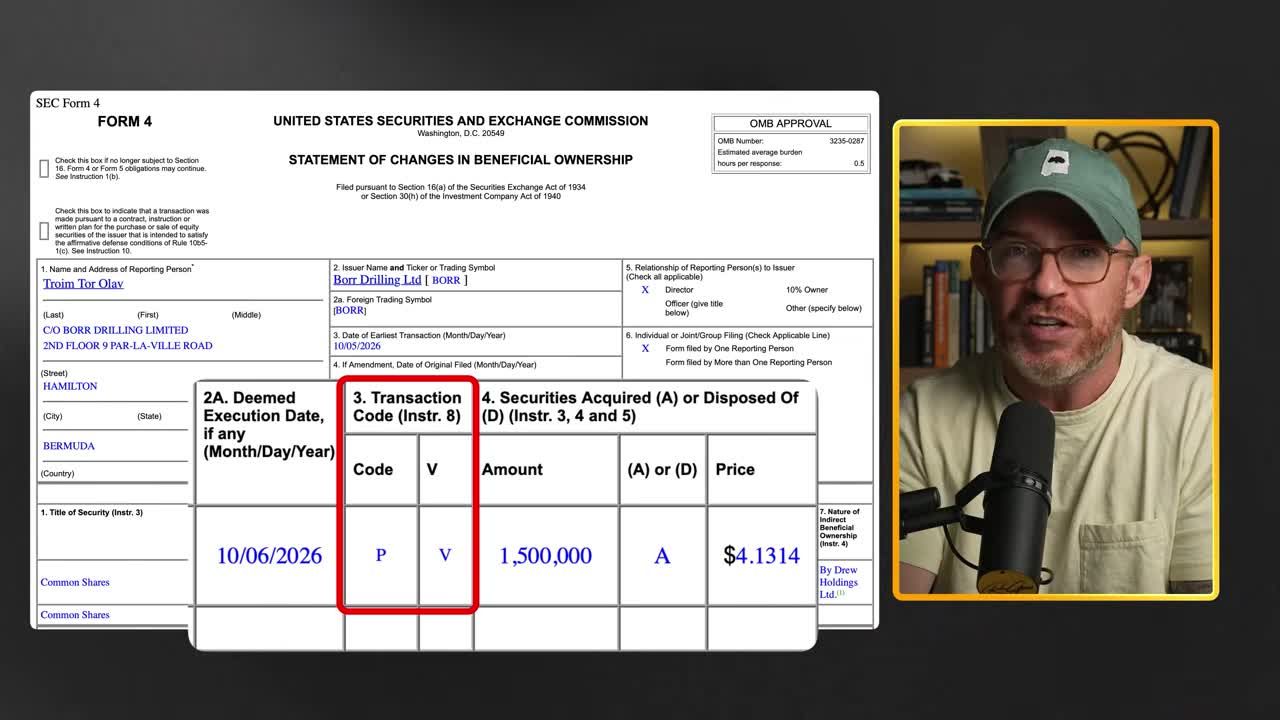
Troim's October 5th filing carries a transaction code "P." That means an open-market purchase at roughly $4.13 per share, not a grant of stock as compensation. He went out and paid the same price any retail trader could have paid.
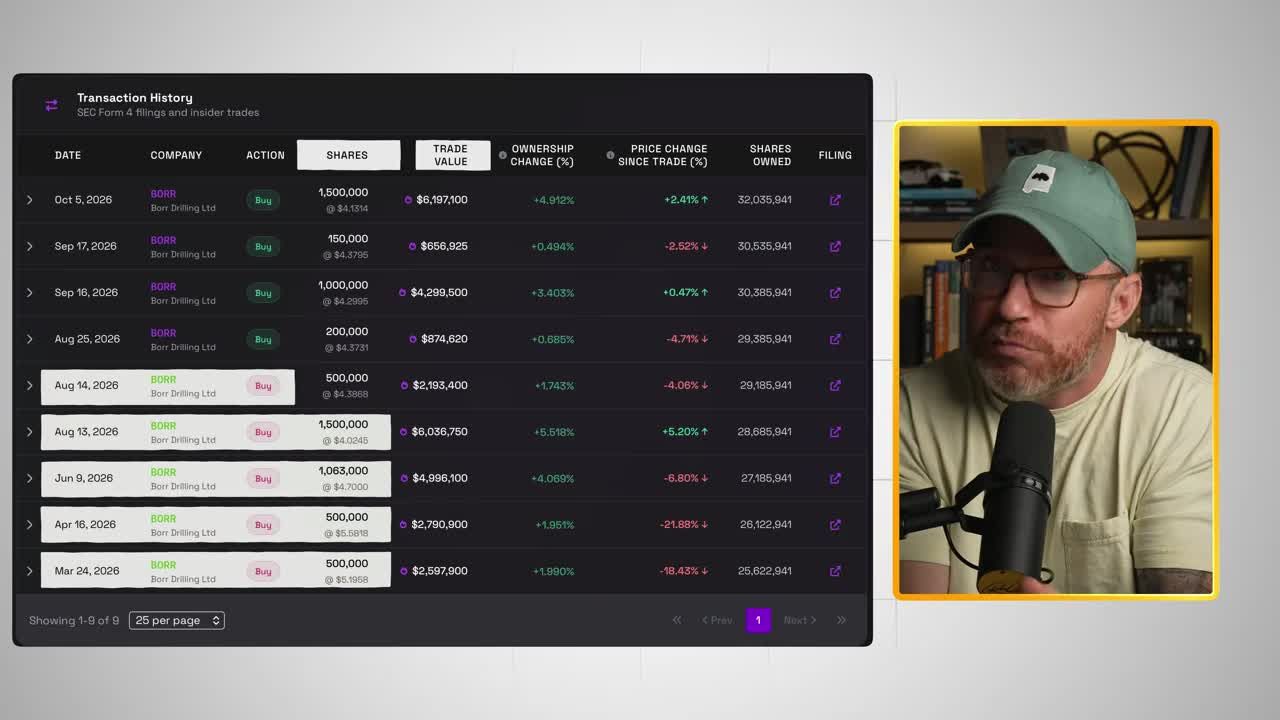
His full transaction history tells the real story:
- March and April: 500,000 shares at a time, with the stock above $5
- June: just over 1 million shares as the price slipped to $4.70
- August: 1.5 million shares in a single day as the stock slid to about $4
- October 5th: another 1.5 million shares around $4.13
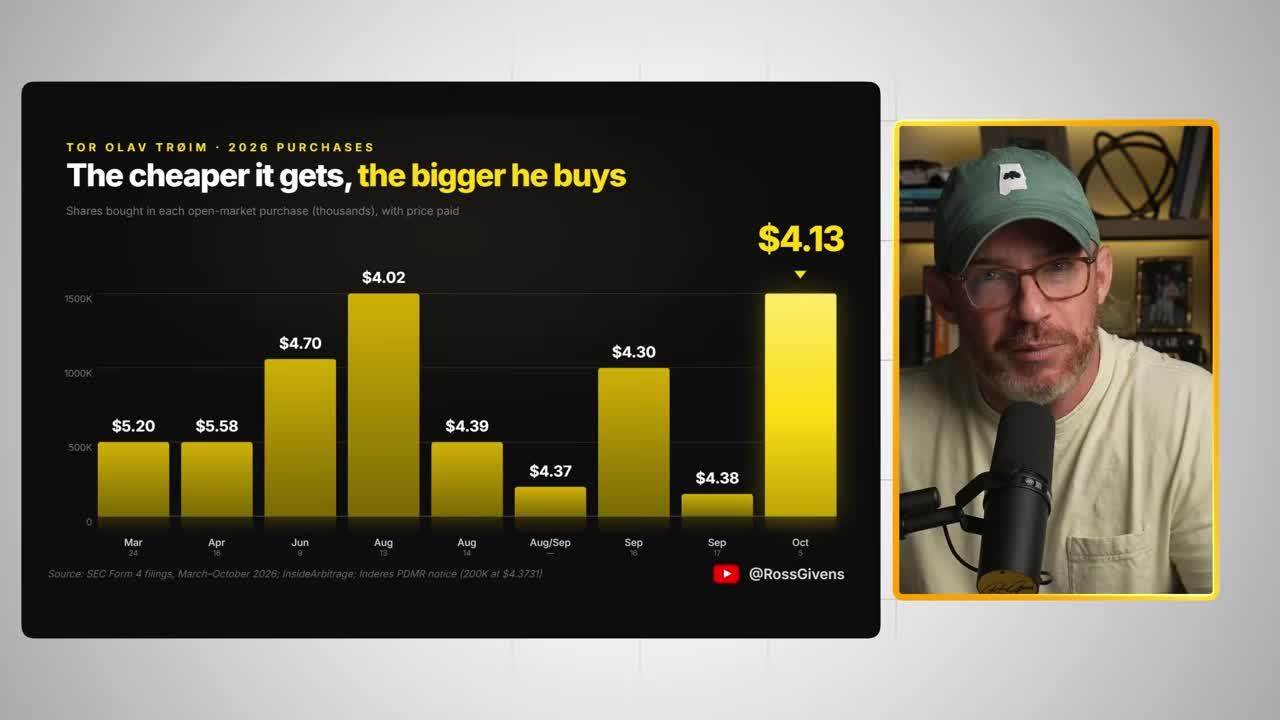
This isn't dollar-cost averaging. This is a man systematically building a position and buying harder every time the price gets cheaper. The biggest purchases line up almost exactly with the lowest prices: $4.02 and $4.13.
And he's not alone. BORR's CEO, Bruno Morand, bought 45,500 shares on September 18th. Company director Jeffrey Curry bought 125,000 shares in August. The people with the best seat in the house are all on the same side of this trade.
Who Is Tor Olav Troim?
Twenty years building offshore oil companies, and one brutal lesson.
Troim isn't a random executive with a line item in his compensation package. He's a naval architect by training who spent almost 20 years as the right-hand man of John Fredriksen, the Norwegian shipping tycoon, helping build some of the biggest names in offshore oil.
He ran Frontline, one of the world's largest oil tanker fleets, and Golar LNG, which moves liquefied natural gas around the globe. He also helped turn Seadrill into one of the largest offshore drillers on the planet. In 2014, he and Fredriksen parted ways.
Two years later, the offshore drilling industry was in the gutter. Oil had crashed, rigs sat idle everywhere, and companies were going bankrupt. That's precisely when Troim helped launch Borr Drilling, buying rigs out of the wreckage, the first couple of them for about a quarter of what they cost to build.
Buy when nobody else wants it. That's his playbook, and he said as much at an industry conference in Oslo back in 2018, warning a room full of investors: "If you're going to hang on until the end, you're going to lose all your money."
This isn't a cheerleader talking up his own stock. This is a man who has watched this business crush people and knows exactly how brutal it can be. When that guy puts $30 million into his own drilling stock in seven months, it's fair to assume he's done the math.
Get an entire year of live weekly mentoring sessions, my newsletter, indicators, bonus reports, tons more. Click the link and I'll see you in the next live session.
Join my Black Ops Trading ClubWhat Does the $30 Million in Insider Buying Signal?
Three developments the market hasn't priced in yet.
The $30 million says Troim believes BORR's recent earnings drop was temporary, not structural, and that rising day rates combined with a stalled global rig supply are about to push cash profits higher. Three specific developments support that thesis.
1. The Worst Quarter Is Behind Them
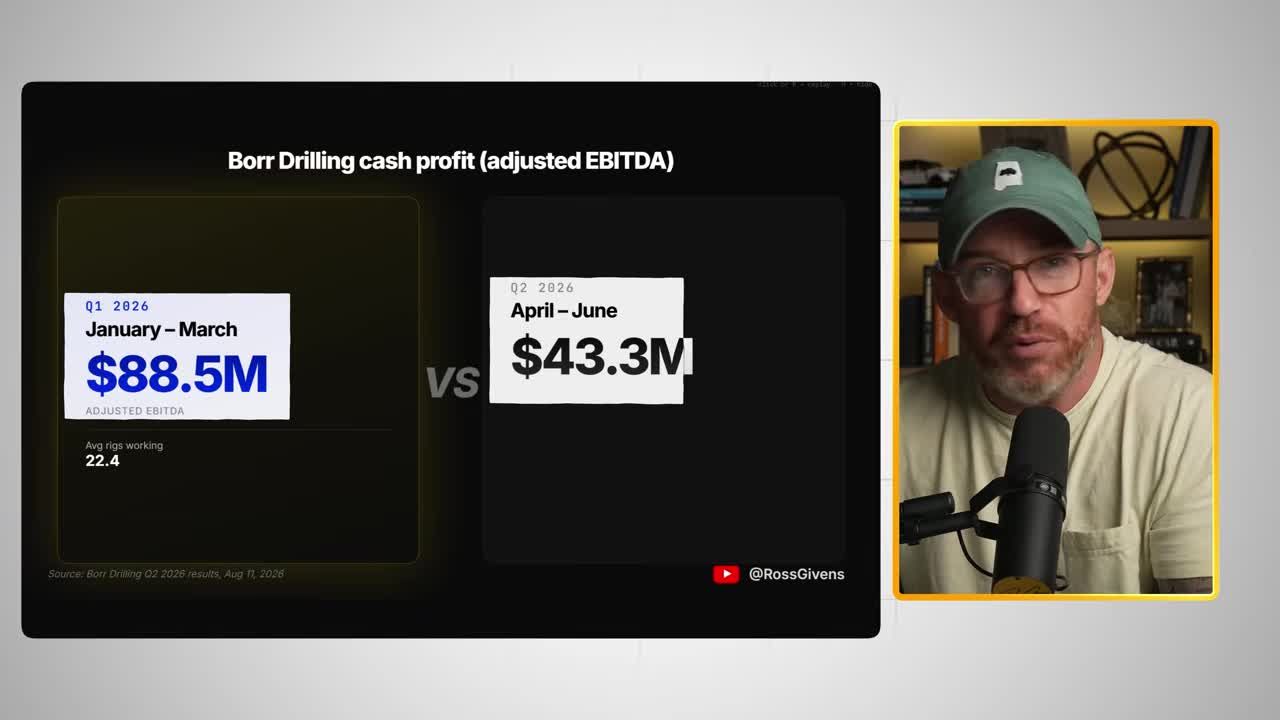
In the second quarter, Borr's cash profit (what Wall Street calls EBITDA) got cut in half, falling from $88.5 million in the first quarter to $43.8 million. Most stocks sell off hard when profit gets cut in half, and BORR did exactly that. One firm, SCB, slapped a sell rating on the stock around the same time.
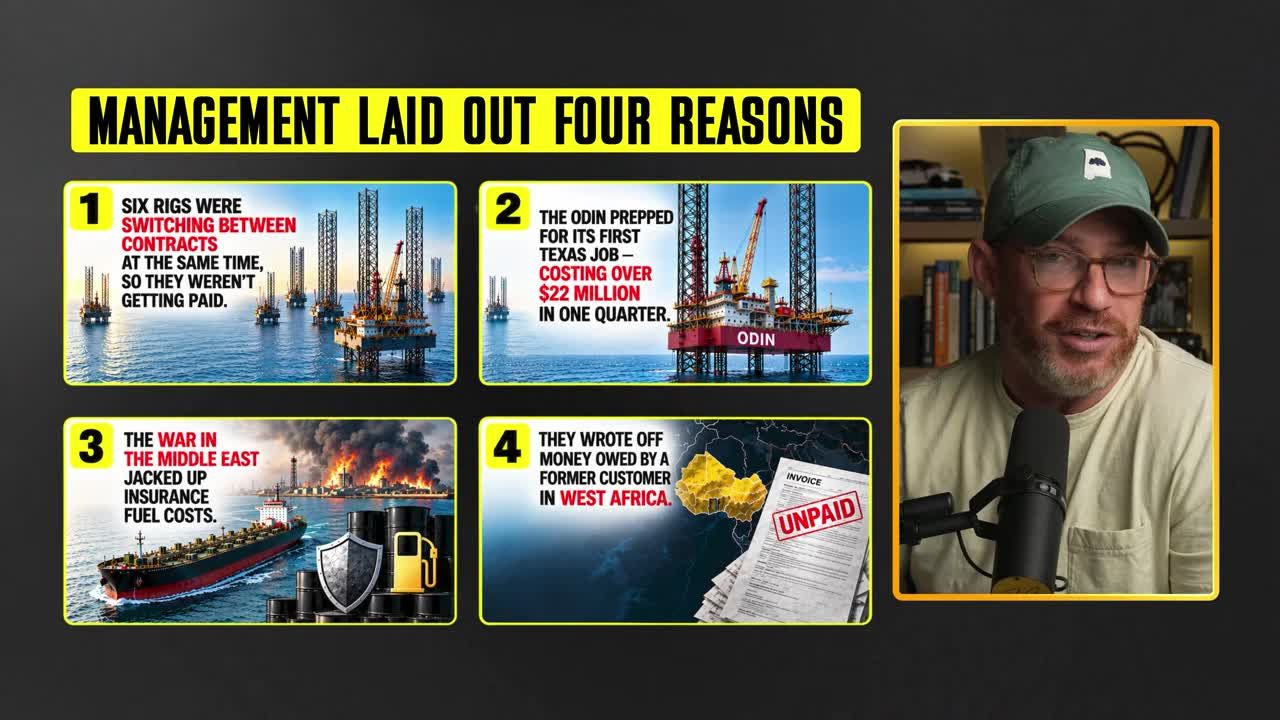
Now look at why it happened. Management laid out four specific, mostly one-time reasons for the drop:
- Six rigs were switching between contracts simultaneously, so none of them were earning
- The Odin rig was prepping for its first job off the coast of Texas, costing more than $22 million in the quarter
- The war in the Middle East drove up insurance and fuel costs
- The company wrote off money owed by a former customer in West Africa
Those are largely one-time hits, and most are already fixed. All six rigs are back working, and the Odin started earning its day rate on September 11th. Management expects about 23 rigs working in the third quarter, and they've said cash profits should "improve significantly."
We'll find out exactly how much when Borr reports in mid-November. In the meantime, a man sitting on the board has bought nearly 5 million shares over the last two months.
2. Nobody Is Building New Rigs
In most industries, rising prices attract competition. Someone builds more supply, and prices come back down. That isn't happening here.
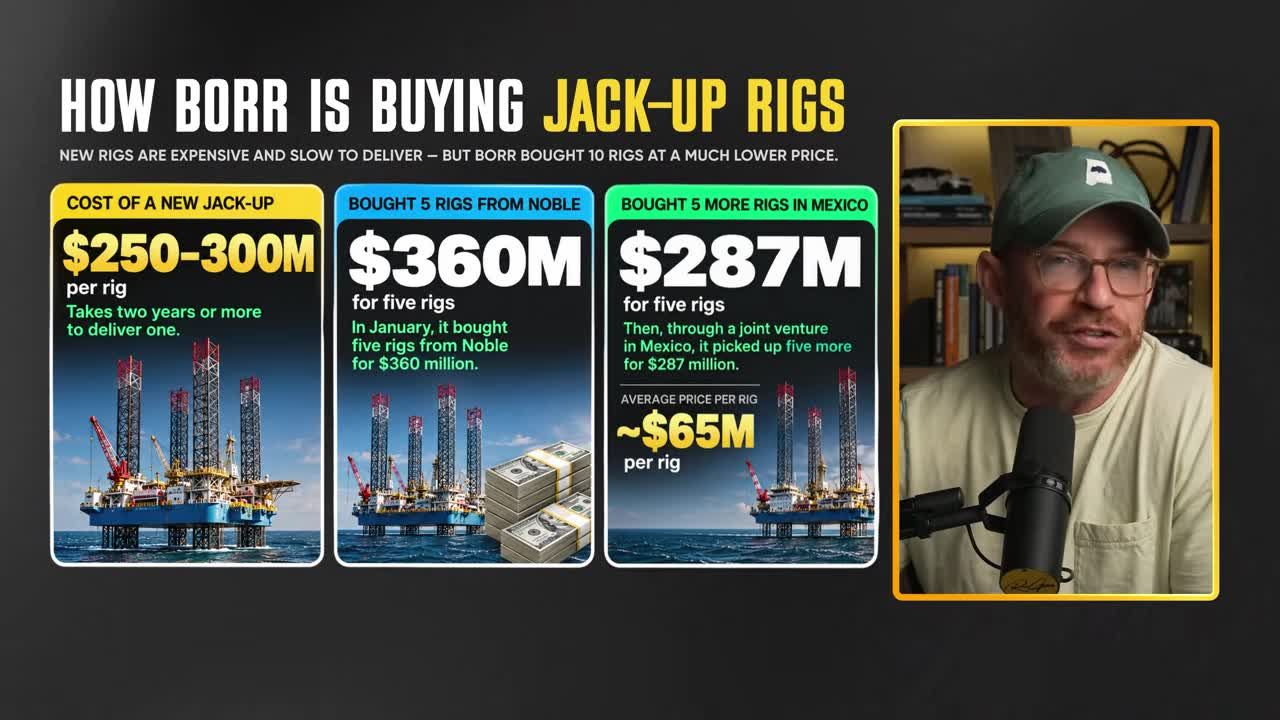
According to Borr's own investor presentation, the order book for new jackup rigs is basically non-existent, while about 30% of the world's jackup fleet is already past retirement age. The reason nobody's building is simple: industry estimates put the cost of a brand-new jackup at $250 to $300 million, and it takes two years to deliver. After the last bust, nobody wants that risk.
In January, the company bought five rigs from Noble for $360 million. Through a joint venture in Mexico, it picked up five more for $287 million. That works out to about $65 million per rig. Same playbook Troim was running in 2016, just at a bigger scale.
3. The World Needs Cheap Barrels
The fighting around the Strait of Hormuz has dragged on for months. Borr's CEO said plainly on the company's last earnings report that the disruption has driven global oil inventories to "exceptionally low levels," and rebuilding them will require sustained production drilling.
Shallow-water oil is some of the cheapest oil you can drill offshore, and jackups are first in line when the world needs barrels fast. Borr has four rigs in the Gulf region across Saudi Arabia, Qatar, and the UAE, and after the fighting forced crews out, those rigs started back up this spring. The company's presentation also flags Middle East opportunities tied to about 17 rigs.
Yes, the war has slowed some contracts in that region. Oil companies there have delayed deals, understandably. But that's a timing problem, not a demand problem. It's not as if the world suddenly needs less oil.
And the contracts keep coming in elsewhere. Since mid-September alone, Borr has announced new work in Vietnam, an extension with Italian oil giant Eni in Europe, a new contract in West Africa, and a Shell extension in Nigeria running into next August.
Why Day Rates Move the Stock
A $10,000 bump per rig turns into real money fast.
A rig costs roughly the same to operate whether it earns $134,000 a day or $234,000 a day. Crew, fuel, and maintenance barely budge. So when day rates rise, almost all of that extra revenue drops straight to profit.
Run the math. If Borr gets just $10,000 more per day across roughly 23 working rigs, that's $230,000 in extra profit per day. Over a year, $84 million. The entire company is worth roughly $1.3 billion.
It gets more powerful than that. Borr carries a lot of debt, roughly a billion dollars after cash, and when a company carries that much leverage, the stock moves more than the business does. If the business gets a little more valuable, shareholders get a lot more valuable, because the lender's piece of the pie stays fixed.
That cuts both ways, and it's part of why this stock has been so volatile. The good news: Borr refinanced nearly all of its debt over the summer, and the big bonds don't come due until the 2030s. That's years of runway for this cycle to play out.
One more wrinkle. Roughly 12% of Borr's shares are sold short. If November earnings land the way management has guided, those shorts may have to cover in a hurry, buying shares back just as new buyers pile in on the good news. That combination can accelerate a move higher fast.
Where Can You Buy BORR Stock?
The chart and the founder point to the same zone.
BORR has been sliding since May while Troim kept buying through the decline. One of the simplest ways to find a buy level on a chart like this is a volume profile, a free TradingView indicator that shows how much trading took place at each price rather than at each point in time.
What it reveals is a large "acceptance area" between roughly $4 and $4.60, a range where buyers and sellers have spent a lot of time in agreement. The stock sits roughly in the middle of that zone right now, after about a 35% drop from the highs. That's late 2024 pricing, and similar to where BORR traded in March 2022.
This stock is a mover. A buck in 2021, nine dollars in 2023, back to two, then up to six. It trends hard in both directions, which is exactly why entry price matters so much here.
The Founder Zone
Troim's average cost for the year is $4.43 a share, the price he paid across the 6.9 million shares behind his $30 million position. That's the number to keep in mind when you weigh this Borr Drilling insider buying against your own entry.
Wall Street analysts covering the stock carry an average price target of about $5. Capital One is at $6. The bears at SCB sit at $3.55. Here's how I frame it: buy in that $4 to $4.70 range, call it the founder zone, and you're paying roughly what the most informed person in the building is paying. Buy under his average, and you're getting it cheaper than he did.
Could the stock fall to $3? Possible, and that's a zone worth loading the boat. Could it fall to $1.80 or $1.90? Doubtful, and if it does, a lot of things went badly wrong along the way.
Final Thoughts on the Insider Signal
This Borr Drilling insider buying is one of the clearer signals in the energy sector right now. A founder with nearly 20 years building offshore oil companies, a man who lived through a full industry collapse and came out the other side buying distressed rigs for pennies on the dollar, is once again putting tens of millions of his own dollars into his own stock. And buying harder every time it gets cheaper.
The fundamentals line up with his behavior. A messy second quarter driven largely by one-time costs. A rig supply that isn't expanding because nobody can justify the cost of building new ones. A global oil market still short on barrels. And a day-rate structure where small improvements in pricing turn into outsized gains for shareholders once you account for the debt load.
None of this guarantees where BORR trades next month. But when the guy who built half of offshore drilling keeps buying his own stock at four bucks a share, that's a signal worth taking seriously.
Get an entire year of live weekly mentoring sessions, my newsletter, indicators, bonus reports, tons more. Click the link and I'll see you in the next live session.
Data sourced from SEC Form 4 filings in the SEC's EDGAR database.
DISCLAIMER: Traders Agency does not offer financial advice. The information provided is for educational purposes only and should not be considered financial advice. Traders Agency is not responsible for any financial losses or consequences resulting from the use of the information provided. Trading carries inherent risks and may not be suitable for all individuals. You are advised to conduct your own research and seek personalized advice before making any investment decisions, recognizing the potential risks and rewards involved.
See more from Traders Agency on Google
Make us a preferred source and our market analysis will appear more prominently in your Google Search, Top Stories, and AI results.
Add to Preferred Sources