


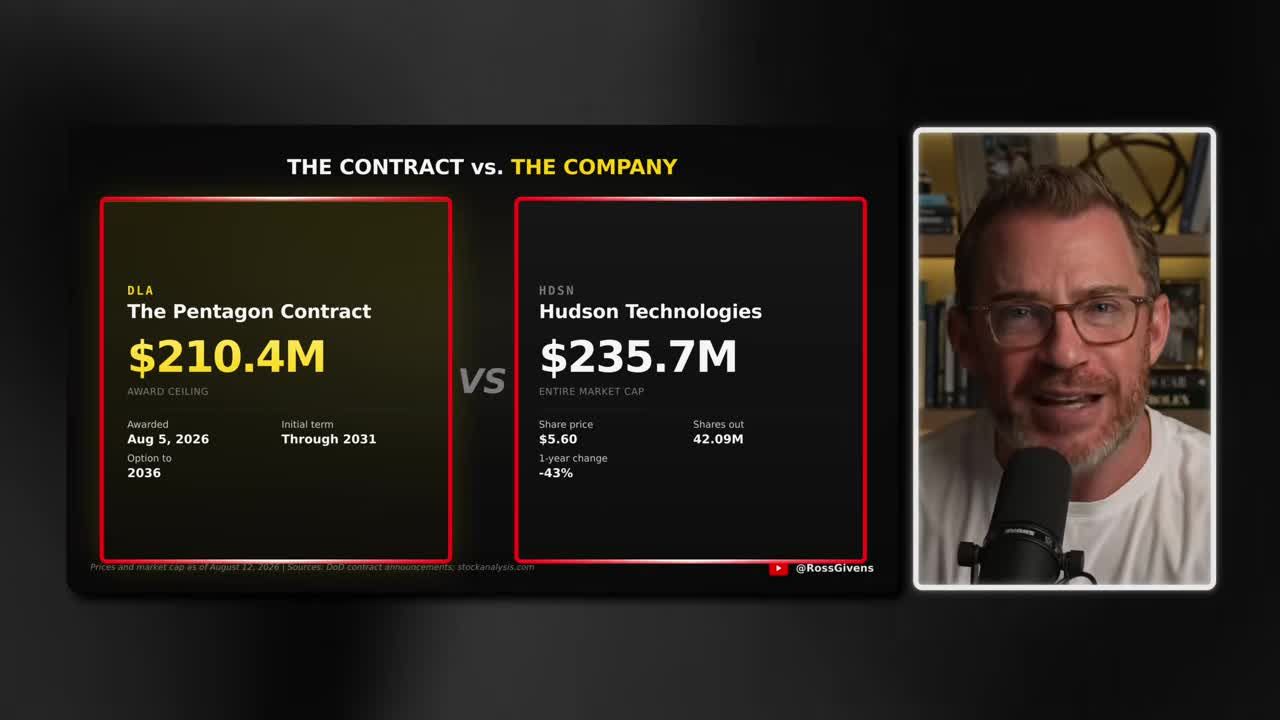
On August 5th, the Defense Logistics Agency signed a contract worth $210 million. The company that won it, Hudson Technologies (ticker HDSN), is worth just $236 million. The entire business. That single Pentagon stock contract represents 89% of the company's total market cap.
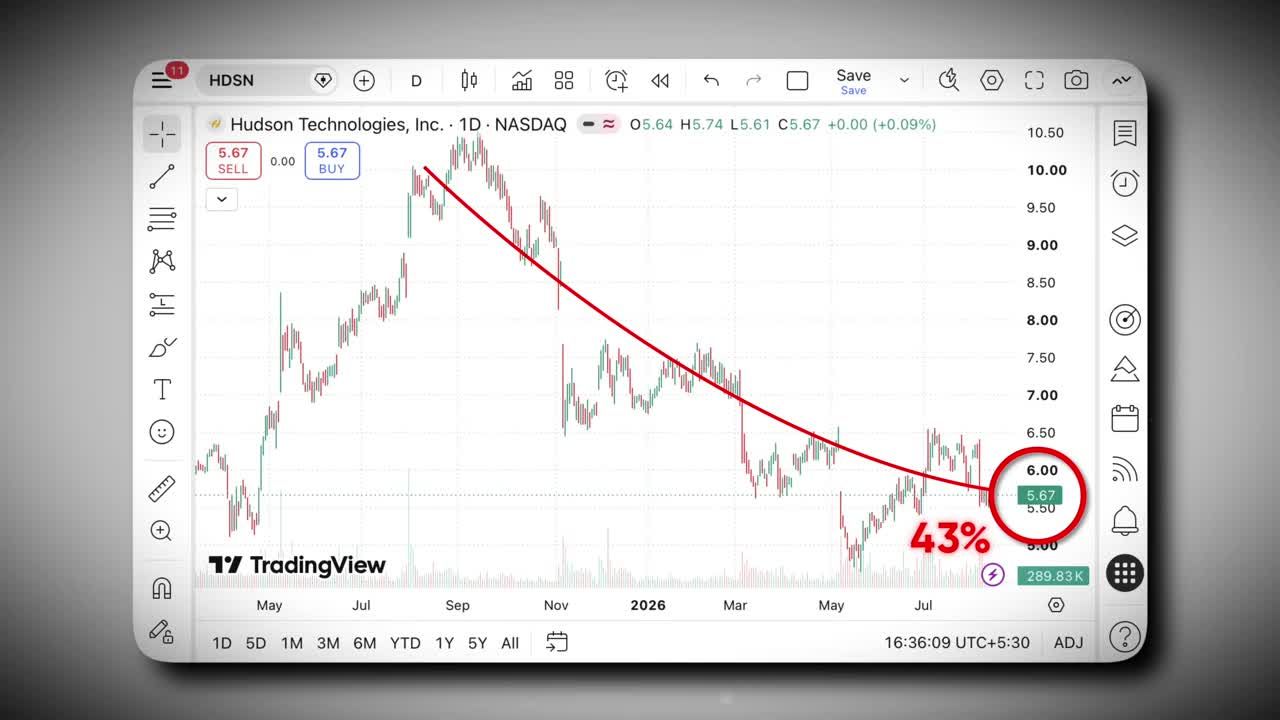
The stock trades for around five bucks a share. It's down 43% over the past year and sits closer to its 52-week low than its high. Yet a tenth of the market cap is sitting on the balance sheet in cash, the company carries zero debt, and sales volume grew 12% last quarter. They even beat Wall Street on the top line.
So why isn't anyone buying? Here's what this company actually does, why the market punished them for winning the biggest contract in their history, and the date that changes what this business is worth.
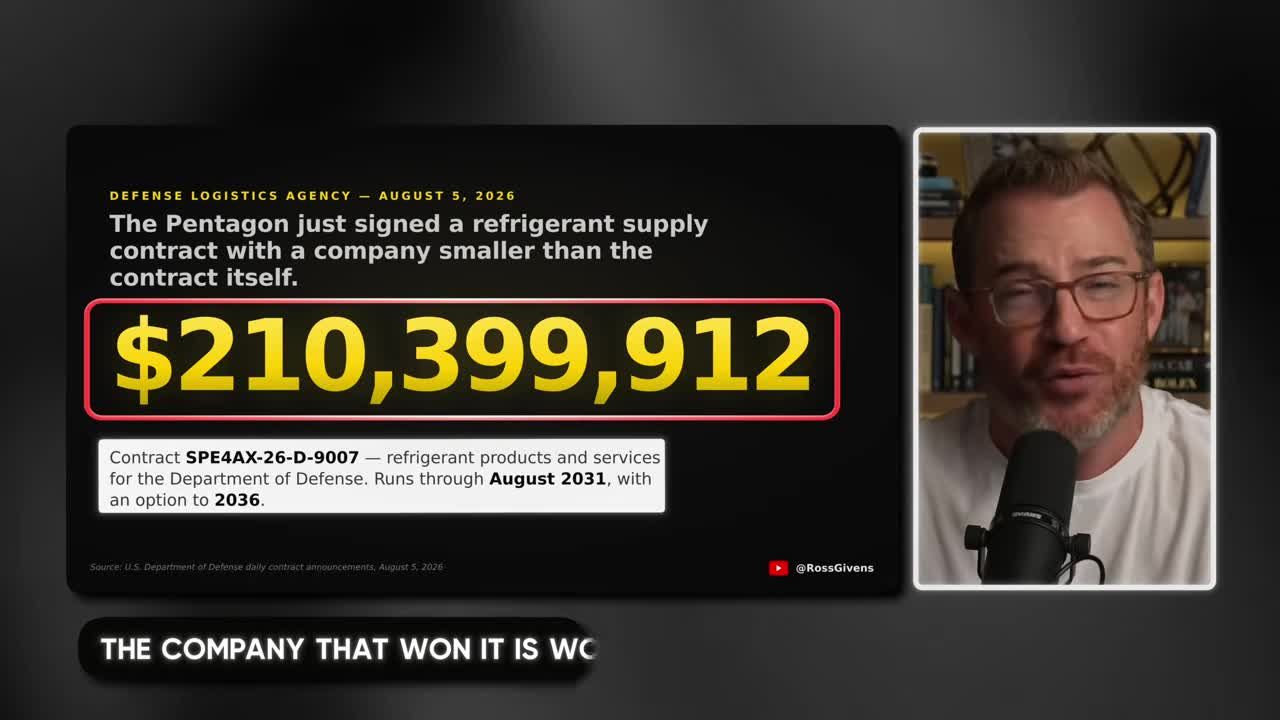
The Pentagon Stock Contract
A $210 million deal for a company worth $236 million
The award makes Hudson Technologies functionally the refrigerant supplier to the United States military. This IDIQ contract runs through August 2031, with an option that carries all the way to 2036.
Every base, every hangar, every ship. Anything the Department of Defense owns that has to stay cold now runs on Hudson.
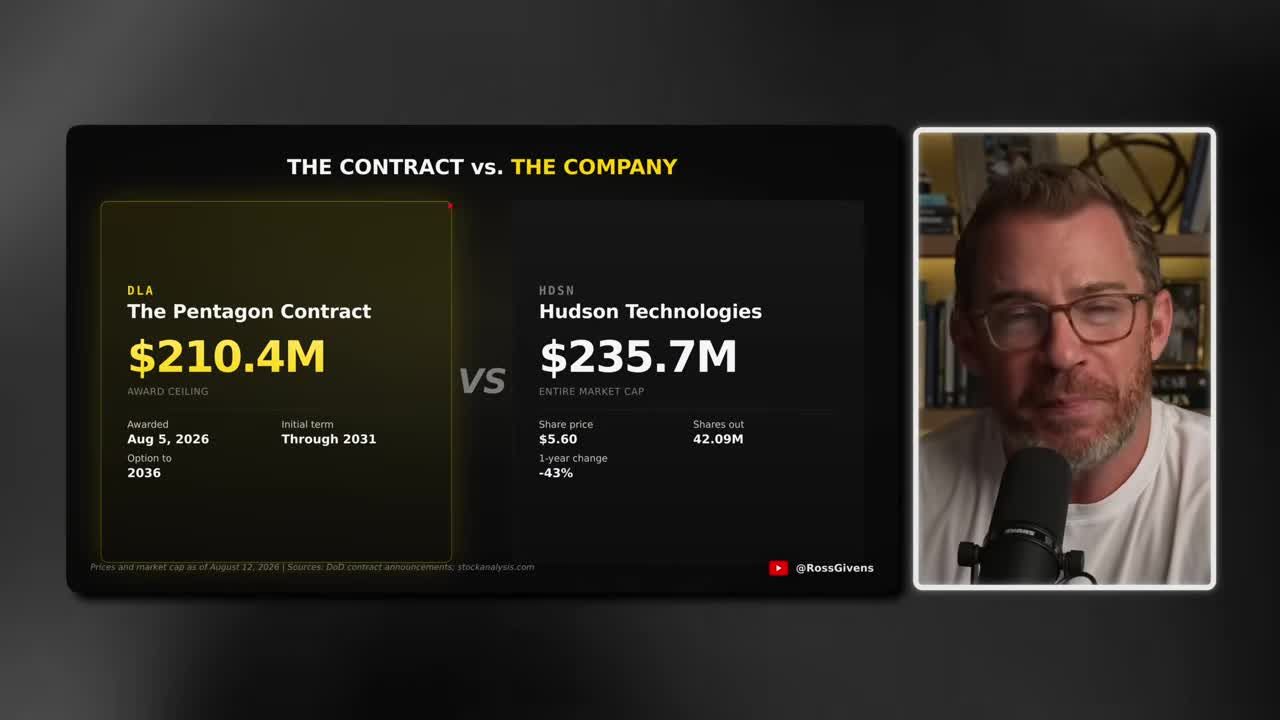
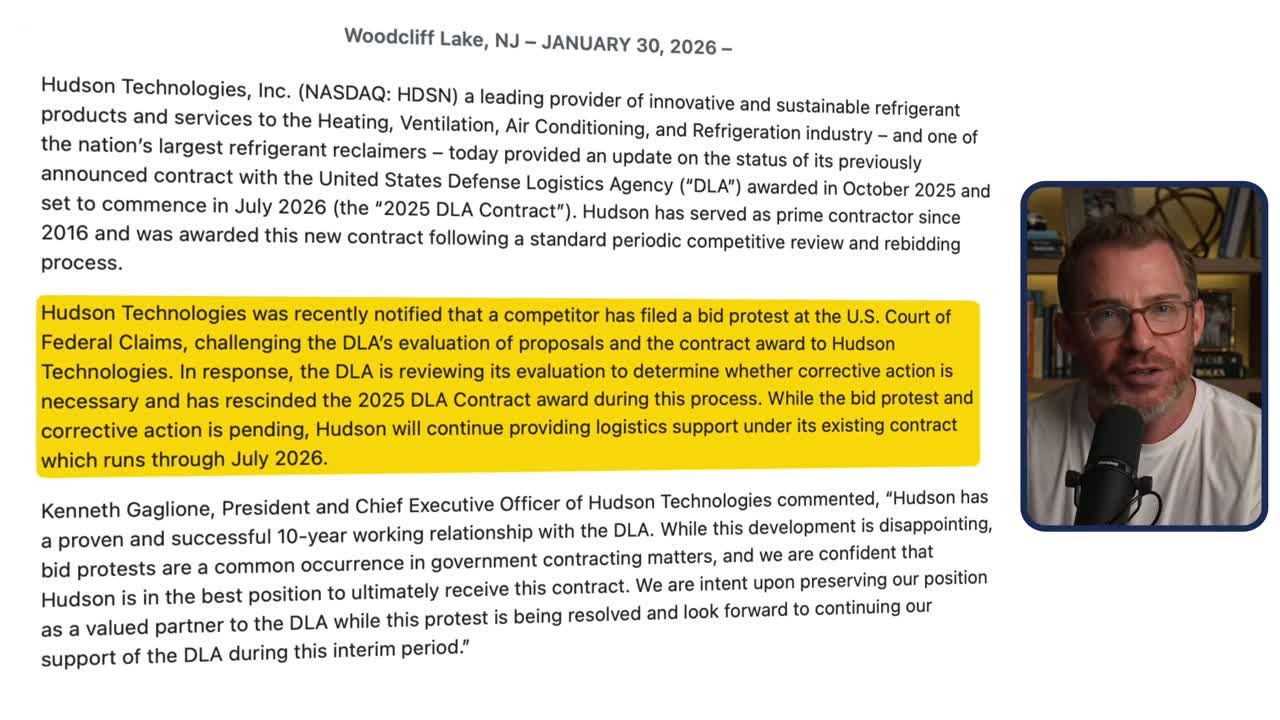
So why did the market miss it? The Pentagon originally handed Hudson this contract back in October of 2025. In January, they took it away. Not because Hudson did anything wrong, but because a competitor filed a bid protest, a formal complaint that the government ran the bidding process improperly.
When that happens, the agency can pull the award back and start over. The contract got rescinded. The market wrote the whole thing off and moved on.
Seven months later, the Defense Logistics Agency ran the process again and gave it right back to Hudson. Wall Street crossed this contract off the ledger in January, and nobody went back and put it on again in August. The market never repriced it.
What Does Hudson Technologies Actually Do?
The business model is dead simple: they recycle air conditioning refrigerant. When an air conditioner, industrial chiller, or the refrigeration rack at your grocery store gets serviced, Hudson takes the old refrigerant, runs it through their plants, cleans it back up to the same spec as brand-new product, and sells it again.
They also sell refrigerant outright and clean contaminated systems for big industrial customers. I know this isn't exciting. There's no AI in it. There's no FDA approval. Nobody on CNBC is going to run a segment on refrigeration reclamation.
And that's exactly why the stock is so overlooked. The boring nature of the business hides the cash generation underneath.
Why Did the Stock Drop After Winning the Contract?
An earnings miss the day after the contract news
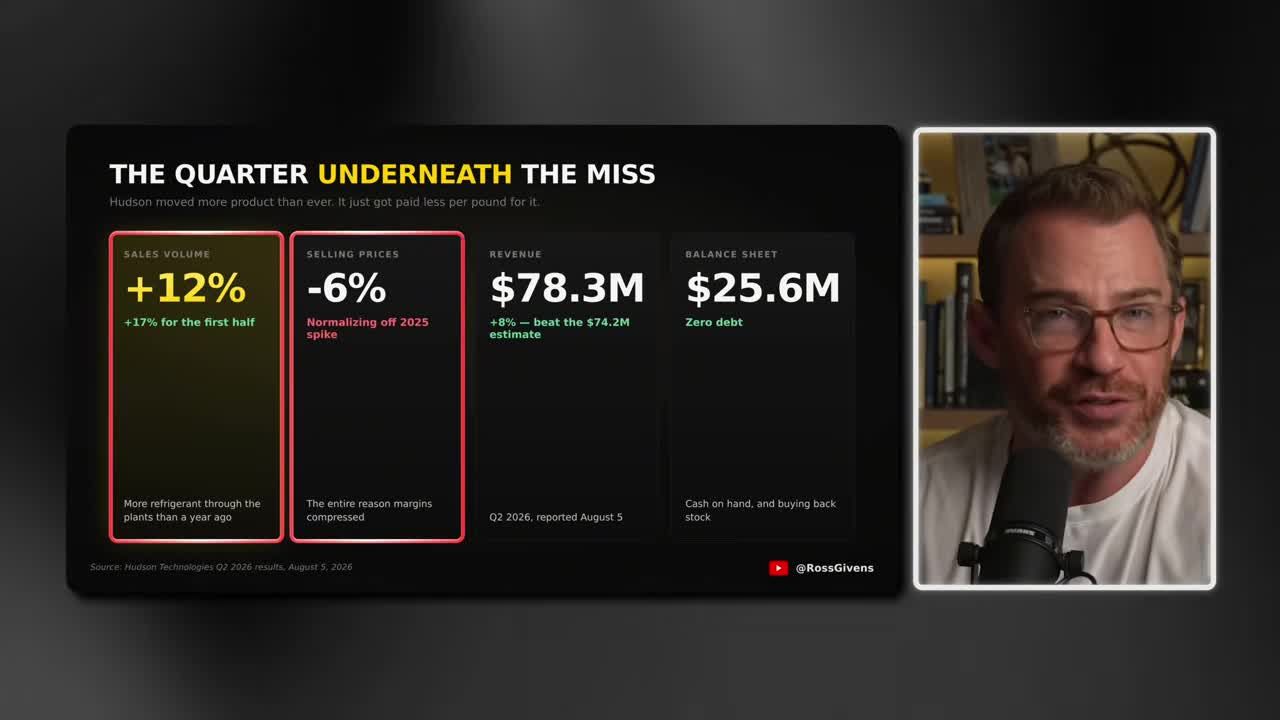
Shares fell because the day after the contract news, Hudson reported earnings. They made 12 cents a share against the 17 cents Wall Street expected. Gross margin came in at 26%, and management took their full-year margin guidance down.
In plain terms, they told investors to expect less profit on every dollar of sales than previously promised. That's a real miss. No way around it.
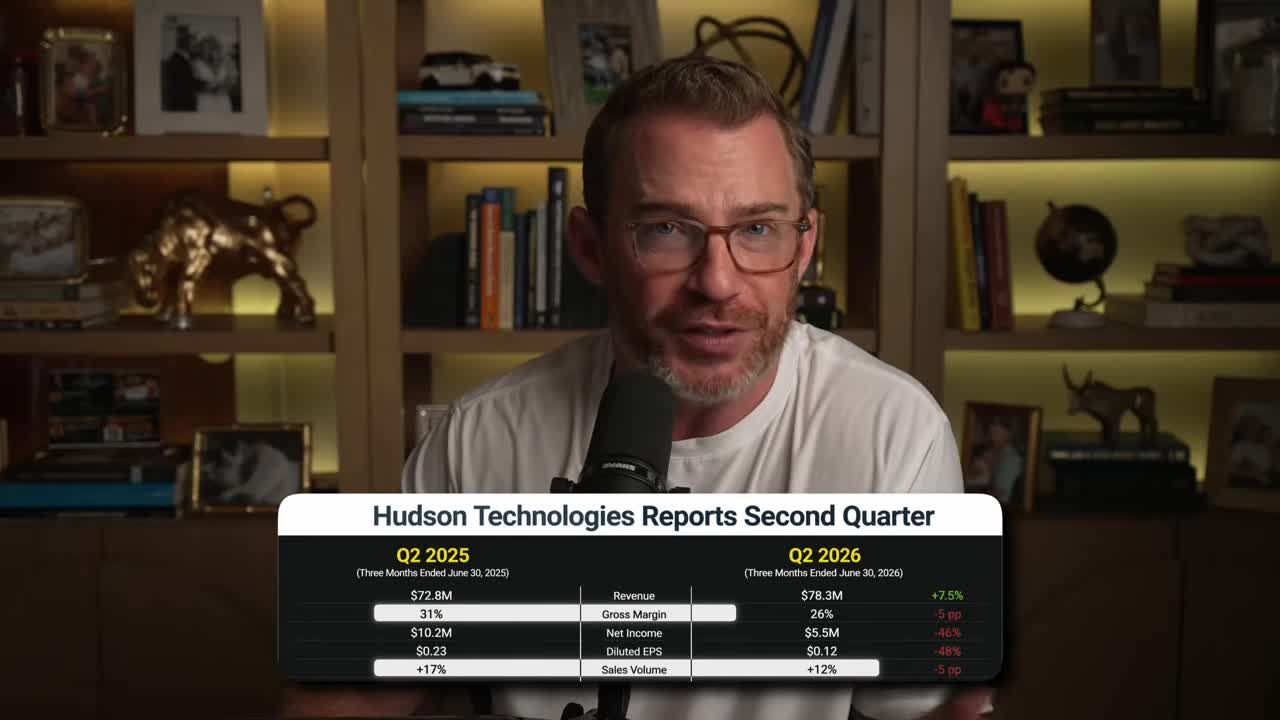
Now look at what actually happened underneath the headline:
- Sales volume up 12% in the quarter
- Sales volume up 17% for the first half of the year
- Selling prices down 6%
They're moving more product than ever. They're just getting paid less per pound. And there's a specific reason for that.
Last year, refrigerant prices were artificially high. The EPA was forcing a transition to new refrigerants, the supply chain seized up, and prices spiked. 2025 was a sugar high. 2026 is what the normal market looks like.
This collapse in earnings is nothing more than a comparison against a year they're never going to repeat. It would be like looking at oil prices in 2027 and expecting Exxon and Shell to earn what they did during a war spike.
Meanwhile, the actual business keeps growing. The pounds of refrigerant moving through the plants are climbing at double digits. Volume up, price down, and the stock down 43%.
Get an entire year of live weekly mentoring sessions, my newsletter, indicators, bonus reports, tons more. Click the link and I'll see you in the next live session.
Join my Black Ops Trading ClubWhat Happens to Hudson Technologies in 2029?
The AIM Act and the supply cliff of 2029
There's a law on the books called the AIM Act. It doesn't forecast that refrigerant supply will shrink. It legally requires it.
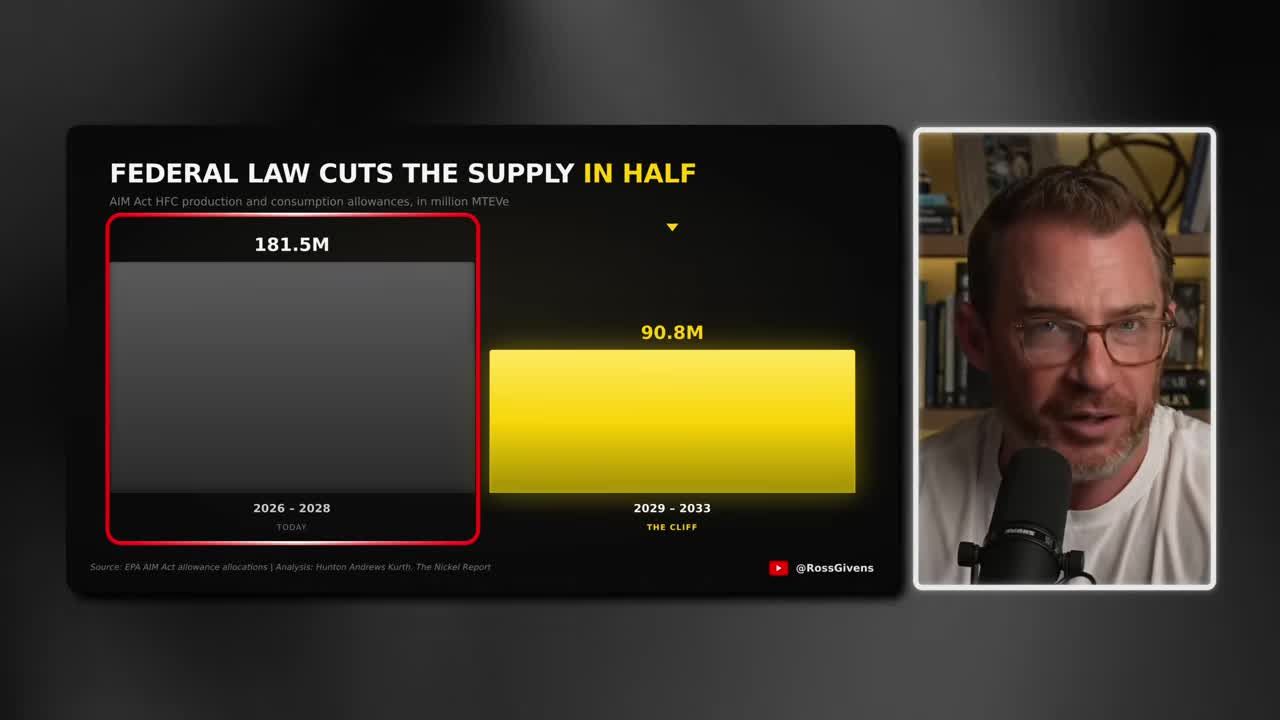
The EPA hands out allowances, permission slips to produce and import the stuff, and those allowances step down on a schedule written directly into federal law. From 2026 to 2028, the industry gets about 181.5 million units of allowance.
Starting in 2029, that number drops to about 90 million. Supply cut in half by law, on a date that's already scheduled.
Are air conditioners going to disappear in 2029? No. Are supermarkets going to stop using cold storage? No. Every refrigerated truck on the interstate will still need the same amount of refrigerant to keep running. Demand doesn't care what Congress passed.
So where does that refrigerant come from when you cut new production in half? Recycling. Which means Hudson.
The Federal Mandate
After January 1st, 2029, servicing and repair for supermarket refrigeration systems, transport, and commercial light ice makers has to be done with reclaimed refrigerant. Not "should be." Not "we'd prefer." It has to be.
A Captive Customer
Uncle Sam is creating a legally mandated buyer with a hard date on when they have to start buying. A federal mandate creating a captive customer for the exact product this company makes.
The Supply Cliff
On the exact same date the mandate hits, supply gets cut in half. The Pentagon stock contract with the DLA gives Hudson a massive baseline of revenue while the company waits for that cliff to slam into the open market.
Is the Stock Undervalued?
Start with the balance sheet. Hudson Technologies carries zero debt and $25.6 million in cash. The stock trades down 43% over the past year, yet four analysts who cover it still rate it a buy with an average price target of $7.31.
Are there risks? Of course. This is the stock market. Hudson doesn't set the price of refrigerant, the market does. If prices fall and keep falling, margins compress and profit shrinks. And waiting for 2029 takes patience.
You also need to understand the DLA contract. It's an IDIQ, which stands for indefinite delivery, indefinite quantity. The $210 million figure is a ceiling, not a guaranteed check. The military buys against it as they need it.
But the fundamentals here are rock solid. You're buying growing volume at a 43% discount right in front of a supply cut written into law. If you want a defense-contract small-cap setup, this Pentagon stock contract is the kind you look for.
And the best part? Hudson is buying back its own stock.
Over each of the last nine quarters, the number of outstanding shares has moved lower. The company is using its own money to buy back and retire shares. As a shareholder, this is exactly what I want to see. It's the one action that directly benefits the people who own the business.
As shares get retired and the total count drops, each remaining share represents a larger piece of the company. The new CEO says they'll keep it up. If they do, the value per share climbs right along with it.
These patterns play out over and over. Traders who entered the JACK position back in June just hit the $22 price target last week. A 55% gain in six weeks. The data works when you follow the money.
The Bottom Line
The market is ignoring the reality of this contract. Wall Street punished an earnings miss without looking at the underlying volume growth or the federal supply cliff coming down the pipe.
You're looking at a debt-free company with $25.6 million in cash, trading a dollar off its 52-week lows, actively buying back its own stock.
They're moving 17% more product than a year ago. They just secured an agreement worth 89% of their entire market cap. And starting in 2029, the federal government legally requires the use of their exact product. The data is sitting right out in the open for anyone willing to read the filings.
You can review Hudson Technologies' filings directly at the SEC EDGAR database.
Get an entire year of live weekly mentoring sessions, my newsletter, indicators, bonus reports, tons more. Click the link and I'll see you in the next live session.
Key Takeaways
- The Defense Logistics Agency awarded Hudson Technologies (HDSN) a $210 million IDIQ refrigerant contract on August 5th, equal to 89% of the company's $236 million total market cap.
- The contract runs through August 2031 with an option extending to 2036, making Hudson the primary refrigerant supplier to the entire U.S. military.
- Despite the contract win, HDSN trades near $5 per share, down 43% over the past year, and sits closer to its 52-week low than its high.
- The company holds $25.6 million in cash with zero debt, grew sales volume 12-17% year-over-year, and is actively buying back its own stock.
- Starting in 2029, federal law requires the use of the specific type of refrigerant Hudson supplies, creating a legally mandated demand floor for their core product.
DISCLAIMER: Traders Agency does not offer financial advice. The information provided is for educational purposes only and should not be considered financial advice. Traders Agency is not responsible for any financial losses or consequences resulting from the use of the information provided. Trading carries inherent risks and may not be suitable for all individuals. You are advised to conduct your own research and seek personalized advice before making any investment decisions, recognizing the potential risks and rewards involved.
See more from Traders Agency on Google
Make us a preferred source and our market analysis will appear more prominently in your Google Search, Top Stories, and AI results.
Add to Preferred Sources