

Hey, Ross here:
Forced index buying is the mechanical process where trillions of dollars in passive funds are legally required to purchase a stock simply because it was added to a major index. This blind purchasing power completely ignores valuation, price, and fundamentals.
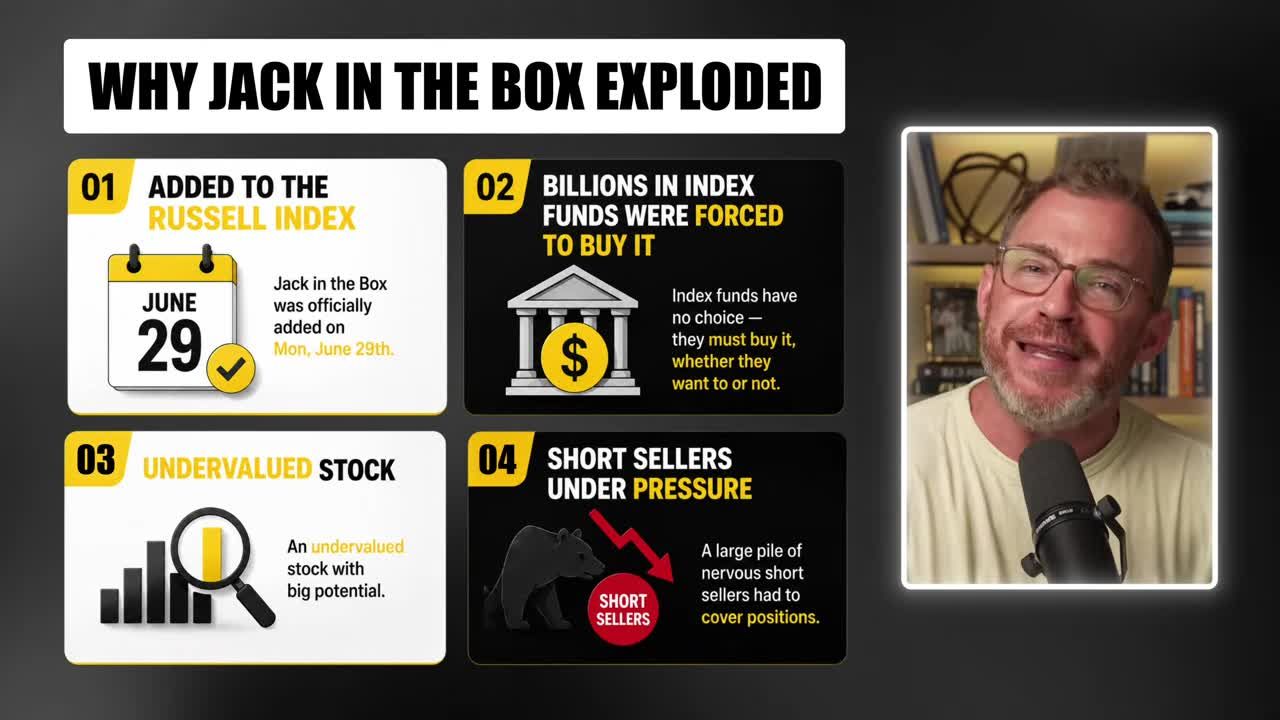
Right now, this exact mechanism is creating explosive opportunities. We just saw it play out perfectly with Jack in the Box (JAC). The stock popped from $13 to around $17 right into the close. That is a 20% single-day gain, its biggest one-day jump in over 6 years.
This is the plumbing that Wall Street counts on you not understanding. Once you see how the machine works, you can position yourself in front of it.
What Is Forced Index Buying?
Bottom Line: Forced index buying is not a theory. It is a contractual obligation baked into $12 trillion worth of passive funds, and the December 11th rebalance is the next scheduled trigger. The edge comes from identifying first-time index additions or significant weighting increases before the robots are required to act, then getting positioned ahead of the volume surge they cannot avoid.
When a company gets added to a major index, every fund tracking that index must mechanically purchase shares. The fund manager has no choice. They buy at whatever price the market demands, triggering massive volume and sudden price spikes.
An index fund has exactly one job: match the index. That is the entire promise it makes to investors.
When Russell adds a stock, the fund manager is not allowed to think about it. They cannot pass on a fast food stock just because they dislike the sector. They are mechanical buyers. Robots moving trillions of dollars.
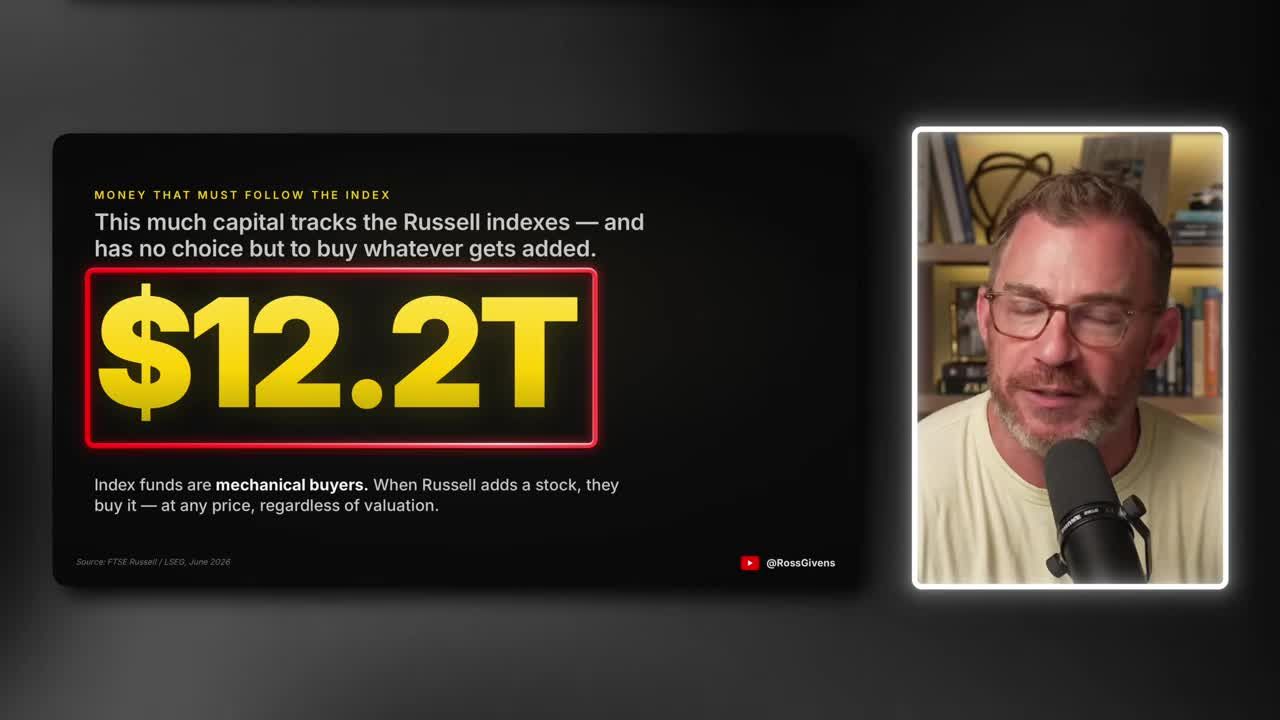
This creates the biggest forced buying event on the entire calendar. On the day this goes into effect, $217 billion trades in the final seconds before the close.
How Does the Russell Rebalance Work?
Once a year (now twice, but more on that later), FTSE Russell takes every public company in America and ranks them by size from biggest to smallest.
The 1,000 largest companies go into the Russell 1000. That is the big cap index. The next thousand go into the Russell 2000, the famous small cap index you always hear talked about on the news.
They call this rank day. This year, rank day landed on April 30th. They line everybody up, redraw the cutline, and a few weeks later the new indexes go live during an event called reconstitution. All that fancy word means is they redraw the map.
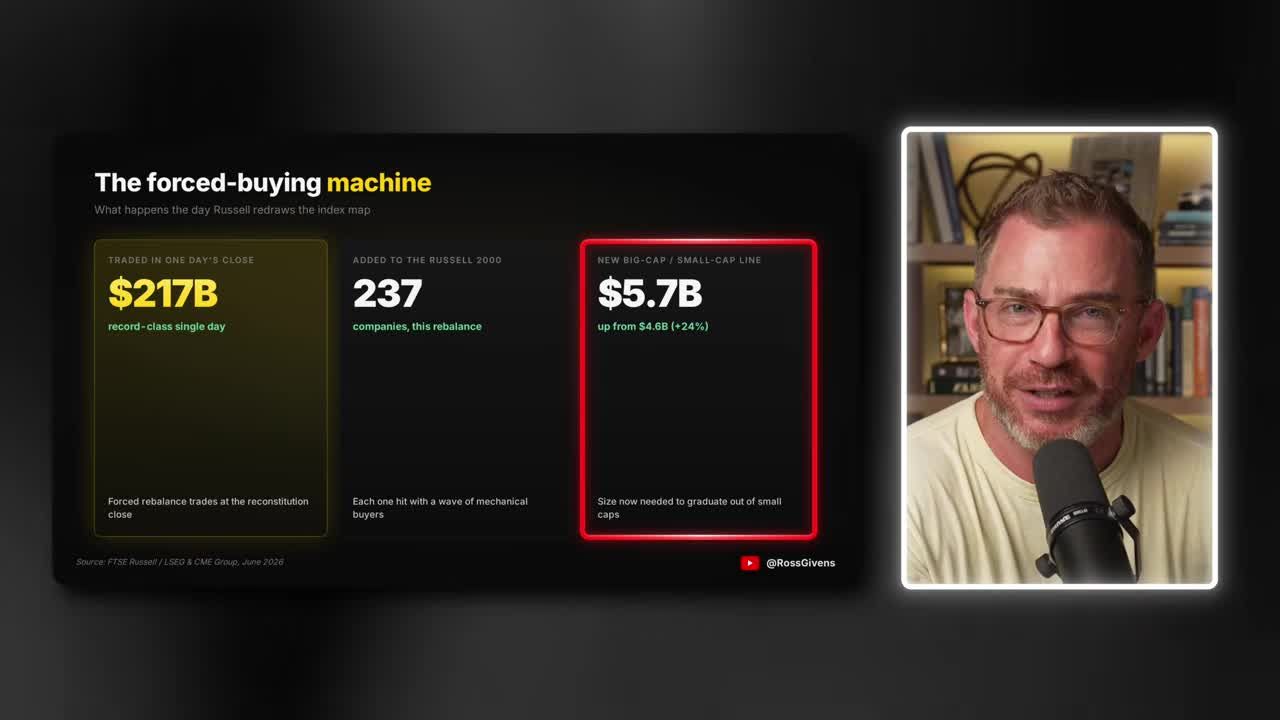
The map moved a lot this year. The dividing line between big cap and small cap jumped from $4.6 billion to $5.7 billion. A company now has to be worth a staggering $5.7 billion to graduate up out of the small cap index.
When Forced Index Buying Meets a Short Squeeze
Forced index buying and short squeezes stack together because mandatory purchasing creates sudden upward price pressure, which panics bearish traders. As the mechanical buyers flood in, short sellers scramble to buy shares to cover their losing bets. That creates a double wave of demand.
This is exactly what happened with Jack in the Box.
The stock was vastly undervalued, trading at 0.2 times sales and sitting well off its highs. The chart showed a big consolidation with a rounded bottom off the lows.
More importantly, more than a third of the company's shares were sold short. We saw 30% to 35% short interest from bearish traders betting on the stock to fall.
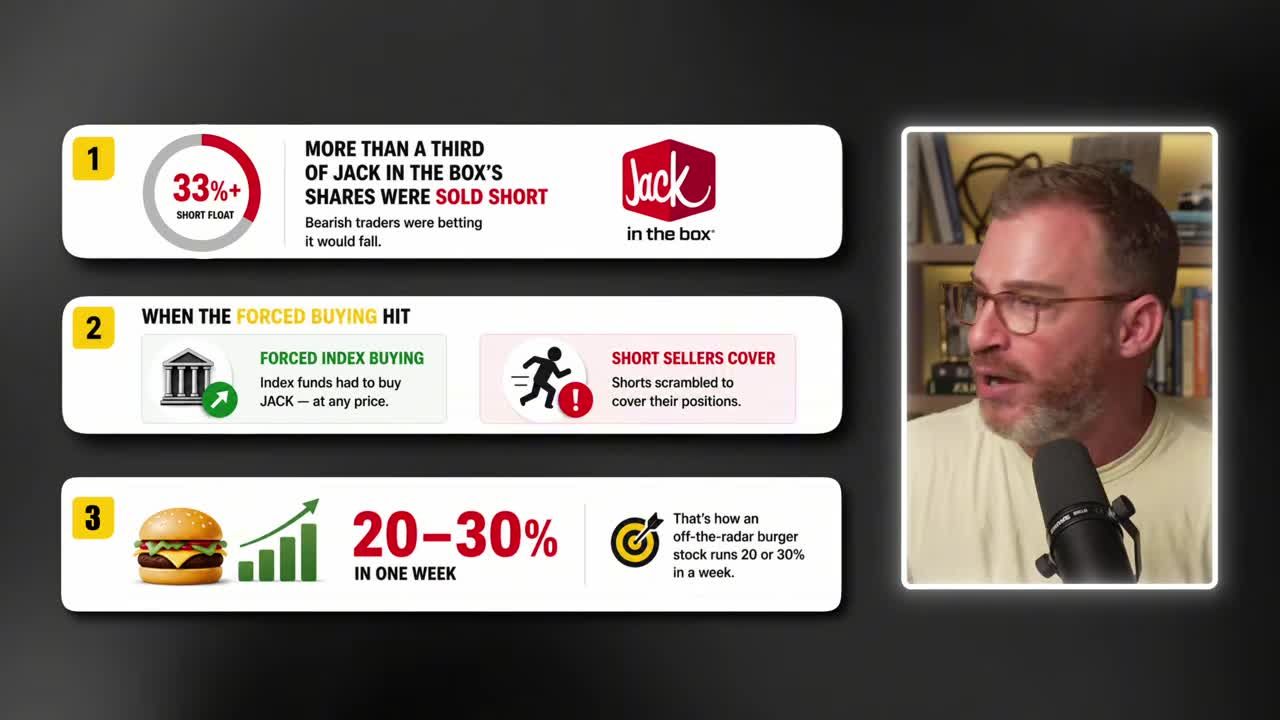
When the index funds hit the market, those shorts had to scramble to cover. Forced buyers on one side, panicking shorts on the other. Both camps buying at the exact same time.
That is how an off-the-radar burger stock runs 20% or 30% in a day. It spiked even higher overnight before settling in around $15.50. It just stacks and stacks on top of each other.
Get an entire year of live weekly mentoring sessions, my newsletter, indicators, bonus reports, tons more. Click the link and I'll see you in the next live session.
Join my Black Ops Trading ClubWhich Stocks Are Next?
The list is not a secret. Russell publishes the preliminary additions and deletions weeks in advance. They told everyone the changes back in May and updated the list every Friday into June.
We can see exactly who the robots are about to buy before they actually execute the trades. Here are a few names that made the cut this time:
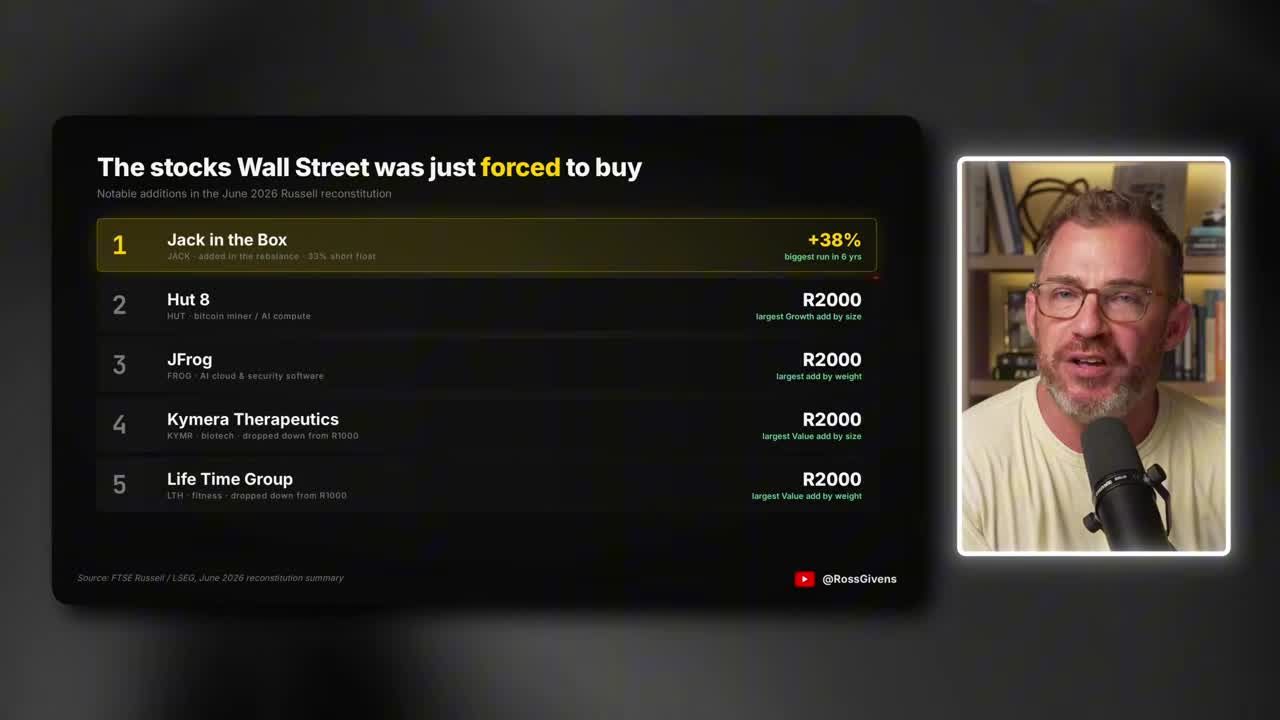
Hut 8 (HUT) is a Bitcoin miner transitioning to an AI compute play. It was the single largest addition to the Russell 2000 growth index by size. The stock doubled in the weeks following the April decision.
JFrog (FROG) is a software company in the AI cloud and security space. Brand new to the index and the largest addition by weight. The stock ran from $40 to $92.
Chimera Therapeutics (KYMR) is a biotech that dropped from the big cap Russell 1000 down into the small cap 2000. It was the largest value addition by size. When a stock goes from a very small slice of the Russell 1000 to a very big slice of the Russell 2000, you see incredible mechanical buying. This was a $70 stock at the beginning of the month, and it ran to $115.
Life Time Group (LTH), the fitness chain, also dropped from the 1000 down to the 2000.
Those names that move from a tiny weighting in one index to a large weighting in another tend to see the biggest moves.
Your Index Fund Is a Sector Bet
The reconstitution tells you exactly where the index money is tilting as a whole. It reveals how the passive funds are being weighted.
The small cap growth index this year:
- Industrials got cut by about 7% of the index.
- Healthcare went up 4%.
- Energy went up roughly 2.5%.
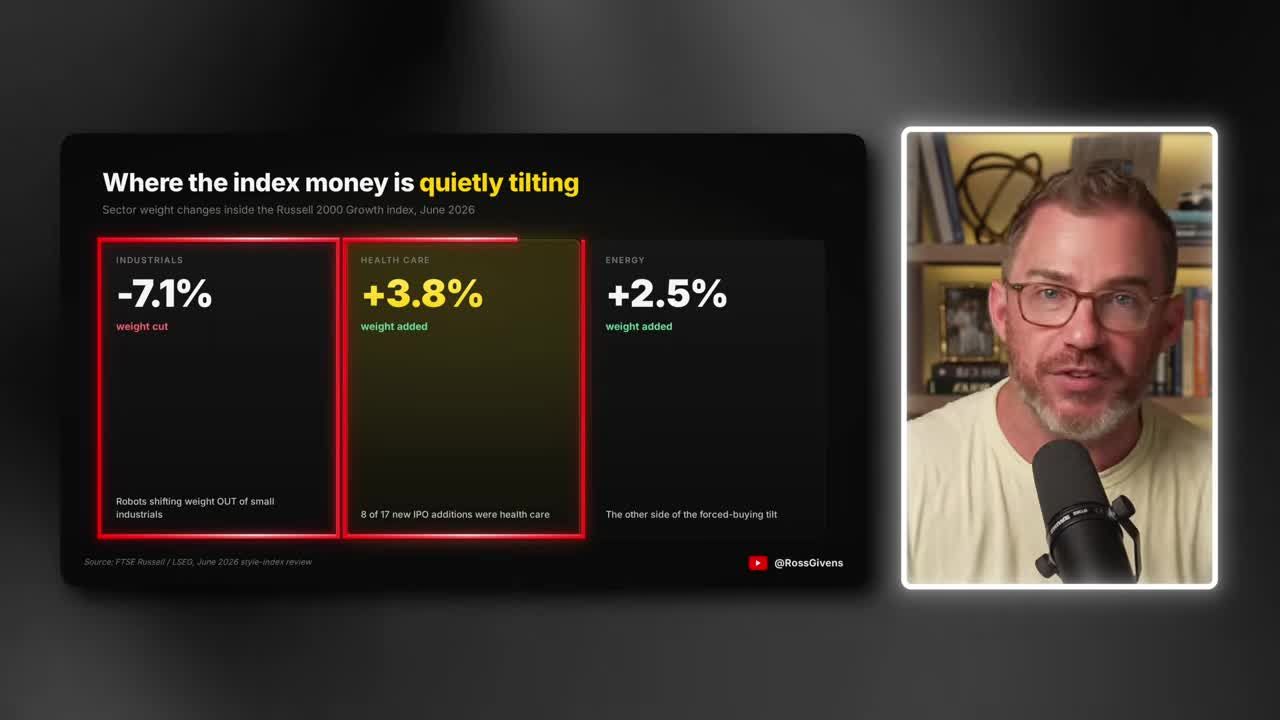
The weights change for a few specific reasons. A lot of the small cap industrial stocks simply got too big and graduated out of the small cap index. Healthcare grew because more stocks showed up. Half of all the IPOs in the Russell this year were healthcare companies.
Style scores also get recalculated. Stocks flip between growth and value depending on their multiples and sales forecasts.
Regardless of the reason, the end result is the same. The forced index buying is quietly shifting weight out of small cap industrial names and into small healthcare and energy. That is where $12 trillion is mechanically tilting.
Twice a Year Now: Double the Forced Index Buying
For 40 years, this was a once-a-year event. Every June brought one giant rebalance.
Starting this year in 2026, FTSE Russell split it into two events. They did this to spread out that giant one-day traffic jam. The side effect is what matters most for traders.
Twice the rebalances. Twice the stocks getting added and dropped. Twice the chances to get in front of trillions of dollars of robotic money.
How Do You Trade the Index Reconstitution?
This is not a dedicated year-round strategy. It is a seasonal edge to watch and lean into when you see a big opportunity. The mechanics are real, they are documented, and now they happen twice as often.
1. Track the Preliminary List
Watch for that preliminary list in November. Know exactly which stocks the funds are about to buy. Keep those as a watch list for the next month. Give priority to trades in those names since they will have the wind at their back.
2. Buy the Rumor, Sell the News
The big desks have traded this event for 40 years. The most obvious names often get bid up early. Traders buy them early and then sell them off after the rebalance. A stock like Jack in the Box could give a chunk of that move back quickly.
3. Sell Into Strength
Always sell some into strength to nail down profits when you have them. You don't have to sell it all. If you are up 20% in a day, sell a quarter, sell a third, or sell half. Put some money in your pocket and derisk the trade.
The Mechanical Advantage
Wall Street counts on you not understanding this plumbing. They want you to ignore the mechanical realities of passive investing.
When a stock like Bloom Energy (BE) graduates from the Russell 2000 into the Russell 1000, every big cap fund has to buy it, and every small cap fund has to sell it. The traffic runs both ways. Some of these end up being kind of a wash. By focusing on names being added to an index for the first time, or stocks moving to a larger weighting, you find the most extreme forced index buying.
Follow the mechanical money. The robots do not care about valuation. They only care about matching the index. Get in front of them before the December 11th rebalance.
Get an entire year of live weekly mentoring sessions, my newsletter, indicators, bonus reports, tons more. Click the link and I'll see you in the next live session.
Key Takeaways
- Jack in the Box (JAC) jumped from $13 to $17 in a single session, a 20% gain and its largest one-day move in over 6 years, driven by forced index buying combined with a short squeeze.
- Approximately $12 trillion is parked in funds tracking FTSE Russell indexes, including passive vehicles managed by Vanguard and BlackRock. Every dollar of that must mechanically buy any stock added to the index, regardless of price or valuation.
- The most extreme forced buying opportunities come from stocks added to an index for the first time, or names moving to a larger weighting, not from stocks simply migrating between Russell tiers where buying and selling can offset each other.
- The December 11th rebalance is the specific near-term catalyst identified for positioning ahead of the next wave of mechanical institutional purchases.
- Index fund managers have no discretion. They cannot pass on a stock based on fundamentals. The mechanical obligation to match the index is what creates the exploitable price spike before and during reconstitution.
DISCLAIMER: Traders Agency does not offer financial advice. The information provided is for educational purposes only and should not be considered financial advice. Traders Agency is not responsible for any financial losses or consequences resulting from the use of the information provided. Trading carries inherent risks and may not be suitable for all individuals. You are advised to conduct your own research and seek personalized advice before making any investment decisions, recognizing the potential risks and rewards involved.
See more from Traders Agency on Google
Make us a preferred source and our market analysis will appear more prominently in your Google Search, Top Stories, and AI results.
Add to Preferred Sources