


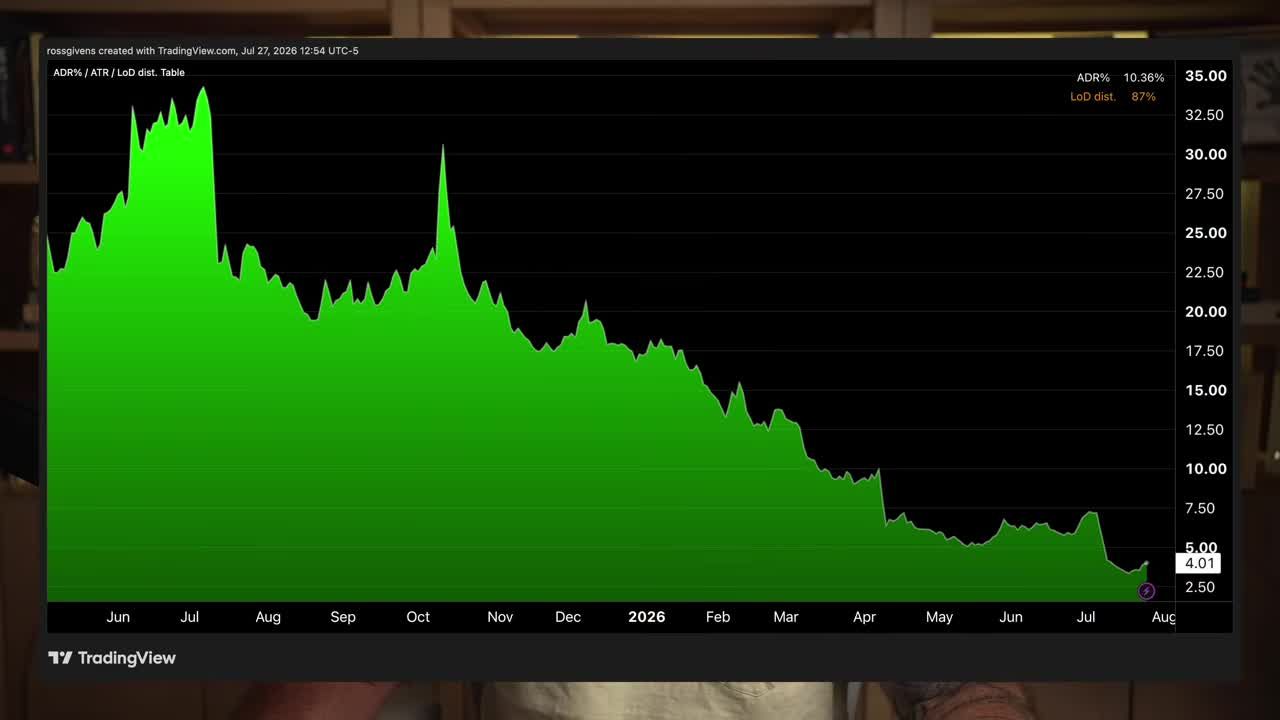
Last summer, Byrna Technologies (ticker BYRN) traded for $30 a share. Today it goes for less than four dollars. And last week it flashed something worth paying attention to: the largest cluster insider buying event this stock has seen since 2021.
Most traders spend their days worrying about the broad market and chasing the same crowded names. That's a mistake. The real opportunities show up in beaten-down companies where the people running the business start putting their own money on the line.
This is one of those moments, and it deserves a spot on your watch list.
What Does Cluster Insider Buying Actually Signal?
Bottom Line: Four Byrna Technologies executives bought shares simultaneously at multi-year lows, the kind of coordinated, discretionary spending that insiders rarely do without conviction. The stock is deeply beaten down, and this cluster buying event is the clearest signal yet that the people closest to the business believe the worst may be priced in. Watch the back half of the year for any operational catalyst that could confirm what these insiders appear to already know.
When multiple executives buy at once, pay attention
Cluster insider buying happens when several company executives purchase shares of their own stock on the open market at roughly the same time. When you're hunting for a crashed stock with turnaround potential, this coordinated buying tells you the people running the business think the shares are badly undervalued.
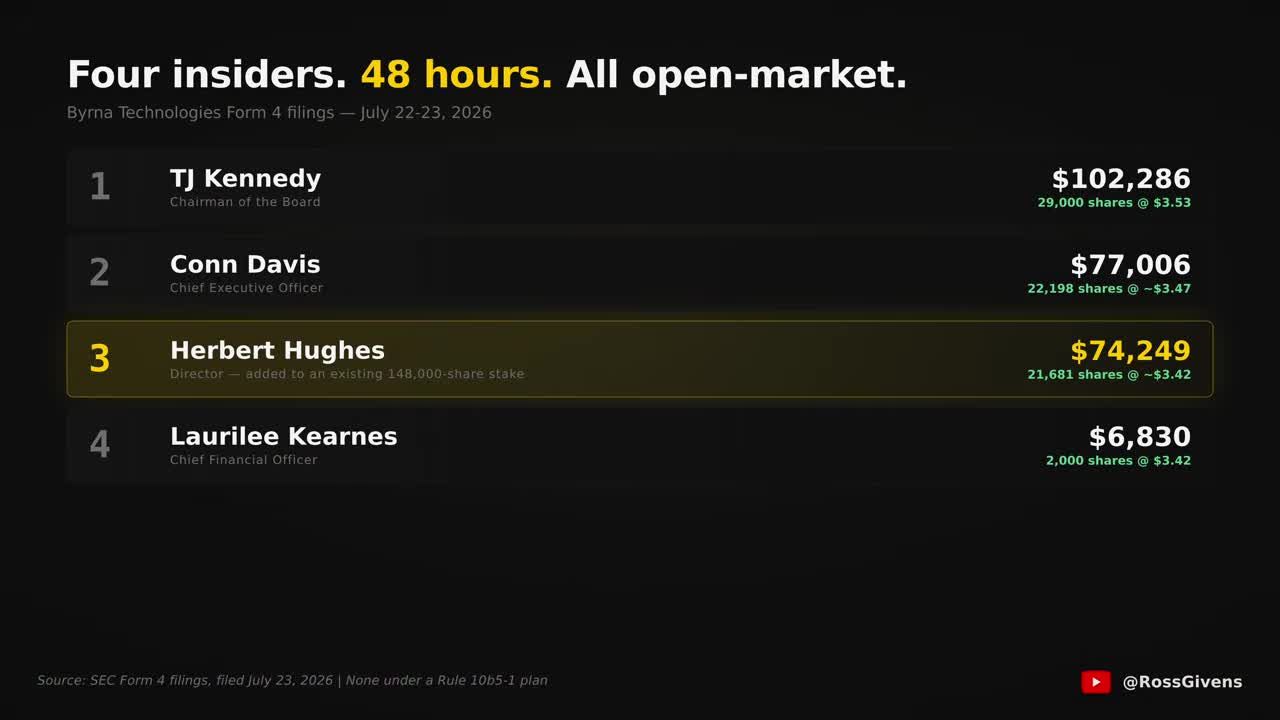
On July 22nd, four insiders bought large chunks of Byrna. The activity was both concentrated and rare.
CEO Conn Davis picked up 22,170 shares, a $77,000 investment. Two of the company's seven board members, TJ Kennedy and Herbert Hughes, bought a combined 50,000 shares. Even the chief financial officer stepped in. All of it happened on the same day.
Discretionary Trades, Not Scheduled Plans
Every one of these purchases happened on the open market. None of it was part of a scheduled trading plan.
These were discretionary trades. The executives actively chose to pull cash out of their own bank accounts and buy shares at current prices. The scanner data shows July was the biggest month of insider buying for this stock in the last five years, both in the number of trades and the total dollars going in.
Here's the thing about insider buying: if executives buy all the time, it means nothing. Buying last week, last month, and last quarter is just routine. What you want is rare buying. That's the best way to find opportunistic setups.
This is the largest cluster insider buying event this stock has seen since 2021.
The Worst Quarter in Company History
To understand the opportunity, you have to look at the damage. On July 9th, Byrna reported its fiscal second quarter. The numbers were horrific.
Revenue came in at $16.5 million against a Wall Street expectation of $22.5 million, a 43% decline from a year ago. Gross margin, the profit made on each dollar of sales, collapsed from 62% down to 11%.
The year before, they made $2.4 million. This year, they lost $10.1 million.
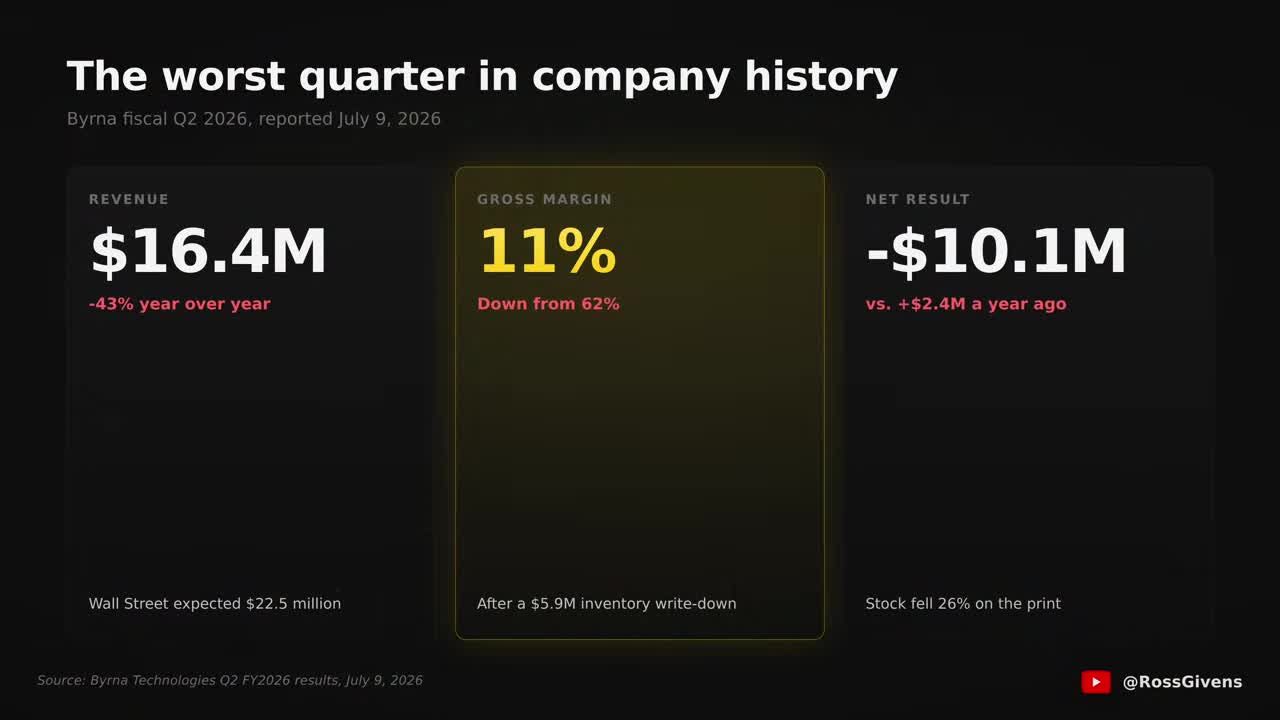
The stock fell 26% that day. B Riley cut their price target from $21 down to $12. Three things went wrong all at once:
- Web traffic dried up.
- The average customer spent 19% less per order.
- Retail partners who stocked up in the first quarter stopped reordering because the product wasn't moving fast enough.
Then management decided to rip off the band-aid and dump everything into one bad quarter: a $5.9 million inventory write-down and a $3.5 million equipment impairment. They shut down their own ammunition manufacturing in Fort Wayne and cut launcher assembly from four product lines down to two.
The CEO stated directly that fiscal 2026 "will not be a revenue growth year." He knew exactly what that would do to the stock. By dumping every bad number into one report, he dropped expectations to the floor. A total reset.
Exactly 13 days later, he and three of his board members started buying. That sequence is not an accident.
Get an entire year of live weekly mentoring sessions, my newsletter, indicators, bonus reports, tons more. Click the link and I'll see you in the next live session.
Join my Black Ops Trading ClubWhy Did Demand Fall Off a Cliff for Byrna?
Byrna's problem is not the product. It's that the biggest advertising platforms on Earth won't let them sell it.
In early 2023, Meta classified Byrna's products as contraband and blocked them from Facebook and Instagram. Google followed suit.
The core product is a CO2-powered launcher that fires pepper rounds and hard kinetic projectiles from a 50-foot range. Think pepper spray, but fired from a pistol. They call it the "ungun," a non-lethal form of self-defense. Most of the launchers look like a Glock 19, and they even sell one that resembles an AR-style rifle.
The federal government does not classify this as a firearm. It is not a gun. But the algorithm doesn't read ATF rulings. It just sees something shaped like a gun and shuts off all your ads.
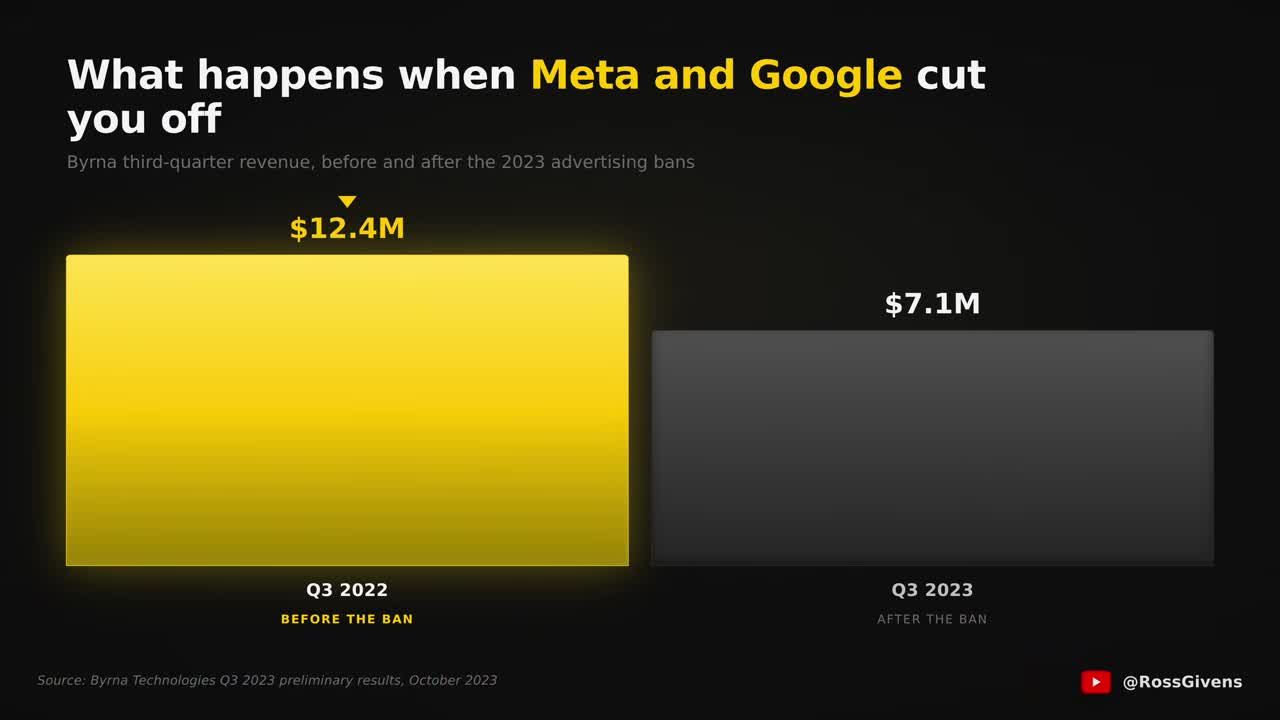
Watch what that did to the business. Revenue went from $12.4 million in the third quarter before the ban to $7.1 million after, a 42.7% drop.
It's the same disease this quarter. Weak web traffic, weak conversions, and influencer and media spending generating less than it used to. A company that lives and dies on performance marketing can't function once it keeps getting kicked off the performance marketing platforms. They got so desperate they bought physical billboards along the highway begging Mark Zuckerberg to reconsider.
How Should Traders Position for a Potential Pivot?
The way to play this is simple: watch the upcoming earnings to see if the new marketing strategy works. On May 28th, Byrna signed a media partnership with Fox Sports through iHeart Media. That covers Fox Sports Radio premier networks reaching over 200 radio stations nationwide, plus national podcast integrations and digital placements.
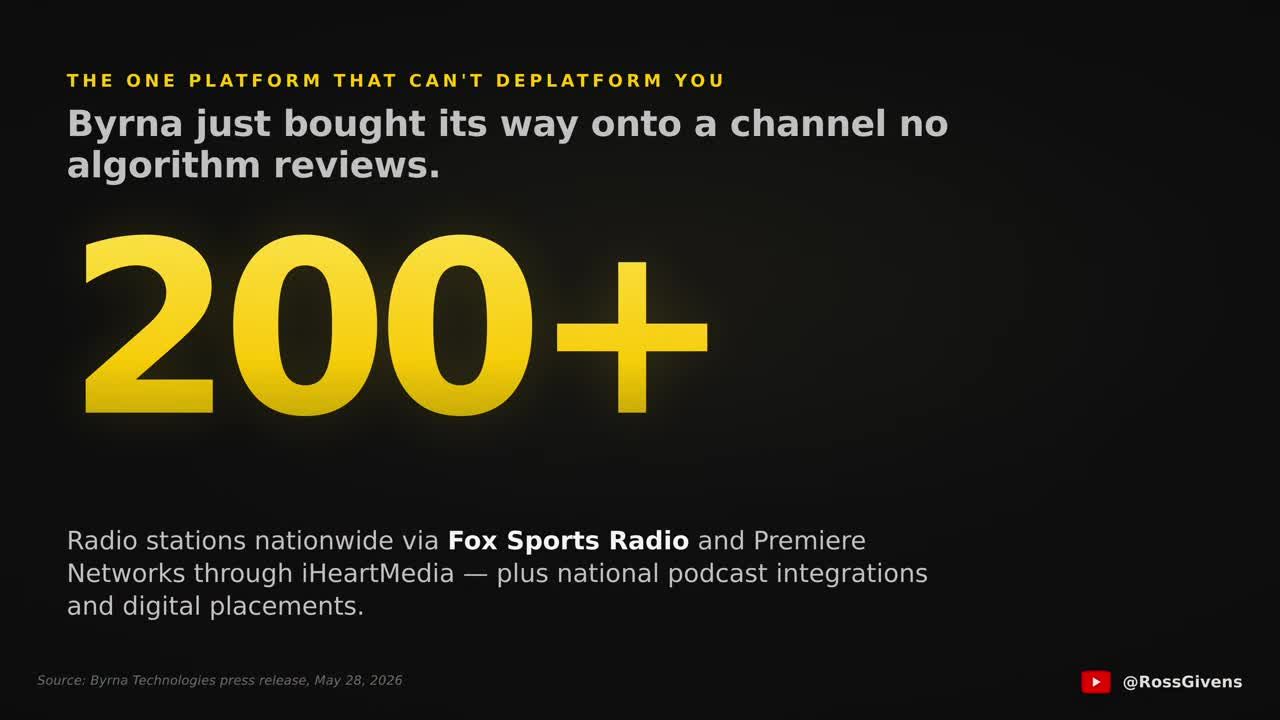
Radio in 2026 sounds dated, but it's the only rational move they have left. Nobody can deplatform you off the radio. There's no algorithm reviewing your creative. If you buy the spot, the spot runs. For a company whose entire growth problem is distribution of the message, not the product, going where you can't be banned is the smart play.
The CEO framed it as a strategic pivot. They're moving away from targeting self-defense enthusiasts and toward everyday people who just want to get home safely and protect their families. They want to stop selling a weapon and start selling peace of mind, the way traditional pepper spray does.
To back that up, they bought the assets of Hero Defense Systems on July 8th for $1.25 million. Pocket change, but it points to a focus on smaller, more concealable, mainstream products.
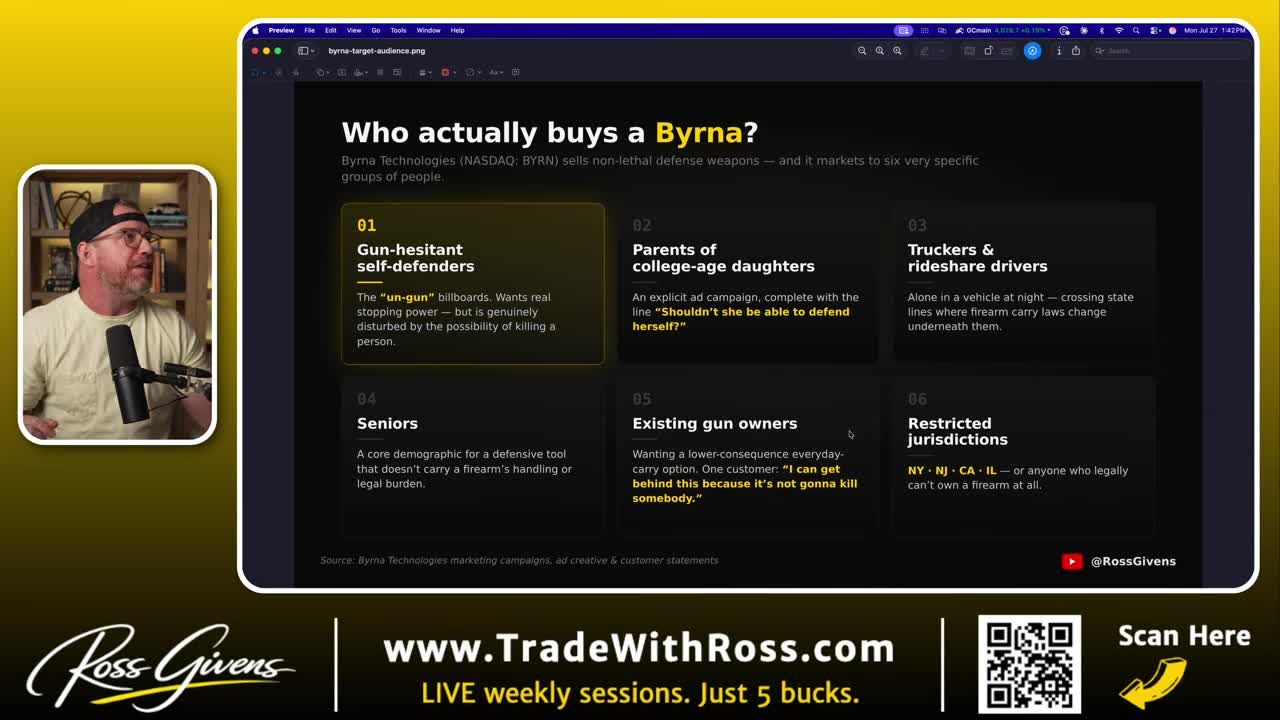
Who Actually Buys a Byrna
When I first dug into this, I struggled with the idea of the market. I'm in Alabama, where people carry real guns. But the more I thought about it, the bigger the market looked.
- Gun-hesitant self-defenders. Many people, especially in blue states, want to defend themselves but don't want an actual gun.
- Restricted jurisdictions. In New York, New Jersey, and Baltimore, the red tape to own a firearm borders on unconstitutional. This bypasses that entirely.
- Everyday demographics. Parents of college-age daughters, ride-share drivers, and seniors who want protection without lethal force.
Is BYRN a Buy Right Now?
With a market valuation of just $86 million and $19 million in revenue over the last twelve months, the stock trades at less than one time sales. Wall Street's average price target is $6.83, about 80% above where it trades today.
This is a razor-and-blades model. Roughly 300,000 units are in the field, and Byrna sells the cartridges and ammunition. That's recurring revenue.
Full disclosure: I bought this stock. It's a compelling story. I've worked in financial publishing for a decade, and I understand how paid ads work. I once ran an ad where I was holding an AR, and it got struck down. I understand the issues that hurt their sales last quarter, and I know how you work around them.
I think the stock is significantly undervalued based on its assets and its sales. My plan is to sell pieces into strength if and when it begins to reprice. The next potential catalyst is the August 11th earnings report, and shareholders will be watching it like a hawk for both the numbers and the guidance.
The Power of the Cluster Insider Buying Signal
When the CEO, the CFO, the chairman of the board, and a longtime director all show up in the open market within the same 48 hours after the worst quarter the company ever printed, that kind of cluster insider buying makes it a stock worth putting on your watch list.
Those four people could very well know something about the back half of this year that we don't.
Pay attention when executives put their own money on the line. A cluster insider buying event like this one is the ultimate signal that a beaten-down stock might be ready to turn.
For Byrna's own filings, see the SEC EDGAR database. Insider transaction data sourced from InsidersIQ.
Get an entire year of live weekly mentoring sessions, my newsletter, indicators, bonus reports, tons more. Click the link and I'll see you in the next live session.
Key Takeaways
- On July 22nd, four Byrna Technologies insiders bought shares on the open market on the same day, committing more than $250,000 of their own money combined.
- CEO Conn Davis purchased 22,170 shares for roughly $77,000. Two board members added a combined 50,000 shares, and the CFO also participated.
- This was the largest cluster insider buying event in BYRN since 2021, occurring after the stock fell from over $30 to under $4.
- Cluster insider buying is significant because open-market purchases are discretionary. Executives choose to buy; they are not obligated to, unlike many scheduled stock grants or option exercises.
- BYRN is on watch for a potential turnaround setup, not a confirmed breakout. The insider activity is the signal to monitor, not a buy trigger on its own.
DISCLAIMER: Traders Agency does not offer financial advice. The information provided is for educational purposes only and should not be considered financial advice. Traders Agency is not responsible for any financial losses or consequences resulting from the use of the information provided. Trading carries inherent risks and may not be suitable for all individuals. You are advised to conduct your own research and seek personalized advice before making any investment decisions, recognizing the potential risks and rewards involved.
See more from Traders Agency on Google
Make us a preferred source and our market analysis will appear more prominently in your Google Search, Top Stories, and AI results.
Add to Preferred Sources