
Wall Street's Wonder Boy just blew up his fund. That massive tech selloff you watched play out in July was not a fundamental shift in the economy. It was a wall street hedge fund collapse.
Leopold Aschenbrenner left an early role at OpenAI to build his Situational Awareness hedge fund around one idea: artificial intelligence is going to be bigger and faster than Wall Street has priced in. He was right. Spectacularly right. His fund was up over 1,000% since launch and up 439% this year through the end of June. The media was calling him the next Warren Buffett.
Then, in a matter of days, he lost it all.
What Caused the Wall Street Hedge Fund Collapse?
Bottom Line: The Situational Awareness collapse was not a story about bad stock picks. It was a leverage failure: 4:1 exposure in a concentrated semiconductor book left no room to survive a short-term rumor-driven dip. The forced liquidation is over, the seller is gone, and the thesis on AI-driven chip demand has not changed.
Extreme leverage met a sudden drop in chip stocks
The collapse was triggered by 4:1 leverage and a fast selloff in semiconductor stocks. A rumor about Nvidia and easing memory shortages caused a dip, prime brokers issued margin calls, and a portfolio worth 20 to 25 billion dollars got liquidated.
Start with the raw numbers. At its peak, the fund held $20 to $25 billion in assets. On Tuesday alone, the portfolio lost about $600 million in a single session. By Wednesday night, Aschenbrenner had sold his entire book to Citadel.
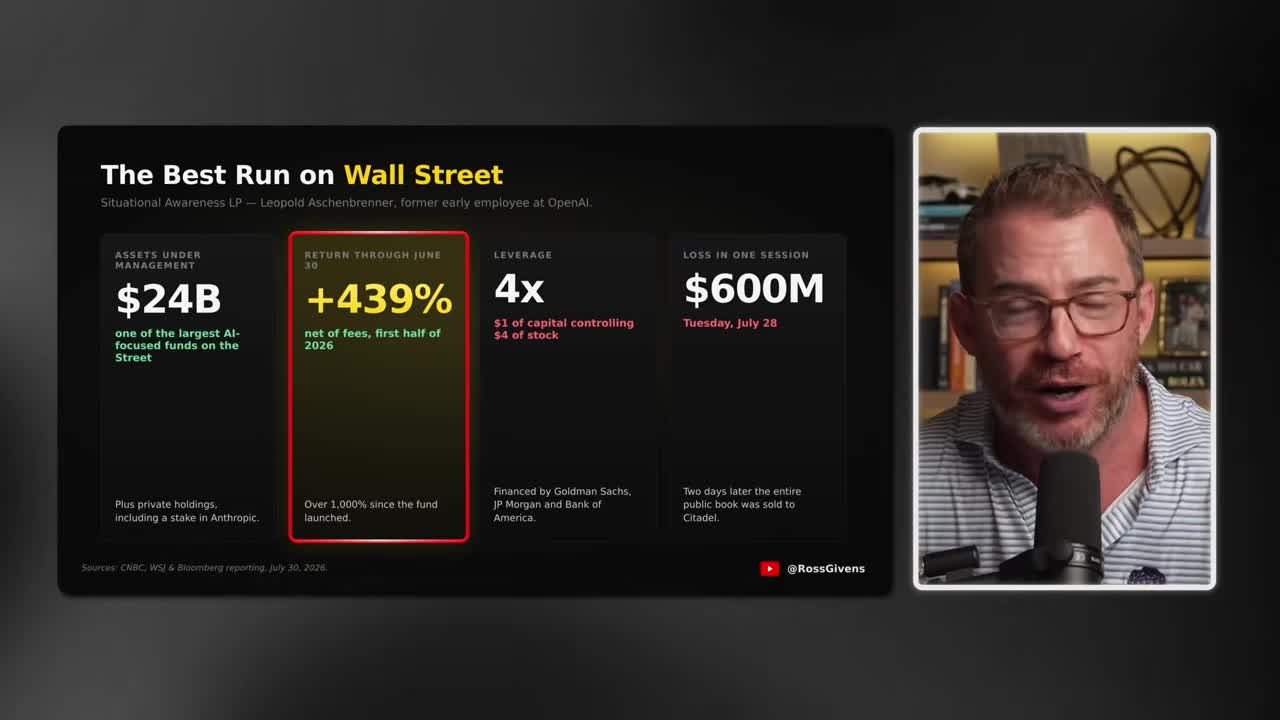
The timing is heartbreaking. On July 24th, exactly one week earlier, he wrote to his investors and called this selloff "one of the best buying opportunities since early 2025." Maybe he was right. He just didn't get to find out.
How the Math Destroyed Him
Borrowed money cuts both ways
How does a manager blow up a multi-billion dollar fund in a single week? One word: borrowed money.
Say you have one dollar and you borrow three. Now you control $4 of stock with $1 of your own capital. That's 4:1. On the way up, it's the greatest thing in the world. If the stock rises 25%, you don't make 25%. You make 100%. You doubled your money on a 25% move.
That's exactly how you post 439% returns in six months and build the hottest fund on the street.
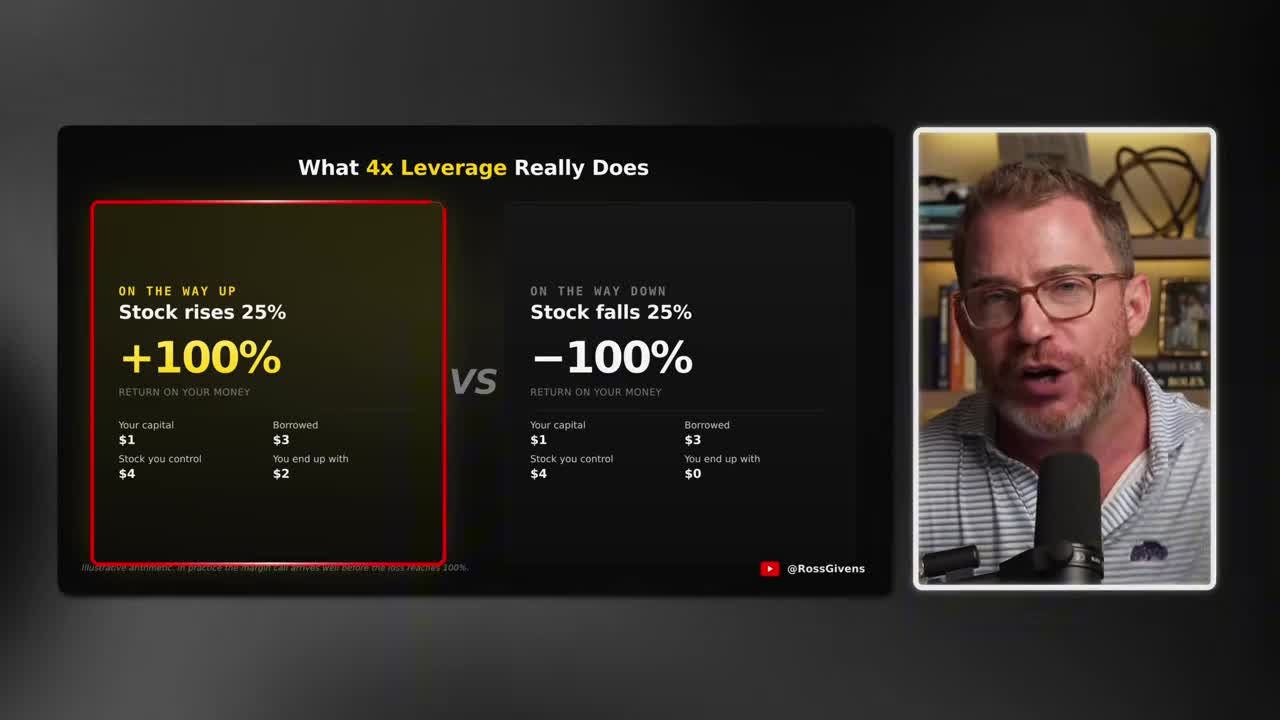
But it cuts both ways. If that same stock falls 25%, your entire dollar is gone. All of it. You're not down 25%. You're wiped out, and you still owe the bank the $3 you borrowed.
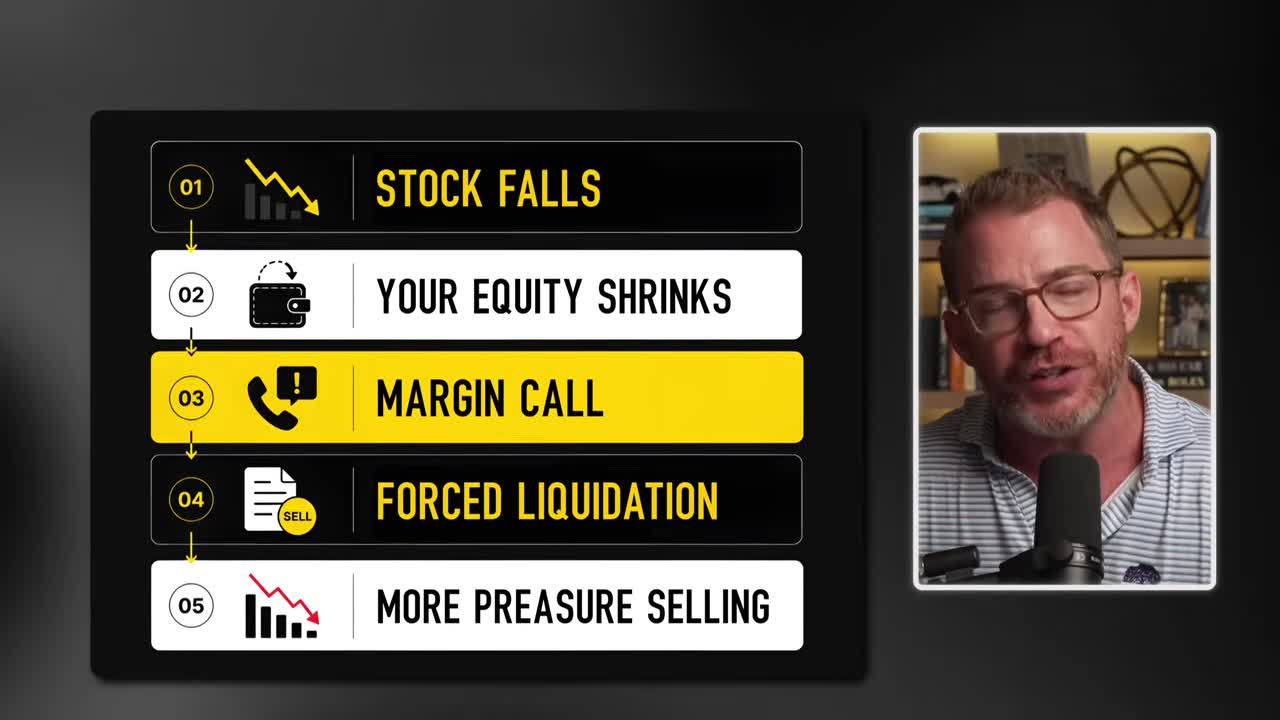
You don't get to wait for a bounce. The moment your money is gone, the bank asks for more. That's a margin call. If you can't post the cash, they sell your stock today at whatever the current price is. This wasn't a bad earnings report or a cancelled order. It was a phone call from a risk desk.
Why Did Your Stocks Drop?
You were collateral damage in someone else's liquidation
If you've been staring at your account wondering what on earth happened, look at the Goldman Sachs high beta momentum basket, their in-house index of leading stocks. The data runs back to 1999.
In July, that basket was down 37%. The single worst month for momentum stocks ever recorded. Worse than 2009. Worse than the 2000 dot-com crash.
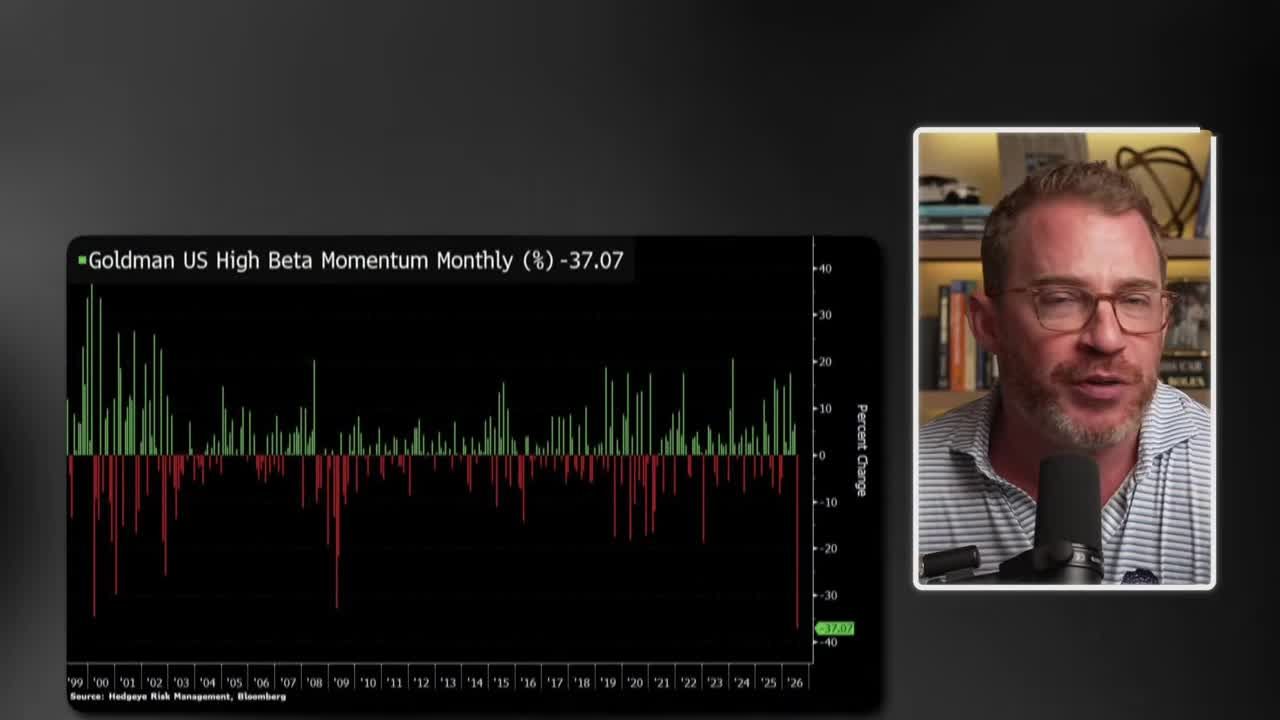
This wall street hedge fund collapse and its forced liquidation was a big contributor. When a forced seller has to dump $20 billion of stock, he doesn't sell the trash. He can't. Nobody wants it. He sells what's liquid, the crowded names everybody owns.
So the selling lands hardest on the best performers of the year. Look at what it did to the leaderboard.
- SanDisk: The number one stock in the entire S&P 500 for the first half of the year, up 858%. Then it gave back half of that in about a month.
- Samsung: Reported 1,800% profit growth, and the stock fell 7% on the exact same day.
That's not a market pricing in bad news. That's a market with a seller in it who doesn't care what the news is. Someone took good news and used it as an opportunity to dump stock. It wasn't the fundamentals. It was the plumbing.
What Was the Rumor That Erased $3.3 Trillion?
No earnings miss. No guidance cut. Just fear
Semiconductor stocks ran 130% over 12 months and hit an all-time high in June. Everything was working. Aschenbrenner was up five-fold on billions of dollars in six months. Then two things landed on top of each other.
First, a rumor that Nvidia's next server architecture was slipping. Second, a fear that the memory shortage was starting to ease. That was it. No earnings misses. No guidance cuts.
But when the whole street is crowded into the same trade with borrowed money, a rumor is all it takes.
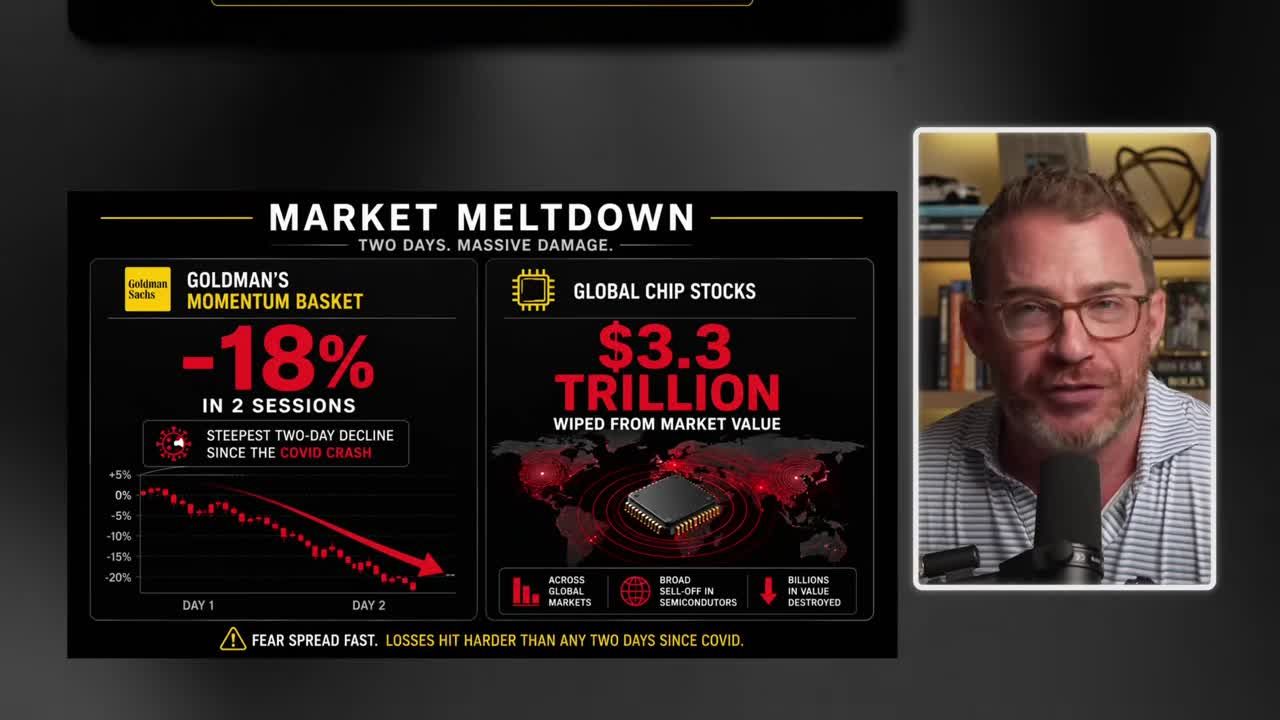
Aschenbrenner's book was sitting right in the middle of it. His prime brokers, Goldman Sachs, JP Morgan, and Bank of America, the banks that lent him the money, spent the week making margin calls and walking him to the exit.
Inside the Book That Blew Up
Both sides of the trade went against him at once
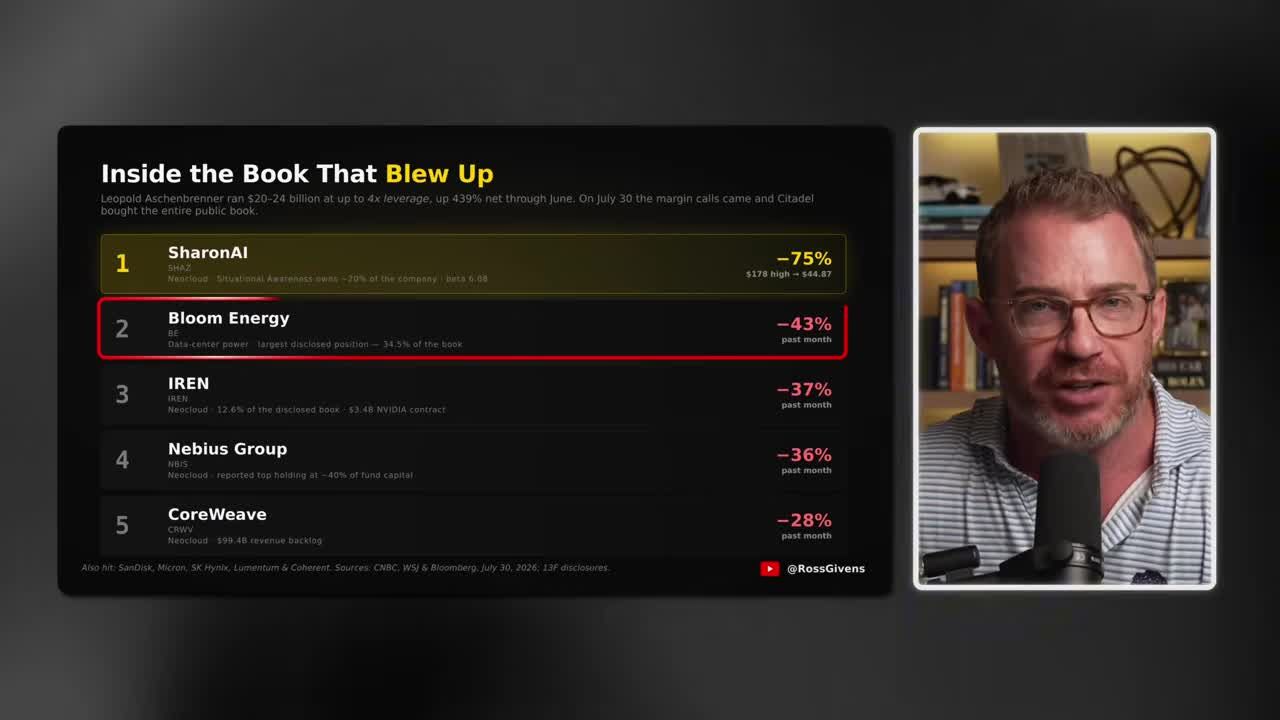
Wall Street cowboys who were levered to the hilt in SanDisk, CoreWeave, and Bloom Energy lost it all. Here's what was inside the book:
- Bloom Energy: His largest disclosed position.
- Nebius: Reported at roughly 40% of the fund's capital.
- Sharon AI: The Neocloud company where he owned 20% of the entire business. That stock went from $175 a share down to $45.
As if that wasn't bad enough, the short side went against him at the same time. He was betting against software names like Adobe. Those stocks went up while the ones he owned went down. He lost on both sides.
Thursday morning, David Faber reported the collapse on CNBC. By the afternoon, Bloomberg and the Journal confirmed the buyer. Citadel bought the bulk of the book.
Nobody has disclosed exactly what Citadel paid, but it wasn't much. His broker forced him to unload his whole book, every stock, every option, every single investment in one block. He had no choice, and he wasn't negotiating from a strong place. Citadel was the only shop in the room with a checkbook big enough to buy it all. He took what they offered. Once he paid the margin debt back, I'd be surprised if there's anything left. Wiped out in a few weeks without so much as a bad earnings report.
Get an entire year of live weekly mentoring sessions, my newsletter, indicators, bonus reports, tons more. Click the link and I'll see you in the next live session.
Join my Black Ops Trading ClubLiquidated, Not Devalued
The best hedge is understanding supply and demand
When a stock falls because the company broke, you wait. Earnings are down, they missed expectations, and you wait for the business to fix itself. That takes quarters, sometimes years.
But when a stock falls because a leveraged fund had to liquidate it into a Tuesday afternoon, the thing that was wrong is over the moment the last share clears. The seller is gone. The demand is still there. These names are trading well below where they sat five or six weeks ago on better information than they had then.
By Thursday morning, the forced seller disappeared. Here's what happened before lunch:
- Nebius: Up 29%, its biggest single day of the year.
- Bloom Energy: Jumped 27%.
- CoreWeave: Bounced 24%.
- SanDisk: Rallied 22%.
- Micron: Surged alongside the rest of the group.
It wasn't just relief. Two real pieces of news landed on that same day. Samsung warned that memory shortages could reemerge and demand was strengthening, the exact opposite of the oversupply fear that started the panic. Then Microsoft reported Azure revenue above $100 billion. Demand for all this compute is not slowing down.
In an ironic twist, the story that knocked these stocks down 30% to 50% got contradicted by the companies themselves on the very same day the forced seller stopped selling.
The $100,000 Bet I Made After the Wall Street Hedge Fund Collapse
Ten names. Ten thousand dollars each
I believe this group of stocks got liquidated, not devalued. That's a massive difference. The selloffs in July were exaggerated, and this might be my last chance to buy them at a 50% discount.
So Thursday morning, I started buying. I put $100,000 to work betting that what we saw in July was forced selling, not repricing. Ten thousand dollars each into ten specific names.
The Core AI Holdings
- Bloom Energy
- Nebius
- CoreWeave
- Sharon AI
The Semiconductor Leaders
- Coherent
- Lumentum
- Marvell
- SanDisk
- Micron
- Western Digital
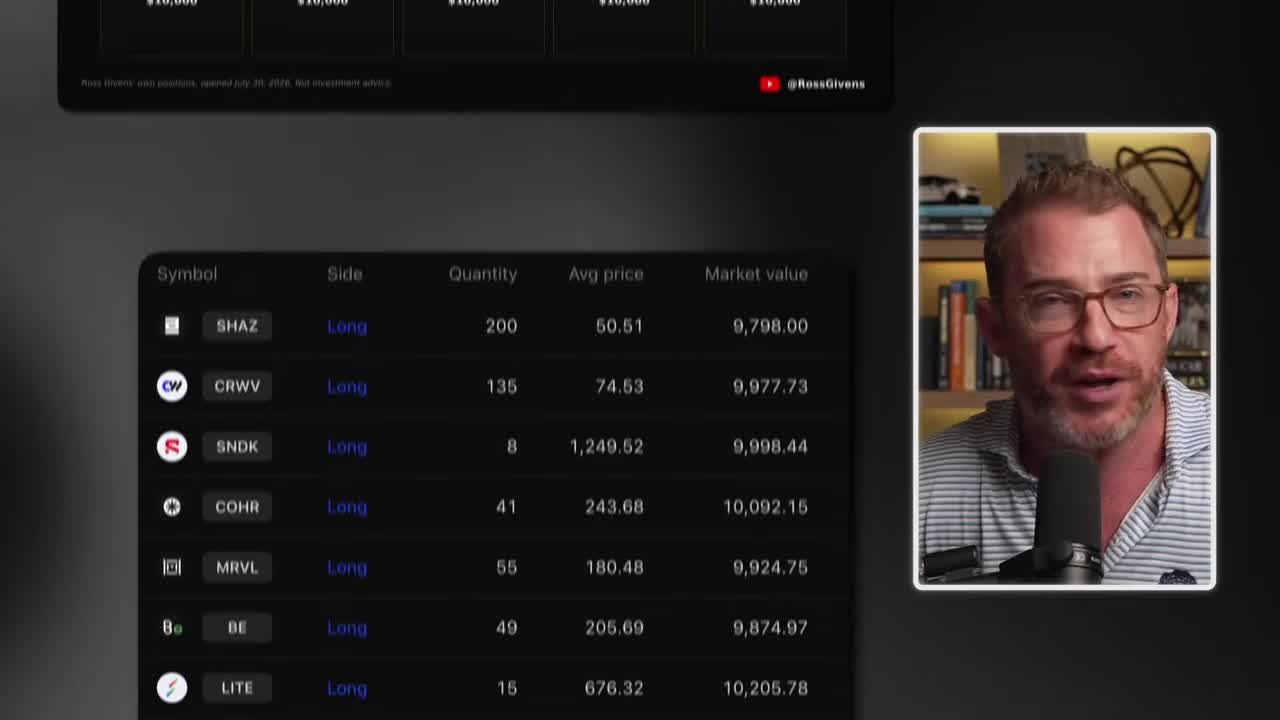
These are the largest known holdings of the Situational Awareness fund, plus a few other names that took the same correction from the same forces for the same reason. Every one of them got sold because somebody else needed cash, not because the businesses got worse.
These are exciting, highly volatile stocks. You need to understand why they move like this, because it's the whole reason the opportunity exists. Almost every name on that list is priced off future profits, not current ones. They're pricing in expectations of the future.
Sharon AI, for example, has traded between $1.90 and $178 in the last year. It carries a beta above six, meaning it moves roughly six times as hard as the S&P in either direction. Why so volatile? Because when almost all of a company's value sits in what it expects to earn five years from now, every change in the mood about those five years moves the stock today.
Push the forecast out a year, the stock drops 40%. Pull it in a year, it doubles. Nothing about the business changed. Just the calendar in everybody's head.
I like momentum. I like movement. I want stocks that have proven they can do this. They've run 100%, 200%, and 800% before. Most of them just got cut in half, which means a simple return to where they traded in June would be a 100% gain.
Don't Panic Over Forced Selling
The mechanics spare no one
If you're sitting on losses in these names and feeling crummy about it, don't. This stuff happens. Even the best performing hedge fund manager on Wall Street, a guy with a direct line to the AI industry, got taken out of these exact same stocks in this wall street hedge fund collapse. He lost probably everything.
July was not about you or me or anyone else being a bad stock picker. It was about too much leverage with too much money in stocks that were already up five and tenfold. It doesn't matter whether you track the biggest funds by assets or manage your own retirement account. The mechanics of forced selling spare no one.
Get an entire year of live weekly mentoring sessions, my newsletter, indicators, bonus reports, tons more. Click the link and I'll see you in the next live session.
Key Takeaways
- Leopold Aschenbrenner's Situational Awareness LP was up 439% year-to-date through June and over 1,000% since launch before collapsing in days.
- The fund held $20 to $25 billion in assets and used 4:1 leverage, which turned a routine chip stock dip into a $600 million single-session loss.
- A rumor about Nvidia and easing memory shortages triggered the selloff. Prime brokers issued margin calls, forcing a full liquidation to Citadel by Wednesday night.
- Just one week before the collapse, Aschenbrenner told investors the July selloff was one of the best buying opportunities of the year.
- The analysis here treats the low as likely behind us: the forced seller is gone, demand remains intact, and the affected names are trading below their levels from five weeks prior on better fundamental information.
DISCLAIMER: Traders Agency does not offer financial advice. The information provided is for educational purposes only and should not be considered financial advice. Traders Agency is not responsible for any financial losses or consequences resulting from the use of the information provided. Trading carries inherent risks and may not be suitable for all individuals. You are advised to conduct your own research and seek personalized advice before making any investment decisions, recognizing the potential risks and rewards involved.
See more from Traders Agency on Google
Make us a preferred source and our market analysis will appear more prominently in your Google Search, Top Stories, and AI results.
Add to Preferred Sources