One of the most famous investors on Wall Street just cut a long-held tech position, and the timing is impossible to ignore. Steve Eisman, the investor made famous by "The Big Short," has reduced his exposure to artificial intelligence by selling his stake in Alphabet, and we see this as a clear warning shot for tech-heavy portfolios. The Steve Eisman AI concern is one our team is watching closely as the relentless rally in technology stocks finally takes a breather.
The numbers tell a clear story about shifting market momentum. The broader market is starting to feel the weight of massive infrastructure spending expectations. Traders need to understand exactly why this high-profile investor is moving to cash, and what it means for their own positions right now.
Why Does Steve Eisman Have Doubts About AI?
In a recent televised interview, Eisman confirmed he sold his Alphabet position a couple of months ago. He explicitly stated his desire to reduce exposure to the artificial intelligence sector. This is a major shift for someone who had held the stock for a very long time.
This move comes right after Alphabet dropped nearly 8% last week. The stock fell following an updated capital spending forecast that highlighted the massive investment required to build out infrastructure for these new technologies.
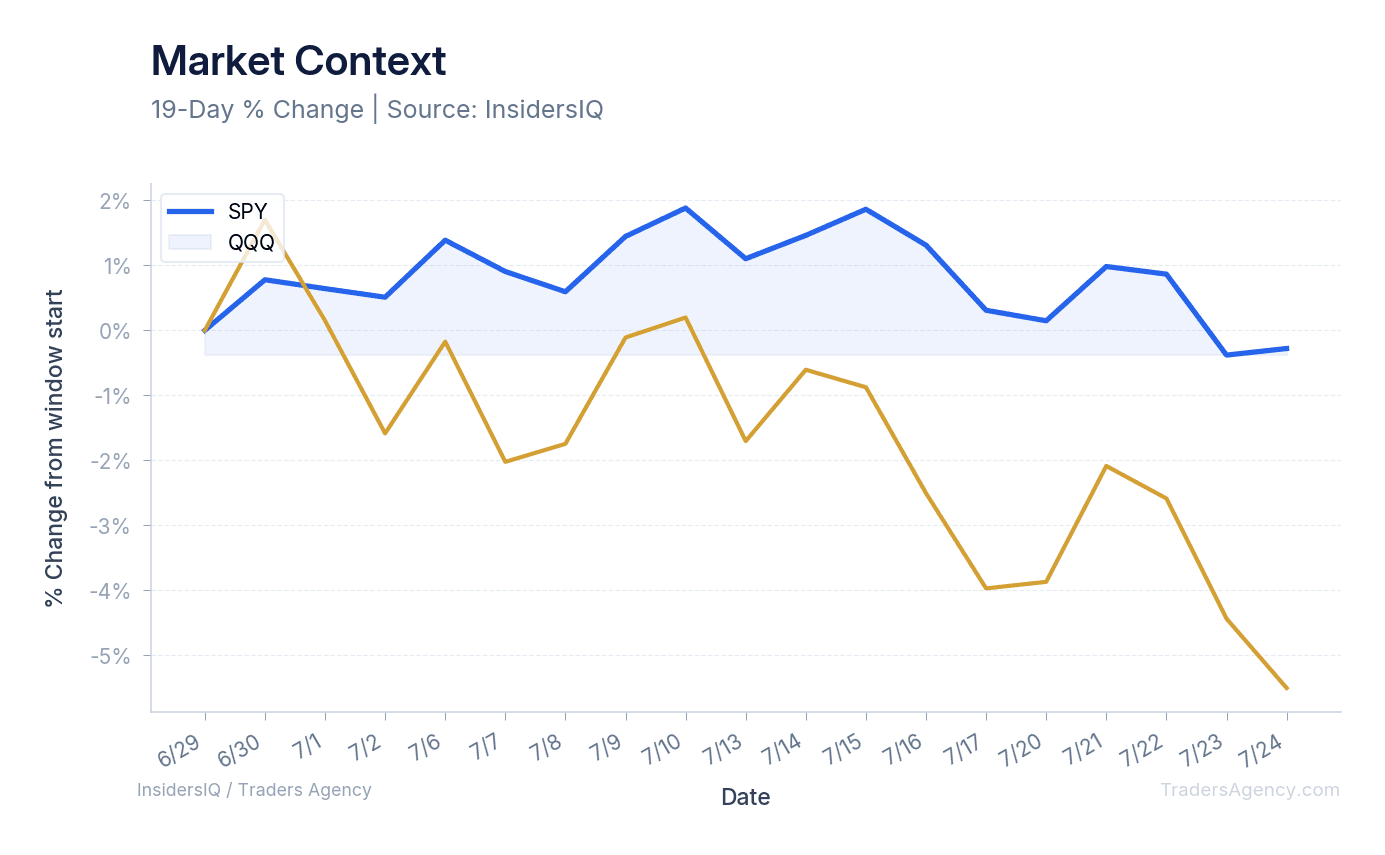
Recent market data confirms this cooling trend across the broader indices. The S&P 500 and the Nasdaq Composite just posted back-to-back weekly losses, falling 0.6% and 2.1% respectively during that stretch.
The Divergence: Our data feed shows the SPY 30-day price change sitting at -0.28%. In stark contrast, the tech-heavy QQQ 30-day price change has dropped a significant -5.50%.
The Focus: Real Market Mechanics, Not Personal Trivia
While many casual observers chase headlines about his personal life or the film based on it, our research team focuses strictly on the real-world market mechanics. Eisman is currently analyzing market concentration, not cinematic portrayals.
Retail crowds often look up his net worth or his exact age. His actual portfolio positioning is the only metric that matters to active traders. His current stance is highly defensive, and he is sitting on a large cash pile until he figures out his next move.
How Will This Affect the Market?
This development suggests a major correction could occur if artificial intelligence infrastructure fails to deliver on lofty expectations. Because both equities and newly issued bonds are heavily tied to tech, a downturn in this single sector could trigger widespread losses across portfolios that look diversified on paper.
The warning centers on the idea that the entire market is currently trading as a single entity. Investors remain singularly focused on tech rather than consumer staples or other traditionally safer corners of the market.
Market participants either want to buy tech or they do not want to buy anything at all. They are completely ignoring defensive sectors. The point was made bluntly: buyers do not want to shift out of tech to buy companies like Clorox.
Want expert trading insights delivered daily?
Join thousands of traders who rely on Traders Agency for market analysis and trade ideas.
Join Traders AgencyThe Danger of the "All One Trade" Setup
Our analysis points to a severe lack of true diversification in the modern market. Even investors holding a standard portfolio of 60% stocks and 40% bonds are heavily exposed to a single theme. They are missing the fact that they are not actually diversified.
More than 50% of the equity portion in these traditional portfolios is tech related. The risk bleeds directly into fixed income as well, because most of the new bond issuance is tied to the exact same sector.
The traditional 60/40 portfolio was designed to protect investors during equity drawdowns. But when the bond market is flooded with debt from the same companies dominating the equity indices, that protection disappears. If the tech sector experiences the big correction being warned about, both sides of the portfolio take a hit at the same time.
Sentiment Check: The Fear & Greed index sits at 68, showing elevated greed in the broader market. Meanwhile, WallStreetBets sentiment is at 0.03 with 2,748 mentions. This retail data tells us smaller traders are still heavily focused on these volatile plays, completely ignoring the concentration risks that institutional investors are beginning to flag.
What Does This Mean for Traders?
Traders must recognize that traditional safe havens are currently being ignored in favor of massive tech concentration. With the Nasdaq Composite already showing a 30-day decline of -5.50%, market participants should evaluate their true exposure to the tech sector.
If the massive capital expenditures from companies like Alphabet do not translate into immediate earnings, the downside risk is substantial. Watching these infrastructure costs closely will be central to the market outlook ahead.
We do not need a weekly newsletter or a dedicated website to tell us what to do next. The data speaks for itself. The market is over-concentrated, and holding cash is a valid defensive position right now.
What Should Traders Watch After Eisman's Alphabet Sale?
Our team is monitoring several specific indicators based on this development. Traders should adjust their risk management strategies accordingly.
1. Capital Spending Forecasts
Watch for any further increases in infrastructure spending from major tech firms. Alphabet dropping nearly 8% after raising its capital spending forecast proves that investors are losing patience with endless spending. If other companies follow suit, the sector could face heavy selling pressure.
2. Broad Index Divergence
Monitor the spread between the SPY and the QQQ. The S&P 500 weekly loss of 0.6% is mild compared to the Nasdaq Composite weekly loss of 2.1%. This divergence shows tech is leading the current pullback, and the broader market is not immune to the drag.
3. Bond Market Issuance
Track the sectors issuing new corporate debt. If the majority of new bonds remain tied to the tech sector, the concentration risk will keep growing. A failure in tech would then spill over into the bond market, damaging the traditional 40% allocation in standard portfolios.
4. Cash Positioning
Observe how large investors manage their capital. Sitting on cash is a deliberate strategy when the market becomes too concentrated. Traders should evaluate whether their own cash reserves are sufficient to weather a potential correction.
The Bottom Line
This is officially a risk-off scenario for one of the most closely watched investors on the Street. We believe the decision to sell Alphabet and hold cash highlights the extreme concentration risk present in today's market. Traders should review their portfolios immediately to ensure they are not accidentally overexposed to a single, highly volatile sector.
Want expert trading insights delivered daily?
Join thousands of traders who rely on Traders Agency for market analysis and trade ideas.
Join Traders AgencyKey Takeaways
- Steve Eisman sold his Alphabet stake a couple of months ago, explicitly citing a desire to reduce AI sector exposure after holding the stock for a very long time.
- Alphabet dropped nearly 8% in a single week following an updated capital spending forecast that spooked investors about the cost of AI infrastructure buildout.
- The S&P 500 and Nasdaq Composite posted back-to-back weekly losses of 0.6% and 2.1% respectively, confirming broader cooling momentum across tech.
- Eisman's move to cash is described as a deliberate strategy against a market he views as dangerously concentrated in a single sector.
- The core risk flagged is concentration: traders who are overweight AI-linked tech stocks may be exposed to a single correlated trade unwinding at once.
DISCLAIMER: Traders Agency does not offer financial advice. The information provided is for educational purposes only and should not be considered financial advice. Traders Agency is not responsible for any financial losses or consequences resulting from the use of the information provided. Trading carries inherent risks and may not be suitable for all individuals. You are advised to conduct your own research and seek personalized advice before making any investment decisions, recognizing the potential risks and rewards involved.
See more from Traders Agency on Google
Make us a preferred source and our market analysis will appear more prominently in your Google Search, Top Stories, and AI results.
Add to Preferred Sources