
European Commission President Ursula von der Leyen told the European Parliament on Wednesday that the European Union is opening the door for Canada to become the bloc's first associate member, a proposal unveiled during her annual State of the European Union address in Strasbourg, according to CNBC and POLITICO Europe.
What von der Leyen said
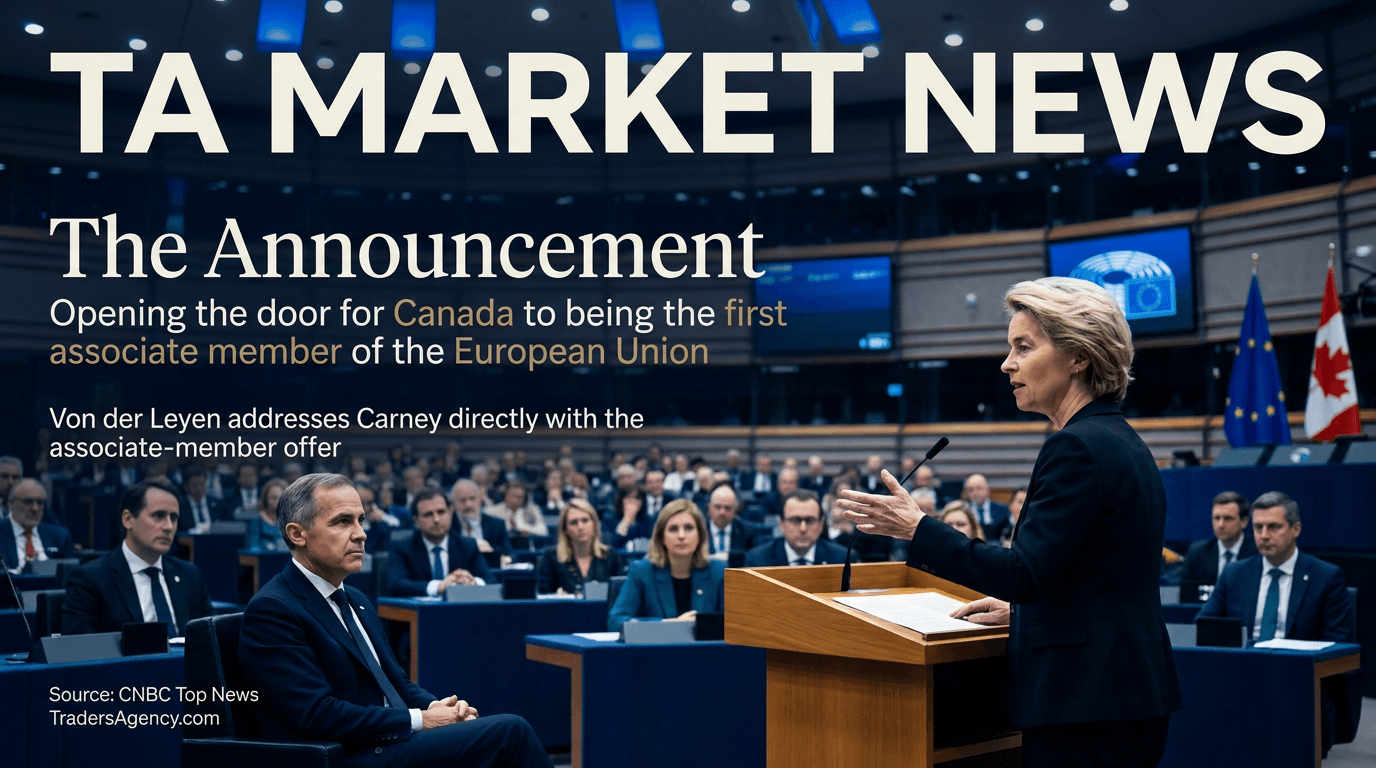
Speaking directly to Canadian Prime Minister Mark Carney, who was in the chamber, von der Leyen said: "And, dear Mark, I said we must urgently reimagine our partnerships so I would like to work with you on opening the door for Canada to being the first associate member of the European Union," according to CNBC's reporting on the address.
CNBC described the announcement as a significant change in EU policy and a signal of a major deepening of ties between Brussels and Ottawa, noting that von der Leyen said the bloc wants to bring the relationship with Canada "to the highest level possible."
Von der Leyen framed the initiative as an evolution beyond the existing EU-Canada trade pact, saying, "We will move from CETA to an alliance for the future, to create a common prosperity and economic security space," per CNBC. The Comprehensive Economic and Trade Agreement, which provisionally took effect in 2017, already eliminated 99% of all tariff lines between the two sides, CNBC reported.
Scope of the offer remains undefined
The reported remarks did not lay out a legal mechanism for associate membership, a treaty basis, or a ratification process among the EU's 27 member states. Nor did von der Leyen's comments, as relayed by CNBC, attach sector-by-sector timelines or any dollar or euro figures to the initiative. What she did pledge, according to CNBC, was cooperation with Canada on artificial intelligence, climate change, geopolitics and Arctic security, framed around the observation that the EU and Canada "see the world with the same eyes." Beyond that framing, the specifics of what associate membership would entail in practice were not detailed in the coverage of the speech.
Carney's position and next steps
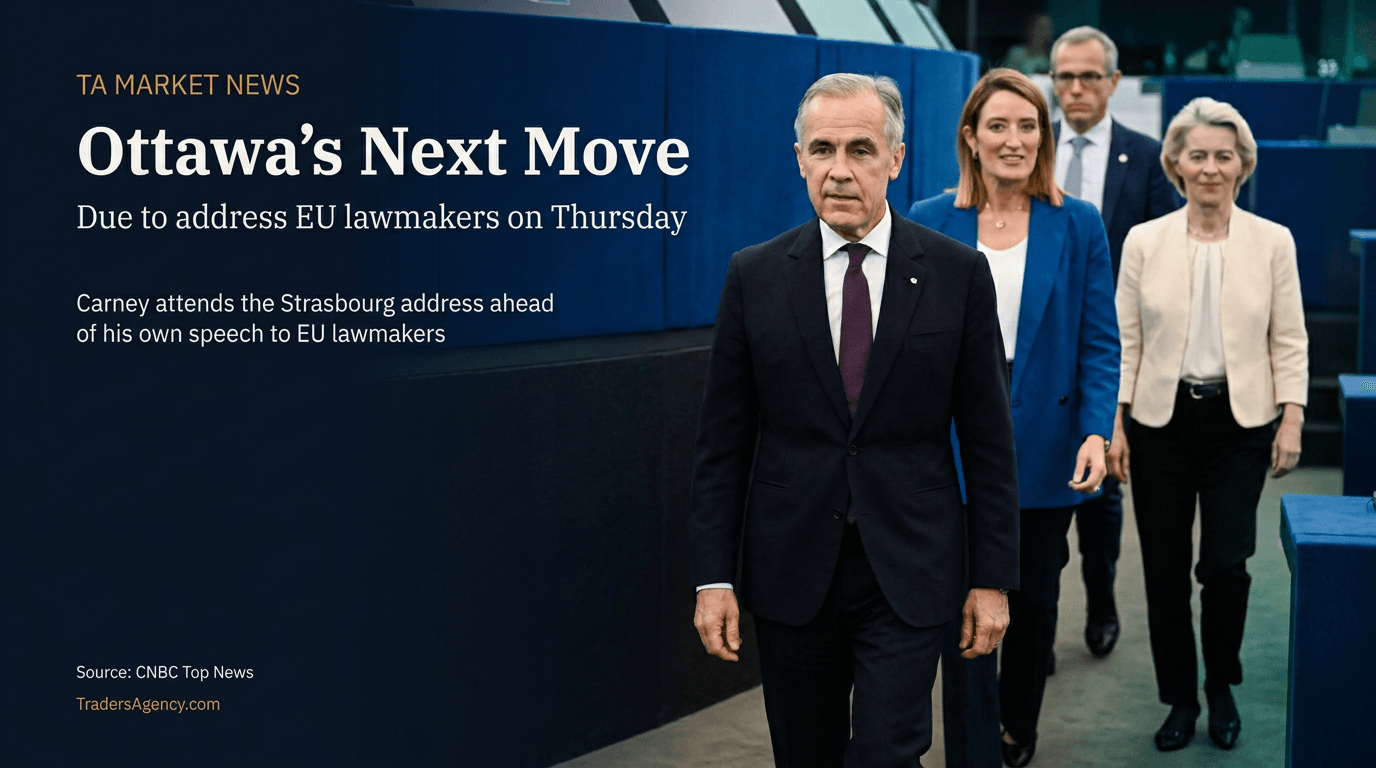
Carney attended the Strasbourg address and is scheduled to speak to EU lawmakers on Thursday, CNBC reported. Carney had previously said Ottawa was keen to pursue a "unique security and economic alliance" with Europe, but not full EU membership, according to the same CNBC report. No negotiating timetable for associate membership was disclosed in the reported remarks, and Carney's direct response to von der Leyen's offer was not included in the CNBC or POLITICO Europe coverage beyond his attendance at the speech.
Reaction from economists and lawmakers
Asked by CNBC whether the push to embrace Canada as the EU's first associate member amounted to a historic moment, Berenberg chief economist Holger Schmieding said, "I think this is a big step, indeed." He added that the move is "not necessarily against the U.S., but it is clearly in favor of making us less dependent on the U.S. and less dependent on China," characterizing deeper ties with "like-minded democracies" as part of a broader economic realignment.
Bernd Lange, who chairs the European Parliament's trade committee, told CNBC that "unpredictable" U.S. policy and "aggressive industrial policy by China" make it important for the EU to strengthen ties with democratic countries, citing Canada as one example. Lange also said the EU should pursue stronger economic ties with Brazil, Indonesia, Japan and South Korea, according to CNBC.
Context: a trade war backdrop
The overture comes as Canada remains locked in a trade dispute with the United States, having pledged to match President Donald Trump's tariffs dollar for dollar, CNBC reported. That backdrop lends context to Schmieding's framing of the associate-member proposal as part of an EU effort to diversify economic partnerships away from reliance on both Washington and Beijing, though this is an interpretation offered by the economist rather than a stated EU policy objective.
Bottom Line
Von der Leyen's proposal marks a notable rhetorical shift in EU-Canada relations, explicitly framed as going beyond the existing CETA trade agreement toward what she called an "alliance for the future." But the reported remarks left the legal architecture, sector-specific commitments, financial scale and negotiating timeline undefined. Carney's own address to EU lawmakers on Thursday may offer the next concrete signal of how Ottawa intends to respond to an offer that, for now, remains a proposal rather than a settled arrangement.
DISCLAIMER: Traders Agency does not offer financial advice. The information provided is for educational purposes only and should not be considered financial advice. Traders Agency is not responsible for any financial losses or consequences resulting from the use of the information provided. Trading carries inherent risks and may not be suitable for all individuals. You are advised to conduct your own research and seek personalized advice before making any investment decisions, recognizing the potential risks and rewards involved.
- CNBC Top News: Canada invited to be EU’s first ‘associate member’ amid Trump tensions · accessed Sep 16, 2026
- POLITICO Europe: EU wants Canada to become ‘associate member,’ von der Leyen says · accessed Sep 16, 2026
See more from Traders Agency on Google
Make us a preferred source and our market analysis will appear more prominently in your Google Search, Top Stories, and AI results.
Add to Preferred Sources