Ross here.
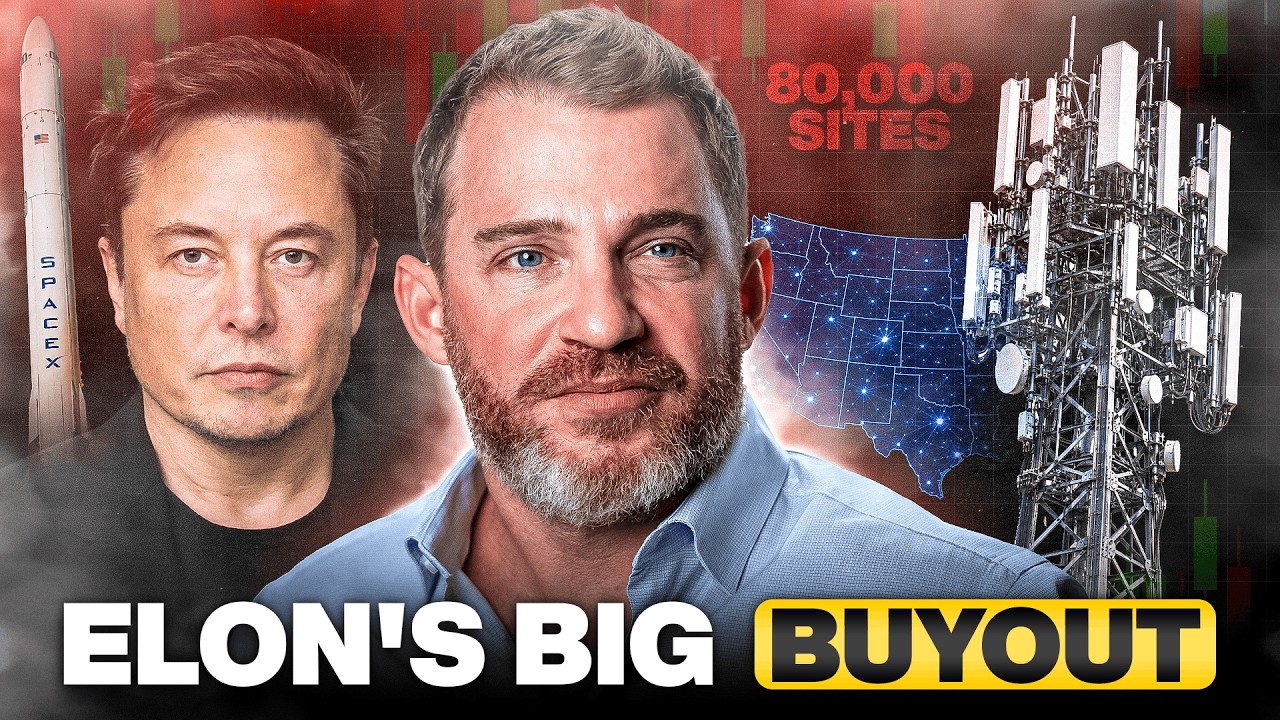
SpaceX stock doesn't trade on any exchange, not yet anyway. But the company's $30 billion spree on wireless spectrum, plus its hunt for 80,000 cell towers, just turned one of the market's most boring dividend stocks into one of its most interesting trades.
Crown Castle, ticker CCI, is up 25% since October 8th. It's still more than 50% below its all-time high. If SpaceX runs its usual playbook, this is just the start.
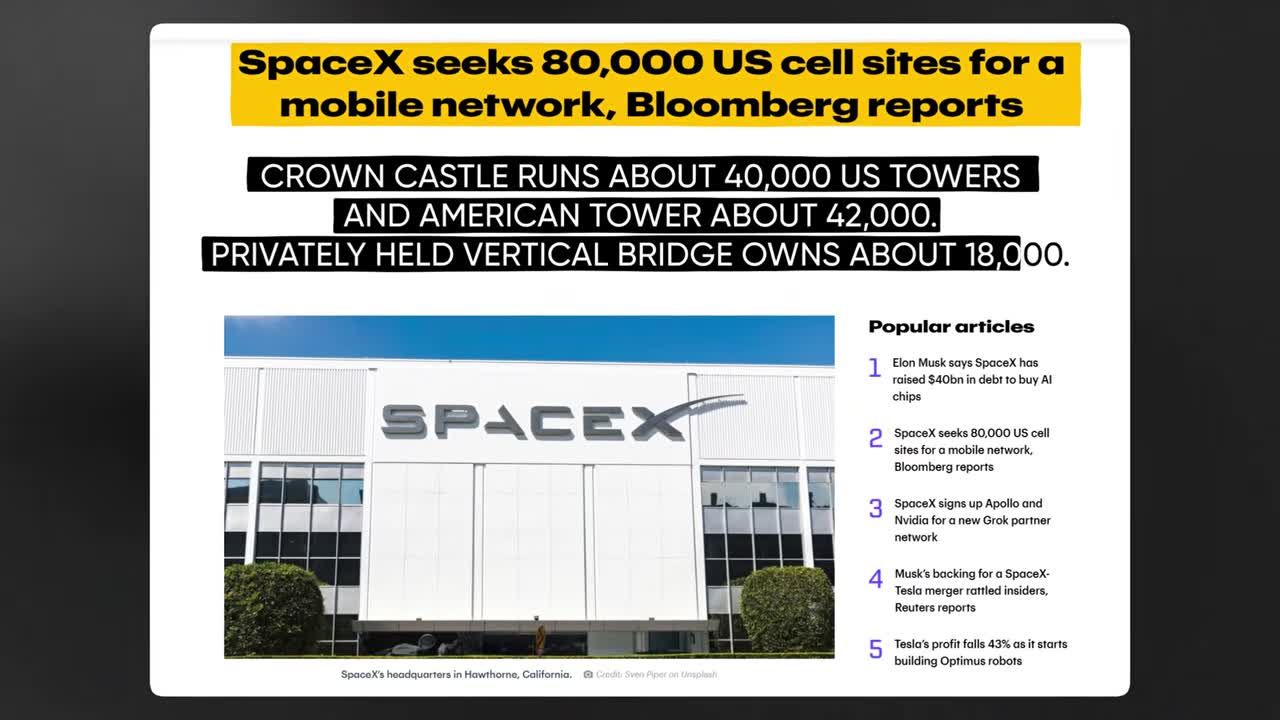
Bloomberg broke the story last week: SpaceX is in talks to secure access to at least 80,000 cell sites, roughly half of every purpose-built tower in the country. The company most often named in that reporting owns about 40,000 of them.
Most investors are betting SpaceX signs a lease. I think there's a real case for something bigger: an outright buyout.
Buyouts pay a premium, not a discount. If SpaceX ends up buying the tower company it's negotiating with, the stock doesn't drift higher over months. It gaps up the morning the deal gets announced. Only the investors who got in early collect that premium.
What Is SpaceX Phone Stock?
Bottom Line: SpaceX's push for 80,000 cell towers makes Crown Castle a direct beneficiary, whether SpaceX signs a lease or buys the company outright. A buyout would likely come at a premium priced in on announcement day, so the stock's upside may not wait for months to show up.
There's no ticker for Elon's next phone company. Yet.
There's no publicly traded "SpaceX phone stock" because SpaceX itself is private. What investors are actually chasing is the ripple effect: the public companies set to benefit if SpaceX becomes a real cell carrier. Crown Castle sits at the top of that list.
Everyone knows SpaceX as the rocket company and Starlink as the satellite internet brand. Elon Musk wants something bigger this time: your phone bill.
SpaceX already runs a service called Starlink Mobile, which beams a signal from satellite straight to a phone. That's useful in the middle of nowhere when you need to send a text. It's a thin pipe, though, with a real limitation: satellites struggle to reach a phone inside a building. No signal in the kitchen, the office, or the parking garage, which happens to be exactly where most people use their phones.
To compete with AT&T, Verizon, and T-Mobile, SpaceX needs two things: the airwaves and the towers. It's already been buying the airwaves aggressively.
Is SpaceX Building a Real Network?
The spectrum spree says yes
SpaceX first agreed to buy a huge chunk of spectrum from EchoStar, a deal that landed around $19.6 billion between cash and SpaceX stock. Then on October 8th, it agreed to buy a nationwide block of low-band spectrum from a firm called Grain Management, reported at about $8 billion in cash. That deal still needs FCC approval.
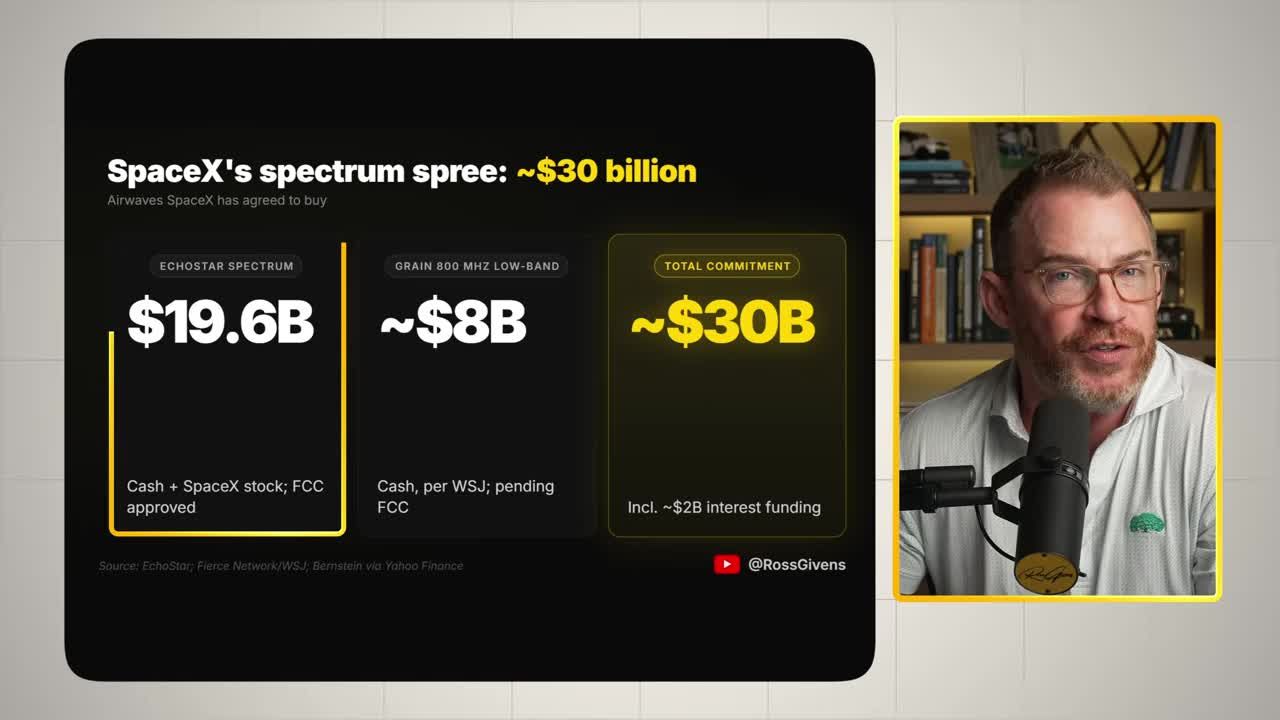
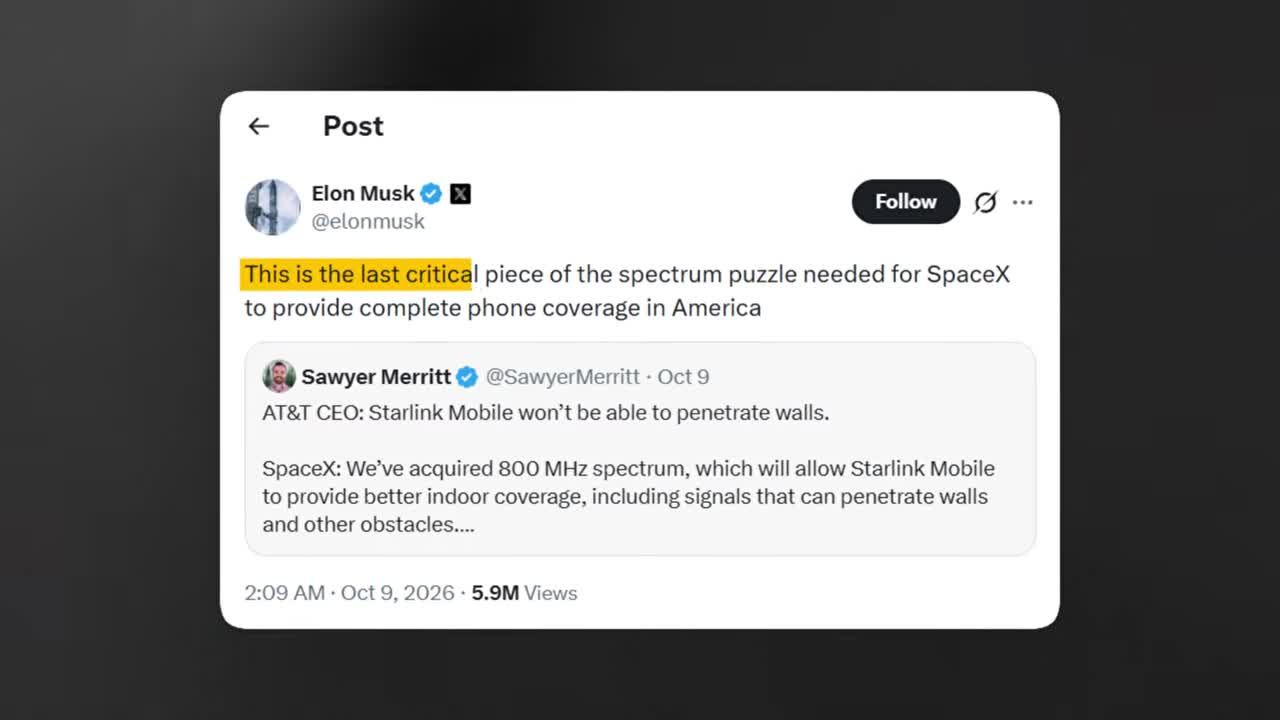
Low-band spectrum matters because it travels far and passes through walls. It's the signal that actually reaches inside your house. Musk posted that this spectrum is the "last critical piece of the spectrum puzzle needed for SpaceX to provide complete phone coverage in America."
Spectrum alone doesn't build a network. It's just permission to broadcast, like owning the rights to a radio station without owning the tower to send the signal from. That's where the October 22nd Bloomberg report comes in: SpaceX is in talks to secure access to at least 80,000 cell sites. The Wireless Infrastructure Association counts about 158,500 purpose-built cell towers in the US, so SpaceX is chasing roughly half the country's entire tower inventory.
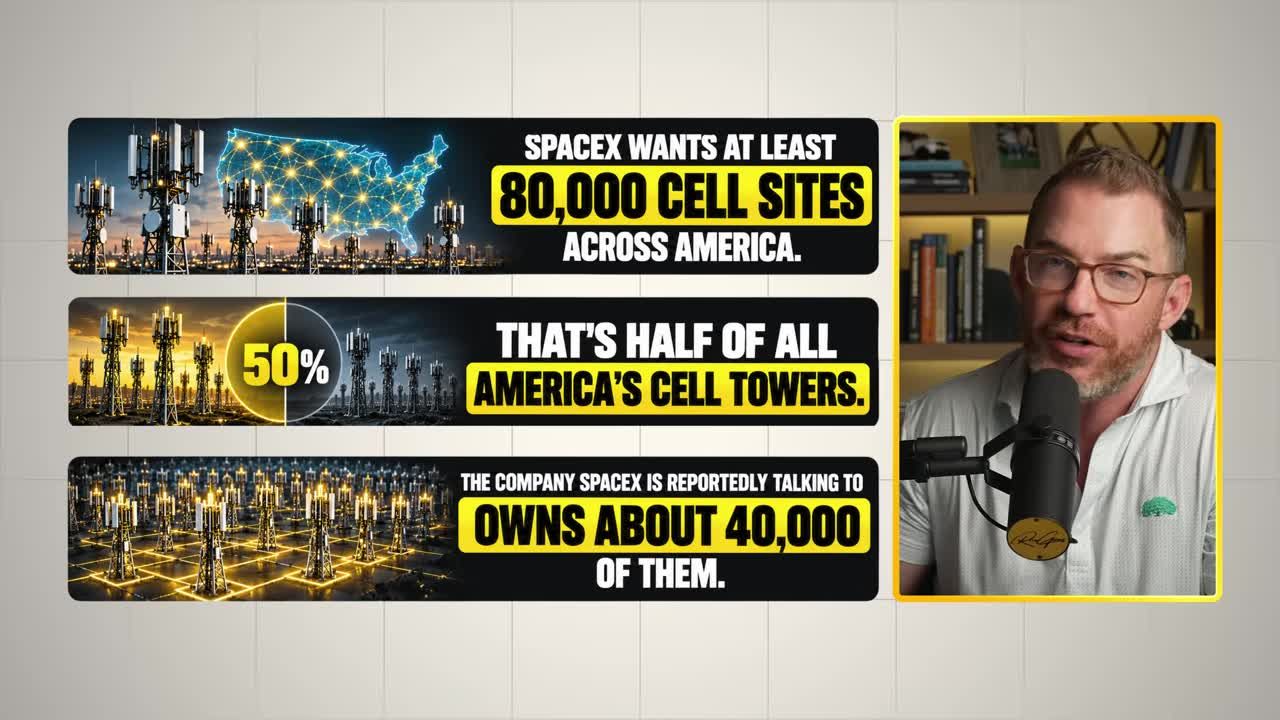
You don't sign up for that kind of infrastructure to kick the tires. You sign up because you're building the real thing.
Starlink Mobile vs Traditional Carriers
Satellites can't get into your kitchen
Starlink Mobile's satellite-first approach solves rural dead zones, but it can't replace a traditional carrier without ground-based towers, which is exactly why SpaceX is now chasing physical infrastructure instead of relying on satellites alone.
Right now, Starlink Mobile is great in the desert when you need to send a text with no bars. It's a poor substitute for everyday phone use, where coverage inside buildings matters most. AT&T, Verizon, and T-Mobile win that fight today because their towers blanket the country and reach inside homes, offices, and parking garages.
For SpaceX to flip that script, it needs the same physical footprint its competitors already have. That means towers, and a lot of them.
Which SpaceX Stock Proxy Gets Paid First?
Four tower companies. One keeps getting named.
Crown Castle, ticker CCI, is the stock most directly named in reporting around SpaceX's tower talks, and it's the one that stands to benefit first if a lease or buyout gets signed. There are four big players in the US tower business, three public and one private, and Crown sits closer to the center of this story than any of the others.
- American Tower is the biggest, with 42,000 US sites, but most of its towers are overseas and it also runs a data center business.
- Crown Castle is a close second with about 40,000 US sites. Bloomberg named it specifically as one of the companies in talks with SpaceX.
- SBA Communications holds about 17,000 US towers, with more overseas than at home, and hasn't been named in the talks.
- Vertical Bridge owns a little over 17,000 towers but is private, so retail investors can't buy it.
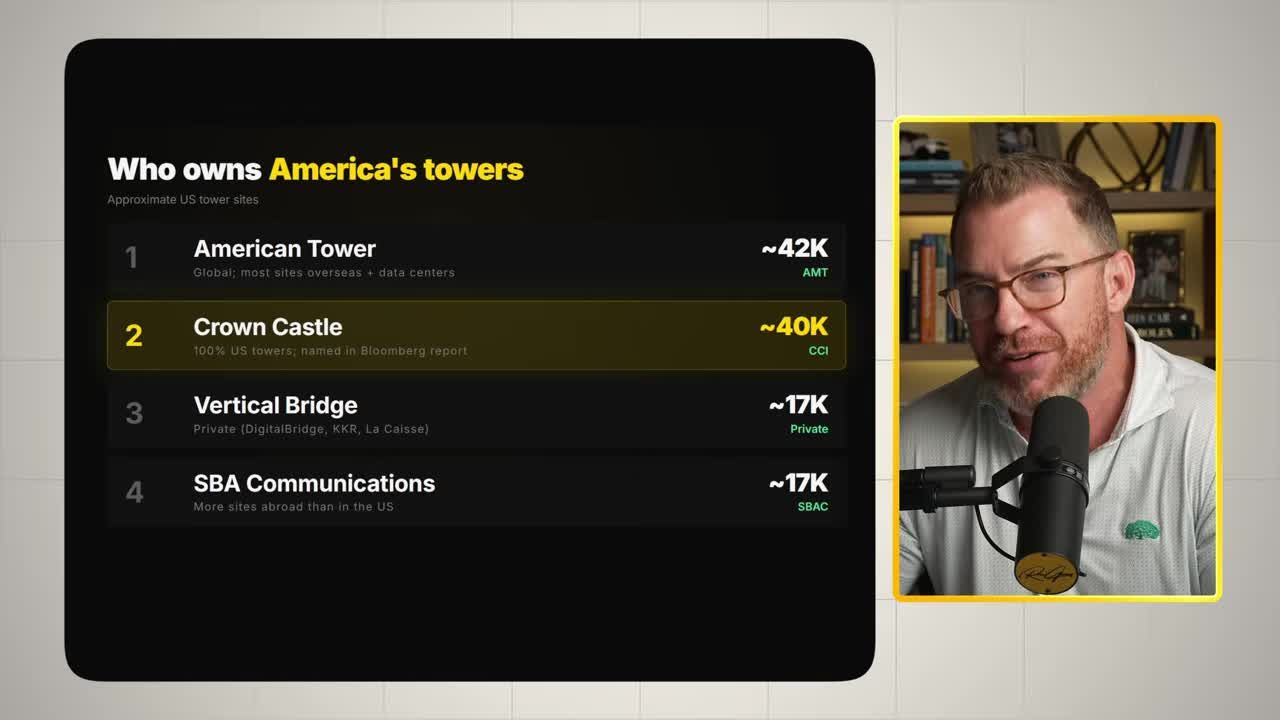
Trade publication Inside Tower reported that American Tower and Vertical Bridge are also in the mix. But Crown Castle's own CEO, Chris Hillbrandt, gave the clearest hint yet on the company's October 21st earnings call, the day before the Bloomberg story broke.
When an analyst asked Hillbrandt point blank about leasing deals with SpaceX or satellite companies, he said:
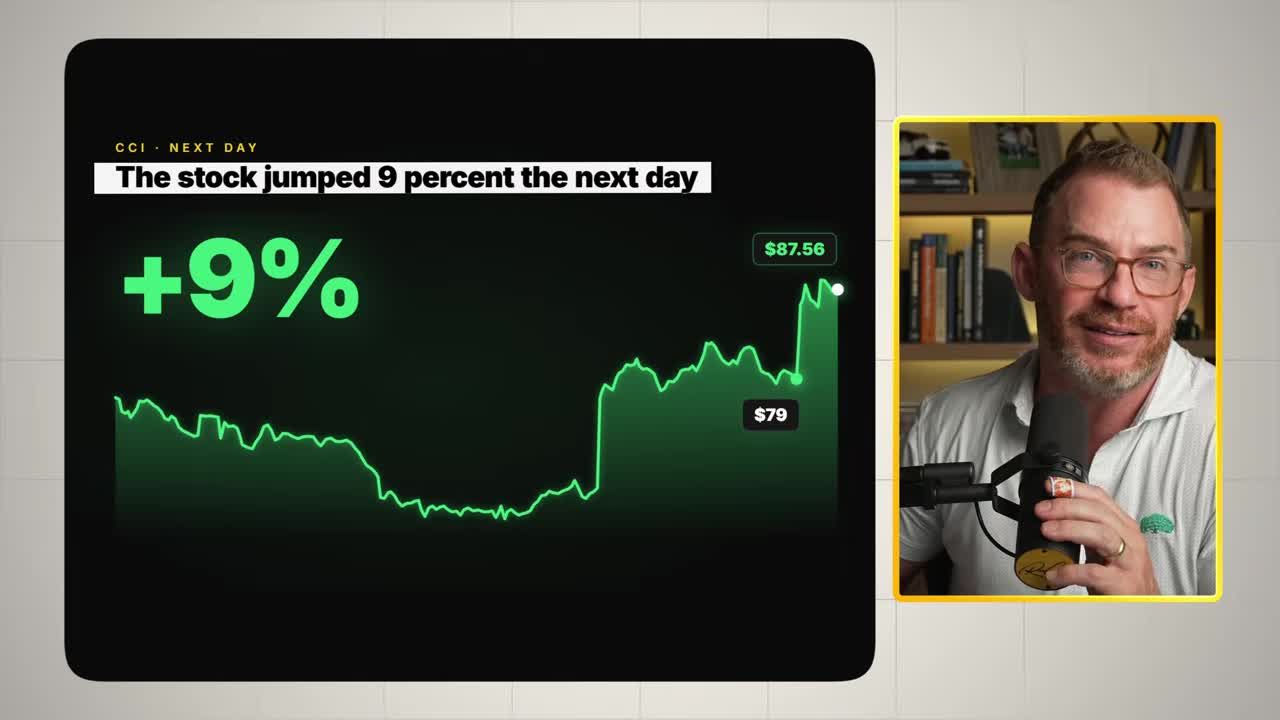
SpaceX famously forbids its negotiating partners from naming it before a deal closes, so that's about as close to a confirmation as a public company CEO gets on a conference call. Crown Castle's stock jumped 9% the next day.
Here's why that matters so much for Crown's business model: it's a landlord. It owns the tower, and phone companies rent space on it to hang their equipment. Building the tower is the expensive part, but it's a one-time cost. Once it's standing, adding a second, third, or fourth tenant costs very little, because the land is already leased and the power is already run. Every new tenant is almost pure profit.
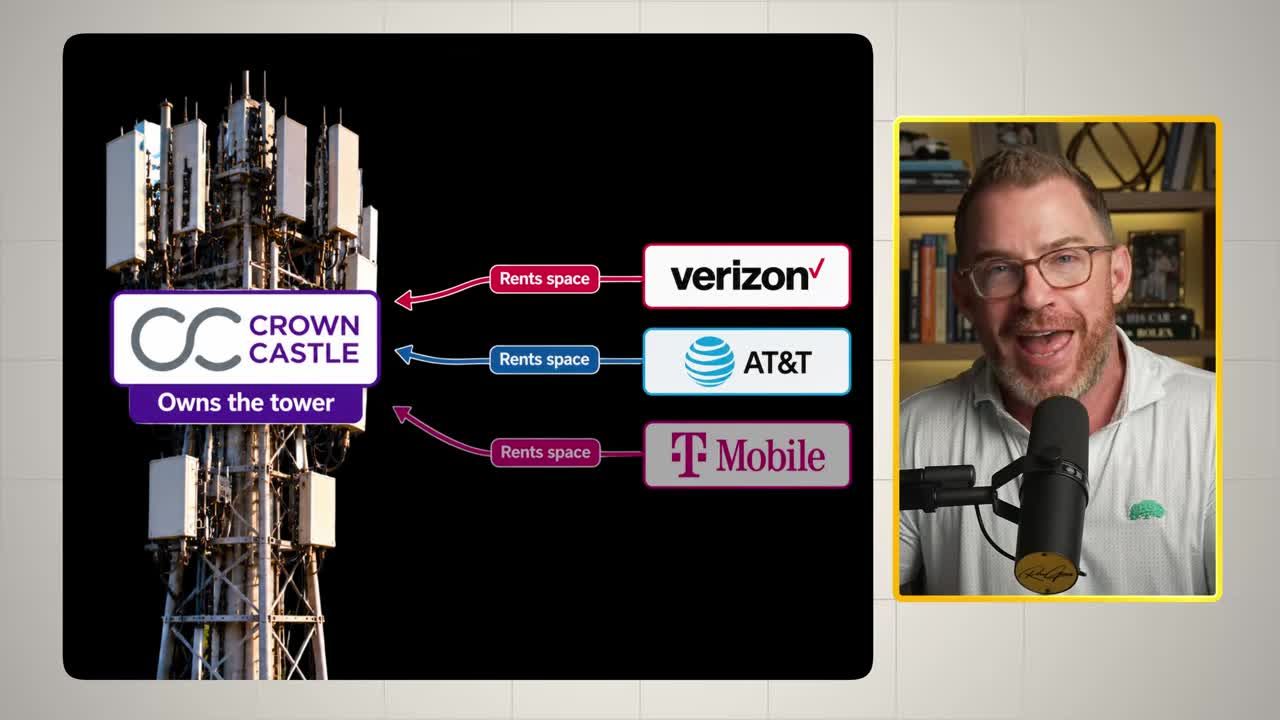
For years, Crown has basically had three tenants: AT&T, Verizon, and T-Mobile. Those three bring in 93% of its site rental revenue, and growth has slowed because there's nobody new to add. Crown itself said it expects 2026 to finish near the bottom of its leasing growth range.
Now imagine a landlord with three tenants suddenly getting a fourth one worth $2 trillion, wanting space in thousands of buildings at once. That's the first real new customer for American cell towers in years, maybe decades.
Get an entire year of live weekly mentoring sessions, my newsletter, indicators, bonus reports, tons more. Click the link and I'll see you in the next live session.
Join my Black Ops Trading ClubWhy Does Crown Castle Fit Best With SpaceX?
The math even allows for a buyout
Crown Castle made a key change in 2026 that lines up almost perfectly with what SpaceX needs. The company sold off its fiber and small cell businesses for $8.5 billion, a deal that closed in May. That left Crown as a pure US tower company with about 40,000 towers, all located right here at home, exactly where SpaceX needs them.
American Tower is bigger, but it's a smaller piece of a much larger global pie, with competing data center operations on top. SBA has more towers overseas than domestically and hasn't surfaced in the reporting. Vertical Bridge is private, so retail investors can't buy it. That leaves Crown Castle as the obvious public pick if SpaceX is going to sign a major US tower deal.
This is where my own theory comes in, and I want to be clear: this is speculation, not reporting. Every account so far describes SpaceX negotiating access, essentially leases, not a buyout. But consider the math.
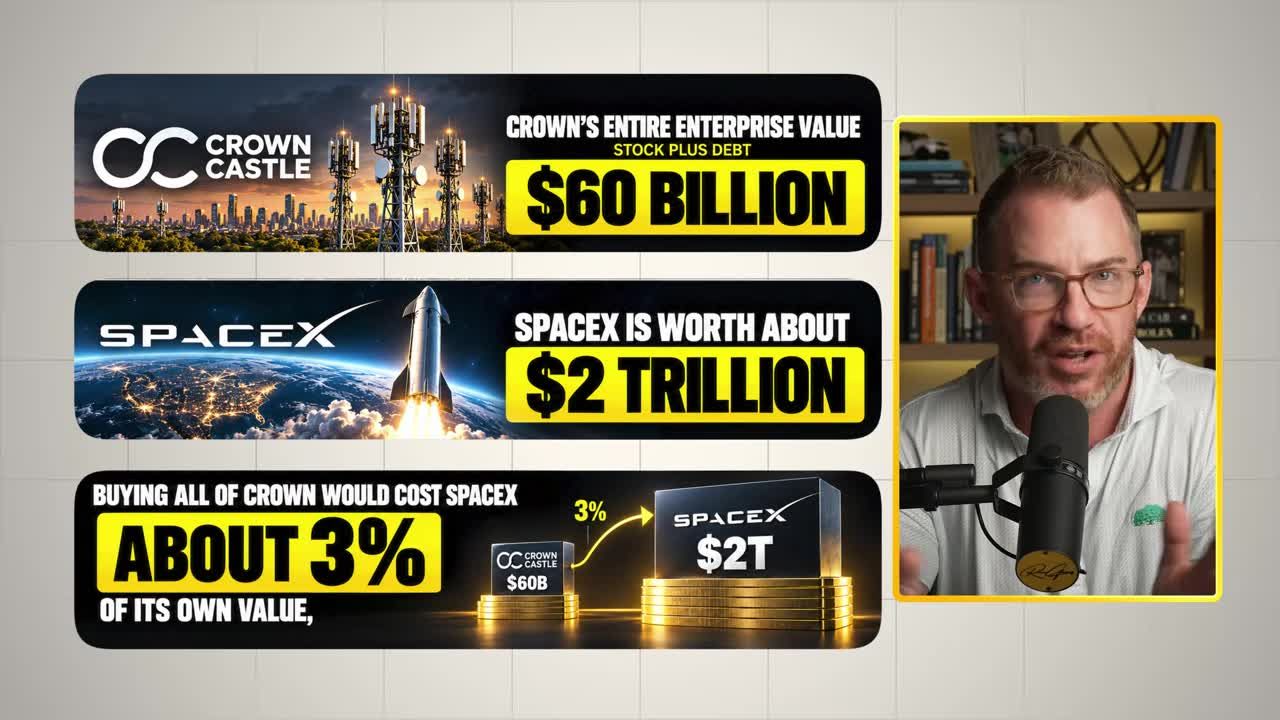
Crown's enterprise value, meaning all its stock plus its debt, sits at about $60 billion. SpaceX is worth roughly $2 trillion. Buying all of Crown, towers, cash flow, and everything else, would cost SpaceX about 3% of its current value. It could even issue stock rather than spend cash, and it's already spent $30 billion just on airwaves without blinking.
Elon Musk's companies don't typically rent. They own and vertically integrate. SpaceX builds its own rockets and engines, catches and reuses those rockets, builds its own satellites and dishes by the thousand, and runs its own launchpads. It's now buying its own spectrum. It has its own AI in Grok. With Terafab, it's even making its own chips. From the chip to the rocket to the satellite to the dish on a roof, Musk owns nearly every link in that chain already. Cell towers would be a logical next link.
Some will argue regulators would block a buyout like this. I disagree, for one simple reason: almost everyone has a complaint about their phone company. Add in the fact that Musk has the president of the United States in his corner, and the political incentive to block something that could lower phone bills just isn't obvious.
You're getting paid to wait for Elon Musk to make his next move.
How Can I Buy SpaceX Stock?
You can't buy SpaceX stock directly on a public exchange because SpaceX is a private company, and there's no public SpaceX stock price to track. The only public exposure tied to its phone ambitions right now runs through the companies it's negotiating with, like Crown Castle under the ticker CCI.
When EchoStar sold spectrum to SpaceX, part of that payment came in SpaceX stock itself, so the company clearly does issue equity privately, just not anything retail investors can purchase on the open market. If you want exposure to the SpaceX phone buildout today, the publicly traded proxy is the tower infrastructure it needs, not a SpaceX phone stock symbol that doesn't exist yet.
What If I Invest $1,000 in SpaceX?
Since SpaceX stock isn't available to retail investors, a $1,000 position in "SpaceX" directly isn't currently possible. What's measurable is the move in companies tied to its buildout. Crown Castle stock is up 25% since the spectrum deal was announced on October 8th, and it jumped another 9% the day after its CEO's comments on the October 21st earnings call.
Those are the kinds of moves available in the public market right now while SpaceX itself remains private.
The Numbers Behind Crown Castle
For a tower company, the metric that matters most is AFO, or adjusted funds from operations, which functions like real cash earnings for a REIT. In the third quarter, Crown's AFO came in at $1.24 a share, up 11% from a year earlier. That improvement came from using $8 billion in proceeds from the fiber sale to pay down debt, with the rest used for buybacks. Less interest expense, fewer shares outstanding, more cash per share.
Management raised its full-year outlook to between $4.54 and $4.66 a share, call it $4.60. With the stock trading around $80 to $85 a share, that puts Crown at roughly 19 times its cash earnings, before factoring in any SpaceX deal at all.
The dividend adds another layer. At $4.25 a year against an $85 to $88 share price, that's close to a 4.9% dividend yield. Crown Castle is both the purest US play on a SpaceX tower deal and the one that pays the most to hold while you wait. See Crown's own filings on its investor relations page for the full breakdown.
What Has to Go Right for Crown Castle Stock?
Three things need to happen for this thesis to play out fully:
- SpaceX has to sign something. Right now it's just talks. The first real proof would be a filing or announcement of a master lease.
- The FCC has to approve the Grain spectrum deal from earlier this month. Without that low-band spectrum, SpaceX doesn't need the towers in the first place.
- AT&T, Verizon, and T-Mobile have to stay put. They still make up about 93% of Crown's rental revenue, and their equipment is already physically installed on these towers, which makes a mass exit unlikely regardless of how they feel about a new competitor moving in.
Crown also carries a fair amount of debt, roughly $23 billion, which is normal for a tower company but does mean the cash flow needs to keep coming the way it has for years.
Frequently Asked Questions
How can I buy SpaceX stock?
You can't buy it on a public exchange since SpaceX is private. The closest public exposure is through companies tied to its buildout, such as Crown Castle under ticker CCI.
What if I invest $1,000 in SpaceX?
That isn't currently possible since SpaceX stock isn't publicly traded. Investors looking for measurable moves tied to SpaceX's ambitions have instead seen Crown Castle rise 25% since October 8th and jump 9% after CEO comments on October 21st.
Is SpaceX going to start a cell phone company?
The evidence suggests yes. SpaceX has committed roughly $30 billion to wireless spectrum and is negotiating access to 80,000 cell sites, the infrastructure needed to run a real nationwide network beyond Starlink Mobile's satellite-only coverage.
What is Elon Musk's SpaceX IPO stock symbol?
SpaceX has not gone public, so there's no IPO stock symbol to trade. The company has used private SpaceX stock as part of deal payments, like the EchoStar spectrum purchase, but that stock isn't available on public markets.
Getting Paid While Elon Builds
SpaceX is dead serious about becoming America's fourth phone company. You don't spend $30 billion on airwaves and ask for 80,000 towers just to kick the tires. Elon Musk doesn't always hit his deadlines, the Roadster came years late, but it flew. After reusable rockets, satellites by the thousand, and underground tunnels connecting cities, it's hard to bet against him figuring out cell service too.
Crown Castle, ticker CCI, is the purest public way to own this story right now. It's named directly in the reporting, its CEO all but confirmed active talks on an earnings call, and it just finished turning itself into a pure US tower business at the exact moment SpaceX needs exactly that. Whether SpaceX ends up leasing space or buying the whole company outright, Crown shareholders are positioned to benefit, and they're collecting close to a 5% dividend in the meantime.
That's the setup I like most about this trade: you get paid to wait for Elon Musk's next move.
Get an entire year of live weekly mentoring sessions, my newsletter, indicators, bonus reports, tons more. Click the link and I'll see you in the next live session.
DISCLAIMER: Traders Agency does not offer financial advice. The information provided is for educational purposes only and should not be considered financial advice. Traders Agency is not responsible for any financial losses or consequences resulting from the use of the information provided. Trading carries inherent risks and may not be suitable for all individuals. You are advised to conduct your own research and seek personalized advice before making any investment decisions, recognizing the potential risks and rewards involved.
See more from Traders Agency on Google
Make us a preferred source and our market analysis will appear more prominently in your Google Search, Top Stories, and AI results.
Add to Preferred Sources