
The memory sector got smoked on Monday, but the AI memory super cycle is far from over. A massive selloff just flushed out the weak hands and exposed exactly where the smart money is hiding. Two specific hidden memory stocks completely ignored the market panic.
This is not speculation. It is pattern recognition. When the entire sector gets hit by a macro headline and a handful of names refuse to come down, the market is giving you a massive signal.
Why Did Memory Stocks Crash on Monday?
Bottom Line: The Monday memory crash was a macro false alarm, not a crack in the AI memory super cycle. The real signal came from what did not sell off: supplier-level names like Kulicke and Soffa and Penguin Solutions held their bids while the obvious large-cap DRAM names got flushed. When institutional money stays parked in specific names during a sector-wide panic, that is where the next leg of the trade is likely building.
The trigger was South Korea, not a flaw in the AI thesis. Tensions heated up with Iran the night before, which cratered the South Korean stock market and shook the liquid natural gas market.
Korea imports almost all of its liquid natural gas. That gas runs the power plants. Those power plants run the fabs that make the memory chips. One domino knocked over the next.
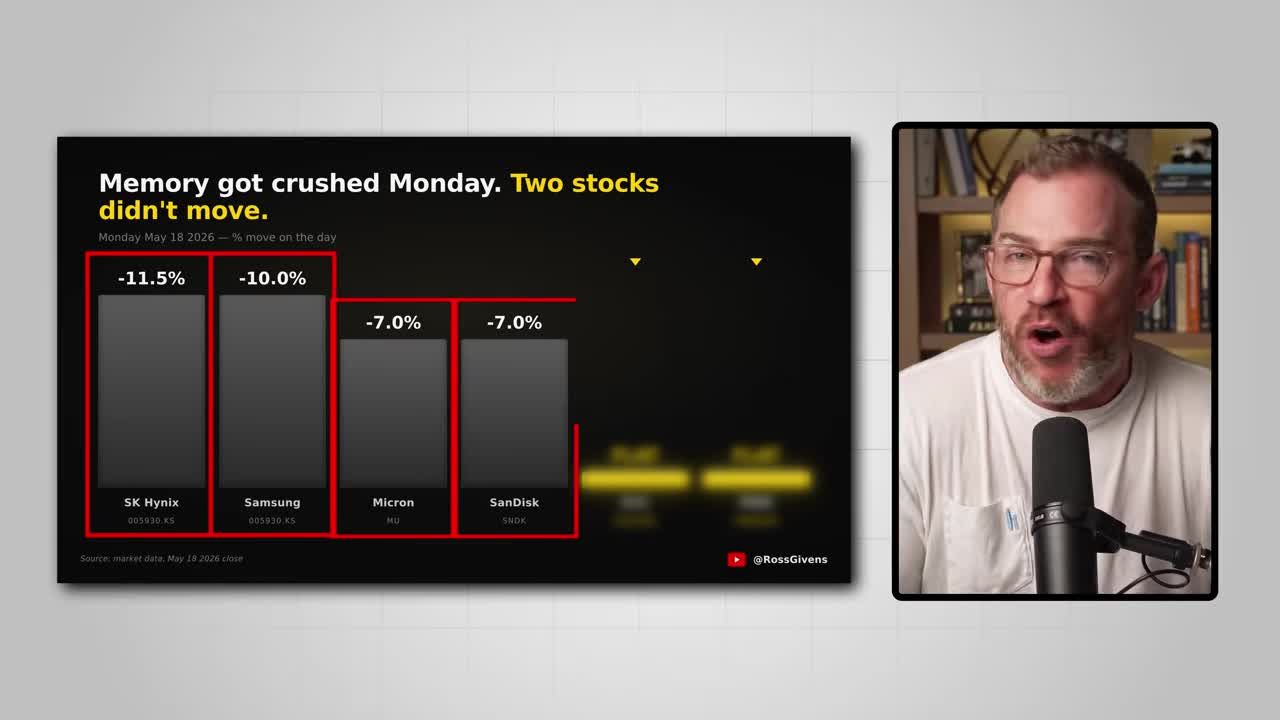
- SK Hynix dropped 11.5% in Monday's session in Korea
- Samsung followed the group lower
- Micron dropped 9.5% from open to close, SanDisk fell as much as 11%
- The DRAM ETF fell 10% in a single session
This was a group move driven by macro noise. It had nothing to do with underlying demand for memory.
Is the AI Memory Super Cycle Still Intact?
Did Wall Street figure out the super cycle is fake? Absolutely not. The memory shortage is currently the worst in 15 years, according to Goldman Sachs. Bank of America recently called this a super cycle similar to the boom of the 1990s.
The data backs it up entirely. Global DRAM (dynamic access random memory) is currently in a 4.9% supply deficit. HBM, the specialty memory stacked next to AI accelerators, is short by 5.1%.
This is not normal. The demand side is just getting started, and AI is driving it parabolic.
AI Agents Need Massive Memory
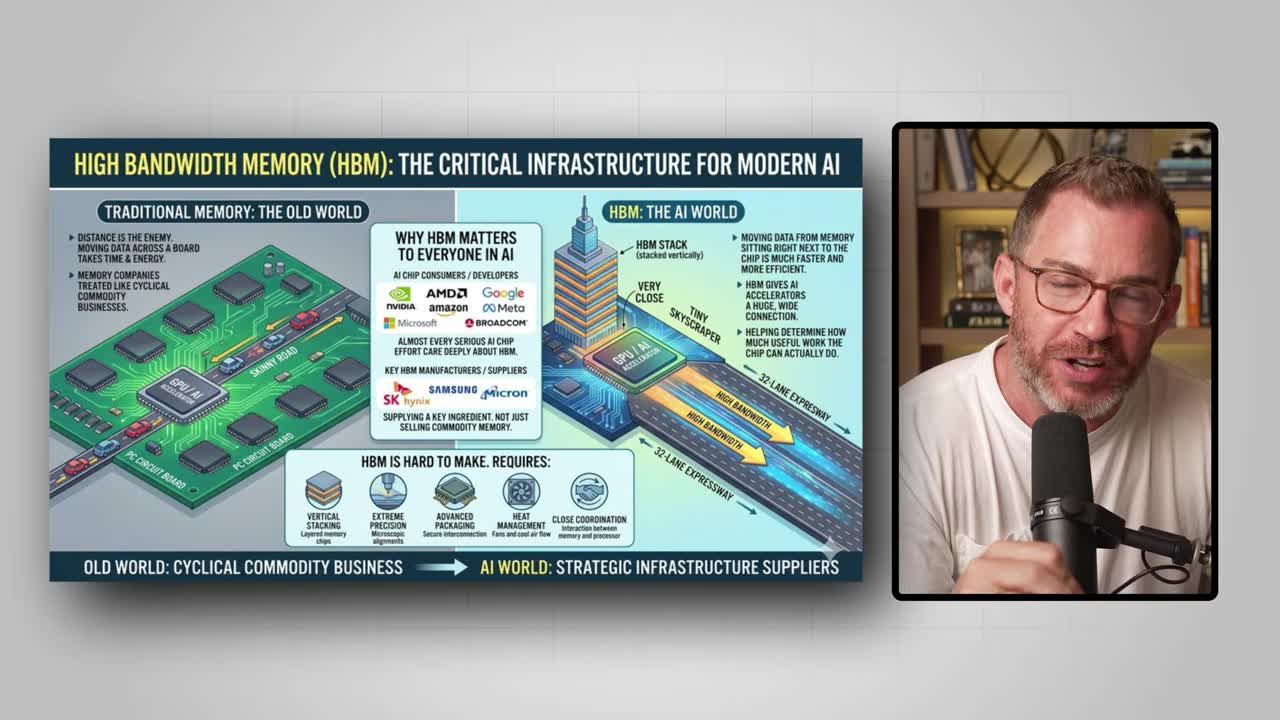
For two years, Wall Street told you AI was all about GPUs. Nvidia and the big calculators. They were partially right. GPUs are the engines, but those engines cannot run without memory. The math chips can only do math on data they can actually reach.
Now, Silicon Valley is about to put AI agents inside every enterprise app. These agents use five to 10 times more memory than a standard chatbot session.
A chatbot is like a smart employee who answers a single question. An agent is that same employee hired for the week. She remembers the project. She tracks the conversation. She opens files and runs sub-agents underneath her. She holds your spreadsheet, your inbox, and your codebase open all day long.
That workflow requires working memory. Every active agent in a data center is a tiny ongoing memory tenant sitting there burning HBM forever.
Where Is Institutional Money Hiding in Memory Stocks Right Now?
The big DRAM names caught the first leg of this trade. SanDisk is up 550% year-to-date. Western Digital is up 200%. Micron is up 179% year-to-date and 700% in 12 months.
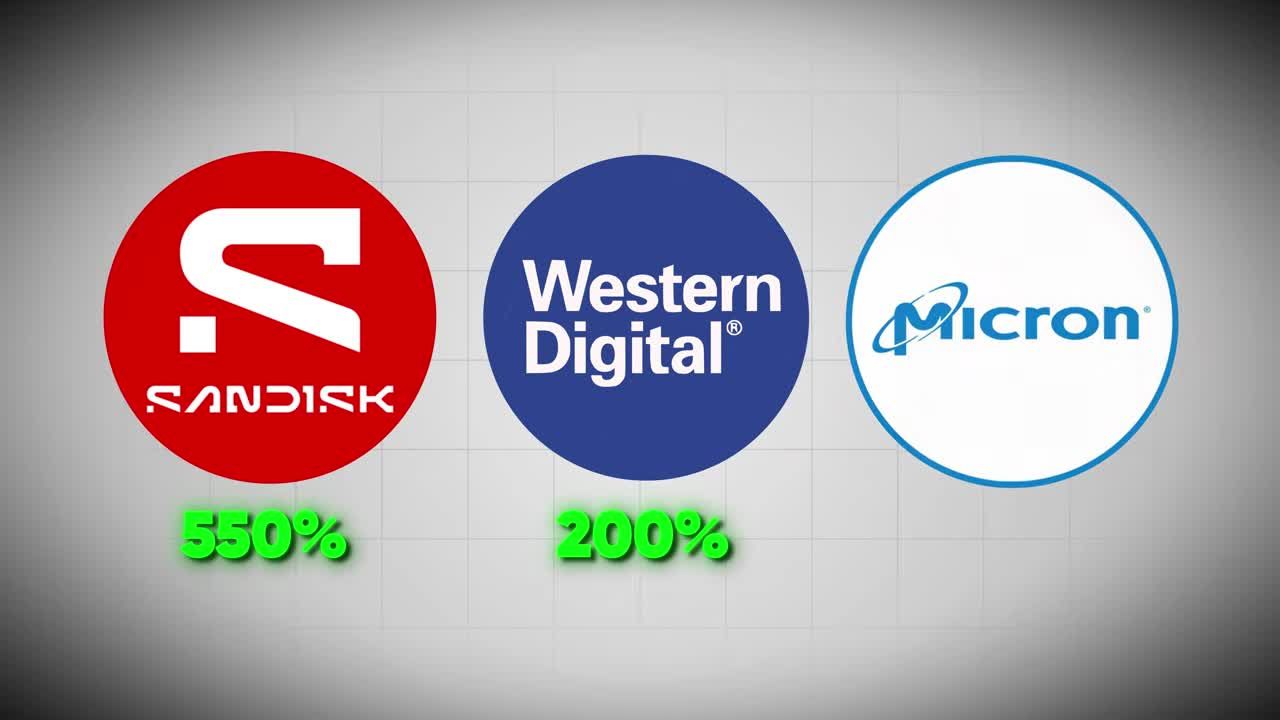
If you missed those, you missed those. The second leg is just starting. This leg belongs to the picks and shovels supplying the major players.
On Monday, two hidden memory stocks barely moved. Both held near their highs. Both refused to come down with the group. When institutional money holds its bid on a day where macro headlines flush the obvious names, you start paying attention. The institutions are anchored in these names. They are not selling on an Iran headline. They are sitting on a thesis that is bigger than a one-day trade.
Get an entire year of live weekly mentoring sessions, my newsletter, indicators, bonus reports, tons more. Click the link and I'll see you in the next live session.
Join my Black Ops Trading ClubStock #1: Kulicke and Soffa (KLIC)
The first name flashing massive institutional accumulation is Kulicke and Soffa, ticker KLIC. This is about $100 a share, but the market cap is right around $5 billion. So, a midcap stock and a fraction of the size of every DRAM name we just talked about. They make the machines that physically bond HBM memory stacks to AI chips.
The next generation of HBM is called HBM4. It can only be assembled with a specific technology called thermo compression bonding. Kulicke and Soffa specializes in this exact technology.
This is a massive choke point. HBM4 stacks are getting taller, moving from 12 layers today to 16 layers next year. The bumps connecting each layer are getting smaller. The heat dissipation problem gets brutal at that geometry. The old way of bonding simply does not work anymore.
Kulicke and Soffa is one of only two qualified vendors at SK Hynix and Micron. They delivered their first HBM system in December.
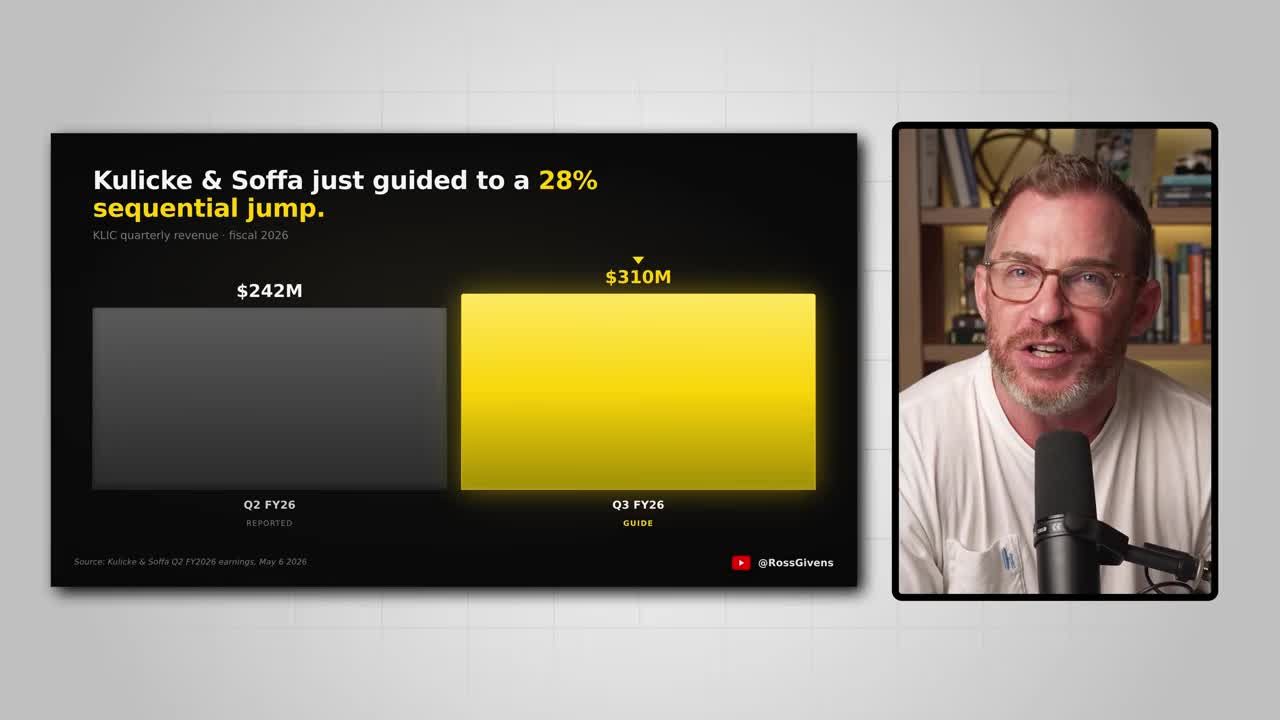
About a year ago, KLIC was trading at its 52-week low of $31. Today it sits at $100. That is a triple in 12 months. On Monday, while Micron was dropping 9.5% and SanDisk was down as much as 11%, KLIC barely moved. Big money was buying the dips, not selling on the spike.
Is the stock cheap? Not even close. The PE is rich. The multiple is high. But the structural setup is just getting going. HBM4 doesn't even ramp until later this year. Every Blackwell Nvidia chip that ships, every TPU, every Trainium chip needs thermo compression bonding. Kulicke and Soffa is on every qualified vendor list. Requalifying a new bonding vendor at one of the big guys like Micron takes years, not months. That is a real moat for the entire cycle.
Stock #2: Penguin Solutions (PNG)
You do not have to bet the farm on Kulicke and Soffa. The second stock comes at the exact same memory story from a completely different angle.
Penguin Solutions, ticker PNG. This is about $47 a share, market cap of $2 billion. A true small cap, half the size of KLIC. If Kulicke and Soffa is the picks and shovels of HBM manufacturing, Penguin is the picks and shovels of agentic AI development. This is one of the hidden memory stocks that most investors have never heard of.
The reason an AI agent uses five to 10 times more memory than a chatbot comes down to a key value cache. Every conversation, tool call, and subtask must be held in memory. The longer the project, the more cache you need.
Penguin Solutions just launched the industry's first production-ready CXL-based KV cache server, offering up to 11 terabytes of pooled memory for AI inference. This is the literal hardware that lets enterprises deploy agentic AI at scale. Without it, every agent eats the memory budget of an entire GPU server. With it, you pool memory across machines and the math suddenly works.
Like KLIC, Penguin held up on Monday. While every DRAM name fell, PNG stayed bid right around $46 to $47. That is your signal. This is the agentic AI memory trade, and it is still largely under the radar.
Know the Risks
These are active trades. They have risk just like any other position. Both of these hidden memory stocks have seen triple-digit returns over the last 12 months. They are a bit extended, but both are currently putting in nice tight consolidations. A break higher from here is buyable.
1. Hyperscaler Capex Pauses
The biggest risk is a hyperscaler capex pause. If the big boys, the Metas, the Anthropics, decide to slow down their infrastructure buildout, the sector will take a hit. Seems unlikely, but it is possible.
2. Competition for KLIC
For KLIC specifically, the bear case involves competition. Disco out of Japan and Hanmei out of Korea are real competitors who could steal some of their share of the TCB market over time. But requalifying a TCB vendor at the major memory fabs takes years, not months. Kulicke and Soffa is already in. That is a real moat for the duration of the HBM4 cycle.
3. Lumpy Revenue for PNG
For PNG, the revenue is a little spotty. They have lumpy, project-driven cycles. If a couple of contracts slip into the same quarter, earnings could disappoint and the stock will take a hit.
The Super Cycle Is Just Starting
Wall Street knows this is a multi-year structural shift. It is driven by HBM, agentic AI, and the simple fact that only a handful of companies on Earth can supply what the AI economy needs.
The big DRAM names are no longer a secret. But the suppliers underneath them are not yet fully discovered. On a day where macro noise flushes the obvious names, the suppliers that hold their bid tell you exactly where the institutional money is parked.
Kulicke and Soffa is the HBM4 packaging trade. Penguin Solutions is the agentic AI memory trade. Two completely different angles on the same super cycle, and both still largely under the radar.
Get an entire year of live weekly mentoring sessions, my newsletter, indicators, bonus reports, tons more. Click the link and I'll see you in the next live session.
Key Takeaways
- Monday's memory selloff was triggered by South Korea's geopolitical exposure to Iran, not any deterioration in AI memory demand. Korea imports nearly all of its LNG, which powers the fabs that produce DRAM and HBM chips.
- SK Hynix fell 11.5%, Micron dropped 9.5% open to close, SanDisk fell as much as 11%, and the DRAM ETF lost 10% in a single session. The move was macro-driven and sector-wide.
- Goldman Sachs has called the current memory shortage the worst in 15 years, reinforcing that the AI memory super cycle thesis remains intact despite the single-session panic.
- Kulicke and Soffa (KLIC) is identified as the HBM4 packaging play, a supplier-level position that held its bid while the major DRAM names collapsed around it.
- Penguin Solutions is flagged as the agentic AI memory trade, a second under-the-radar name that also refused to follow the group lower, signaling institutional accumulation at the supplier tier.
DISCLAIMER: Traders Agency does not offer financial advice. The information provided is for educational purposes only and should not be considered financial advice. Traders Agency is not responsible for any financial losses or consequences resulting from the use of the information provided. Trading carries inherent risks and may not be suitable for all individuals. You are advised to conduct your own research and seek personalized advice before making any investment decisions, recognizing the potential risks and rewards involved.
See more from Traders Agency on Google
Make us a preferred source and our market analysis will appear more prominently in your Google Search, Top Stories, and AI results.
Add to Preferred Sources