

EchoStar Stock: Why SpaceX's Boost Mobile Talks Could Unlock a $33 Billion Gap
The market is pricing the whole company for less than its SpaceX IOU alone is worth.
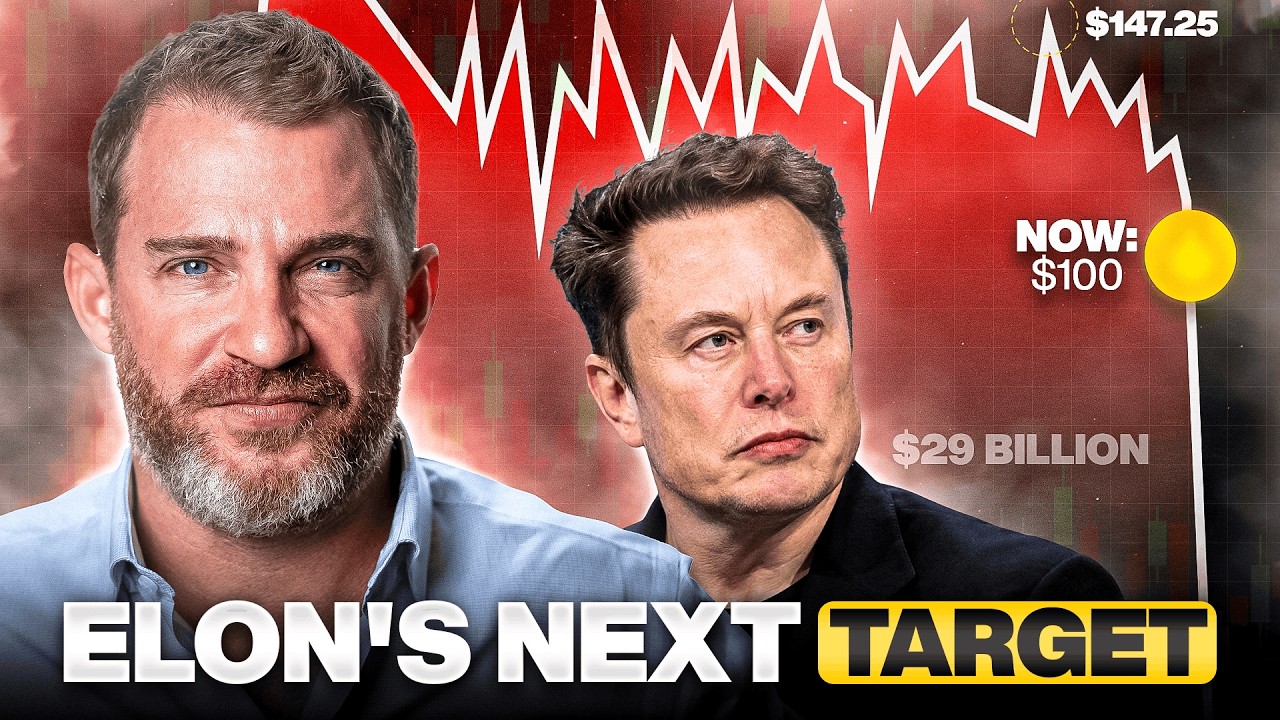
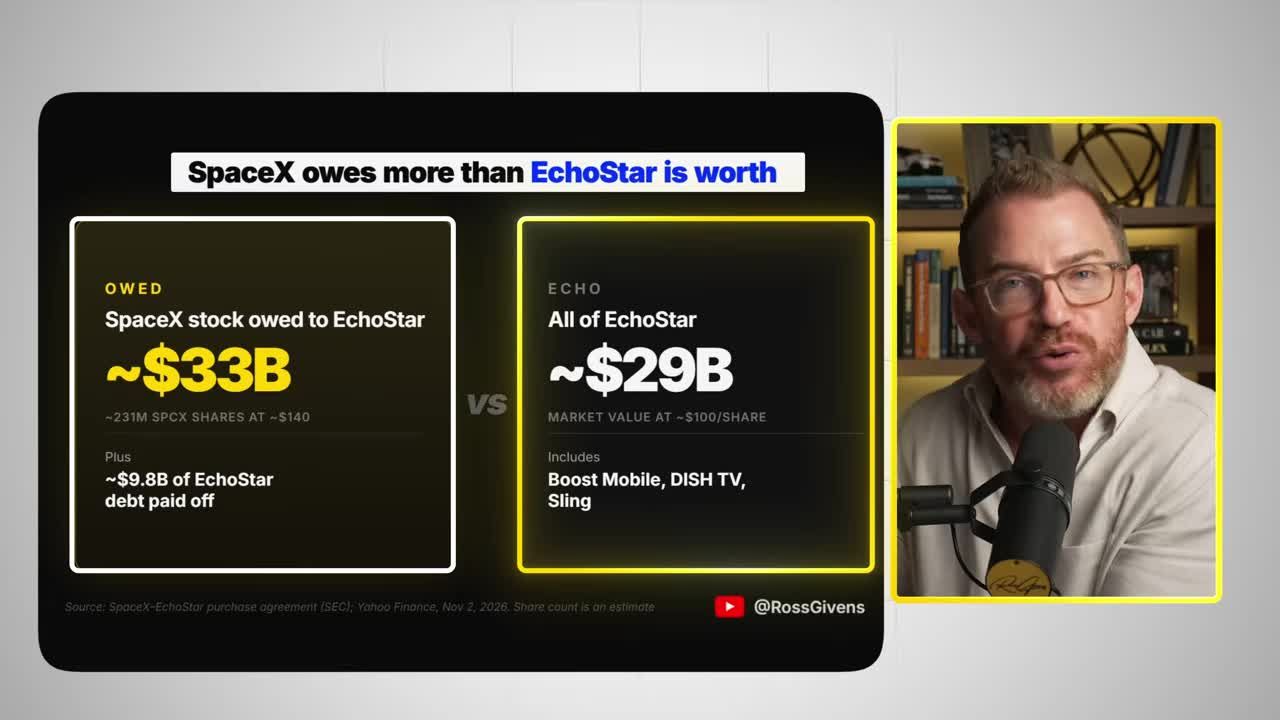
EchoStar stock trades for about $100 a share, putting the company's entire market cap at roughly $29 billion. Yet SpaceX already owes EchoStar close to $33 billion worth of its own stock from a spectrum deal signed months ago. That gap is why I just opened a position.
On November 2nd, the Washington Post reported that SpaceX is in talks to buy Boost Mobile, or at minimum gain access to its network. Elon Musk reportedly handled the discussions personally, sitting down with Charlie Ergen, the chairman of Boost's parent company EchoStar, last month. That's a notable headline on its own. But the real story is the math sitting underneath it, and why one handshake between two men could settle the entire thing.
What Does SpaceX Actually Want?
SpaceX wants to become a real cell phone carrier, not just a satellite service that texts you when you're lost in the mountains. SpaceX's CFO Brett Johnson said it directly on the company's earnings call: the goal is to "become a major mobile carrier in the United States."
To pull that off, a company needs three things: airwaves, towers, and customers.
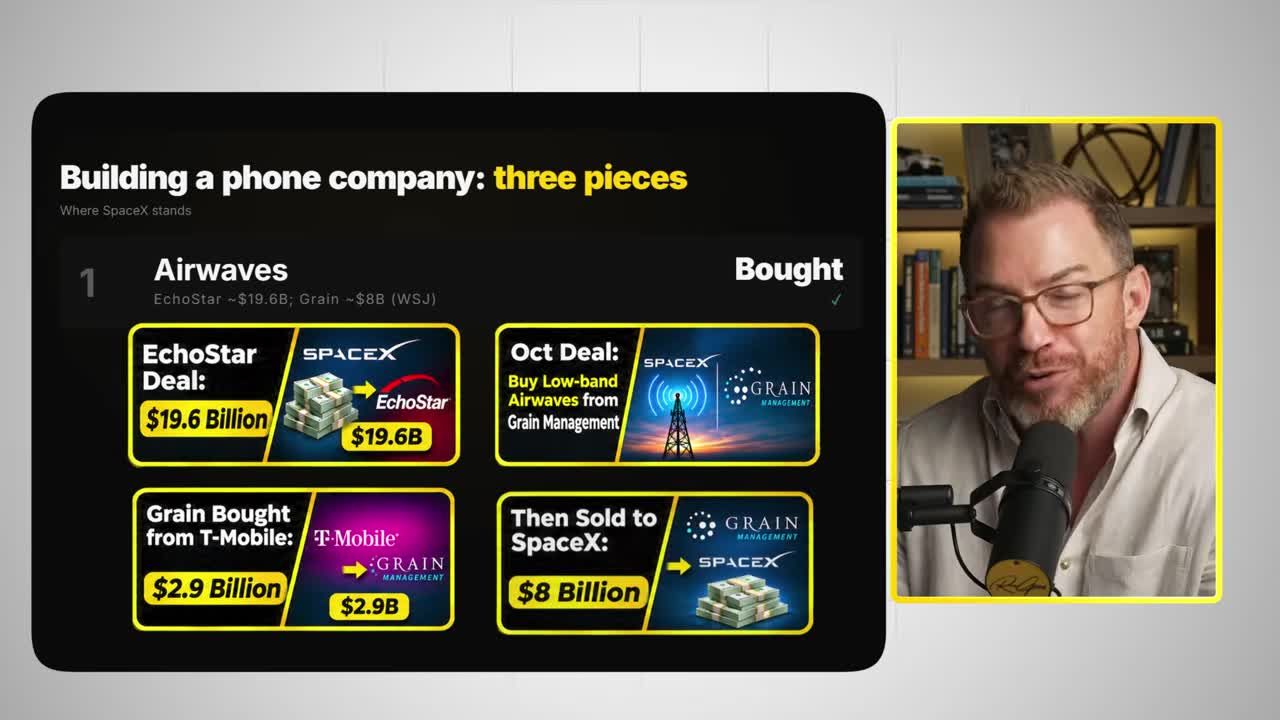
SpaceX has been aggressively buying airwaves. It agreed to pay EchoStar about $19.6 billion for one large chunk. Then in October, it agreed to buy a block of low-band airwaves from a firm called Grain Management. Grain had picked up that spectrum from T-Mobile over the summer for $2.9 billion, then flipped it to SpaceX for about $8 billion, according to the Wall Street Journal.
For towers, Bloomberg reported last month that SpaceX is looking for access to at least 80,000 cell sites and has held exploratory talks with Crown Castle.
Customers are the hard part. You can buy airwaves with a check and rent towers, but getting millions of people to switch phone plans normally takes years of ads, stores, and customer service, unless you just buy a company that already has them.
That's where Boost Mobile comes in. Boost had 7.38 million wireless customers as of the end of June. It has stores, billing infrastructure, and brand recognition. Everything SpaceX needs as a base to start from is already sitting inside the conversation Ergen and Musk reportedly had last month.
But the customers aren't even the biggest prize here. The IOU is.
The $33 Billion IOU
Go back to that $19.6 billion spectrum deal between SpaceX and EchoStar. SpaceX isn't paying it all in cash, and the structure matters.
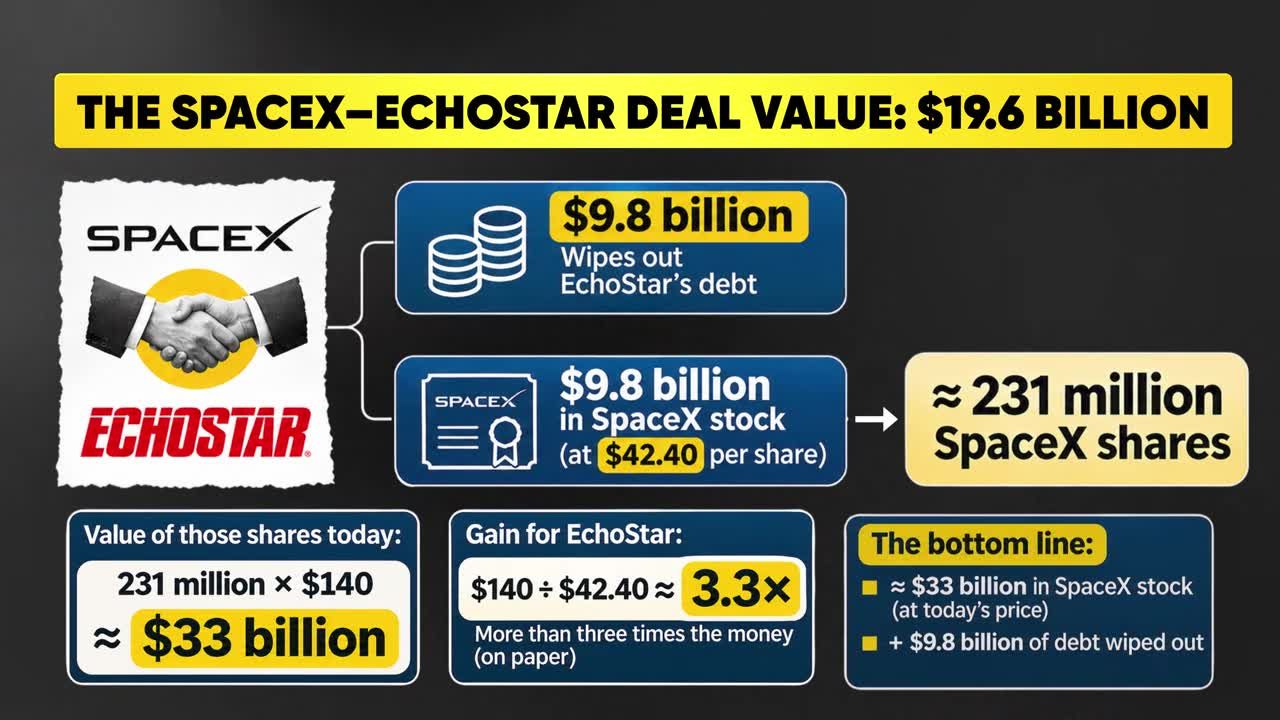
Straight from the contract: SpaceX first pays cash to wipe out about $9.8 billion of EchoStar's debt. The rest gets paid in SpaceX stock at a locked-in price of $42.40 a share, set before SpaceX went public. SpaceX currently trades around $140 a share.
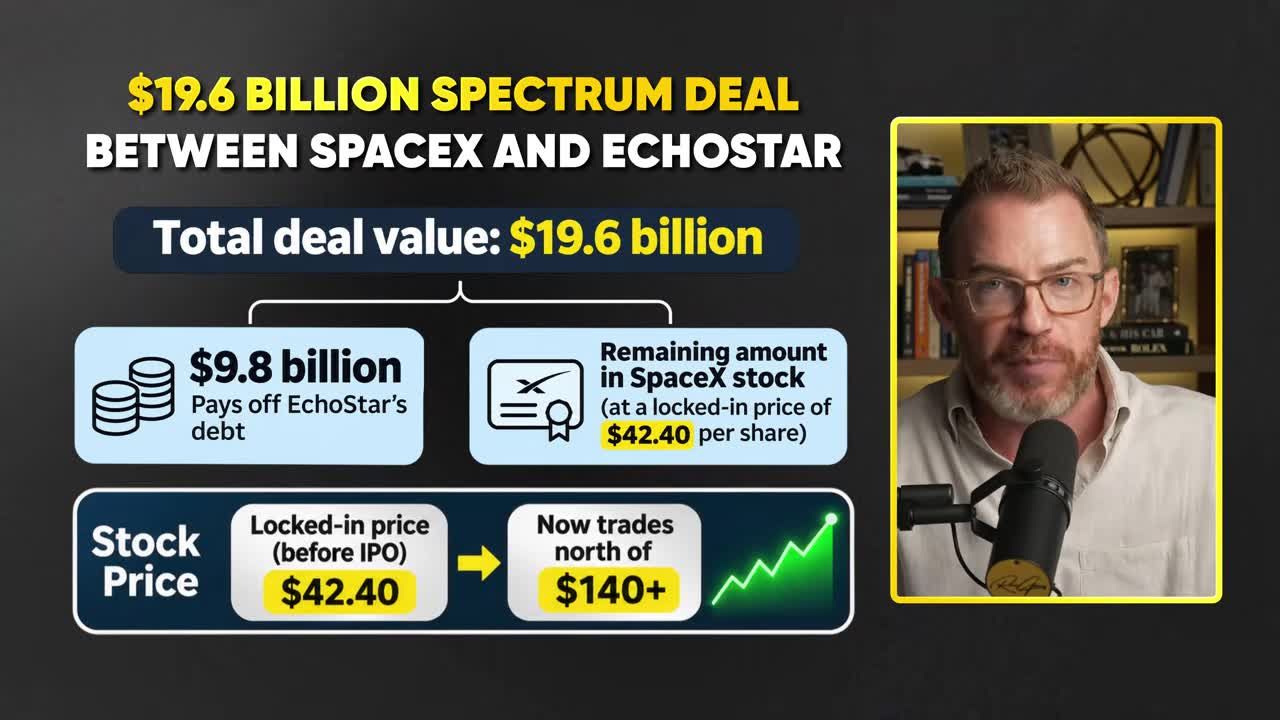
Run the numbers. $9.8 billion of the deal eliminates EchoStar debt outright. The remaining $9.8 billion, at the locked $42.40 price, works out to roughly 231 million SpaceX shares. At today's $140 price, those 231 million shares are worth roughly $33 billion.
Four Piles on the Table
Think of EchoStar's balance sheet as four piles laid out on a kitchen table.
Pile one is the $33 billion of SpaceX stock owed to EchoStar. Pile two is cash in the bank. After AT&T paid EchoStar $20 billion for a separate batch of airwaves back in July, Ergen told investors the company holds roughly $14 to $15 billion in cash. That number comes straight from him and has not yet been audited.
Pile three is debt. After SpaceX pays off the $9.8 billion, my rough estimate puts EchoStar's remaining debt around $3 billion. Pile four is remaining bills: shutting down the old wireless network, and taxes on the spectrum sales. Ergen has put that figure between $5 and $7 billion, with roughly a third already set aside in a trust. Call it about $4 billion still coming out of cash.
Add it up: $33 billion in stock, plus $14 billion in cash, minus $3 billion in debt, minus $4 billion in bills. That leaves about $40 billion.
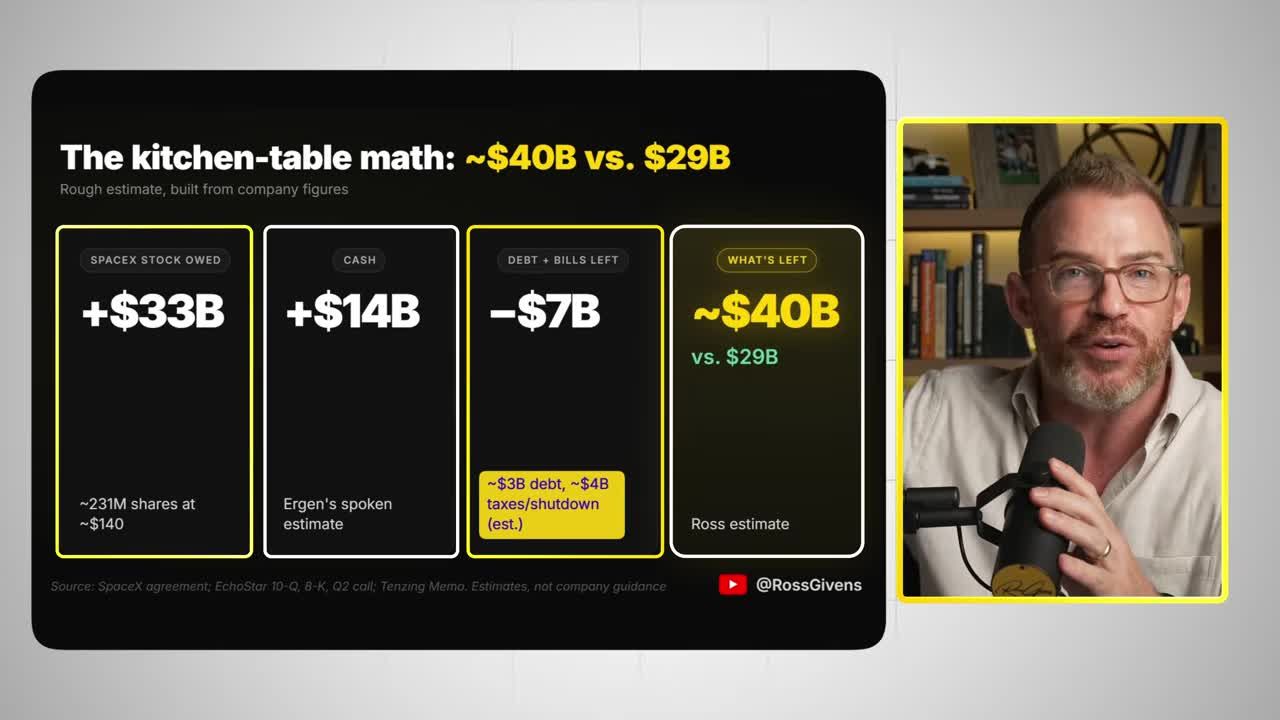
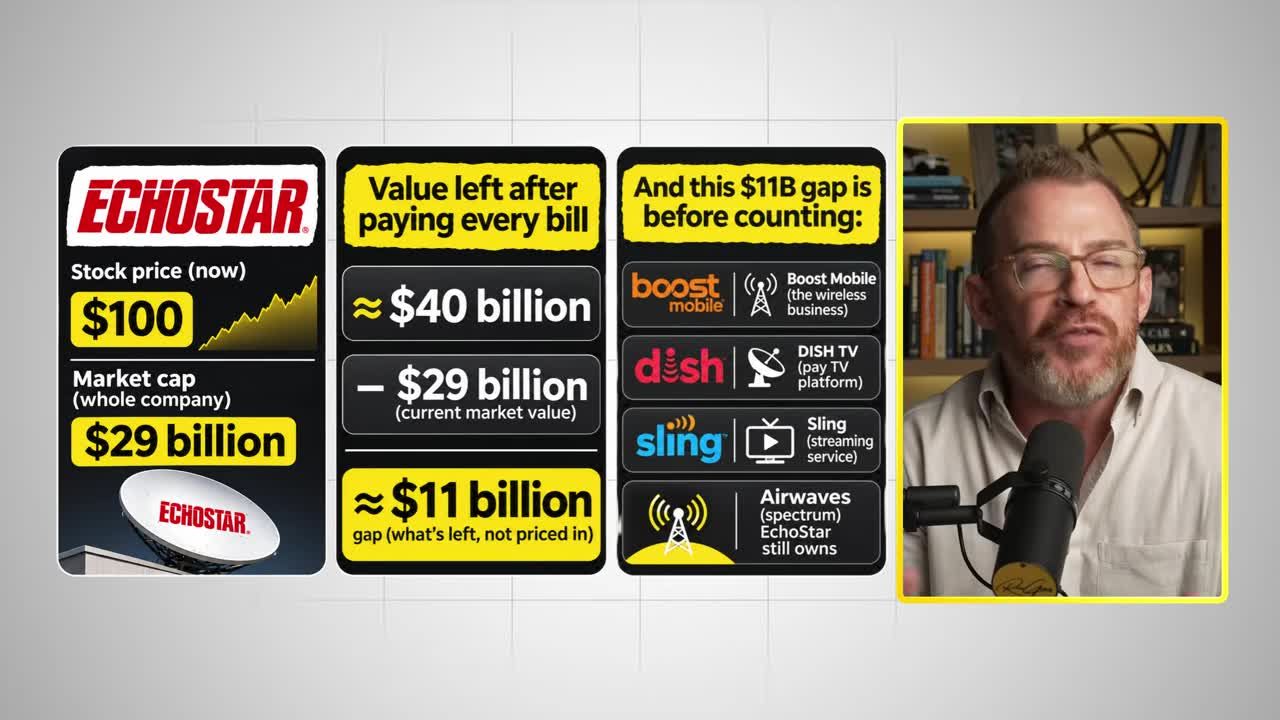
This is my own estimate built from EchoStar's own disclosed numbers, not something the company has formally reported as a total. But at a $100 share price and a $29 billion market cap, the market is pricing EchoStar at roughly $11 billion less than what's left after every bill gets paid. And that's before counting anything for Boost Mobile, Dish TV, Sling, or the spectrum EchoStar still owns. Those assets come free at the current price.
Get an entire year of live weekly mentoring sessions, my newsletter, indicators, bonus reports, tons more. Click the link and I'll see you in the next live session.
Join my Black Ops Trading ClubWhy Does EchoStar Stock Trade at a Discount?
EchoStar stock looks undervalued based on the math behind its SpaceX spectrum deal, which leaves the company sitting on an estimated $40 billion in value against a $29 billion market cap. So why would the market leave money like that on the table? There are a few reasons.
- Timing: The SpaceX stock doesn't land in EchoStar's hands until the deal's final closing, targeted for the end of November 2027. SpaceX has the right to speed that up but hasn't said it will.
- Volatility: The IOU's value swings with SpaceX's stock price. Every roughly $10 move in SpaceX shares moves the IOU's value by about $2.3 billion.
- Messy history: Some EchoStar units went through bankruptcy court last year. Wall Street doesn't like messy situations, but messy is often where the bargains sit.
None of that changes the core math. It just explains why the market hasn't closed the gap yet.
Could a Buyout Make EchoStar Stock Pop?
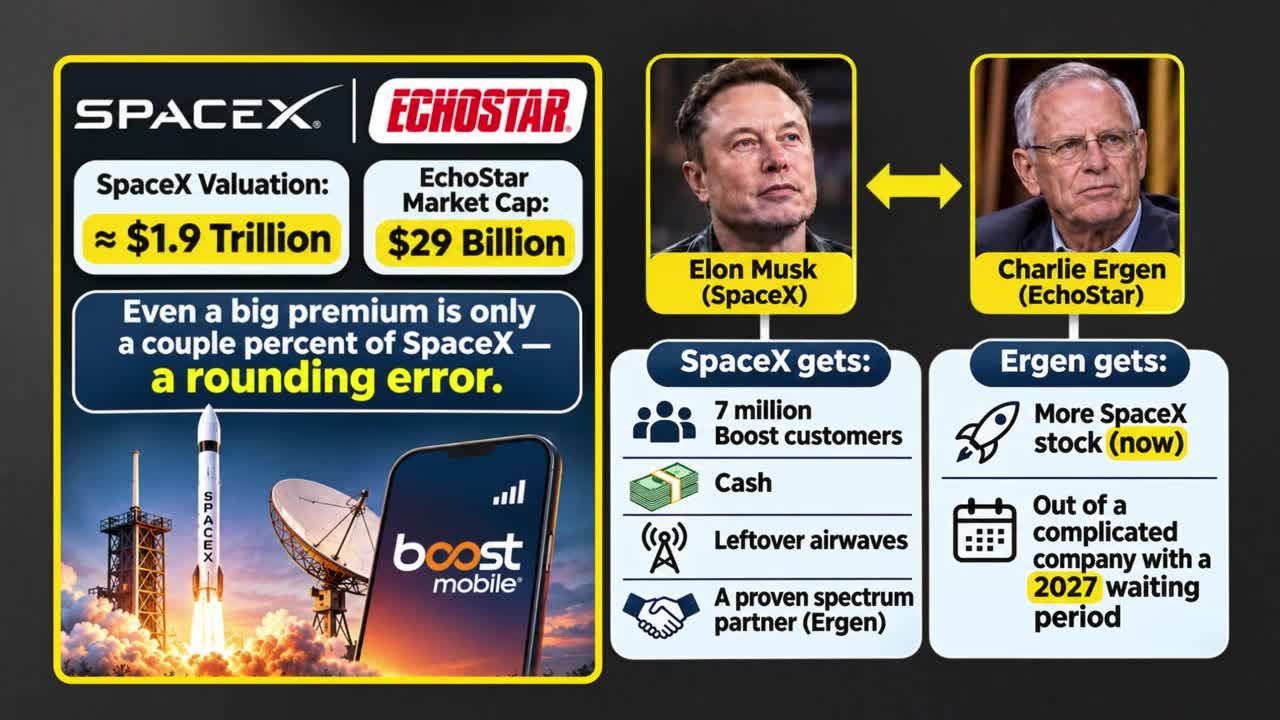
A full SpaceX buyout of EchoStar could send EchoStar shares sharply higher because it would let SpaceX cancel its own $33 billion stock IOU while picking up 7 million Boost customers, EchoStar's cash, and leftover spectrum, all for a price that's a rounding error against SpaceX's scale.
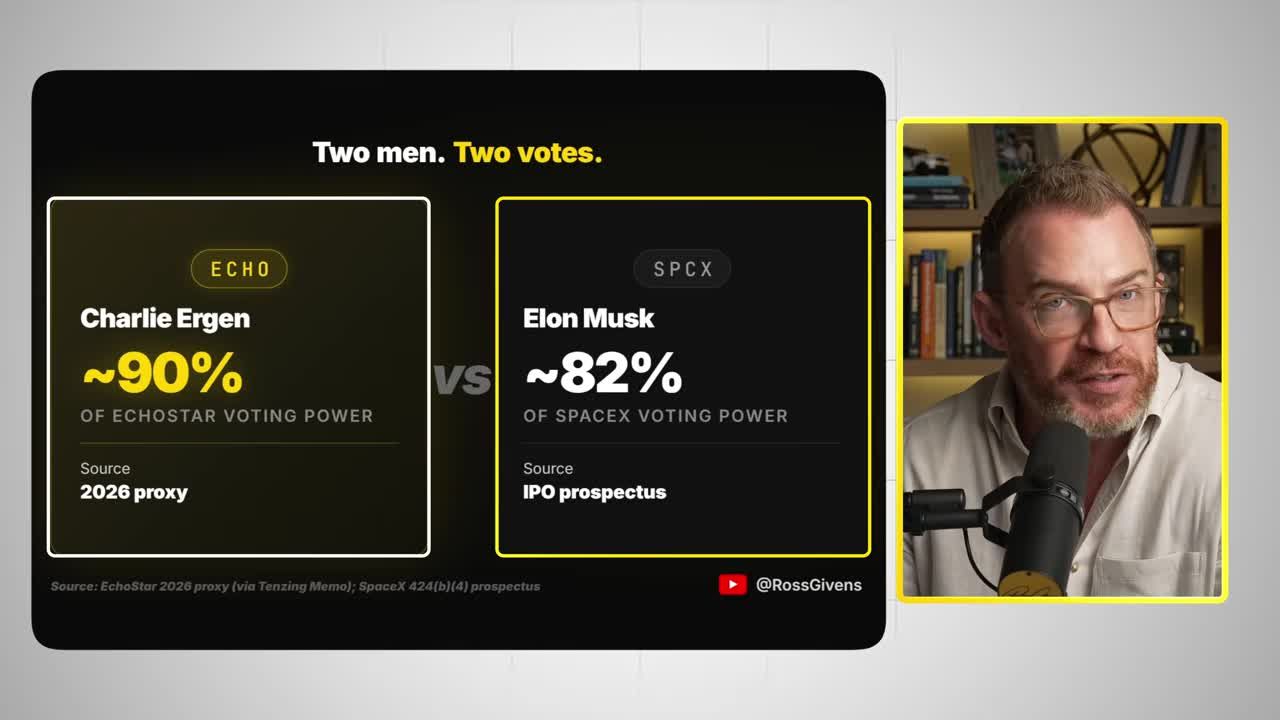
Here's the structural detail that makes this more than speculation. Ergen and his family control about 90% of the voting power at EchoStar. Musk controls about 82% of the voting power at SpaceX, according to the company's own IPO filing. There's no committee to convince, no shareholder revolt to manage, no 18-month proxy fight. If those two men shake hands, the deal is done. That's likely why Musk went to see Ergen himself.
To be clear on what's actually confirmed: the Washington Post reported SpaceX is in talks to buy Boost or use its network. Nobody has officially reported a deal for all of EchoStar. If they had, the stock would already be higher.
What follows is my own reasoning, but think about this from Musk's side of the table. He wants Boost's customers, but Boost doesn't run its own towers. It rides on AT&T and T-Mobile's networks under lease agreements, and the Post reported those leases may not transfer to a new owner without AT&T and T-Mobile saying yes. I don't think SpaceX's biggest competitors are eager to help it steal customers. Buying just Boost could get messy fast.
Buying all of EchoStar solves that problem. EchoStar is Boost's parent company. If SpaceX owns EchoStar, it owns the very company it owes those 231 million shares to, which means the debt basically disappears. SpaceX would be buying back its own IOU. A large chunk of the purchase price is money SpaceX already owes anyway.
SpaceX is worth roughly $1.9 trillion. Even paying a massive premium on top of EchoStar's $29 billion market cap would amount to a couple percent of SpaceX's total value, a rounding error for a company of that magnitude.
In exchange, Musk would get an instant carrier base of 7 million Boost customers, the cash sitting on EchoStar's balance sheet, leftover spectrum EchoStar still owns, and a partner in Ergen, who has spent decades buying, holding, and selling spectrum. For Ergen, the trade is simple: swap a complicated company with a 2027 waiting period for SpaceX stock he can hold today.
Four Ways EchoStar Stock Gets Paid
This doesn't require the buyout to happen. Four outcomes are possible. If Musk buys Boost outright, EchoStar gets paid for a business Ergen himself has said has "treaded water for four years." If Musk just leases Boost's network, EchoStar gets a new revenue stream from the hottest company on the planet. If Musk buys the whole company, shareholders likely get a premium on a stock that already trades below what it's worth. And if nothing happens at all, you still own a company sitting on an estimated $40 billion of value for a $29 billion price tag.
The Chart: $80 to $100
EchoStar stock is still trading at about a 35% discount to its all-time high set back in May, when it ran up on SpaceX IPO hype. Since then, the stock has moved through a series of acceptance ranges: new information pushes it higher, the market digests it, sometimes pulls back on concerns like the 2027 timeline, then resets.
For roughly the last six months, it has traded in an $80 to $100 range. It's currently trying to poke its head above that range.
I entered a position of 500 shares around $100 per share. If a buyout is officially announced, the stock won't drift up slowly, it will jump overnight to whatever the deal price is. There's no window to get in once that news hits. If you already own shares, you capture that move. If you don't, you're reacting after the fact.
The date to watch is EchoStar's third quarter earnings report, expected sometime next week (no official date has been announced, though some sources point to November 9th or November 12th). This matters because it's the first full quarter after the $20 billion AT&T payment landed. For the first time, investors will see EchoStar's real cash position on the balance sheet instead of Ergen's estimate from a conference call. If that cash figure comes in around $14 billion, the math behind this entire thesis holds up. It's also the first chance for Ergen to get asked about Musk on the record.
The Bottom Line
The two men who decide what happens next, Charlie Ergen and Elon Musk, already sat down together last month. Whether the end result is a full buyout, a network lease, or nothing at all, EchoStar stock is positioned to benefit under nearly every scenario based on the numbers EchoStar itself has disclosed.
This isn't a story about hoping a deal happens. It's a story about a valuation gap that exists today, regardless of what Musk decides next. Watch next week's earnings report for confirmation on the cash figure, and watch the $80 to $100 range on the chart for a potential breakout.
Get an entire year of live weekly mentoring sessions, my newsletter, indicators, bonus reports, tons more. Click the link and I'll see you in the next live session.
DISCLAIMER: Traders Agency does not offer financial advice. The information provided is for educational purposes only and should not be considered financial advice. Traders Agency is not responsible for any financial losses or consequences resulting from the use of the information provided. Trading carries inherent risks and may not be suitable for all individuals. You are advised to conduct your own research and seek personalized advice before making any investment decisions, recognizing the potential risks and rewards involved.
See more from Traders Agency on Google
Make us a preferred source and our market analysis will appear more prominently in your Google Search, Top Stories, and AI results.
Add to Preferred Sources