

Hey, Ross here:
AI medicine stocks may be the most overlooked trade in the artificial intelligence sector right now, while most of the attention stays on the chipmakers and cloud giants. On October 19th, the FDA approved a cancer drug that lets some rectal cancer patients skip surgery, chemo, and radiation entirely. The catch: you only qualify if a lab test on your tumor says you qualify. That single detail is where I believe the next wave of AI money is heading.
A post about this breakthrough racked up more than 5 million views on X in just a few days. The writer's point was simple: medicine is changing faster than almost anybody realizes, and the evidence is sitting in press releases almost nobody reads.
He's right. And if you've been riding the AI trade through chipmakers and cloud giants, it's been a rough couple of months. You might be holding the wrong end of this entire theme.

What Are AI Medicine Stocks?
Bottom Line: The real AI medicine trade may not be the companies building AI, but the ones selling the data and diagnostics that drug makers need to use it. Tumor-matching tests like the one behind the new FDA-approved cancer drug could point to a less crowded corner of the AI trade than chipmakers and cloud stocks.
The companies that build the AI vs. the ones that charge for it
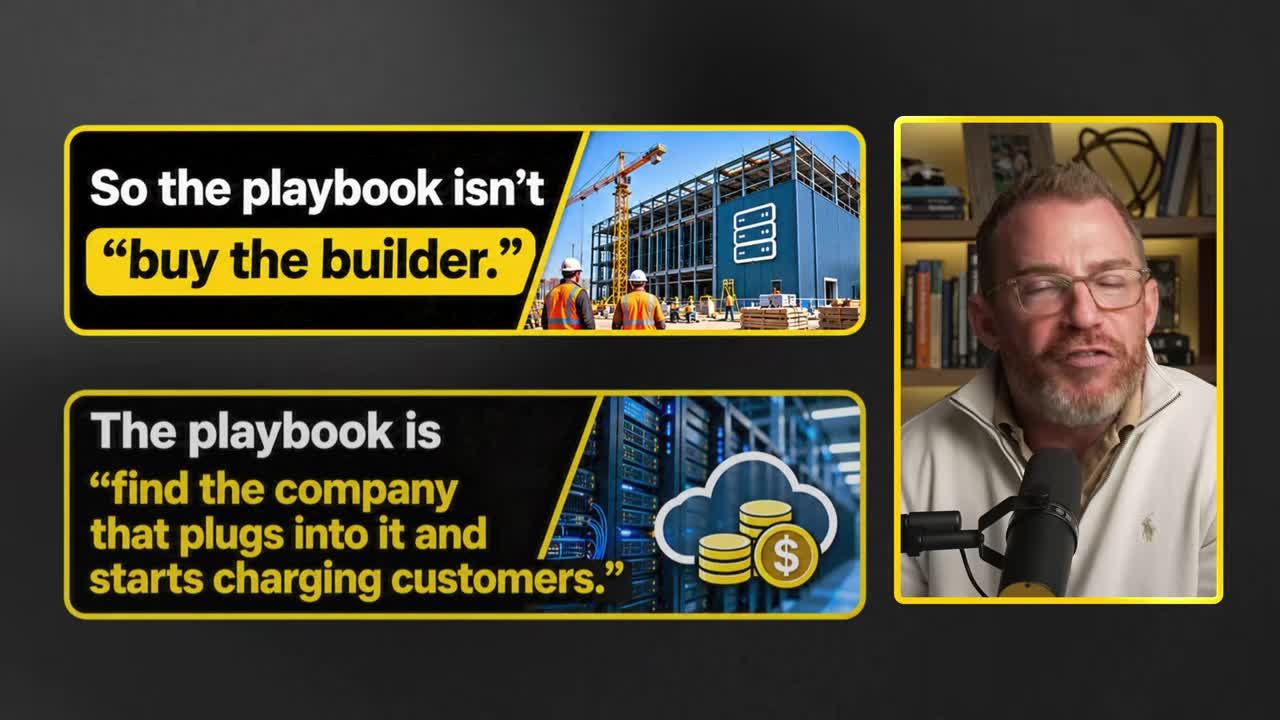
AI medicine stocks are companies that use artificial intelligence to analyze medical data, tumor genetics, and clinical trial information to improve diagnostics, drug discovery, and treatment decisions. Some build the AI from scratch. Others simply plug into it and charge customers for the output.
That distinction matters more than anything else in this sector right now.
Every major technology in history has followed the same script: the people who build it spend a fortune, and the people who build on top of it make a fortune. Railroad companies in the 1800s laid track across the entire country at massive cost, and a lot of them went bust, some more than once. But the steel didn't disappear when the railroad went broke. The companies that shipped goods across that track, the catalog sellers, the meat packers, the grain traders, got rich using something they never had to pay to build.
The same thing happened with the internet a century later. Telecom companies buried millions of miles of fiber optic cable in the late 1990s and a lot of them went bankrupt. The companies that made the money were the ones that ran on top of that cable: Google, Netflix, Amazon, Meta.
Why Are AI Medicine Stocks Exploding Now?
The AI infrastructure trade hit a wall. Medicine didn't.
AI medicine stocks are gaining attention because the AI infrastructure trade just hit a wall, while real-world medical breakthroughs powered by AI data are stacking up faster than most investors realize. The market is now asking when AI spending actually pays off, and medicine is answering that question in real time.
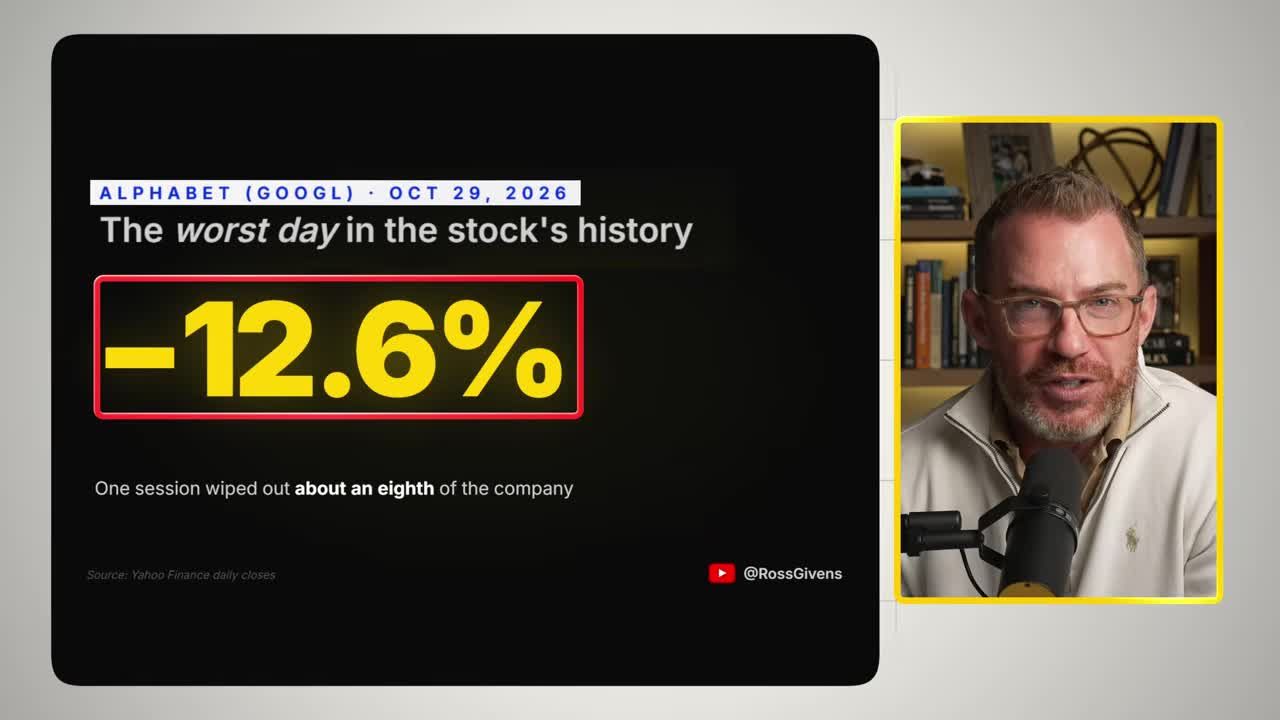
On October 29th, Alphabet fell 12.6% in a single day after earnings. That's the worst day in the stock's history, worse than 2020, worse than any day since its IPO in 2004. Amazon got hit after its report too. Intel fell 30% on Friday in a single session.
Investors are starting to ask a reasonable question: when does all this AI spending actually pay off? I think there's a better question. Who gets to use all that AI without paying to build it?
In AI, the builders are obvious. They're the most crowded stocks on the planet. So who's plugging in? One of the biggest answers is medicine, because medicine runs on data, mountains of it. Tumor scans, genetic tests, doctor's notes, trial records. For decades, most of that data just sat there because no human could read all of it. AI can.
Here's what the last six months of medicine actually delivered, checked against FDA trial data:
- Pancreatic cancer: Patients on chemo were living a median of about 6.5 months once the cancer spread. A once-daily pill from Revolution Medicines pushed that to 13.2 months, roughly double. The FDA approved it in August.
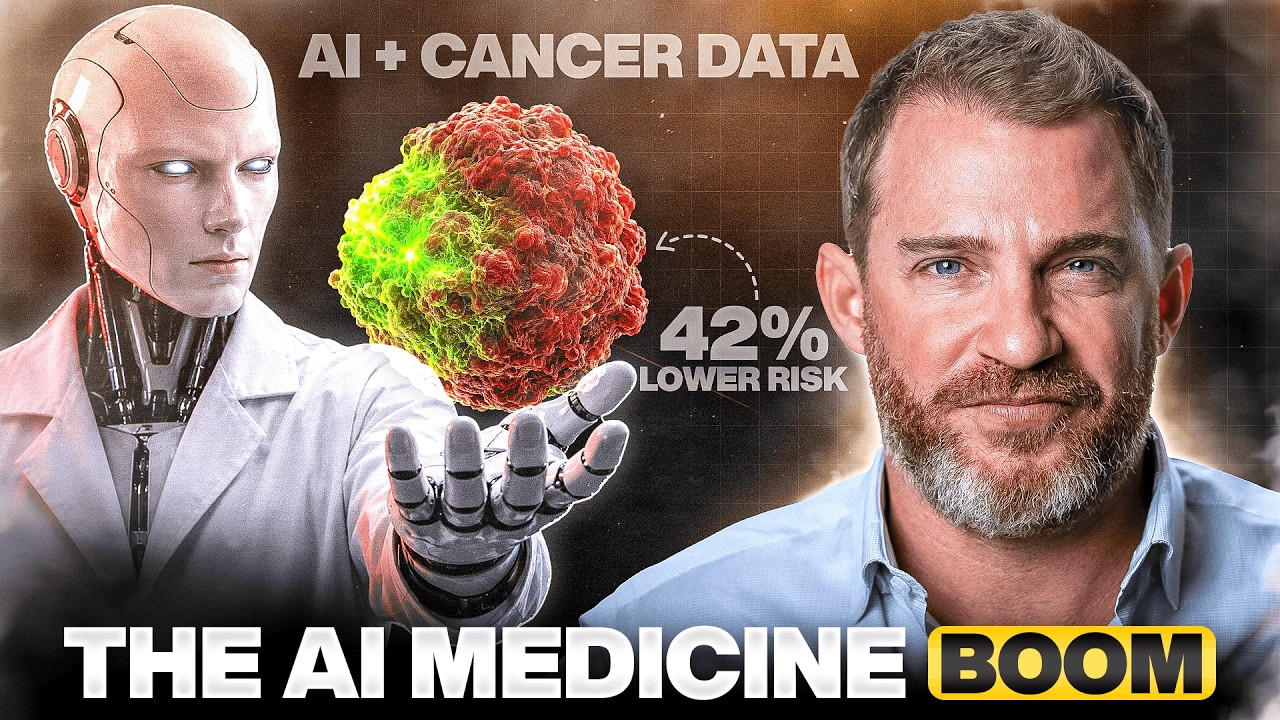
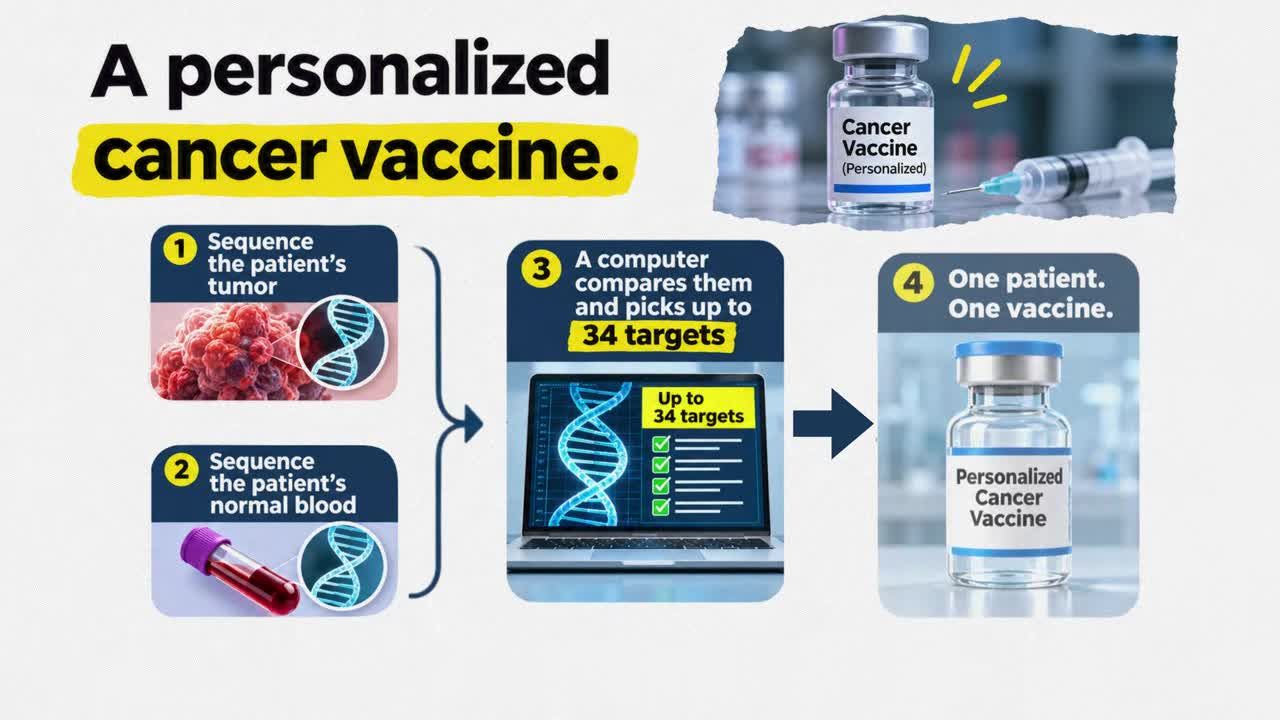
- Personalized cancer vaccine: Merck and Moderna tested a vaccine built from each patient's own tumor in more than a thousand melanoma patients. Added to Keytruda, it cut the risk of cancer returning or death by 42% compared to Keytruda alone.
- Weight loss: Eli Lilly's next weight loss drug, retatrutide, showed patients on the top dose losing an average of 28% of body weight in its phase three trial, around 70 pounds.
- Rectal cancer: The drug approved October 19th, but only for patients whose tumor tests showed a specific genetic flaw.
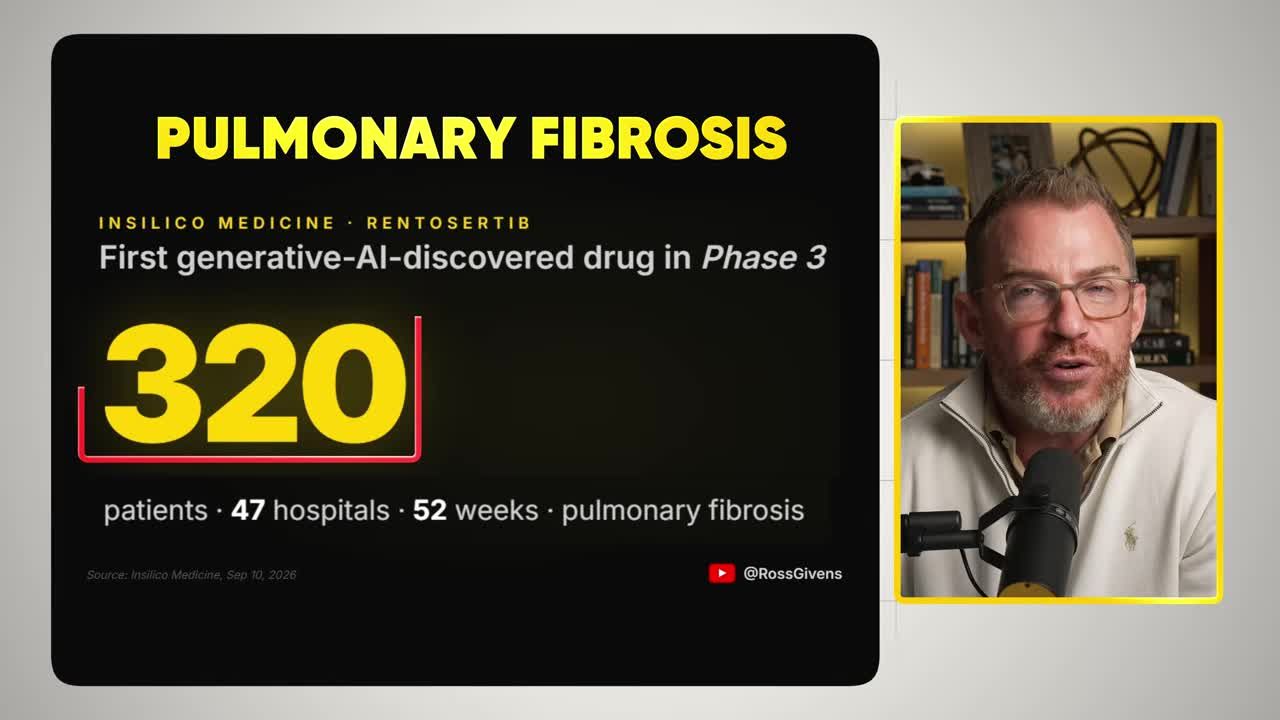
- Pulmonary fibrosis: In September, Insilico Medicine dosed the first patient in a phase three trial for this lung scarring disease, targeting something its AI found with no previously known link to fibrosis.
The vaccine is worth sitting with for a second. It gets made by sequencing the tumor, comparing it to normal blood, and letting a computer pick up to 34 targets. One patient, one vaccine. That's not a pharmacy product. It's a data product.
The pattern is clear. Breakthroughs are getting more personal, and the more personal medicine gets, the more it depends on knowing exactly what's happening inside one patient's tumor.
On that fifth one, pulmonary fibrosis: no AI-designed drug has been approved by the FDA yet. This trial is years from that outcome, and Insilico trades in Hong Kong, not on a US exchange. The trial covers 320 patients across 47 hospitals and runs for a full year. But five years ago, AI drug discovery was a slide in an investor deck. Now it's a drug in late-stage human trials. That's a milestone worth paying attention to.
What Are the Top AI Medicine Stocks to Watch?
Skip the builders, find the toll collector
Most pure AI drug discovery companies don't make money yet. They're burning cash, selling stock, and waiting on trials that take years to complete. So how do retail investors get paid now instead of waiting a decade?
You find the company sitting in the middle of it all: the one that already has the data, already has the customers, and is already sending bills.
Tempus AI (TEM)
That company is Tempus AI, ticker TEM. The business model is straightforward: Tempus runs genetic tests on cancer patients' tumors. A doctor sends in a sample, Tempus sequences it, and tells the doctor which drugs that tumor is likely to respond to. That's the diagnostics business, and insurance already pays for it.
But every test leaves behind data. Stripped of patient identity, it becomes part of one of the largest cancer databases in the world. Drug companies want that data badly. According to its annual report, Tempus works with 19 of the 20 largest public pharma companies.
Why would pharma pay for this? A failed drug trial can burn hundreds of millions of dollars. If Tempus data helps a drug company pick the right patients or kill a bad drug before it gets expensive, that's worth a fortune. Think of it like a toll road: the doctor pays for the test, and then the data from that test gets licensed back to pharma again and again. Tempus gets paid twice.
That's what makes this a build-on-top-of-AI company instead of a build-the-AI company. Tempus doesn't need to win the chip race. It just needs chips to keep getting cheaper and smarter so its data gets more valuable.
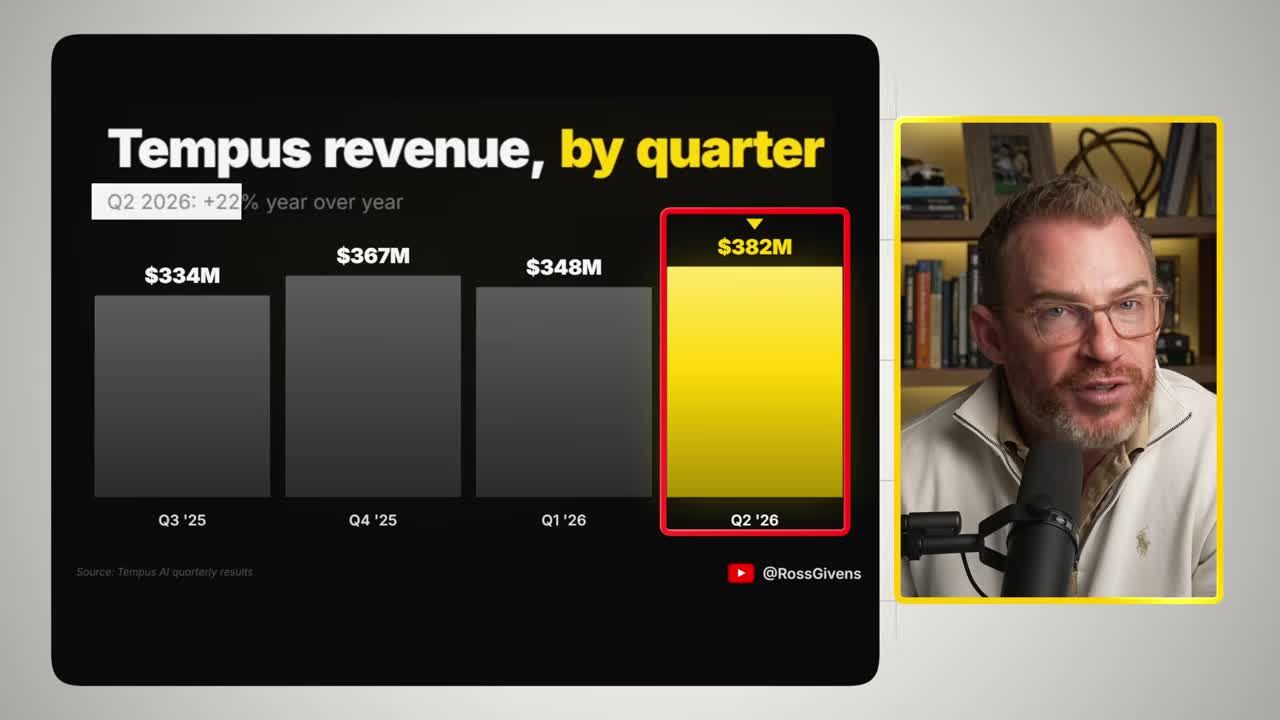
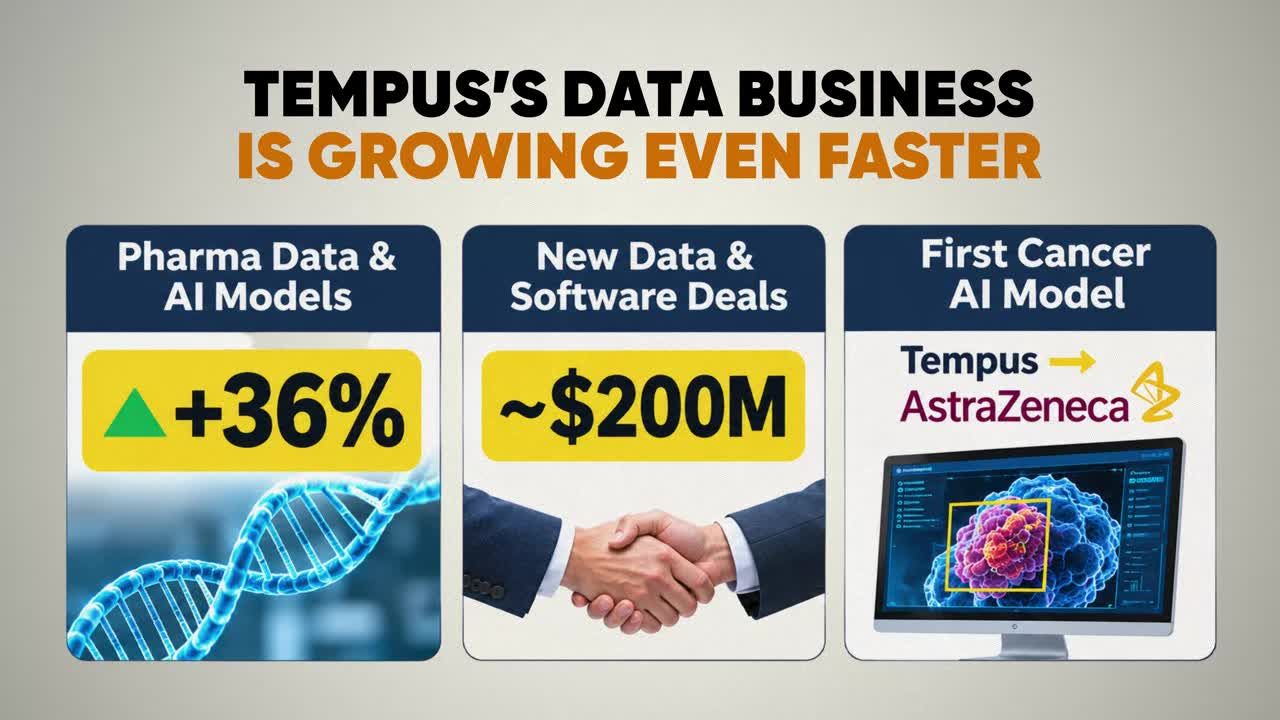
The numbers back this up. In the second quarter, Tempus brought in $382.5 million in revenue, up 22% from last year. Cancer test volume grew 31%. The data licensing business, the part that builds AI models for pharma, grew 36%. In that single quarter, Tempus signed about $200 million in new data and software deals, and it handed AstraZeneca its first cancer AI model built on Tempus data. One of the biggest drug companies on earth went straight to Tempus for its AI model.
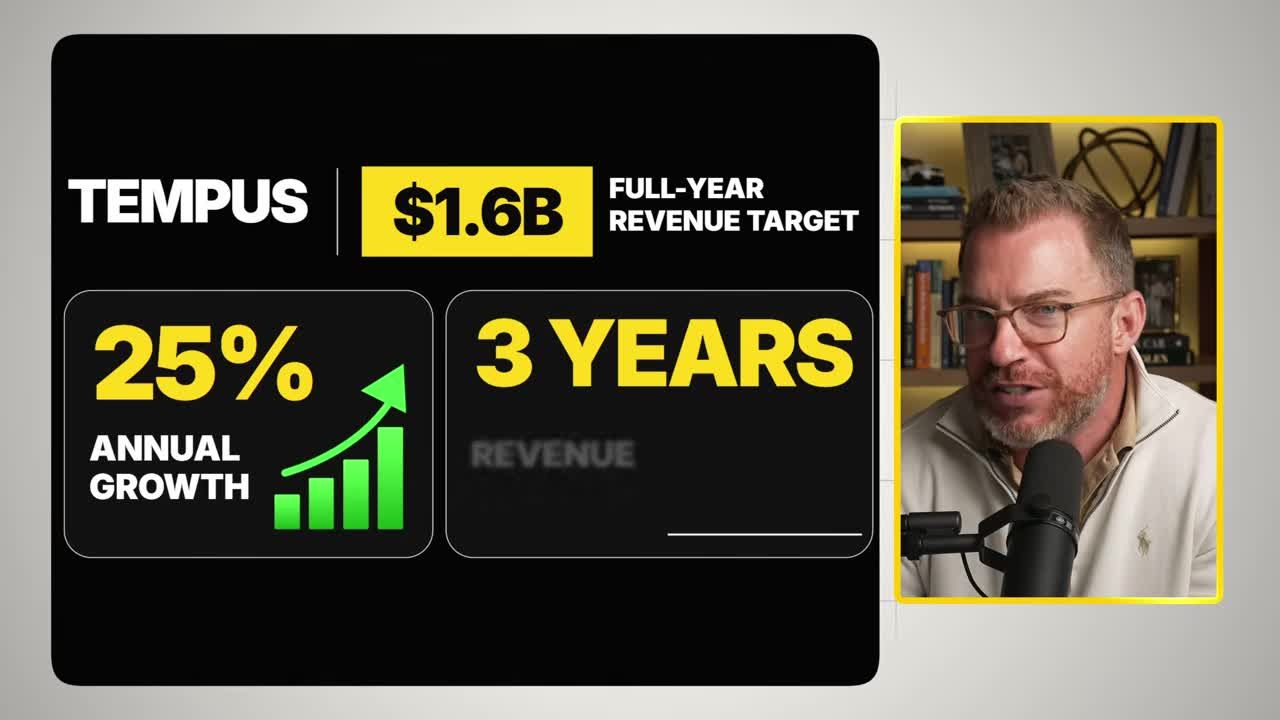
Management raised its full-year revenue target to about $1.6 billion, which represents 25% growth. A company growing 25% a year roughly doubles revenue every three years. Meanwhile the data side, the highest-margin part of the business, is growing even faster than the core diagnostics business. More tests mean more data, better data means better AI models, better models win more pharma deals, and more deals fund more testing. It snowballs, and it gets stronger the more AI improves regardless of what happens in the chip race.
On the stock itself: over the last year, TEM has traded as high as 90 and as low as 40. This is not a sleepy dividend stock. Its average daily range is 8.5%, meaning it can swing hard in a single session. Give it room to breathe if you take a position.
One more detail worth noting: Nancy Pelosi started loading up on $20 call options in Tempus back in late 2024 or 2025, options that expired in January 2026. Instead of cashing out, she converted the position into stock, and there's no filing showing she's sold those shares since. She likely still holds a sizable position.
Tempus is also acquiring a company called Personalis for about $1.5 billion, a company that makes tests looking for tiny traces of cancer in the blood after treatment to catch recurrence early. The deal is mostly paid in stock and is expected to close around the turn of the year. More tests, more data, same snowball.
Get an entire year of live weekly mentoring sessions, my newsletter, indicators, bonus reports, tons more. Click the link and I'll see you in the next live session.
Join my Black Ops Trading ClubA Smaller Name With Upside
Schrodinger (SDGR): more risk, more room to run
If Tempus feels too large or too volatile for your taste, there's a smaller name worth watching: Schrodinger (SDGR).
Schrodinger makes software that lets chemists design drug molecules on a computer before mixing a single chemical. It's essentially physics plus AI, and drug companies rent the platform. Some molecules designed with it have turned into enormous deals.
In 2023, Takeda paid $4 billion upfront for a psoriasis pill from Nimbus Therapeutics. Nimbus designed that drug using Schrodinger's software, and Schrodinger owned a piece of Nimbus, pocketing about $147 million from that deal. This year, Eli Lilly bought another company Schrodinger co-founded, Ajax Therapeutics, in a deal worth $2.3 billion. Schrodinger got about $57 million in cash from that transaction, plus potential milestone payments down the road.
What's next: that psoriasis pill is under priority review with the FDA, with a decision expected in the first quarter of 2027. If approved, it could become one of the first drugs designed with heavy computer modeling to reach the market at scale. That would be a significant headline, and it would likely draw a wave of new investor interest into Schrodinger even from people who never owned the drug itself.
The stock has already moved. It went from about $11 to the high $20s over the last year, up more than 70% in the last three months alone. Its market cap currently sits around $2 billion, making it just barely a midcap stock. These lump-sum payments for drug discoveries arrive sporadically, and FDA approval outcomes are never guaranteed, so expect volatility. But if the coming FDA decision goes the way we want, it would prove out the entire concept that computer-designed drugs are a legitimate business, not just a theory.
Toll Roads vs. Builders: Which AI Medicine Stocks Win?
Where the real exposure lives
Pure AI drug discovery plays are years away from FDA-approved revenue in most cases. Insilico Medicine's pulmonary fibrosis trial, for example, won't produce an approved drug anytime soon, and it isn't even listed on a US exchange. That's the risk profile of betting on the builders.
Companies like Tempus and Schrodinger sit closer to the toll-road model. They collect fees now, from real customers, while still benefiting from every advance in AI technology that improves their data and software value.
Among the AI medicine stocks mentioned here, Tempus is the one sitting right in the middle of the medical data pipeline, working with 19 of the 20 largest public pharma companies and expanding that footprint through the Personalis acquisition. AstraZeneca took its first cancer AI model, built on Tempus data, straight from Tempus. One of the biggest drug companies on earth went straight to Tempus for the AI.
That's a meaningful vote of confidence from one of the largest drug companies on the planet, and it's the kind of real-world validation that's hard to manufacture through marketing alone.
Positioning for What's Next
The AI trade is splitting in two
One side is the builders, the chipmakers and cloud giants that just posted some of their worst trading days as investors question when the spending pays off. The other side is the companies plugging into what's been built, collecting data, and sending bills to the biggest pharmaceutical companies in the world.
History says the second group wins. The railroad builders went broke. The fiber diggers went broke. But the companies that plugged into what they built made fortunes. AI is being built right now with hundreds of billions of dollars of somebody else's money, and some of those companies are absolutely going to zero.
Tempus doesn't have to pay for any of that infrastructure. It just has to keep feeding cancer data into the system and sending invoices to the largest drug companies on earth. That's the trade, and that's where I'm looking next among AI medicine stocks.
Get an entire year of live weekly mentoring sessions, my newsletter, indicators, bonus reports, tons more. Click the link and I'll see you in the next live session.
DISCLAIMER: Traders Agency does not offer financial advice. The information provided is for educational purposes only and should not be considered financial advice. Traders Agency is not responsible for any financial losses or consequences resulting from the use of the information provided. Trading carries inherent risks and may not be suitable for all individuals. You are advised to conduct your own research and seek personalized advice before making any investment decisions, recognizing the potential risks and rewards involved.
See more from Traders Agency on Google
Make us a preferred source and our market analysis will appear more prominently in your Google Search, Top Stories, and AI results.
Add to Preferred Sources