
You've probably seen the ticker IBIT pop up on your brokerage app and wondered what it actually is. Is it Bitcoin? Is it a stock? Something in between? Here's the Bitcoin ETF explained in one sentence: it's an exchange-traded fund (ETF) that trades on a stock exchange and gives investors exposure to Bitcoin's price without requiring them to buy, store, or manage the cryptocurrency directly. You buy shares through a normal brokerage account, just like you would with any stock or index fund.
By the end of this guide, you'll know how these funds actually work, how a spot Bitcoin ETF differs from a Bitcoin futures ETF, which tickers matter most, and how to decide whether one belongs in your portfolio.
What Is a Bitcoin ETF?
A Bitcoin ETF is a regulated investment fund that tracks the price of Bitcoin and trades on a traditional stock exchange during normal market hours.
Instead of opening a crypto wallet, moving funds to an exchange, and buying Bitcoin directly, you place an order for ETF shares the same way you'd buy shares of SPY or QQQ. The fund company handles the actual Bitcoin custody, security, and storage behind the scenes.
This matters because it removed a major barrier for everyday investors. Before January 2024, when the U.S. Securities and Exchange Commission (SEC) approved the first spot Bitcoin ETFs, most people gained crypto exposure through direct ownership or futures-based products. Now a retirement account or standard brokerage account can hold Bitcoin exposure with a single ticker symbol.
Key Concept: A Bitcoin ETF is a wrapper, not a new asset. You're buying shares of a fund that holds Bitcoin (or Bitcoin futures) on your behalf, which means you get the price exposure without the wallet, the private keys, or the storage headaches.
How Do Bitcoin ETFs Work?
Bitcoin ETFs work by holding actual Bitcoin (spot ETFs) or Bitcoin futures contracts (futures ETFs) inside the fund, then issuing shares that track the value of those holdings. Authorized participants create and redeem shares to keep the ETF's price aligned with Bitcoin's market price.
Here's the mechanical version. A fund like IBIT buys and stores real Bitcoin with a custodian. As demand for ETF shares rises, authorized participants (large financial institutions) create new shares backed by additional Bitcoin purchases. When demand falls, shares get redeemed and Bitcoin gets sold. This creation and redemption process is what keeps the ETF's trading price close to Bitcoin's actual spot price.
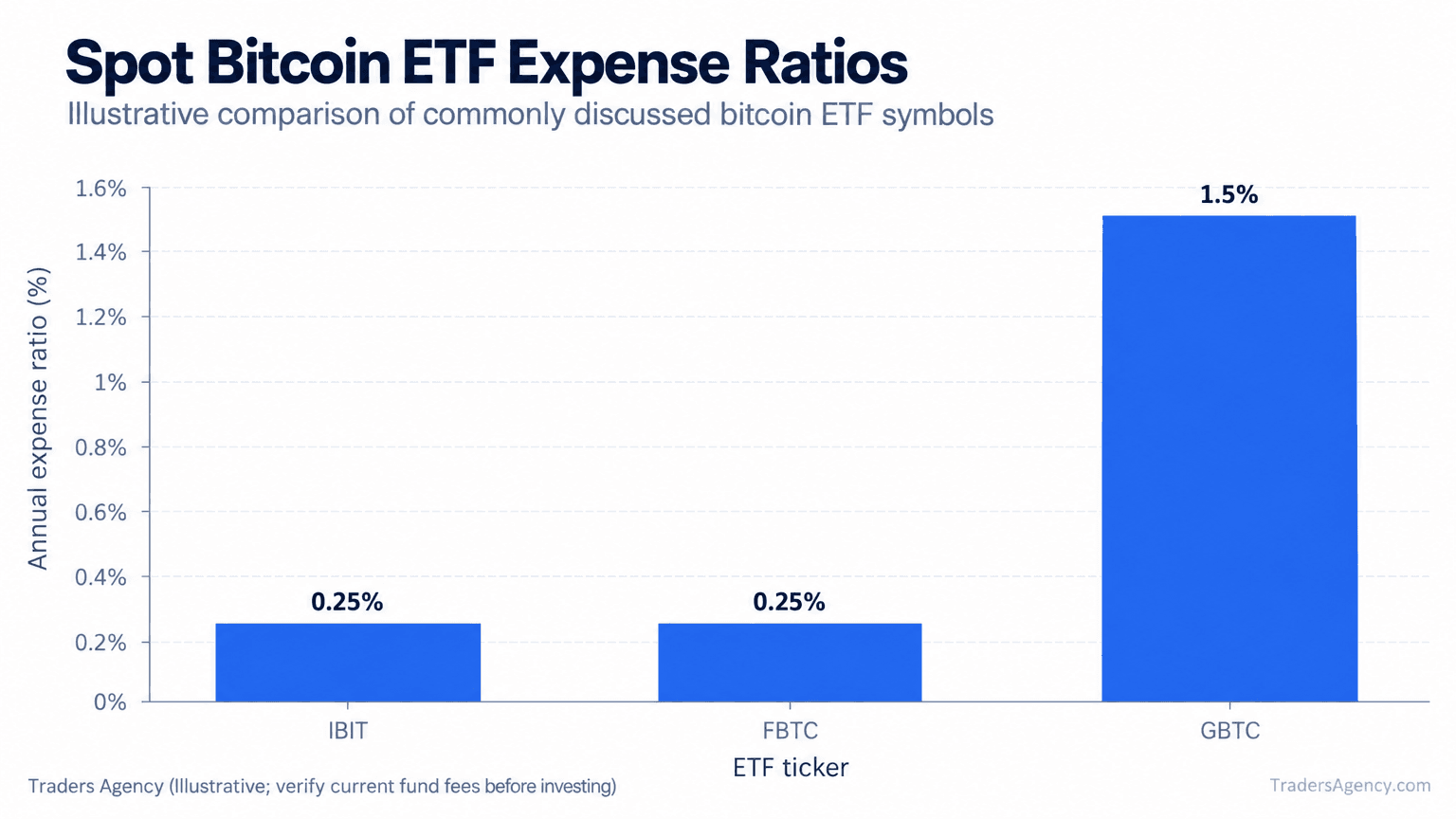
Each fund charges an expense ratio, an annual fee taken as a small percentage of your investment, to cover custody, security, and administrative costs. That fee is the price of convenience, and it's the single biggest factor that separates one Bitcoin ETF product from another.
Bitcoin ETF vs. Bitcoin: What's the Difference?
The core question comes down to control versus convenience. Direct ownership means you hold the actual asset in a wallet you control. An ETF means you hold a share of a fund that owns the asset for you. Here's how we break the tradeoffs down for members:
| Factor | Direct Bitcoin Ownership | Bitcoin ETF |
|---|---|---|
| Custody | You manage private keys or trust a crypto exchange | Institutional-grade storage handled by the fund |
| Trading Hours | 24/7, including weekends | Stock market hours only |
| Tax Reporting | Track cost basis across wallets and exchanges yourself | Standard 1099 form from your broker |
| Ongoing Fees | None after purchase (aside from trading costs) | Annual expense ratio for as long as you hold |
| Share Price | Requires buying fractional Bitcoin | A fraction of one Bitcoin, easy round-dollar buys |
For beginners specifically worried about losing access to a wallet or mismanaging a private key, the ETF structure removes that entire risk category.
What's the difference between spot and futures Bitcoin ETFs?
Not every Bitcoin ETF holds actual Bitcoin. This distinction matters more than most new investors realize.
A spot Bitcoin ETF holds real Bitcoin in custody and directly tracks its market price. A Bitcoin futures ETF, by contrast, holds futures contracts traded on exchanges like the Chicago Mercantile Exchange (CME). Those contracts are agreements to buy or sell Bitcoin at a set price on a future date, not the coin itself.
Futures-based products existed before spot ETFs were approved, but they carry a quirk called contango, where futures contracts trade at a premium to the current spot price. Over time, rolling those contracts forward can create a drag on returns that doesn't exist in spot products. For most beginner investors seeking straightforward Bitcoin price exposure, we point toward spot ETFs as the more direct and typically lower-friction choice.
What are the top Bitcoin ETF tickers to know?
If you're building a research list, these are the names that come up most often:
- IBIT (iShares Bitcoin Trust): one of the largest spot Bitcoin ETFs by assets, known for a competitive expense ratio.
- FBTC (Fidelity Wise Origin Bitcoin Fund): another major spot fund with a low expense ratio and Fidelity's custody infrastructure.
- GBTC (Grayscale Bitcoin Trust): the oldest of the group, converted from a legacy trust structure into an ETF, but it carries a much higher expense ratio than newer competitors.
Expense ratios might look like a rounding error on paper, but they compound over years of holding.
A Quick Example on Fees
Imagine a hypothetical $1,000 investment held for five years. In a low-fee spot ETF, fees might shave off only a small slice of returns each year. In a higher-fee product like the illustrative comparison above, that annual drag compounds and can meaningfully reduce your ending balance, even if both funds tracked the exact same underlying Bitcoin price.
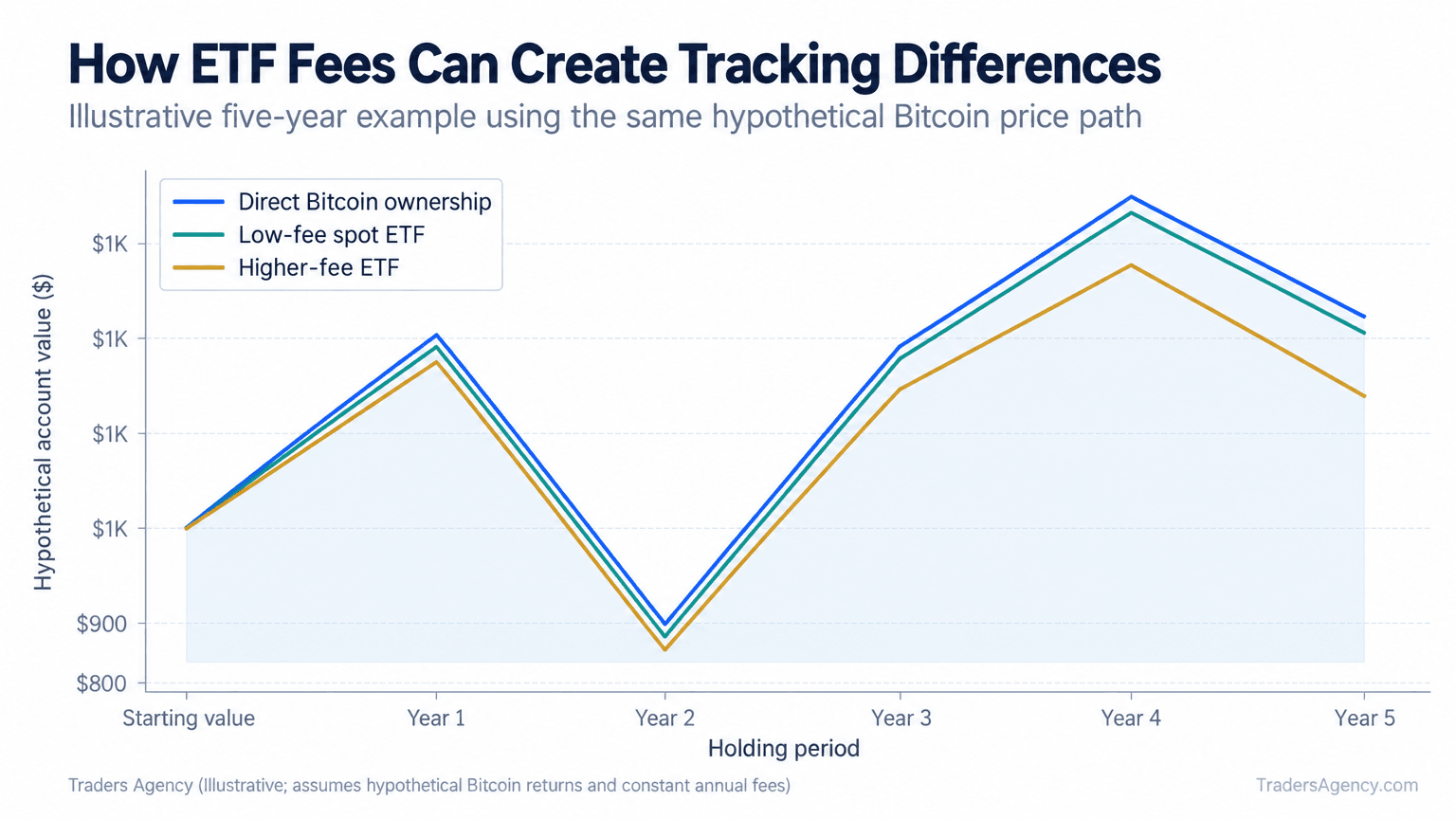
This is exactly why we tell members to always check the current expense ratio before choosing between similar spot Bitcoin ETFs. Tracking difference (how closely the fund's return matches actual Bitcoin performance) and fees are the two numbers that matter most when comparing the best Bitcoin ETFs side by side.
Want expert trading insights delivered daily?
Join thousands of traders who rely on Traders Agency for market analysis and trade ideas.
Join Traders AgencyIs Buying a Bitcoin ETF a Good Idea?
Whether a Bitcoin ETF is a good idea depends on your goals, your risk tolerance, and how much of your portfolio you're willing to allocate to a volatile asset. For investors who want simple, regulated Bitcoin exposure without managing a wallet, it can be a reasonable tool. For those chasing quick gains without understanding the volatility involved, it's a risky bet.
Bitcoin has historically moved in large swings, sometimes double-digit percentage moves within a single week. An ETF doesn't remove that volatility. It just changes how you access it. Before you buy, ask yourself whether you could tolerate a 30% or larger drawdown without panic-selling.
When It Fits
- You want crypto exposure inside a retirement or taxable brokerage account without opening separate crypto exchange accounts.
- You prefer standard tax reporting through your broker rather than tracking crypto cost basis manually.
- You're allocating a small, defined percentage of a diversified portfolio, not betting the majority of your savings.
When It Doesn't Fit
- You need 24/7 trading access or plan to move funds outside traditional finance.
- You're using borrowed money or emergency savings to buy in.
- You haven't defined a position size limit before purchasing.
Watch Out: The ETF wrapper makes Bitcoin easier to buy, not less volatile. Decide your maximum position size before you place the order, and write it down. Position sizing is the only real risk control you have on an asset that can move double digits in a week.
How Does a Bitcoin ETF Fit Into a Portfolio?
Bitcoin and Bitcoin ETFs have historically shown a different price pattern than traditional stocks and bonds, though that relationship can shift depending on the broader market environment.
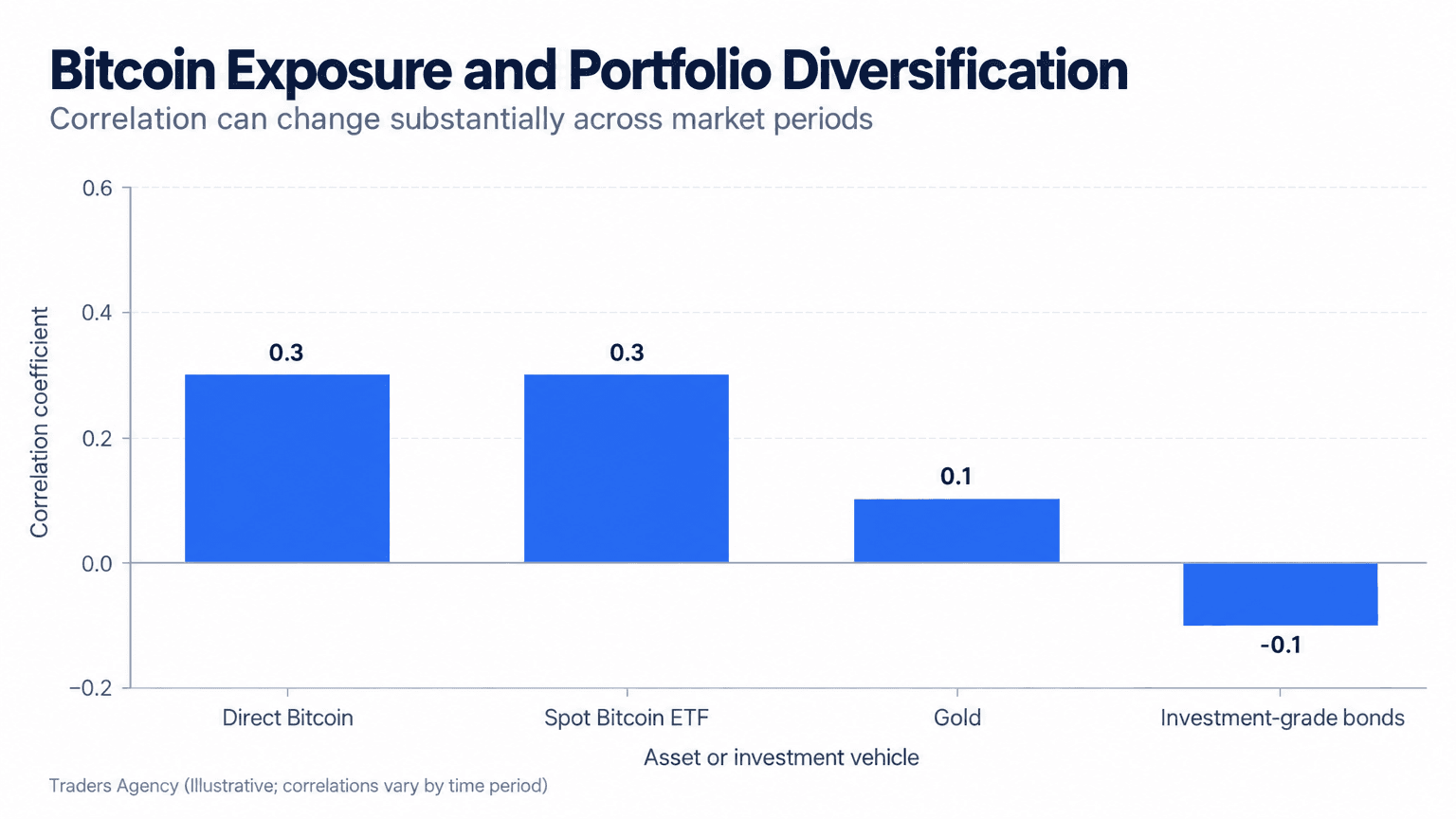
We generally suggest members treat Bitcoin ETF exposure as a small, deliberate slice of a portfolio rather than a core holding, given that its price swings can be far sharper than gold or investment-grade bonds. Position sizing matters here: many traders we work with cap crypto-linked exposure at a modest single-digit percentage of total invested assets, then revisit that number as the position grows or shrinks with price moves.
The Bottom Line
A Bitcoin ETF gives everyday investors a regulated, brokerage-friendly way to gain Bitcoin price exposure without wallets or private keys. Spot Bitcoin ETFs like IBIT and FBTC hold actual Bitcoin, futures-based products track contracts instead of the coin itself, and fees vary meaningfully between funds like GBTC and its newer competitors.
If this breakdown taught you anything, it's that the ticker symbol matters less than three things: the structure behind it, the expense ratio, and how much of your overall portfolio you're comfortable putting at risk.
Our education team publishes new strategy guides and market analysis every week.
Want expert trading insights delivered daily?
Join thousands of traders who rely on Traders Agency for market analysis and trade ideas.
Join Traders AgencyDISCLAIMER: Traders Agency does not offer financial advice. The information provided is for educational purposes only and should not be considered financial advice. Traders Agency is not responsible for any financial losses or consequences resulting from the use of the information provided. Trading carries inherent risks and may not be suitable for all individuals. You are advised to conduct your own research and seek personalized advice before making any investment decisions, recognizing the potential risks and rewards involved.
See more from Traders Agency on Google
Make us a preferred source and our market analysis will appear more prominently in your Google Search, Top Stories, and AI results.
Add to Preferred Sources