
UK consumer price inflation rose to 3.5% in the 12 months to September 2026, above the 3.4% consensus forecast from economists polled by Reuters, as motor fuel costs recorded their steepest annual increase since August 2022. The reading, published by the Office for National Statistics (ONS), extended a run of accelerating inflation that has now moved further away from the Bank of England's 2% target.
According to the CNBC report on the release, September's figure followed 3.1% in August and 2.9% in July, marking the highest annual inflation rate in almost a year. That amounts to a 0.6 percentage-point increase over two months (3.5% minus 2.9%), based on the published ONS annual rates.
Motor fuel leads the upside surprise
The ONS said the motor fuel inflation rate hit its highest level since August 2022, when fuel costs surged in the wake of Russia's full-scale invasion of Ukraine. Motor fuel prices were up 29.8% year on year in September, according to ONS data cited by CNBC.
CNBC's reporting attributed the UK's exposure to this latest fuel shock to its status as a net energy importer, pointing to the U.S.-Iran war and the subsequent difficulty moving oil through the Strait of Hormuz as contributing pressures on global energy prices. This framing reflects CNBC's reporting rather than an ONS finding.
Market reaction and rate-hike pricing
Markets were pricing in a 98% probability that the Bank of England will raise its key interest rate by 25 basis points to 4% at its November decision, according to LSEG data cited by CNBC, with most traders also pricing a further 25 basis-point increase at the December meeting. Despite the hotter print, CNBC reported that the British pound was flat against both the euro and the U.S. dollar following the release, and that yields on UK government bonds were little changed.
Services inflation stokes second-round concerns
Scott Gardner, a strategist at J.P. Morgan Personal Investing, told CNBC that recent headline inflation growth had "undone the progress we saw in the spring," and that accelerating services inflation in particular would concern Bank of England policymakers because it points toward "second round inflationary effects beyond energy prices." Gardner added that, while the current backdrop differs from 2021, the prolonged conflict is weighing on the UK economy and "making the case for a rate hike stronger."
Gardner's comments reflect an attributed market view rather than a Bank of England statement.
Budget pressure builds ahead of Healey's first fiscal statement
Suren Thiru, chief economist at the ICAEW, said that "with inflation increasing, the pieces are falling firmly into place for a November rate rise," according to CNBC. Thiru also said surging prices are turning the Autumn Budget into a difficult balancing act for the Chancellor, increasing pressure for cost-of-living support while pushing up government borrowing costs, which he said is shrinking fiscal headroom and narrowing policy options.
Separate data published the same day showed UK national debt exceeded £3 trillion ($4 trillion) in September for the first time, ahead of Chancellor John Healey's first Autumn Budget next week, CNBC reported. Healey said in a statement following the data release that he would be "maintaining our fiscal discipline" in next week's budget while working to "drive for growth [and give] businesses and families some breathing space."
Data quality notes from the ONS
The ONS bulletin flagged that it was not possible to update to 2026 weights in line with standard methodology for this release, citing delays in processing underlying survey data and the need for further quality assurance. The ONS also noted that the government's Great British Summer Savings scheme, which ended on 1 September 2026, likely raised prices for cultural events, historic monuments and cinema admissions as it was reversed, though this did not appear to have a substantial overall impact on headline inflation. Traditionally sourced price data in the release were collected on or around 15 September 2026, with scanner data now covering approximately 50% of the grocery market.
Bottom Line
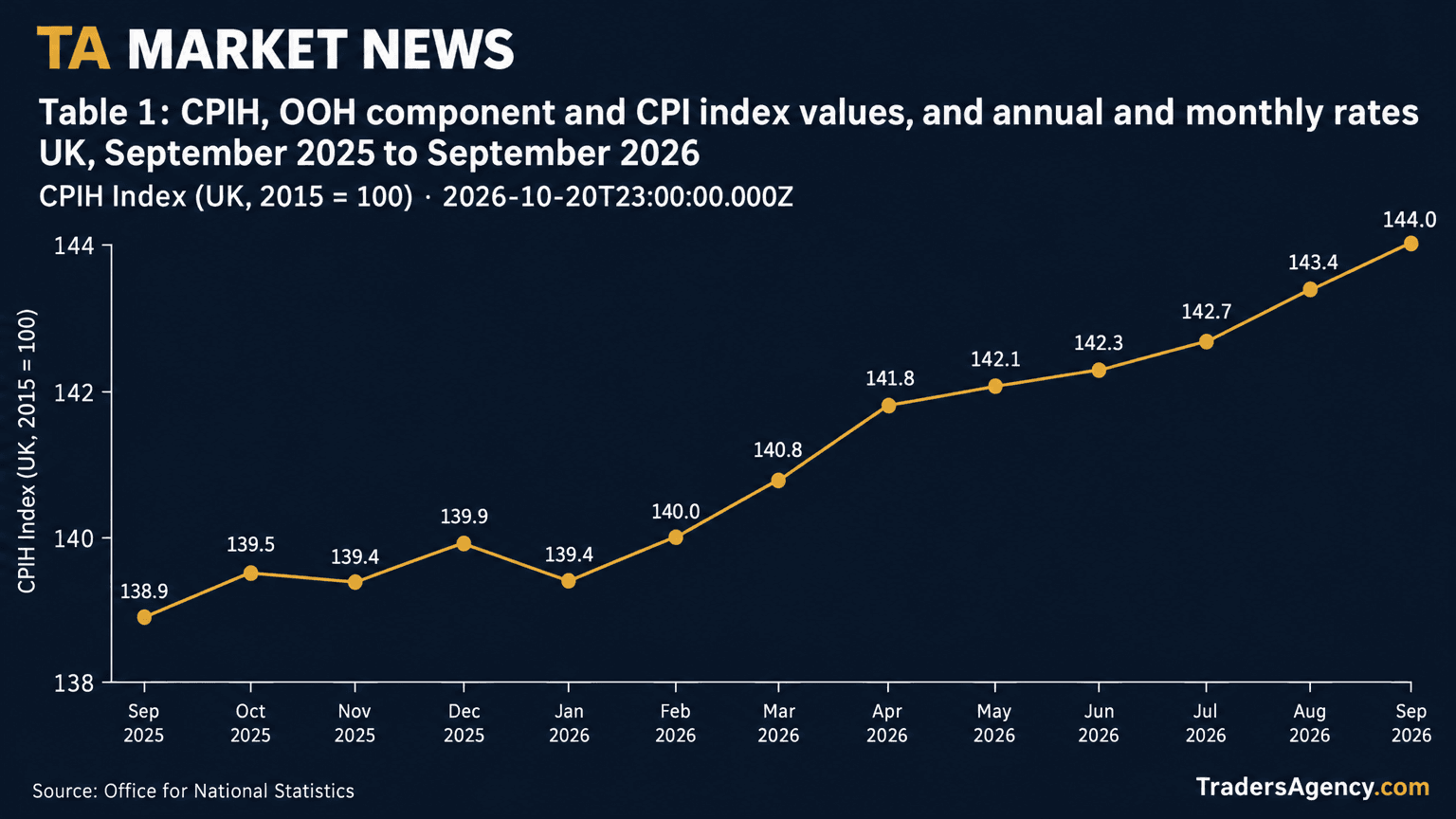
September's 3.5% CPI reading, which CNBC reported was driven by the surging cost of motor fuels — up 29.8% year on year — came in above the 3.4% Reuters consensus and extended a rising trend from 2.9% in July to 3.1% in August. Market pricing reported by CNBC, citing LSEG data, points to a 98% implied probability of a Bank of England rate rise in November, even as sterling and gilt markets showed little immediate reaction to the data. The release arrives alongside separate data showing UK national debt has topped £3 trillion for the first time, adding to the fiscal backdrop ahead of Chancellor John Healey's Autumn Budget next week.
DISCLAIMER: Traders Agency does not offer financial advice. The information provided is for educational purposes only and should not be considered financial advice. Traders Agency is not responsible for any financial losses or consequences resulting from the use of the information provided. Trading carries inherent risks and may not be suitable for all individuals. You are advised to conduct your own research and seek personalized advice before making any investment decisions, recognizing the potential risks and rewards involved.
- CNBC Top News: UK inflation jumps to 3.5% - cementing rate hike expectations · accessed Oct 21, 2026
- Office for National Statistics: Consumer price inflation · accessed Oct 21, 2026
See more from Traders Agency on Google
Make us a preferred source and our market analysis will appear more prominently in your Google Search, Top Stories, and AI results.
Add to Preferred Sources